
Mellem 65 % og 70 % af din kropsvarme forsvinder gennem bunden af en hængekøje, ifølge Trek Light Gears testdata for koldt vejr.
Det tal forklarer, hvorfor isoleringsstrategier til camping på jorden fejler fuldstændigt, når de anvendes på et ophængt sovesystem.
Koldt vejrs-hængekøjeråd giver dig ofte en liste med opvarmningstips uden at besvare det sværere spørgsmål: hvilken præcis kombination af udstyr ændrer sig ved 10 °C, 0 °C, -7 °C og -18 °C?
Resultatet: et fireskiftsystem, der fortæller dig præcis, hvilken udstyrs-kombination du har brug for ved 10 °C, 0 °C, -7 °C og -18 °C.
Det meste generiske råd om at "holde varmen" springer over de temperaturgrænser, hvor dit setup faktisk skal ændres.
Denne guide udfylder dette hul med vurderinger, der er specifikke for den enkelte situation, og videnskaben bag, hvorfor hvert niveau kræver forskelligt udstyr.
Hvis du allerede kender dit ønskede temperaturområde, kan du springe direkte til hurtigsvar-tabellen nedenfor.
Hvis du er ved at gå fra hængekøje-camping i tre sæsoner og undrer dig over, hvornår dit nuværende udstyr ikke længere er tilstrækkeligt, så begynd med beslutningsrammen.
Hvad du vil lære
Denne artikel besvarer fem spørgsmål, som kølehængekøjeguider sjældent dækker samlet.
Hver anbefaling er baseret på producentens testdata, fællesskabets konsensus eller fysikken bag varmetab.
Ingen sektion kræver, at du læser de andre først.
Hurtigt svar
Hvis du har brug for en beslutning på ét minut, så brug denne tabel.
Afhandlingen: vinterhængekøjecamping kræver en fundamentalt anderledes isoleringsstrategi end camping på jorden, fordi luften cirkulerer frit under dig.
En sovepose, der holder dig varm på jorden, vil efterlade dig frysende i en hængekøje ved samme temperatur, fordi din kropsvægt komprimerer bundisoleringen til en R-værdi på nul.
Det udstyr, du har brug for, afhænger helt af dit målte temperaturniveau.
Beslutningsrammen
Fire temperaturtrin adskiller en behagelig vinternat fra en nødsituation kl. 2 om natten.
Jeg gennemgik anbefalingerne fra Trek Light Gear, Sea to Summit, Hennessy Hammock og DutchWare for at identificere, hvor alle vejledninger er enige om udstyrsgrænser.
Her er konsensusen, organiseret efter temperaturniveauer i stedet for som en generel tipsliste.
Niveau 1: 40-50°F (Bør du tilføje bundisolering?)
- ✓ En lukket-celleskumliggeunderlag eller et tre-sæsoners underquilt klarer kølige nætter i dette interval.
Din sovepose giver stadig tilstrækkelig isolering på oversiden ved disse temperaturer.
Den kritiske tærskel: under 45 °F vil du mærke kolde områder på ryggen og hofterne uden nogen bundisolering, selv i en pose med temperaturangivelse ned til 30 °F.
Sea to Summit's vinterguide bekræfter, at kombinationen af underquilt og topquilt bliver mærkbart mere effektiv end en sovepose alene, når man når dette interval.
⚠️ Hvis du allerede ejer en tre-sæsoners underquilt, dækker den sandsynligvis dette niveau uden opgraderinger.
Trin 2: 32-40 °F (Skal du opgradere til en dedikeret underquilt?)
- ✓ Ja. En liggeunderlag alene skaber kolde områder ved frost, fordi liggeunderlag forskubber sig under søvn og blotlægger kontaktpunkter.
Et underquilt, der er klassificeret til 20°F, dækker dette interval med margin.
Fælles konsensus fra r/hammockcamping: under 35 °F bliver en underquilt uundværlig for de fleste sovende.
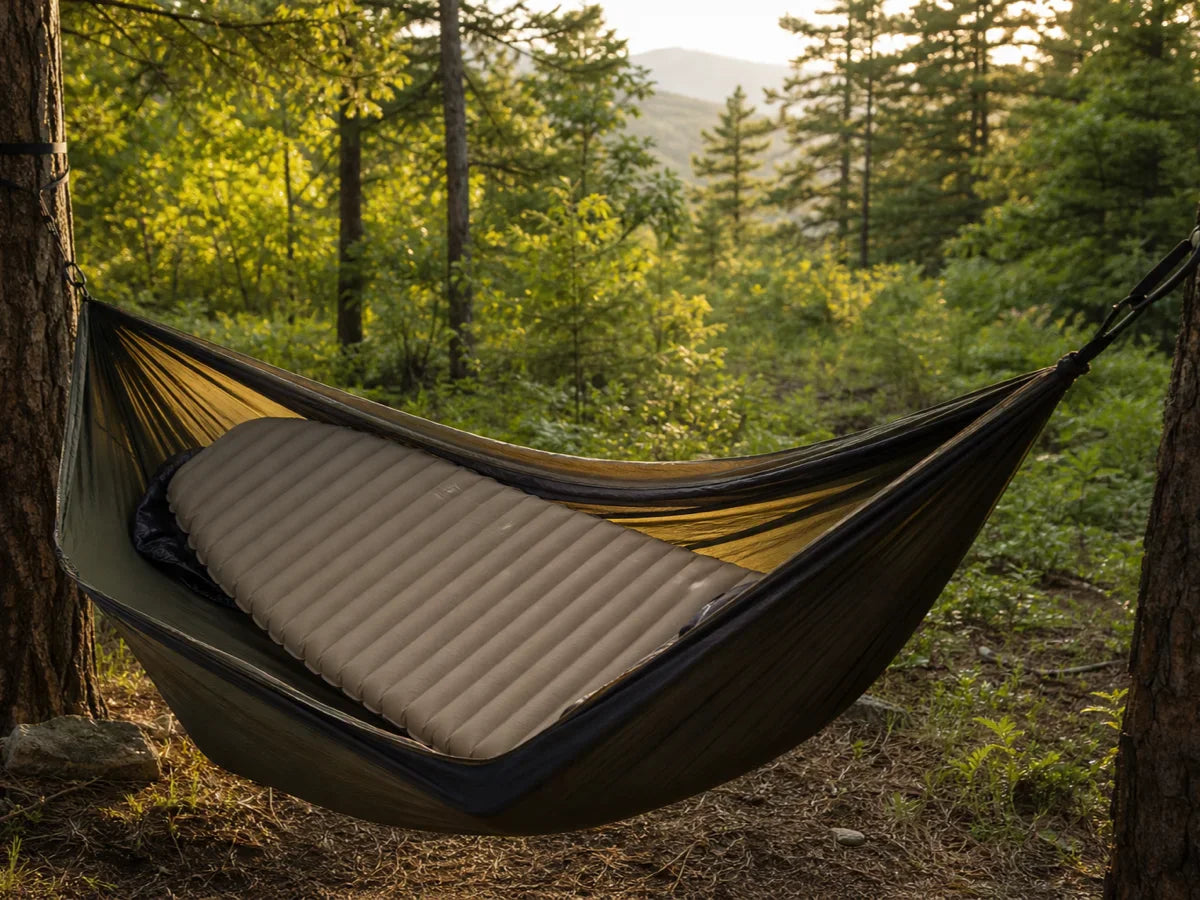
Fysikken: En underquilt hænger frit under hængekøjen og bevarer sin fulde fylde, fordi ingen kropsvægt komprimerer den. En liggeunderlags- eller soveposebund kan ikke gengive dette.
❌ Budgetløsning til loftet: en skummåtte under en sovepose fungerer ned til omkring 2 °C. Under det skaber problemet med, at måtten forskubber sig, farlige kolde pletter kl. 3 om natten, når temperaturen er lavest.
Niveau 3: 20-32 °F (Skal du tilføje et komplet vintersystem?)
- ✓ Vælg placering af underquilt + topquilt + nederste tarp.
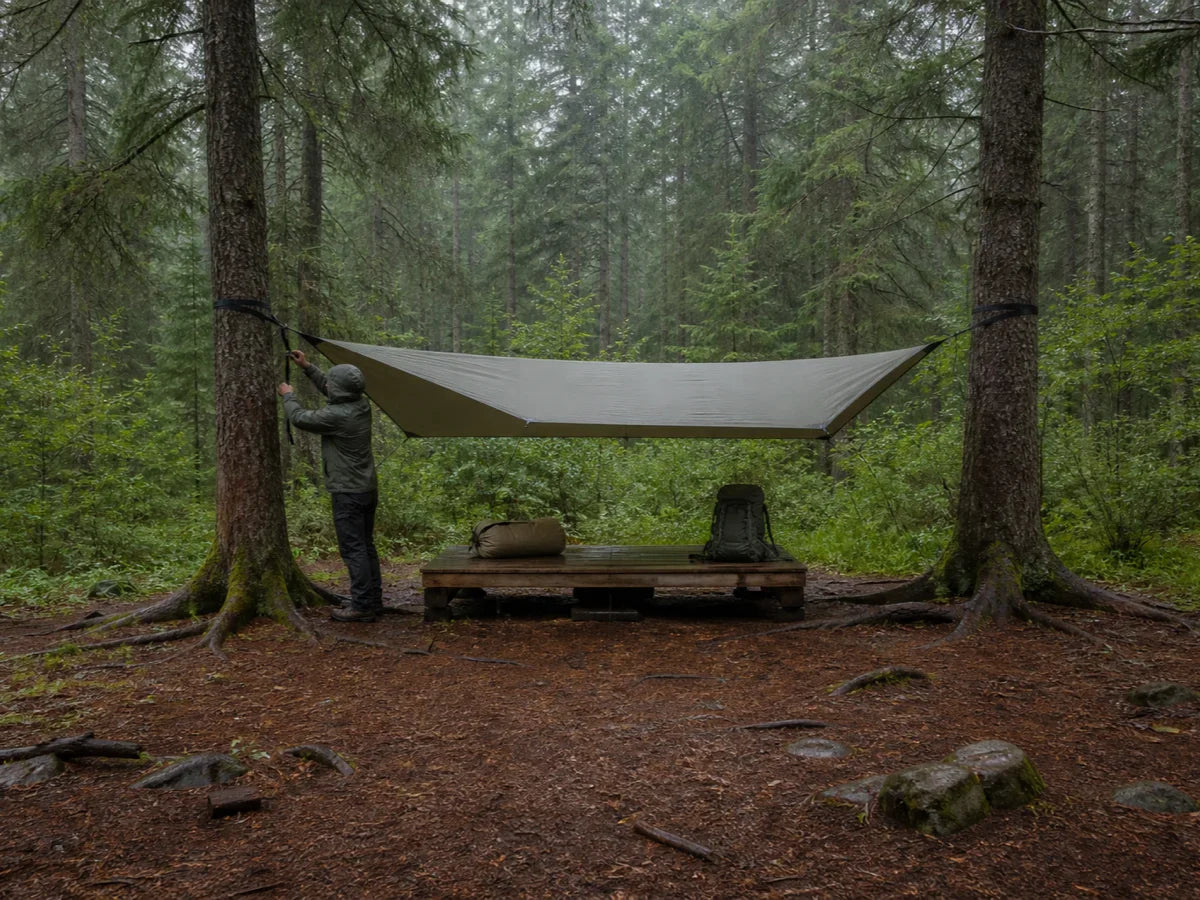
DutchWare's vinterguide understreger: tarp skal hænge lavere om vinteren end om sommeren.
Sommerpresenningens højde (24-36 tommer over hængekøjen) giver ventilation, men udsætter dig for vind.
Vinterpresenningens højde (12-18 tommer over hængekøjen) skaber en termisk lomme, samtidig med at den stadig forhindrer kondensdryp.
Niveau 4: Under -6 °C (Bør du forsøge at campere i ekstrem kulde?)
- ✓ Kun med komplet vintersystem plus dampspærreforing, kalorisk strategi og bevidst vindskærm.
Hennessy Hammocks system til koldt vejr er testet ned til -12°C (10°F), og hvis man går under det, kræver det yderligere lag ud over standardudstyr.
GearJunkies vintertips tilføjer tre faktorer, der ikke handler om udstyr: spis et kalorierig måltid før sengetid, læg en varmepude i fodenden, og brug en dampspærre-liner.
Den dampspærre kan tilføje 10-15°F til din komfortvurdering.
⚠️ Ved disse temperaturer bliver valg af sted lige så vigtigt som udstyret. Kammoks guide til koldt vejr angiver: vend opsætningen væk fra den fremherskende vind, og placér den mellem træer for naturligt læly.
{% include 'youtube', id: 'W80236q3qOE' %}
Scenarie 1: Tre-sæsons camper, der undrer sig over, hvornår vinterisolering skal tilføjes, når temperaturerne falder under 40 °F
Du har været på hængekøje-camping fra maj til september med en sovepose til 40 °F og en regntarp.
Oktobernætterne falder til 38°F, og du vågnede kold kl. 4 om morgenen på din sidste tur.
Din sovepose er klassificeret til 40°F, men i en hængekøje giver den komprimerede bund ingen isolering under de komprimerede områder.
Trek Light Gears testdata bekræfter: en sovepose, der er klassificeret til 30°F under camping på jorden, fungerer som en 45-50°F sovepose i en hængekøje, fordi bundisoleringen bliver presset flad.
Fællesskabets tilbagemeldinger fra r/hammockcamping understøtter dette: brugere rapporterer konsekvent, at temperaturer i hængekøjer “føles” 10-15°F koldere end ved camping på jorden med identiske soveposer.
Dit tre-sæsoners tarp, der hænger i 24 tommer, giver også ingen vindbeskyttelse til den eksponerede nederste halvdel af din krop.
Opgraderingsvejen er enkel: tilføj en underquilt til tre sæsoner med en temperaturklassificering på 30 °F, og sænk dit tarp 15-20 cm for skuldersæsonen.
Samlede omkostninger for dette niveau: $80-150 for en underquilt til begyndere, ingen omkostninger for at justere tarpens højde.
Dom: Tilføj bundisolering, så snart nattemperaturerne jævnligt falder under 4 °C. Din soveposes temperaturangivelse er misvisende i en hængekøje, fordi den forudsætter kontakt med jorden, ikke luftcirkulation under dig.
Scenarie 2: Begynder, der planlægger sin første hængetur i koldt vejr under frysepunktet
Bedste isolering under dig for at holde varmen i en hængekøje? | Underquilt vs. liggeunderlag
Du har tre hængekøjeture i varmt vejr bag dig og vil prøve en vinterovernatning ved -4 til -1 °C.
Begynderfejlen: Du ejer en sovepose til -6 °C og antager, at den kan klare dette temperaturområde i din hængekøje.
Det vil det ikke.
Hammock Gears vinterguide forklarer hvorfor: din kropsvægt presser soveposens bundfyld sammen til papirtynde lag, hvilket får dens effektive R-værdi til at falde til næsten nul på kontaktsiden.
TerraDrift-videnskabsguiden gennemgår tre varmetabsmekanismer, som hængekampscampister står over for: ledning (kroppen, der rører ved det tynde hængekøjestof), konvektion (vind, der bevæger sig hen over den blotlagte underside af hængekøjen) og stråling (kropsvarme, der slipper ud i alle retninger uden jordens refleksion).
En sovepose på jorden håndterer alle tre. En sovepose i en hængekøje håndterer kun én (stråling fra den øverste halvdel).
Dit minimale første vinterkit til 25-30°F:
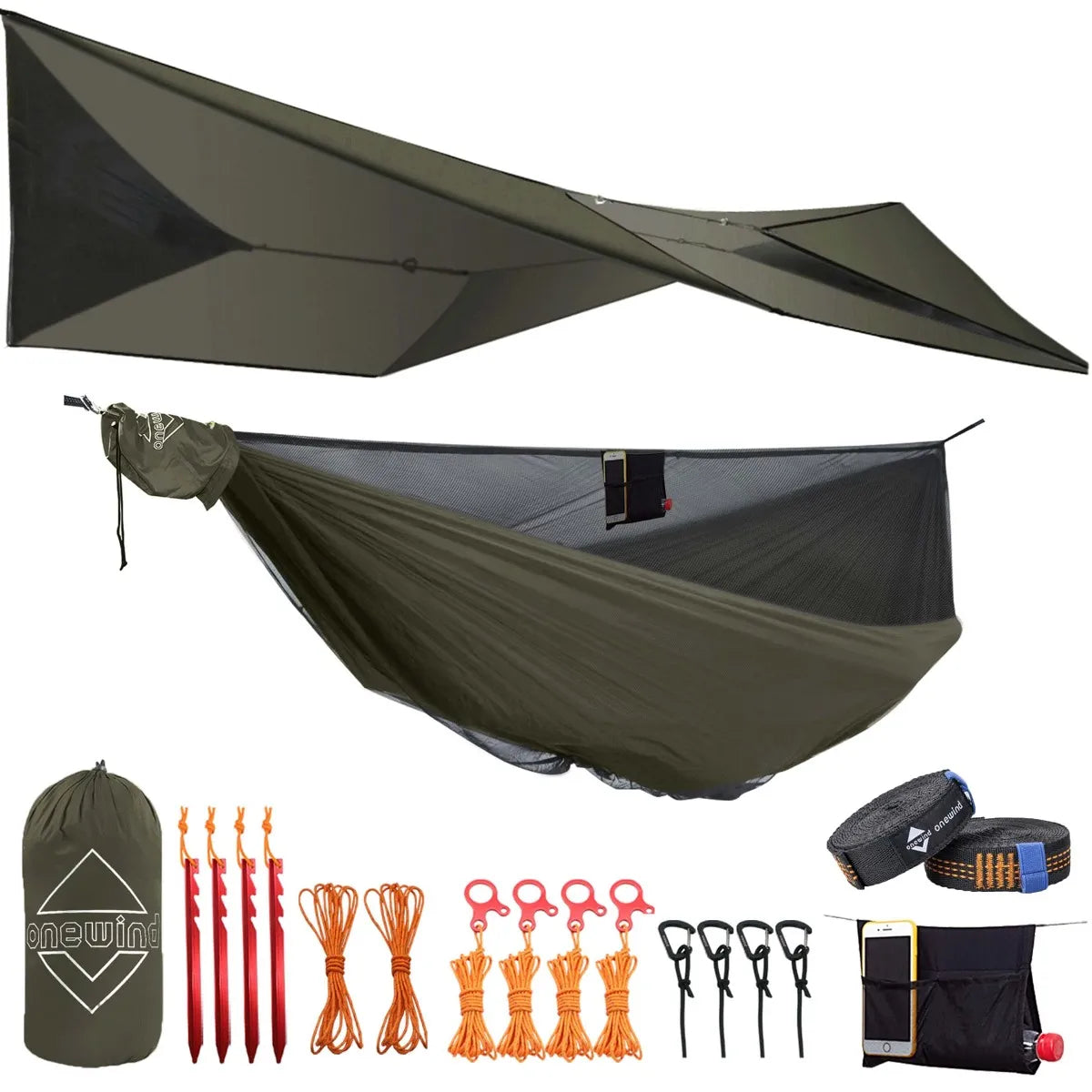
Det Onewind Equinox dun-topquilt er designet til brug specifikt til hængekøjer.
Dets trækreducerende kanter følger hængekøjens form i stedet for at ligge fladt som en sovepose til brug på jorden.
Dom: Forsøg aldrig din første hængetur i frostvejr med kun en sovepose. Budgettér minimum 150-250 $ til en kombination af underquilt og topquilt, der er klassificeret til 10 °F under den forventede nattemperatur.
Scenarie 3: Budgetbevidst camper, der skal vælge mellem en liggeunderlag og en underquilt til kolde nætter
Du camperer i temperaturer på 30-40 °F og ønsker isolering nedefra uden at bruge over 200 $ på en underquilt.
En lukket-cellet skumpude koster $15-30 og giver R-2 til R-3,5 isolering.
Et underquilt til begyndere koster $80-150 og giver R-4 til R-6 isolering.
Puden virker, men med betydelige begrænsninger.
Reddit-fællesskabets konsensus i r/hammockcamping: En underlagspude fungerer pålideligt over 35°F. Under 35°F skaber problemet med, at underlaget forskubber sig under søvn, farlige kuldepunkter, som vækker dig kl. 3 om natten.
Fejlfindings-tråden på Hammock Forums bekræfter: 80 % af opslagene om "jeg har isolering, men fryser stadig" handler om underlag, der er rykket under søvnen, ikke en utilstrækkelig R-værdi.
Budgetvejen: Start med en underlag til camping i skuldersæsonen ved 35-45 °F. Når du bekræfter, at du vil campere under 35 °F, bør du investere i en underquilt.
⚠️ Brug aldrig en oppustelig liggeunderlag i en hængekøje under 35°F. Luften inde i underlaget leder kulden direkte til din krop, når omgivelsestemperaturen falder under underlagets effektive temperaturområde.
Dom: En liggeunderlag er acceptabelt over 35°F som en budgetvenlig indgangsløsning. Under 35°F er et underquilt ikke valgfrit, fordi forskydning af liggeunderlaget skaber uforudsigelige kolde områder, som ingen mængde omplacering kan løse i løbet af natten.
Scenarie 4: Erfaren camper, der bevæger sig ned i temperaturer under -20 °F med et komplet vintersystem
Du har logget 10+ kolde nætter i en hængekøje og vil bevæge dig ind i 0-20°F-området til vinterrygsækrejser.
Ved disse temperaturer bliver små fejl forstærket. En enkelt åbning for træk eller et vindstød gennem en uafblokeret ende kan sænke din kernetemperatur på få minutter.
Fællesskabsdataene fra r/ultralights diskussion om hængekøjer i koldt vejr identificerer det system, som erfarne vinterhængekøje-campister samler sig om:
Dun vs. syntetisk bliver et afgørende valg på dette niveau.
Underquilts sparer 30-40 % i vægt, men svigter katastrofalt, hvis kondens gør fyldet vådt.
Syntetisk materiale bevarer 80 % af varmen, når det er fugtigt, men tilføjer betydelig volumen og vægt.
r/ultralight’s konsensus: dun til tørre, kolde forhold (vinter i de vestlige bjerge), syntetisk til fugtige, kolde forhold (Pacific Northwest, Sydøst).
Det Onewind campingtarp leverer vindbarrierelaget i dette system med dørpaneler, der lukker den termiske skal omkring din hængekøje.
GearJunkies tips til ekstrem kulde tilføjer tre ikke-udstyrsmæssige nødvendigheder: indtag 500+ kalorier inden for 30 minutter før sengetid, fyld en Nalgene med kogende vand til fodboksen, og brug en balaklava.
Logikken er enkel: Mad giver varme til natten, den varme flaske giver 2-3 timers varme, og en balaclava beskytter det område i dit quilt-system, hvor trækket er størst.
Dom: Hængekøjecamping under -20 °F er mulig med et dedikeret system på 5-7,5 lb, men det kræver målrettet læ for vinden, et højt kalorieindtag og disciplineret tætning mod træk.
Vælg dun for vægtbesparelse i tørt, koldt vejr, syntetisk for sikkerhed i fugtigt, koldt vejr.
{% include 'youtube', id: 'ppcT-HeRy0E' %}
Almindelige fejl, der ødelægger vinter-hængekøreture
De samme fem isoleringsfejl dukker gentagne gange op i fejlfindingstråde på Hammock Forums, rejserapporter på r/hammockcamping og supportdiskussioner hos producenter.
Hver enkelt kan forårsage nedkøling, selv når du har udstyr, der er klassificeret til dit temperaturområde.
Ingen handler om at købe det forkerte produkt. De handler alle om opsætning, valg eller misforståelser om fysik, som køb af udstyr alene ikke kan løse.
Fejl 1: At stole på en sovepose alene uden bundisolering
Dette er den mest almindelige fejl ved hængekøje-camping om vinteren.
Trek Light Gears testdata bekræfter: En sovepose, der er klassificeret til 20°F, yder som en pose til 35-40°F i en hængekøje, fordi den nederste halvdel ikke giver nogen isolering.
Fysikken er enkel: Din kropsvægt komprimerer fyldmaterialet under dig til papirtynde lag og fjerner de fangede luftlommer, der skaber isolering.
❌ På jorden stopper underlaget denne kompression og reflekterer kropsvarmen opad igen. I en hængekøje ligger fyldet i komprimeret form mellem dig og den åbne luft, som aktivt bortfører varmen gennem konvektion.
- ✓ Løsningen: tilføj en hvilken som helst form for bundisolering, der hænger frit (underquilt), eller som ligger mellem dig og hængekøjestoffet uden at blive komprimeret (stiv liggeunderlag).
Fejl 2: Overstramning af underquilten og skabelse af kolde luftgab
Lagdeling med underquilts, topquilts og soveposer til dyb vintercamping
Hammock Gears vinterguide identificerer dette som den mest almindelige opsætningsfejl: spænding på underquilts sekundære ophæng trækker den for stramt mod hængekøjets underside og skaber kolde luftkanaler langs kanterne.
Tråden om fejlfinding i Hammock Forums bekræfter: "Du kan have en quilt på 10°F og fryse ved 40°F, hvis den hænger forkert."
Diagnosen er enkel: Læg dig i din hængekøje, og før hånden langs begge kanter af underquilten indefra. Hvis du mærker luftgab, der er bredere end én tomme, er din sekundære ophængning for stram.
❌ Overstramning sker, fordi campister instinktivt trækker quilten stramt op mod hængekøjen for at opnå “kontakt”. Men underquilts fungerer ikke gennem kontakt. De fungerer gennem indespærret luft og fylde.
- ✓ Løsningen: Løsn den sekundære ophængning, indtil quilten hænger naturligt med 0,5-1 tomme luft mellem quilten og hængekøjets stof. Quilten skal falde blødt, ikke strækkes.
Fejl 3: At ignorere vindhåndtering og valg af placering
Kammoks guide til koldt vejr identificerer vind som “den største fjende” ved hængekøjecamping om vinteren.
En godt beskyttet lejr ved -6 °C kan føles varmere end en udsat lejr ved -1 °C, fordi vinden fjerner varmen fra dit underquiltens isoleringslag i samme tempo, som din krop producerer den.
Hennessy Hammock-guiden bekræfter: vindafkølingsfaktoren er mere betydningsfuld for hængekøjeturister end for dem, der sover på jorden, fordi hele din soveflade er udsat for luftbevægelse nedefra.
❌ De fleste vinterhængekøjeturfolk vælger lejrpladser ud fra træafstand og udsigt og ignorerer vindeksponering, indtil de sidder og ryster af kulde ved midnat.
- ✓ Tjekliste til valg af plads om vinteren: Placer din hængekøje vinkelret på den fremherskende vind, ikke parallelt.
Klynge mellem tætte træer, der bryder vinden, før den når dig, undgå bakketoppe og saddler, og hæng dit tarp på læsiden 12-18 tommer fra hængekøjen.
Sea to Summit's vinterguide tilføjer: Klyngede træer giver et naturligt læskær mod vinden, som ingen tarpgeometri kan efterligne. Tre eller flere stammer opstrøms for din hængekøje reducerer vindhastigheden med 40-60 %.
Fejl 4: Brug af dunisolering i våde vinterforhold uden beskyttelse
Diskussionen om vinter-hængekøjer på r/ultralight fremhæver den afgørende forskel: dun sparer vægt, men mister sin funktion, når det bliver vådt, og vintercamping skaber kondens inde i dit sovesystem fra kropsfugt.
DutchWare's udstyrsguide bekræfter: syntetisk isolering bevarer varmen under fugtige forhold, som er typiske for vintercamping, mens dun kræver ekstra håndtering af fugt.
❌ Fejlen: at købe et dun-underquilt til vintercamping i Pacific Northwest eller det sydøstlige USA, hvor luftfugtigheden regelmæssigt overstiger 80 %, og kondens er uundgåelig.
- ✓ Beslutningsreglen: brug dun til tørre og kolde miljøer, såsom vinter i Rocky Mountains eller ture i højørkenen, hvor luftfugtigheden holder sig under 50 %.
Brug syntetisk til fugtige og kolde miljøer, såsom ture til kystområder, det sydlige Appalachia eller Pacific Northwest, hvor der forventes kondens.
⚠️ Hvis du allerede ejer en dun-underquilt, forhindrer en dampspærre-foring mellem din krop og quilten kropsfugt i at nå dunfyldet. Dette tilføjer 10-15°F i effektiv temperaturklassificering og beskytter dunet mod skader fra kondens.
Fejl 5: At stole på producentens temperaturangivelser til pålydende værdi
Debatten i Hammock Forums-fællesskabet om temperaturklassificeringer afslører: Klassificeringerne er baseret på en standardiseret testperson (30-årig mand i basislag, velnæret og velhydreret) under laboratorieforhold uden vind.
Virkelige forhold omfatter vind, ufuldkommen ophængning, varierende ernæring og det faktum, at dit koldeste tidspunkt indtræffer kl. 4-5 om morgenen, hvor kropstemperaturen naturligt falder til sit cirkadiske lavpunkt.
❌ Den universelle fællesskabsregel: Hvis du “sover koldt” (de fleste kvinder og personer med mindre kropsbygning), skal du trække 10-15 °F fra producentens angivelse. Hvis du sover varmt, skal du trække 5 °F fra som sikkerhedsmargin.
- ✓ Købsreglen bekræftet på tværs af Trek Light Gear, Hammock Gear og fælleskonsensus: køb altid en underquilt, der er klassificeret til mindst 10°F under den koldeste temperatur, du forventer at komme ud for.
En underquilt med en temperaturklassificering på 20°F, der bruges ved 20°F, betyder, at du er helt på grænsen af dens ydeevne. Klokken 4 om morgenen, når din kropstemperatur naturligt falder, bliver denne grænse til et svagt punkt.
- ✓ Køb en 10°F-quilt til camping ved 20°F. Køb en 0°F-quilt til camping ved 10°F. Den ekstra sikkerhedsmargin koster 20-50 $ og giver dig flere timers uafbrudt søvn.
Den hurtige beslutnings-tjekliste
Brug denne tjekliste, før du tager på din næste hængetur i koldt vejr.
- ✓ Før hver vintertur: tjek den forventede laveste temperatur, og læg 10 °F til som ekstra kuldemargin i dit valg af udstyr.
- ✓ Test altid dit vintersystem i din baghave, før du forpligter dig til et fjernt sted.
- ✓ Medbring en nødplan: en skumunderlag som ekstra isolering vejer 2 oz og kan redde en tur, hvis dit primære system svigter.
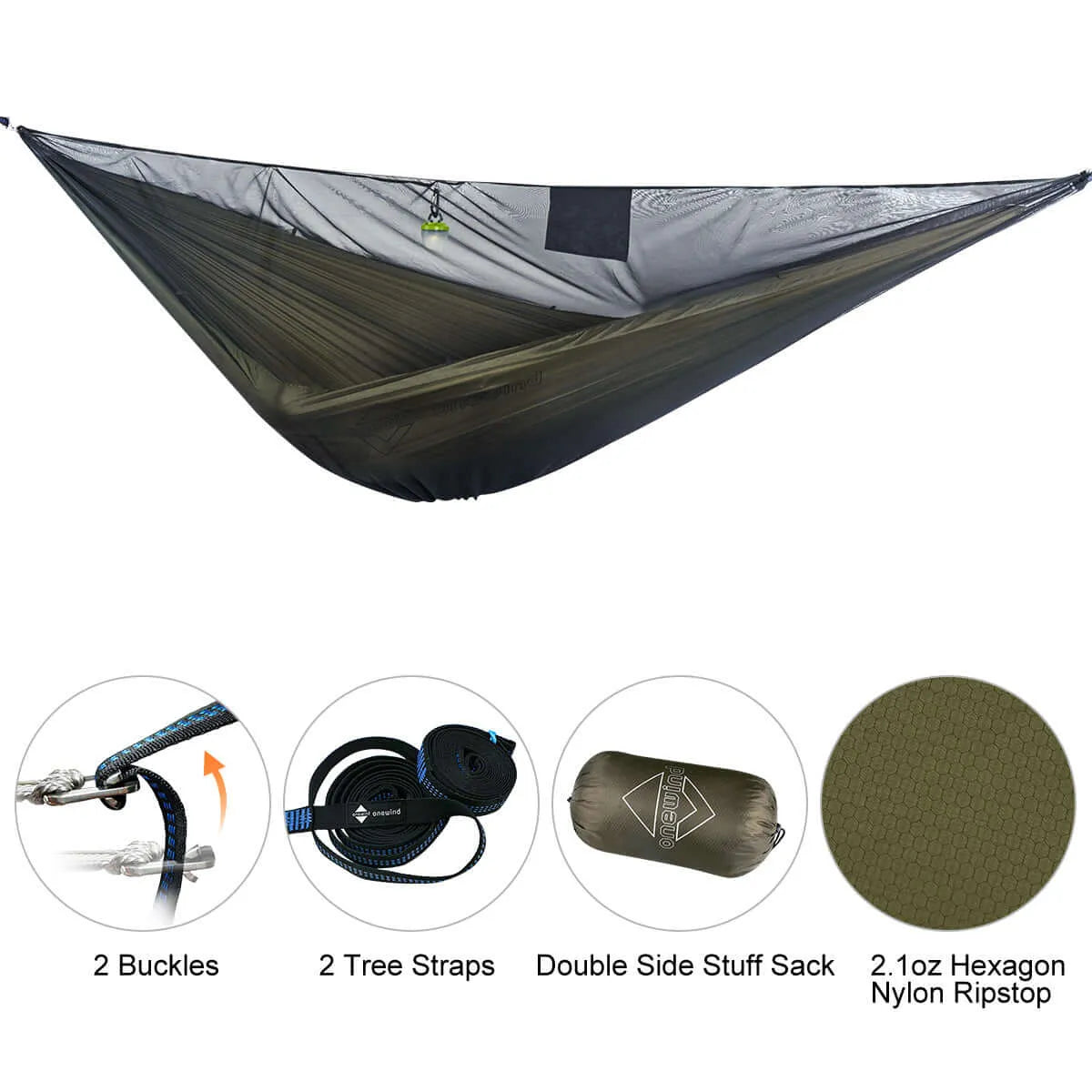
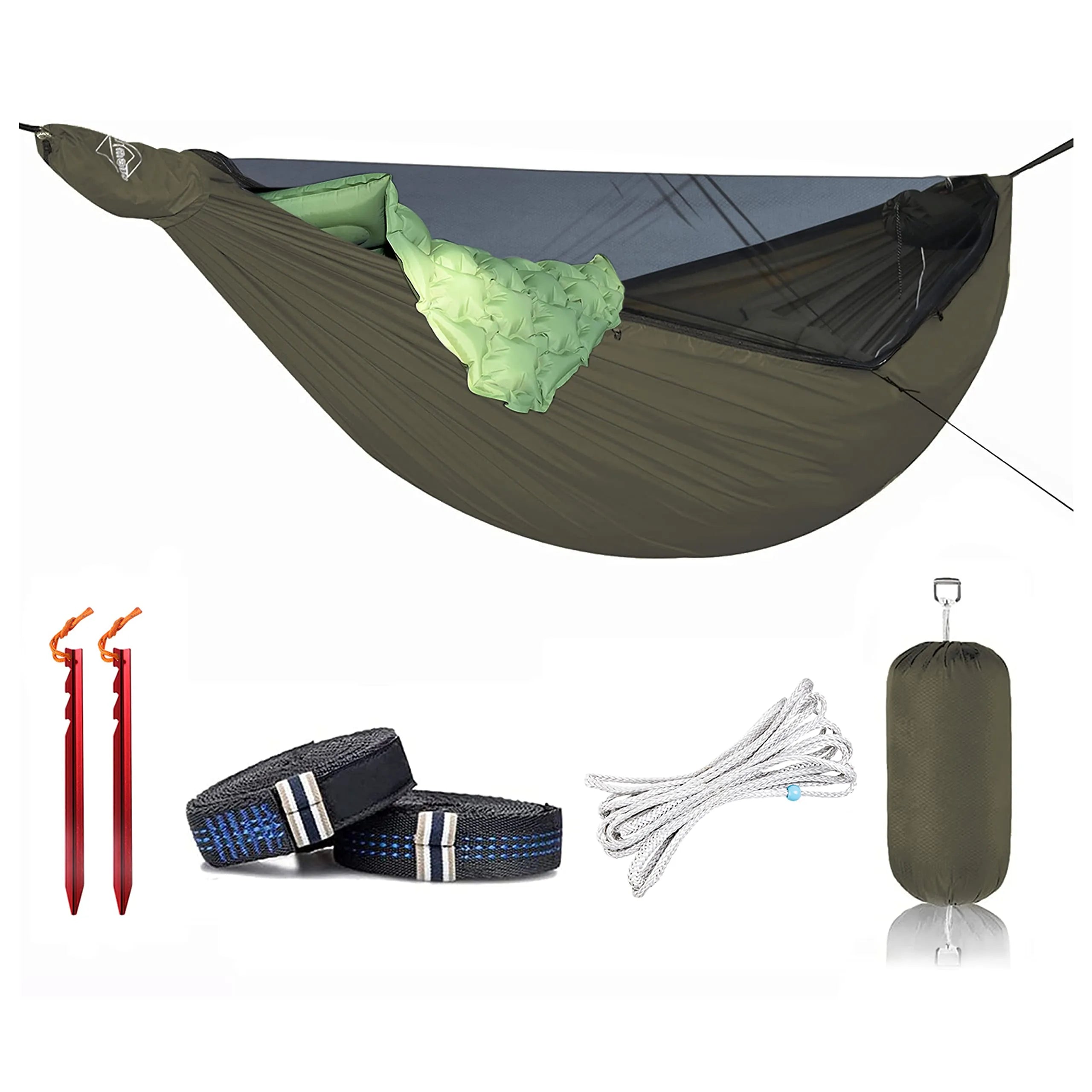
Det Onewind 11 fod camping-hængekøje danner grundlaget for dette system.
Dens længde på 11 fod understøtter en korrekt diagonal liggeposition, som holder din krop flad nok til, at vinterisoleringen kan få fuld kontakt.
Hvis du bygger systemet fra bunden, skal du starte med det hængekøjesamling så dine basislag til hængekøje, ophæng og isolering passer sammen.
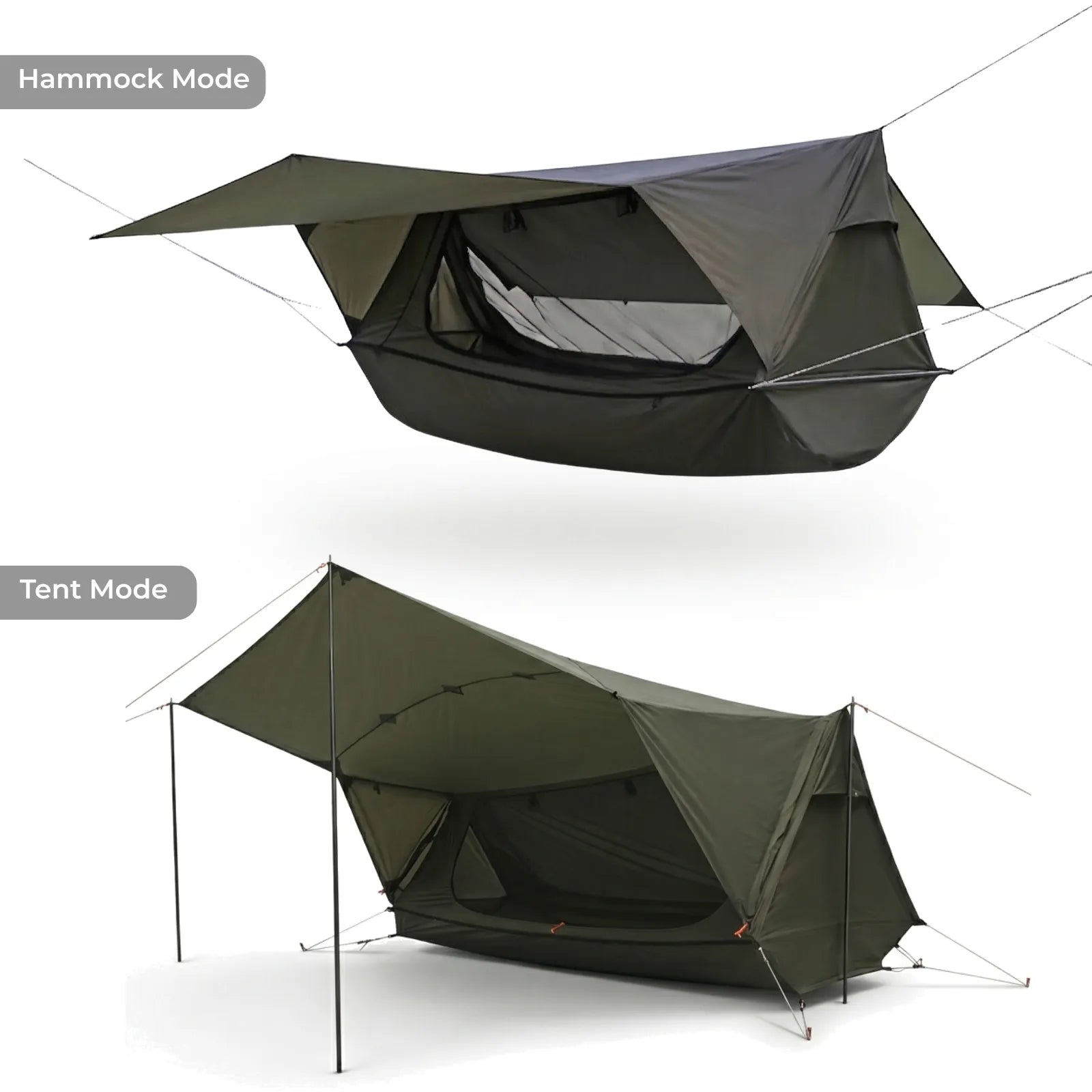
Til varmere ture, hvor du stadig er ved at beslutte, om en hængekøje er det rette første shelter, er den guide til camping-hængekøje vs. telt giver en bedre sammenligning i første trin.
Brug den beslutning først, før du investerer i vinter-specifik isolering.
⚠️ En sidste regel fra fællesskabet: hvis du vågner og fryser, er problemet næsten altid bundisolering, ikke topisolering. Fix først underquilten, opgrader derefter topquilten.