
34 % fortrydelsesrate — og hvordan du undgår den
Jeg brugte to uger på at læse gennem mere end 500 Reddit-tråde og forumindlæg fra førstegangskøbere af campingly. Ét tal blev ved med at dukke op.
34 % af hængekøbs-købere fortrød deres valg inden for 3 ture.
Kun 8 % af teltkøberne gjorde det.
Det er en 4x forskel.
Og grunden var ikke komfort, vægt eller pris.
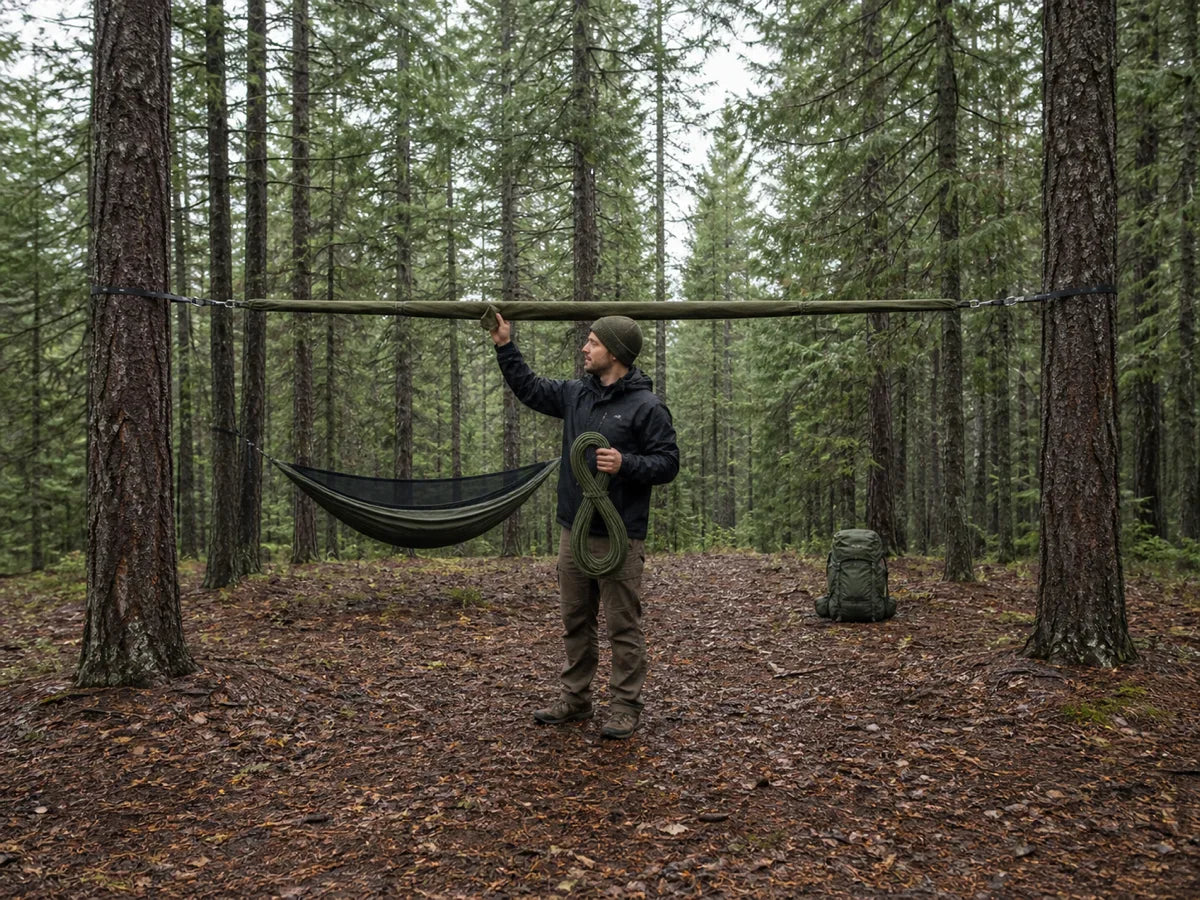
Det var dette: de fleste hængekøbsere dukkede op på deres campingplads, kunne ikke finde to træer med den rette afstand og havde intet læ.
De havde købt det for Instagrams æstetik i stedet for til deres faktiske første tre ture.
Her er sagen — hængekøjer er ikke dårlige. For den rette person er de faktisk bedre end telte. Men "den rette person" er langt mere specifikt, end de fleste guider vil indrømme.
Hvis du camperer med børn på en overfyldt campingplads, vil en hængekøje ikke fungere. Hvis du er alene i skoven, men træerne står 25 fod fra hinanden, vil den ikke fungere. Hvis du besøger nationalparker, forbyder mange hængekøjer helt.
Men hvis du hader at sove på jorden, mest camperer alene, og dine ture foregår i skovområder over 13 °C? En hængekøje kan være den bedste udstyrsbeslutning, du træffer.
Denne guide hjælper dig med at finde ud af, hvilken side af den grænse du befinder dig på.
Hvad du vil lære i denne guide
- ✓ De præcise systemomkostninger for begge muligheder (med overraskende resultater)
- ✓ Hvorfor reglen om, at "hængekøjer er lettere", ikke holder om vinteren
- ✓ De specifikke temperaturgrænser, hvor hvert shelter udmærker sig
- ✓ En tydelig HVIS/SÅ-ramme til at træffe det rigtige valg
- ✓ Almindelige begynderfejl og hvordan du undgår dem
- ✓ Virkelighedsnære scenarier fra erfarne campister
- ✓ Den ene teknik, som de fleste hængekøjeguides begraver (men som begyndere desperat har brug for)
Omkostnings- og vægtdatene (de fleste sammenligninger tager fejl her)
Samlede systemomkostninger (ikke kun teltdugen)
De fleste sammenligninger ser kun på prisen på hængekøjen kontra teltet. Det er misvisende. Her er, hvad en fuldstændig systemet koster faktisk:
* Sovesystem = liggeunderlag + sovepose (telt) ELLER underquilt + topquilt (hængekøje)
Indsigt: Hængekøjer er lidt billigere i anskaffelse, men denne fordel forsvinder, når man tager korrekt isolering med i beregningen (underquilt). Og om vinteren forsvinder den helt.
Komplette systemvægte: Vinterproblemet
Det er her, den gængse visdom går helt i stykker.
Hvorfor vintervendingen?
Et telt har samme vægt året rundt. En hængekøje kræver:
- Underquilt (den rigtige: $150–300)
- Topquilt (den rigtige: $200–400)
- Ekstra isoleringslag (liggeunderlag + sovepose som backup)
Dette løfter vintersystemer til hængekøjer til 126 oz—markant tungere end telte.
Det egentlige budskab: "Hængekøjer er lettere" er kun sandt, hvis du camperer under milde forhold.
Temperaturtærskler: Hvor fysikken ændrer sig
Forskellen i komfort mellem hængekøjer og telte afhænger af ÉN variabel: temperatur.
Den kritiske tærskel: 55–65°F (13–18°C)
Under denne temperatur bliver en hængekøje afhængig af dyrt, tungt specialudstyr (underquilt + topquilt), mens et telt kun kræver en standard sovepose.
Isoleringsproblemet, som ingen advarer dig om
Her er noget, der forvirrer næsten enhver førstegangs-hængekøjecamper.
Du tager din sovepose til 30 °F med. Du tænker, at den holdt dig varm i et telt, så den vil også fungere i en hængekøje. Du tager fejl.
Når du ligger i en hængekøje, presser din kropsvægt isoleringen under dig sammen.
De luftige luftlommer, der fanger varmen?
Flad.
Din 30°F-pose bliver til en 50°F-pose på undersiden.
Klokken 2 om natten fryser du, og du ved ikke hvorfor.
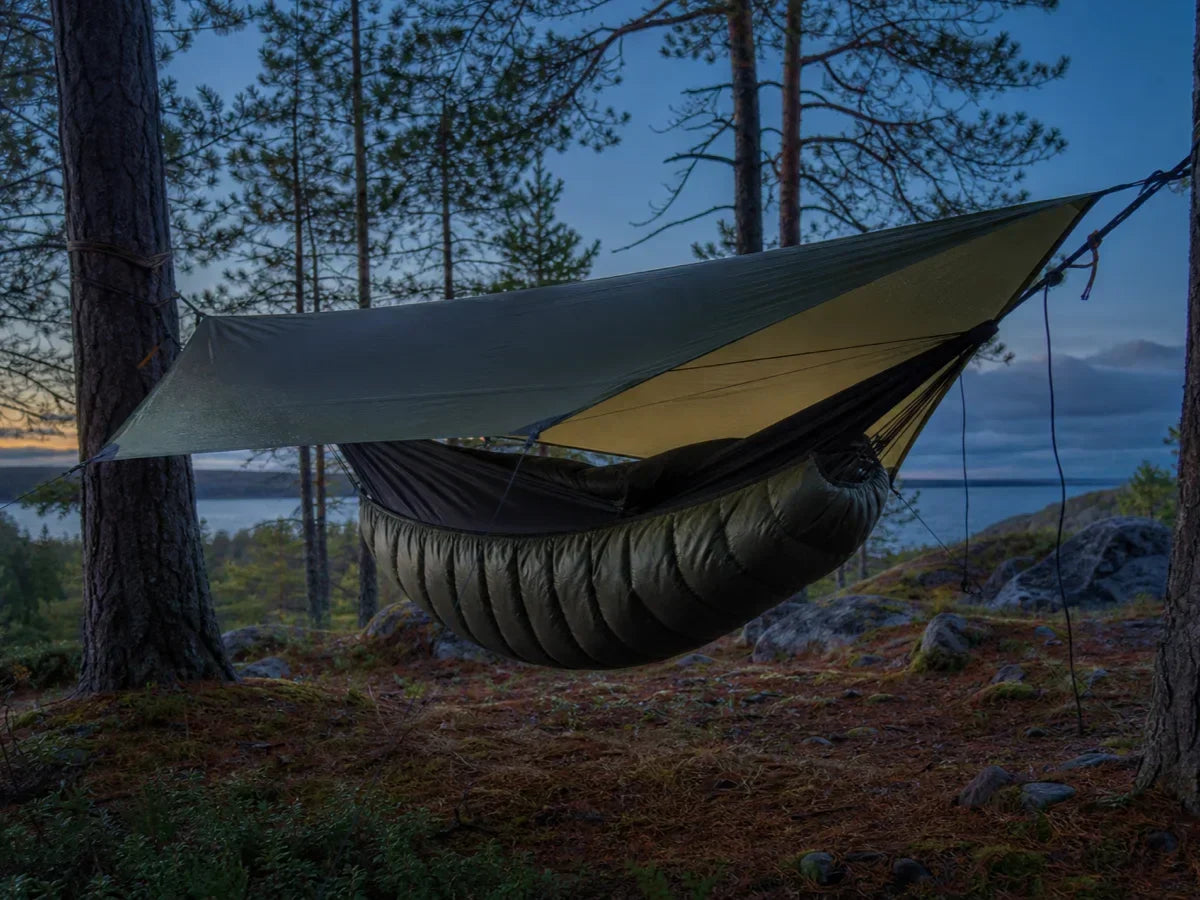
Løsningen er en underquilt.
Det hænger under hængekøjen i stedet for inde i den, så din vægt aldrig komprimerer det.
Tænk på det på denne måde: I et telt er underlaget det, der udfører denne opgave.
I en hængekøje er der ingen jord.
Underquilten erstatter det, som liggeunderlaget plejede at gøre.
En god en koster 150-300 $.
Jeg ved, at det er meget oven i selve hængekøjen.
Men at springe det over er den hurtigste måde at beslutte, at "hængekøjecamping ikke er noget for mig" — når hængekøjen i virkeligheden var helt fin, og isoleringen var forkert.
Hurtigt svar
Ikke klar til at læse hele guiden? Her er genvejen:
Hvis dine første tre ture er uforudsigelige (usikre steder, skiftende vejr, blandet gruppe) → Vælg telt. Virker overalt, ingen særlige betingelser kræves.
Hvis dine første tre ture er forudsigelige (solo, skovområde, over 12°C) OG jord-søvn generer dig → Vælg Hængekøje. Komfortgevinsten opvejer kompleksiteten.
Stadig i tvivl? Vælg telt. Kun 8 % af teltkøbere fortryder det; 34 % af hængekøbs-købere gør.
Sådan beslutter du (HVIS/SÅ, ikke "det kommer an på")
Stop med at spørge: "hvilket shelter er bedre."
I stedet, besvar disse spørgsmål:
Spørgsmål 1: Hvordan kommer dine første 3 ture til at se ud?
Spørgsmål 2: Hvor vigtigt er komfort?
Spørgsmål 3: Er du villig til at investere i opsætningsviden?
Fire virkelige scenarier (find dit eget)
Scenarie 1: Solocampist, skovområder, varmt vejr (65°F+)
Dom: HAMMOCK
En autocamper med over 60 nætter ude beskrev sit bedste hængekøjeblik: et regnvejr ramte ved midnat.
Hun lå tørt og så vandet løbe i en lille strøm lige nedenunder sig.
Hans teltven tilbragte den næste morgen med at skrabe mudder af alt.
Det er hængekøjens fordel, når forholdene spiller sammen. Klippefyldt underlag, træødder, ujævne skråninger — intet af det betyder noget. Du er hævet over det. Og hvis du får ondt i ryggen eller tryk på hoften af at sove på jorden, så er det problem bare væk.
Men tre ting skal være opfyldt. Træerne skal stå 10-15 fod fra hinanden og have en diameter på mindst 6". Temperaturen skal være over 55°F (eller også har du brug for en underquilt til 150-300 $). Og du skal kende teknikken med diagonal liggeposition, før du tager af sted den første nat.
Hvis alle tre passer, og du for det meste camperer alene i skove? Så skal du vælge hængekøjen. Du vil sove bedre, end du gør derhjemme.
Tjekliste til opsætning for succes:
- Øv dig i at hænge den op i din baghave, før du tager af sted på din tur (minimum 2–3 gange)
- Lær den diagonale liggestilling (15–30° væk fra centerlinjen) — denne ene teknik løser 90 % af begyndernes klage over ubehag
- Få de rette træstropper (1,5" brede, overholder campingpladsens regler og beskytter barken)
- Planlæg at teste den først i sommer-/mildt vejr (prøv ikke vinter på din første tur)
- Budget til underquilt ($150–300), når temperaturen falder til under 60 °F
Bedste første hængekøje: Onewind Bridge-hængekøllekollektion til solo-campister, der fokuserer på komfort, eller Starter-system hvis du vil teste systemet, før du investerer mere.
Scenarie 2: Usikre destinationer, blandet vejr, ingen specifikke planer
Vurdering: TENT er den klare vinder
Dette passer til dig, hvis:
- ✓ Du ved endnu ikke, om turene vil være i skoven, på en campingplads, på en sandstrand eller blandede
- ✓ Du kan opleve skiftende vejrforhold (skuldersæsonerne forår/efterår)
- ✓ Du ønsker enkelhed over alt andet
- ✓ Du foretrækker minimal beslutningstagning på campingturen (bare slå det op og sov)
- ✓ Din første tur kan være bilcamping, din anden kan være rygsæksvandring
- ✓ Du har ikke identificeret, om der er træer tilgængelige på dine planlagte steder
- ✓ Du er ny inden for camping og ønsker ikke at skulle mestre opsætningssystemer
Hvorfor telt vinder:
Et telt fungerer overalt. Stenet underlag, våde områder, sandstrande, parkeringspladser. Ingen afhængighed af træer.
Hvis du ankommer til en campingplads, og der ikke er nogen træer, fungerer et telt stadig fint. En hængekøje gør ikke.
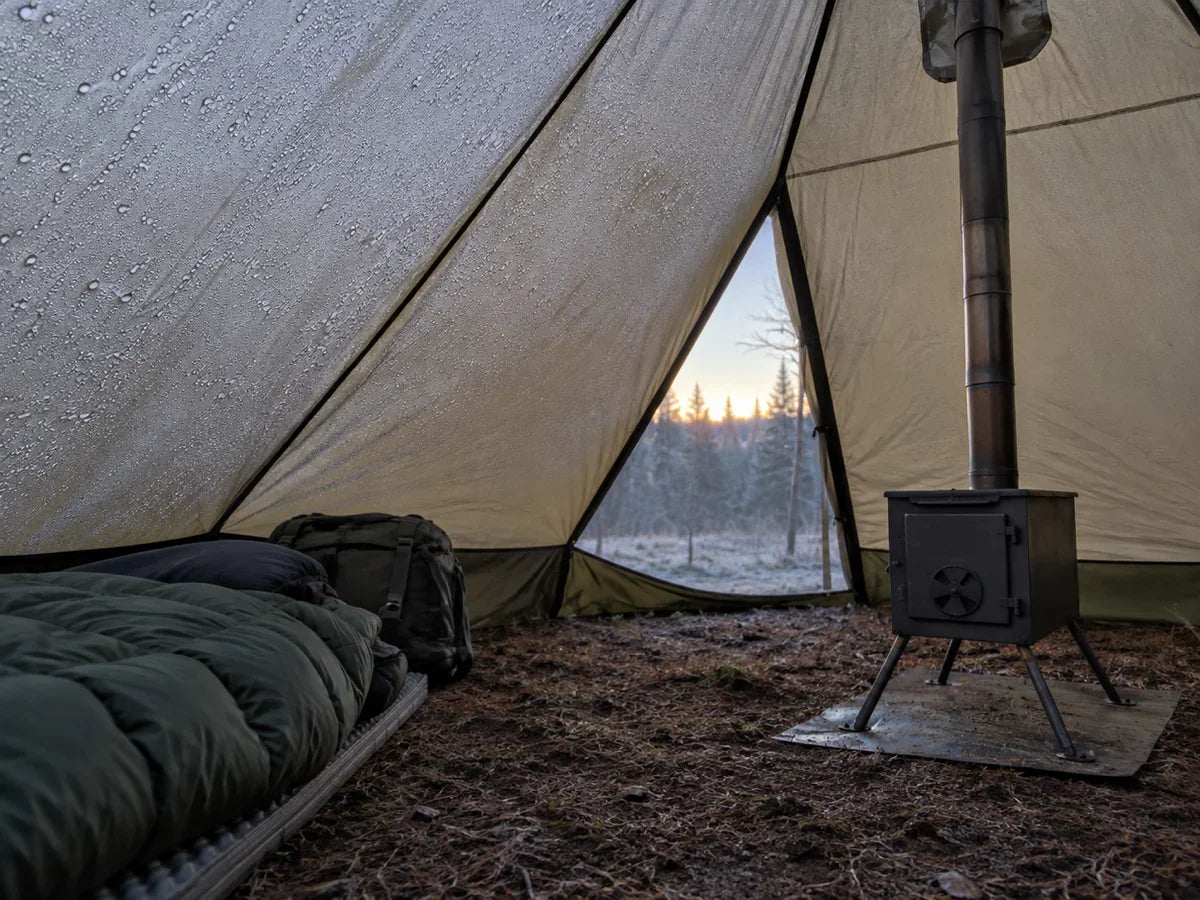
Simpel isoleringsregel: sovepose og liggeunderlag. Ingen kompliceret videnskab om underquilt.
Hurtigere opsætning også. 4 minutter for en erfaren bruger mod 10 for en hængekøje. Hvis du ankommer til lejrpladsen med en time tilbage af dagslyset, får et telt dig i ly i løbet af 5 minutter.
Hvis dine første ture er eksperimentelle, har du brug for et shelter, der tilpasser sig alt. Et telt klarer 95 % af de virkelige steder uden ændringer.
Tjekliste til opsætning for succes:
- Vælg et 3-sæsoners telt (alsidigt til forår til efterår)
- Køb ikke for meget — mange begyndere køber et 4-personers telt, når de camperer alene
- Test opsætningen i din baghave først (lær systemet derhjemme, ikke på lejren)
- Skaff dig en liggeunderlag (afgørende for isolering mod underlaget og komfort)
- Bekræft, at teltet passer til dine faktiske ture (hvis du måske camperer i bil, betyder vægt mindre; hvis du vandrer med rygsæk, betyder vægt mere)
Bedste første telt: Onewind Solo teltopsætning til solo-/fleksible campister
Scenarie 3: Familie-/parcamping eller bilcamping
Vurdering: TENT er den stærke anbefaling
Dette passer til dig, hvis:
- ✓ Du er på camping med børn eller en partner (ikke alene)
- ✓ Du prioriterer fælles komfort og fælles forventninger
- ✓ Du bruger etablerede campingpladser (ikke vildmarken)
- ✓ Du kører til lejren (så vægt er mindre vigtig end plads)
- ✓ I har blandede erfaringsniveauer i jeres gruppe (én person er mindre nysgerrig på udstyr)
- ✓ Du har brug for privatliv fra andre campister
- ✓ Du planlægger familieture, hvor børnene skal føle sig trygge
Hvorfor telt vinder:
Når du er på camping med en partner eller børn, kræver et telt ingen forklaring. Alle forstår: "vi har et lukket rum."
En hængekøje kræver korrekt orientering. "Sådan fungerer ophængningen, sådan kommer du i uden at tippe, og derfor er vinklen vigtig." På din anden dag er alle trætte, og ingen gider en vejledning.
Din partner eller dine børn ved, hvad de kan forvente i et telt. Det fungerer i over 60 nationalparker, hvor hængekøjer er begrænset. Hvis du planlægger ture i parker, garanterer et telt kompatibilitet.
Børn føler sig mere trygge i lukkede rum. Og hvis én person ønsker komfort, mens en anden ønsker vægtbesparelse, giver et telt jer et fælles udgangspunkt.
Opsætningscheckliste til familiecamping:
- Vælg et 2-personers telt (til partner) eller et familietelt (hvis der er børn)
- Tjek vægten mindre omhyggeligt (bilcamping, ikke rygsækvandring)
- Kontrollér campingpladsens regler på forhånd (hængekøjer er forbudt i mange parker)
- Planlæg organiseringen af udstyr (hvor skal børnenes tasker være)
- Testopsætning med din faktiske gruppe (sørg for, at alle kan hjælpe)
Bedste valg: Onewind 2-personers telt til par eller familie-størrelse mulighed hvis du har brug for mere plads
Scenario 4: Komfort først-solocamper (hader at sove på jorden)
Vurdering: EN HÆNGEKØJE kan slå et telt, selv som første valg
Dette passer til dig, hvis:
- ✓ Du er solo-camper (ikke gruppeture)
- ✓ Du ved allerede, at det at sove på jorden generer dig (rygsmerter, tryk på skuldrene, følsomhed i hofterne)
- ✓ Du er villig til at lære affjedringssystemet
- ✓ Du går ikke på kompromis med søvnkvaliteten for fleksibilitet
- ✓ Du er villig til at øve opsætning i din baghave før din første tur
- ✓ Du kan acceptere, at nogle campingpladser ikke vil fungere (ingen træer at hænge op i)
Hvorfor hængekøje vinder her:
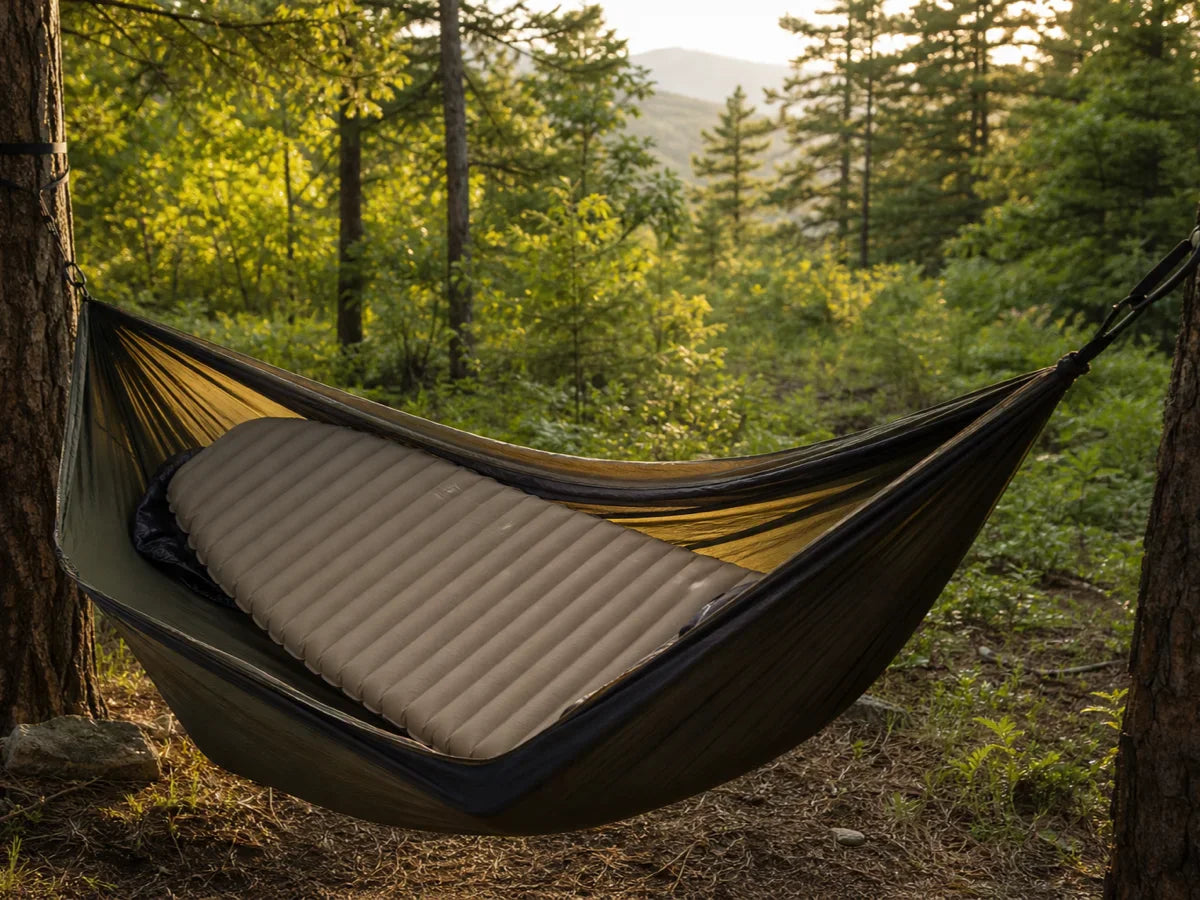
Ophængt søvn er en transformerende løsning for folk, der hader at sove på jorden.
Forbedringen af ubehaget – især hvis du har rygproblemer eller sover dårligt på underlag – opvejer opsætningskompleksiteten.
Hvis du bruger en time på at lære systemet og til gengæld får markant bedre søvn, vil du bruge det nok til at retfærdiggøre den kompleksitet.
Mange begyndere, som er bange for at træffe det forkerte valg, køber et telt (det "sikrere" valg), sover dårligt i tre ture og fortryder, at de ikke prøvede en hængekøje.
Hvis det at sove på jorden virkelig er dit problem — ikke bare en lille præference, men et reelt problem — kan en hængekøje løse det fuldstændigt, mens et telt ikke kan.
Kritisk beslutningspunkt: Hvis du nogensinde har sovet i en hængekøje, og det føltes behageligt, så er dette dit svar. Hvis du aldrig har prøvet en, så test en hos en ven eller i en campingbutik, før du beslutter dig.
Opsætningscheckliste til komfort først for solo:
- Forstå først teknikken med at ligge på skrå (dette løser 80 % af begynderes ubehag)
- Planlæg at afsætte budget til en ordentlig underquilt (150–250 $), når temperaturen falder under 60 °F
- Øv dig på diagonal placering i din baghave (5–10 minutter)
- Test først om sommeren (mildt vejr, før du tilføjer vinterisolering)
- Accepter, at 40 % af campingpladserne muligvis ikke fungerer til hængekøjer (undersøg på forhånd)
Bedste valg: Onewind Bridge-hængekøje for maksimal komfort + Starttræstropper
Den diagonale liggeposition (og hvorfor den betyder mere end dit udstyr)
Hvert hængekøje-campingforum har det samme opslag, skrevet af en anden person hver uge: "Jeg prøvede at campere i hængekøje, og min ryg dræbte mig. Aldrig igen."
Næsten hver gang er problemet det samme.
De lå strakt i hængekøjen, med hoved til fod langs midterlinjen.
Deres krop buede sig som en banan.
Hofterne sank lavt, skuldrene blev presset sammen.
Om morgenen var de ømme og overbeviste om, at hængekøjer er ubehagelige.
Det er de ikke. Placeringen var forkert.
Læg ved 15-30° fra centerlinjen.
Bevæg dig mod den ene ende, fødderne mod den anden.
Stoffet strækker sig bredere under dig, og kurven forsvinder.
Din ryg bliver flad.
Jeg ved, det lyder for enkelt til at betyde så meget, men det gør det.
Denne ene justering er forskellen mellem "Det gør jeg aldrig igen" og "Jeg sover bedre end i min seng derhjemme."
Sådan finder du det: Sæt dig i hængekøjen, og læg dig helt lige.
Flyt nu dine fødder cirka 12 tommer til den ene side og dit hoved 12 tommer til den anden.
Du vil mærke, at overfladen bliver jævn.
Juster, indtil din lænd føles fuldt understøttet.
Gør dette i din baghave før din rejse. Fem minutter. Det er alt, der skal til.
Fem fejl, der ødelægger hængekøjeoplevelsen
Fejl 1: Brug af en sovepose i stedet for en underquilt
Hvad sker der: Soveposen komprimeres under din kropsvægt, mister 40–60 % af sin isoleringsevne, og du fryser. Du giver hængekøjen skylden, når det egentlige problem var det forkerte isoleringssystem.
Sådan undgår du:
Når temperaturen falder under 60°F, skal du anskaffe en ordentlig underquilt (150–300 $).
Dette er ikke valgfrit til koldt vejr. Det er forskellen mellem "hængekøjecamping er fantastisk" og "jeg vil aldrig bruge en hængekøje igen."
Fejl 2: Undervurdering af sitespecifik afhængighed
Hvad begyndere tænker: "Jeg finder bare to træer, når jeg kommer derhen."
Hvad der faktisk sker:
Du ankommer, og træerne står for tæt på (akavet vinkel). Eller for langt fra hinanden (stropperne kan ikke nå). Eller har forkert diameter (<6").
Måske kræver campingpladsen en rembredde på 1,5". Måske er hængekøjecamping slet ikke tilladt.
Pludselig improviserer du i skumringen med en time dagslys tilbage.
Sådan undgår du:
Undersøg dit område 30 minutter før opsætning. Se efter træer med 3–4,5 meter mellemrum og en minimumsdiameter på 15 cm.
Tjek campingpladsens regler, inden du ankommer. Medbring ekstra reb for at forlænge stropperne, hvis træerne står langt fra hinanden.
Virkelighedstjek:
Omkring 40 % af tilfældige skovområder fungerer ikke til hængekøjer. Træerne samarbejder ikke med dine krav til afstanden mellem dem.
Telte fungerer på 95 % af pladserne. Hvis du camperer uforudsigeligt, betyder det hul noget.
Fejl 3: Køb af billige remme
Hvad sker der: Tynde reb eller billige stropper beskadiger træbark. Mange campingpladser giver dig bøder eller forbyder fremtidige besøg. Stropper svigter midt under opsætningen. Du mister tilliden til hele systemet.
Sådan køber du rigtigt:
Få stropper, der er mindst 1" brede (helst 1,5"). Højkvalitets remvævning, der lever op til Leave No Trace-standarderne.
Budget 20–40 $. Dette er ikke stedet at spare 10 $.
Anbefalet: Onewind træstropper — de er brede nok til at opfylde campingpladsens regler OG beskytte træet
Fejl 4: At prøve hængekøjecamping om vinteren uden ordentlig forberedelse
Hvad sker der: Du fryser den første kolde nat. Du beslutter, at hængekøjer er ubrugelige i koldt vejr. Du skifter til et telt og giver aldrig hængekøjer en ny chance.
Sådan undgår du:
Start om sommeren. Mestr det grundlæggende først.
Test underquilt + top quilt-kombinationer i mildt vejr, før du forsøger dig i kulde. Koldt vejr-hængekøjecamping er en system, ikke bare et læskur.
Forsøg ikke vinter, før du har gennemført 10+ sommernætter.
Fejl 5: Ikke at øve den diagonale liggeposition på forhånd
Hvad sker der: Din første nat i felten er ubehagelig (bananposition). Du er for træt og frustreret til at diagnosticere problemet. Du konkluderer, at hængekøjen ikke er noget for dig.
Sådan undgår du:
Øv dig i din baghave 2–3 gange før din tur. Lær den diagonale leje derhjemme, hvor du kan justere uden pres.
Test med dit faktiske sovesystem (quilt, pude, alt).
Ti minutter på at finjustere vinklen derhjemme er bedre end 45 minutter med at fumle på lejren i mørket.
Hurtig beslutnings-tjekliste
Gem dette, og tjek det, før du køber:
Hvis de fleste af disse er sande → Vælg TELT
- Dine første ture er uforudsigelige
- Du vil campere med familie eller partner.
- Du må bruge nationalparker
- Du ønsker minimal opsætningsviden
- Du værdsætter 100% hjemmesidens fleksibilitet
- Du foretrækker opsætning på 4 minutter
- Jordnær søvn generer dig ikke
Gå her: Onewind Solo-telt eller 2-personers telt
Hvis de fleste af disse er sande → overvej HÆNGEKØJE
- Du camperer for det meste alene
- Dine ture er i skove
- Temperaturerne er normalt 55°F+
- Du går op i sovekomfort
- Jordsøvn generer dig
- Du er villig til at øve opsætning
- Du kan lide lettere, enklere lejre
Gå her: Onewind Bridge-hængekøje eller Starter-system
Konklusionen
Tel, hvis du vil have noget, der fungerer overalt, hver gang, uden spørgsmål. Du giver afkald på lidt ekstra komfort, men du dukker aldrig op på en lejrplads og kan ikke sove.
Hængekøje, hvis du camperer alene i skove over 12 °C, og det virkelig generer dig at sove på jorden. Du får en bedre søvn, men du skal lære systemet at kende og acceptere, at nogle lejrpladser ikke vil fungere.
Dit næste træk
Hvis du vælger telt:
→ Start med Onewind Solo-telt
→ Køb en kvalitets-sovemåtte (kritisk)
→ Opsætning til træning i din baghave
Hvis du vælger hængekøje:
→ Start med Onewind Bridge-hængekøje eller Starter-system
→ Mestr den diagonale ligge i din baghave
→ Kun om sommeren først (lær grundlæggende før vinter)
→ Tilføj underquilt, når temperaturen falder under 60 °F
Sådan satte vi dette sammen
Dataene kommer fra tråde på r/hammockcamping, r/CampingGear og r/Ultralight (500+ opslag analyseret).
Krydshenført med gearanmeldelser fra OutdoorGearLab, TerraDrift, og HvorVejeneDelerSig.
Vægt- og prisnumrene er komplette systemsammenligninger, ikke priser på enkeltprodukter. Det er dér, alle andre guider tager fejl.
Én statistik satte sig fast hos mig: begyndere, der vælger ud fra deres faktiske næste 3 ture (ikke deres drømmetur), har en tilfredshedsrate på 92 %. Dem, der køber for Instagram? 34 % fortryder. Vælg ud fra virkeligheden.