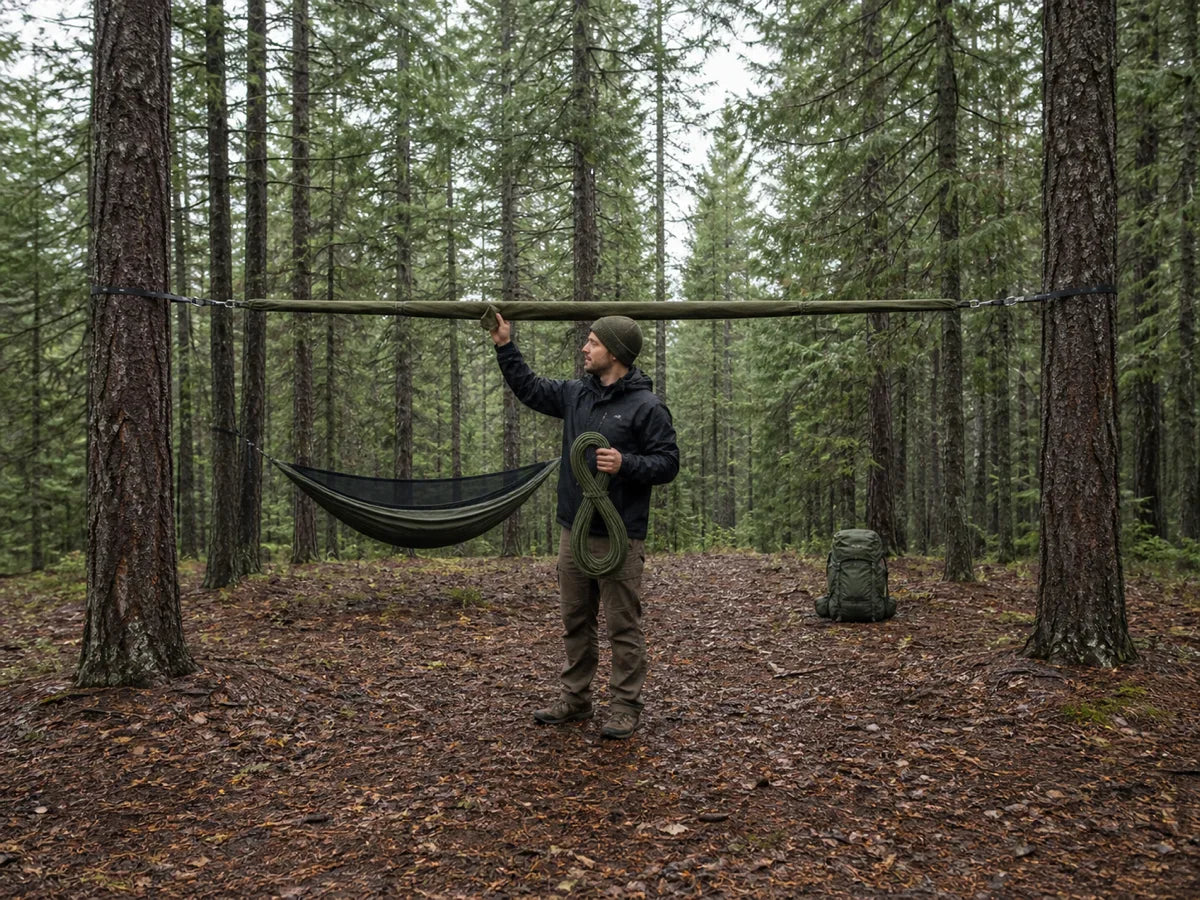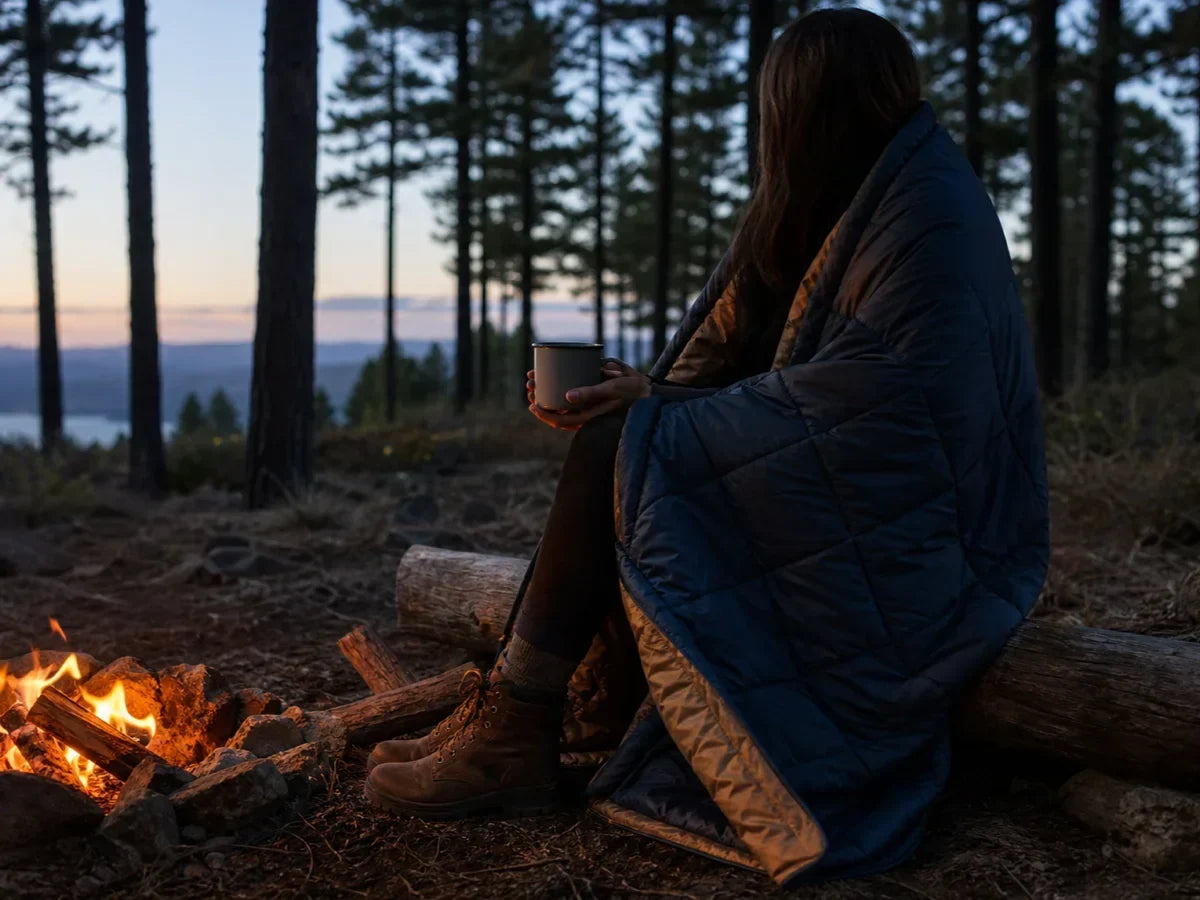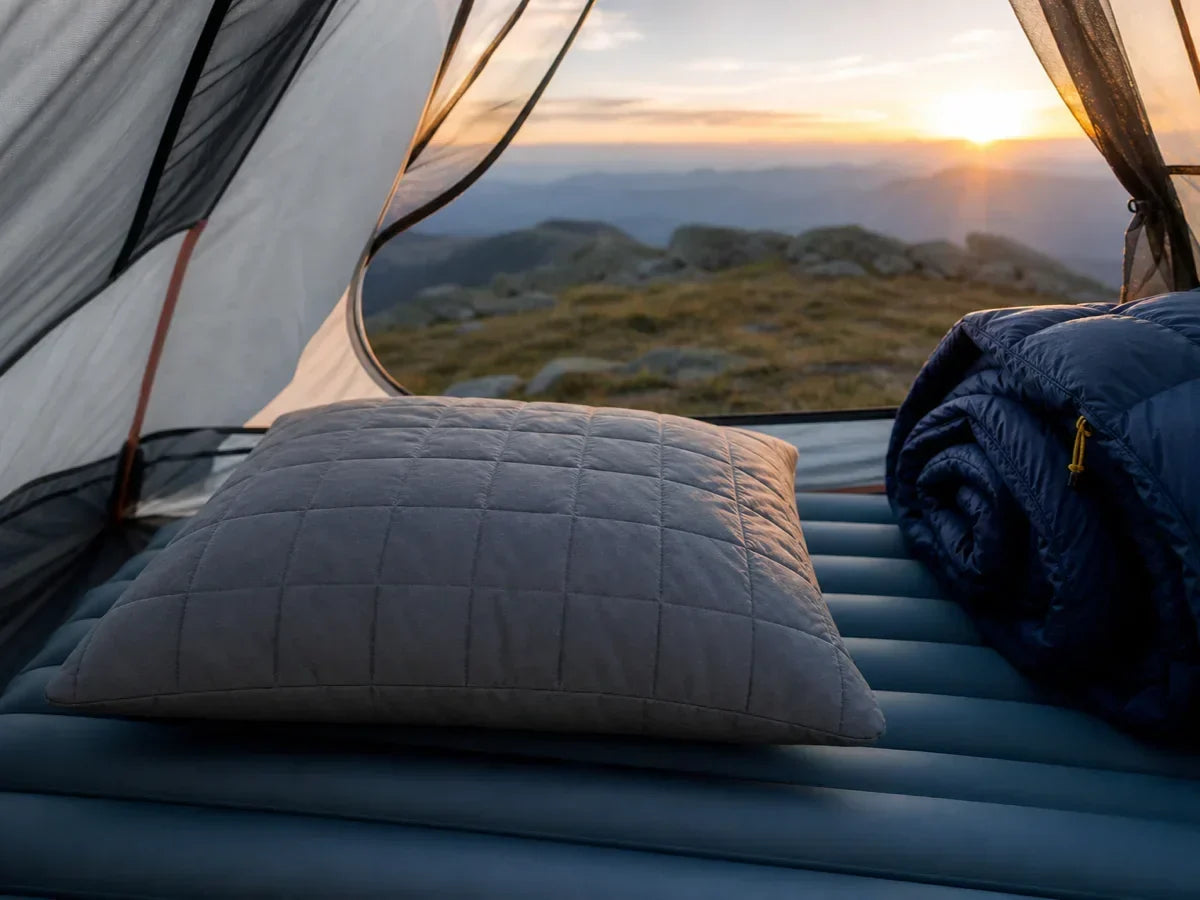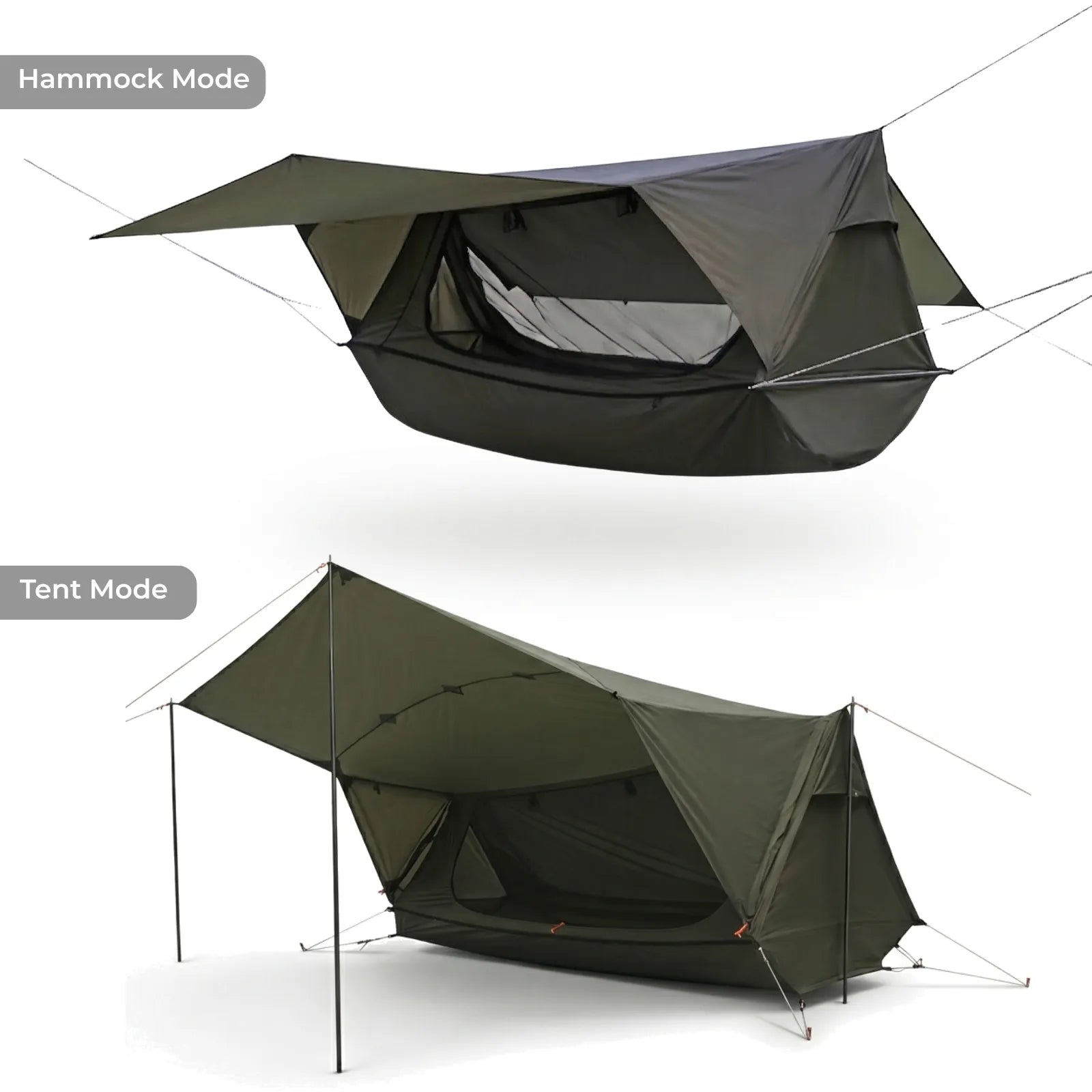

En standard sovepose på 20 ounce mister omtrent 65 til 70 procent af sin angivne varmeeffekt i det øjeblik, du kravler op i en hængekøje.
Det tal kommer fra et grundlæggende fysikproblem: Din kropsvægt komprimerer isoleringen under dig, og når den er komprimeret, fanger den næsten ingen luft.
Jeg sammenlignede seks isoleringsopsætninger på tværs af hængeture i tre sæsoner og fandt det samme resultat hver gang.
Et topquilt kombineret med et underquilt holdt mig varm ved temperaturer 15 grader under det niveau, hvor en sovepose begyndte at svigte.
Hvis du allerede ejer en underquilt, er topquiltet den manglende halvdel af et system, der eliminerer kolde områder og kamp med lynlåse.
Hvis du afprøver hængekøjecamping for første gang, kan din eksisterende sovepose stadig bruges, men kun når du tilføjer bundisolering under hængekøjen.
Denne artikel gennemgår præcis, hvornår du skal skifte, hvilken temperaturklassificering du bør købe, og hvordan du undgår de fem isoleringsfejl, der ødelægger de fleste begynderture.
Hvad du vil lære
Denne artikel gennemgår den isoleringsbeslutning, som de fleste hængekøje-campister står over for efter deres første kolde nat.
Hver anbefaling inkluderer en specifik temperatur, vægt eller pris, så du kan sammenligne med dit eget udstyr.
Målet er en klar beslutning, ikke et produktkatalog.
Hurtigt svar
De fleste hængekøjecampister bør skifte til en topquilt, efter at de har styr på bundisoleringen.
En sovepose kan få dig gennem en prøvetur, men den løser ikke problemet med sammenpresset isolering under din ryg.
Købsrækkefølgen betyder mere end brandnavnet på etiketten.
Hvis du camperer i en hængekøje færre end tre gange om året, bliver soveposen.
Hvis du camperer mere end det, tjener opgraderingen til topquilt sig selv ind i komfort og vægtbesparelse inden for én sæson.
Beslutningsrammen
{% youtube bnaRtmIrQgM %}
Isoleringssystemet til en hængekøje har tre lag: underquilt, topquilt og tarp.
De fleste begyndere køber dem i den forkerte rækkefølge.
Jeg så tre venner starte med en førsteklasses topquilt og uden underquilt og derefter undre sig over, hvorfor deres rygge frøs ved 45 grader.
Underquilten tager først fat på den største varmeafgivende overflade.
Ifølge Hammock Gear slipper 65 til 70 procent af din kropsvarme ud gennem det tynde hængekøjestof under dig.
Et toplagstæppe dækker kun de resterende 30 til 35 procent af varmebehovet.
Derfor er den korrekte rækkefølge ved køb underquilt først, topquilt derefter og tarp til sidst.
Når underquilten er på plads, bliver valget af topquilt enklere.
Du vælger mellem fyldkraft, temperaturklassificering og fodboks-stil, ikke mellem at løse et grundlæggende varmeproblem.
Forskellen mellem en budgetquilt til 240 $ og en premiumquilt til 535 $ er en vægtbesparelse på 12 til 16 ounce samt et mere raffineret yderstof.
Begge holder dig varm til den samme nominelle temperatur.
Vægtforskellen betyder noget for langdistancevandrere, der tæller hver eneste ounce.
Det betyder ikke noget for weekendcampister, der kører til stiens startpunkt.
Scenario 1: Begynder med kun en sovepose
Du har købt en hængekøje, og du har allerede en sovepose med 30 graders komforttemperatur fra teltcamping.
Soveposen fungerer fint ovenpå, fordi isoleringen over brystet forbliver luftig og varm.
Problemet er under dig.
Din kropsvægt trykker soveposens bundisolering flad mod hængekøjestoffet.
Det komprimerede lag giver næsten ingen isolering, og derfor bliver din ryg kold, selv når lufttemperaturen er over posens temperaturangivelse.
Warbonnet Outdoors forklarer dette som den primære årsag til, at topquilts findes: "enhver soveposeisolering, som du ligger oven på, bliver fladet ud af din kropsvægt og mister som følge heraf sine isolerende egenskaber."
Løsningen er ikke en bedre sovepose.
Løsningen er at tilføje en underquilt eller en lukket-cellet pude under hængekøjen.
En skumpude til 35 $ spændt fast under hængekøjen kan eliminere problemet med en kold ryg ned til omkring 40 grader.
Et dedikeret underquilt udvider dette interval til 20 grader eller lavere.
Det vigtigste spørgsmål for begyndere: Vil du fortsætte med hængekøjecamping efter denne prøve?
Hvis svaret er måske, så brug 35 dollars på en skumliggeunderlag og behold soveposen.
Hvis svaret er ja, så afsæt 180 til 250 $ til en underquilt og gem købet af topquilt til tur nummer fire eller fem.
Afgørelse: Behold soveposen foreløbig. Brug dine første 180 til 250 dollars på en underquilt, ikke en topquilt. Opgrader kun det øverste lag, når bunden er løst.
Scenarie 2: Hængekøjecamper til tre sæsoner
Du camperer i en hængekøje fra april til oktober, og du ejer allerede et underquilt.
Dette er scenariet, hvor opgraderingen til topquilt tjener sig selv ind.
En typisk sovepose til 20 grader vejer 28 til 32 ounces med lynlås, hætte og trækkrave.
Et sammenligneligt 20-graders topquilt fra Hammock Gear eller Enlightened Equipment vejer 16 til 24 ounces.
Det er en besparelse på 4 til 16 ounce på et enkelt stykke udstyr.
Vægtforskellen kommer af at fjerne komponenter, som ikke er nødvendige i en hængekøje.
Forskning fra Hammock Gear bekræfter, at quilts fjerner tre funktioner, som tilføjer vægt uden at give ekstra varme i et hængekøje-setup.
Hætten er unødvendig, fordi din hængekøje har en ridgeline-pude eller et separat pudesystem.
Den fuldlange lynlås er unødvendig, fordi du stikker dig ind fra siden.
Bagisoleringen er unødvendig, fordi underquilten klarer den opgave.
Territory Supplys oversigt fremhæver UGQ Outdoor Bandit og Enlightened Equipment Revelation som de bedste valg til brug i hængekøje i tre sæsoner, begge med dunfyld på 850+ fyldkraft i prislejet $350 til $400.
Et topquilt med 30 grader håndterer også varme sommernætter bedre end en sovepose.
Du kan drapere det løst eller folde det åbent uden at skulle kæmpe med en lynlås.
Hammock Gear bemærker, at "en 30-graders quilt ville fungere bedre på en nat med 60+ grader end en 30-graders sovepose."
Denne alsidighed betyder, at en enkelt topquilt dækker et bredere temperaturområde end en enkelt sovepose.
Ifølge CleverHiker's felttests opnåede de bedste tre-sæsons quilts de højeste resultater i både varmepræcision og komfort, når de blev brugt åbne over 50 grader og helt tucked under 35 grader.
Til brug i tre sæsoner klarer en topquilt på 20 til 30 grader alt fra juninætter til skuldersæsonsture i oktober.
Anbefaling: Køb en topquilt til tre sæsoner med en temperaturklassificering på 20 til 30 grader. Tilpas temperaturklassificeringen til din underquilt. Budget: 240 til 400 $ afhængigt af fyldkraft.
Scenario 3: Kold sovende
Du vågner kold, selv når vejrudsigten siger, at du burde have det behageligt.
Kolde sovende bør vælge en sovepose med en isolering, der er vurderet til 10 til 15 grader lavere end den forventede minimumstemperatur.
Hammock Gear’s købsguide advarer om, at temperaturangivelser forudsætter en gennemsnitlig stofskifteproduktion, og at "kalorieindtag, vægt, tøj, luftfugtighed" alle påvirker din faktiske varme.
Hvis du forventer laveste temperaturer på 30 grader, så køb en topquilt til 15 til 20 grader.
Katabatic Gear Sawatch 15 grader bruger dun med en fyldkraft på 850 til 900 og vejer 23 til 31 ounces afhængigt af størrelsen.
Loco Libre Ghost Pepper går helt ned til minus 40 grader til vinter-hængekøjecamping.
Fodkassedesign betyder mere her end i nogen anden situation.
En syet fodboks holder på varmen omkring dine fødder og forhindrer træk i at trænge ind nedefra.
En konvertibel fodkasse giver dig mulighed for at åbne bunden på varme nætter, men den skaber et potentielt trækpunkt på kolde nætter.
For kolde sovende vinder den syede fodboks hver gang.
Den trækfri forsegling omkring dine fødder eliminerer den næststørste klage ved kold søvn efter kolde rygge.
Ulempen er, at du ikke kan åbne fodboksen på varme nætter, så en quilt med syet fodboks er mindre alsidig om sommeren.
Hvis du kun camperer i temperaturer under 50 grader, er den påsyede fodkasse det oplagte valg.
Hvis du camperer året rundt, så overvej at eje to quilts: en med syet fodkasse på 15 grader til kolde ture og en med konvertibel fodkasse på 40 grader til sommerbrug.
Anbefaling: Køb en topquilt med en komforttemperatur, der er 10 til 15 grader lavere end din forventede laveste temperatur. Vælg en syet fodkasse. Forvent at bruge 350 til 500 $ på en fyldkraft på 850+.
Scenario 4: Skuldersæsonrejse med lånt kuldevejsisolering
En ven har lånt dig en underquilt til en tur sidst i oktober, og du skal finde ud af det øverste lag.
Lånt udstyr ændrer beregningen, fordi du ikke kender den nøjagtige temperaturklassificering eller tilstanden af underquilten.
Test underquilten i din baghave før turen.
Hæng hængekøjen op, tilføj det lånte underquilt, og sov udenfor i én nat for at afstemme dine forventninger.
Hvis underquilten holder dig varm ned til 35 grader, vil din sovepose sandsynligvis kunne klare toplaget til en weekendtur.
Hvis underquilten føles tynd eller trækfuld, har du brug for et varmere toplag, end din sovepose giver.
Sammenligningen fra Alton Goods peger på, at soveposer stadig udmærker sig i én bestemt situation: "maksimal ydeevne i koldt vejr" uden nogen indlæringskurve ved opsætning.
Til en enkelt tur i skuldersæsonen er soveposens enkelhed en fordel.
Du pakker den ud, kravler ind i den og sover.
Ingen fastgørelsesstropper, ingen håndtering af træk, ingen finjustering om natten.
Topquilten bliver kun værd at købe, når du ved, at du vil fortsætte med hængekøjecamping efter denne prøveperiode med lånt udstyr.
Det er her, budget-genbrugs-casen og den langvarige komfort-casen divergerer fuldstændigt.
Genbrug af din sovepose koster 0 $ og fungerer til én til tre ture.
At købe en dedikeret topquilt koster 240 $ til 400 $ og betaler sig tilbage over snesevis af ture i form af vægtbesparelse, temperaturalsidighed og hurtigere opsætning.
Skæringspunktet er omkring tur nummer tre eller fire.
Før det er soveposen det rationelle valg for din pengepung.
Derefter er topquilten det rationelle valg for din søvnkvalitet.
Vurdering: Brug din sovepose til turen med lånt udstyr. Hvis du derefter camperer mere end tre gange i hængekøjer, så investér først i dit eget underquilt og derefter i et topquilt.
Almindelige fejl, der ødelægger begynderture
Hver fejl på denne liste er en beslutning, der træffes, før du forlader huset, ikke en teknisk fejl på lejren.
Mønstret er det samme: at springe ét trin over i isoleringssystemet og håbe, at det resterende udstyr kompenserer.
Disse fem fejl står for størstedelen af klagerne over kolde nætter på r/hammockcamping og i hængekøje-fora.
Fejl 1: At ankomme efter mørkets frembrud
At sætte et quiltsystem op i mørke betyder, at du springer trin over, som er vigtige.
Underquilttilbehøret skal være centreret på hængekroppen, med bafflerne hængende frit og ikke samlet op mod stoffet.
I dagslys tager den justering fem minutter.
I mørket springer de fleste begyndere det over og vågner med en kold stribe ned ad ryggen, hvor underquiltet er gledet ud af position.
Den øverste quiltindstikning kræver også visuel bekræftelse.
Du skal sikre, at quilten overlapper underquilten på begge sider og danner en forseglet isoleringskuvert.
Et mellemrum på bare to tommer mellem topquiltens kant og underquiltens kant lader kold luft strømme igennem.
Ankom med mindst en times dagslys til dine første tre opstillinger.
Derefter tager rutinen ti minutter, og du kan klare den med pandelampe.
Fejl 2: Antagelse om, at alle campingpladser er ens
En lejrplads på en bjergkam med stabil vind har brug for en varmere topquilt-vurdering end en beskyttet dalplads ved samme lufttemperatur.
Vind komprimerer topquiltens isolering udefra, hvilket reducerer dens effektive temperaturvurdering med 5 til 15 grader afhængigt af vindhastigheden.
En presenning blokerer denne effekt, men kun hvis den rækker langt nok til at beskytte quilten mod tværvind.
Hammock Gears købsguide bemærker, at "blæsende klimaer uden et godt læ kan kompromittere quilts vurderinger."
Den praktiske konklusion: Din quilts temperaturklassificering er kun nøjagtig under rolige forhold med en tarp over hovedet.
Uden en tarp skal du trække 10 grader fra den angivne temperatur for at få dit faktiske komfortniveau.
Vælg din lejrplads med vindbeskyttelse først, så holder dit quilts temperaturklassificering.
Vælg en naturskøn ryg uden vindbeskyttelse, og din 30-graders quilt kan måske kun yde som en 40- eller 45-graders quilt.
Fejl 3: Undervurdering af krav til isolering eller vejrbeskyttelse
Den mest almindelige version af denne fejl er at købe en topquilt uden nogen bundisolering.
En topquilt med 0 grader vil ikke holde dig varm i en hængekøje ved 4 grader, hvis din underside ikke er isoleret.
Reddit-brugere på r/hammockcamping rapporterer, at begyndere ofte møder op med en flot quilt og intet under sig, og så giver de quilten skylden, når de fryser.
Isoleringssystemet er et system.
Hvert lag afhænger af de andre.
En underquilt til 20 grader kombineret med en topquilt til 30 grader fungerer i praksis bedre end en topquilt til 0 grader alene.
Temperaturklassificeringen for topquiltet forudsætter, at bunden allerede er håndteret.
Konsensus i hængekøje-fora bekræfter prioriteten: køb underquilten først, match topquilten til dens temperaturvurdering, og test kombinationen, før du binder dig til ture i koldt vejr.
En anden version af denne fejl er at springe presenningen helt over.
Regn gør ikke bare dig våd.
Det siver gennem yderstoffet på dit topquilt, får dunfyldet til at falde sammen og reducerer din effektive isolering med 50 procent eller mere på få minutter.
Selv en let tarp løser dette problem fuldstændigt.
Fejl 4: At købe premiumudstyr før den første tur
{% youtube U8t8dTgzdqs %}
En Western Mountaineering AstraLite koster 535 $ og vejer et pund.
En Hammock Gear Economy Burrow koster 240 $ og vejer cirka to pund.
Begge holder dig varm ned til 20 grader.
Prisforskellen på 295 $ giver dig en vægtbesparelse på 12 til 16 ounce og et mere raffineret yderstof.
Det har betydning for langdistancevandrere, der tæller hvert eneste ounce på en 2.000-mile lang sti.
Det gør ikke noget for en begynder, som måske efter to weekender beslutter, at hængekøjscamping ikke er noget for dem.
CleverHikers felttests viser, at Hammock Gear Burrow 20 og Enlightened Equipment Revelation 20 er de bedste value-quilts under 400 $.
Start med 800 fyldkraft andedun til prispunktet på $240.
Opgrader til 900+ fyldkraft gåsedun, når du har bekræftet, at du vil bruge den i årevis.
Den Onewind Equinox topquilt tilbyder endnu en budgetvenlig indgang med dun med 800 fyldkraft og et hængekøjespecifikt snit, der eliminerer den ekstra bredde, du ikke har brug for i en hængekøje.
Budget-genbrug er den rationelle strategi til ture ét til tre.
Langsigtet komfortinvestering er den rationelle strategi fra og med den fjerde tur.
Forveksl ikke de to tidslinjer.
Fejl 5: At ignorere vejrforskydninger på ankomstdagen
Bjergtemperaturer falder 3 til 5 grader pr. 1.000 fod højdestigning.
En vejrudsigt, der viser 45 grader ved stiens start, kan betyde 35 grader ved din lejrplads, hvis du stiger 2.000 fod.
Dit quilt-system skal kunne håndtere den koldeste forventede temperatur ved din faktiske sovehøjde, ikke tallet i vejr-appen ved dit udgangspunkt.
Tjek vejrudsigten for den nærmeste vejrstation til din lejrplads’ højde.
Tilføj en sikkerhedsmargin på 5 grader oven i det tal.
Hvis nattemperaturen er inden for 10 grader af din quilts angivne temperatur, så medbring et ekstra isoleringslag.
Et fleecefor eller et rummetæppe inde i hængekøjen giver 5 til 10 graders ekstra effektiv varme for under $20 og blot et par ounces ekstra i rygsækken.
r/hammockcamping-fællesskabet խորհուրդ?
Koldfronter bevæger sig hurtigere end de fleste prognosemodeller forudsiger i bjergrigt terræn.
Et quiltsystem med en buffer på 10 grader håndterer disse overraskelser uden at tvinge dig til at afbryde turen.
Den hurtige beslutningscheckliste
Brug denne tjekliste, før du køber isolering næste gang.
Beslutningen er enklere, end de fleste udstyrslister får den til at se ud.
Håndter bundisoleringen først.
Match temperaturen på topquiltet med din underquilt.
Start med budgetudstyr og opgrader, når du ved, at du vil blive ved med at bruge det.
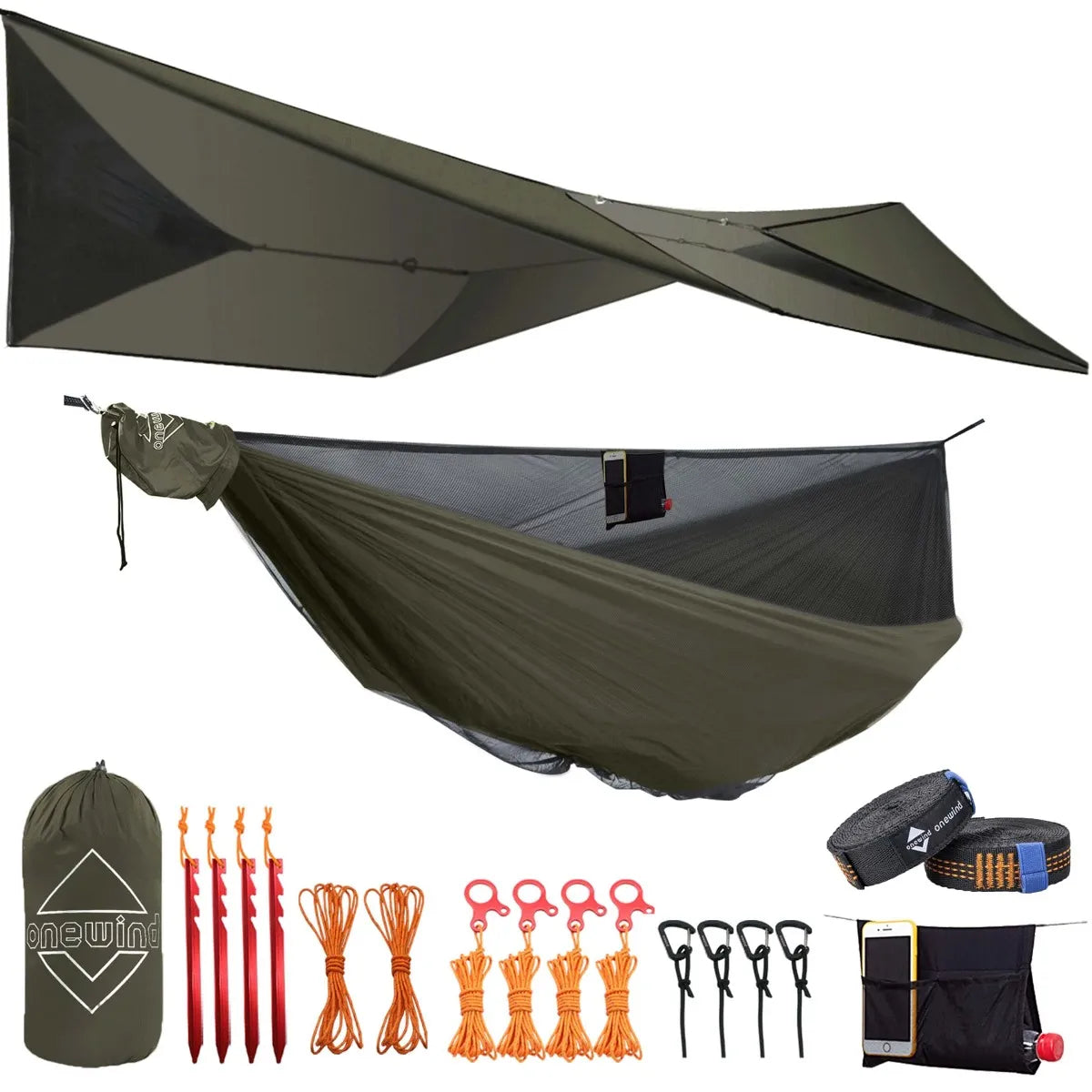
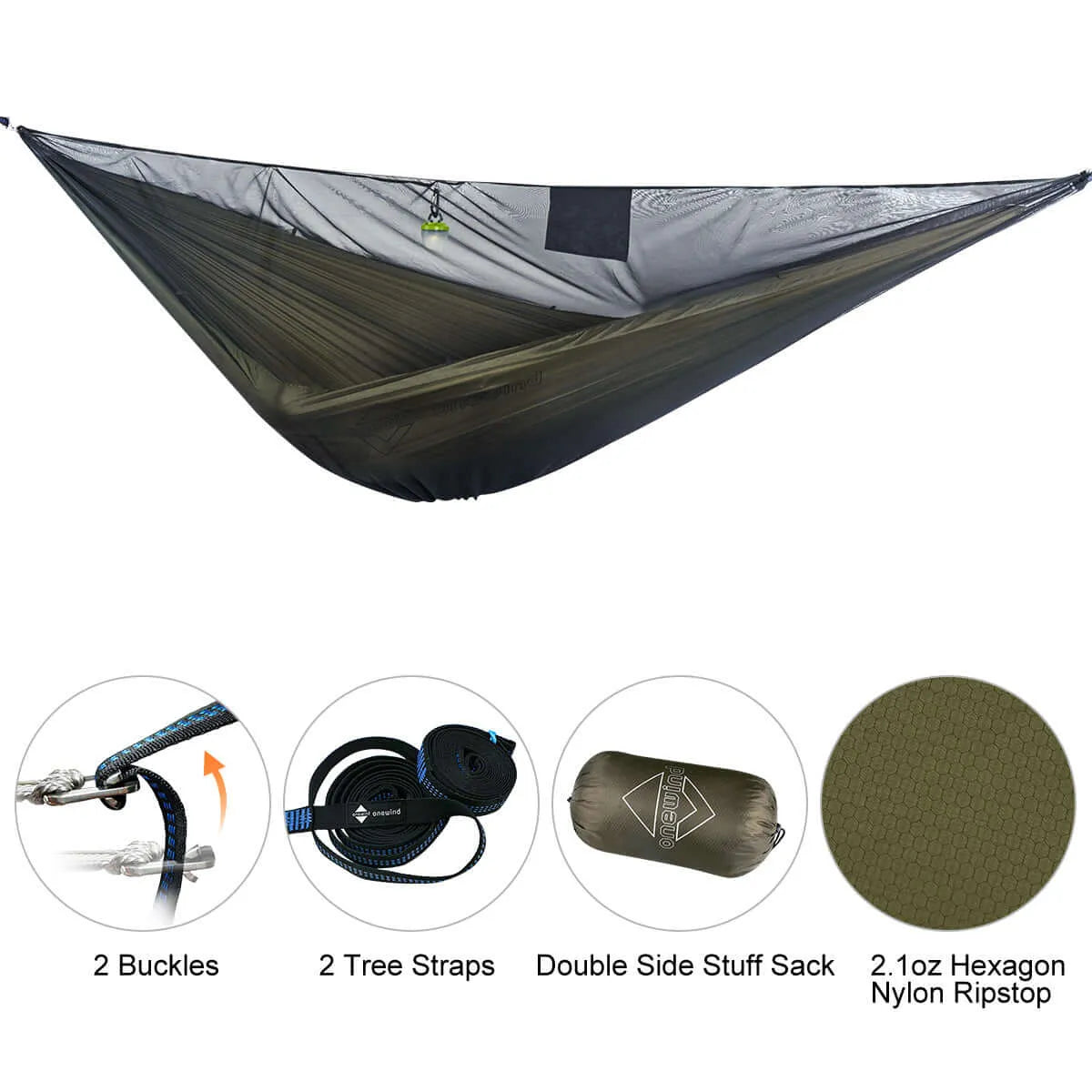
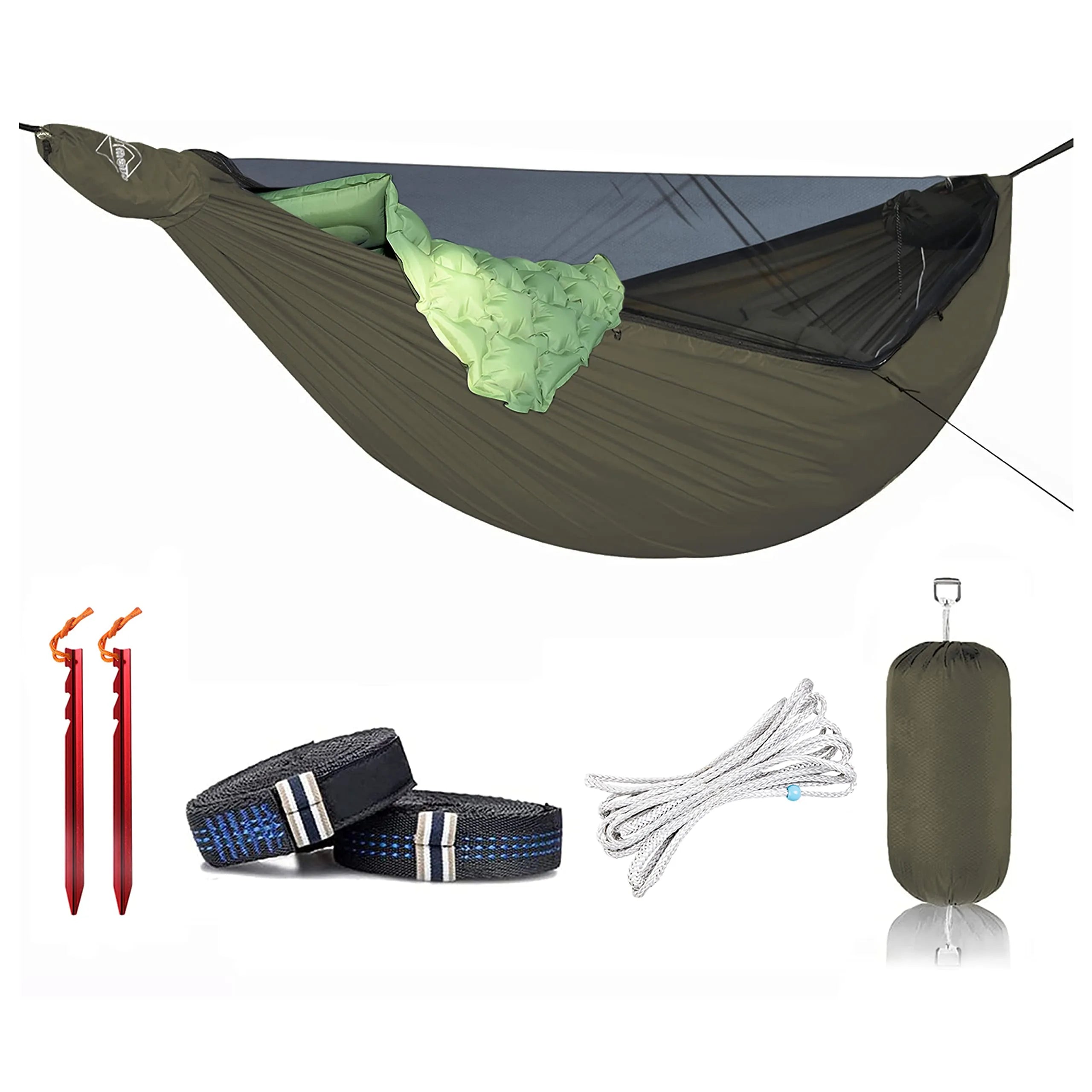
Den Onewind 11 fod campinghængekøje passer godt sammen med enhver af de quiltopsætninger, der er beskrevet ovenfor, fordi den ekstra længde giver dig plads til at justere quiltens overlap på begge sider.

Shop the recommended setup
Shop Now →