
De fleste vejledninger til opsætning af presenninger besvarer det forkerte spørgsmål først.
Jeg sammenlignede 13 kilder til denne korte tekst, herunder REI-opsætningsvejledning, en kilde til A-ramme-opsætning, aktuelle sider om tarp-camping og tre Reddit-tråde fra brugere af hængekøjer og bilcamping.
Mønstret var tydeligt: Begyndere fejler ikke, fordi de valgte den femtebedste opsætning af presenningen.
De fejler, fordi de vælger en form, før de læser siden.
For de fleste campister er det lave A-ramme-opslag den standardmæssige opsætning af campingpresenningen, fordi det lærer om ryglinjen, hjørnespænding, afløbsvinkel og vindeksponering i én gentagelig opsætning.
Skift kun form, når vejret eller opgaven ændrer sig.
Brug en lukket A-ramme til regn drevet af vind, en læn-til eller høj køkkenpresenning til adgang i godt vejr, en lav plovspids-stil til kraftig vind, og stænger når afstanden mellem træerne er forkert.
Det er den ramme, denne guide bruger.
Hvad du vil lære
Denne guide giver dig én standardopsætning, fem feltscenarier og en kort tjekliste, du kan bruge, før den første pløk slås i.
Jeg kommer ikke til at rangere hver tarp-form, som om de er lige gode.
En begynder har brug for en pålidelig rækkefølge af operationer.
En madlavningsstation på en campingplads, en regnsejl til hængekøje og et jordtelt kan bruge det samme tarpstof, men de bør ikke bruge den samme geometri.
Hvis du stadig vælger selve tarp’en, så start bredt med Presenninger og læskure, og indsnævr derefter valget først, når du ved, om opgaven er en sovepladsafdækning, hængekøjeafdækning eller et køkkentag.
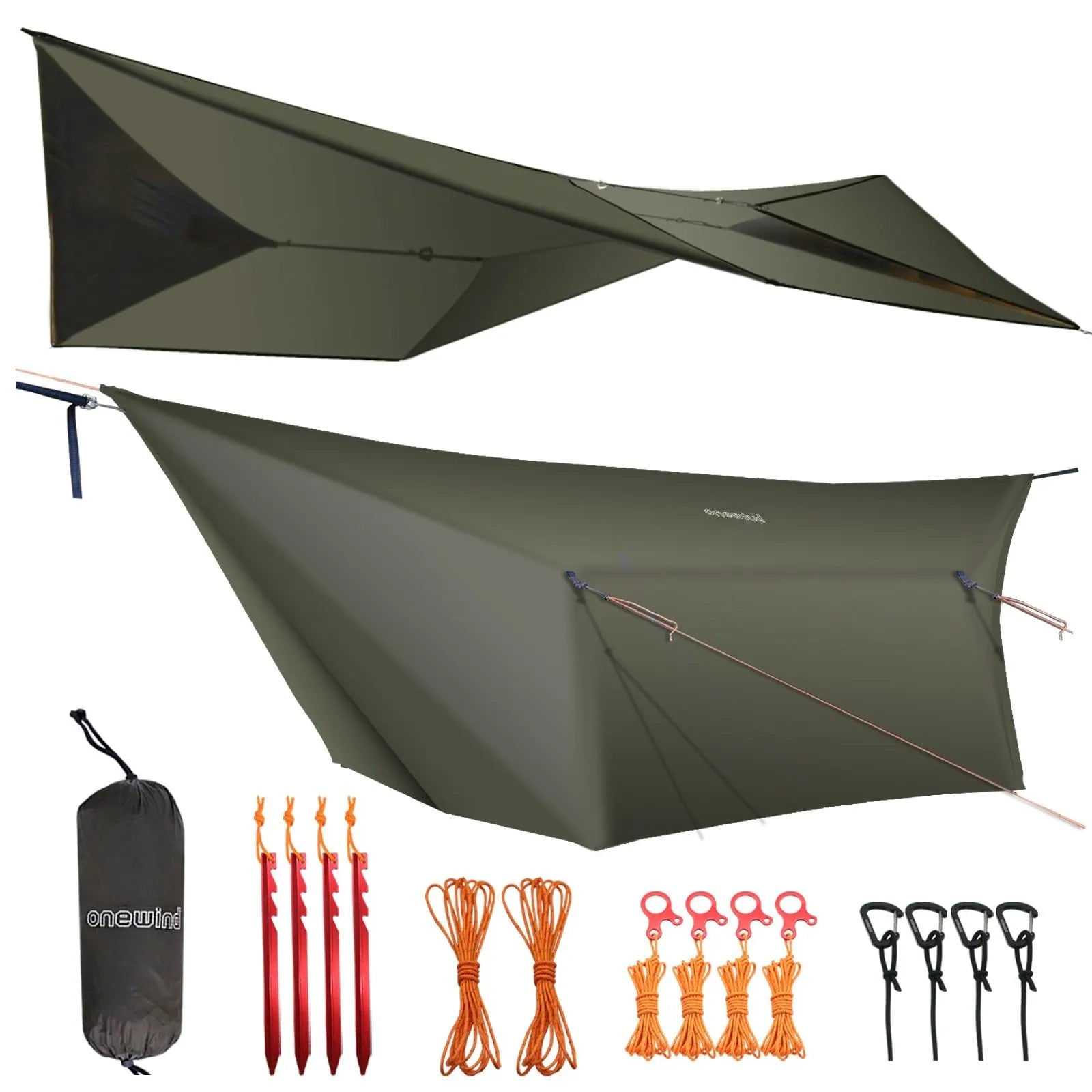
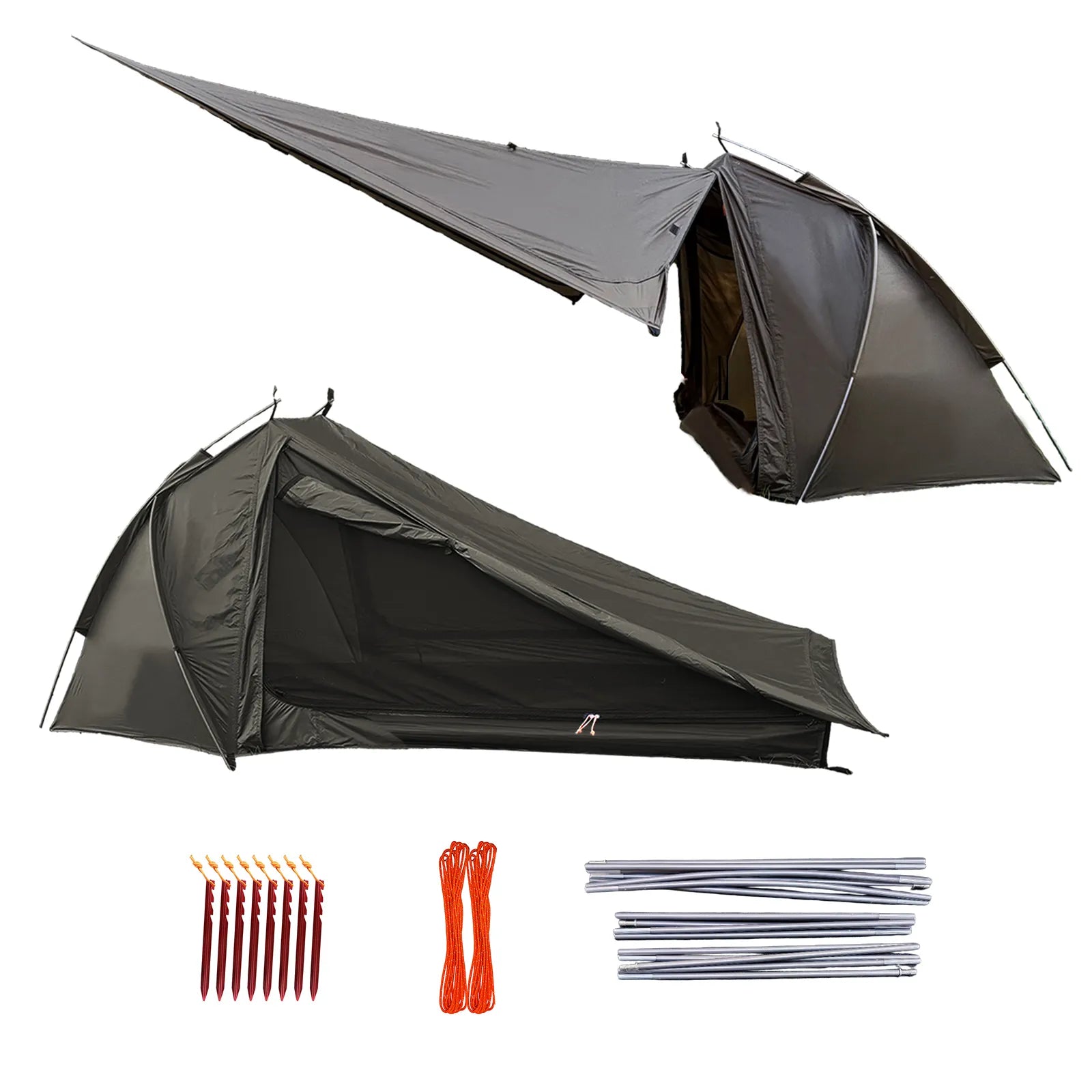
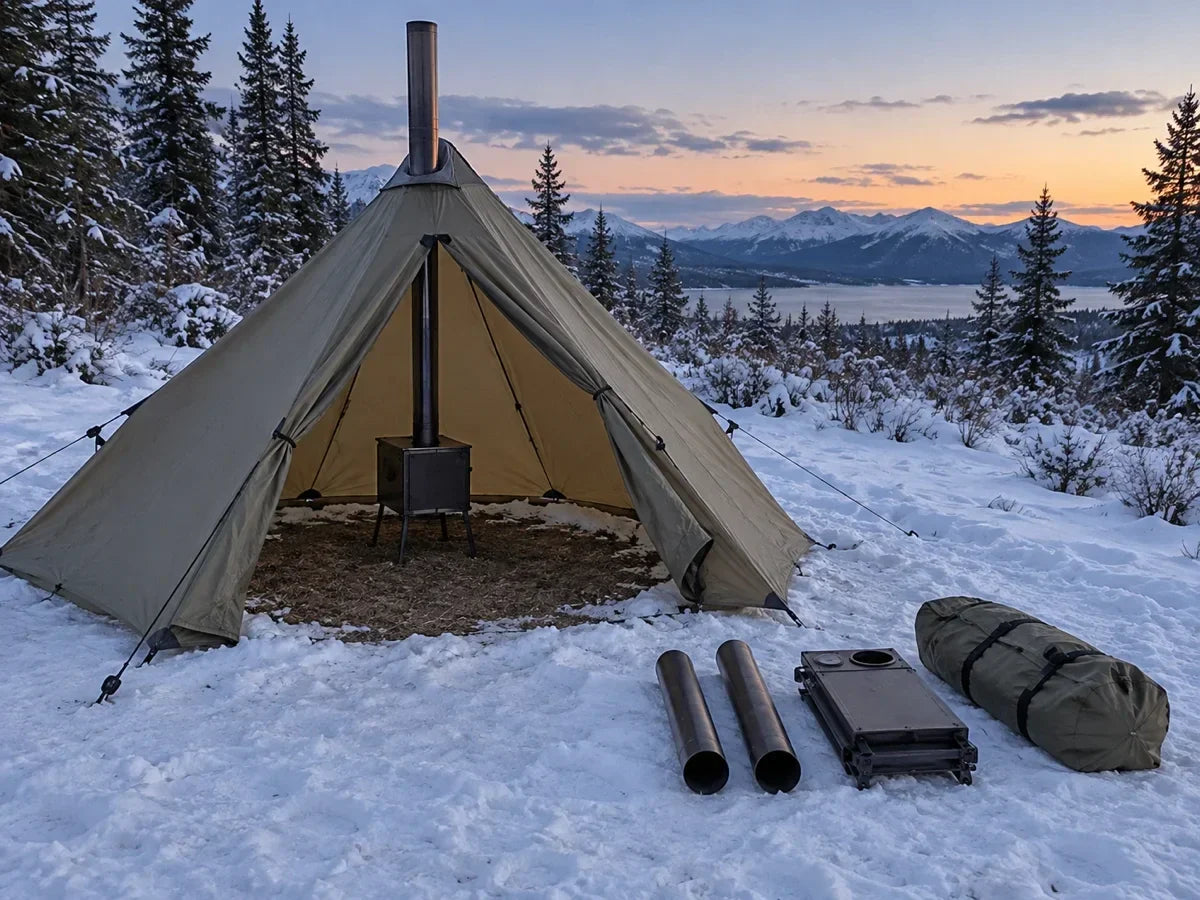
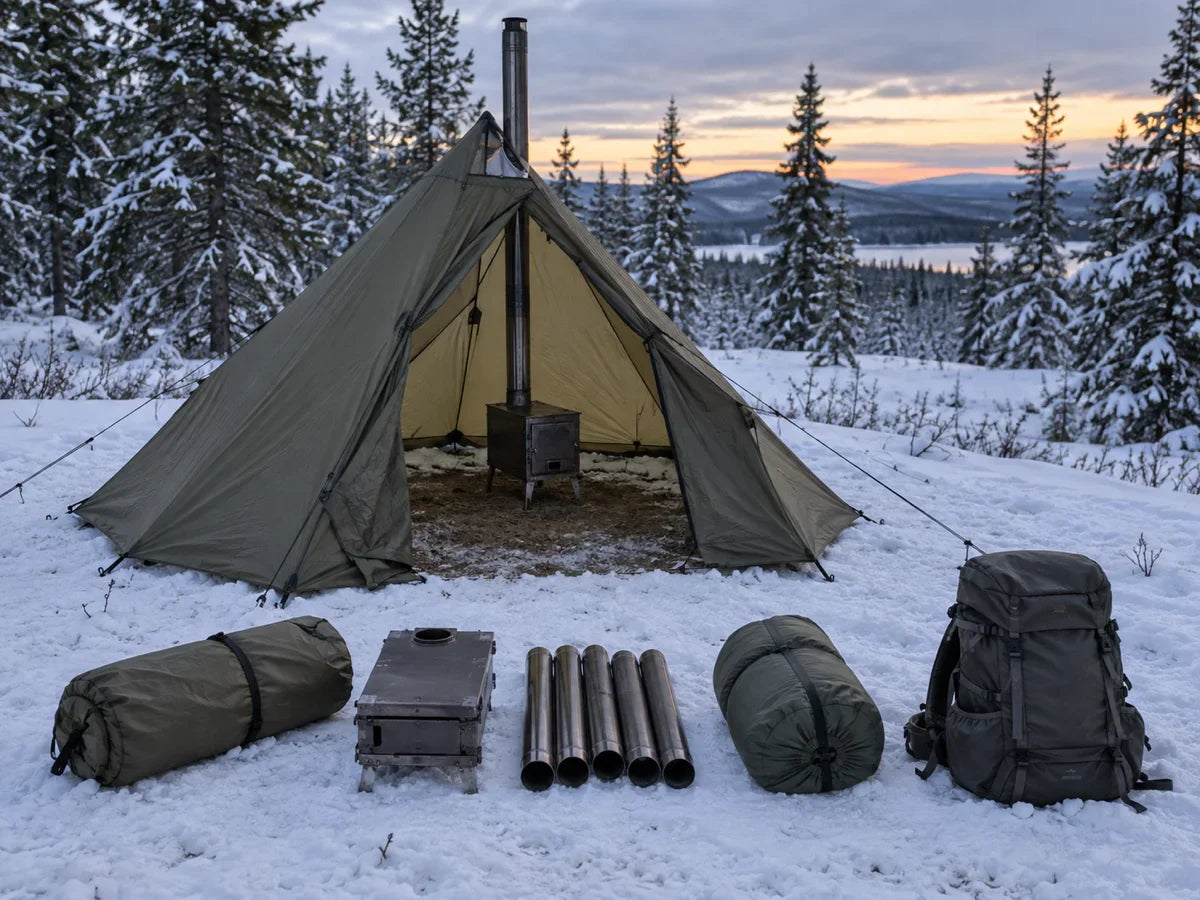
Det eneste udstyr, der forudsættes, er helt grundlæggende: en tarp, 9 til 15 meter snor til ryglinen, 4 til 8 barduner, 6 til 8 pløkker samt enten træer, vandrestave eller tarpstænger.
Ifølge opsætningsvejledningen til A-rammen, som er gennemgået til denne artikel, er en presenning på 8 x 10 fod et anvendeligt minimum for én person, mens 10 x 12 fod giver begyndere mere råderum.
Den margen er vigtig, fordi en nybegynder sjældent opsætter presenningen helt perfekt ved første forsøg.
Hurtigt svar
Hvis du kun lærer én opsætning af en campingtarp, så lær først den lave A-ramme.
Det fungerer, fordi ryglinen bærer konstruktionen, hjørnerne skaber tagvinklen, og de to sider leder vandet væk fra sove- eller siddeområdet.
REI's tarp-ly råd bruger det samme grundlag: fastgør først ryglinen eller stængerne, og spænd derefter hjørner og sideløkker, efter at tarpen er centreret.
Til en første tur skal du indstille ryglinen omkring brysthøjde i roligt vejr og sænke den til 18 til 24 tommer i dårligt vejr, hvis du sover under den.
Til en køkkenpresenning skal ryglinen holdes høj nok til at kunne stå op, men den nedadgående side skal være tydelig, før regnen begynder.
For en hængekøje skal du ignorere loftshøjden, indtil kanterne dækker hængekøje-kroppen og den forventede sprøjtezone.
Ved vind skal læsiden sænkes først.
Løs ikke en blafrende tarp ved blot at trække hårdere i den samme dårlige geometri.
Beslutningsrammen
For de fleste campister er det første spørgsmål ikke: "Hvilket tarp-opslag ser smart ud?"
Det første spørgsmål er "Hvad beskytter tarpen?"
En sovende krop har brug for lav sidedækning.
En hængekøje har brug for centreret regndækning og en sprøjtebuffer.
Et picnicbord har brug for plads over hovedet, dræn og forankringspunkter, som folk ikke snubler over.
En blæsende lejrplads kræver mindre eksponeret stof.
Det er derfor, A-rammen er standardvalget og ikke den endelige løsning.
Det giver dig en gentagelig baseline.
Kør ryglinjen først.
Centrér tarp'en.
Sæt pløkker i de fire hjørner, så hvert panel afleder vand.
Tilføj kun sideudtræk, efter at det grundlæggende tag er stabilt.
Når regnen falder lodret og er let, skal opsætningen holdes i balance.
Når regnen kommer skråt ind, sænk vejrsiden, indtil presenningen begynder at fungere som en væg.
Når vindretningen er stabil, skal du lukke den ende, der vender mod vinden, eller skifte til en lavere stormform.
Når du har brug for plads til madlavning, hæv arbejdsdelen, men sørg for en stejl afløbslinje bagved.
Fejlen er at behandle hvert oplæg som et personligt valg.
Det klogere valg er at matche formen med opgaven.
Scenarie 1: Begynder A-rammeopsætning mellem to træer, før regnen begynder
Dette er det scenarie, som de fleste begyndere bør øve derhjemme.
Du har to træer, en rektangulær presenning, nok snor og regn i vejrudsigten.
Det rigtige valg er en lav A-ramme, fordi den giver færrest bevægelige dele og den hurtigste feedback.
Bind den ene ende af ridgelinen til det første træ.
Spænd den anden ende ved det andet træ.
Drapér eller fastgør presenningen med clips, så midterlinjen følger ryglinjen.
Sæt de to første hjørner fast på den ene side, og træk derefter i den modsatte side, indtil begge tagpaneler ser jævne ud.
REI oplister bowline-knuden, trucker’s hitch og prusik som nyttige knuder til opsætning af presenning, og den trio passer godt til begynderopgaven.
Brug råbåndsknuden til en fast løkke, lastbilchaufførknuden til at spænde, og en prusikknude, når tarpen har brug for glidende justering på linen.
A-ramme opsætningskilden giver et praktisk sætudvalg: 30 til 50 fod snor og 6 til 8 pløkker.
Det område er ikke pynt.
Det giver dig mulighed for at flytte forankringspunkterne i stedet for at tvinge presenningen ind i en trang eller løs opsætning.
Start ikke for højt, da det føles rummeligt.
Høje pladser føles bedre i fem minutter, og så siver det ud fra siderne, når vinden skifter.
Til en første opsætning i regn bør vejrbestandighed prioriteres højere end siddehøjde.
Med Onewind-udstyr hjælper et tarp-ærme eller en organiseret bardunopsætning, fordi tarpen kan tages ud klar til at blive centreret i stedet for at trække liner gennem våd jord.
Til denne specifikke A-ramme-anvendelse er en mulighed i fuld størrelse som den 12 ft silnylon presenning giver mere dækning end et lille minimalistisk lagen, hvilket betyder noget, når ryglinjen ikke er perfekt.
Dom: Vælg først en lav A-ramme, og hæv den først, når taget dræner rent, og vejrsiden forbliver dækket.
Scenarie 2: Opsætning af hængekøjetarp, der undgår sprøjt og sideeksponering
En hængekøje-tarp er ikke bare et tag.
Det er sidebeskyttelse.
Den almindelige begynderfejl er at sætte tarpen så højt, at man kan beundre lejrpladsen, og derefter opdage, at regn ikke falder lige ned.
Reddit-hængekampister bliver ved med at gentage det samme praktiske råd: brug forudmonterede liner, lær at justere prusik-knuder, og slå teltet lavere op i dårligt vejr.
Kontinuerlige ridgelines opstod, fordi de gør det lettere at centrere, når tarp’en skal placeres over hængekøjen og ikke blot mellem to træer.
En delt ryglinje kan fungere, især når du går op i mindre snor og mindre sammenfiltring.
For en begynder i regn vinder lettere centrering som regel.
Begynd med at hænge hængekøjen op, hvor ophængsvinklen og afstanden mellem træerne er passende.
Derefter skal du centrere tarpen over hængekroppen, ikke kun over ophænget.
Bring tarpets kanter ned, indtil de dækker siden af hængekøjen, hvor sprøjt vil ramme.
Hvis vinden kommer fra én retning, så sænk først den side og accepter mindre plads på forteltet.
Hvis vejrudsigten er grim, så spring terrasse-tilstanden over.
Porch-tilstand er en komfortopsætning til godt vejr, ikke standardopsætningen til stormvejr.
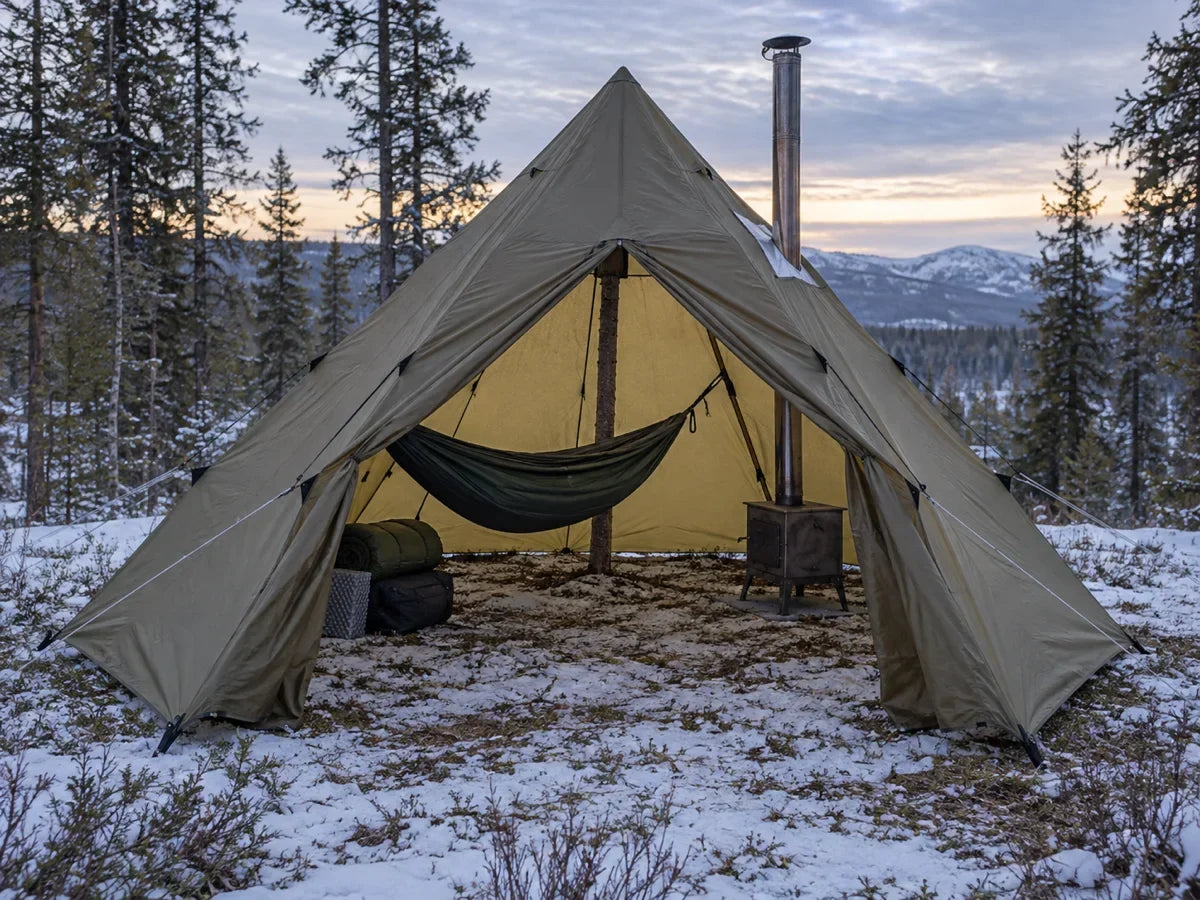
Til Onewind-hængekøjebrugere, en dedikeret Hængekøje-regnslag fortjener sin plads her, fordi formen og fastgørelsespunkterne matcher dækningsopgaven bedre end et tilfældigt fladt lagen.
Et netovertræk til tarp hjælper også, når den første opgave er at få regnslaget sat op, før hængekøjen eller quilten bliver våd.
Dom: Vælg en lav, centreret tarpopsætning til hængekøjen med hurtig justering af ryglinen, før du vælger veranda-højde eller udsigt.
Scenarie 3: Køkken til bilcamping eller presenning til picnicbord til heldagsregn
En køkkenpresenning har en anden funktion end en sovepresenning.
Du har brug for ståplads, et tørt bord og afledning, der ikke løber ind i madlavningsområdet.
Diskussioner om bilcamping nævner forankringer, som backpacking-guider ofte overser: tagbøjler på køretøjer, træer, tunge sten, forlængelige markisestænger og gamle teltstænger.
Det er vigtigt, fordi en campingplads sjældent er et perfekt skovgitter.
Den rigtige opsætning er ofte et højt A-formet telt eller et lean-to, ikke et lavt stormly.
Begynd med bordet eller køkkenområdet.
Vælg den side, hvor vandet skal drænes.
Placér derefter ryglinen, så tarpens hældning vender væk fra stole, opbevaringskasser og komfuret.
Hvis du fastgør den til et stativ på et køretøj, skal du beskytte snoren mod skarpt metal og kontrollere, at døre eller bagklapper ikke skærer i linen.
Hvis du bruger stænger, skal du bardunere dem i to retninger, før du strammer presenningen helt op.
Hvis presenningen blafrer, skal du ikke blive ved med at hæve den.
Sænk den vindvendte kant, eller flyt hjørneforankringerne udad, indtil stoffet holder op med at smælde.
Campground-versionen kan bruge tungere beslag, fordi du ikke tæller ounces.
Til en familie- eller gruppeløsning, opsætningsudstyr såsom tarpstænger og ekstra barduner giver mere mening her end at jagte en opsætning, der udelukkende er ultralet.
Dom: Vælg kun en højere køkkentarp, når du kan kontrollere afløb og trafikveje, og sænk derefter den vindvendte side, hvis regnen begynder at falde skråt.
Scenario 4: Opsætning af tarp med vandrestave, når der ikke er brugbare træer
Åbent terræn ophæver ikke A-ramme-logikken.
Det ændrer støtterne.
REI's ultralette tarpopsætningsvejledning omfatter A-rammeopsætninger med vandrestave, som er den rette bro mellem backpacking og grundlæggende tarp-geometri.
Sekvensen forbliver velkendt.
Placér presenningen.
Indstil stangpositionerne.
Stram bardunerne let.
Sæt pløkker i hjørnerne.
Spænd derefter stængerne og sidepunkterne igen.
Stangens vinkel er vigtig, fordi en lige lodret stang kan skride ud under varierende spænding.
Vink hver stang en smule væk fra tarp-kroppen, så bardunen og tarpens spænding arbejder mod hinanden.
Hold ridgelinen lavere, når der er vind.
En stolpeopsætning i brysthøjde kan føles beboelig i roligt vejr, men samme højde kan blive som et sejl på udsat terræn.
Hvis du kun har fire pløkker, så spring de valgfrie sideudspændinger over, indtil de fire hjørner og stormbardunerne til stangen holder.
Hvis du har seks til otte pløkker, kan du tilføje barduner midt på kanten for at reducere klap fra panelerne.
Det er også her, at en rektangulær tarp med flere fastgørelsespunkter slår et minimalistisk lagen med kun hjørneløkker.
De ekstra fastgørelsespunkter gør det muligt at justere taget i stedet for at flytte hele læskjulet.
Dom: Vælg en A-ramme til vandrestave, når der mangler træer, men hold teltopstillingen lav, og brug dine stærkeste forankringer på stænger og hjørner først.
Scenarie 5: Fejlfinding på en blæsende campingplads, når tarpen blafrer, eller pløkkerne trækkes op
Vind afslører dårlig geometri hurtigere end regn.
En tarp kan se ren ud i stille luft og svigte ti minutter efter, at vindstødene kommer.
Vindfokuseret tarp-vejledning peger mod lavere rygliner, tætte forankringer, stærkere pløkvalg og kontrolleret panelspænding.
A-ramme-kilden giver den samme praktiske anvisning: i dårligt vejr skal pløkkerne bankes dybere i, der skal tilføjes sidebarduner, og de vindvendte hjørner skal bringes tættere på jorden.
Forskning fra REI tilføjer den opsætningsdetalje, som begyndere ofte overser: bowline, trucker’s hitch og prusik løser hver især et forskelligt problem med spænding eller justering.
Start diagnosticeringen ved ryglinjen.
Hvis rygraden er løs, er hver hjørneløsning midlertidig.
Derefter skal du kontrollere luvsiden.
Hvis vinden kan komme ind under teltdugen, vil teltdugen løfte sig, slå og rive pløkkerne op.
Sænk den side, indtil stoffet stopper med at fungere som en skovl.
Tjek derefter ankerne.
Blød jord kræver mere overfladeareal, ikke mere håb.
Brug længere pløkker, placer sten over bardunerne, eller grav en pind ned som et dødt anker i sand eller løs jord.
Til sidst skal du kontrollere afstrømningen.
Vind kan presse regn ind under en tarp, som ellers ville være fin i lodret regn.
Hvis den ene ende udsættes for vejret, så luk den ende eller drej teltet, inden det bliver mørkt.
Det forkerte svar er at købe en større presenning, før man lærer denne rækkefølge.
Et større tarp med dårlige vinkler bliver et større vindfang.
Dom: Vælg en lavere, strammere opsætning vendt mod vinden, før du giver stoffet skylden, og forstærk kun forankringerne, når luvkanten ikke længere skovler luft op.
Almindelige fejl, der ødelægger begynderture
De fem fejl nedenfor har én fælles årsag.
Beslutningen om presenningen træffes for sent.
En tarp er ikke svær, fordi stoffet er mystisk.
Det er svært, fordi stedet, vejret, ankerne og turens arbejde alle kommer på én gang.
På tværs af opsætningsvejledninger og diskussioner blandt campister bliver den samme advarsel ved med at gentage sig i forskellige former.
Folk ønsker et pitchbibliotek, men de har brug for en opsætningssekvens.
Fejl 1: Ankomme efter mørkets frembrud
Mørke gør små fejl med presenningen til vådt udstyr.
Du overser jordens hældning.
Du overser grenen over ryglinjen.
Du overser den lave fordybning, der bliver til en vandrende.
En begynder bør sætte tarpen op, før der laves mad, før kasserne organiseres, og før en liggeunderlag pumpes op.
Den rækkefølge føles streng, indtil den første storm.
A-rammen bør stå oppe, mens du stadig har nok lys til at se, om begge paneler afviser vand.
Hvis presenningen er til en hængekøje, bør regnslaget være centreret, før quiltede tæpper eller tæpper tages frem.
Hvis presenningen er til et køkken, bør afløbslinjen være tydelig, før bordet er fyldt.
Ankomst efter mørkets frembrud får også folk til at vælge høje, løse opsætninger, fordi de ønsker hurtigt loftshøjde.
Det er omvendt for regn.
Til den første opsætning er dagslys et stykke udstyr.
Fejl 2: At antage, at alle campingpladser er ens
Ingen tarpopsætning fungerer på samme måde på alle campingpladser.
To træer, der står 2,4 til 3,7 meter fra hinanden, kan gøre en kompakt A-ramme nem.
To træer, der står langt fra hinanden, kan få den samme tarp til at blive til et slapt tag, medmindre rygsnoren er meget stram.
Blød jord ændrer pløkplanen.
Stenet jord ændrer det igen.
En presenning til picnicbordet kan have brug for stænger, fordi den bedste madlavningsplads ikke passer med træerne.
Et hængekøjeovertræk skal først og fremmest følge hængekøjen og derefter sikre regndækning.
Den bedre rutine er en 60-sekunders gennemgang af stedet.
Kig op efter døde grene.
Se nedenfor efter fordybninger og afstrømningslinjer.
Kig til siden efter vindretning og sandsynlig fodtrafik.
Vælg derefter formen.
Opsætningen af presenningen skal tilpasses stedet, ikke omvendt.
Fejl 3: At undervurdere kravene til isolering eller vejrbeskyttelse
En presenning beskytter mod regn og noget vind.
Det erstatter ikke isolering.
Det er vigtigt, fordi begyndere ofte taler om opsætning af tarp, som om det at holde sig tør og holde sig varm er det samme problem.
De overlapper, men de er ikke identiske.
Til jordbaseret læ og holder en tarp regnen væk fra toppen, mens underlaget og sovesystemet håndterer kulde og fugt nedenunder.
Til hængekøjecamping beskytter tarpen mod regn, mens isoleringen under hængekøjen håndterer konvektivt varmetab.
Til et køkkentarp holder presenningen arbejdsområdet brugbart, mens lag af tøj håndterer kulden.
Vejrbeskyttelsen ændrer sig også med teltets højde.
Et højt tarp giver luftgennemstrømning og adgang.
Et lavt tarp giver beskyttelse mod storm.
Vælg afvejningen, før du bliver træt.
Hvis regn og vind er sandsynlige, så prioriter tørhed først og komfort derefter.
Hvis natten er rolig og varm, kan du åbne teltdugen, efter at shelteren allerede har vist, at den dræner.
Fejl 4: At købe premiumudstyr før den første tur
Premium stof retter ikke en dårlig opsætning.
En lettere tarp med en slap ryglinje samler stadig vand.
Et større tarp med en høj vindvendt kant fanger stadig vind.
Et komplet tilbehørssæt er stadig utilstrækkeligt, hvis pløkkerne placeres dér, hvor folk går.
Start med de dele, der lærer systemet.
Du har brug for en presenning, der er stor nok til at dække opgaven, en snor, der er lang nok til at placere ryglinen, hvor den hører hjemme, pløkker, der passer til jorden, og enkel justering af spændingen.
Derefter kan du opgradere omkring de problemer, du faktisk møder.
Hvis tarpen er langsom at folde ud i regnvejr, er et tarpsleeve en virkelig forbedring.
Hvis det er langsomt at centrere hængekøjen, kan en kontinuerlig ridgeline eller en opsætning med regnslag på forhånd hjælpe.
Hvis køkkenpresenningen mangler ankre, betyder stænger og ekstra barduner mere end en anden farve på stoffet.
For Onewind-købere bør produktvalget komme efter opsætningsopgaven: hængekøjens regndækning, opbevaring af tarp-hylster, tarp-støtte til stænger eller overlap af myggenet.
Det holder produktstien ren: presenninger og læskure til taget, opsætningsudstyr til stænger og spænding samt en dedikeret Hængekøje-regnslag når tarpens primære opgave er at dække hængekøjen.
Det forhindrer, at udstyr bliver en erstatning for træning.
Fejl 5: Ignorering af vejrskift på ankomstdagen
En tarpopsætning er ikke færdig, når den sidste pløk er slået i.
Det er færdigt, når stedets forhold holder op med at ændre sig.
Det sker sjældent på ankomstdagen.
Regn kan blødgøre jorden og løsne pløkker.
Vinden kan dreje 45 grader og begynde at presse spray ind under den side, der så beskyttet ud ved middagstid.
Folk kan skabe nye trafikveje, når kølebokse, stole og lanterner flytter sig rundt.
Løsningen er en kort genkontrol inden det bliver mørkt.
Gå langs tarpens kant, der vender mod vejret.
Pluk eller tryk på ryglinen for at se, om den har mistet spænding.
Se efter den første vandvej fra stoffet.
Kontrollér, om nogen pløk er ved at hælde eller løfte sig.
For en hængekøje skal du stå dér, hvor vinden kommer fra, og kigge hen over tarpens kant mod hængekøjens dug.
Hvis du kan se for meget af hængekogens side, så sænk tarpen, før du går i seng.
For et køkkentarp, skal du se, hvor afstrømningen ender efter det første regnskyl, ikke hvor du håbede, den ville ende.
Onewind tarpstænger, pløkker og ekstra barduner kan understøtte disse justeringer, men beslutningen om justering kommer stadig fra stedet.
Den hurtige beslutningscheckliste
Brug denne rækkefølge, første gang du sætter en campingtarp op.
Først, angiv jobtitlen.
For det andet skal du finde vejr-siden.
For det tredje skal du sætte ryglinjen eller stangstøtterne.
For det fjerde, sæt pløkker i de fire hjørner.
For det femte skal du først tilføje ekstra sidetræk, når taget har afledt vandet.
For det sjette skal du kontrollere opsætningen igen efter det første vindskifte eller regnskyl.
Hvis du er i tvivl, så vælg den lave A-ramme.
Det er ikke altid den mest behagelige tarp-opsætning.
Det er det mest nyttige udgangspunkt, fordi enhver senere justering er lettere at forstå.
Hæv den for adgang til køkkenet.
Luk den for vinddrevet regn.
Centrér det omhyggeligt til en hængekøje.
Erstat træer med pæle, når stedet tvinger dig til det.
For de fleste campister er den ene sekvens nok til at stoppe gætværket.
Presenningen er bare stof, indtil geometrien er rigtig.
Når geometrien er rigtig, bliver selv en simpel tarp en pålidelig regnplan.