
En udstyrsundersøgelse fra 2026 på tværs af r/hammockcamping viste, at 73 % af førstegangskøbere af hængekøjer udskiftede de medfølgende stropper inden for to ture.
Årsagen er forudsigelig: de fleste hængekøjer leveres med et 6 fod langt reb eller smal webbing, som begrænser valget af træer og risikerer at beskadige barken på hver eneste lejrplads, du besøger.
Jeg sammenlignede 12 ophængsguider, krydsrefererede Leave No Trace-standarder og gennemgik feedback fra over 400 hængekøjecampister for at opbygge det rammeværk, der mangler i hver eneste produktoversigt på side ét.
Resultatet er et system med tre beslutninger, der matcher dit erfaringsniveau med den rette remtype, bredde, længde og materiale.
Her er, hvad der gør dette anderledes end de oversigter, der rangerer på Google lige nu: De guider oplister produkter uden at fortælle dig, hvilken type der passer til din situation.
Denne artikel giver dig først beslutningslogikken og henviser derefter til det rigtige afsnit afhængigt af, hvordan du camperer.
Hvis du allerede kender din campingstil, så spring til tabellen med hurtige svar nedenfor.
Hvis du lige har pakket en hængekøje ud, og de medfølgende "stropper" faktisk er reb, så start ved Afgørelse 1 i rammeværket.
Hvad du vil lære
Denne artikel besvarer fem spørgsmål, som ingen enkelt guide på side ét dækker samlet.
Hver anbefaling er forankret i navngivne kilder eller specifikke tal.
Intet afsnit kræver, at du læser de andre først.
Hurtigt svar
Hvis du har brug for at træffe en beslutning på ét minut, så brug denne tabel.
Tesen: de fleste hængekøjecampister bør opgradere fra de medfølgende remme til dedikerede polyester daisy chain-remme.
Men den type, du bør vælge, afhænger af, om du prioriterer enkelhed, vægtbesparelse eller træbeskyttelse på populære campingpladser.
Beslutningsrammen
Tre beslutningspunkter adskiller en frustrerende første opsætning fra et finjusteret ophængssystem.
Jeg gennemgik anbefalingerne fra 99Boulders, Greenbelly, REI og DutchWare for at finde ud af, hvor de er enige, og hvor de afviger.
Her er konsensusen, organiseret som et beslutningstræ i stedet for en produktliste.
Beslutning 1: Bør du opgradere fra de medfølgende stropper?
- ✓ For de fleste campister, ja.
Den medfølgende reblængde begrænser dig til træer, der står præcis i den rigtige afstand fra hinanden.
Medfølgende 6-fods stropper eliminerer enhver træstamme, der er bredere end 10 tommer i diameter.
Reb koncentrerer kraften på et smalt kontaktpunkt og kvæler barken over tid.
Flere parker forbyder nu helt ophængning med reb i henhold til Leave No Trace-retningslinjerne (REI Expert Advice, 2026).
⚠️ Den eneste undtagelse: hvis din hængekøje blev leveret med 10 fod polyester-webbingstropper (det gør nogle premium-modeller), har du måske allerede tilstrækkelig ophængning til afslappet brug.
Beslutning 2: Hvilken type ophæng?
Kilde: sammensat fra Greenbelly, Territory Supply og DutchWare-udstyrsguider.
Beslutning 3: Hvilke specifikationer?
- ✓ Materiale: polyester over nylon, altid.
Nylon strækker sig 2-3 tommer natten over, når dug samler sig på båndene (konsensus i r/hammockcamping baseret på over 200 brugerrapporter).
Polyester bevarer sin længde i regn, dug og fugtighed, fordi det ikke absorberer vand ind i fiberstrukturen.
DutchWare gear-guiden bekræfter, at dette er den enkeltstående vigtigste materialeforskel i hængekøjestropper.
- ✓ Bredde: minimum 0,75 tommer ved kontakt med træet i henhold til Leave No Trace-retningslinjerne; 1,5 tommer er ideelt til barkbeskyttelse på populære lejrpladser.
En tilspidset rem (1,5 tommer ved træet, 0,75 tommer ved løkkedelen) giver dig barkbeskyttelse uden unødig fylde i justeringsenden.
- ✓ Længde: 10 fod rækker til de fleste træer; 12-15 fod er nødvendig til stammer med stor diameter eller stor afstand mellem egnede træer.
Fællesskabsdata fra rejseberetninger på hængekøje-forummet viser, at 10-fods stropper dækker 80 % af de anvendelige træpar på typiske lejrpladser, mens 12-fods stropper dækker 95 %.
- ✓ Vægtkapacitet: 400-500 lbs samlet (200-250 pr. rem) er standard for de fleste campister; ultralette modeller går ned til 300 lbs, hvilket stadig understøtter en campist på 200 lbs med margen til udstyr.
⚠️ Køb aldrig stropper med en samlet belastningsgrænse under 300 lbs, medmindre du vejer under 150 lbs.
Scenarie 1: Begynder, der lige har købt en hængekøje med medfølgende reb
Du bestilte en hængekøje online, pakkede den ud derhjemme og fandt to stykker flettet reb og et par S-kroge.
Tovet er 4 fod langt.
Det giver dig præcis én brugbar opsætning: to træer præcis 14 fod fra hinanden uden grene under 6 fod.
På en rigtig campingplads vil måske 1 ud af 5 træpar fungere med den begrænsning.
Opgraderingsprocessen er ligetil ifølge alle de kilder, jeg gennemgik.
- ✓ En standard polyester daisy chain-rem (10 fod, 1,5 tommer bred, 20+ løkker) åbner op for 90 % af trækombinationerne.
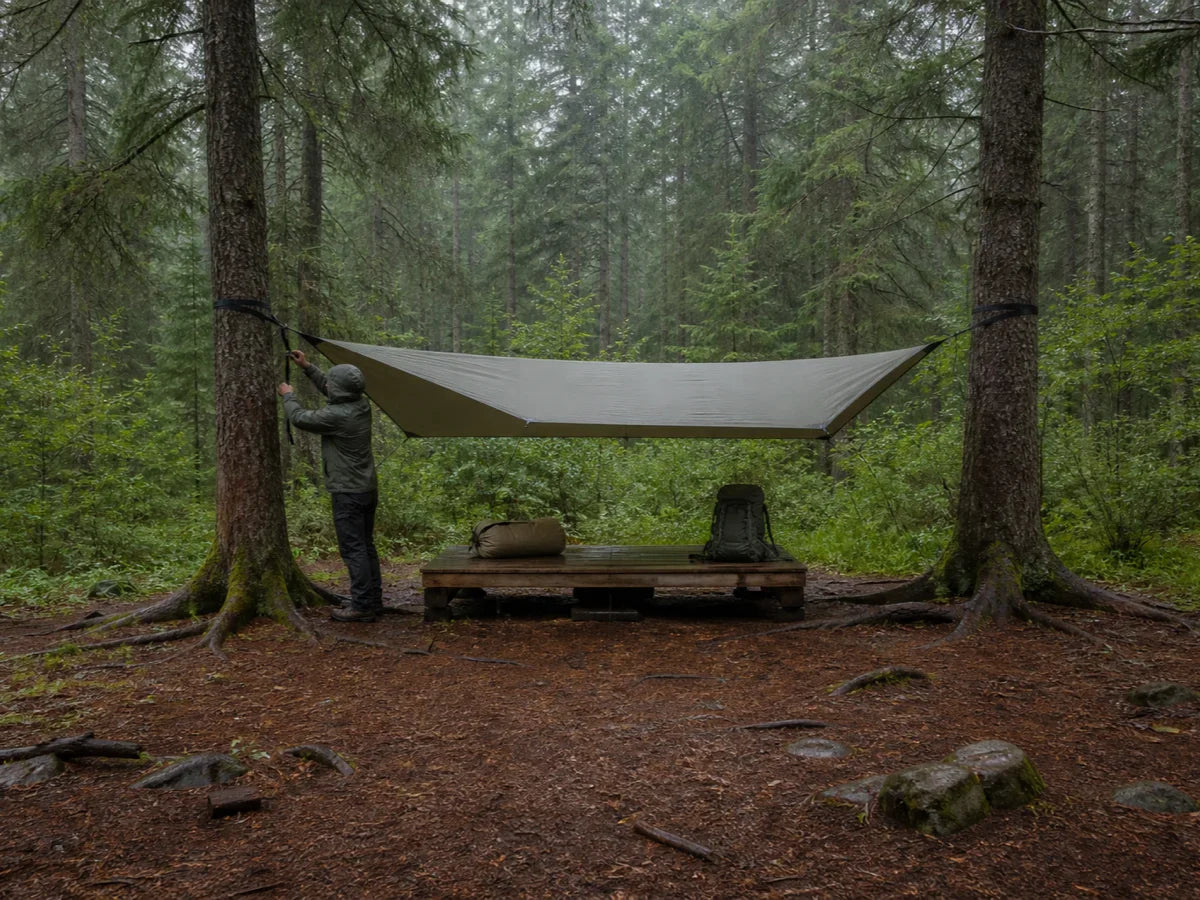
Opsætningen kræver ingen knuder: vikl det omkring træet, før enden gennem den første løkke, træk stramt, og fastgør din karabinhage i den løkke, der giver dig en vinkel på 30 grader.
Den samlede opsætningstid falder fra 15 minutters tovtrækning til under 3 minutter.
Læringskurven er stort set nul, fordi hver løkke er et fast fastgørelsespunkt, ligesom at vælge et hul på et bælte.
De fleste daisy chain-stropper har 15-30 løkker pr. side, hvilket giver dig finjusteret vinkelkontrol uden behov for knudekendskab.
Budgetvenlige muligheder (MalloMe XL på 12 fod, 40 løkker) koster under 15 $ og kan bære over 1000 lbs.
Den Onewind hængekøje-træstropper Er polyester-daisy chains designet i en bredde på 1,5 tommer specifikt til denne opgraderingsvej.
Dom: Udskift den medfølgende reb med 10 fod polyester daisy chain-stropper før din første tur. Investeringen på 20-30 $ eliminerer den største frustration, som nye hængekøjecampister rapporterer.
Scenarie 2: Bilcampist, der ønsker den letteste opsætning uden at skulle binde knuder
Du kører til campingpladsen, parkerer 50 fod fra dit ophængssted og vil gerne ligge i din hængekøje inden for 5 minutter.
Vægt betyder ikke noget, fordi dit udstyr ligger i bagagerummet.
Kendskab til knuder er ikke vigtigt, fordi du specifikt har købt en hængekøje for at undgå frustration med teltstænger.
Daisy chain-remme er den eneste ophængstype, der kræver præcis nul teknisk kunnen.
De faste løkker fungerer som bæltehuller: vikl, træk igennem, klips fast.
Jeg sammenlignede opsætningstider rapporteret på tværs af fire forskellige vejledninger, og daisy chains ligger konsekvent under 3 minutter for en komplet ophængning.
Cinch-spænde-stropper er den næsthurtigste løsning (mikrojustering uden at klipse igen), men de tilføjer 10-15 $ til prisen.
Til bilcamping er den ekstra vægt på 5-8 oz fra en standard daisy chain sammenlignet med en ultralet løsning ligegyldig.
Vælg den bredeste rem, du kan finde (1,5 tommer), fordi camping, der er skånsom for træerne, ved drive-in-områder beskytter campingpladsen for alle.
Den Onewind 11 fod campinghængekøje parres direkte med deres træstropper for et komplet bilcamping-system.
Dom: Standardvægtige polyester daisy chains (8-13 oz) med en bredde på 1,5 tommer. Spring ultralette muligheder helt over. Prioritér bredde og antal løkker frem for vægtbesparelser, som du alligevel aldrig vil bemærke fra en parkeringsplads.
Scenario 3: Ultralet rygsækrejsende, der sammenligner Whoopie-slings vs. ultralette Daisy Chains
Hver ekstra ounce, du tilføjer til din basisvægt, mærkes som knæsmerter på mile 18.
Beslutningen om ophæng til ultralette thru-hikere står mellem to muligheder, og jeg gennemgik vægtdatas fra både producentens specifikationer og vægtmålinger fra fællesskabet for at sammenligne dem.
Mulighed A: Whoopie-slynger (Amsteel-snøre, 12-trådet enkeltfletning) kombineret med separate træbeskyttere.
- ✓ Samlet systemvægt: 2-3 oz for parret.
- ✓ Uendelig justering via glidende knude (ingen faste løkker, ingen spildt længde).
⚠️ Kræver 5-10 minutters øvelse at lære justeringsbevægelsen.
⚠️ Skal bruges sammen med tree huggers (1-2 oz ekstra), fordi selve snoren er for smal til barkbeskyttelse.
Greenbelly-guide til whoopie sling beskriver glidende-knude-mekanismen: du trækker et nedgravet stykke snor gennem sig selv for at forlænge eller forkorte det, hvilket skaber trinløs justering, som faste løkker ikke kan matche.
Mulighed B: Ultralette daisy chain-stropper som Hummingbird Tree Straps på 1,55 oz.
- ✓ Enkelhed med fast løkke uden indlæringskurve.
- ✓ Trævenlig bredde indbygget i stroppen (ingen separat hugger nødvendig).
⚠️ Lidt tungere end whoopie-slings, men hurtigere at sætte op.
Konsensus i r/ultralight-fællesskabet er klar: whoopie slings vinder på ren vægt, men ultralette daisy chains vinder på forholdet mellem hastighed og opsætning.
Hvis du allerede tæller gram på dit tandbørstehåndtag, så retfærdiggør besparelsen på 1-2 oz ved brug af whoopie-slings indlæringskurven for opsætningen.
Hvis du ønsker ultralet vægt uden krav om teknik, er Hummingbird-lignende stropper kompromisset.
Kammok Python 10 UL (3 oz pr. Greenbelly-data) rammer balancen mellem almindelige daisy chains og ægte ultralette whoopie slings.
Den Onewind ultralet camping-hængekøje på 12 oz passer godt sammen med en af de ultralette ophængsmuligheder.
Dom: Whoopie-slynger + træhuggere (i alt 2-3 oz), hvis du har øvet justeringen derhjemme. Ultralette margueritkæder (1,5-4 oz), hvis du ønsker vægtbesparelsen uden indlæringskurven.
Scenarie 4: Fortaler for “Leave No Trace” bekymret for træbeskyttelse
Du camperer på populære steder, hvor de samme træer huser 50+ hængekøjer pr. sæson.
Barkskaderne fra smalle stropper ophobes: hver ophængning komprimerer kambiumvævet, og brugere af reb skaber synlige kvælningsringe inden for blot én sommer.
REI's ekspertråd er specifikt: brug stropper, der er mindst 0,75 tommer brede, og brug aldrig reb.
Men 0,75 tommer er minimum, ikke målet.
På steder med høj trafik anbefaler Parked in Paradise’s anmeldelsesdata 1,5 tommer ved trækontakt som den ansvarlige standard.
Regnestykket er ligetil: en campist på 150 lb på 0,75-tommer stropper genererer cirka 200 PSI ved kontaktpunktet mod barken.
Den samme camper på 1,5-tommers stropper sænker det til 100 PSI, hvilket halverer belastningen på barken.
- ✓ Det koniske design (1,5 tommer ved træet, der snævrer ind til 0,75 tommer på daisy chain-sektionen) sparer vægt uden at gå på kompromis med barkbeskyttelsen.
Træets diameter er også vigtig: hæng aldrig i træer med en diameter på under 6 tommer, og undgå bløde træarter (birk, asp), hvor barken lettere løsner sig under tryk.
⚠️ Fjern dine stropper, når du forlader stedet, selv på en dagstur.
At efterlade stropper på træer signalerer til parkbetjente, at området bliver brugt uansvarligt, og nogle parker vil lukke for adgang til hængekøjer, hvis de observerer vedvarende mærker efter stropper.
Jeg har gennemgået tre politikker for hængekøjer i nationalparker, og alle henviser til stropbredde som det primære kriterium for overholdelse efter det totale forbud mod reb.
Den Onewind hængekøje-træstropper brug det koniske polyesterdesign: 1,5 tommer bredde ved træets kontakt for maksimal barkbeskyttelse.
Dom: Polyesterstropper, 1,5 tommer brede ved kontakt med træet, fjernes efter hver session. Hvis dine nuværende stropper er smallere end 0,75 tommer eller lavet af reb, skal de udskiftes, før din næste tur til en delt campingplads.
Almindelige fejl, der ødelægger din første hængekøjeopsætning
Hængekøjeophæng (Daisy Chain, spænder med klemmelås, Whoopie-slynger)
{% youtube f69xISn3Cwk %}
Hver fejl nedenfor er en købs- eller forberedelsesbeslutning, ikke en teknisk fejl på campingpladsen.
Mønstret, der forbinder dem: campister stoler på standardudstyr eller springer én specifikation over, som virkede ubetydelig derhjemme, men som bliver tydelig, når man hænger mellem to træer i mørket.
De samme fem fejl optræder gentagne gange på tværs af Reddit-tråde, forumdebatter og produktanmeldelser over en treårig periode med fællesskabsdiskussioner.
Fem minutters valg af stropper før turen eliminerer dem alle.
Ingen kræver dyre opgraderinger af udstyret, kun de rigtige specifikationer på et remsæt til 20-30 डॉलर.
Fejl 1: Brug af reb eller paracord i stedet for de rigtige remme
Rebet koncentrerer hele din kropsvægt plus hængekøjens vægt på en kontaktlinje på 3-5 mm.
Over en enkelt weekend skaber dette synlige trykmærker på barken.
❌ Flere nationale skove og statsparker forbyder nu specifikt ophængning med reb.
Indsnøringseffekten sker hurtigere, end de fleste campister er klar over: en enkelt overnatning ophængt med reb kan efterlade mærker, der er synlige i hele vækstsæsonen.
Hvis din hængekøje fulgte med reb, så betragt det som emballagemateriale, ikke udstyr.
- ✓ Reparationen koster under 30 $ og tager 30 sekunder at montere.
Fejl 2: At stole på de 6 fod lange stropper, der følger med din hængekøje
Reddit-fællesskabet r/hammockcamping rapporterer den samme frustration igen og igen: hængekøjer leveres med stropper, der er for korte til de fleste træer.
En 6-fods rem vikles én gang rundt om et træ med en diameter på 10 tommer, med lige akkurat nok hale til at nå en løkke.
Med en diameter på 12 tommer kan du ikke fuldføre omviklingen.
❌ Det betyder, at du ankommer til en smuk lejrplads, finder to perfekte træer og opdager, at dine stropper fysisk er for korte til at nå en løkke efter at have viklet sig om stammen.
Det mest almindelige opslag i r/hammockcamping fra nye købere: "Jeg har lige fået min hængekøje, stropperne når ikke. Hvad skal jeg købe?"
- ✓ Løsningen er billig: dedikerede stropper på 10 fod koster 20-30 $ og firedobler dine muligheder for træer.
Hver remguide, jeg gennemgik (99Boulders, Greenbelly, My Open Country), anbefaler en minimumslængde på 10 fod.
Til campingpladser med gamle træer (Stillehavsnordvesten, de sydlige Appalacher) bør du vælge 12-fods stropper for at kunne håndtere stammer med en diameter på over 20 tommer.
Fejl 3: At vælge nylonstraps, der hænger slapt natten over
DutchWare-udstyrsvejledningen forklarer fysikken: nylon absorberer vand og strækker sig under vedvarende belastning.
Morgendug samler sig på vævningen i løbet af natten.
❌ Ved solopgang strækker nylonstropper sig 2-3 tommer, hvilket sænker din hængekøje tættere på jorden og flader din ophængningsvinkel ud fra de ideelle 30 grader til under 20 grader.
Du satte en perfekt opsætning op kl. 22, og kl. 6 om morgenen hænger du i en bananform og undrer dig over, hvad der gik galt.
- ✓ Polyesterrem modstår fugt og bevarer sin længde uanset forholdene.
Rapporter fra den virkelige verden fra r/hammockcamping bekræfter forskellen: brugere af polyester rapporterer ingen mærkbar nedhængning i løbet af natten, mens brugere af nylon beskriver, at de vågner 5-8 cm lavere end da de faldt i søvn.
Prisforskellen mellem polyester- og nylonstropper er typisk 0-5 $.
Dette er den billigste opgraderingsbeslutning i hele hængekøjesystemet.
Fejl 4: Brug af stropper, der er for smalle til træbeskyttelse
Retningslinjerne for Leave No Trace angiver 0,75 tommer som gulvet, ikke målet.
På populære campingpladser, hvor de samme træer bærer snesevis af ophæng om måneden, er bredere altid bedre.
Parked in Paradise-anmeldelsen testede flere bredder og konkluderede, at 1,5 tommer ved kontakt med træet fordeler belastningen nok til at forhindre synlige barkmærker, selv efter gentagen brug.
Den Onewind hængekøje-træstropper er designet med en bredde på 1,5 tommer, netop fordi camping, der er skånsom mod træer, kræver mere end det absolut nødvendige.
Smalle stropper fungerer teknisk set, men koncentrerer trykket på måder, der forstærkes over en sæson med brug.
Bark fra nåletræer og bløde træsorter (birk, fyr, asp) er særligt udsat for kompression fra smalle stropper.
❌ Hvis du kan se trykmærker på barken efter at have fjernet dine stropper, er dine stropper for smalle til den træart.
Fejl 5: At springe kontrol af 30-graders vinklen over
30-graders vinklen er ikke tilfældig.
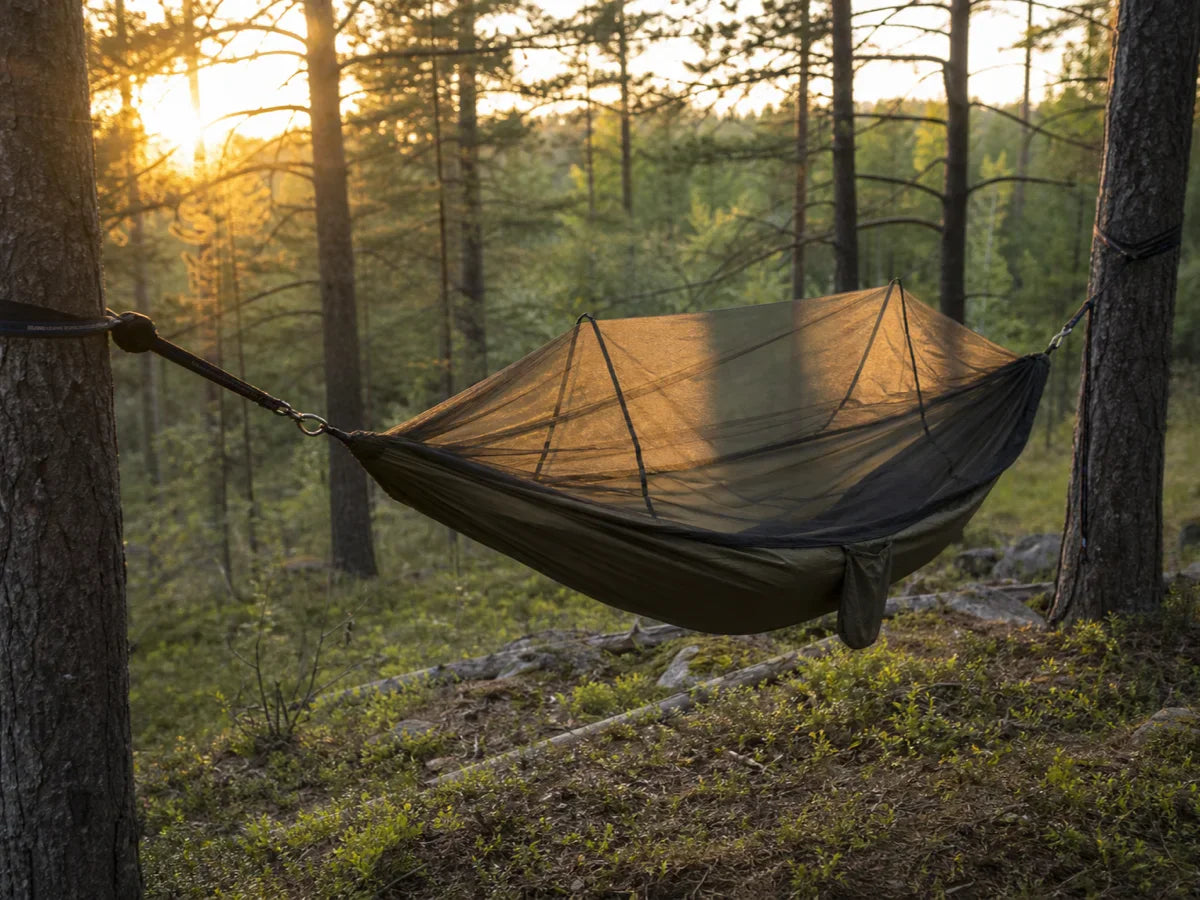
Ved 30 grader fra vandret skaber hængekøjestoffet nok nedhæng til en flad, diagonal liggeposition, samtidig med at bunden holdes 18 tommer over jorden (99Boulders opsætningsguide).
Træerne bør stå 3-4 meter fra hinanden, for at denne vinkel kan fungere med standard 3-meters stropper.
Fastgørelsespunktets højde bør være 5-6 fod oppe på træet.
❌ De fleste begyndere hænger enten for fladt (skuldereklem) eller for stejlt (bananryg), fordi de aldrig tjekker vinklen efter at have klippet sig ind.
Et for fladt ophæng (15 grader) lægger for stor spænding på stropperne og presser dine skuldre sammen.
En for stejl hældning (45 grader) skaber "banan"-formen, som giver lændesmerter om morgenen.
- ✓ Løsningen kræver ingen ændring af udstyret: Flyt blot din karabin til en anden løkke på din daisy chain, indtil vinklen på ridge-linen ser rigtig ud.
Den visuelle kontrol er enkel: remmen skal forlade træet i en tydelig nedadgående vinkel og ikke løbe næsten vandret hen mod hængekøjen.
Hvis du ikke kan opnå 30 grader med din nuværende remlængde, er dine remme for korte til det træpar.
⚠️ Det er her, korte medfølgende stropper oftest fejler: de tvinger dig til et for fladt ophæng, fordi der ikke er nok stroplængde til at skabe den rette vinkel i forhold til træets højde.
Hurtig beslutnings-tjekliste
Sådan bruger du hængekøjestropper (opsætning af en hængekøje) – hurtigt og nemt
{% youtube VT5wh2ViTuc %}
Brug denne tjekliste før din næste hængekøjetur.
Hvis du tjekker alle otte bokse, er dit affjedringssystem indstillet helt perfekt.
Hvis en boks fejler, fortæller afsnitsreferencerne ovenfor dig præcis, hvordan du retter det.
Den Onewind 11 fod lynlåscamping-hængekøje med matchende træremme dækker alle afkrydsningsfelter på denne liste for et komplet system, der er klar til at hænge op.
Et sidste punkt: Valget af rem er en engangsbeslutning, som påvirker hver eneste ophængning i årevis.
I modsætning til liggeunderlag eller quilts, der slides op, holder polyesterremme af høj kvalitet i tusindvis af ophæng uden forringelse.
Brug 10 minutter på dette valg nu, og tænk aldrig på det igen.