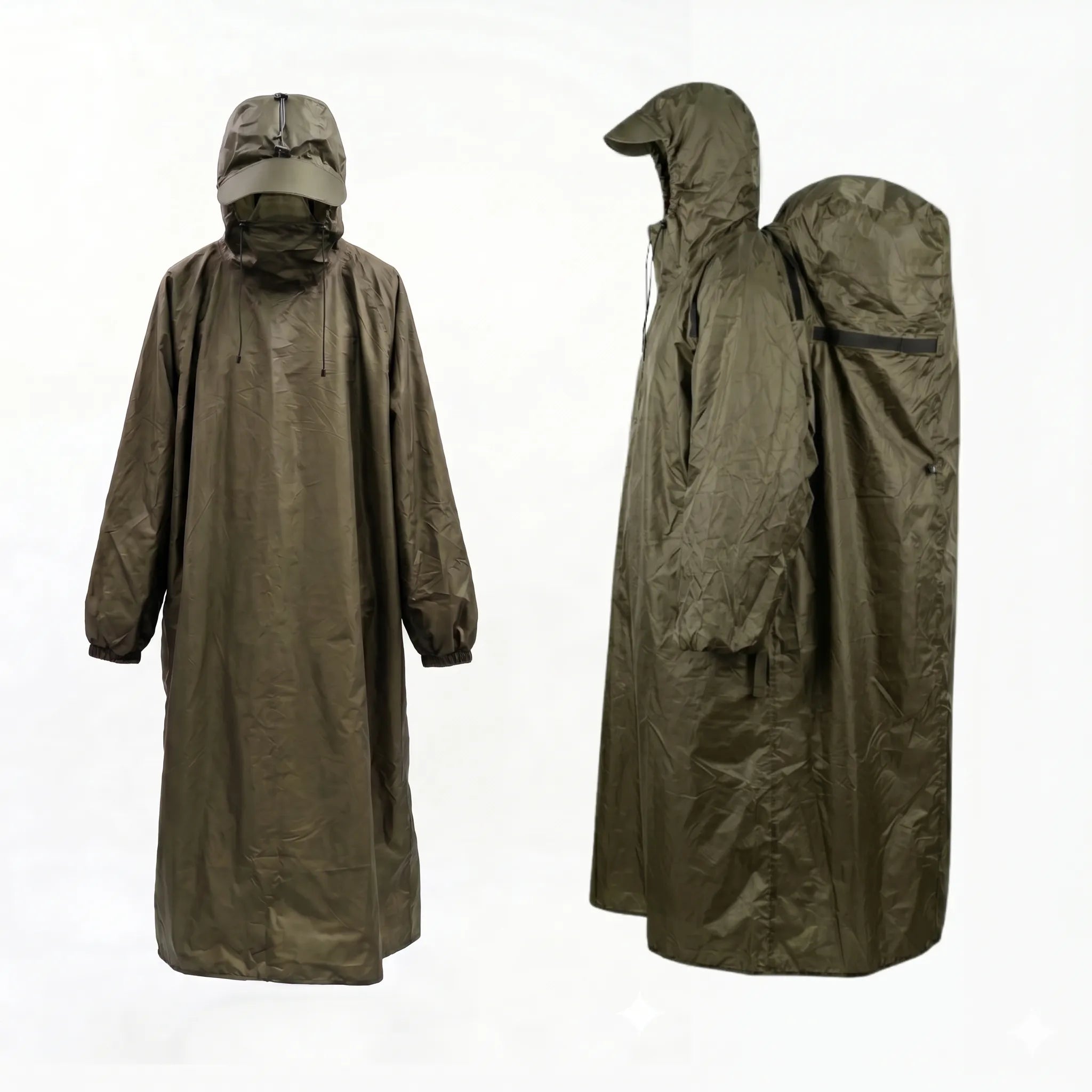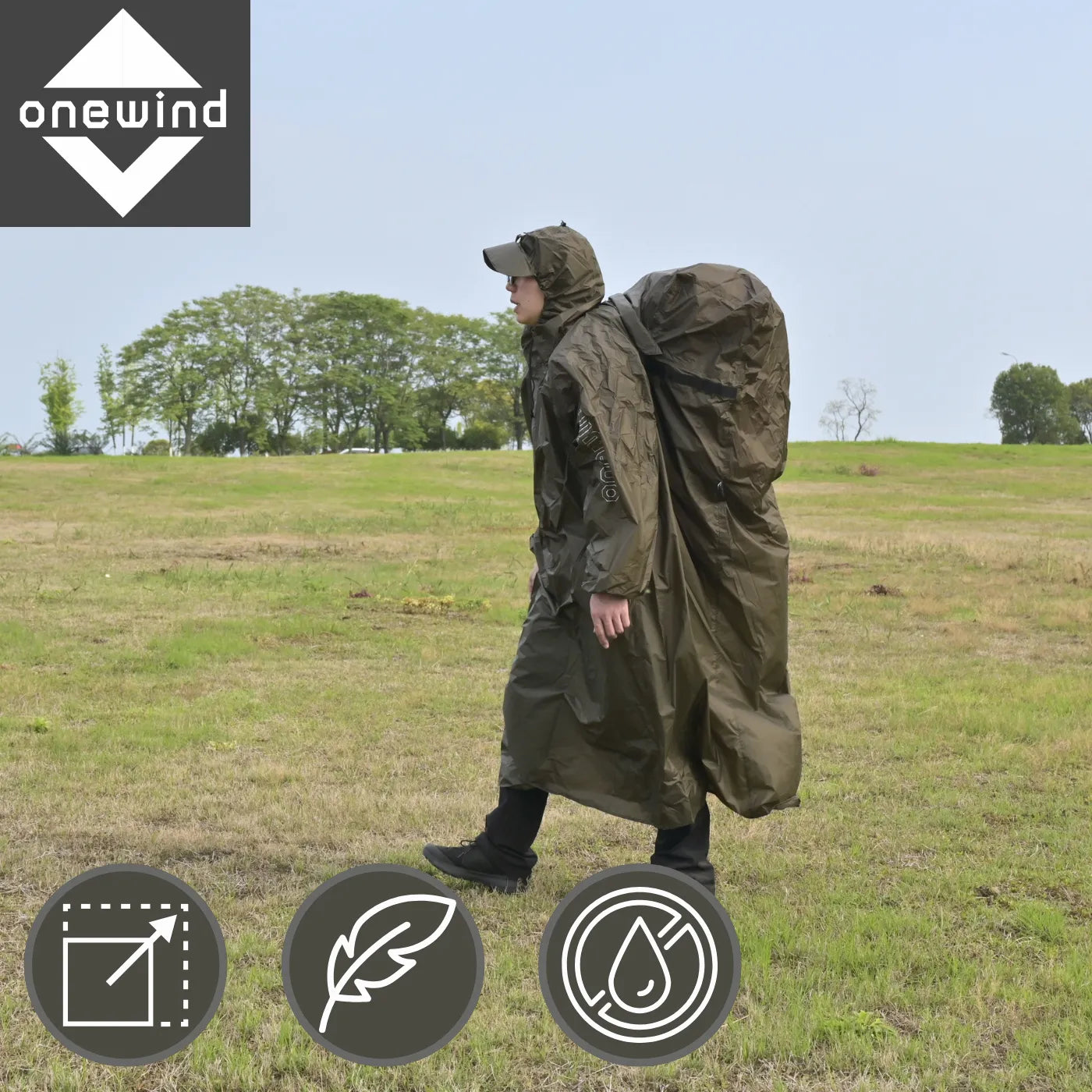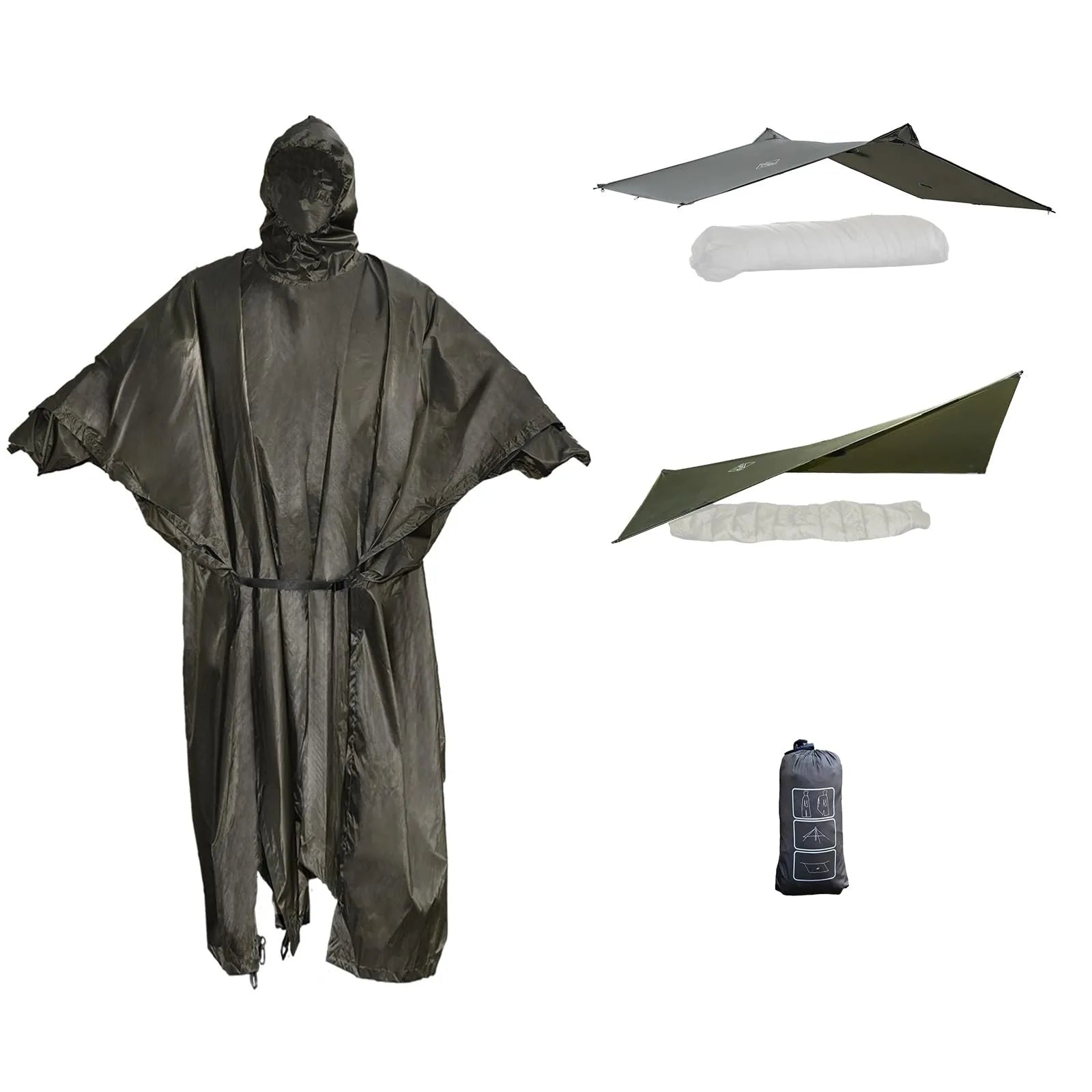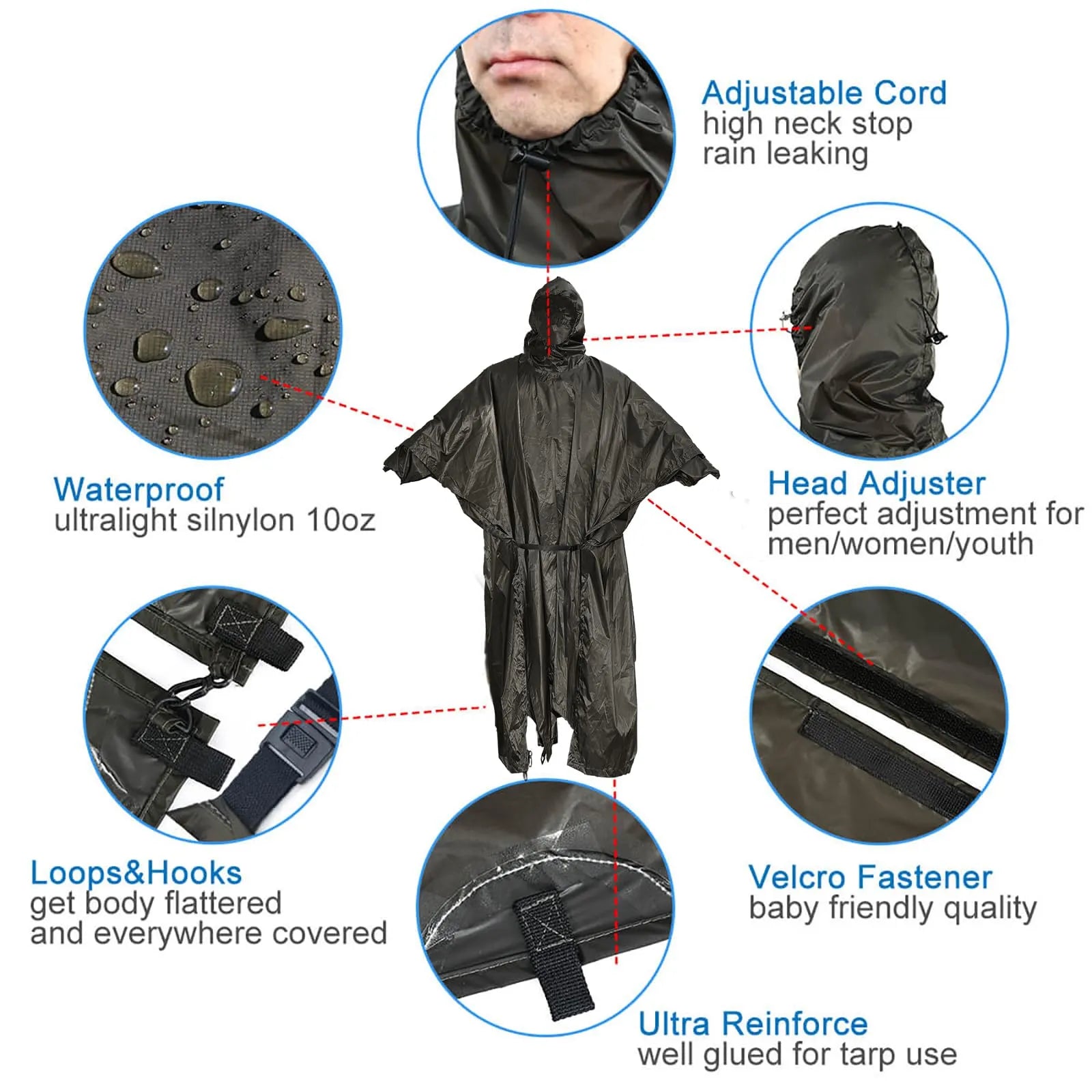

O pelerină tarp bună cântărește aproximativ 8 uncii și înlocuiește atât a ta jachetă de ploaie și prelatea ta, reducând peste o livră din rucsac. A te strecura sub ea pentru a te încălzi este o mișcare din arta mai amplă a drumeție în ploaie.
Acest număr este motivul pentru care drumeții se îndrăgostesc de idee, și este real.
Mi-am montat propria pelerină de ploaie în formă de A în curte, apoi am citit o duzină de ghiduri despre cum să o fac corect și am găsit aceeași lacună în fiecare dintre ele.
Jumătate dintre pagini îți vând pur și simplu un poncho și îl numesc adăpost, iar cealaltă jumătate îți arată montări generice cu prelată care ignoră singurul lucru pe care îl are un poncho și pe care o prelată nu-l are: o gaură în mijloc pentru capul tău.
O pelerină de ploaie devine un adăpost adevărat doar atunci când rezolvi trei compromisuri integrate, iar nicio singură pagină nu te ghidează prin toate trei.
Acest ghid este acel tutorial pas cu pas, plus un test sincer pentru a vedea dacă poncho-ul tău este un adăpost pentru următoarea ta excursie sau doar un strat de ploaie pe care, întâmplător, îl porți și cu tine.
Nimeriți toate trei și eliminați o prelată din echipamentul dumneavoastră; greșiți una și petreceți o noapte umedă învățând de ce.
Ce vei învăța
Am construit acest lucru în jurul unei singure decizii: dacă poncho-ul tău poate fi adăpostul tău și tehnica de a-l face să reziste dacă răspunsul este da.
Iată ce stabilește fiecare secțiune.
Răspuns rapid
Poncho-ul tău este un adăpost atunci când orificiul pentru cap este etanșat, panoul este suficient de mare pentru prelatea pe care o poți monta, iar vremea este suficient de blândă încât un adăpost jos, deschis, să reziste.
Dacă lipsește oricare dintre acestea, este doar un strat de protecție împotriva ploii și o rezervă de urgență, nu adăpostul tău, iar în schimb cari o prelată adevărată.
Restul acestui ghid îți arată cum să răspunzi la fiecare rând pentru propria ta călătorie și cum să prezinți lucrul acesta odată ce îl ai.
Testul Poncho-Tarp
Este un poncho-tarp adăpostul/echipamentul de ploaie potrivit pentru tine? Experiența mea cu poncho-tarp-ul/bivy-ul MLD
Am încetat să tratez poncho-ul ca pe un obiect magic cu dublă utilizare și am început să-l tratez ca pe o prelată cu trei dezavantaje în ziua în care am înțeles de ce cele ieftine curg și fâlfâie.
Un poncho nu este o prelată plată, iar a pretinde că este una este motivul pentru care începătorii se udă sub el.
Are o gaură în mijloc pentru cap, este un panou mic, de dimensiune individuală, și se montează doar din inelele metalice de la colțuri și din capsele laterale.
Așadar, testul are trei întrebări, fiecare legată de o soluție, iar tu le parcurgi pe toate trei înainte să pleci de acasă.
Răspundeți da la toate trei, iar poncho-ul este un adăpost ultraușor legitim care elimină o prelată separată din echipamentul dvs.
Răspunde „nu” la oricare dintre ele și este un strat de ploaie plus o rezervă de precauție, iar adăpostul tău este o prelată dedicată.
Întrebarea 1: Gaura pentru cap și de ce mijlocul acoperișului tău are scurgeri
Decupajul pentru cap este problema definitorie a poncho-ului și primul lucru pe care fiecare realizator cu experiență îl rezolvă.
Pe forumul r/myog de pe Reddit, când un excursionist a postat o prelată poncho făcută în casă, frumoasă, care a strâns 158 de voturi pozitive, întrebările de top nu au fost despre material sau culoare, ci despre cum a „integrat gluga de-a lungul liniei de creastă”.
Asta este tot jocul: o gaură rotundă în centrul panoului strânge apa și o picură pe tine, așa că trebuie să o închizi sau să o muți.
Datele de la experții în design confirmă acest lucru, deoarece un orificiu central rotund ieftin provoacă „probleme de acumulare sau de picurare”, în timp ce o fantă integrată în linia de creastă nu provoacă, motiv pentru care prelatele poncho premium sunt realizate în a doua variantă.
Există trei remedieri, în ordinea aproximativă a eficienței lor.
Rulați gluga și legați șnurul de strângere în jurul ruloului, aceasta fiind metoda militară: după cum spune un ghid pentru adăpostul tip poncho, „rulați gluga și fixați șnurul de strângere în jurul ruloului pe care l-ați creat.”
Leagă un segment de paracord în jurul glugii când vine ploaia, deoarece, potrivit unei surse despre adăposturi de supraviețuire, „faci un nod cu paracord în jurul glugii pentru a împiedica apa să se infiltreze în interior.”
Cel mai bine, cumpărați un design care mută deschiderea în creasta principală, astfel încât „se închide etanș când este întins” și, în cuvintele producătorului, „nu există o gaură fluturândă în mijloc care să prindă ploaia.”
Indiferent de metoda de fixare pe care o folosești, orientează gluga în sus și spre partea din spate mai înaltă a cortului, astfel încât gravitația să nu o poată umple.
Alegeți: un poncho cu glugă pe creasta cortului dacă îl cumpărați pentru utilizare ca adăpost și metoda de rulat și legat sau metoda cu nod din paracord dacă dețineți deja un poncho cu glugă centrală.
Întrebarea 2: Mărimea și regula poncho-ului unu-versus-doi
Un poncho tarp este echipament pentru utilizare solo, iar cifrele arată clar acest lucru.
Un panou mare de poncho se întinde pe aproximativ 9 picioare de-a lungul crestei, cu o lățime de 5 până la 5,5 picioare; un poncho de ploaie standard este mai mic; vechiul poncho militar are 68 x 80 de inci.
Asta este suficient pentru a acoperi un singur drumeț într-un A-frame, și abia.
Un drumeț de pe acel thread r/myog a spus-o direct despre un panou de 7 picioare: „bun pentru modul poncho, poate nu atât de bun pentru ploaie puternică, 7 picioare este destul de mic, cu siguranță mi-aș dori și un bivy.”
Așadar, alege mărimea în mod sincer, în funcție de modul în care îl vei folosi.
Două persoane reprezintă limita realistă: un poncho nu va acoperi două persoane, așa că fie unești două poncho-uri de-a lungul crestei, fie iei o prelată adevărată.
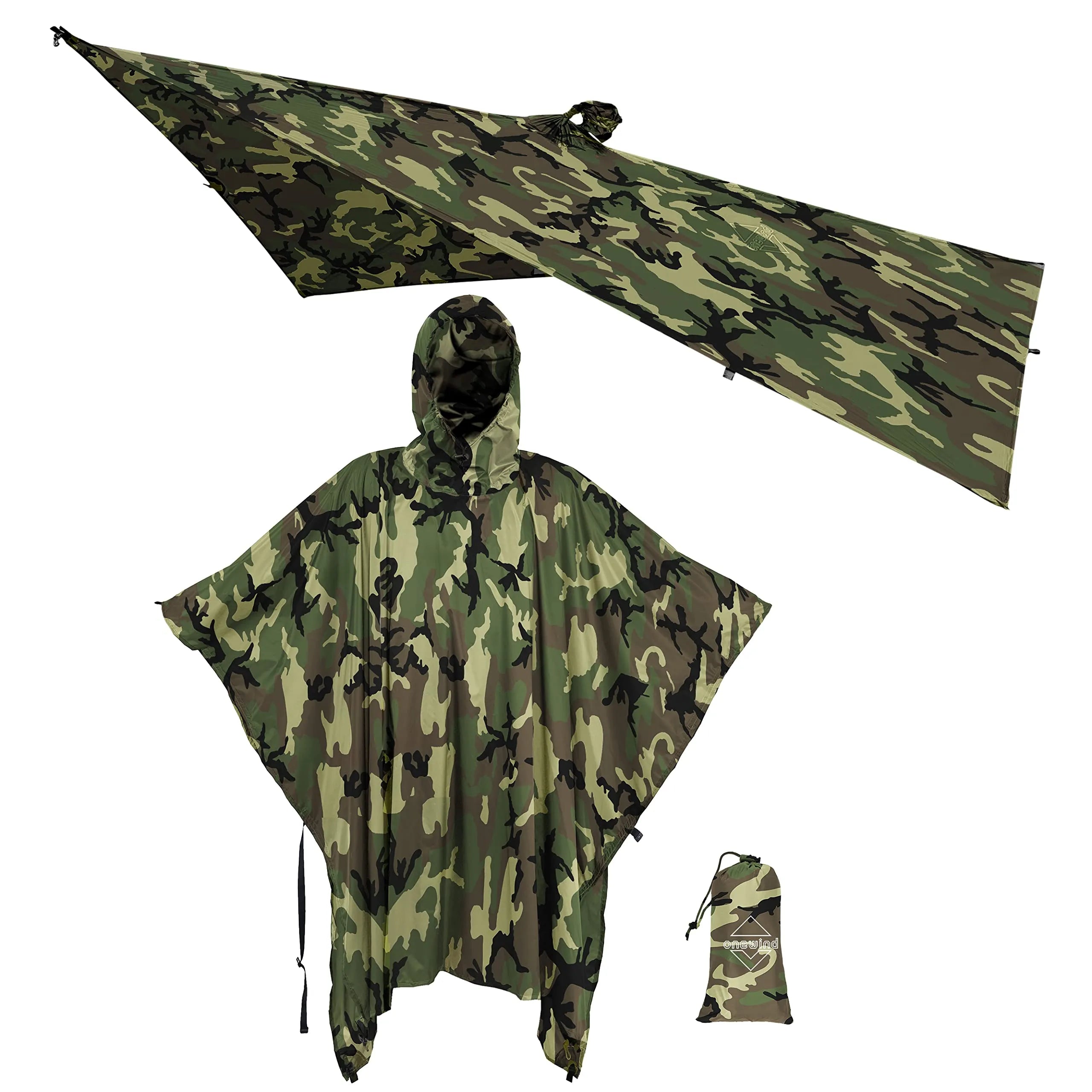
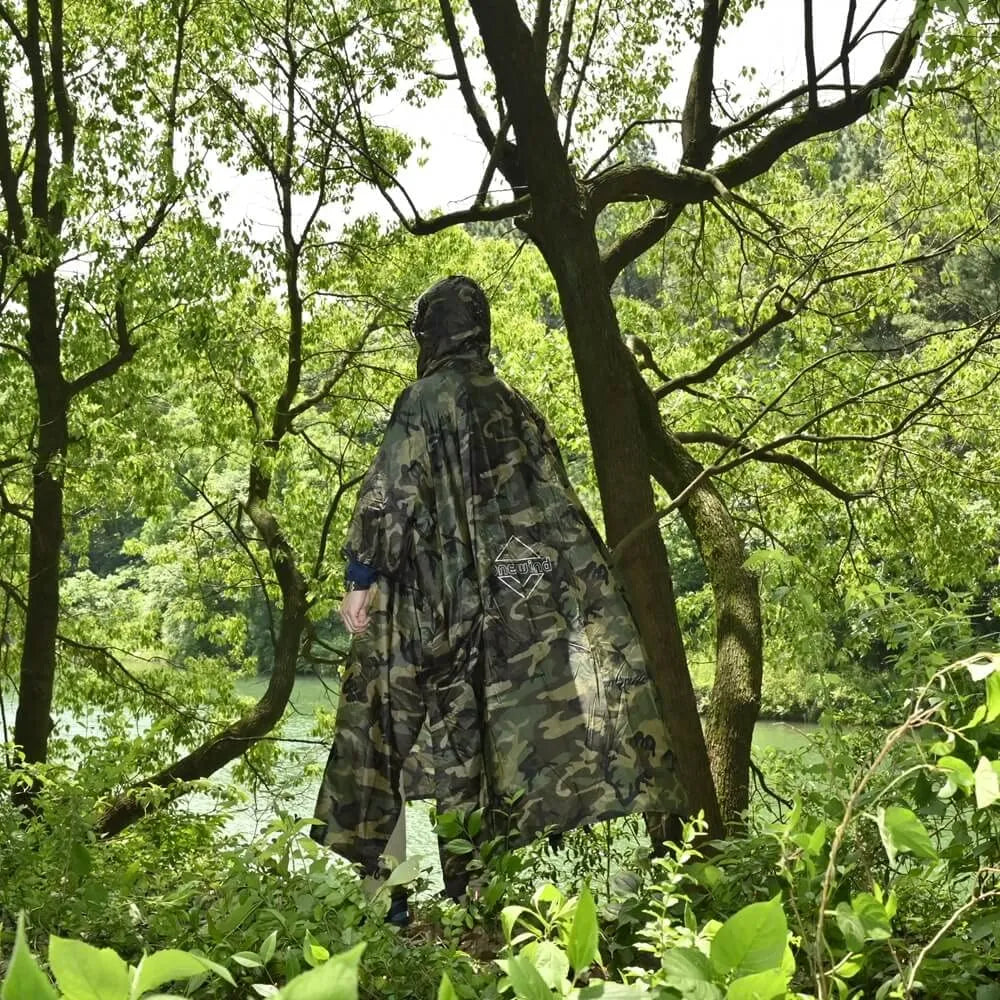
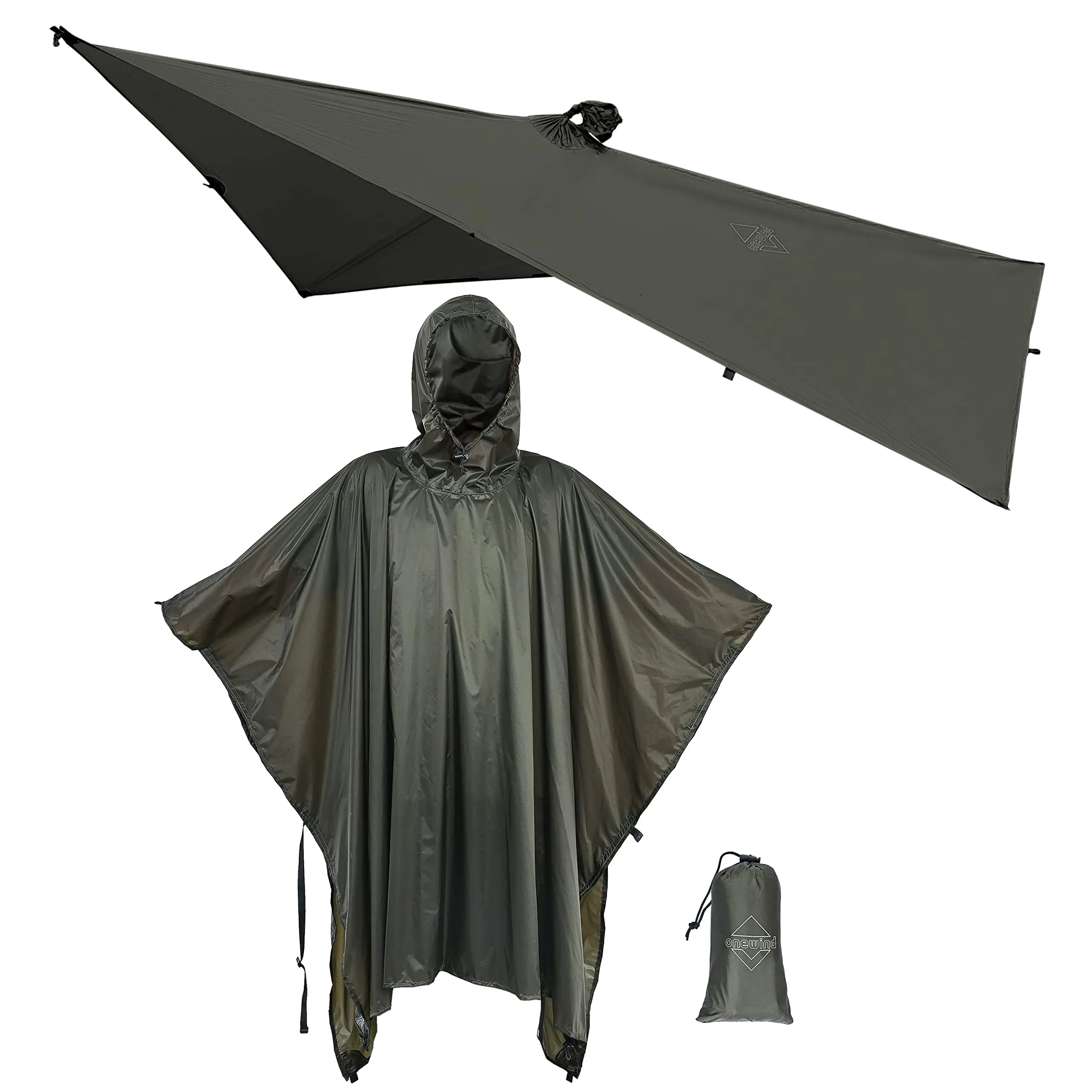
al Onewind Adăpost poncho de ploaie camuflaj are 257 de grame cu un panou de 250 x 142 cm, care este dimensiunea ce se montează efectiv în formă de A ca adăpost solo, mai degrabă decât o protecție de urgență, și un standard poncho de ploaie este în primul rând un strat de ploaie și, în al doilea rând, o prelată de rezervă.
Recomandare: Folosește un poncho ca adăpost individual împreună cu un bivy, unește două pentru două persoane și nu mai aștepta ca un singur panou să găzduiască două persoane.
Întrebarea 3: Condițiile și unde se oprește un poncho tarp
Un poncho tarp este un adăpost fără podea, fără plasă împotriva insectelor, deschis pe trei laturi, așa că condițiile trebuie să fie suficient de blânde încât deschiderea să fie în regulă.
Vântul este limita maximă, iar comunitatea este consecventă în privința locului în care se situează.
Un membru al forumului Backpacking Light, care folosește un poncho de 6,9 uncii, a raportat că acesta funcționează „când șansele de ploaie sunt mai mici și vântul este sub 20 mph”, iar Ryan Jordan de la Backpacking Light renunță complet la poncho „în vânt puternic, la temperaturi mai scăzute”.
Regula lui pentru momentul în care un poncho tarp este suficient merită memorată: vreme blândă „în care șansa să ai nevoie efectiv de echipament de ploaie sau de un adăpost deasupra capului, bine închis cu nasturi, pentru o furtună severă este mică.”
Autoritatea în tehnică de la The Hiking Life numește locurile de evitat cu totul: „medii constant umede și vântoase”, deplasarea prin vegetație deasă și „drumețiile exclusiv deasupra limitei pădurii”.
Sub limita copacilor, vremea caldă, umedă, cu șanse reduse de furtuni și vânt slab reprezintă zona verde.
Deasupra limitei pădurii, frigul de aproape de îngheț, vântul susținut sau presiunea serioasă a insectelor reprezintă zona roșie, iar acolo ai nevoie de o prelată dedicată sau de un adăpost adevărat.
Insectele merită propria lor linie, deoarece un tarp tip poncho nu are podea și nici plasă, așa că, în sezonul țânțarilor, fie adaugi un bivy, fie o plasă de cap, fie donezi sânge toată noaptea.
Frigul este eșecul mai discret: un cort deschis pe trei laturi nu poate capta aerul cald așa cum o face un adăpost închis, așa că o prelată tip poncho, care pare potrivită la 60 de grade, se simte foarte diferit la 38, cu adiere de vânt.
Modelul este același în toate situațiile: un tarp tip poncho te răsplătește în condiții blânde și te pedepsește în momentul în care vremea devine serioasă, așa că potrivește-l cu prognozele în care ai încredere, nu cu excursia pe care ți-o dorești.
Verdict: dacă nu poți menține excursia sub limita pădurii, în condiții blânde și cu vânt de sub aproximativ 20 mph, poncho-ul este stratul tău de protecție împotriva ploii, iar altceva este acoperișul tău.
Cum să montezi o prelată poncho ca un adăpost în formă de A
25 dintre cele mai bune configurări de adăpost cu prelata poncho pentru bushcraft și supraviețuire
Odată ce cele trei întrebări sunt depășite, prezentarea propriu-zisă este rapidă și folosește bețe de trekking, deoarece un poncho nu stă singur în picioare.
Sigilați mai întâi gluga, folosind metoda rulare-și-legare sau metoda cu paracord din Întrebarea 1, ca să nu fiți nevoit să reparați o scurgere pe întuneric mai târziu.
Întinde o linie de creastă între doi copaci sau folosește un suport a bețe de trekking sau pentru prelată la fiecare capăt și prinde sau leagă punctele de creastă din față și din spate ale poncho-ului de acesta.
Fixați cele patru inele de prindere din colțuri, întinse și jos, trăgând panoul bine, deoarece o pelerină de ploaie oferă „aria maximă atunci când este montată cât mai plat posibil”.
Pentru vânt și ploaie mai puternică, coborâți unghiul mai jos și fixați colțurile din spate direct în sol, ceea ce reprezintă cadrul A de furtună recomandat de orice sursă de tehnici; corzile de ancorare sunt aici esențiale, nu opționale.
Aceasta este în mod deliberat versiunea scurtă a geometriei, deoarece formele generale de tip A-frame și lean-to, tensionarea cordelinei și alegerea amplasamentului sunt tratate în detaliu în ghid de montare a prelatei de campingși nu există niciun motiv să o repetăm aici.
Dacă excursia dumneavoastră depășește ce poate acoperi un panou de poncho, același utilizator ar trebui să treacă la un adăpost real deasupra capului, care the ghid pentru tarp ultraușor trece prin.
Alegeți: semi-piramida sau cadrul deschis în formă de A pe vreme blândă, și cadrul de furtună jos în formă de A, cu colțurile din spate fixate cu cuie în pământ, atunci când se apropie vântul și ploaia.
Matematica greutății: ce economisești de fapt
Motivul pentru care merită să suportăm orificiul pentru cap și dimensiunea mică este cifra de pe cântar, așa că merită să prezentăm avantajul în date clare, în locul unei promisiuni vagi.
Un poncho tarp îndeplinește două funcții, echipament de ploaie și adăpost, cu o singură bucată de material, iar experții care îl folosesc cuantifică economia în același mod.
Thru-Hiker spune că este „peste o liră” redusă din greutatea de bază, comparativ cu transportul echipamentului de ploaie plus un prelată separată de 8 x 10 picioare, iar The Hiking Life raportează un total combinat adăpost + echipament de ploaie de aproximativ 8 uncii pentru un poncho Cuben.
Iată schimbul prezentat alăturat, ca să poți vedea exact ce câștigi și ce pierzi.
Economia este reală, dar observați că configurația onestă pentru o singură persoană adaugă un bivac, ceea ce reduce diferența.
Faceți un schimb de aproximativ o jumătate de livră până la o livră de greutate pentru protecție împotriva solului, a insectelor și pentru capacitate de rezistență la furtună, iar dacă acest schimb merită este exact ceea ce stabilesc cele trei întrebări.
Mai există un unghi pe care paginile produsului îl omit: deoarece pelerinele de ploaie se livrează cu capse de îmbinare pe fiecare parte, două dintre ele se pot uni într-o structură A mai lată, în timp ce fiecare drumeț își poartă în continuare propria jumătate într-o zi uscată, astfel încât, pentru un cuplu în care ambii doresc protecție împotriva ploii, două pelerine de ploaie pot depăși o pelerină de ploaie plus o prelată comună atât la greutate, cât și la versatilitate.
Scenariul 1: O noapte solitară blândă, sub limita pădurii
Ești plecat pentru una sau două nopți pe un traseu întreținut, este cald și umed, prognoza anunță ploaie ușoară, iar șansele de furtună sunt reduse.
Acesta este terenul natural al poncho tarp-ului și principalul motiv pentru a lua unul cu tine.
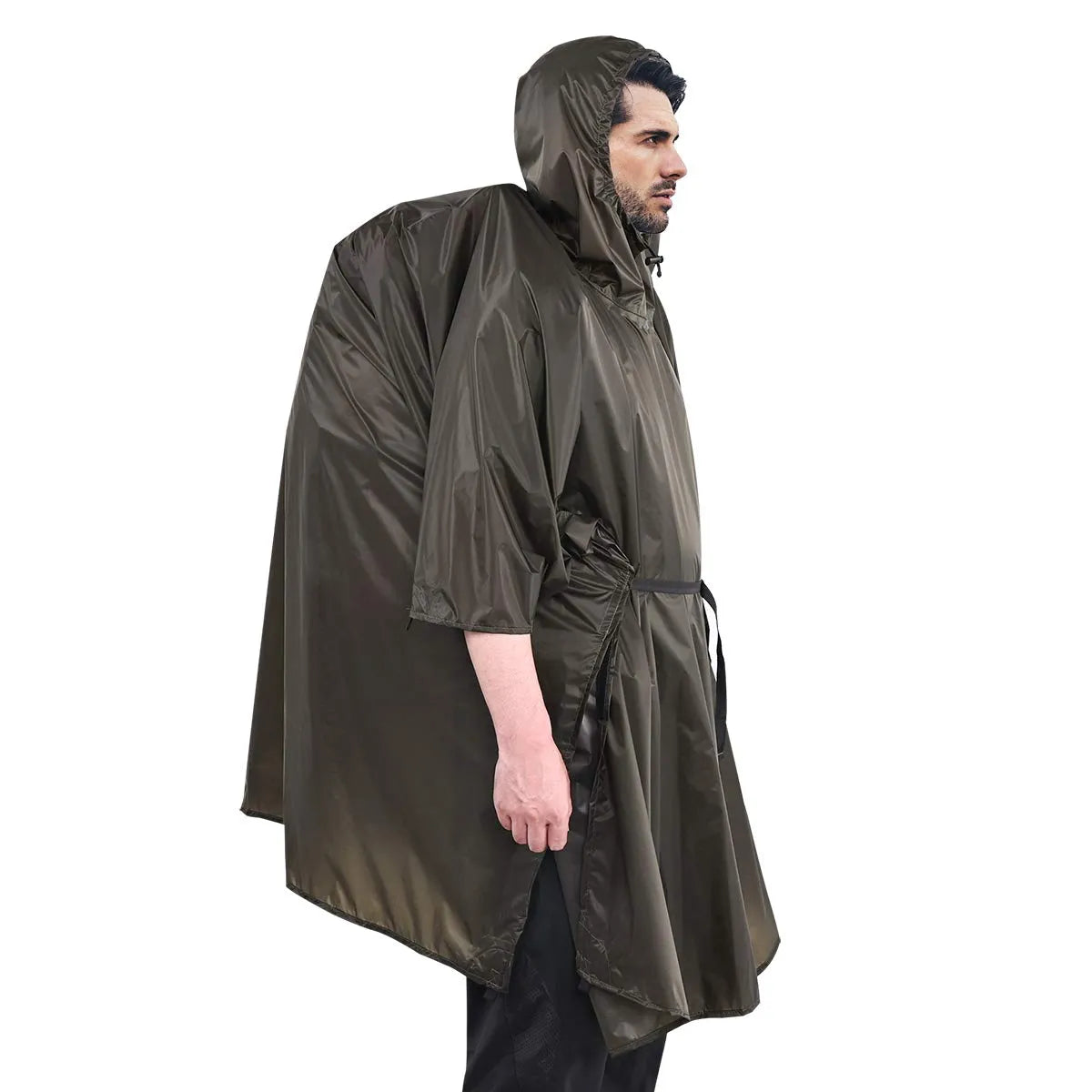
Etanșați gluga, montați un A-frame jos între doi copaci, fixați colțurile întinse și glisați dedesubt un bivy ușor pentru protecție împotriva stropilor și a insectelor.
Tocmai ai lăsat acasă geaca de ploaie și prelată ta dedicată și ai redus peste o jumătate de kilogram, ceea ce reprezintă exact economia de greutate la care se referea drumețul de pe r/myog prin „echipament care îndeplinește o dublă funcție”.
Conform regulii lui Jordan, aceasta este exact excursia ușoară, cu severitate redusă, pentru care este concepută o prelată tip poncho.
Am instalat un poncho în nopți ca acestea și am rămas uscat, iar singura observație sinceră este că doar o furtună neașteptată și puternică l-ar pune la încercare.
Alegeți un loc adăpostit sub copaci, în locul unei pajiști deschise, orientați partea joasă din spate a cadrului în formă de A spre orice adiere de vânt există și păstrați gluga etanșă și orientată în susul pantei, astfel încât nimic să nu băltească.
Bivacul este ceea ce transformă acest lucru dintr-un pariu potrivit doar pe vreme bună într-un montaj repetabil, deoarece gestionează umezeala din sol, stropii ridicați din pământ și insectele pe care o pelerină poncho deschisă nu le poate opri.
Luați cu voi câțiva picioare în plus de cordelină și două cuie de cort de rezervă, deoarece diferența dintre o pelerină de ploaie bine întinsă, care respinge ploaia, și una lăsată, care o canalizează, este de aproximativ nouăzeci de secunde de reglaj.
Verdict: folosește poncho tarp-ul, adaugă un bivy, alege un loc adăpostit și bucură-te că porți un singur obiect în loc de două.
Scenariul 2: Excursia pentru două persoane
Acum tu și un partener vreți să dormiți sub același acoperiș, iar un singur poncho cedează în liniște în clipa în care vă strecurați amândoi sub el.
Un panou de poncho acoperă un singur drumeț, nu doi, iar nicio montare ingenioasă nu schimbă suprafața în metri pătrați.
Ai două opțiuni oneste, iar ambele provin direct din sursele tehnice.
Fixați împreună două poncho-uri de-a lungul capselor laterale și inelelor metalice pentru a construi un adăpost tip A-frame mai lat, așa cum arată ghidurile de configurație militară folosind propria feronerie a poncho-ului.
Sau acceptă că două persoane înseamnă zonă de tarp și adu un tarp dedicat pentru două persoane, trimițând poncho-ul înapoi la rolul de strat de ploaie.
Ceea ce nu ar trebui să faci este să întinzi un singur panou peste două persoane și să speri, pentru că cineva petrece noaptea cu picioarele sau cu geanta în ploaie.
Montarea poncho-ului unit necesită puțină practică, așa că instalați-l o dată în curte înainte să vă bazați pe el, deoarece alinierea a două glugi și a două seturi de puncte de prindere în întuneric, pe o pantă, este într-adevăr o treabă migăloasă.
Avantajul este că, într-o zi uscată, adăpostul dispare și se transformă înapoi în două straturi de ploaie, câte unul pe fiecare drumeț, lucru pe care nicio prelată comună nu îl poate face.
Verdict: Îmbinați două poncho-uri pentru un A-frame adevărat pentru două persoane sau luați cu dvs. un prelat dedicată; un singur poncho este un acoperiș pentru o singură persoană.
Scenariul 3: Excursia rece, vântoasă sau deasupra limitei pădurii
Te îndrepți spre o creastă expusă, sau temperatura scade spre punctul de îngheț, ori se prevede că vântul se va intensifica.
Tot ceea ce face un poncho tarp ușor îl face, de asemenea, nepotrivit aici.
Un adăpost deschis, fără podea, disipă căldura, iar un panou mic, în vânt susținut, devine o velă care fâlfâie, indiferent cât de jos îl montezi.
Pragul comunității de „vânturi sub 20 mph” nu este o sugestie, iar Jordan trece la o jachetă și la un adăpost adevărat exact în aceste condiții.
The Hiking Life este categoric că „excursiile exclusiv deasupra limitei arborilor” sunt locul nepotrivit pentru o prelată tip poncho.
Purtă o prelată dedicată, un cort tip mid sau un cort, păstrează poncho-ul ca al tău strat de ploaieși nu îi cereți să vă fie acoperiș în vreme pentru care nu a fost proiectat niciodată.
Verdict: lasă poncho tarp-ul doar ca echipament de ploaie și adu un adăpost adevărat; frigul, vântul și expunerea sunt un nu categoric pentru el.
Scenariul 4: Copia de rezervă pentru orice eventualitate
Uneori, prelatea tip poncho nu este deloc adăpostul pe care l-ați planificat, iar și aceasta este o utilizare legitimă.
Purtați un cort sau o prelată ca acoperiș principal, iar poncho-ul vă însoțește ca echipament de ploaie, care poate deveni și un adăpost de urgență dacă ceva merge prost.
Un poncho își merită locul aici deoarece îndeplinește acea a doua funcție cu aproape nicio greutate în plus, ceea ce forumurile ultraușoare descriu ca fiind „un adăpost de rezervă sau echipament de ploaie, nu pentru utilizare obișnuită.”
Dacă îți pierzi sau îți spargi adăpostul principal, dacă se rupe un stâlp sau dacă un cort se inundă, poți sigila gluga, monta rapid un adăpost sprijinit de un copac și poți trece peste noapte în loc să pleci în întuneric.
Asta este asigurare, nu patul tău, iar distincția contează, deoarece un plan de rezervă sub care nu intenționezi niciodată să dormi nu trebuie să treacă toate cele trei întrebări.
De asemenea, acoperă și drumeția de o zi care se prelungește, bivacul neașteptat atunci când estimezi greșit distanța și prietenul a cărui echipament cedează, ceea ce înseamnă o acoperire serioasă pentru o piesă pe care oricum o purtai deja ca protecție împotriva ploii.
Schimbarea mentală constă în a nu mai întreba dacă poncho-ul este un adăpost excelent și în a începe să întrebi dacă este un lucru excelent de avut atunci când adăpostul tău real a dispărut, iar răspunsul la aceasta este aproape întotdeauna da.
Verdict: A purta un poncho ca echipament de rezervă pentru ploaie și adăpost de urgență este o formă inteligentă de asigurare ultraușoară, atâta timp cât nu este singurul tău plan pentru vreme rea.
Greșeli frecvente la adăposturile tip poncho
Aproape fiecare noapte cu poncho-tarp ud despre care am citit se trage de la omiterea uneia dintre cele trei întrebări.
Ignorând orificiul pentru cap până începe să plouă. O glugă centrală acumulează apa și o picură pe piept, așa că sigileaz-o cu o rulare și legare sau cu un nod din paracord înainte de a monta cortul, nu la 2 dimineața, când simți picurarea.
Tratarea unui poncho ca adăpost pentru două persoane. Un singur panou are dimensiuni pentru o singură persoană; două persoane au nevoie de două poncho-uri prinse împreună sau de o prelată adevărată, iar întinderea unuia peste două persoane doar va uda pe cineva.
Aducerea unui tarp tip poncho peste limita sa de rezistență la intemperii. Sub limita pădurii, condiții blânde și vânt de până la aproximativ 20 mph reprezintă limita de utilizare; frigul, vântul susținut și zonele expuse cer un adăpost dedicat, iar poncho-ul revine la rolul de echipament de ploaie.
Lista de verificare pentru decizia rapidă
Rulează asta înainte să împachetezi și lasă călătoria ta reală, nu călătoria pe care ți-o imaginezi, să răspundă la fiecare rând.
Un adăpost tip poncho este un adăpost adevărat exact atunci când poți răspunde „da” la aceste trei întrebări și îl poți monta bine întins.
Răspundeți sincer și fie cărați un singur obiect în loc de două, fie descoperiți în curte în loc de în sălbăticie.

Shop the Camo Rain Poncho Shelter
Shop Now →