Lightweight Hot Tent: Compare the Full Carry System
A lightweight hot tent is a carry system, not a canopy number. Compare shelter, support, stove, pipe, sleep insulation, and route mode with component boundaries made explicit.
A 6.4-pound shelter, a calculated 4.72-pound canopy-stove-pipe subtotal, and a 1,400-gram teepee body describe different carry boundaries.
Start by naming what each published weight includes and what the trip still requires.
I would not rank by canopy weight alone when support, pipe, stove, anchors, ground layer, or sleep kit may be separate.
This is an editorial comparison method, not a hands-on test, and every product weight below is attributed to the page or review that published it.
No complete configuration was independently measured for this guide.
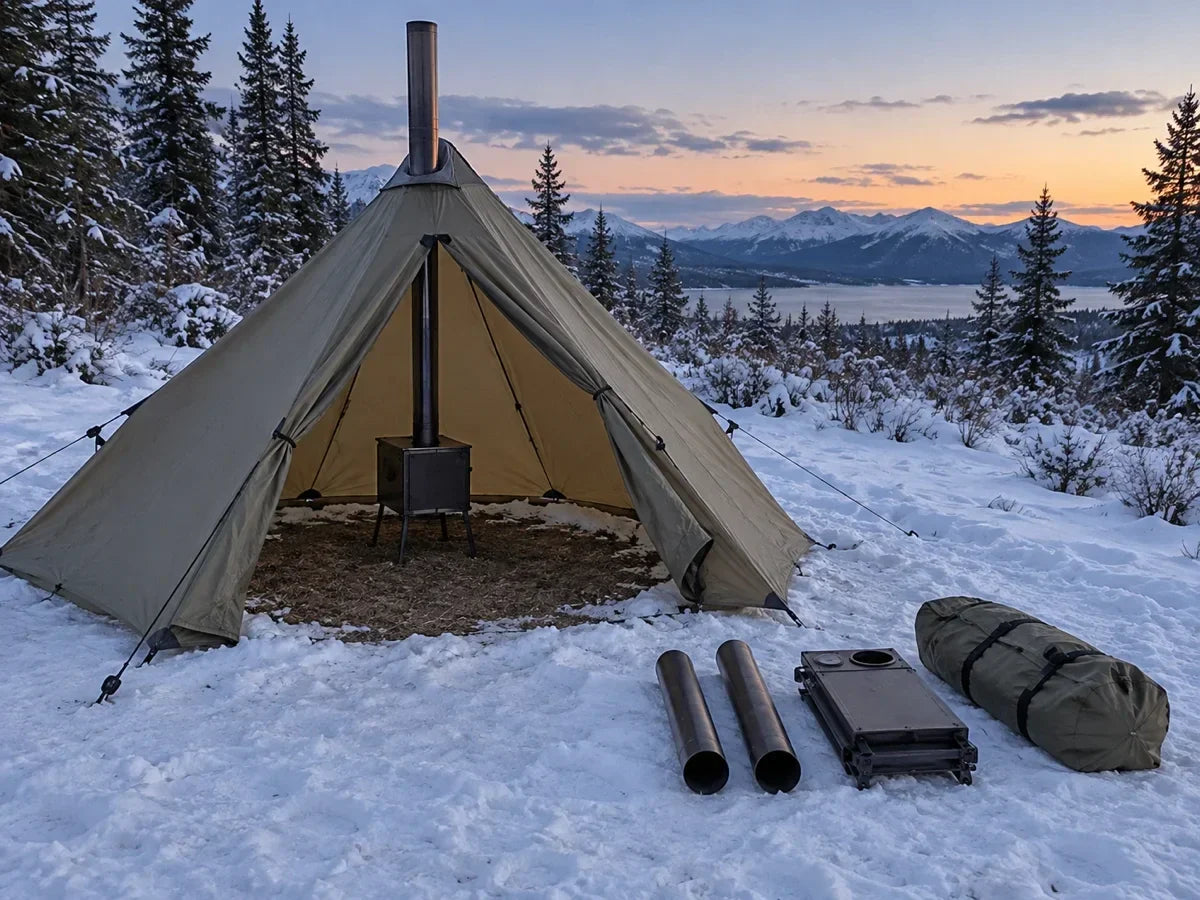
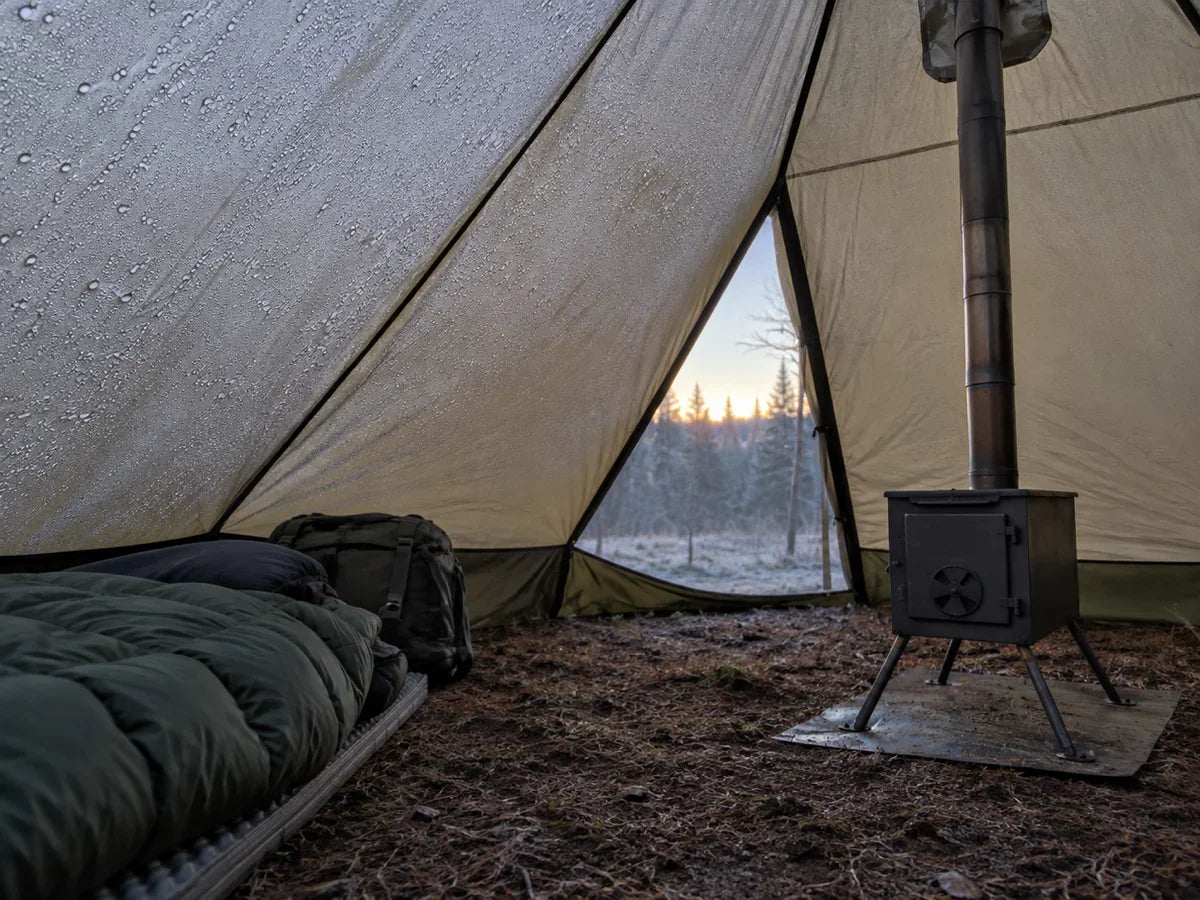
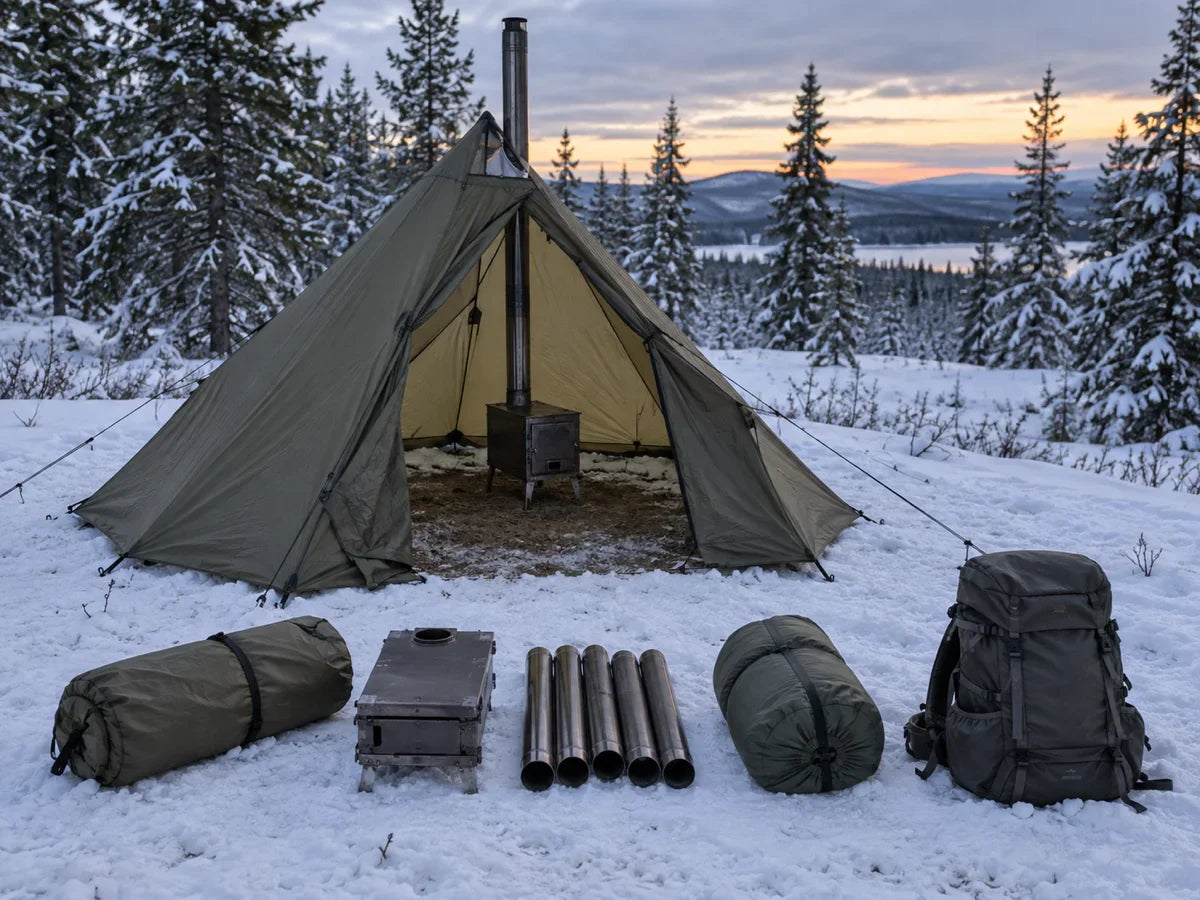
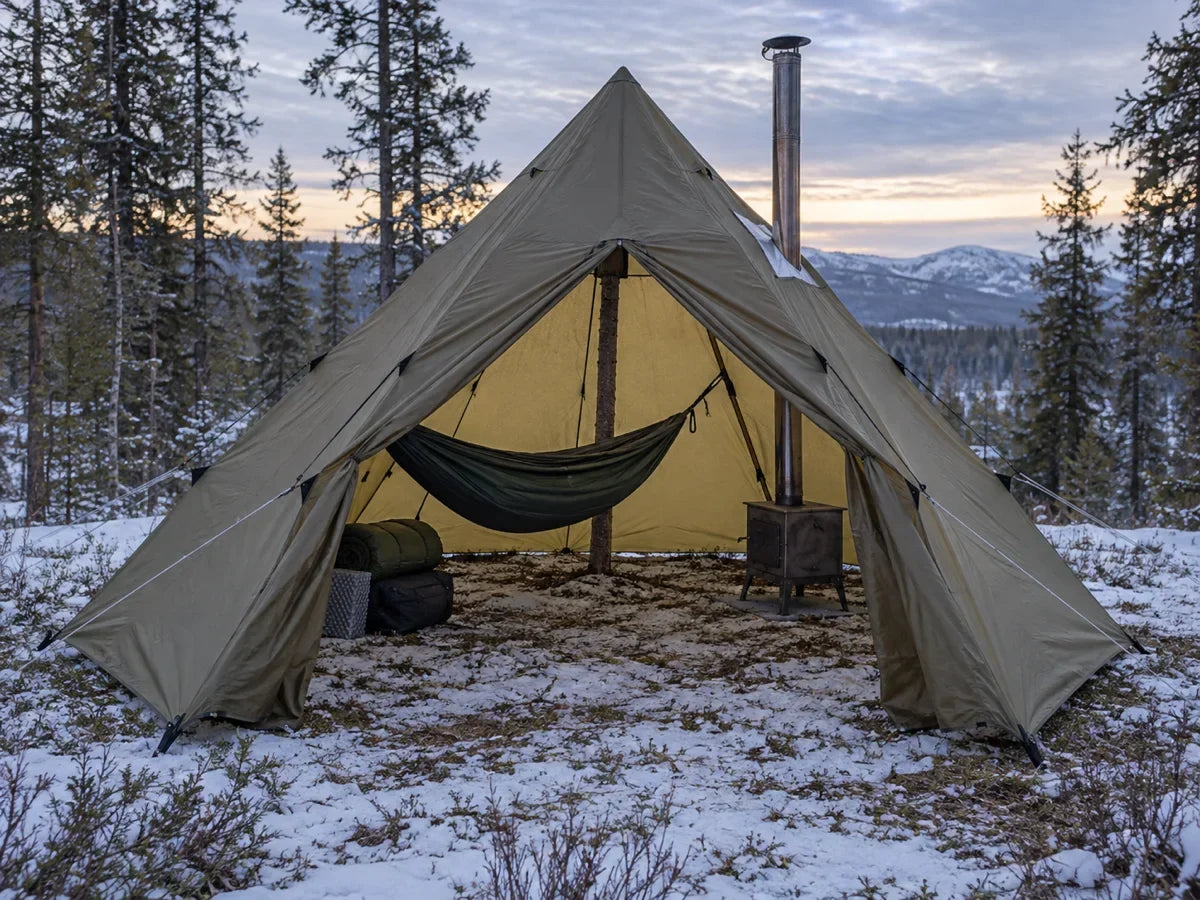
Generated illustrations show general planning scenarios, not specific products or verified weights.
What You'll Learn
Decision
The useful takeaway
How to compare system weight
Count the shelter, support, stove, pipe, anchors, ground layer, sleep insulation, and route-dependent items separately.
How to read published weights
A shelter-only figure, a basic tent kit, and a canopy-plus-stove subtotal are different boundaries.
When a stove system makes sense
Route length, transport mode, weather, and awake-time comfort matter more than an abstract lightweight label.
What not to trade away
A stove does not replace a cold-rated sleep system or remove CO, fire, manual, and local-restriction constraints.
✓ You will separate shelter weight from a complete system total.
✓ You will identify components that a product listing leaves unconfirmed.
✓ You will compare the same sleep baseline across different shelter plans.
✓ You will choose by route and transport mode rather than a universal weight cutoff.
✓ You will keep stove safety and local fire rules inside the decision.
Quick Answer
A lightweight hot tent should be compared as a trip system, not as a tarp, canopy, or tent body.
For long foot travel, I would count each required component and ask whether stove comfort earns its weight, volume, fuel, and setup demands.
For a short walk, pulk, boat, or fixed camp, the same stove kit may be a reasonable comfort choice.
That does not make the kit lighter, safer, or suitable for every route.
If the trip looks like this
My editorial answer
Long foot carry with meaningful daily mileage
Start with a non-stove shelter and a complete cold sleep system, then add a stove only if its use case clearly justifies the extra load.
Brief walk to a stationary camp
A heavier comfort system may be worth carrying if the route, weather, fire rules, and exact equipment instructions support the plan.
Pulk, sled, boat, or vehicle access
Judge the load by its transport method, but keep the same component inventory visible.
Floorless shelter in cold weather
Add the ground layer and sleep insulation as separate items rather than assuming the shelter solves either need.
The best answer is therefore conditional but not vague.
For sustained foot travel, favor the simplest system that meets shelter and sleep needs without a stove carried mainly for awake-time warmth.
If the route is short or uses a sled, the comfort-to-carry trade may move in the other direction.
In both cases, the sleeping system must remain appropriate when the fire is out.
The Weight You Need to Compare Is a System
A tent's advertised weight is a component measurement, not a trip verdict.
A stove adds a firebox, legs, door, spark arrestor or other model-specific parts, and sometimes a pipe that must be packed in sections.
The shelter may require stakes, guylines, connectors, trekking poles, or a separate support pole that are not included in the body weight.
A floorless design may require a separate ground layer, and cold-weather sleep insulation remains a separate requirement.
Ledger line
Count it when
Questions to answer
Shelter body
Always
Is the listed figure body-only, packed weight, minimum trail weight, or a kit weight?
Stakes and guylines
The setup needs anchors
Are all anchor points represented, or does the published total omit the user's preferred replacements?
Support
The shelter needs a pole or connector
Is a dedicated pole included, or is the system borrowing trekking poles already in the pack?
Stove
A stove will be carried
Does its stated weight include legs, door, fire grate, or other required pieces?
Pipe and heat protection
A stove is part of the plan
How many pipe sections are carried, and which shields or accessories are required by that exact manual?
Ground layer
The shelter has no floor or the site calls for protection
Is the ground layer part of the published bundle, and is its actual size appropriate?
Sleep system
Every overnight trip
Does the sleeping bag or quilt and pad remain suitable with the stove extinguished?
Trip-dependent load
Conditions or transport demand it
Are fuel tools, wood processing gear, wet-gear bags, sled, or repair pieces needed?
The system total is shelter, anchors, support, stove, pipe, required accessories, ground layer, sleep system, and trip-dependent items.
The ledger is not universal because one camper may already carry trekking poles while another needs a sled.
The ledger's job is to expose those choices rather than pretend every configuration is identical.
I would keep mandatory components and optional choices in separate columns so a reader can see which weight changes when a setup is simplified.
A common error is comparing a tent-only number with another brand's kit that may already include stove, pole, or anchors.
Another is to exclude the sleep kit from both sides even though it is the equipment that must protect the camper after the fire is out.
For total pack weight, count the same cold-weather layers and personal gear on both sides or exclude both.
If the comparison is only about shelter architecture, the article should say so and should not imply that the result predicts a complete winter pack.
Published Weights Do Not Share One Boundary
The clearest examples are not a ranking but a boundary audit.
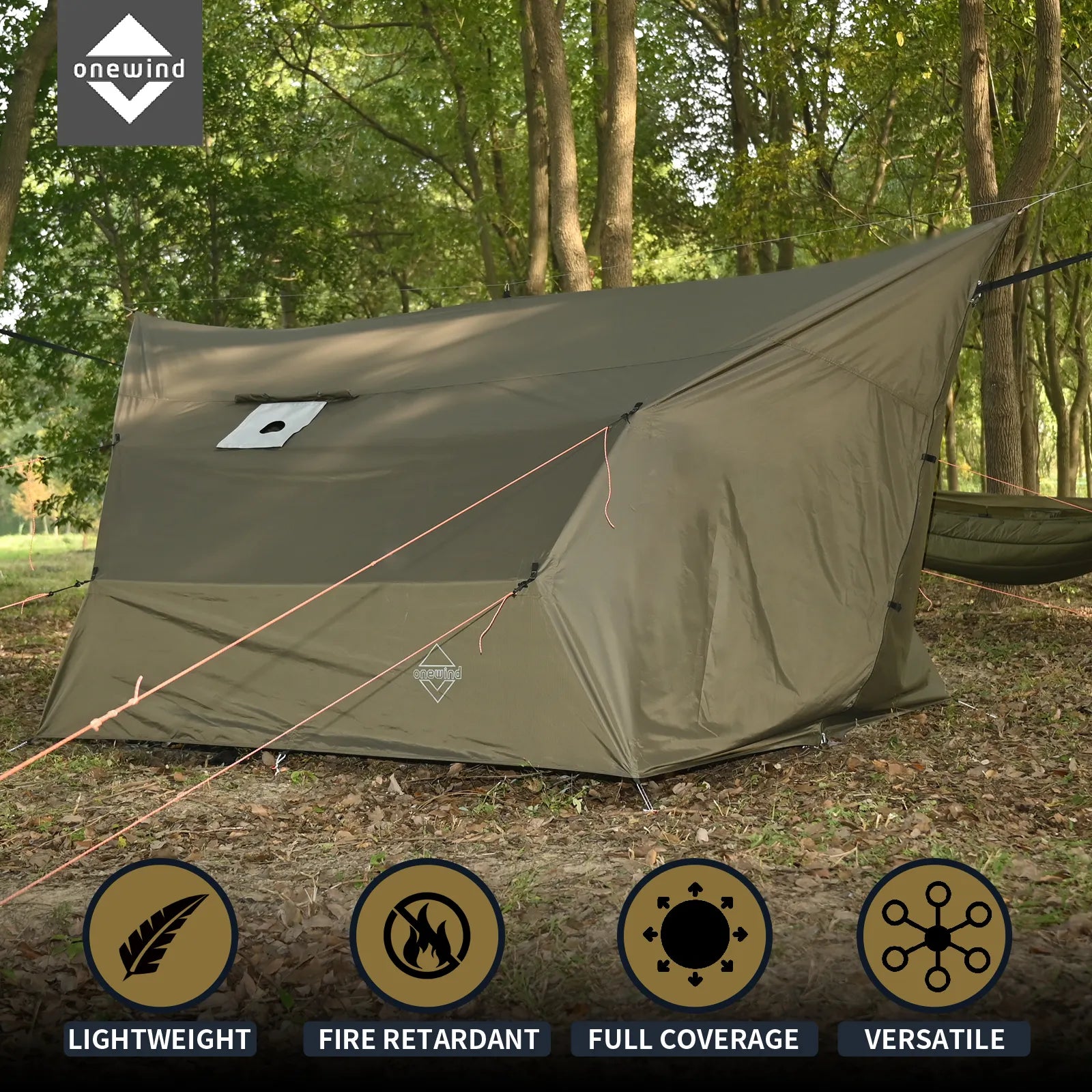
The Penumbra page lists the floorless 18 m² shelter at 2.9 kg / 6.4 lb.
That published figure does not establish the weight of a stove, pipe, support pole, ground layer, or cold sleep system.
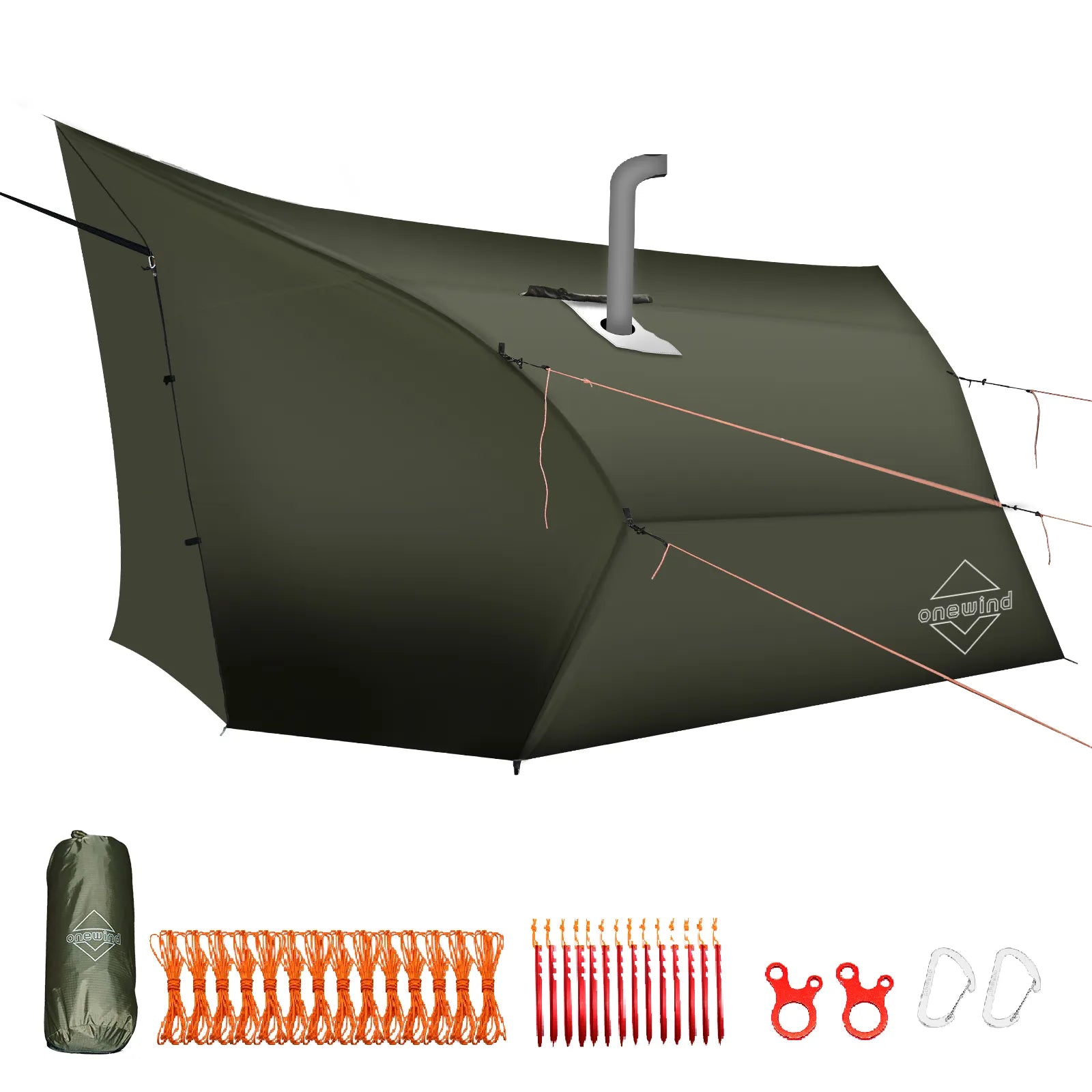
Its accessories weigh 195 g, its connector weighs 91 g, and its optional aluminum pole weighs 345 g.
Its approximate 1,700-gram packaged figure does not identify a configuration clearly enough to use as a universal total for every variant.
Published listing
What the source says
What the number does not prove
Penumbra
2.9 kg / 6.4 lb; 18 m²; floorless
A complete tent, stove, pipe, ground, and sleep package.
Summit Solo body
1,400 g body; 195 g accessories; 91 g connector; optional 345 g pole
That every listed part is included in every variant or in the approximate 1,700 g package.
Cimarron 2.0 basic kit
GearJunkie's search excerpt says 3 lb 8 oz for its basic kit.
A hot-tent weight with stove and pipe. The indexed introduction differs by one ounce, and the direct page fetch was blocked.
Cimarron component subtotal (editor calculation)
Seek Outside's source-listed weights are 39 oz for the canopy, 26 oz for the medium U-Turn stove, and 10.5 oz for seven-foot pipe; adding them gives 75.5 oz / 4.71875 lb, or about 4.72 lb.
Label this as our calculation from source-listed component weights, not as a quoted bundle total; tent stakes, the optional carbon pole, and a full sleep system are excluded.
The indexed Cimarron 3 lb 8 oz and 3 lb 7 oz figures remain unresolved because the direct GearJunkie page was blocked.
This 75.5-ounce editorial calculation covers only the canopy, stove, and seven-foot pipe; it excludes the tent stakes and optional carbon pole.
Penumbra and Summit Solo differ in capacity and support; neither listing gives a verified full tent-stove-sleep weight.
Build a Carry Ledger Before Comparing Tents
The shared baseline includes gear used in every plan, while the configuration layer captures shelter, stove, support, and transport choices.
Comparison layer
Keep constant or disclose
Why it matters
Shared baseline
Sleep insulation, personal safety items, food, and water
Prevents a stove setup from appearing lighter simply because its sleep gear disappeared from the calculation.
Shelter kit
Canopy, anchors, lines, support, and any connector
Prevents body-only measurements from being compared with complete kits.
Stove kit
Stove, pipe, model-required accessories, and carrying container if used
Shows whether the number includes the operational pieces and how they are transported.
Ground and moisture management
Ground layer and wet-gear containment
Floorless shelter choices can move this load outside the shelter package.
Transport mode
Foot, pulk, sled, boat, or vehicle
Changes effort and suitability without changing the mass of the items themselves.
Optional comfort
Stove extras or larger shelter capacity
Makes the benefit visible as a deliberate trade rather than an invisible baseline.
I would record each value in its source unit, identify the selected variant and support method, and convert only after the boundary is fixed.
For a separately sold stove, do not imply it is part of the tent package merely because the shelter has a stove jack.
The Penumbra page lists a stove jack and accessories, but not a stove-and-pipe configuration.
Do not infer whether unlisted support or ground pieces are included.
The Summit Solo page does not clarify the approximate 1,700 g package configuration.
Label each value as manufacturer-stated, reviewed, or user-reported.
A search excerpt or video title does not define what was weighed.
IF/THEN: Choose for the Trip You Actually Take
The decision should begin with how the gear moves, not with a product label.
IF
THEN
Because
You carry every component on foot over long daily distances
Compare total load and packed volume against a complete cold sleep plan before adding a stove.
The stove's benefit may be limited to time when someone is awake, while its mass travels all day.
Your approach is short and camp is stationary
A comfort-oriented system may be a reasonable trade if the route, rules, and product instructions permit it.
The same weight is less burdensome over a short carry, although it does not vanish.
A pulk or sled carries the load
Evaluate the pulk's route suitability and the stove kit's volume, then keep the complete component ledger.
Transport changes exertion, not the equipment's actual mass or safety obligations.
You rely on floorless shelter space
Add the selected ground layer and sleep insulation as separate items.
The shelter's lack of a floor does not remove ground contact or cold exposure from the trip.
The stove is the only plan for warmth overnight
Rebuild the sleep plan before treating the trip as viable.
A stove is not a substitute for insulation suitable when the fire is out.
The manuals or local rules do not clearly support the intended setup
Do not assume compatibility or proceed on the basis of a stove jack.
A sewn opening is not proof of safe clearance, ventilation, or legal use.
This framework deliberately does not set a universal weight cutoff.
A fixed number would confuse a fast hiker's long approach with a short walk, a pulk route, and a base camp.
Before shopping, decide whether you want the lightest foot-carry shelter or a warmer camp system with added components.
Those are different jobs, and the first answer may not need a wood stove at all.
If adding a stove, decide whether its comfort justifies carrying and tending the complete kit.
If choosing shelter only, plan support, ground layer, and a sleep system that works without fire.
Neither branch removes the need to read exact product instructions and current local rules.
Scenario 1: Solo Foot Carry Over a Long Day
Constraint
Recommendation
Verdict:
Favor the simplest shelter that meets the route and sleep requirements.
Count
Include full carried mass, packed volume, chosen support, and a complete cold sleep system.
Stove test
Add stove and pipe only if their awake-time benefit earns all-day carry and operating work.
For long daily mileage, I would compare the same cold sleep system with and without the stove kit.
The stove's heat while operating does not change what the sleeper needs after the fire is out.
Scenario 2: Short Approach to a Fixed Camp
Constraint
Recommendation
Verdict:
A heavier stove kit can be a reasonable comfort choice for a genuinely short approach.
Count
Include the full stove and pipe package, required accessories, and camp duration.
Limit
Confirm current rules and exact equipment instructions before relying on the stove.
A comfort-first decision is not evidence that the same configuration is lightweight for backpacking.
Scenario 3: Pulk or Sled Travel
Constraint
Recommendation
Verdict:
A pulk may make the load practical, but it does not reduce the equipment's mass.
Count
Include the full system, pulk volume, terrain, snow conditions, and sections where the sled cannot be used.
Evidence
One Reddit trip report is an anecdote, not a universal hiking threshold.
The English Woodsman and Jon Conti titles cited in this table present creator claims, not independent system tests. Both videos are embedded later in this guide at the sections where they are relevant.
The Jon Conti title's “worth it” framing is one person's judgment about one trip; it does not establish a shared component boundary or the exact items carried.
A creator's title cannot replace a transparent contents list and reproducible weigh-in.
Where the Listed Products Fit
Penumbra is a larger floorless shelter, while Summit Solo is a single-person teepee with separately listed components.
Neither listing provides a verified complete tent-stove-sleep-system weight.
That link is a side route for hammock campers, not a reason to turn this comparison into a general hammock-versus-tent article.
Packed Volume and Setup Are Part of the Trade
FASTEST Lightweight Hot Tent Setup! (Minutes to Cozy Warmth)
Mass is only one constraint in a winter camp kit.
A stove may meet a scale target yet take awkward pack space, need a long pipe sleeve, or require protection from wet gear.
A shelter's packed dimensions are useful for comparison, but they do not describe the volume of its stove, pipe, ground layer, or sleep insulation.
Constraint
Why it belongs beside the scale reading
Practical check
Packed volume
Bulky pieces compete with food, sleep gear, and clothing inside a pack or sled.
Check the longest rigid part and where the pipe sections ride.
Setup sequence
Multiple stove and pipe pieces can add handling beyond pitching the shelter.
Read the actual steps for the exact model combination before leaving.
Wet gear
A damp shelter or pipe sleeve can affect packing and the next pitch.
Separate clean sleep gear from wet shelter and stove components.
Fuel and tending
A wood stove involves fuel sourcing, preparation, and attention while in use.
Consider whether the route and camp allow that work without assuming effortless fuel.
Transport mode
A sled or vehicle may accept a long or awkward load better than a backpack.
Test the route and carrying method on paper, not by pretending the load weighs less.
Compare mass, pack fit, setup work, and sleep independence as separate constraints rather than one score.
Fuel availability and fire rules vary by route, so the plan should not rely on gathering wood where prohibited or impractical.
A low listed weight cannot rescue gear that will not fit, cannot be carried, or cannot be used legally under its exact instructions.
Five Mistakes That Make a System Look Lighter
Most bad comparisons are accounting errors rather than arithmetic errors.
Mistake
Why it misleads
Better correction
1. Comparing shelter body to complete bundle
One side may omit anchors and support while the other side includes stove and pipe.
Label the boundary and compare only like-for-like totals.
2. Treating an unclear packaged figure as universal
A package can vary by pole, connector, or accessory selection.
Name the exact variant and preserve every component weight separately.
3. Counting a stove but forgetting its pipe
The heat source cannot be compared fairly without the system pieces needed to use it.
Add the exact pipe length and model-required parts from the applicable listing or manual.
4. Calling the stove a substitute for sleep insulation
The fire may be out, unavailable, or unusable when the sleeper needs protection.
Count a cold-rated sleep system independently of stove warmth.
5. Treating a pulk as weight reduction
A sled changes how a load is moved, not how much equipment exists.
Report the same mass ledger and identify the carrying method separately.
6. Assuming a stove jack proves compatibility
An opening alone does not establish dimensions, clearance, or safe operation.
Check the exact tent and stove instructions and do not invent a universal clearance.
7. Using a creator's title as a controlled result
A title may omit sleep gear, support, anchors, or the measurement method.
Treat the video as a visual example until its contents and method are explicit.
Packed weight, minimum trail weight, bundle weight, and complete kit can mean different component boundaries.
Do not substitute one boundary for another without evidence.
Pipe length and stove accessories affect the carried system, while stove heat does not remove the cold sleep requirement.
A pulk remains a valid transport choice, not a change to the scale total.
I would rather mark an unknown weight as “not stated” than guess, because a transparent comparison is more repeatable than a false ranking.
Safety Belongs in the Weight Decision
A hot-tent decision has safety and legality consequences that do not disappear when the shelter is light.
The CDC report warns that open tent doors, windows, or flaps do not ensure CO safety.
Safety question
Conservative action
Does the tent have a stove jack?
Treat it as an opening, not as proof of safety or compatibility.
Is the stove manufacturer known?
Use the exact stove manual for the exact model, fuel, pipe, ventilation, and clearance instructions.
Is anyone asleep or is the stove unattended?
Never sleep with a live fire or leave the stove lit unattended; before sleep, extinguish it exactly as the model-specific manual instructs.
Is there a CO alarm?
Treat it only as an additional warning device, never as permission to use an unsupported setup; CPSC camping guidance warns about combustion equipment in enclosed spaces.
Are doors, windows, or vents open?
Do not treat open flaps or ventilation as a guarantee against carbon monoxide.
Does the CO alarm activate, or does anyone have possible CO symptoms?
Follow the CPSC Carbon Monoxide Fact Sheet: move outside to fresh air immediately. For an alarm, call emergency services, the fire department, or 911; for possible poisoning symptoms, call the fire department from outside. Do not re-enter until responders say it is safe.
The Winnerwell manual cannot set clearances for other stove and tent models.
Never sleep with a live stove or leave it burning unattended.
Before sleeping, extinguish the fire exactly as the manual for that specific stove instructs.
If an alarm sounds or anyone has possible CO symptoms, follow the CPSC Carbon Monoxide Fact Sheet: get outside to fresh air immediately. For an alarm, call emergency services, the fire department, or 911; for possible poisoning symptoms, call the fire department from outside. Do not re-enter until emergency responders say it is safe.
Flame-retardant fabric, stove jacks, vents, and CO alarms do not prove that every setup is safe.
Follow the exact equipment instructions and local rules; do not rely on a heat source that cannot be used safely and legally.
That is not an optional footnote to the weight calculation.
It is part of deciding whether the system belongs on the trip at all.
Final Verdict
The lightest useful hot tent is not automatically the shelter with the lowest listed body weight.
It is the setup that meets shelter and sleep needs after support, anchors, stove, pipe, ground layer, and transport are counted.
For long foot carries, I would require a clear reason to add a stove whose warmth cannot replace the sleep system.
For a short approach or pulk, a heavier comfort system may fit if rules and instructions allow it.
My verdict
What I would do next
Long-distance backpacking
Compare complete shelter-and-sleep systems first; add the stove only when the benefit justifies its carry and operating overhead.
Short approach or fixed camp
Decide whether evening warmth and drying are worth the full extra kit, without calling the kit ultralight by default.
Pulk or vehicle-supported travel
Evaluate the transport method and route separately from the scale total.
The numbers that look closest on a search page may be the least comparable ones.
These figures describe different items: a 6.4-pound shelter, 1,400-gram body, 3-pound-8-ounce basic kit, and 4.72-pound calculated canopy-stove-pipe subtotal.
List the items and sources, then judge the setup against route, transport, weather, and legal conditions.
That is the comparison I would trust before choosing a so-called lightweight hot tent.
Featured Product
Tente chaude tipi Summit Solo avec sortie de poêle
Start with the shelter, stakes and guylines, support pole or trekking-pole connector, stove, pipe, and required accessories. Add a ground layer, cold-rated sleep insulation, and any trip-dependent fuel or wet-gear storage separately, then label what a published total excludes.
No. This is an editorial sum of Seek Outside's source-listed 39-ounce canopy, 26-ounce medium U-Turn stove, and 10.5 ounces of seven-foot pipe: 75.5 ounces / 4.71875 pounds, or about 4.72 pounds. Label it as an editor's calculation, not a quoted bundle total; it excludes tent stakes and the optional carbon pole, and is not a complete carry or sleep system.
No. Plan a cold-rated sleep system that remains suitable after the stove is out, and treat stove heat as an awake-time comfort and drying factor rather than overnight insulation.
Keep product configurations separate. Penumbra is listed at 2.9 kilograms or 6.4 pounds for a floorless shelter; Summit Solo lists a 1,400-gram body, 195-gram accessories, 91-gram connector, and optional 345-gram pole, while its approximate 1,700-gram package configuration is unclear.
No. CDC guidance warns that opening tent doors, windows, or flaps does not guarantee CO safety. The [CPSC Carbon Monoxide Fact Sheet](https://www.cpsc.gov/safety-education/safety-guides/carbon-monoxide/carbon-monoxide-fact-sheet) says to get outside to fresh air immediately if an alarm sounds or anyone has possible CO-poisoning symptoms. For an alarm, call emergency services, the fire department, or 911; for possible symptoms, call the fire department from outside. Do not re-enter until emergency responders give permission. Never sleep with a live stove or leave it lit unattended; before sleep, extinguish it exactly as the manual for that stove model instructs. Follow the exact tent and stove instructions and current local fire restrictions.
It is a different carrying mode, not a lighter inventory. Show the same component list, then explain that a pulk, sled, boat, or vehicle can change the effort and route where the load is practical.