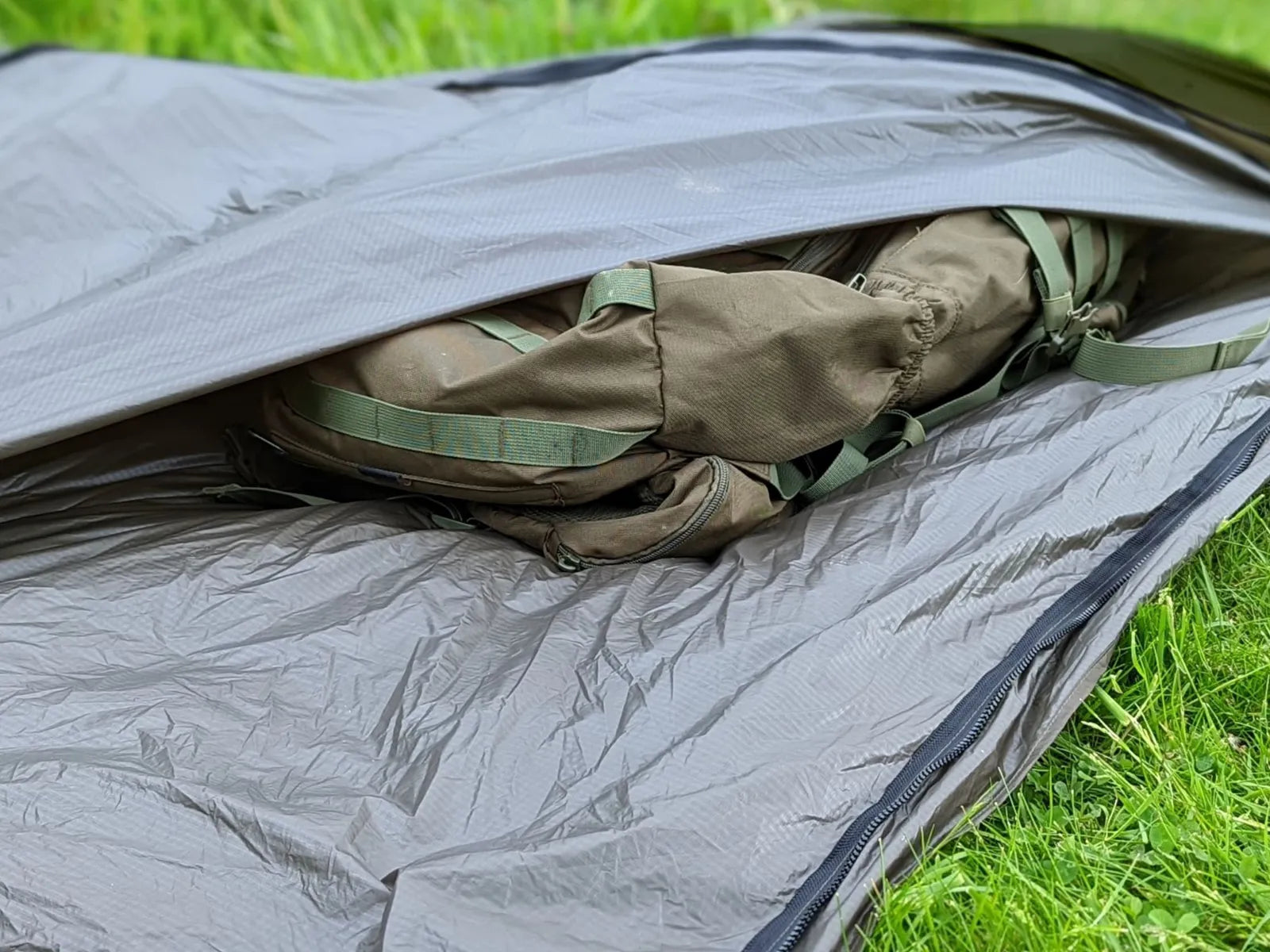

A 12 ft tarp can protect a hammock camp through a storm, but wet fabric needs a different plan once the trail ends. A sleeve can provide temporary containment, yet containment is not completed storage. The useful distinction is active camp, short wet transport, and fully dry long-term storage.
Storage is complete only when the tarp has been cleaned, inspected, fully dried, and placed somewhere cool, dry, ventilated, and loose.
What You'll Learn
At every handoff, mark the tarp “wet for transit” or “dry for storage.”
That distinction keeps a short-term bundle from becoming forgotten long-term storage.
Quick Answer: Match Storage to Tarp Condition
A wet tarp can travel for a short period when it is isolated from gear that must stay dry.
It cannot be treated as ready for long-term storage merely because the outside of the bundle feels less wet.
The water-resistant vs waterproof guide handles coating choices, while pitch geometry and coverage stay in the setup guides. The storage clock begins when shelter handling starts, because water performance does not remove the need to manage moisture after use.
The Three Tarp Storage Clocks

Clock one, active camp: The tarp is still part of the shelter system, so the immediate goal is controlled handling rather than final drying.
Clock two, short wet trail transport: The tarp is no longer protecting the hammock, but it may still carry moisture, so the priority becomes isolation, pack organization, and a prompt drying handoff.
Clock three, fully dry long-term storage: The tarp has reached the only condition in which a long pause between trips makes sense, provided it has also been cleaned and inspected.
Advance through the clocks in order. A sleeve belongs to clock one or clock two when the tarp is wet. A loose, ventilated, cool, dry storage location belongs to clock three.
Active-Camp Storage
At camp, the first job is to prevent the tarp from becoming dirtier or more tangled while it is wet. Avoid wringing coated fabric, dragging corners through soil, or dropping the bundled shelter into a puddle. The one-piece mesh tarp sleeve is designed for this kind of temporary organization, with a 12 ft length, continuous ventilated polyester mesh, end pockets, and a shock-cord closure. Those features help gather loose tarp material and keep the bundle controlled while the shelter is being handled.
A closet, storage bin, or long break must wait until direct inspection confirms that every gathered area is dry.
Open gathered hems, seams, pockets, and tight folds to check for hidden dampness.
Keep the contained tarp away from quilts, clothing, sleeping bags, and other items whose dry condition matters immediately.
If the shelter remains standing safely through another period of rain, active-camp organization may be the best choice until a safe packing window appears.
Hennessy’s SnakeSkins mechanism is useful evidence for the handling principle here: gather loose fabric, keep it off the ground, and move the sleeve in stages rather than fighting a loose sheet.
The mechanism supports controlled movement. It does not establish drying or make wet storage acceptable.
Short Trail Transport After Rain

A wet morning departure requires transport handling. The tarp may need to ride in or on the pack for an hour, but it should remain visibly assigned to the wet-transit clock. Separate the shelter from dry insulation before the pack leaves camp. Use a dedicated wet-cargo zone or outer barrier if needed to protect the rest of the load, then open the tarp as soon as the route reaches a suitable drying place.
The two-piece 12 ft tarp sleeve is OD green, made from 1.1 oz ripstop nylon, and uses end pockets with a shock-cord closure; its listing gives a weight of 48 g.
Its useful role in this situation is staged two-end control and organized transport, especially when wind or a hurried departure makes a single loose bundle awkward to manage.
The two sections let the camper handle each end in sequence instead of chasing fabric across a damp campsite.
Use the two sections to control each end in sequence during transport. Drying, waterproof storage, and mildew performance require separate evidence.
One r/hammockcamping thread about tarp sleeves reports that wet fabric can remain wet inside a mesh sleeve. Open it at the next drying opportunity.
Users in a separate r/hammockcamping thread on integrated tarp and hammock storage report a different friction: one-piece versus two-piece setups trade off partial deployment, bulk, line organization, and external carry.
Write “open and dry” on a simple trip note or place the wet tarp where it cannot be forgotten.
At-Home Inspection and Full Drying

Home is where temporary containment becomes a deliberate care process. Follow Montbell's care guidance here: remove dirt and moisture, dry in shade, and avoid prolonged heat, ultraviolet light, humidity, or poor ventilation. Then spread or suspend the tarp so air can reach more than the outer layer.
Suspend or spread the fabric so water is not trapped between tightly pressed surfaces. Use gentle indirect airflow when available. High heat is not a substitute for drying.
There is no reliable universal drying time, so inspect the tarp rather than trusting a clock.
Check the center panels first, then the ridgeline area, perimeter seams, tie-outs, pockets, and places where guylines or hardware were gathered.
Run clean fingers over suspicious areas and look for darker patches, cool damp spots, grit, or a smell that indicates the material still needs attention.
Clean visible dirt before final drying, because grit left in the fabric or attachment points can remain abrasive during the next deployment.
Let the tarp reach the same dry condition throughout, including seams and pockets, before placing it in long-term storage.
If the weather changes, return the tarp to temporary loose containment and continue the process later rather than sealing it while uncertain.
Fully Dry Long-Term Storage
According to REI's tent-storage guidance, complete drying and loose placement in a cool, dry place mark the handoff from transport to storage.
Use the least compressed arrangement that keeps the tarp orderly. Choose the storage environment independently of the sleeve: avoid direct sunlight through a window, hot shelves near heating equipment, humid basements, and containers that trap damp air. Keep the tarp off garage floors and other surfaces that can transfer moisture or dirt.
Before the next trip, inspect it again instead of assuming the previous season’s condition survived unchanged.
Long-term storage requires evidence of dryness and inspection; an empty camping calendar is not enough.
The IF/THEN Storage Framework
Identify the active clock first, then choose the container.
If the tarp is wet, every action should preserve separation and access to the next drying opportunity.
If the tarp is dry, every action should preserve cleanliness, ventilation, and low compression.
The framework works because it gives each container a limited job.
Containment protects the rest of the load during movement, while long-term storage protects the tarp after the care process is finished.
Scenario 1: Overnight Camp With More Rain Possible
Mesh Tarp Sleeve
Keep the tarp controlled through the active-camp clock; any packed wet bundle remains transit cargo until fully dried.
A forecast of more rain changes the timing, but it does not change the storage standard. If the shelter remains safe and useful, leaving it organized until a better packing window can prevent unnecessary contact with wet soil. If the tarp must come down, gather the fabric without turning the campsite into a race against the weather. Keep guylines and attachment points in clearly separated bundles for the next deployment.
Scenario 2: Wet Morning Departure Beside Dry Quilts
Pack the dry quilts before dealing with the wet tarp whenever the sequence allows.
A damp tarp pressed against a quilt bag can create a preventable moisture problem inside a load that was otherwise dry.
The cold-weather separation principle in this winter hammock camping guide applies here as a gear-management rule: keep wet shelter fabric apart from insulation that must retain its dry condition.
Open it at the first safe opportunity, remove dirt, create airflow, and begin inspection.
Scenario 3: Home Without Enough Drying Space
Tent Care and Maintenance
Limited space requires more scheduling, not a lower drying standard.
A tarp can be suspended over clean supports in sections, provided air can reach gathered areas without stressing tie-outs.
Rotate or reposition the material so inner surfaces separate between stages.
Scenario 4: Seasonal Storage Between Trips
For a seasonal pause, complete drying and inspection come before loose placement in a cool, dry location.
Keep the tarp where sunlight, heat, humidity, and poor ventilation will not become the background condition.
Do not place it under heavy gear that keeps it compressed or makes inspection inconvenient.
Before packing for the next trip, use the beginner hammock setup guide as the next-deployment reference rather than treating seasonal storage as the end of the system.
Mistake 1: Treating a Sleeve as a Drying System
A sleeve solves a handling problem by gathering loose material and reducing exposure to the ground.
A sleeve does not remove water; open the tarp and dry it.
The tarp-sleeve discussion makes the warning concrete: wet fabric can remain wet inside a mesh sleeve. That workflow observation should trigger opening and drying; product-performance claims still require authoritative evidence.
Mistake 2: Sealing a Wet Tarp in a Small Container
A small container can be useful for a short transfer when the tarp must stay separate from other equipment.
It becomes a poor long-term choice when it keeps damp surfaces pressed together and removes access for inspection.
End transit compression at the first drying opportunity. At home, open the tarp and inspect it instead of leaving it in the small stuff sack.
Mistake 3: Mixing Wet Shelter Fabric With Dry Insulation
Wet shelter fabric and dry insulation have different handling priorities.
A quilt can be protected in its own bag while the tarp occupies a separate outer pocket, barrier, or temporary carrier.
At home, open the tarp before it becomes buried beneath clean clothing and sleep equipment.
Keep wet shelter fabric separate from dry insulation from camp through transport.
Mistake 4: Ignoring Guylines, Pockets, and Hardware
A tarp is more than its broad central panel.
Guylines can retain water and grit, while end pockets can hide damp corners that never receive direct airflow inside a gathered bundle.
Hennessy’s SnakeSkins mechanism illustrates the value of gathering loose fabric and moving a sleeve in stages, but the same handling discipline should include the lines and attachment points.
Check shock-cord closures without assuming that a working closure proves the whole system is ready.
Keep hardware from grinding against dirty fabric during storage.
A quick inspection before the long pause is easier than diagnosing a missing loop or tangled line beside a trail.
Mistake 5: Keeping a Tarp Compressed Between Trips
Trail compression is designed for movement.
Long-term storage should make the tarp easy to inspect and keep it away from conditions that add heat, humidity, light, or ground contact.
Tarp Supply's storage checklist supports inspection and a loose, dry, ventilated arrangement away from light and ground contact.
Keep a sleeve in the organization system only when the dry-condition check remains explicit.
The best storage arrangement is the one that makes the next inspection obvious.
The Quick Decision Checklist
Use the Tarp Sleeve collection for organization options. Care for a wet tarp still requires opening, drying, and inspection.
Run this checklist at camp, at the vehicle, and at home when conditions change.
The active storage clock determines the next action; sleeve format follows.
A temporary containment solution should always have a next action attached to it.
Final Verdict
A sleeve can gather fabric during camp and organize a short wet journey. Open, dry, and inspect the tarp after that journey.
The sequence is active containment, separated wet transport, full home drying, and loose long-term storage.
Follow those three clocks, and a wet 12 ft tarp will have a clear next step instead of becoming an unresolved bundle in the gear closet.

See the one-piece mesh tarp sleeve
Shop Now →