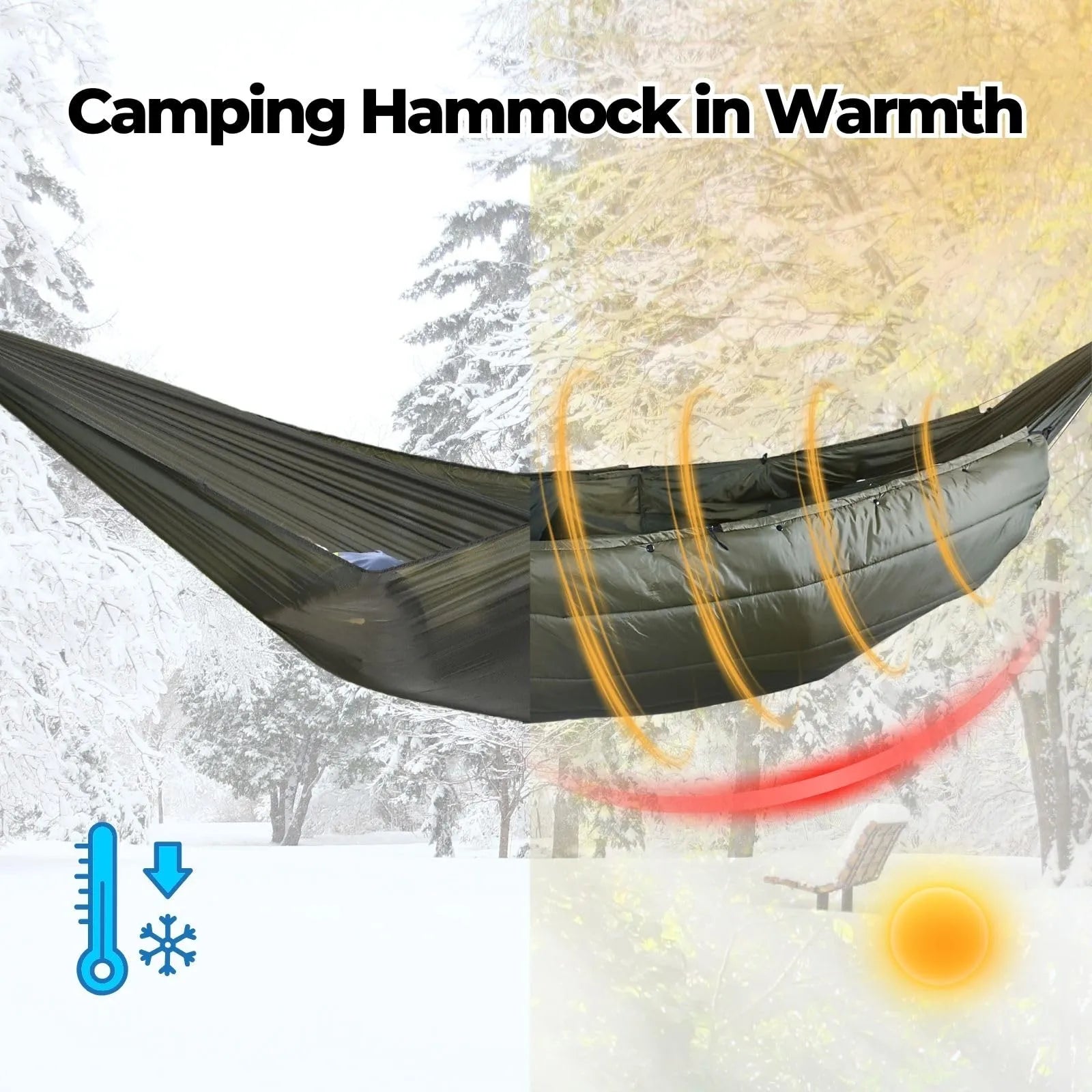

寝袋はテントの中では十分に暖かく感じても、ハンモックでは背中が冷たくなることがあります。
理由は単純です。下に敷いた断熱材は、体とハンモックの生地に挟まれて押しつぶされるため、暖かい空気を保持できません。
ハンモックキャンプ用のアンダーキルトは、適切な覆い、密閉性、張り具合、そして風よけが確保されて初めて、その問題を解決します。
私は、新しいハンモック用保温装備の導入を、買い物の判断ではなく、適合テストとして扱っています。
キルトが以下の5つのチェックをクリアしたら、私はそれを実際の夜に安心して使えます。
裏庭で一つでも確認項目に失敗したら、温度定格のせいにする前に、まずそこを修正します。
学べること
- ✓ なぜ30度の寝袋でも、ハンモックでは背中が冷たくなるのかがわかります。
- ✓ 実際の一泊旅行の前に確認すべき、重要な5つのフィットチェックがわかります。
- ✓ いつフォームパッドで十分か、そしていつアンダーキルトにアップグレードするのがよりすっきりした選択かがわかります。
- ✓ キャンプ用ハンモック、アンダーキルト、トップレイヤー、タープ、プロテクターを、購入順を間違えずに組み合わせる方法がわかります。
- ✓ どのコールドスポットの症状がどの設置ミスに対応するかがわかります。
このガイドは、単なる「最高のアンダーキルト」一覧ではありません。
より暖かいキルトのほうが暖かいことは、すでにご存じでしょう。
難しい問題は、キルトが実際にハンモックの下で機能しているかどうかです。
それが、最も寒い夜が起こる場所です。
キャンパーが、より重い寝袋、より厚手の靴下、そしてより暖かい帽子を追加しているのを見たことがありますが、実際の問題は片方の肩の近くにある5センチほどの開口部でした。
5点テストで、出発前にそれを見つけられます。
簡単な答え
ハンモックが一晩限りの試みではなく、本格的な睡眠システムになりつつあるなら、アンダーキルトを選びましょう。
穏やかな条件でハンモックキャンプを試す際に、ずれや肩への圧迫、やや快適性の低い斜めの寝姿勢に耐えられる場合は、パッドを使用してください。
寝袋は、体の上半身だけを覆う場合にお使いください。
その同じ寝袋に、底面の問題まで解決してもらえるとは期待しないでください。
標準の順序は、まず下部断熱、次に上部断熱、そして最後に風の制御です。
すでにキャンピングハンモックをお持ちなら、最も早い判断方法は、家でハンモックを吊るし、アンダーキルトをクリップで取り付け、実際に寝て、以下の5つの確認項目を実施することです。
このガイドで使用されているハンモックキャンプの背景資料によると、背中の冷えの問題は、下側の断熱材が圧縮され、空気の流れにさらされることから始まります。
ハンモックキルトブランドの調査は、実用的な答えが同じであることを示しています。上層にさらにお金をかける前に、まず下側の対策をしてください。
ハンモックコミュニティからの現場報告では、多くのユーザーが寒さを感じるのは、すべての温度評価が間違っているからではなく、キルトの位置がずれているためだと示されています。
アンダーキルト vs パッド vs 寝袋
これは、アンダーキルト、パッド、スリーピングバッグの比較を1つの表にまとめたものです。
寝袋は役に立たないわけではありません。
下に敷いて断熱することを期待しているなら、それは役目を果たしていません。
5ポイントフィットテスト
ハンモック用アンダーキルトの取り付け
このテストが機能するのは、すべてのコールドアンダーキルトの問題には場所があるからです。
肩甲骨の間が寒い場合は、通常、キルトが低すぎる位置にあるか、中央からずれていることを意味します。
ふくらはぎが冷える場合は、足元がしっかり密閉されていないか、寝姿勢に対してキルトの長さが足りないことが多いです。
片側に沿って冷気を感じる帯がある場合は、通常、斜めに寝たことでハンモック本体がキルトの端からずれていることを意味します。
私は、ハンモックに自分の体重をかけた後にこのテストを行います。
空のハンモックは、アンダーキルトを完璧に見せることがあります。
負荷がかかったハンモックは真実を物語ります。
なぜ寝袋だけでは下からの冷えに対応できないのか
寝袋は、かさ高のある断熱材の中に暖かい空気を閉じ込めるように作られています。
その上ではバッグが膨らむことができるので、うまくいきます。
体重によって断熱材がハンモック生地に押しつけられて平たくなるため、下側では効果がありません。
ハンモックはまた、下側が流れる空気にさらされたままになります。
だからこそ、地面では快適だった寝袋でも、気温50度の夜にはキャンパーが寒く感じることがあるのです。
バッグの温度定格は、底面の断熱をグラウンドパッドまたはマットレスが担うことを前提としています。
ハンモックでは、その下層は追加しない限りありません。
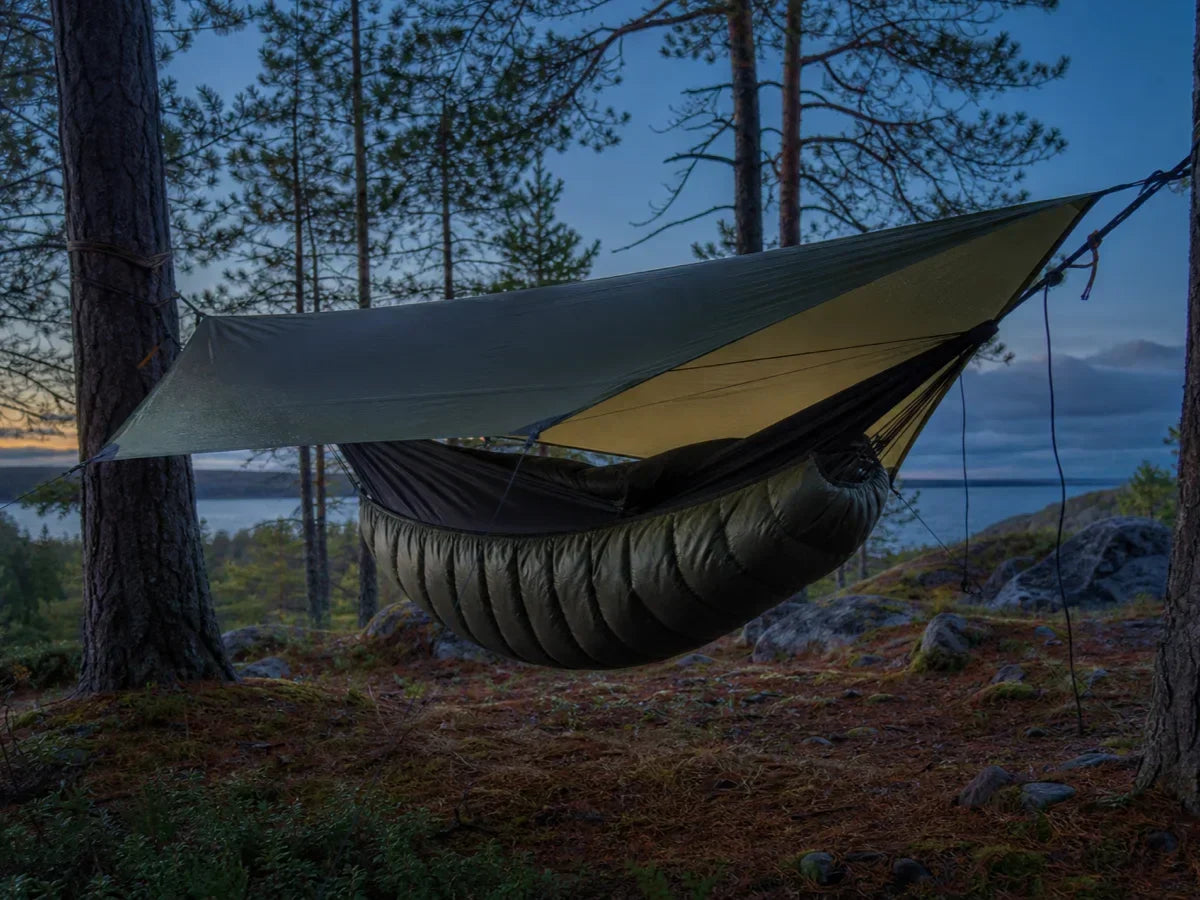
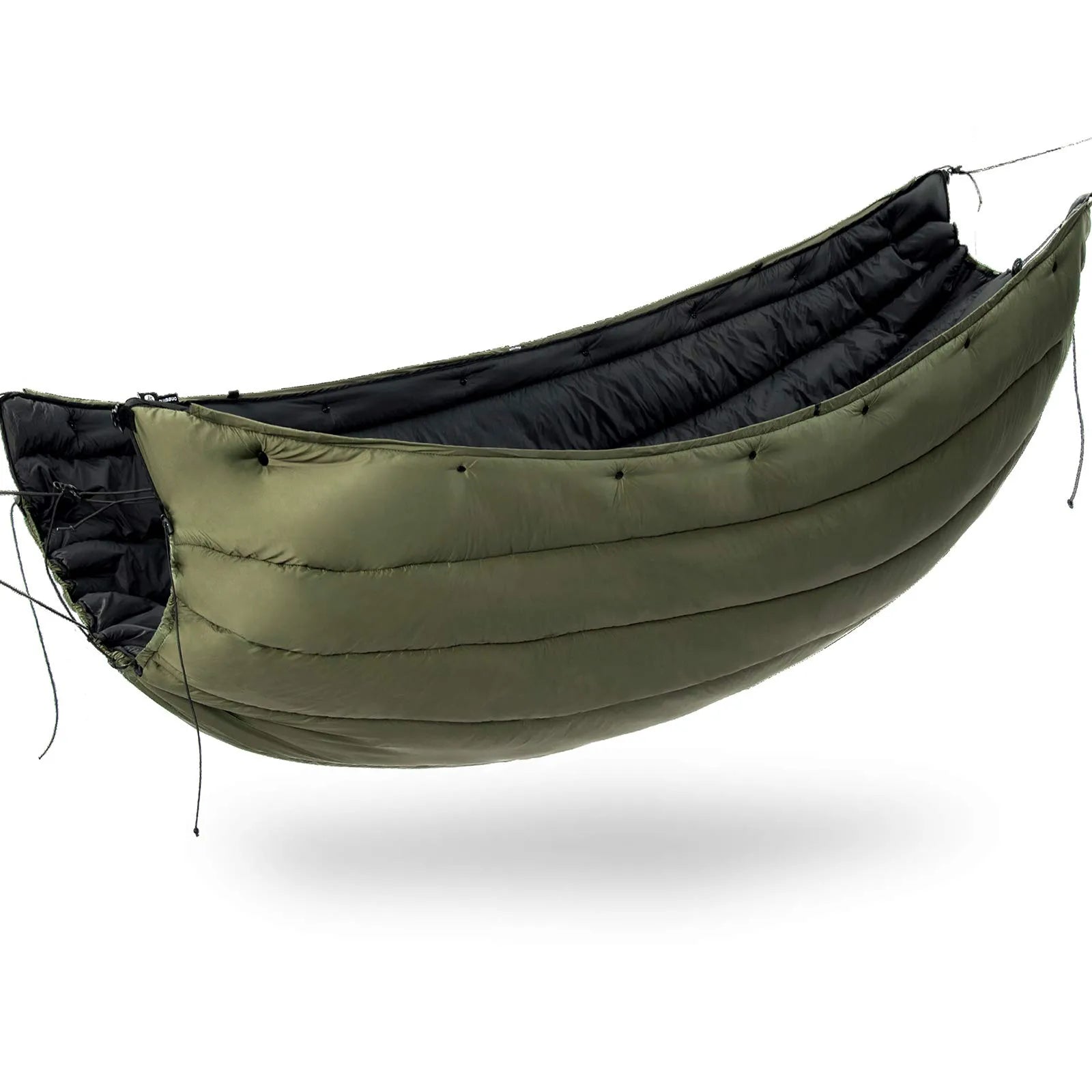
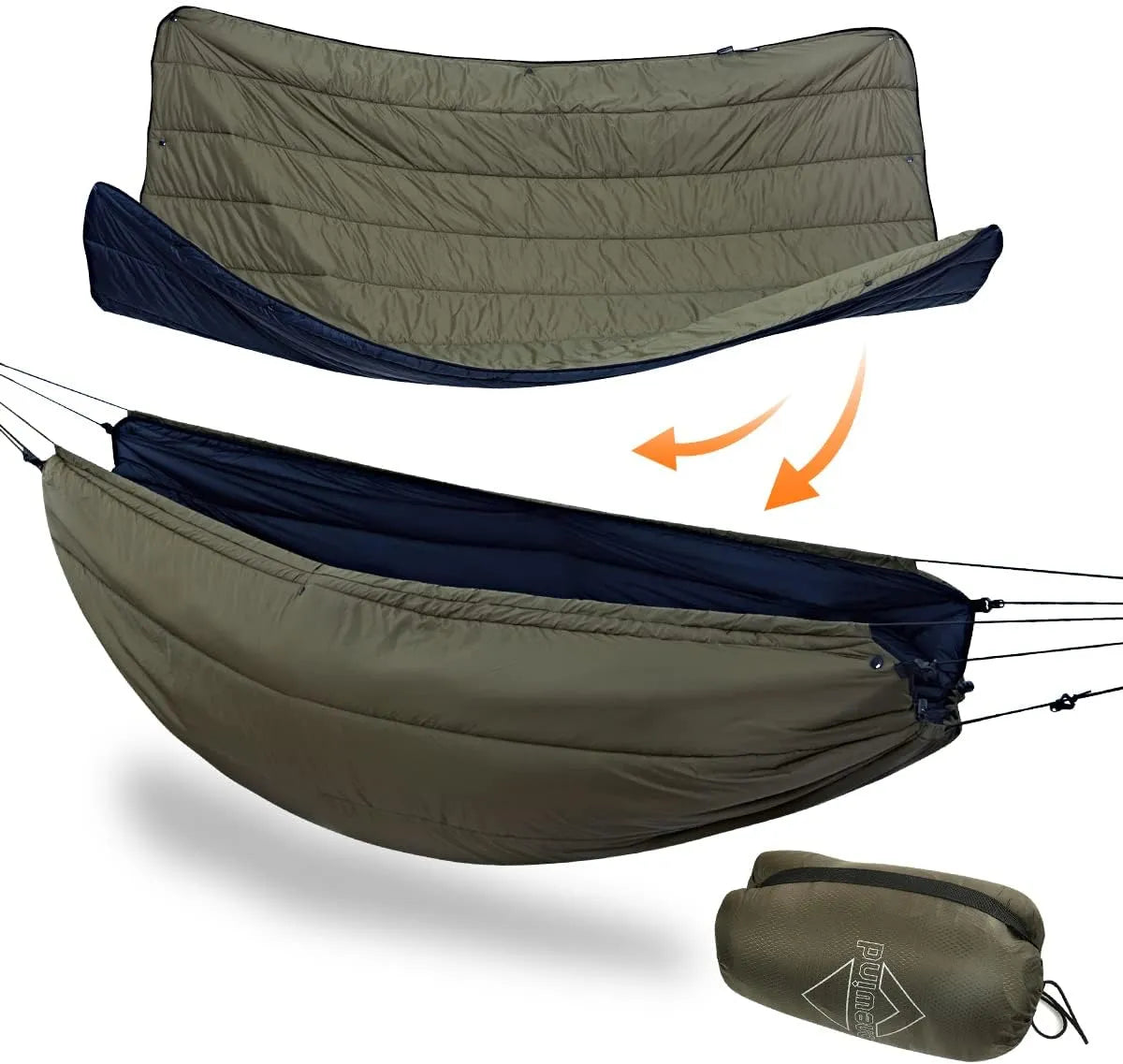
アンダーキルトはハンモックの外側に吊るされます。
あなたの体重では潰れません。
そのひとつの違いが、アンダーキルトが存在する理由です。
一部の旅では、今でも寝袋を上に重ねて使っています。
それは有効な節約策です。
しかし、私はそのバッグの下面を底部断熱とは見なしません。
天気予報が暖かく、旅のリスクが低い場合は、パッドで代用できます。
天気予報が涼しい、風が強い、または湿っている場合は、保温性を保てるように、アンダーキルトをハンモックの外側に取り付けたいです。
ハンモック断熱オーダー
この注文により、無駄なアップグレードを防げます。
底面の問題を解決する前により暖かいトップキルトを買うのは、雪の中で裸足のまま厚手のジャケットを着るようなものです。
最も暖かい最上層でも、ハンモックの下を流れる空気を断熱することはできません。
より良いタープでも、アンダーキルトが15センチも低く吊り下がっている状態は直せません。
ハンモックから始めてください。
それから、下部を解決してください。
その後、上部を調整してください。
その後、システム全体を風から保護します。
その順序が理由です。 Onewind 11フィート キャンピングハンモック アンダーキルトと同じ会話に属します。
ハンモックは、ただ寝そべるためのものではありません。
それは、アンダーキルトをどこに配置する必要があるかを決めるのはフレームです。
フィットテスト1:長さのカバー範囲
ハンモックにアンダーキルトを使う方法!新しい Outdoor Vitals のアンダーキルトを設置しましょう
長さのカバー範囲は、身体が均等に熱を失うわけではないため、最初に確認すべき点です。
肩、腰、ふくらはぎは、一般的な不満のある部位です。
短めのアンダーキルトでも、胴体を覆い、脚の下に小さなパッドを追加すれば使えます。
それは意図的な超軽量戦略です。
断熱区域の外にふくらはぎをうっかり出してしまうのとは違います。
通常の斜め寝姿勢に入ってください。
キャンプでまっすぐに寝たことがないなら、テストのために無理にまっすぐ寝ないでください。
キルトの始まりと終わりを手でなぞって感じてください。
肩の部分は、頭側の端からはみ出さないようにしてください。
腰はキルトの最も暖かい部分の内側に収めてください。
ふくらはぎは、覆うか、小さなパッドまたは予備の衣類で意図的に保護する必要があります。
11フィートのキャンプ用ハンモックを使用している場合は、製品ラベルが完全にそのまま当てはまると決めつけず、そのハンモックでキルトを試してください。
ハンモック本体の種類によって、たるみ方や包み込み方が異なります。
展開時の形状は、オンラインに記載されている平らな長さよりも重要です。
フィットテスト2:サイドラップ
サイドラップは、ハンモックが体の下で形を変えても、暖かい空気が逃げるのを防ぎます。
ハンモックは平らなベッドではありません。
それは側面に沿って湾曲し、伸び、立ち上がります。
斜めに寝ると、片方の肩と反対側の膝が生地を異なる方向に押すことがあります。
その動きによって、側面に隙間が生じることがあります。
アンダーキルトは、寝ている人の下で折れ込むことなく、ハンモック本体の周りを覆うように上がってくる必要があります。
中央にはかろうじて触れていても、両サイドが開いていると、風が当たると寒く感じます。
あまりにも強く巻きすぎて、たわんだり圧縮されたりすると、かさ高を失うことがあります。
これを、仰向けから横向き、そして再び仰向けに戻ることで確認します。
動くたびに側面がずれる場合は、セカンダリーサスペンションまたはキルトの位置を調整してください。
キルトがハンモックの下に巻き込まれて挟まった場合は、緩めて中央に戻します。
これは、本物の裏庭での設営テストが、空の設営をさっと撮った写真より優れている理由の一つです。
フィットテスト3:エンドシール
端部の隙間は小さいですが、厳しいです。
頭側または足元側に1インチの開口部があるだけで、空気が動き始めると、はるかに大きく感じる冷気の通り道が生じます。
端のチャンネルは、キルトを締め付けることなくハンモックの周りで閉じる必要があります。
緩すぎると隙間風が発生します。
きつすぎると、断熱材がよれて体から離れてしまうことがあります。
目標は、ロープのような結び目ではなく、やわらかな密閉です。
キルトを留めた後、中に入って、誰かに頭側と足側を確認してもらってください。
もし一人なら、ハンモックに落ち着いてから、手で溝に沿ってなぞってください。
あなたが求めているのは、ただ対称性を見ることではなく、開放的な空気を感じることです。
首元の寒さは、空の状態では閉じているように見えても、ハンモックに荷重がかかると開く頭側の密閉不良から生じることがよくあります。
足先の冷えは、足元側の同じ問題が原因で起こることがあります。
修正は通常、新しいキルトではなく、小さな調整で済みます。
フィットテスト4:吊り下げ張力
サスペンションのテンションは、初心者にとって最も分かりにくい部分です。なぜなら、両極端とも理にかなっているように感じられるからです。
キルトが低すぎると、冷たい空気がハンモックと断熱材の間にたまります。
キルトを強く引っ張りすぎると、断熱材が押しつぶされて保温性が低下することがあります。
適切な張り具合で、キルトをつぶさずにハンモックへ持ち上げます。
私は手で試します。
誰かが中で横になっている状態で、ハンモックとアンダーキルトの間に手を差し入れてください。
キルトがハンモックに触れているか、ほぼ触れている状態になるようにしてください。
大きな空の空気のポケットを感じるべきではありません。
また、断熱材がぴんと張った太鼓のように平らに伸び切っていると感じることもありません。
少しずつ調整してください。
サスペンションの1インチの変化は、製品ラベルの10度の変化よりも重要になることがあります。
そのため、私はハンモックに体重をかけ、少なくとも20分間寝るか、休むまではアンダーキルトを判断しません。
フィットテスト5:防風性能
アンダーキルトは正しくフィットしていても、風が当たると寒く感じることがあります。
ロフト断熱材は、静止した空気を保持することで機能します。
風はその静かな空気を奪います。
最初の風対策は設置場所の選定です。
可能なときは、自然の遮蔽物の後ろに身を隠してください。
2つ目の修正は、タープの張り方です。
予報が風強くなる場合は、タープの端を低くしてください。
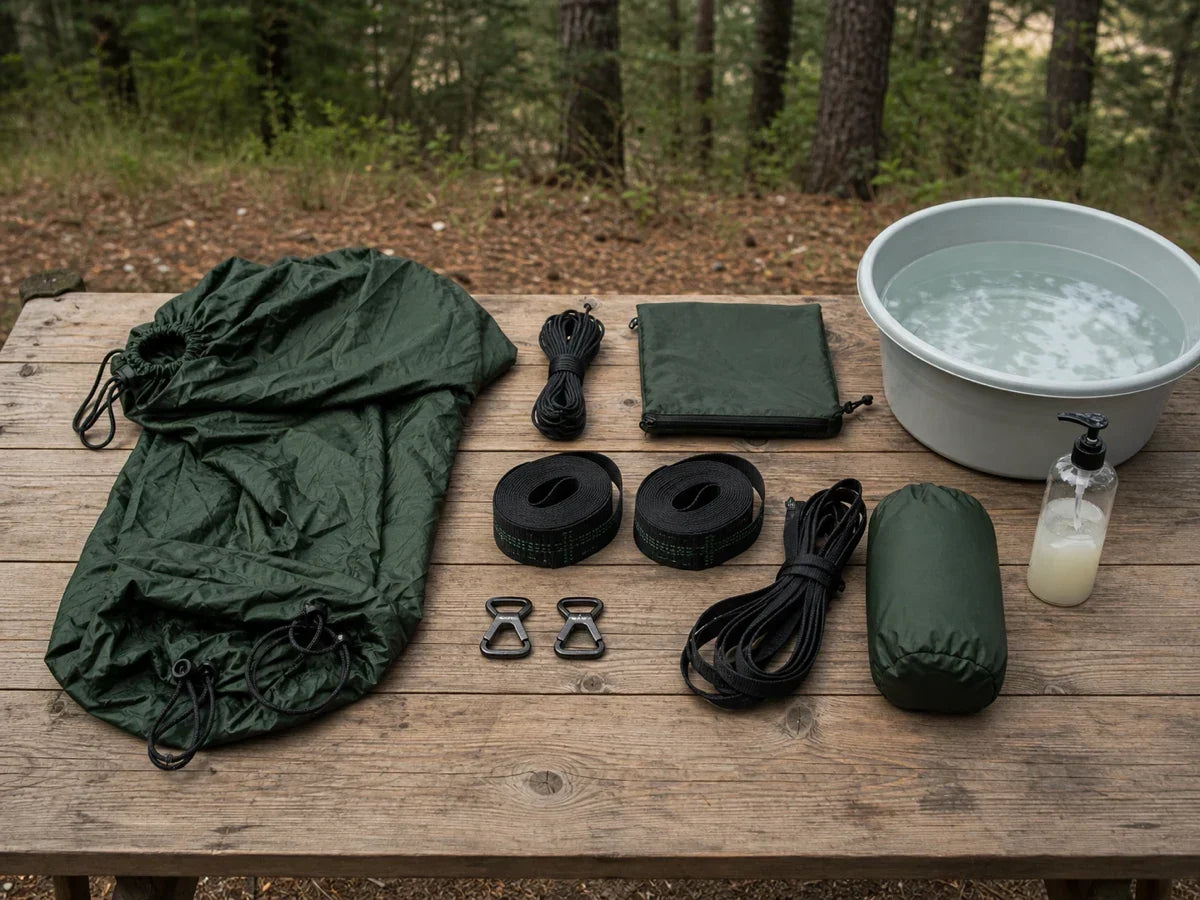
3つ目の対策は、飛沫、霧、風、または汚れたキャンプ環境からキルトを守るアンダーキルトプロテクターです。
それが、そこです Onewind アンダーキルトプロテクター システムに属します。
これは断熱材の代替品ではありません。
すでにぴったり合うように作られた断熱用のシールドです。
アンダーキルトがたるんでいる場合は、まず張りを調整してください。
アンダーキルトがフィットしていても、風が設営全体を吹き抜ける場合は、保護を追加してください。
シナリオ1:寝袋はあるのに、背中が冷える場合
これが、ハンモックで迎える定番の最初の寒い夜です。
テントで使えたのと同じ寝袋を持っていく。
ハンモックに入ります。
体の上部は問題ないようです。
真夜中になる前に、背中が冷えてきます。
解決策は自動的により暖かい寝袋になるわけではありません。
対策は底部の断熱です。
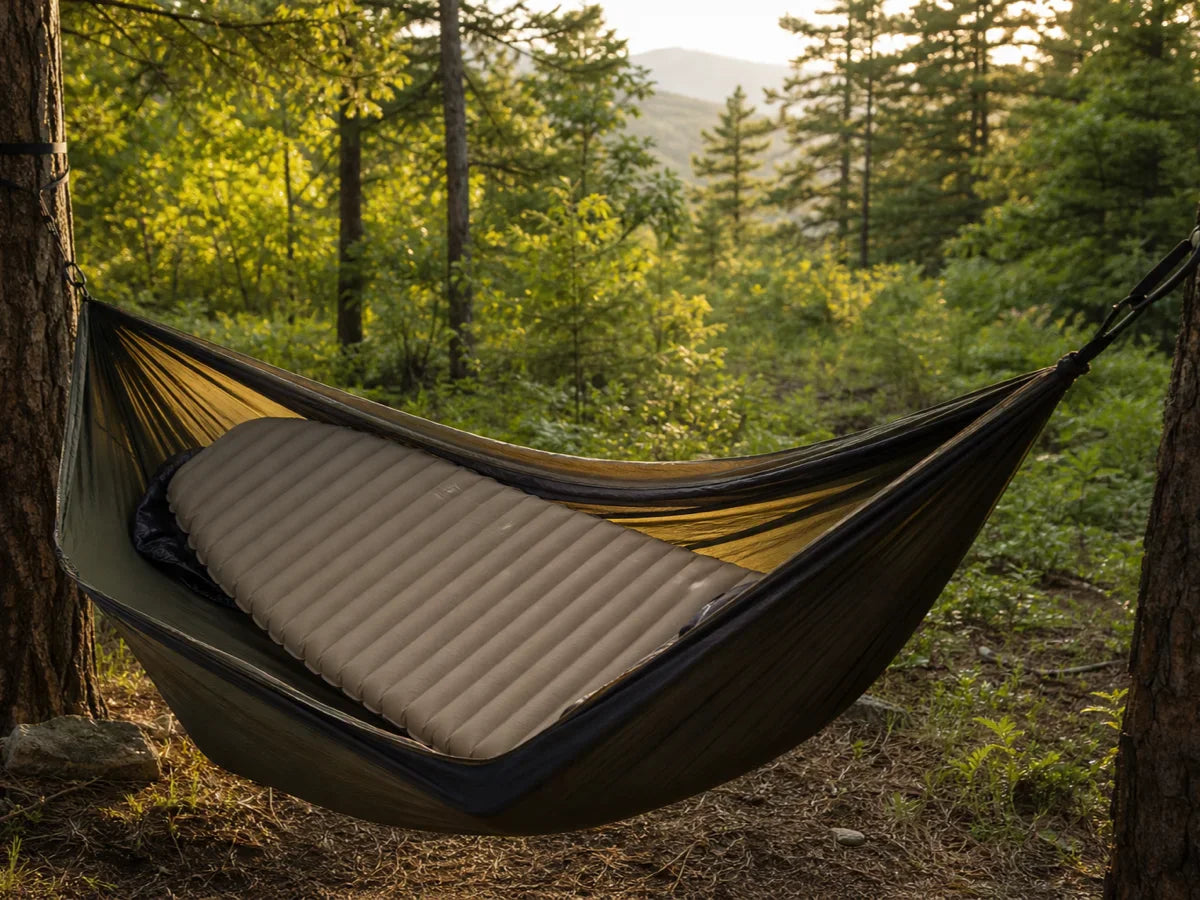
穏やかな裏庭でのテストでは、フォームパッドでコンセプトを実証できます。
安価でシンプル、そして非常用の予備として役立ちます。
しかし、パッドはずれたり、しわになったり、対角線の寝姿勢を狭めたり、肩に圧力をかけたりすることがあります。
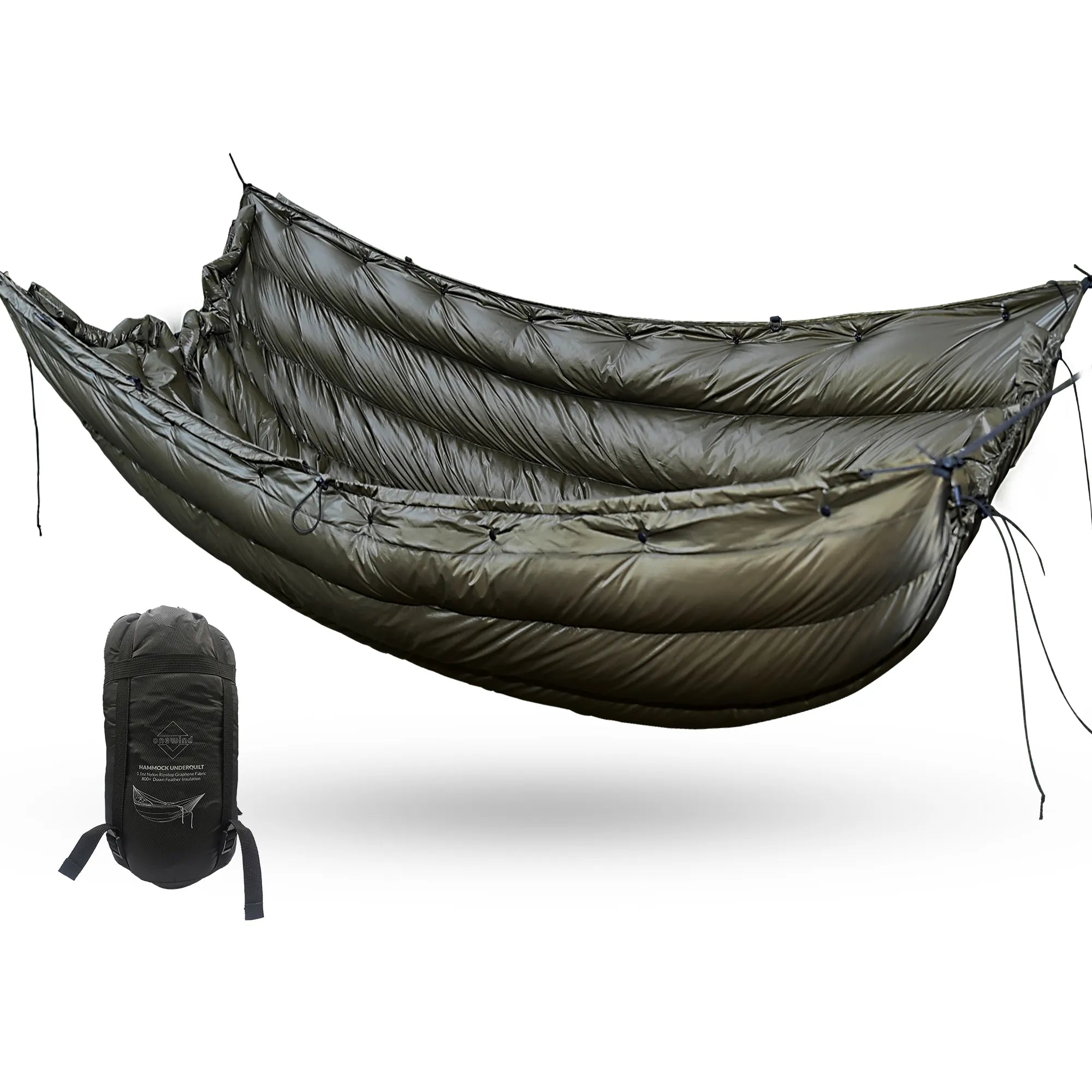
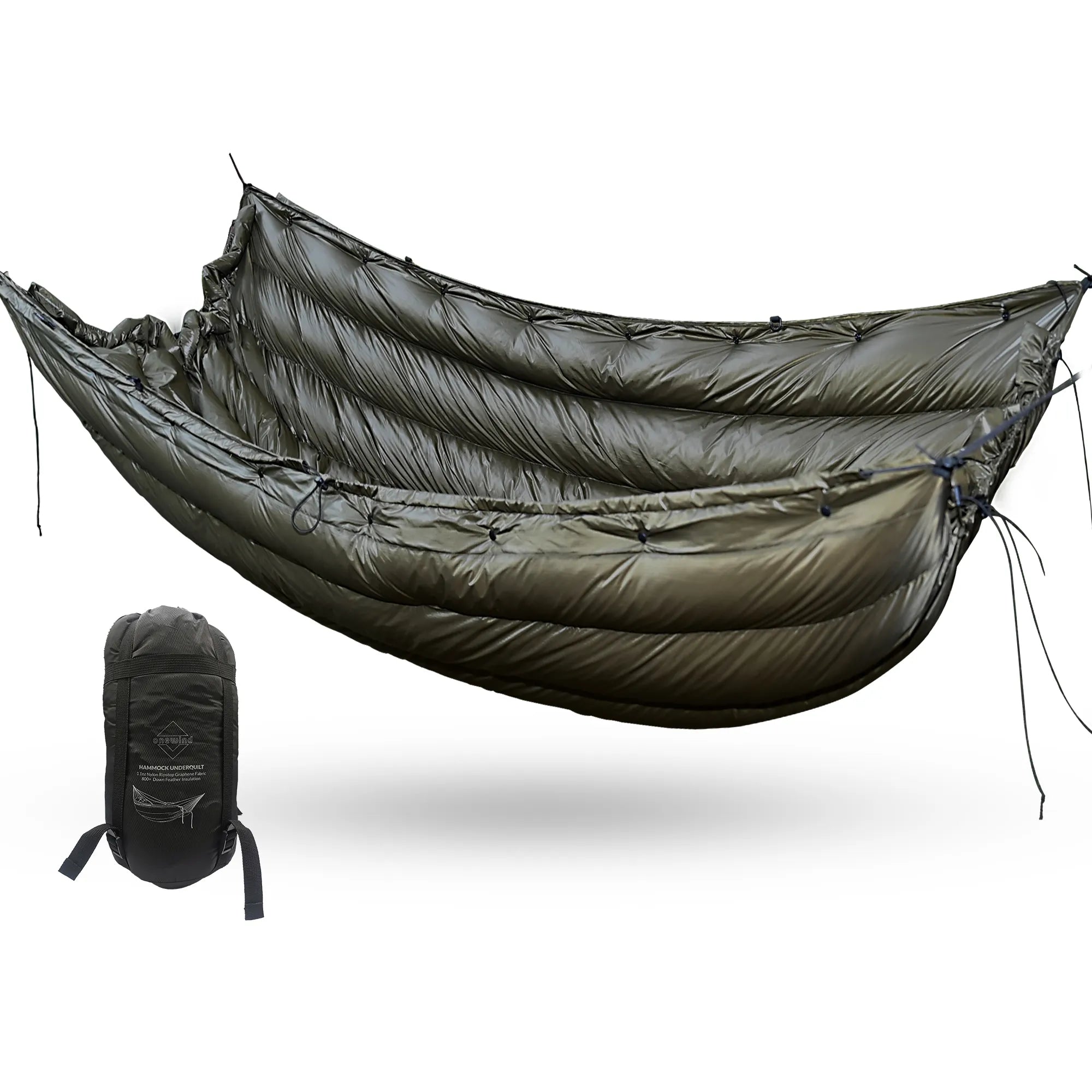
ハンモックでのキャンプを続ける予定なら、専用のアンダーキルトのほうがすっきりした解決策です。
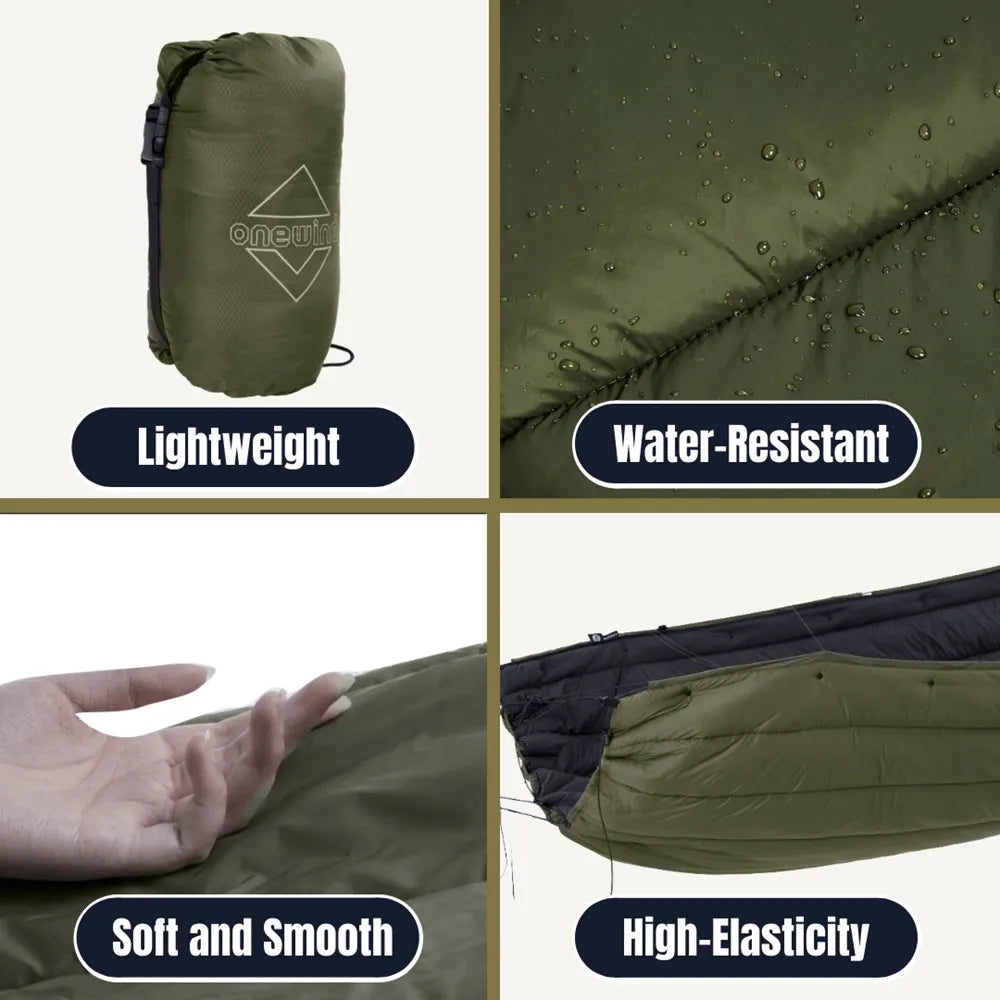
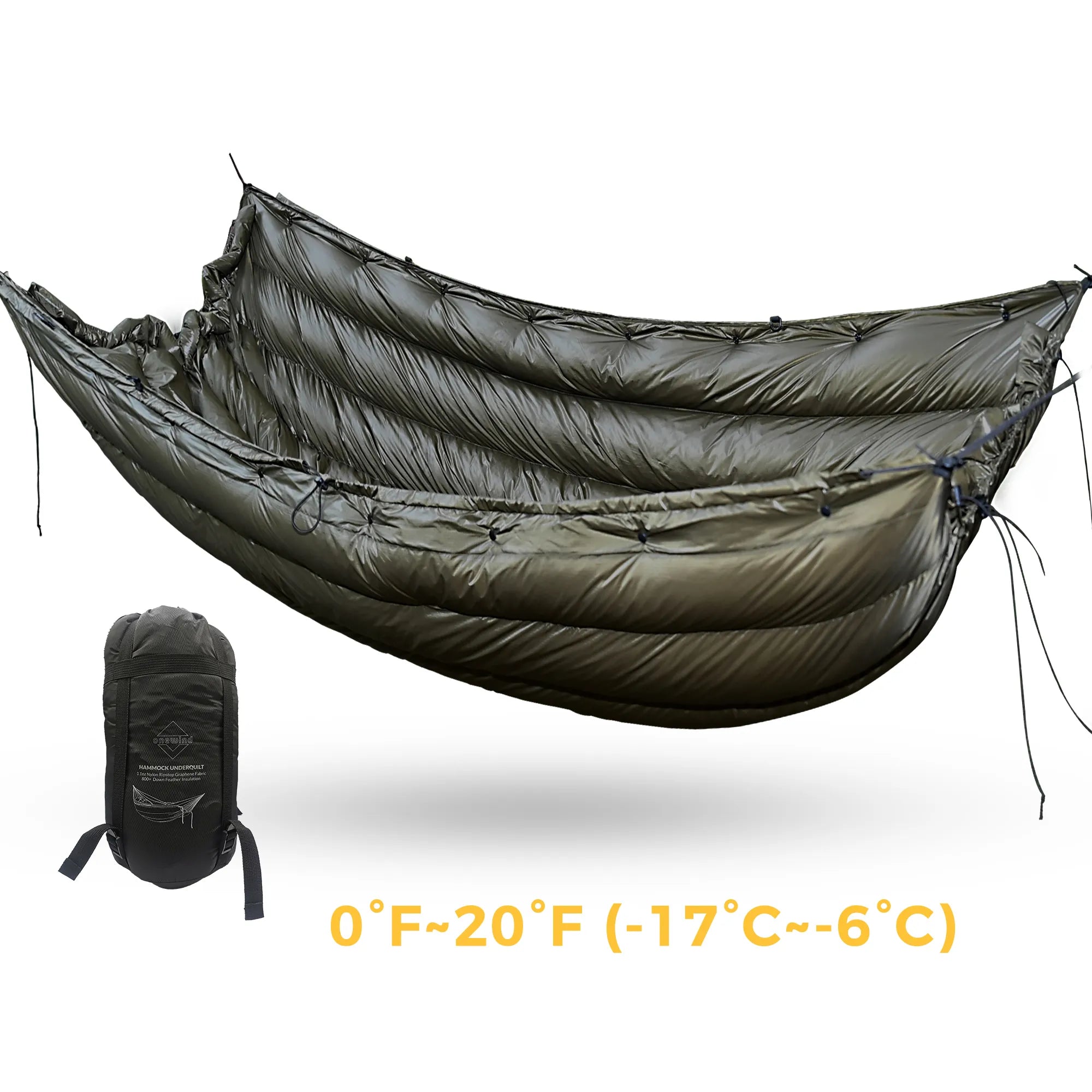
ザ・ ハンモック用アンダーキルト ODグリーン フィットテストを理解した後に確認する自然な製品の手順です。
夜が寒かったという理由だけで購入しないでください。
ハンモック本体に沿うロフト付きの底部断熱材が必要だから、これを購入してください。
判定: 寝袋は保温性の高いものをそのまま使い、より暖かい寝袋を買う前に、まずは下側の断熱を追加してください。
シナリオ2:11フィートのキャンプ用ハンモックに初めてアンダーキルトを組み合わせる場合
今こそ、システムを正しく整える絶好のタイミングです。
ハンモックをお持ちです。
暑い夏の夜に一晩だけでなく、何度でもその中で眠りたくなるはずです。
現在、アンダーキルトは実際の寝姿勢に合わせる必要があります。
まずハンモックを吊るしてください。
キャンプで行うのと同じ方法で、たるみとストラップの高さを調整してください。
その後、アンダーキルトを追加してください。
空のハンモックでキルトを調整して、それで終わりにしないでください。
乗り込んでください。
斜めに寝る。
一度か二度動かしてください。
その後、長さ、側面の巻き込み、端部の封止、張力、および巻き取りを確認してください。
もしご使用中であれば Onewind 11フィート キャンピングハンモック荷重がかかった睡眠姿勢の下でアンダーキルトを中央に保ち、空の状態の生地の下で中央に合わせるのではなくしてください。
バグネット入口を希望する場合は、同じ装填済みフィット確認を使用してくださ Onewind 11フィート ファスナー付きキャンプ用ハンモック 一晩かけて使用する前に、セットアップを信頼できるか確認してください。
それらは必ずしも同じ場所ではありません。
判定: 画面上の製品名ではなく、積載されたハンモックの形状にアンダーキルトを合わせてください。
シナリオ3:アンダーキルトを持っているのに、肩やふくらはぎにすきま風を感じる場合
寒がりの方は、より暖かいアンダーキルトが必要だと考えがちです。
時にはそうなります。
ただし、肩やふくらはぎの部分で隙間風を感じる場合は、通常、耐寒性能の評価よりもフィット感が先に問題となっています。
まず、寒い場所を特定してください。
「コールドショルダー」とは、キルトが足元方向にずれすぎている、側面がゆるすぎる、または頭側から隙間風が入っていることを意味します。
ふくらはぎが冷えるのは、キルトが斜めの寝姿勢に対して短すぎるか、足元側にゆとりがありすぎるか、夜の間にずれている可能性があります。
片側が冷たい場合、動いたときにサイドラップがうまく機能していないことを意味します。
一度に3つのことを変更しないでください。
まずキルトを中央に戻してください。
その後、端部のシールを調整してください。
その後、テンションを調整してください。
その場合は、追加の脚部断熱材や、より暖かいアンダーキルトを検討してください。
私は20分の荷重テストが好きです。なぜなら、多くの隙間はサスペンションが落ち着いた後にしか現れないからです。
判定: アンダーキルトを交換する前に、場所ごとの隙間を修正してください。
シナリオ4:パッド、化繊、ダウン、プロテクターのどれを選ぶか
正解は、ハンモックでのキャンプ頻度と、その旅でどれだけ寒くなるかによって決まります。
一晩の軽いテストなら、フォームパッドが最も安価な証明になります。
通常の3シーズンの旅行には、化繊アンダーキルトが扱いやすく、管理も簡単です。
収納サイズと重量が重要なバックパッキングでは、ダウン製のアンダーキルトがより魅力的になります。
雨天、風の強い環境、汚れたサイト、または肩季節のサイトでは、プロテクターを使用することで、アンダーキルトのフィットがすでに適切な状態でも保温性を維持しやすくなります。
これらを同等のアップグレードとして扱わないでください。
それぞれ異なる問題を解決します。
予算の問題はパッドで解決します。
化繊アンダーキルトは、下側の保温を簡単に解決します。
ダウンアンダーキルトは、保温性と重量のバランスおよび収納性の問題を解決します。
プロテクターはキルト周辺の露出を解消します。
ザ・ シングルレイヤーアンダーキルト シンプルな足元の暖かさ重視のカテゴリーに属します。
ザ・ アンダーキルトコレクション 全ラインナップを比較するのに最適な場所です。
判定: 用途に応じて選択してください:低予算、通常の快適性、携行重量、または防風・防滴。
シナリオ5:予報は風が強い
風はハンモック睡眠システムの実際の保温性能を変えます。
気温は45度と表示される場合があります。
掛け布団の下を夜通し風が通ると、体が少し冷たく感じることがあります。
より暖かいアンダーキルトを購入する前に、シェルターの形状を確認してください。
タープをもっと低く張ってください。
風上側を閉じてください。
より風雨をしのげる設営場所を選んでください。
アンダーキルトがタープのカバー範囲より下に垂れ下がらないようにしてください。
サイトが露出している場合は、キルトの周囲に保護を追加してください。
これは自分をビニール袋に閉じ込めることではありません。
それは、ふくらんだ断熱材を流れる空気や飛沫から保護することについてです。
適切にフィットし、防風対策が施されたアンダーキルトは、保護されていないより暖かいアンダーキルトよりも優れていることがよくあります。
判定: 風の中では、キルトが寒すぎると判断する前に、キルトを保護してください。
ハンモック用アンダーキルトでよくある間違い
アンダーキルトの失敗の多くは、固定された設置方法を信じてしまうことから生まれます。
ハンモックは空の状態でも見栄えが良いです。
キルトは中央に配置されています。
タープは高くて快適に見えます。
その後、キャンパーが乗り込むと、システム全体の形が変わります。
そのため、以下のすべてのミスは、実際にはローデッドフィットのミスです。
ミス1:アンダーキルトが中央に保たれている必要があることを忘れる
空のハンモックに合わせて中央に配置したアンダーキルトは、あなたの体の中央に合っていない場合があります。
斜めの寝方にすると、圧力がかかる部分が変わります。
肩と腰の動きによって、実際の暖かいゾーンは数インチ移動します。
中に入った後でも、キルトが胴体の下にくるようにしてください。
足元のほうへずれると、肩が冷えてしまいます。
頭のほうにずれると、足が冷えてしまいます。
裏庭でのテストが成功した後に吊り下げ位置を印付けしておくと、キャンプ場での時間を節約できます。
セットアップを左右対称に見せる必要はありません。
断熱材が、実際に体が寝る位置に来る必要があります。
ミス2:キルトをきつく引っ張りすぎる
ぴったりしたフィット感は安心感がありますが、保温性にはロフト量が必要です。
アンダーキルトをハンモックにぴったりと引き寄せると、保温性を生む空間を減らすことができます。
それは、キルトがたるむべきだという意味ではありません。
それは、持ち上げるときにやわらかくあるべきという意味です。
圧縮ではなく、接触を考えましょう。
最も確実な確認方法は、装填された状態での手による確認です。
大きな空気の隙間を感じてください。
次に、潰れた断熱材がないか確認してください。
正しい設定は、それらの失敗の間にあります。
小さなサスペンション調整が重要です。
すべての下書きをさらに締めることで解決しようとする間違いを犯さないでください。
ミス3:終端チャネルを無視する
エンドチャネルは、ハンモックの内側からは見えないため、見落としやすいです。
ハンモックに荷重がかかると、それらも変化します。
ヘッドエンドの隙間があると、首や肩が冷えてしまうことがあります。
足元の隙間は、上部の層が暖かくても足を冷やしてしまうことがあります。
開口部を閉じるのに十分なように、チャンネルをぴったりと締めてください。
キルトが変形しないように、固く結びすぎないでください。
キルトにドラフトカラーやギャザー付きの端がある場合は、それらに本来の役割を果たさせてください。
ハンモック本体の周囲をやわらかく密閉することが目的です。
私は最後に端部を確認します。なぜなら、張力やセンタリングの変化によって再び開いてしまうことがあるからです。
ミス4:裏庭での動作テストを省略すること
ハンモックのそばに立つことは、睡眠テストではありません。
30秒座るだけでは、睡眠テストにはなりません。
動きが必要です。
乗り込んでください。
斜めに寝る。
少し転がしてください。
水筒に手を伸ばしてください。
起き上がって、もう一度横になってください。
キルトがそのような通常の動きの間にずれるなら、午前2時にはさらにずれてしまいます。
20分の裏庭でのテストで、つらい夜を防げます。
新しいセットアップなら、トレイルヘッドから3マイル離れた場所で失敗に気づくより、家で見つけたいです。
ミス5:下半身の保温より先に上半身の保温を買うこと
このミスは高くつきます。
キャンパーは寒さで目を覚まし、より暖かい寝袋を購入します。
次の旅行もまだ寒いです。
その後、より厚手のトップキルトを購入します。
次の旅行もまだ寒いです。
問題はずっとその下にありました。
上部断熱は上側を暖めます。
底面の断熱材が下側を暖かく保ちます。
仕事はそれぞれ異なります。
下が寒い場合は、下を解決してください。
適切なアップグレードは、アンダーキルト、パッド、より優れた端部の密閉、または風よけかもしれません。
最初の選択として、より温かいバッグになることはほとんどありません。
梱包前の最終チェックリスト
すべての列が合格したら、アンダーキルトは本番の旅行に出発できる準備が整っています。
1行でも失敗した場合は、まずその行を修正してください。
それがシステムで考えることの利点です。
推測するのはやめてください。
あなたは、間違った場所で暖かさを買うのをやめます。
キャンプ用ハンモック、アンダーキルト、トップ保温、タープを連携させます。
ほとんどのキャンパーにとって、それがハンモックキャンプを試すことと、実際にハンモックで快適に眠ることの違いです。