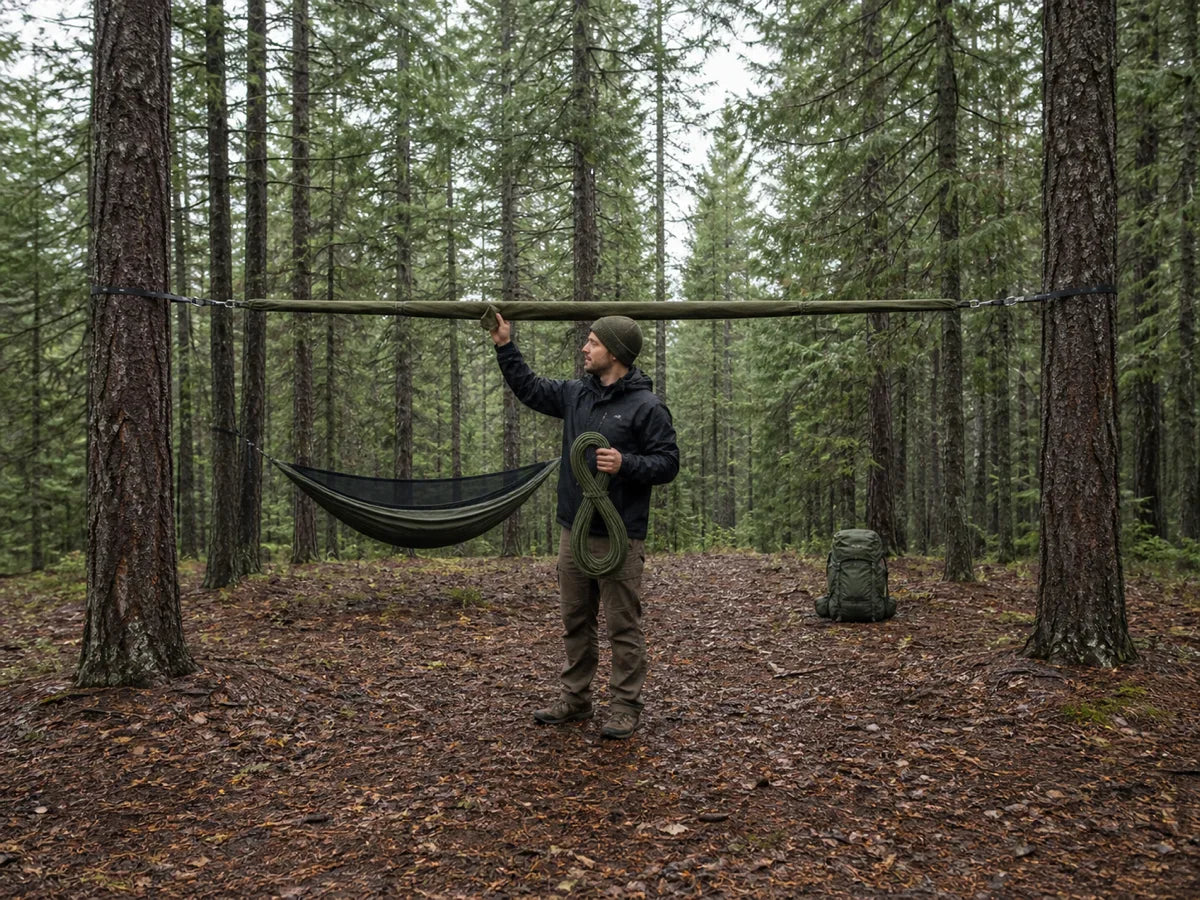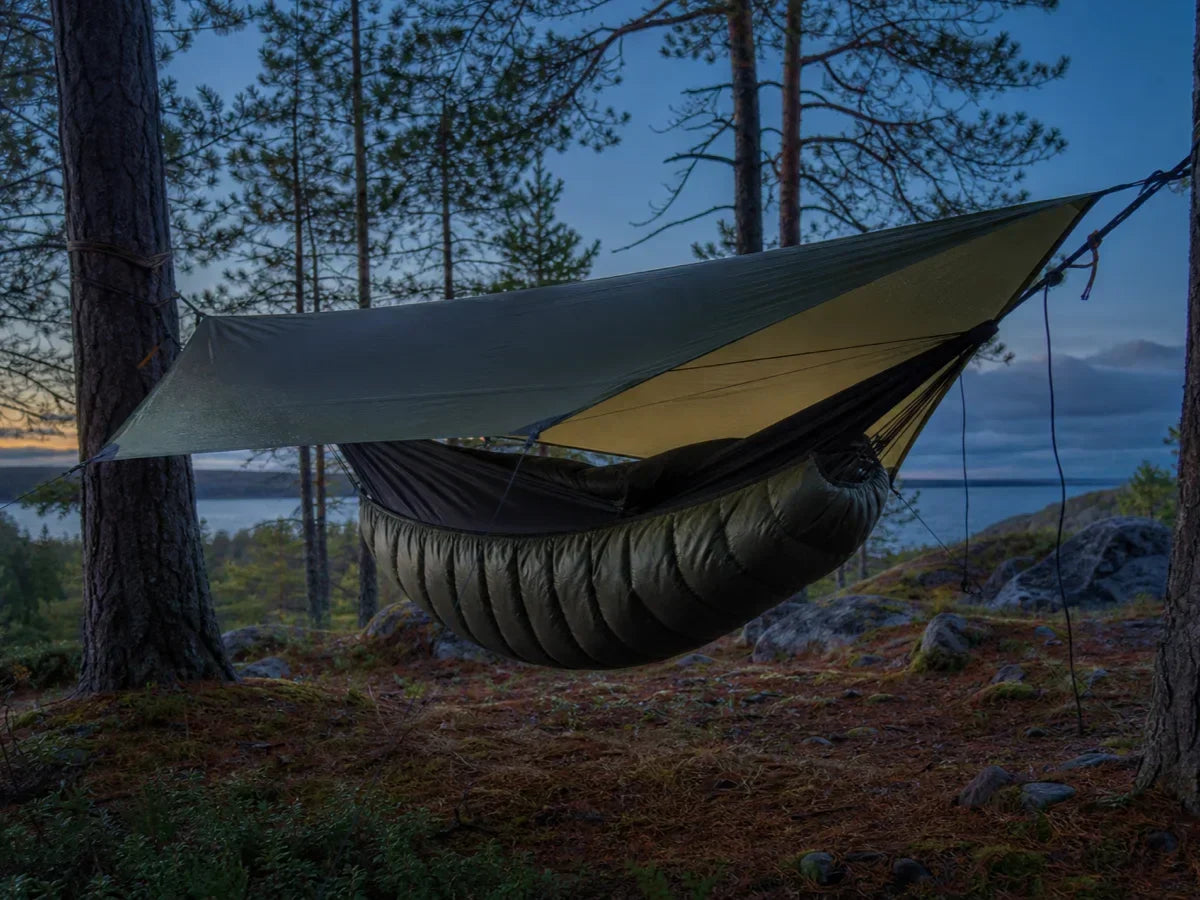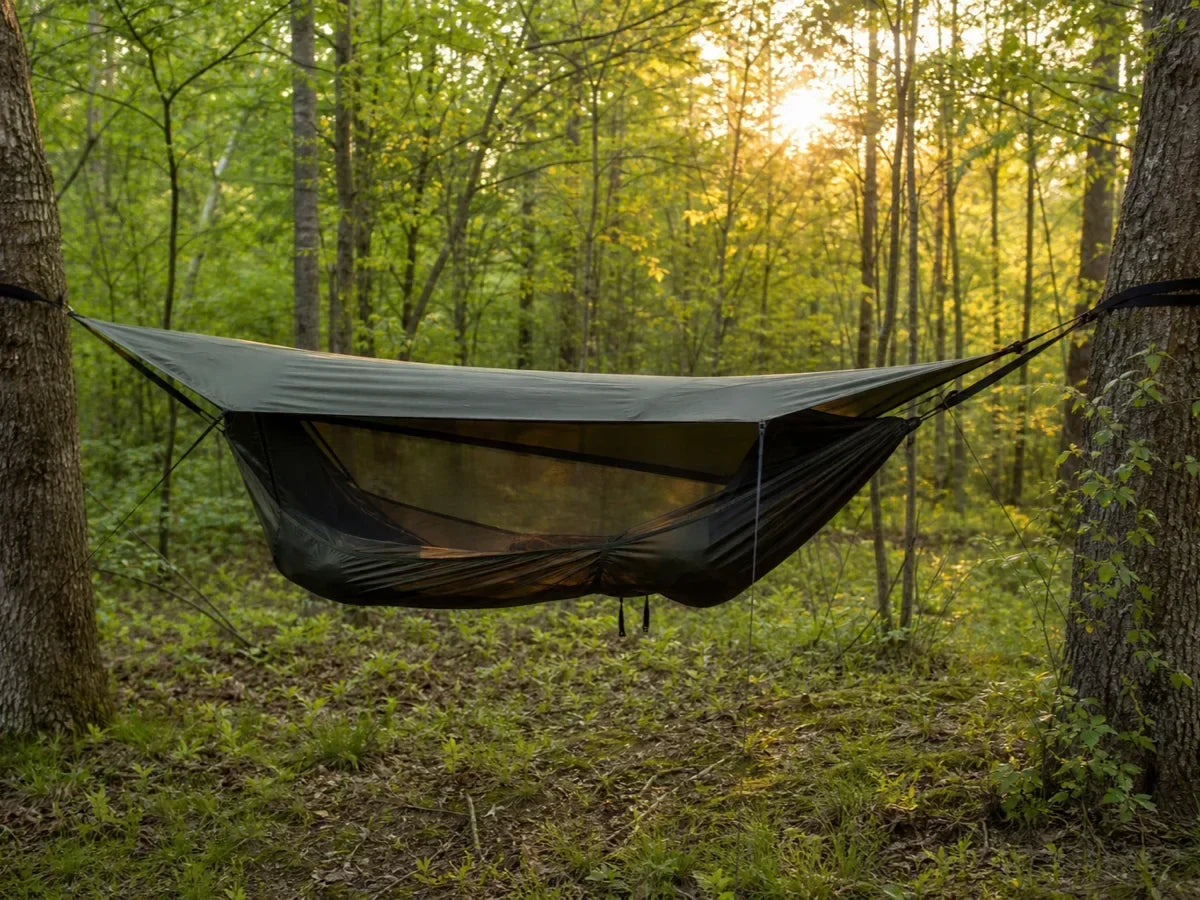

You already own a sleeping pad.
Before you spend $90 to $250 on an underquilt, the obvious question is whether the pad you have will just do the job.
Every buying guide answers that by ranking pads by R-value, then adding one line about getting a wide pad or a double-layer hammock.
That advice is not wrong. It is just built on a number that was never measured for hammocks.
I went and read what the R-value test actually does to a pad, and the answer reframes the whole decision.
What You'll Learn
Quick Answer

A sleeping pad works as hammock insulation.
Whether it works for you is decided by your hammock, not by the pad's R-value.
In a gathered-end single-layer hammock, the pad slides out from under you and your shoulders sit outside its edges.
That configuration produces almost every horror story about pads in hammocks.
In a double-layer hammock, the pad is captured between the two fabric layers and cannot drift.
That is usually the cheapest fix if you already own a pad.
In a bridge or flat-lay hammock, the pad lies on a flat platform.
Here it can genuinely outperform an underquilt, and long-term users report it removes cold spots entirely.
- ✓ Choose the pad path if you own a bridge or double-layer hammock, or if you ever need to sleep on the ground.
- ✓ Choose an underquilt if you run a gathered-end single-layer hammock and want insulation that never shifts and breathes properly.
⚠ Do not choose based on R-value alone. Two pads rated R 4.5 and R 4.4 behave nothing alike in a hammock, for reasons the rating cannot express.
What The R-Value Test Actually Measures
R-value feels like a warmth rating.
It is more specific than that, and the specificity is the problem.
The industry standard is ASTM F3340, and its full title tells you most of what you need: Standard Test Method for Thermal Resistance of Camping Mattresses Using a Guarded Hot Plate Apparatus.
Here is how the measurement is produced.
The pad is held under pressure between two plates.
The upper plate is heated and is, in the standard's own framing, representative of a person lying on top of the mat.
The lower plate is chilled and is representative of cold ground.
The rig measures how much energy it takes to hold the hot plate steady, and derives R from that.
According to Therm-a-Rest, which keeps an ASTM-approved testing device at its Seattle headquarters, the protocol was finalized and published in 2019, which is what made cross-brand R-values genuinely comparable for the first time.
That comparability matters here, because the two-pad comparison below is only fair if both numbers came off the same kind of apparatus. They did.
Read that description again with a hammock in mind.
The test squeezes the pad flat between two rigid surfaces, and the thing it models underneath is the ground.
A hammock has no ground. Underneath your pad is moving air.
A hammock also does not hold the pad flat. The fabric curves, and the pad curves with it or fights it.
So the R-value number is entirely real and entirely comparable between brands, since Therm-a-Rest and others now run the same ASTM-approved apparatus and the protocol was finalized in 2019. It answers one question well: how much thermal resistance does this pad provide when compressed flat against cold ground.
It does not answer the question you are actually asking, which is whether the pad will cover your shoulders when the hammock wraps around you.
The Two-Pad Proof
If R-value transferred cleanly to hammocks, two pads with the same R-value would perform the same way in one.
They do not.
The comparison is stark.
The XLite is rated R 4.5.
The Klymit Hammock V is rated R 4.4.
By the number, the XLite is very slightly warmer.
In a hammock, the Klymit is in a different category, because it is 47 inches wide against the XLite's 20, and it has fold-out wings that wrap up around your hips and shoulders.
The reviewer who tested the Klymit put the failure mode plainly: the single most common complaint he hears from new hammock campers using standard pads is that their hips and shoulders got cold.
Not their backs. Their hips and shoulders.
That is a coverage problem, and no amount of thermal resistance in the middle of a 20-inch pad fixes it.
Note what the R-value gap does not tell you.
The Klymit is 2.5 times heavier than the XLite, 32 oz against 13 oz.
Weight is the real cost of that coverage, and the rating does not express it either.
Why Your Shoulders Are The Failure Point
The reason the shoulders go first is the diagonal lay.
You do not sleep straight down the centerline of a gathered-end hammock. You lie across it on a diagonal, which is what flattens your body out. Our guide to sleeping in a hammock covers that geometry and the underlying reason bottom insulation is mandatory at all: your body weight crushes the loft out of anything beneath you, so a warmer sleeping bag does nothing while uncompressed insulation works.

Now put a 20-inch rectangle under a body lying diagonally.
Your torso is covered.
Your shoulders, which are the widest part of you and are rotated off the pad's axis by the diagonal, hang past the edge.
Gear reviewers describe the same thing from the other direction: standard pads are prone to shifting during sleep, and most models do not insulate the shoulders well because of their skinny width.
There is a second effect, usually called the pad taco.
A narrow or stiff pad in a curved hammock curls up at the sides.
Instead of a flat platform you get a trough with raised edges that press against your shoulders and arms.
That is why partial inflation keeps coming up as a fix.
A pad inflated firm is rigid and fights the hammock's curve, while a softer pad conforms.
Lengthwise baffles help for the same reason, because a pad whose air chambers run head to foot bends across its width more willingly than one baffled side to side.
Capture: Why The Pad Slides Out
The second failure is drift.
You get into the hammock on the pad.
You wake at 3am with the pad somewhere near your knees and your back against bare fabric.
This is the complaint that converts more people to underquilts than cold does. One long-term hammock camper described it exactly: the biggest issue was sliding off of the pad because it did not stay put, and once he switched to an underquilt it stayed tight on the outside of the hammock, so no matter how he moved around inside it was always there in a perfect cradle.
That is the structural asymmetry.
An underquilt hangs outside the hammock, so your movement inside cannot displace it.
A pad sits inside, sharing the space with a sleeping, rolling human.
Every workable pad setup solves this by capturing the pad somehow.
Double-layer hammock. The pad goes between the two fabric layers, so it physically cannot move. Our full double-layer hammock collection is built around exactly this. Gear guides recommend this specifically to avoid excess movement, and it is the reason Onewind builds the Vortex 11 ft double layer at $59.90 and 1.65 lbs, the Vortex 12 ft double layer at $74.90 and 1.74 lbs, and the Northers 11 ft zipper double-layer at $99.90.
Fabric surfaces. A pad with a fabric top grips better than bare nylon on bare nylon. One camper reported that a fabric-covered pad does not slide around inside the hammock, and that gluing a small strip of wool felt to the bottom made it stay put even better.
Wings. Hammock-specific pads with fold-out flaps do double duty, adding shoulder coverage and resisting rotation.
Straps. Some top insulation ships with pad-retention hardware built in, which is why the Hammock Topquilt Poncho with OneTouch pad straps at $85.90 exists as a top-and-capture solution in one piece, with a lighter OD green topquilt poncho at $75.90 for milder nights.
Worth stating honestly: the double-layer fix is not universal. In the same community thread where several people praise it, one experienced hanger says flatly that he has never been able to make a pad between layers work and doubts anyone can.
That disagreement is real, and it tracks with pad width. A 20-inch pad in a double-layer sleeve is still a 20-inch pad.
Capture and coverage are two separate problems, and a double-layer hammock only solves one of them. Reddit threads on this consistently conflate the two, which is why the same fix gets described as a miracle by one camper and as useless by the next.
The research here is unusually easy to reconcile once you separate them: capture fixes drift, width fixes cold shoulders, and you need both.
Where The Pad Actually Wins
I have spent five sections on the pad's problems, so here is the other side, and it is stronger than most underquilt-first articles admit.
In a bridge or flat-lay hammock, the pad can be the better system. A bridge hammock uses spreader bars to hold a flat, trough-shaped platform, which is exactly the surface a pad wants. Our bridge hammock guide covers that geometry in depth.
One camper who uses a lengthwise-baffle Exped pad in either a bridge hammock or a 90-degree hammock reported it single handedly removed every cold spot issue, and added that he used to fight and fight to get his underquilt set perfectly and no longer has to.
If that configuration appeals, the Crystal bridge hammock at $151.99 is the flat-platform option in our line, and the hammock sync spread bar at $26.90 widens a gathered-end body toward the same effect.
Another convert switched to a pad specifically because he kept getting cold spots and calf ridge with a gathered-end hammock plus underquilt, and said the pad instantly removed every underquilt cold-weather problem in one go.
The pad goes to ground. The underquilt cannot. This is the pad's one genuinely structural advantage, and it is not a rounding error. If you hike where you may end up in a shelter, above treeline, or at a site with no usable trees, the underquilt is dead weight that night while the pad still works.
One thru-hiker framed it as a route-planning decision, naming Great Smoky Mountains National Park and the White Mountains as the stretches where you want the ground option available.
A pad spreads the hammock out. Several users note that a pad flattens the lay, especially when inflated firm. That is the same effect a spreader bar produces, achieved with gear you already carry.
Where The Underquilt Wins
Balance requires the reverse list, and two of these are things a pad cannot fix at any width.
It never shifts. Covered above. Structural, not fixable.
It breathes. This one surprises people. Pads do not breathe, and the community complaint is consistent: a clammy feel, or straight up wet. You sweat against a sealed plastic or fabric surface all night with nowhere for the moisture to go. Underquilts are permeable, so the moisture passes through.
One camper who used a pad for his first 20 to 30 nights and then bought a quilt said it was much nicer, singling out breathability.
It wraps your sides. An underquilt cradles up around your flanks. A flat pad, however wide, is still a flat surface under a curved body.
Durability under nightly use. One user wore through two Therm-a-Rest Z-fold foam pads in a single year of sleeping in a hammock every night, having also tried cheap blue foam, self-inflating pads and a Big Agnes air pad without a meaningful improvement.
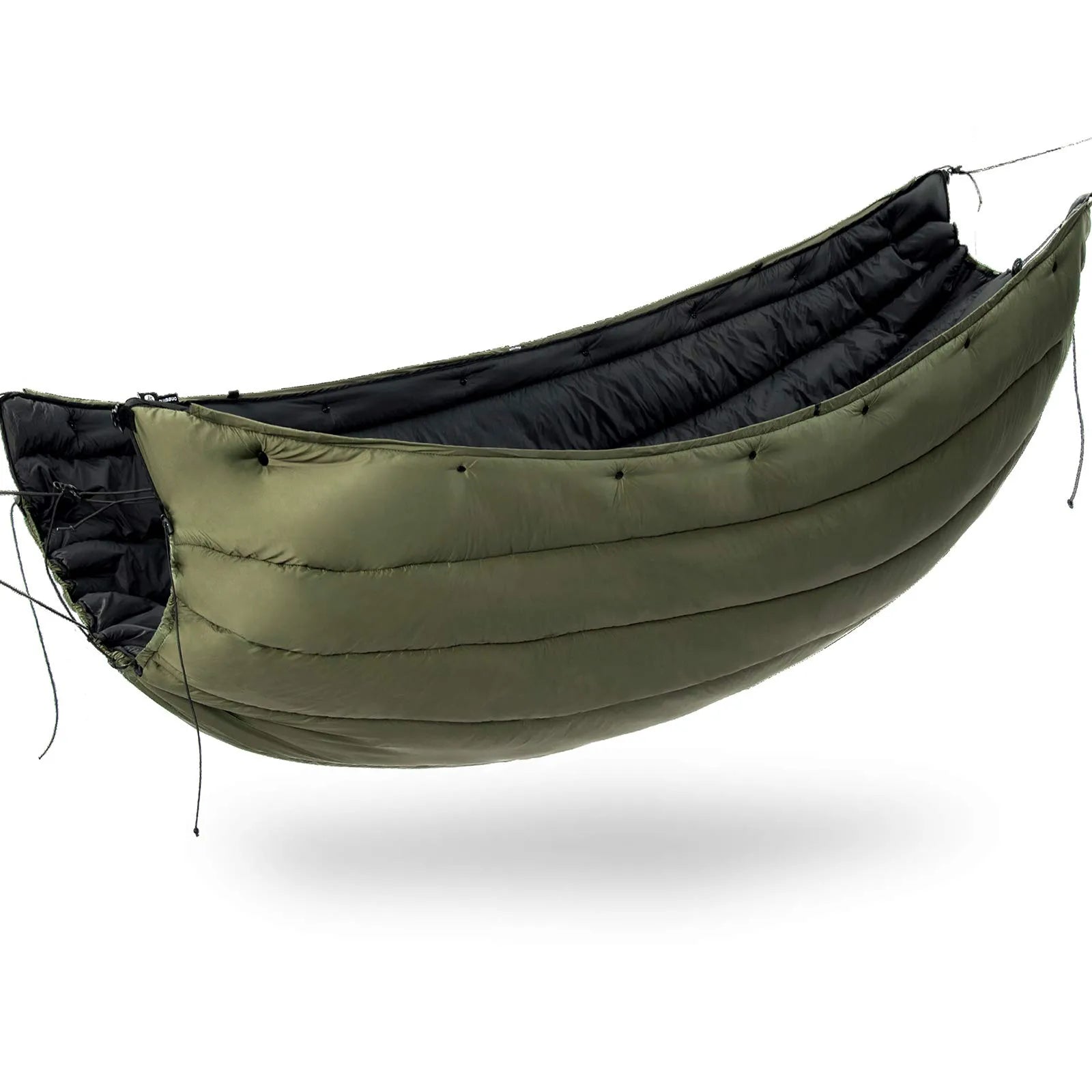
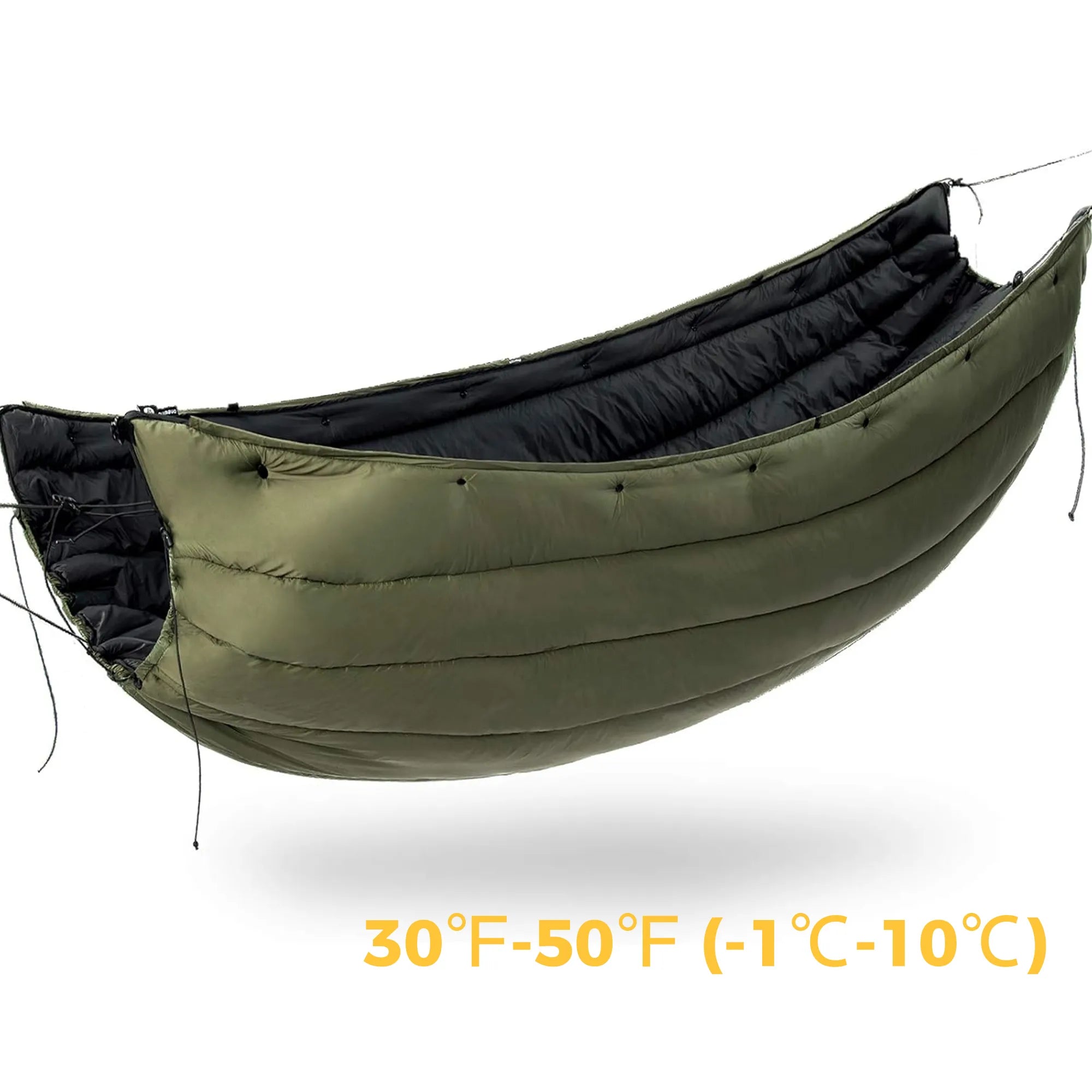
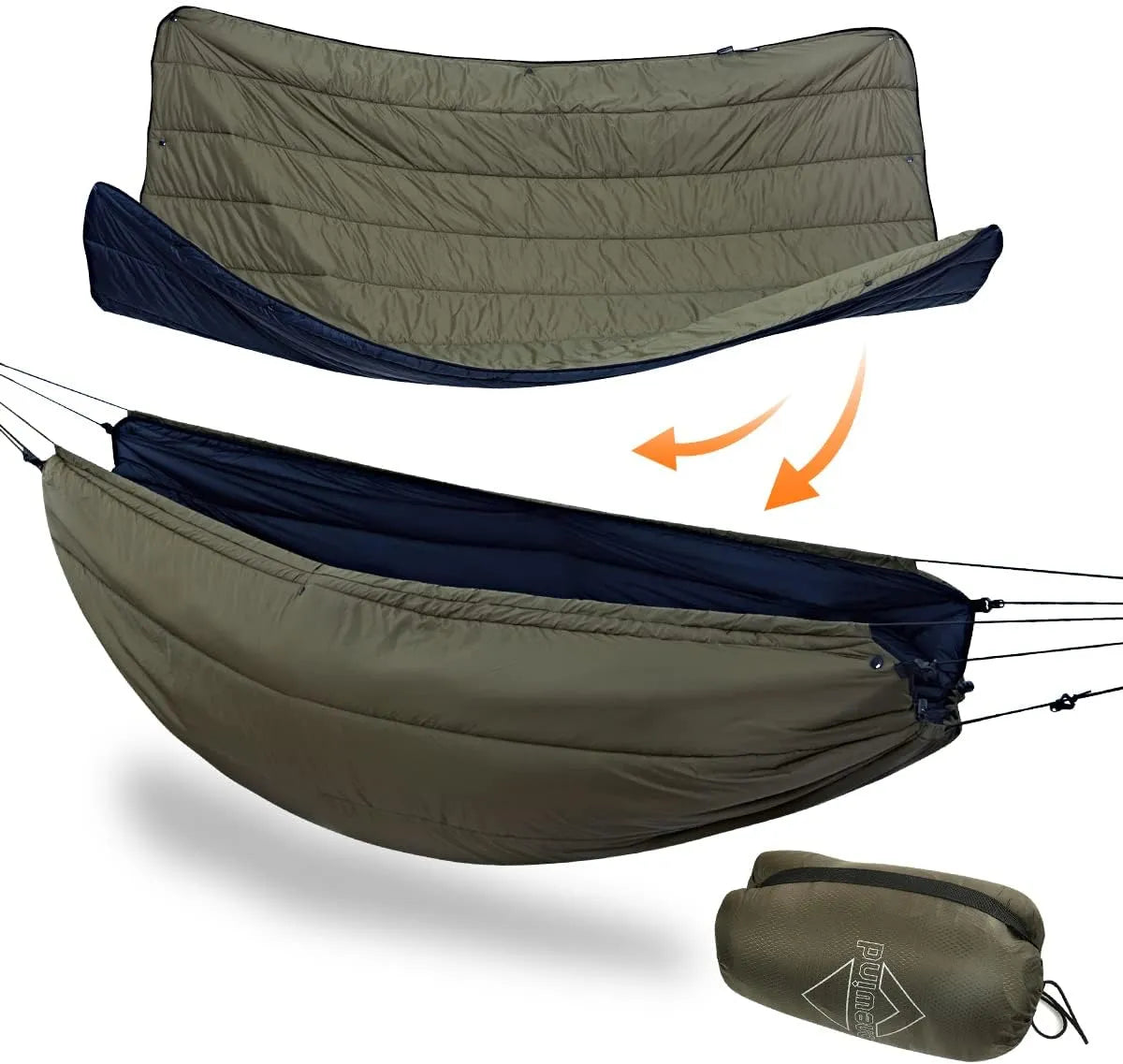
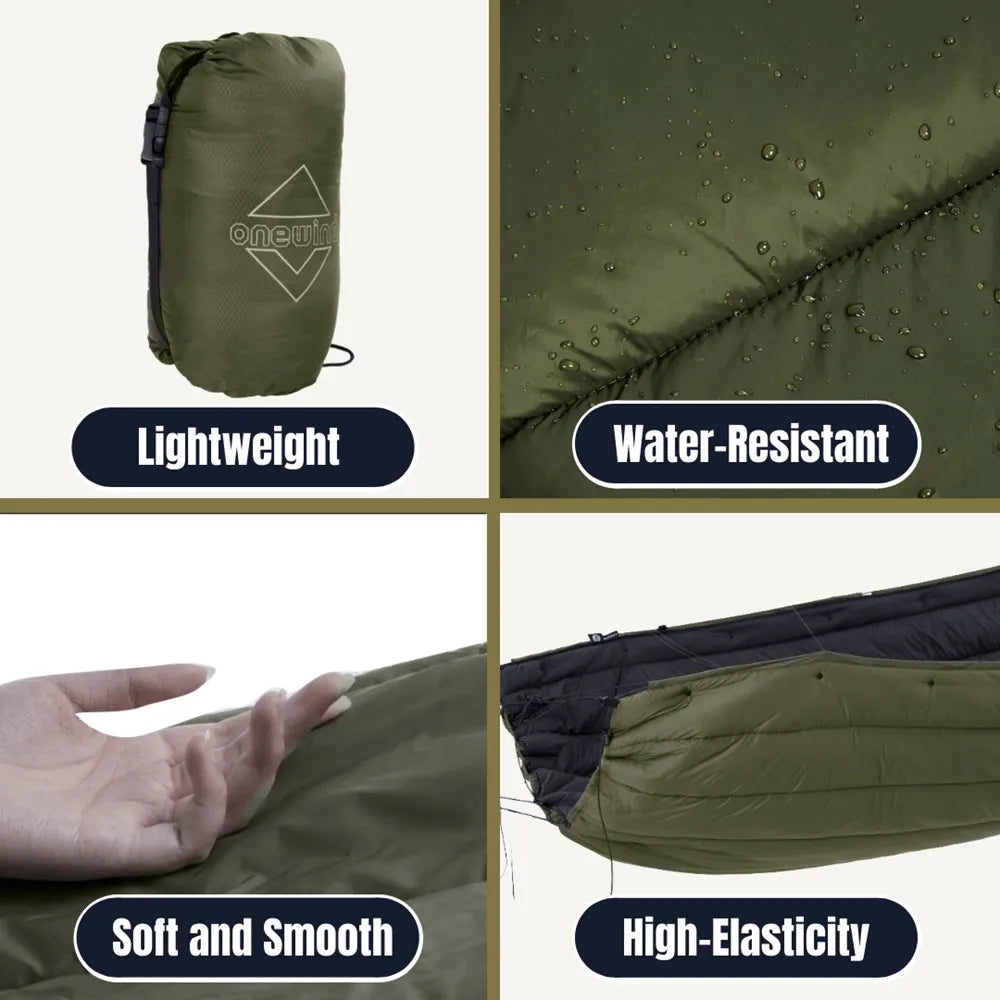
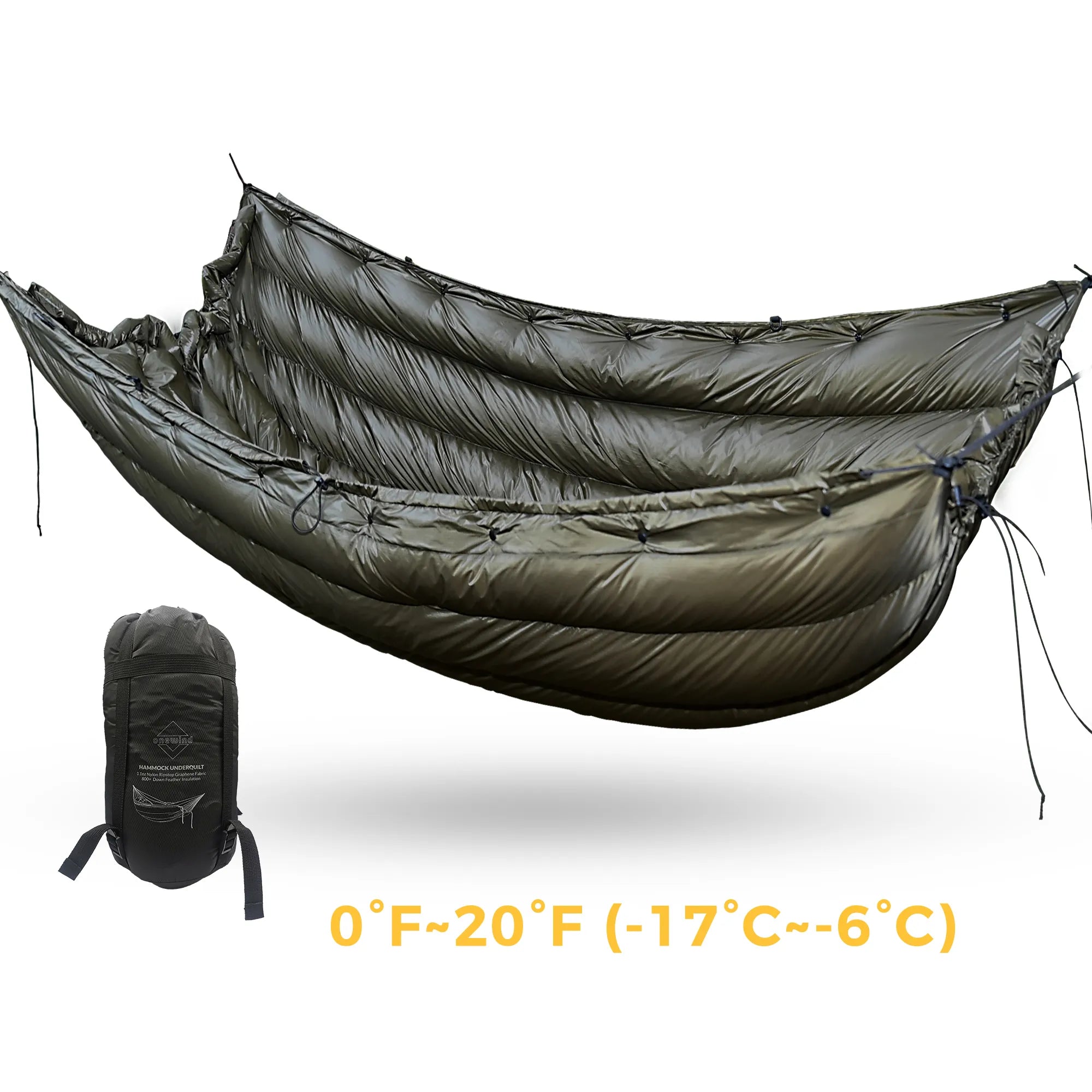
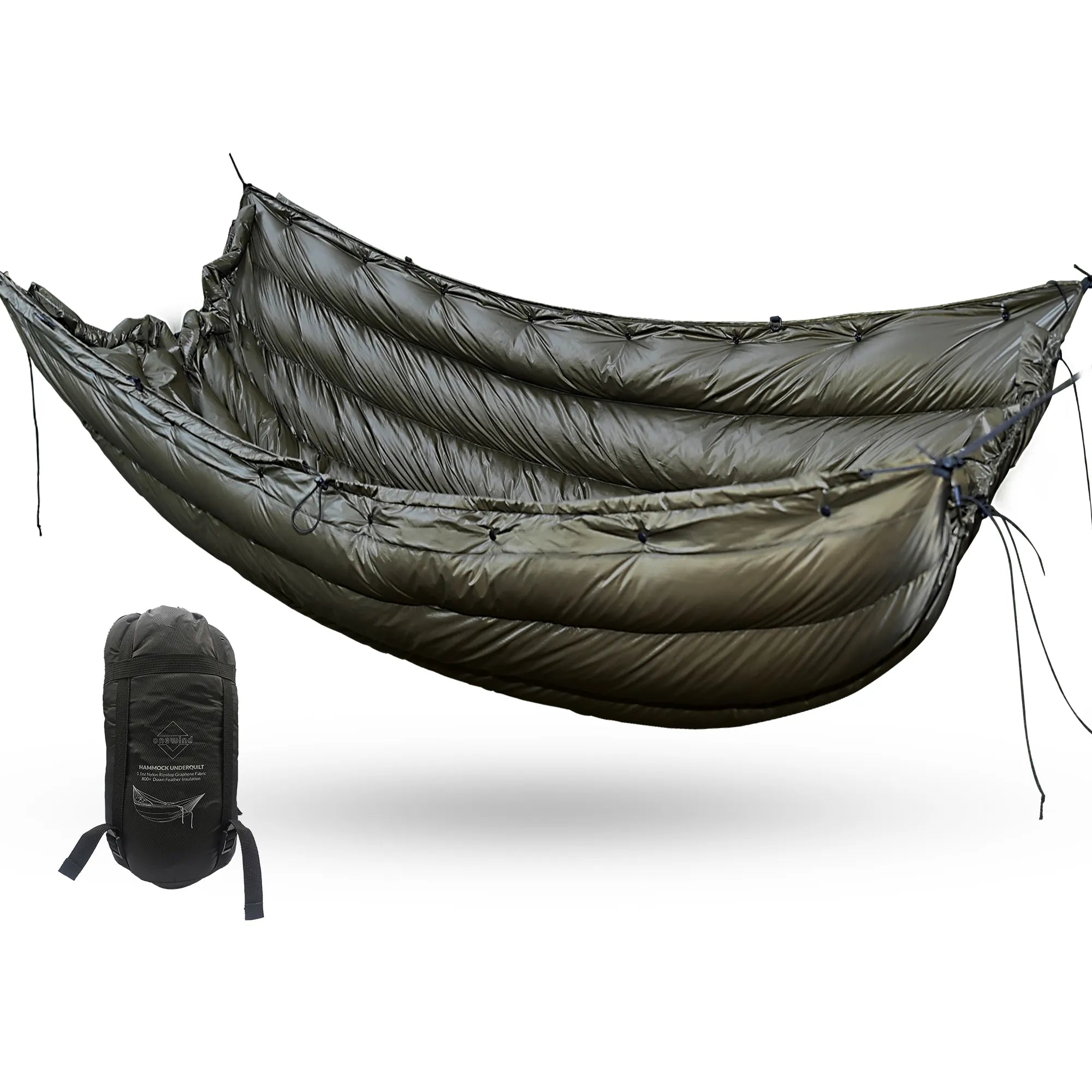
Onewind's underquilt line runs from the Flare underquilt at $89.90, through the Bridge hammock underquilt at $94.99 and 38.8 oz, to the Solstice down underquilt at $189.00 and the Equinox down underquilt at $249.00, which weighs 41.6 oz and is rated 0F to 20F. Our underquilt buying guide handles that selection in detail, so this article will not re-run it, and the full underquilt collection shows the temperature range options side by side.
If you go the underquilt route, an underquilt protector at $27.90 and 10.6 oz blocks wind stripping heat off the outside, with a camo printed version at $29.90.
Fit is adjustable rather than fixed, and underquilt adjusters at $6.49 are the cheap part that closes the gaps most people blame on the quilt itself.
For cold nights the Flare underquilt and blanket combo at $144.90 bundles the bottom and top layers, and the Bridge hammock underquilt protector at $34.99 covers the bridge geometry specifically.
Running Both
The choice is not always either/or, and the most common expert configuration is a stacked one.

The pattern: an underquilt does the primary work outside the hammock, and a very thin closed-cell foam pad rides inside as a supplement.
The numbers make it obvious why. A 1/8 inch Thinlight-style pad, sold by Mountain Laurel Designs and Gossamer Gear, comes in an 80 inch length that users cut down to about 40 inches, landing at roughly 1.6 oz.
For 1.6 ounces you get a torso-length backup layer, a sit pad in camp, and an emergency ground option.
For car camping where ounces do not rule, a camping blanket at $84.90 or the 3/4 size version at $52.90 layers over the top more comfortably than a mummy bag in a hammock.
That is a different calculation from carrying a full 13 to 32 oz inflatable alongside an underquilt.
Choose this if you camp cold, if you want redundancy against an underquilt that shifts, or if you occasionally need to sleep on the ground but not often enough to justify a full pad.
Scenario 1: You Own A Pad And A Gathered-End Hammock
This is the most common starting position, and it is the one that generates the complaints.
Your pad slides, and if it is a standard 20-inch model your shoulders are outside it on the diagonal.
If your pad is 25 inches or wider, capture alone may fix you, and a double-layer hammock at $59.90 is cheaper than any underquilt in the catalog.
If your pad is 20 inches, understand that capture stops the drift but does nothing about coverage.
You will still get cold shoulders.
Hammock width interacts with this. A wider body gives the pad somewhere to sit flat instead of forcing it up the walls, which is the argument for the Aerie 12 ft XXL double hammock at $74.90 or the Aerie 11 ft double with mosquito net at $69.90 over a narrow lounging hammock.
Verdict: Choose the double-layer hammock if your pad is 25 inches or wider. If it is 20 inches, avoid spending on capture and put the money toward an underquilt instead.
Scenario 2: You Sleep In A Bridge Or Flat-Lay Hammock
Here the usual advice inverts.
The spreader bars give you a flat surface, so the pad is not fighting a curve and does not taco.
The strongest field reports in this whole topic come from this configuration, including one user whose lengthwise-baffle pad removed every cold spot he had ever had, after years of fighting to set an underquilt correctly.
Verdict: Recommend the pad as your primary insulation here, and prioritize a lengthwise-baffle design. This is the one configuration where a pad is not a compromise.
Scenario 3: You Sometimes Have To Sleep On The Ground
If your routes include shelters, alpine sections, or campgrounds that ban tree attachment, this decides itself.
An underquilt is engineered to hang under a hammock and does nothing on the ground.
A hiker planning an Appalachian Trail section framed it exactly this way, naming Great Smoky Mountains National Park and the White Mountains as the stretches where the ground option matters.
Verdict: Choose the pad when ground nights are a real possibility, and accept the shoulder-coverage work as the price of versatility.
Scenario 4: You Camp Below Freezing
Cold amplifies every weakness in the system.
A gap that is merely noticeable at 50F becomes the reason you do not sleep at 25F.
That is why the cold-weather answer is rarely the same as the summer answer.
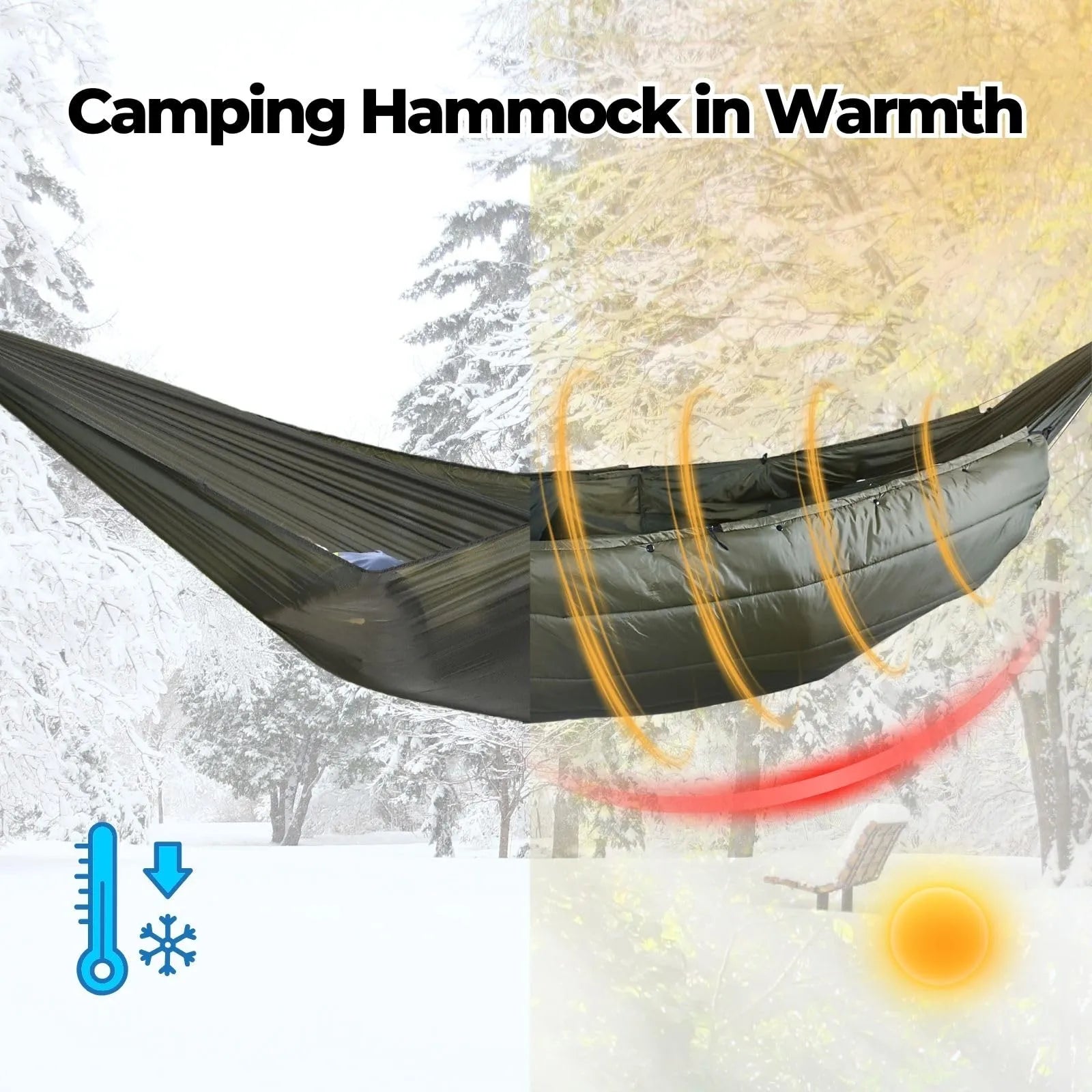
The Klymit Hammock V, at 47 inches wide and R 4.4, was reported comfortable down to 25F paired with a 15-degree bag, which shows a wide pad can genuinely do cold-weather duty.
Against that, several campers say plainly that in shoulder season and winter they always pick the underquilt because it wraps around and will not shift overnight, and one disputes outright the claim that pads are warmer at those temperatures.
Verdict: Choose an underquilt as the primary system for regular sub-freezing use, and add the 1.6 oz foam supplement rather than a second full pad.
Scenario 5: You Are Buying Your First Hammock Setup
If you have not bought the hammock yet, this is the cheapest moment to get it right.
Buying a double-layer body costs little more than a single layer and keeps the pad option permanently available, even if you later add an underquilt.
Budget the suspension alongside it: tree straps at $16.90 and an adjustable structural ridgeline at $7.99 lock in the sag that makes the diagonal lay repeatable, which is what keeps you on the pad instead of sliding off it.
That is the configuration that does not lock you out of anything.
Verdict: Choose a double-layer hammock as the default first purchase, use the pad you already own, and add an underquilt later only if drift or clamminess actually bothers you.
Choosing Your Setup
Three questions, in order. The first one that answers itself is your answer.
A few defaults worth stating outright.
For most people who already own a 25-inch or wider pad, I recommend a double-layer hammock before an underquilt. It is cheaper, it solves drift completely, and it keeps your ground option.
For most people who own a 20-inch pad and a gathered-end hammock, buy the underquilt. Capturing a too-narrow pad fixes the wrong problem.
Unless you camp regularly below freezing, do not buy a second full pad to layer. Buy 1.6 ounces of thin foam instead.
Avoid shopping this decision by R-value. It is a real, comparable, well-standardized number that answers a question about flat ground, and you are not sleeping on flat ground.

The pad you already own is worth trying before you spend anything.
Just measure it first, and look at your hammock before you look at the rating.

Capture your pad: Vortex 11 ft double layer, $59.90
Shop Now →