
Terra Nova lists a 5000mm flysheet and a 10000mm groundsheet on its Quasar tent, while GORE-TEX says the DWR on a jacket is not permanent and the waterproof membrane can still work after the face fabric stops beading.
That gap is the whole problem behind water resistant vs waterproof.
Buyers see one soft marketing label, one hard number, and one soaked fabric face, then assume all three mean the same thing.
They do not.
For most buyers, the smarter move is to read the trip first, then the number, and only then the label.
I would keep reading for one reason.
This guide turns vague copy into a buying rule you can use on tarps, tents, rain shells, and storage gear before you spend money on the wrong level of protection.
What You'll Learn
This article will help you decide what level of water protection you actually need.
It will also help you avoid paying for "waterproof" when "water-resistant" is enough.
It will show you the opposite mistake too.
A lot of buyers trust a water-resistant label when they really need sealed protection, taped seams, or an IP-rated enclosure.
Water-Resistant vs Water-Repellent vs Waterproof
The three labels do not sit on an even scale.
They point to different kinds of protection.
Water-repellent usually refers to surface behavior.
Water-resistant often signals limited rain tolerance, but not a standardized threshold.
Waterproof should point to a barrier with a spec, a seal, or both.

Quick Answer
For most outdoor buyers, "water-resistant" is enough only when exposure is light, short, and low pressure.
You should step up to true waterproof gear when rain is sustained, wind pushes water sideways, pressure builds on floors and pack contents, or immersion becomes possible.
According to GORE-TEX, the face fabric can stop beading while the membrane still remains waterproof.
According to Nikwax, DWR sits on the outer surface and needs regular maintenance.
According to REI, tent seams and interior coatings are separate barriers from the DWR that helps a fly shed water.
Research from care guides, standards pages, and spec sheets points to the same pattern: measurable barriers decide dryness better than generic marketing labels.
Those three points tell you the whole buyer story.
Read the barrier first.
Treat the label as a shortcut only after the spec confirms it.
The Decision Framework
Eno Hammock Setup for Beginners: A Step-by-Step Guide
The cleanest way to make this decision is to sort the trip into one of four water-pressure buckets.
Bucket one is drizzle and short exposure.
Bucket two is steady rain without much lateral wind.
Bucket three is sustained rain with wind, abrasion, or repeated contact pressure.
Bucket four is storage or electronics exposure where immersion or total soak is possible.
According to Intertek, the second numeral in the IP code is specifically about water protection, which is why IPX7 and IP67 matter for enclosed gear but do not replace fabric ratings on tarps or jackets.
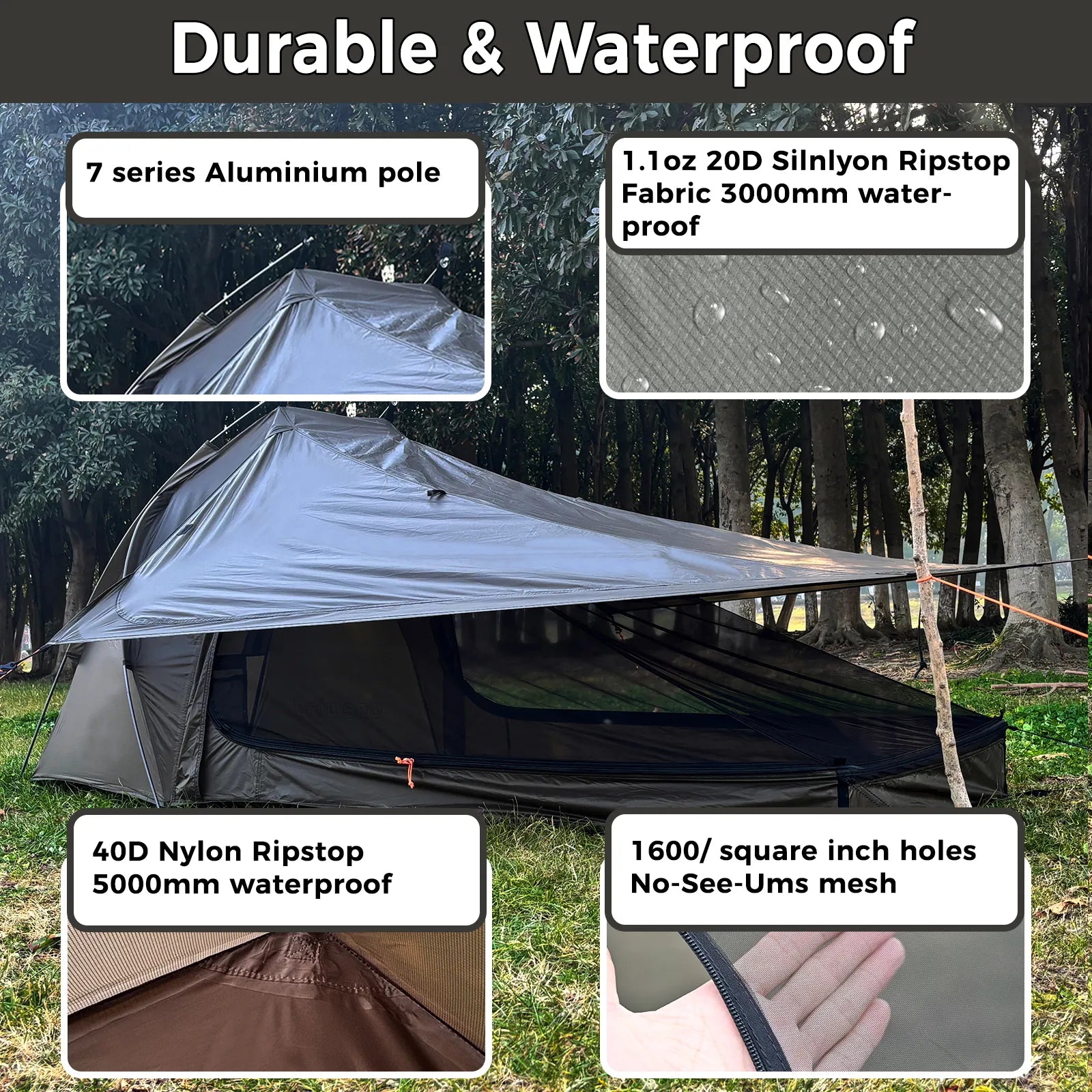
According to Terra Nova, hydrostatic head is measured in millimeters and higher values mean better waterproofing.
That makes hydrostatic head the fast filter for shelter fabrics.
It also makes IP ratings the fast filter for dry storage.

If the trip lives in the first bucket, I would not buy a heavy waterproof answer by default.
If the trip lives in the second bucket, I would ignore generic "water-resistant" language and look for a real millimeter rating.
If the trip lives in the third bucket, you should prioritize seam construction as much as the fabric number.
If the trip lives in the fourth bucket, choose waterproof storage even if the fabric world around it is only water-resistant.
The useful move is more concrete.
Choose for the failure that ruins the trip, not the word that sounds strongest on a product card.
How to Read a Product Page Without Getting Tricked
Spec literacy starts on the product page.
I do not read the adjective first.
I read the number first.
Then I check the construction detail that can still break the system.
Then I ask whether the product category matches the trip.
That is the difference between a tarp choice, a family tent choice, a shell choice, and a dry-storage choice.
If the page hides the number, I assume the marketing copy is doing more work than the product spec.
If the page shows the number but says nothing about seams, floor pressure, or closure design, I assume the number is only part of the answer.
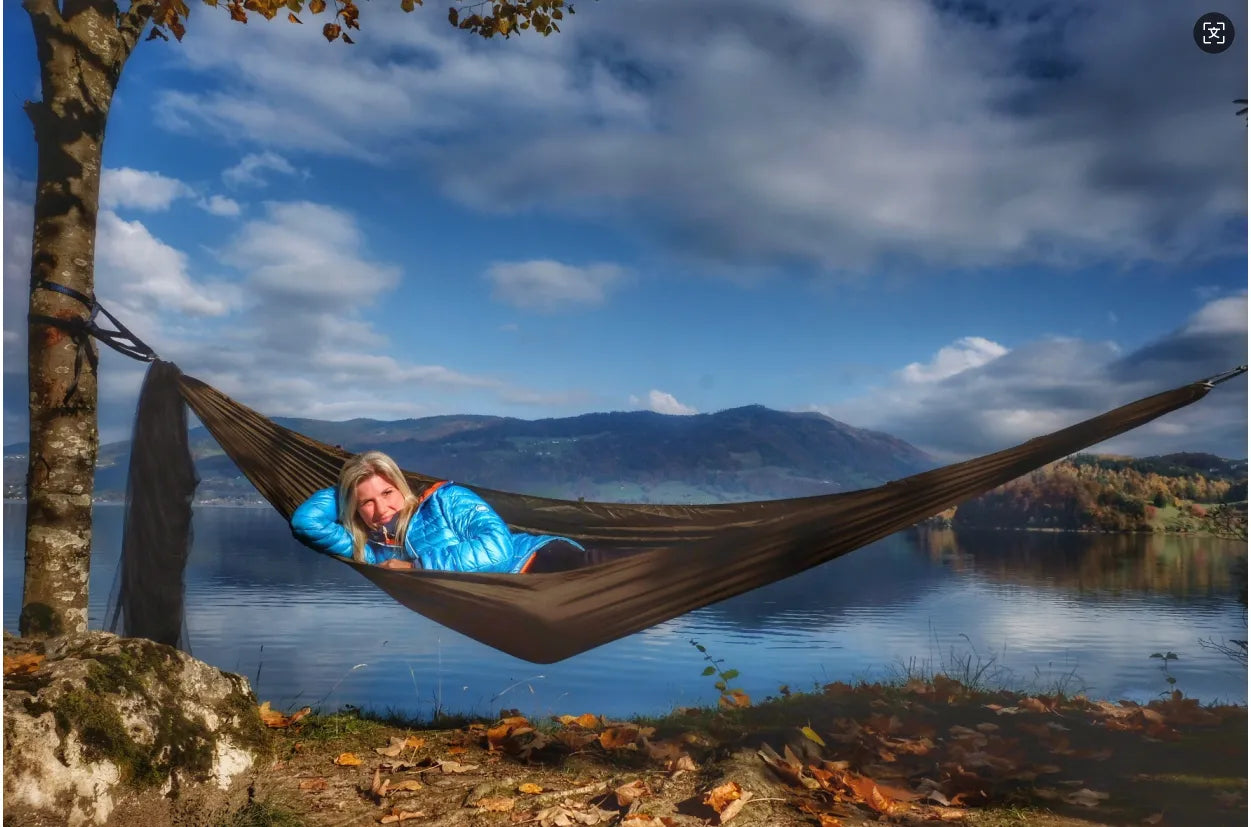
Scenario 1: First-time hammock camper buying a tarp for three-season forest trips in the Eastern U.S., deciding whether a 1500mm fly is enough or if 3000mm is the safer first buy.
This buyer is not choosing for alpine exposure.
This buyer is choosing for tree cover, splashback, overnight rain, and a first pitch that will probably not be perfect.
That matters because a newcomer loses dryness through setup errors before they lose it through absolute fabric failure.
A 1500mm tarp can work in this setting if coverage is wide enough, the ridgeline is clean, and the storm is normal instead of wind-driven.
A 3000mm tarp buys more margin for sloppy pitch, longer rain, and worse campsite drainage.
That is why I treat 1500mm as the budget minimum and 3000mm as the safer first buy for a beginner who expects repeated rain.
The biggest trap is trusting "water-resistant tarp" copy with no hydrostatic-head number attached.
If the page only says water-resistant, I assume I still do not know enough to buy.
If the page says 1500mm, I know the tarp is at least speaking in measurable terms.
If the page says 3000mm, I know I am buying more storm margin, not just a louder adjective.

This is also the one scenario where a product mention makes sense after the logic is already clear.
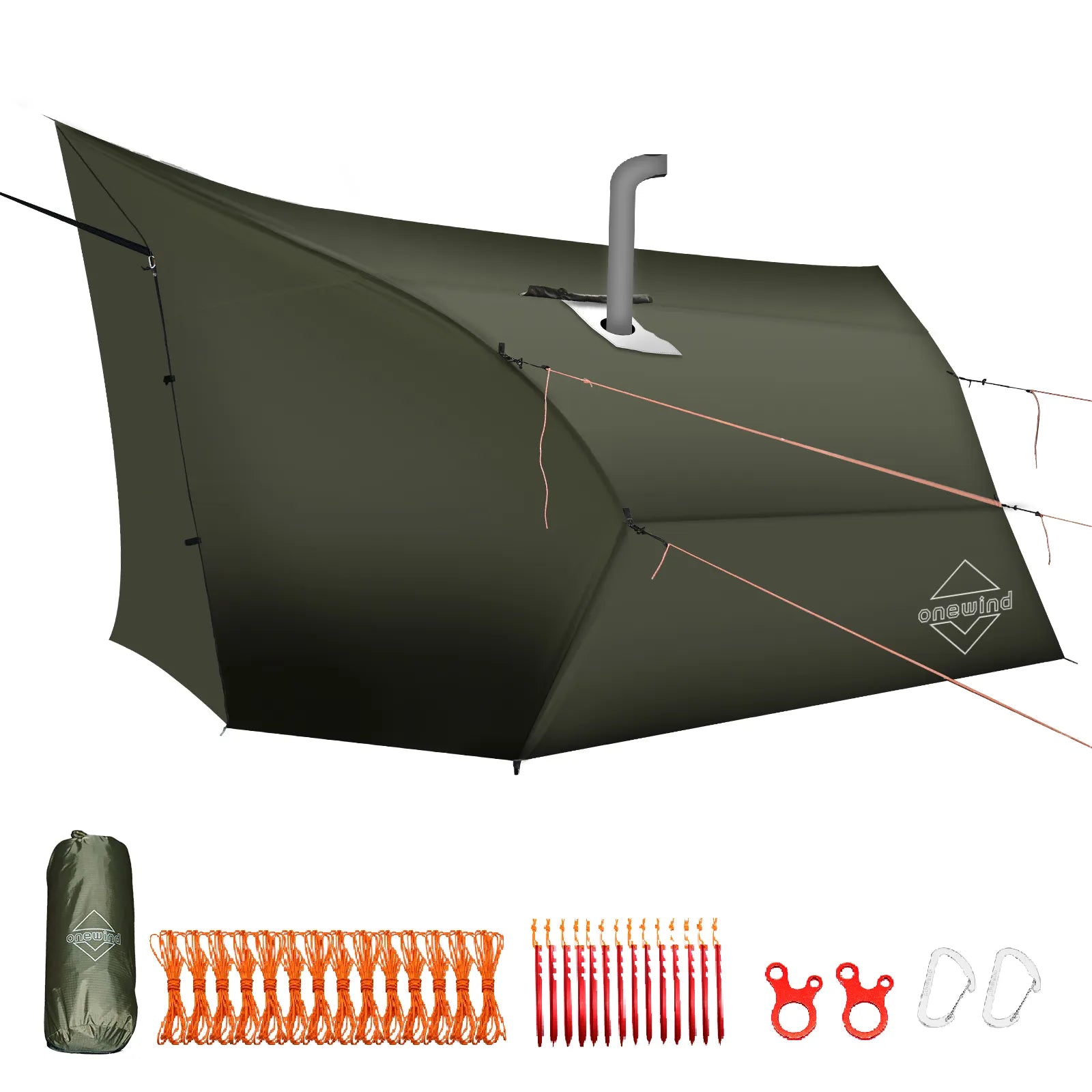
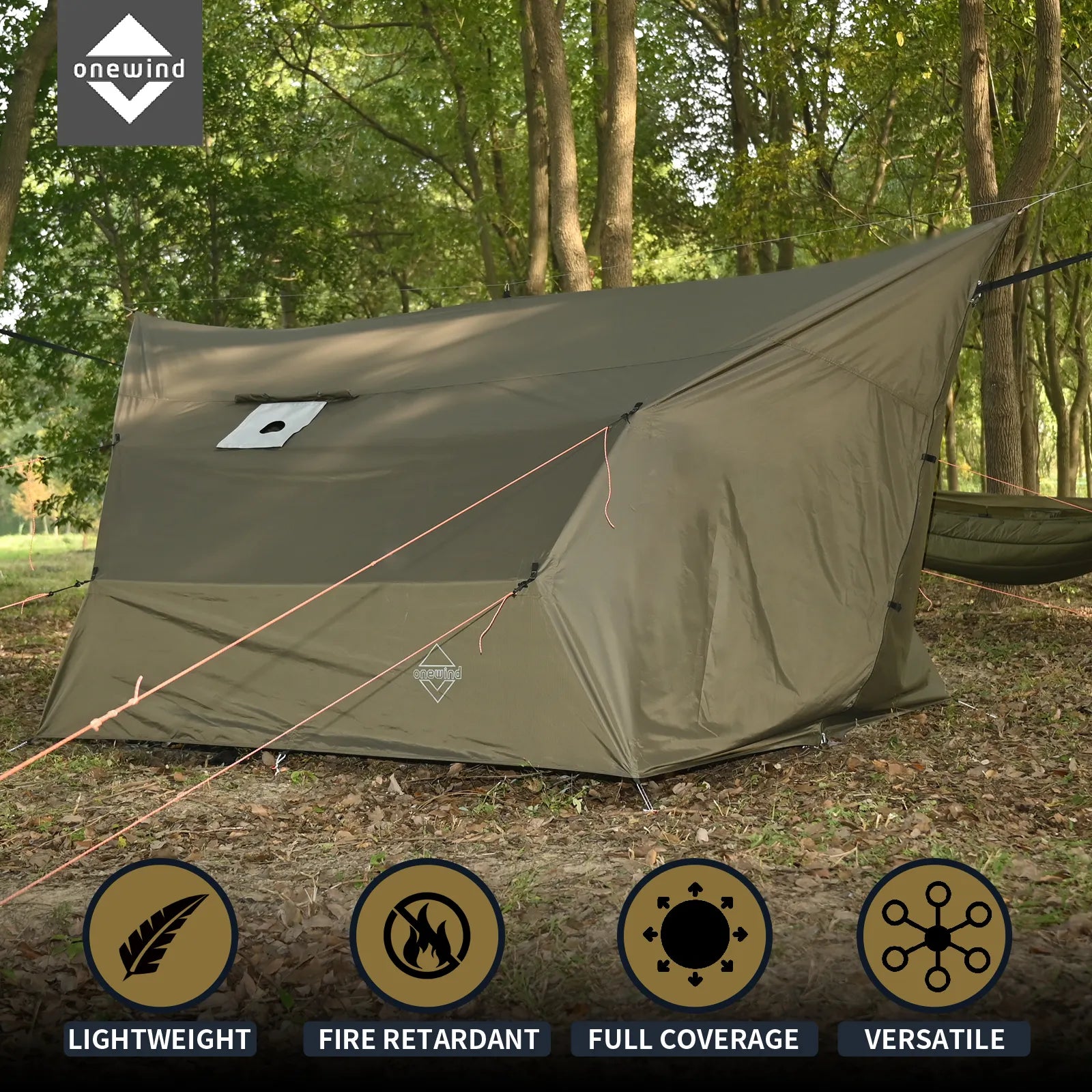
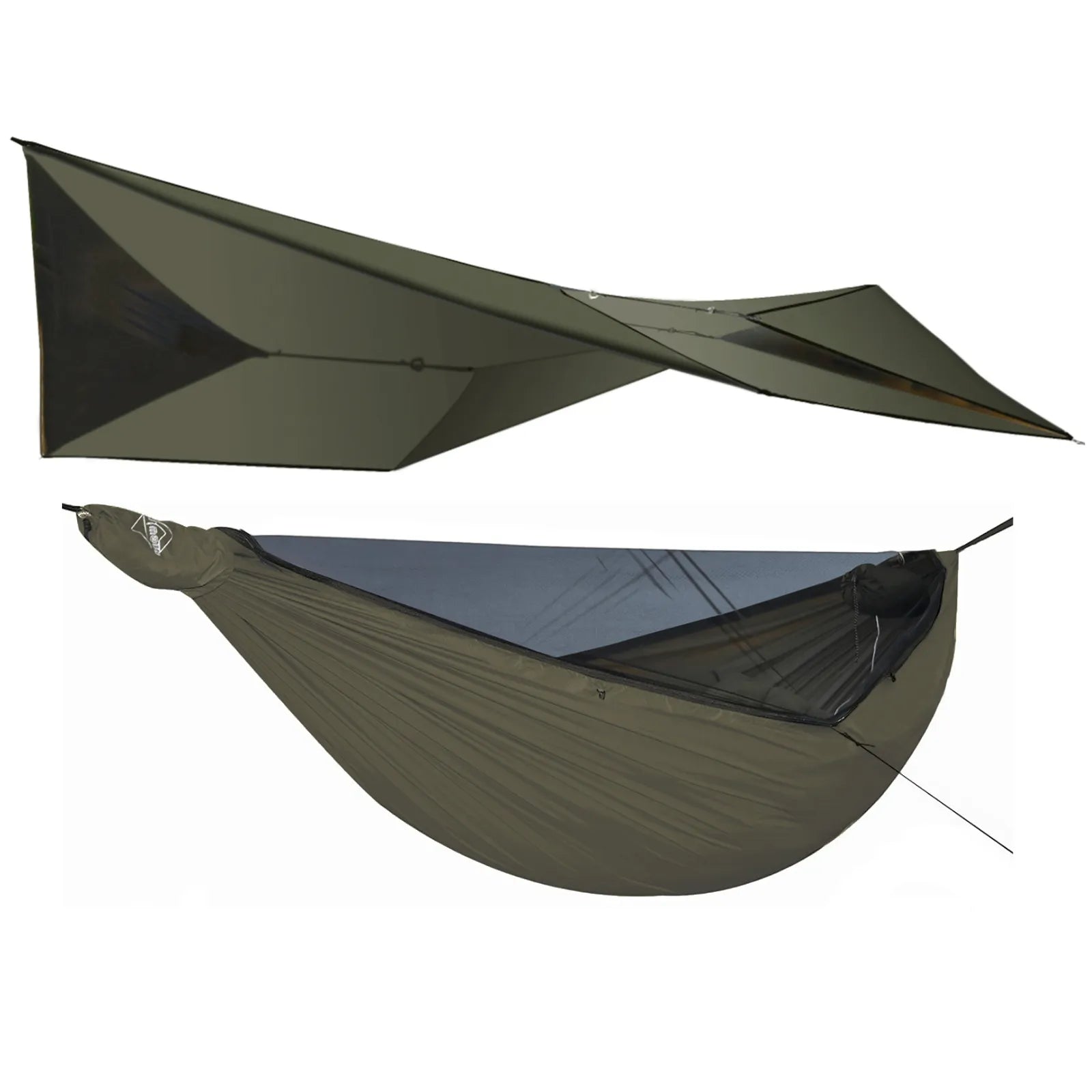
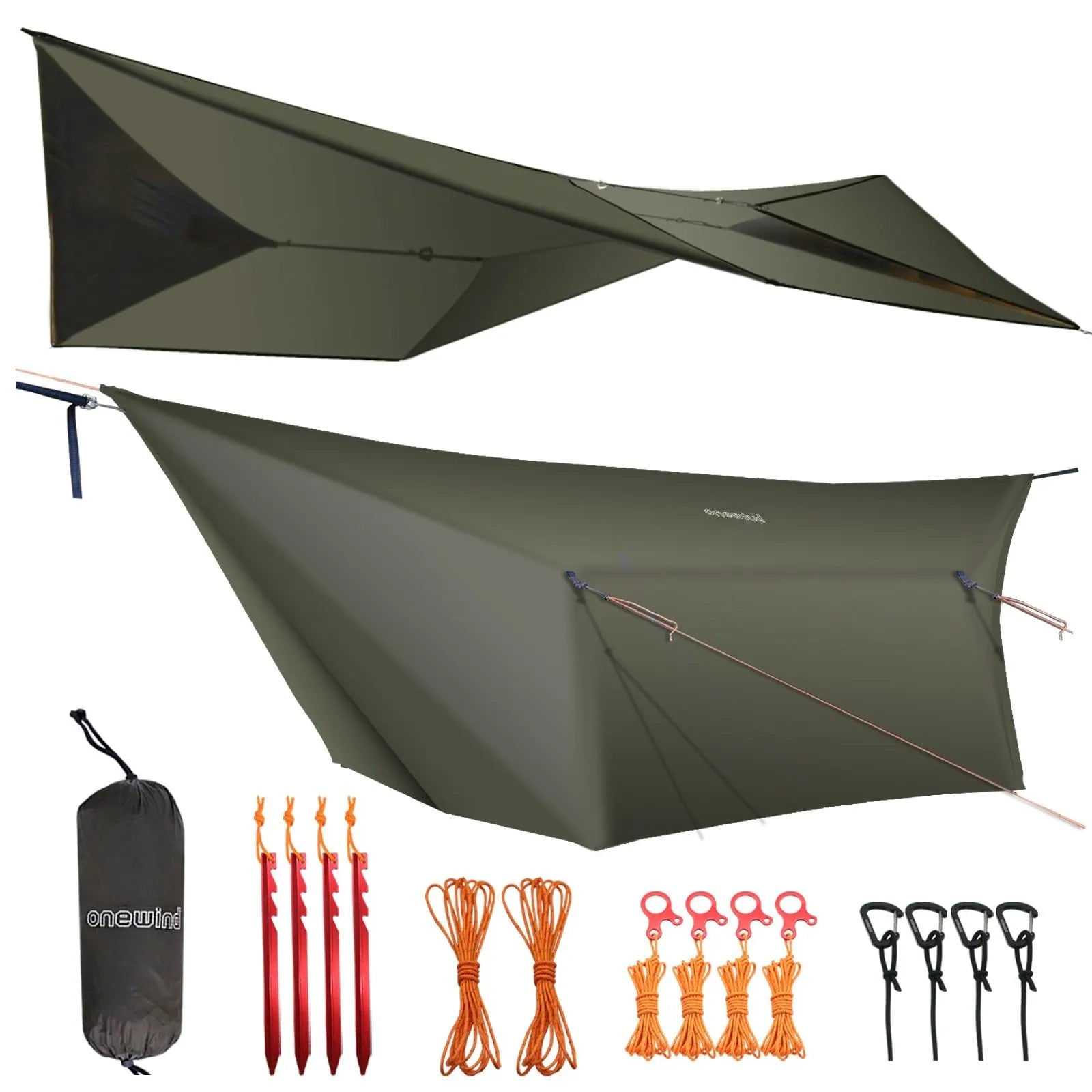
The Onewind Silnylon Tarp Ultralight Waterproof 12ft fits the safer-first-buy logic because the category itself points to a measured rain solution instead of vague language.
Verdict: For most first-time hammock campers in normal forest rain, 1500mm is workable, but 3000mm is the safer default because beginner pitch mistakes create more risk than the weight penalty.
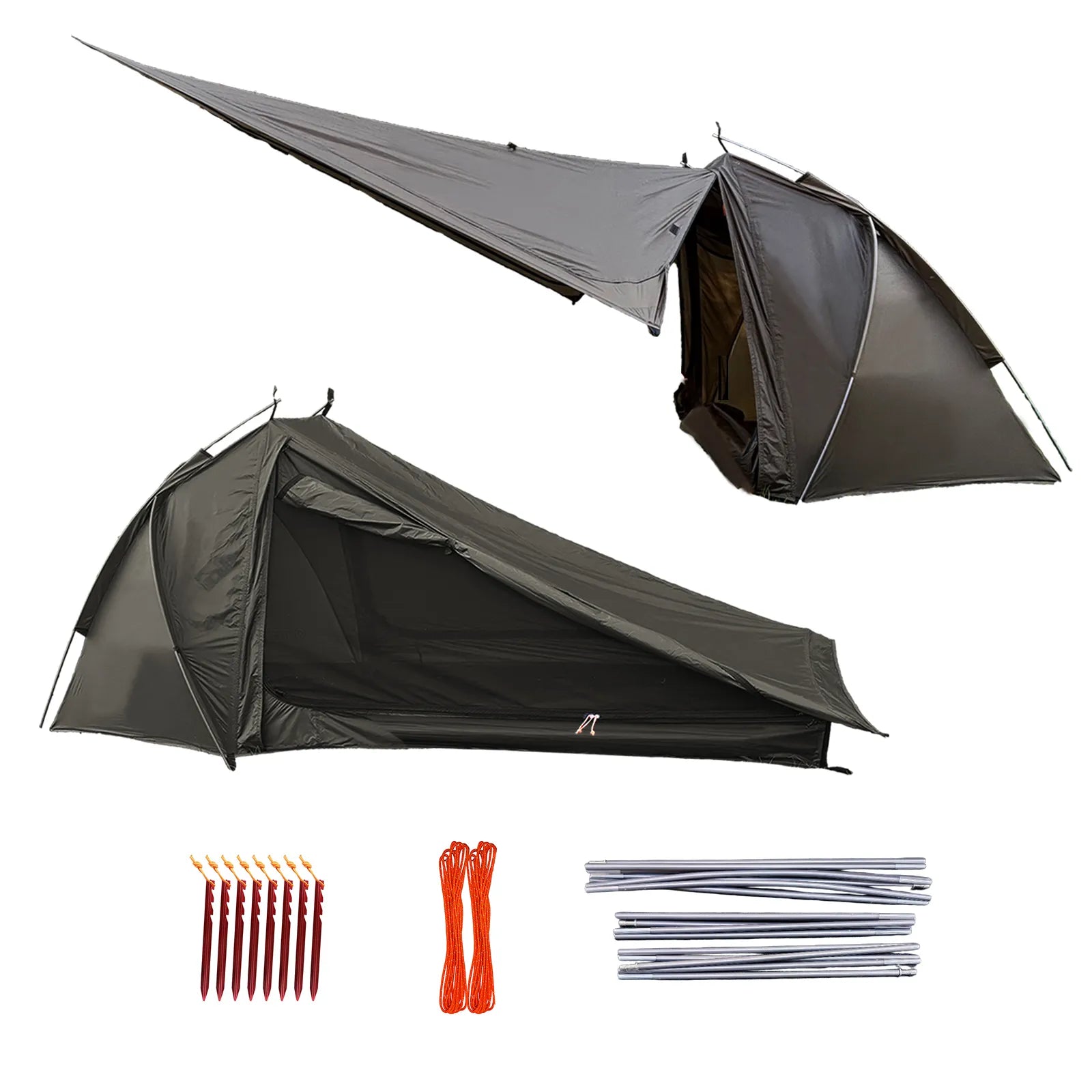
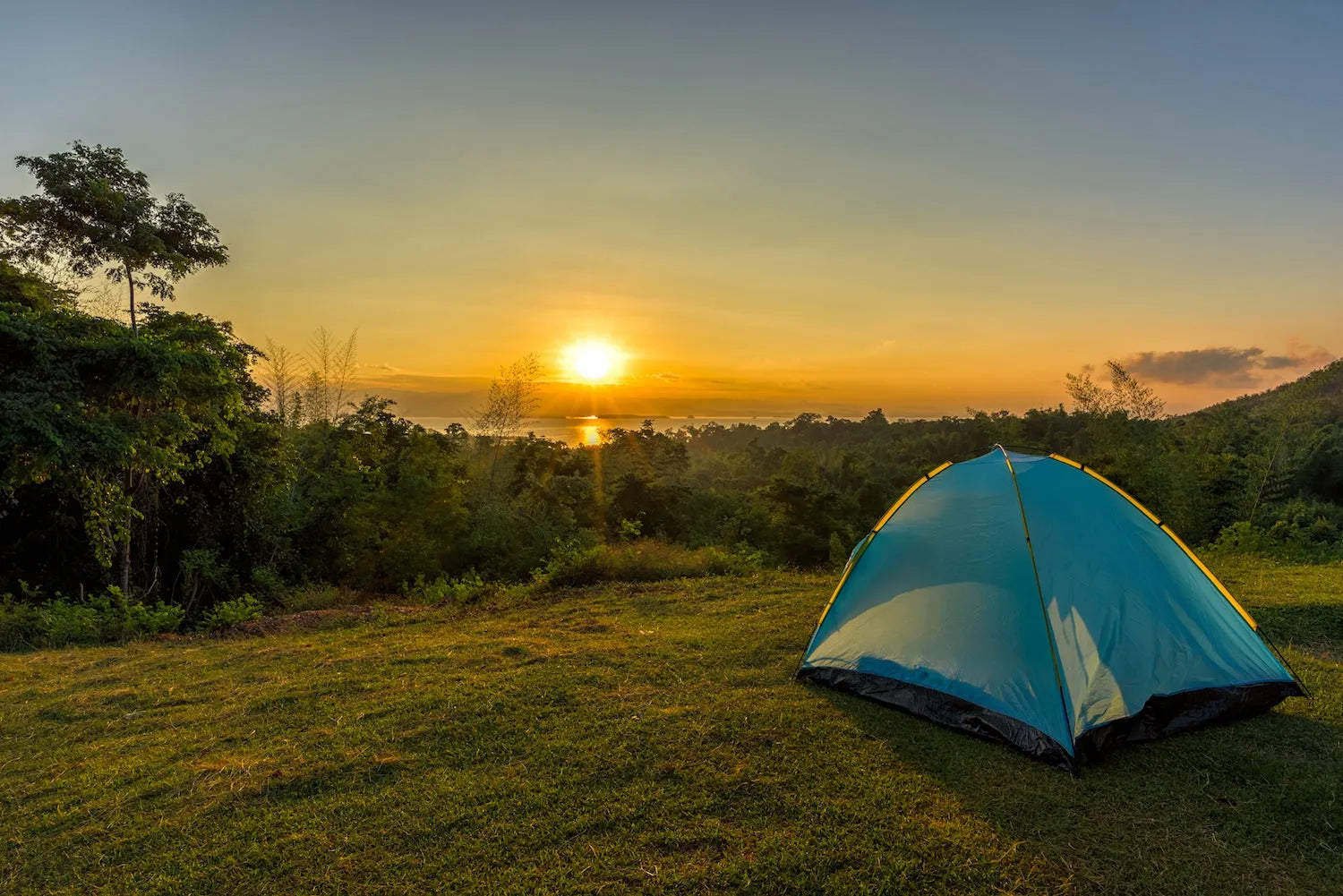
Scenario 2: Family car camper planning a rainy Pacific Northwest weekend, comparing a tent spec sheet that says 2000mm rainfly and 5000mm floor and trying to decide whether that protects two adults and kids through sustained rain.
This buyer is not only buying for rain from above.
This buyer is buying for kids kneeling on the floor, bags pushed against wet walls, and a tent that stays pitched for two or three damp days.
That is why the 2000mm fly and 5000mm floor split is more useful than one generic waterproof label.
The fly handles falling rain.
The floor handles pressure from bodies and gear.
According to REI, the urethane coating on the inside of the fly and floor is a primary moisture barrier, and seam sealer matters separately from the DWR on the outside.
So yes, 2000mm fly and 5000mm floor can be enough for a rainy family weekend.
But only if the seams are in good shape and the floor is not pressed into pooling water.
A family setup needs margin because the failure cost is high.
One wet sleeping bag can turn a fun weekend into a miserable drive home.
I would trust this spec more than a page that only says "highly water-resistant" and gives no floor number.

I would also still inspect the seams before the trip instead of assuming the rating alone guarantees comfort.
Verdict: A 2000mm rainfly and 5000mm floor is a reasonable waterproof starting point for a wet family car-camping weekend, but the smart call is to pair those numbers with seam condition and site drainage rather than trusting the spec sheet alone.
Scenario 3: Day hiker and weekday commuter in a drizzle-prone coastal climate, choosing between a DWR softshell and a heavier 10k mm waterproof shell for light rain, wind, and occasional downpours.
Buyers overspend right here more than anywhere else.
They think any regular rain means they should buy the strongest waterproof shell they can afford.
For a short walk to work, dog loop, or light trail in recurring drizzle, a water-resistant or DWR-treated shell can be the better first buy because comfort, breathability, and packability matter more than stormproof margin.
According to GORE-TEX, DWR helps the face fabric keep beading and avoid that cold, clammy feel.
According to Nikwax, DWR is meant to be maintained, not treated as permanent.
That tells me the softshell choice is valid for everyday wet use if the buyer accepts its limits.
Those limits show up in sustained rain, repeated brush contact, and long exposure once the face fabric wets out.
The 10k mm shell becomes worth it when the same person expects true downpours or long trail time after work.
I would ask one blunt question here.
Will you stay outside for hours after the shell stops beading, or are you moving from door to door with a chance of one short storm?
If the answer is the second one, a lighter DWR or water-resistant shell is usually enough.
If the answer is the first one, step up to waterproof.
Verdict: For drizzle, short hikes, and commute use, buy the lighter water-resistant or DWR option first, but choose a 10k mm waterproof shell once exposure shifts from brief wet weather to real, sustained rain.
Scenario 4: Shoulder-season backpacker cutting weight for a five-day trip with exposed campsites, deciding whether a lighter PFAS-free DWR shell is enough or if a fully taped waterproof jacket is worth the penalty.
This is not a drizzle problem.
This is a duration problem, a wind problem, and an abrasion problem.
Pack straps, hip belts, and constant movement all increase the pressure on a shell.
GORE-TEX says PFAS-free DWR requires more regular care because it is less resistant to oils.
That does not make PFAS-free gear bad.
It means the buyer should expect less neglect tolerance.
A lighter PFAS-free DWR shell can still be the right outer layer if it sits on top of a real waterproof membrane and the trip forecast is mixed rather than ugly.
But if the choice is between a lightly protected shell and a fully taped waterproof jacket for five days of exposed camps, I would take the taped waterproof option.
The penalty is weight.
The payoff is fewer hours spent walking inside a damp microclimate after the face fabric stops performing.
In this bucket, shell maintenance is not enough by itself.
Construction matters more.
Taped seams, reliable zipper protection, and a real waterproof rating deserve priority over minimalist copy about water resistance.
Verdict: On a five-day shoulder-season trip with exposed camps and sustained rain risk, you should choose the fully taped waterproof shell first, because duration and abrasion punish light water-resistant answers faster than most buyers expect.
Scenario 5: Thru-hiker whose jacket stopped beading after repeated washes and pack-strap abrasion, deciding whether to clean and reproof the shell or replace it with a new waterproof layer.
How to Hang a Camping Hammock
This is the scenario where buyers confuse comfort failure with barrier failure.
The jacket looks wet.
The shoulders feel heavy.
The user assumes the shell is done.
According to GORE-TEX, a garment can stop beading while the membrane still remains waterproof.
According to Nikwax, the DWR finish is not permanent and should be maintained with cleaning and occasional reproofing.
So the first move is not replacement.
The first move is diagnosis.
If the face fabric is wetting out but there is no true leakage through the inside, clean it, dry it with heat if the care label allows, and then reproof if beading does not return.
If seams are peeling, membrane layers are delaminating, or water is actually passing through worn panels, then the barrier itself is failing and replacement makes sense.
Reddit threads about wetting out show how often users jump straight from "water stopped beading" to "this jacket is no longer waterproof."
That leap is expensive.
I would only replace after the maintenance branch fails or the shell shows structural damage.
Verdict: If the jacket stopped beading after wear, clean and reproof it first, then replace only if the membrane, seams, or fabric structure are truly leaking.
DWR Recovery Steps
The fastest way to waste money in this category is to replace a shell before you run the maintenance branch correctly.
Nikwax and GORE-TEX both point to the same sequence.
Clean first.
Restore the surface behavior second.
Replace last.
I would run that order every time before buying a replacement shell.
If the jacket passes the wash and heat test, you saved the cost of a new waterproof layer.
If it fails after reproofing and seam inspection, then replacement is justified instead of emotional.
Scenario 6: Paddler or storm-prone camper protecting electronics and sleep insulation, deciding when a water-resistant stuff sack stops being enough and an IP67 or fully waterproof dry bag becomes mandatory.
This scenario changes the standard completely.
You are no longer asking whether the face fabric beads.
You are asking whether the closure survives total soak or short immersion.
That is why water-resistant language becomes dangerous here.
According to Intertek, IP x7 means protection against the effects of temporary immersion.
That is a meaningful waterproof claim for enclosed storage.
A water-resistant sack can still be useful inside a pack for organization or light splash control.
It is not the right choice for a quilt, electronics, or medical gear if the pack may sit in water, ride in a boat, or spend hours in heavy storm spray.
This is also where buyers should stop comparing storage gear to tents or shells.
A tarp and a dry bag do not fail in the same way.
One leaks through fabric pressure and seams.
The other fails at the opening, seal, or enclosure.
If the cost of failure is a dead phone or soaked insulation, I recommend waterproof storage every time.
Verdict: Once your gear might face soak, capsize, or all-night storm exposure, a water-resistant stuff sack is no longer enough, and you should choose an IP-rated case or true waterproof dry bag instead.
Common Mistakes That Break Beginner Trips
The pattern behind most water-protection mistakes is simple.
Buyers focus on the strongest sounding word and ignore the pressure pattern that will actually break the setup.
That is why these five mistakes all happen before the first drop of rain lands.
Arriving after dark
Late arrivals turn every rating into a worse rating because setup quality drops.
A 3000mm tarp pitched badly at night can lose to a 1500mm tarp pitched correctly before sunset.
I would avoid making final protection decisions in the dark because drainage, wind angle, and tree spacing matter as much as the number on the page.
Assuming every campsite is equivalent
A buyer who chooses for the average campsite gets burned by the bad campsite.
Low spots, splashback, exposed ridges, and hard floor contact all increase water pressure without changing the label on your gear.
That is why I choose for the worst realistic campsite on the trip, not the prettiest one in my head.
Underestimating insulation or weather-protection requirements
REI separates seam sealing, coatings, and DWR because dryness is a system, not one claim.
A buyer who underestimates weather protection usually underestimates insulation too, and the result is a wet, cold night instead of a small comfort problem.
I would rather carry a little extra protection than try to solve a soaked sleep system after dark.
Buying premium gear before the first trip
Premium gear is often the right second buy, not the right first buy.
If your real use case is drizzle, short hikes, and occasional camping, a simpler water-resistant answer can teach you more than an expensive waterproof shell bought for imaginary expeditions.
The smart spend is the one that matches your next trip, not your most ambitious future self.
Ignoring weather shifts on arrival day
A water-resistant plan can become a waterproof plan in one updated forecast.
That is why I re-check the weather on arrival day and upgrade the setup logic if wind, duration, or pooling risk climbs.
The right number changes when the trip changes.
The Quick Decision Checklist
- ✓ Read the trip before you read the tagline.
- ✓ Treat hydrostatic head and IP ratings as the real buying language.
- ✓ Use water-resistant for short, low-pressure exposure.
- ✓ Use waterproof for sustained rain, pressure, or soak risk.
- ✓ Reproof a wetting-out shell before replacing it.
- ✓ Ignore vague copy if the product page refuses to show a number.
The best first decision is usually not "what is the strongest protection I can buy."
The better question is "what is the minimum spec that keeps this exact trip dry without paying for protection I will not use."
That shift is what turns water resistant vs waterproof from a vocabulary debate into a buying tool.

Compare Tarp Rain Ratings
Shop Now →