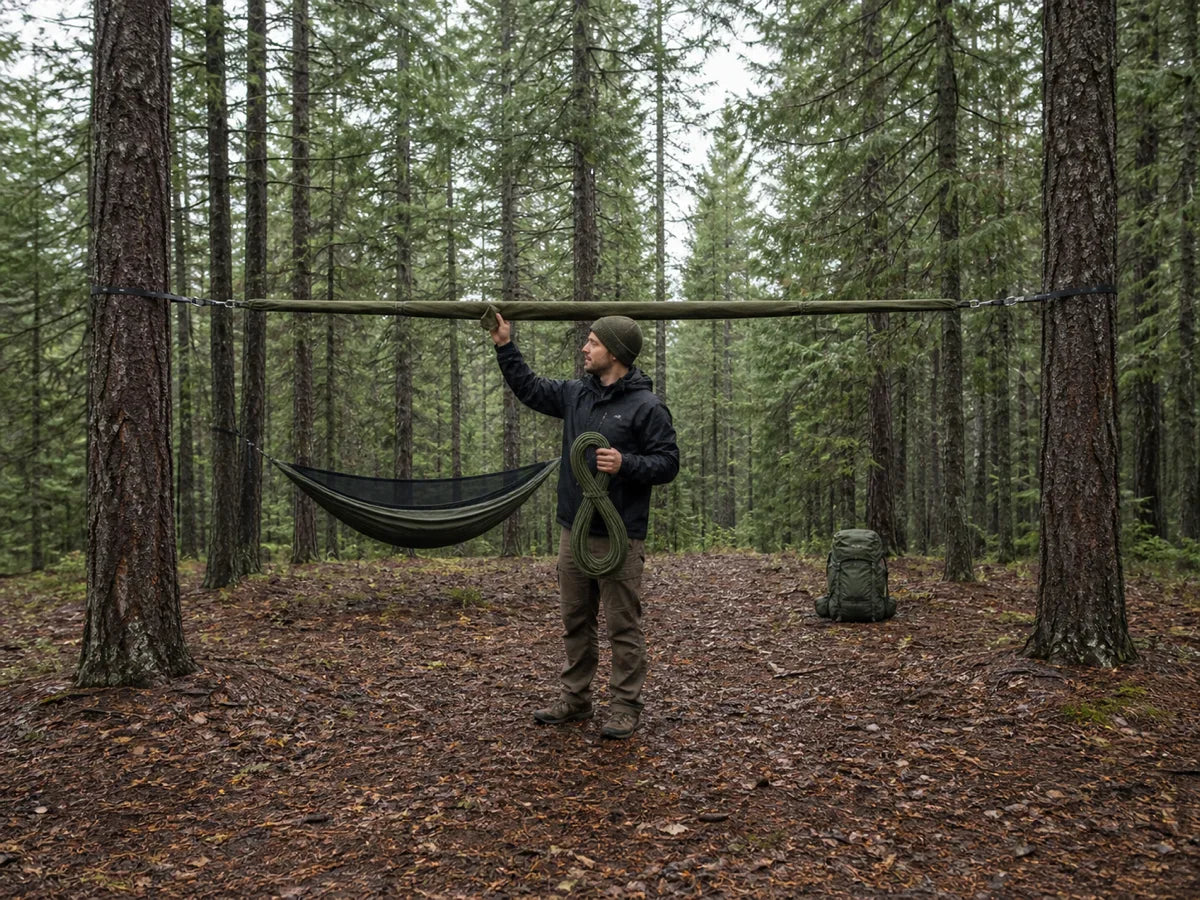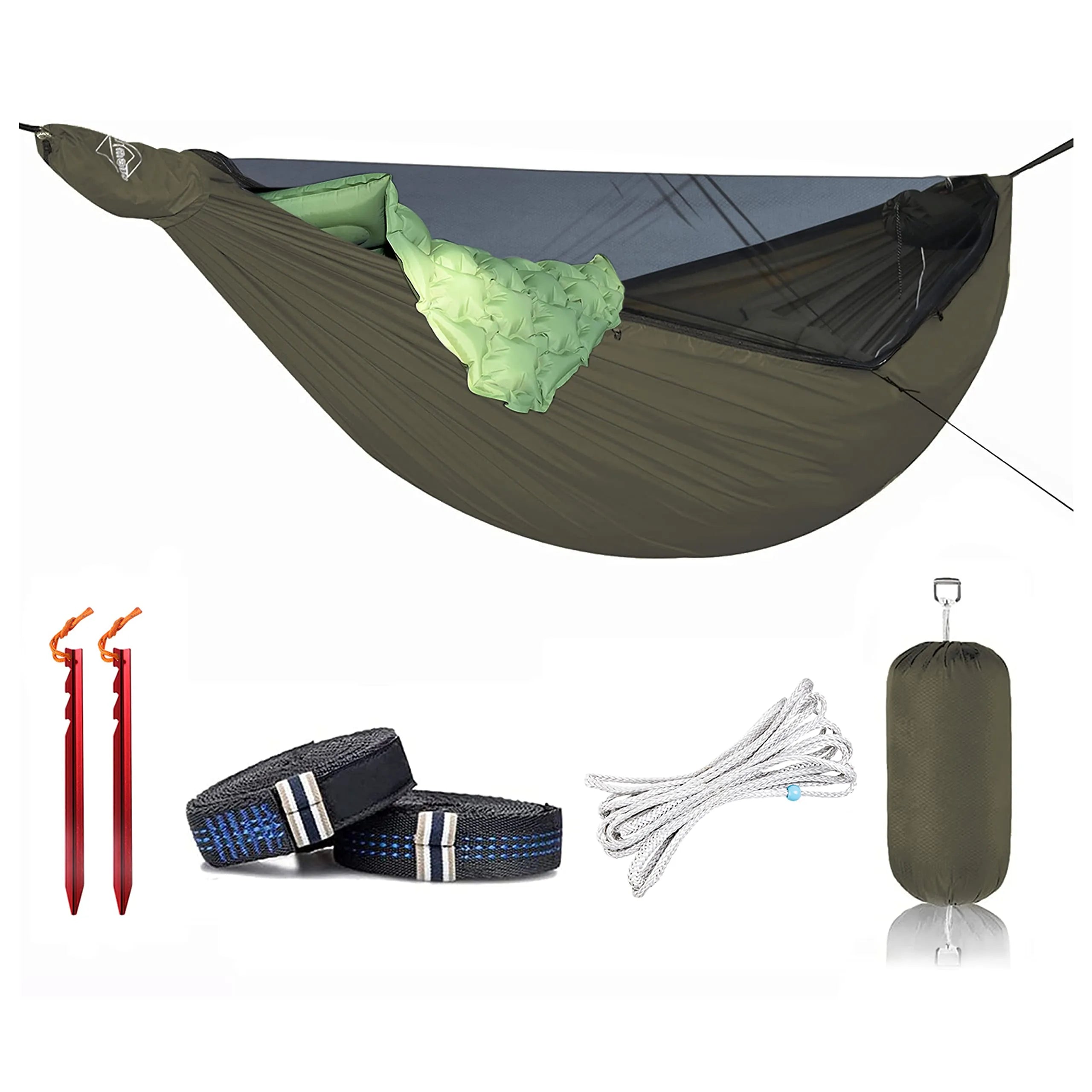

Kammok lists its Roo Double at 120 x 68.5 inches with a 500 lb capacity and a 1 to 2 person lounge rating, but the same spec sheet recommends one person for sleep.
That single split explains most confusion around a 2 person camping hammock.
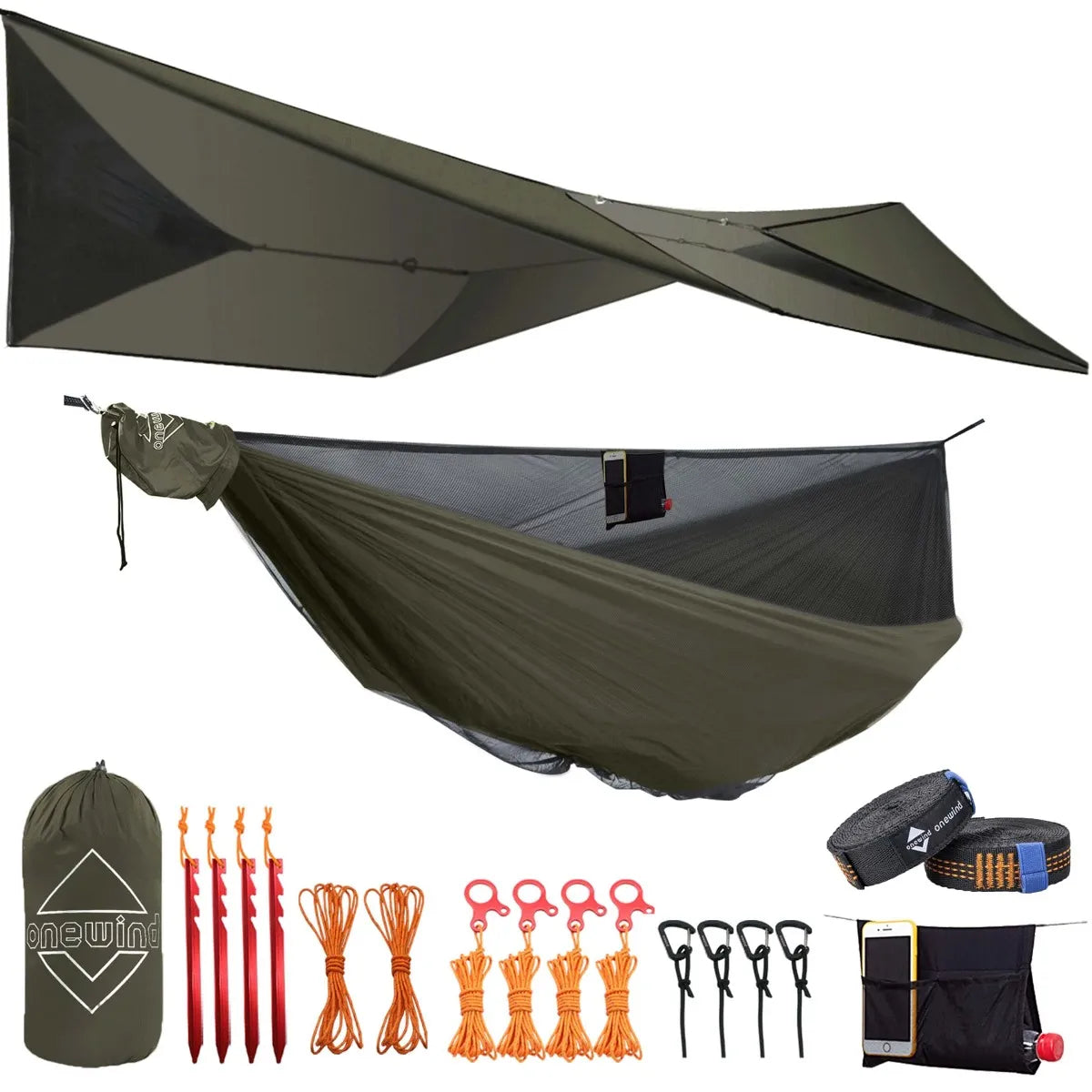
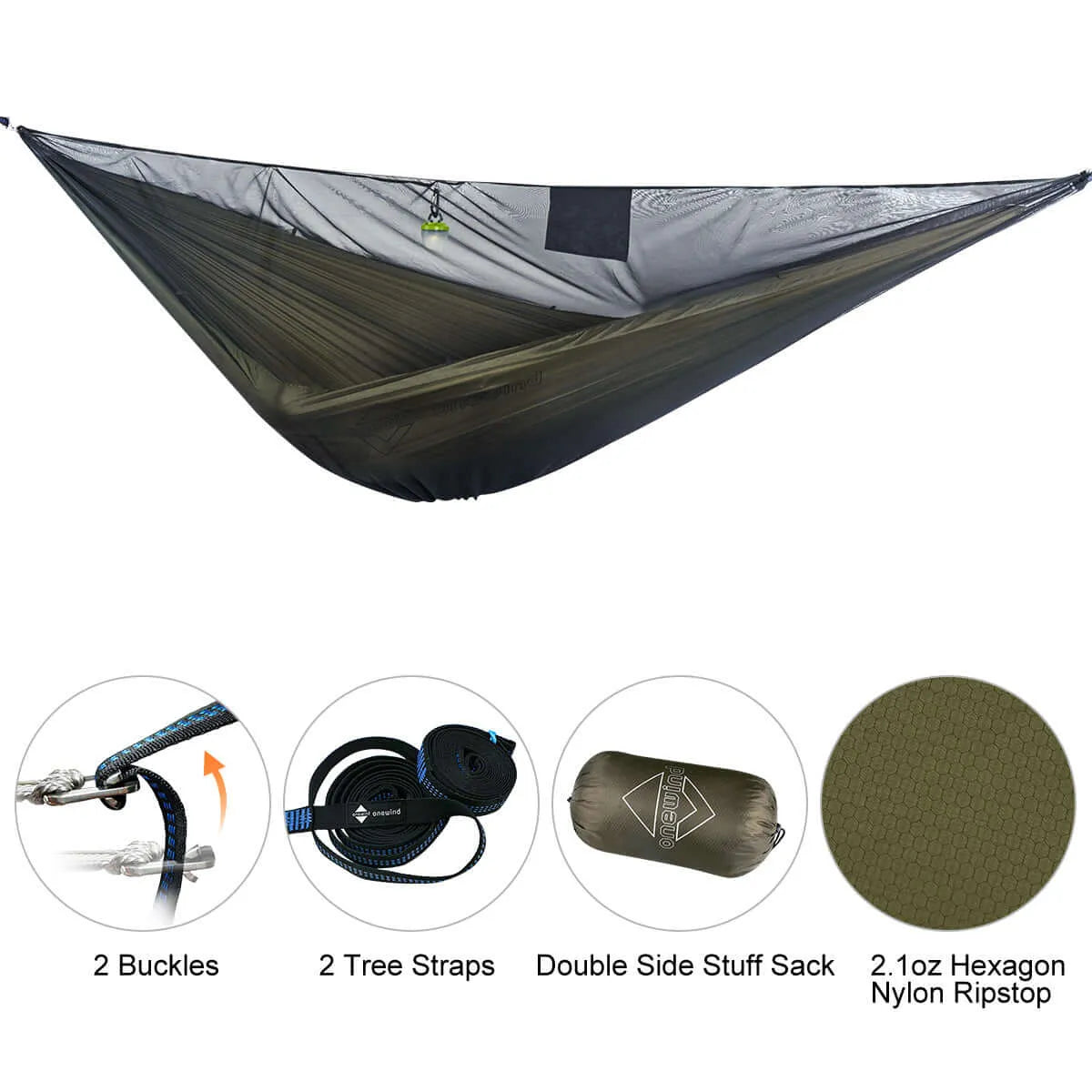
Onewind's Aerie double hammock gives a similar buying clue from another angle: the 11 ft and 12 ft versions use 68 inch wide fabric, carry a 500 lb max load, and include a ridgeline, removable bug net, and 12 ft tree straps.
I treat those numbers as a fit test, not a promise that two adults will sleep well in one gathered-end hammock all night.
This is not a hammock tent comparison; it is a hammock fit and compatibility guide for people deciding whether one double hammock can do a two-person job.
For most camping trips, a 2 person camping hammock is a roomy one-person sleeping hammock and a two-person lounging hammock.
For reliable overnight couple sleep, the lower-regret setup is usually two hammocks close together, a tandem layout, or a true two-bay design.
What You'll Learn
This guide gives you a decision framework before any product recommendation.
I start with the load rating because it is the easiest number to compare and the easiest number to overtrust.
Then I move to body position, because the diagonal lay is the part most product pages do not explain in a buyer-safe way.
The last layer is the shelter system, because rain, bugs, cold air, and midnight exits decide whether a clever camp idea still works at 3 a.m.
Quick Answer
A 2 person camping hammock can be a good buy when the goal is solo comfort, relaxed camp lounging, or short shared rests inside the rated load.
If the double is mainly for roomy solo sleep, compare camping hammocks by use case and complete system cost before choosing size.
It becomes a risky buy when the plan is two adult sleepers in one gathered-end hammock for a full night without a trial run.
Choose the double hammock if the main job is more room for one person.
Choose two hammocks if the main job is sleeping well beside another adult.
Choose a true two-person design when you want separate sleep bays, anti-roll support, or a structure built around two bodies from the start.
The Decision Framework

The label gives you the first clue, but the system decides the trip.
According to REI's expert hammock guide, double hammocks are wider than singles, yet campers often choose the extra width for personal comfort rather than actual two-person sleeping.
That source also reinforces two setup basics that matter here: a roughly 30 degree hang angle and a diagonal sleeping position.
Those basics are hard enough for one sleeper to tune well.
Two adult sleepers in one gathered-end hammock change the geometry because both bodies are trying to occupy the same diagonal space.
I use four questions before recommending any 2 person camping hammock.
Can the complete suspension hold the combined load with margin?
Can both people lie without being pushed into the same low point?
Can the tarp, bug net, and underquilt still cover the sleeping shape?
Can each person enter, exit, and turn over without waking the other person every time?
If any answer is no, the hammock may still be useful, but the use case changes from shared sleep to shared lounge.
Fit Test 1: Load Rating Is Not Comfort Rating

Capacity is the pass-fail safety gate.
Comfort starts after that gate.
Onewind lists the Aerie double hammock with a 500 lb max load and a pair of 12 ft tree straps with adjustable buckles.
Kammok lists a 500 lb rating for the Roo Double, and ENO lists a 400 lb rating for the DoubleNest.
Data from those three manufacturer spec pages helps you screen obvious mismatches, especially when two people, sleep clothes, and small camp items all add weight.
They do not tell you how two bodies will settle into the fabric once the hammock is loaded.
Shock load also matters more than a calm static number.
A person dropping into the hammock, both sleepers shifting at once, or a rushed exit can add force beyond the quiet body weight shown on a spec chart.
I check the weakest link in the whole chain, not the most impressive number on the product page.
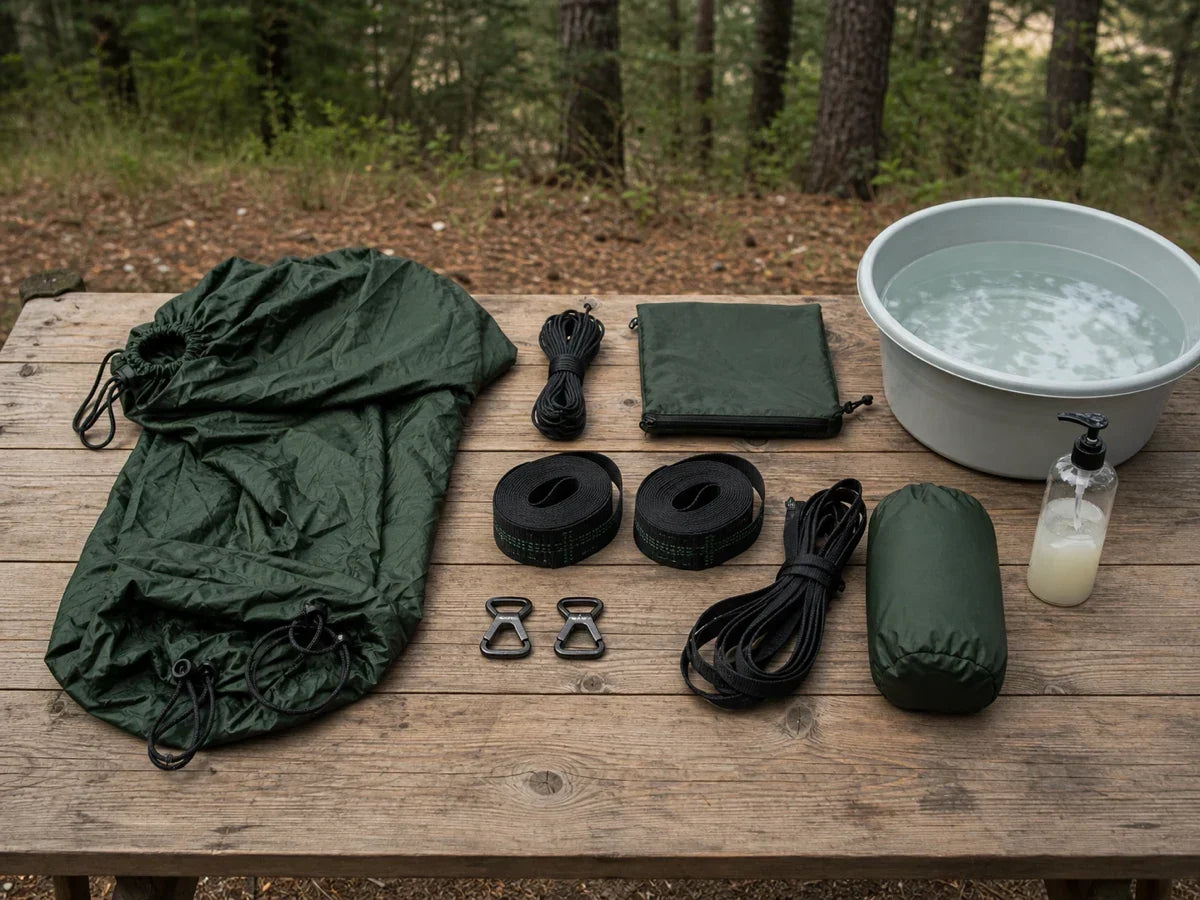
The hammock body, continuous loops, carabiners or buckles, straps, knots, and trees all belong in the same load question.
A double hammock with a strong fabric body and underbuilt straps is not a strong camping system.
A double hammock between two small or damaged trees is also not a strong camping system.
For a first trip, hang low enough that an awkward exit is boring rather than dangerous.
The load test says whether the setup can hold two people.
It does not say whether two people should sleep there.
Fit Test 2: One Diagonal Lay Does Not Become Two
Hammock setup and comfort reference

{% youtube f69xISn3Cwk %}
The diagonal lay is the main reason a camping hammock can feel flat enough for sleep.
REI's guidance points campers toward lying diagonally rather than straight down the centerline.
That diagonal gives one sleeper a flatter shoulder-to-hip line and keeps the hammock from folding tightly around the body.
A wider double hammock improves that diagonal for one person because there is more fabric to work with.
Two adults do not simply get two independent diagonals in the same gathered-end shape.
Both bodies slide toward the low point, and the lighter sleeper often gets pushed toward the heavier sleeper.
The result is not always unsafe, but it is often annoying enough to ruin sleep.
Reddit hammock-camping threads repeat the same complaint in plain language: couples can cuddle in a double hammock, but all-night sleep often turns into rolling together and waking each other up.
Kammok's spec split points in the same direction because the Roo Double is rated for 1 to 2 people lounging while one person is recommended for sleep.
That is the buying signal I trust most.
Extra width is real, and it has value.
The value is more predictable for a solo sleeper than for two adult sleepers.
If your goal is one comfortable sleeper, a double is easy to justify.
If your goal is two rested adults, one gathered-end bed has to pass a movement test before it earns a place on the trip.
Fit Test 3: Weather, Bugs, and Insulation Still Need to Fit

The fabric bed is only one part of a camping hammock.
Rain protection, bug protection, and bottom insulation decide whether the hammock is still livable after sunset.
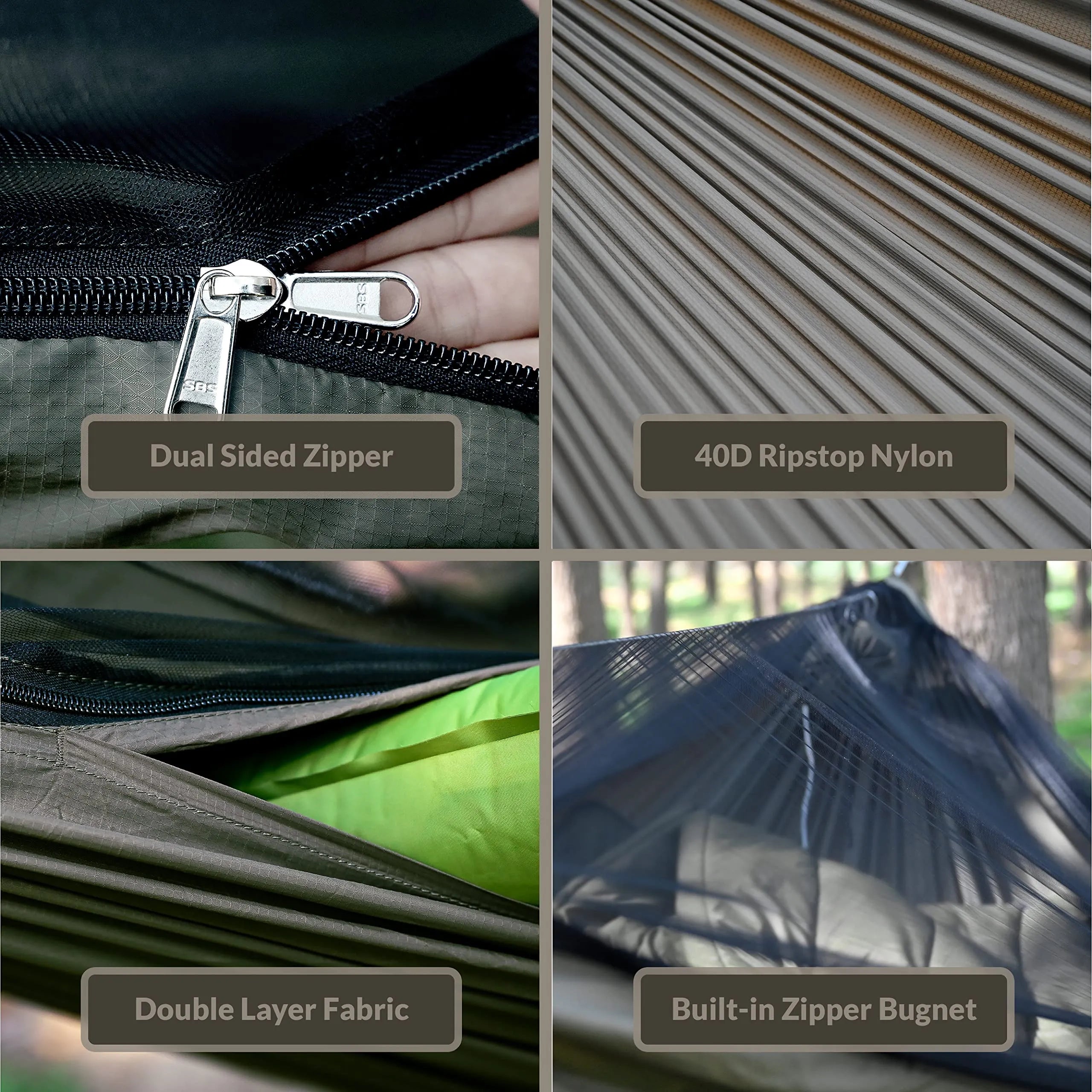
Onewind's Aerie double hammock includes a removable bottom-entry bug net and an adjustable ridgeline, which makes it a stronger camping system than a bare lounge hammock.
That still does not remove the two-person fit question.
Two bodies press the bug net differently, enter from different angles, and change how the hammock body sits under the tarp.
Cold air under the hammock is the next problem.
An underquilt works best when it hugs the outside of the hammock without being crushed flat or leaving air gaps.
Two sleepers moving in one fabric bed can pull the warm zone away from the person who needs it most.
For rain, the tarp has to cover the real hanging shape, not the neat product photo.
A single ridgeline tarp may cover one double hammock well, but two hammocks close together need a wider plan.
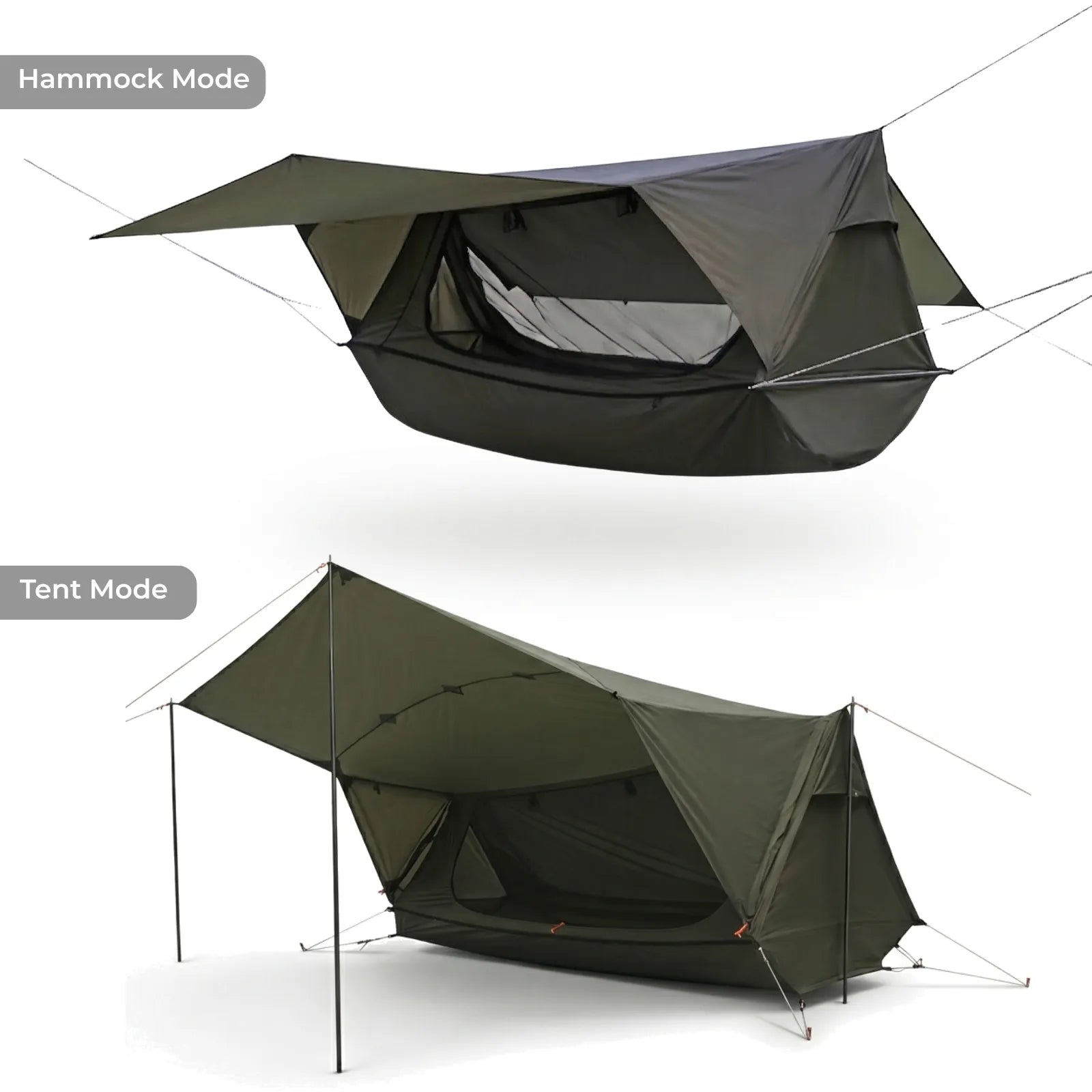
Tentsile's two-person guidance showed that true shared sleep needs more than a wider fabric bed because separate sleeping bays, anti-roll support, and more structured anchor geometry all change the system.
That kind of design solves problems a wide gathered-end hammock was not built to solve.
Scenario 1: Roomy Solo Sleeper

A solo camper is the easiest green light for a 2 person camping hammock.
The extra width helps shoulder room, side coverage, and diagonal positioning without adding another body into the same sag curve.
REI notes that doubles are often selected for personal comfort, and that matches the practical logic of this scenario.
The best fit is an 11 to 12 ft gathered-end hammock with enough width to let you move diagonally without feeling wrapped too tightly.
The Onewind 11ft Camo Double Hammock fits this use case because it combines 68 inch wide fabric, a 500 lb max load, included 12 ft straps, a ridgeline, and a removable bug net.
I would pair that body with a tarp before I treated it as a camping shelter.
For colder nights, I would also plan bottom insulation rather than assuming sleeping bag loft will stay warm underneath.
The key mistake is buying a double because two is in the name, then overlooking the simpler win.
The simpler win is a more comfortable solo bed.
For bigger solo campers, side sleepers, restless sleepers, and campers who dislike narrow hammock squeeze, that win is enough.
Verdict: Choose a double camping hammock for solo sleep when you want more fabric, more diagonal room, and a full shelter system around one body.
Scenario 2: Couple Lounging Together, Sleeping Separately

This is the use case where a double hammock earns its name without overpromising.
Two people can sit, read, talk, warm up, or rest together in camp when the combined load stays inside the full system rating.
Lounging is forgiving because nobody expects eight quiet hours in the same body position.
Sleep is not forgiving.
Every turn, knee shift, zipper reach, or midnight exit moves the same fabric bed.
Reddit discussions around two-person hammocks often separate romantic lounge expectations from actual overnight comfort, and that distinction is worth keeping.
Kammok's lounge 1 to 2 and sleep 1 recommendation gives a clean product-spec version of the same rule.
For couples, I like one shared double hammock as the camp couch and two separate hammocks as the sleep plan.
Tree straps matter in this layout because close but separate hangs still need clean tree protection and enough adjustment range.
If the site has two trees only, the couple should not assume two hammocks will fit without a spreader bar, high-low hang, or another anchor option.
If the site has more tree options, the separate sleep setup becomes much easier.
Verdict: Use one double hammock for couple lounging, then sleep in two systems when the goal is waking up rested.
Scenario 3: Parent, Child, or Dog Sharing Short Camp Time

A parent, child, or dog scenario is not the same as two adults trying to sleep all night.
The total load is often lower, the time window is shorter, and the goal may be a supervised rest rather than deep sleep.
That makes a double hammock useful, but it does not remove setup discipline.
Hang low, keep entry and exit slow, and avoid a steep sit-drop that turns a calm rest into a hard swing.
The 500 lb max load on Onewind's Aerie double hammock gives margin for many adult-child combinations, but the full system still includes straps, buckles, and tree choice.
The bug net also matters with kids and dogs because fabric pressure, paws, shoes, or fast exits can stress zippers and mesh.
I would keep shoes off, clip sharp dog nails before the trip, and treat the hammock as a rest zone rather than a play zone.
For a child nap, the adult should be close enough to control movement and help with exit.
For a dog, the better plan is often a short cuddle or calm rest before the dog returns to its own pad or ground spot.
Verdict: A double hammock can work for supervised parent-child or dog sharing when the hang is low, the load is within the full system rating, and the goal is short rest rather than all-night two-adult sleep.
Scenario 4: Backpacking Pair Trying to Save Weight

One double hammock looks tempting when a backpacking pair is counting ounces.
The math changes once the full sleep system appears.
You still need rain protection, bug protection, bottom insulation, top insulation, suspension, and a backup plan if the site does not support the chosen hang.
If one double hammock replaces two hammock bodies but forces a larger tarp, awkward underquilt coverage, worse sleep, or a ground backup, the real savings shrink fast.
REI's basic hang guidance also matters more on backpacking trips because site choice is limited by daylight, weather, tree spacing, and trail fatigue.
Two separate lightweight hammocks may weigh more than one double body, but they give each person control over diagonal lay, insulation tension, and exit timing.
The movement issue is the silent cost.
One person turning over can wake the other person, and one person leaving the hammock can collapse the shared sleeping shape.
A pair that already sleeps well in close contact may still make this work for a short fair-weather trip.
The first test should happen near home, not eight miles from the trailhead.
For most backpacking pairs, I would cut weight in cookware, duplicate tools, or clothing before I cut the second sleep system.
Verdict: A backpacking pair should choose one double hammock only after a full backyard sleep trial; otherwise, carry two sleep systems and protect the night's rest.
Scenario 5: Car Camping Pair Under One Shared Tarp

Car camping gives couples the easiest path to comfort because pack weight is no longer the main constraint.
Bring two hammocks, hang them close where the trees allow it, and use a larger tarp only when the geometry truly covers both sleepers.
This setup keeps the social part of hammock camping while solving the sleep problem.
Each person gets a diagonal lay.
Each person can leave the hammock without dumping the other person into the center.
Each person can tune an underquilt, pad, or top quilt to match body temperature.
The Onewind hammock rain fly and hammock tarp are more natural mentions here than in the opening because the decision has moved from hammock size to shelter coverage.
A shared tarp can be efficient, but only if the tarp width and pitch cover both hammocks during wind-driven rain.
Tentsile's two-person design discussion is useful as a contrast because purpose-built shared systems solve roll and separation with structure, not just more nylon width.
If you want side-by-side closeness without one shared bed, tandem-style hanging can be worth the extra hardware and practice.
If you want the easiest car-camp sleep, two independent hammocks under a thoughtful tarp pitch usually wins.
Verdict: For car camping couples, choose two hammocks under a larger shelter plan unless a true two-person hammock design is the specific goal.
Common Mistakes With 2 Person Camping Hammocks

Most mistakes come from trusting the product label more than the fit test.
The word double sounds like a sleep plan.
The capacity number sounds like a comfort promise.
The product photo makes the tarp, bug net, and underquilt look easier than they feel when two bodies start moving.
I would rather make the decision smaller and cleaner.
Choose the job first, then choose the hammock.
Mistake 1: Treating Capacity as a Sleep-Quality Promise

A 400 to 500 lb capacity rating is a load threshold, not a sleep-quality rating.
ENO lists the DoubleNest at 400 lb, while Kammok and Onewind both list double-hammock examples at 500 lb.
Those numbers matter because a setup below the combined load is off the table.
They still do not measure shoulder pressure, knee overlap, midnight movement, condensation, or underquilt gaps.
The safe way to read the number is narrow.
The rating tells you whether the system is built to carry load under its stated conditions.
The backyard test tells you whether the setup is worth sleeping in.
Avoid any purchase logic that stops at capacity.
Mistake 2: Buying One Double Hammock to Replace Two Adult Sleep Systems

The biggest disappointment pattern is using one double hammock as a cheap replacement for two adult sleep systems.
That plan can look efficient on a packing list.
It can feel cramped once the first sleeper rolls toward the second sleeper.
Community reports on Reddit are useful here because they describe the human part that spec sheets cannot show.
The recurring complaint is shared movement, roll-together pressure, and lost diagonal position.
I would only try this after both sleepers agree that close contact, limited movement, and a possible poor night are acceptable.
For a first couple trip, two hammocks are the safer comfort choice.
Use the double hammock as the shared lounge instead of forcing it into the role of a two-adult bed.
Mistake 3: Forgetting the Underquilt Has to Stay Centered

Cold air under a hammock is not a minor detail.
It is one of the fastest ways for a good-looking setup to fail overnight.
An underquilt works when it stays close enough to trap warm air without being compressed flat.
Two bodies in one hammock change where the lowest point sits, and the lowest point may move through the night.
That movement can create cold shoulders, cold hips, or a gap along one side.
The Onewind single layer underquilt and hammock underquilt make more sense when matched to one sleeper's position.
For two separate hammocks, each sleeper can tune suspension and warmth independently.
For one shared hammock, both people have to agree on the same warm zone, which is harder than it sounds.
Mistake 4: Assuming One Tarp and Bug Net Covers Every Two-Person Layout

One hammock, two close hammocks, a tandem bar layout, and a true two-bay design all create different coverage shapes.
A tarp that is perfect over one ridgeline may be too narrow for two hammocks side by side.
A bug net that fits one gathered-end body may not make sense once the sleepers separate.
Onewind's removable bug net on the Aerie double hammock is a useful integrated feature for one hammock body.
The coverage question changes when the actual sleep plan uses two bodies in two different spaces.
Tentsile's discussion of separate bays and more structured suspension is a reminder that real two-person designs solve coverage and roll control together.
Before the trip, pitch the exact tarp and bug setup you plan to carry.
Rain is a poor time to discover that the outer shoulder or footbox sits outside the dry zone.
Mistake 5: Skipping the Backyard Movement Test
Hammock strap setup reference

{% youtube VT5wh2ViTuc %}
A backyard movement test is the cheapest honest answer.
Both people should enter the hammock, settle into sleeping position, turn over, reach for a bottle, unzip the bug net, and practice one person exiting while the other stays inside.
Then check sag, strap position, tarp coverage, bug net tension, and underquilt alignment.
Do the test with the same quilts, clothes, and pillows you plan to pack.
A 10 minute sit test is not enough.
The better test is long enough for the first pressure points and cold spots to appear.
If the setup fails at home, it is still a useful hammock.
It just failed the two-person overnight role.
The Quick Decision Checklist
Buy a 2 person camping hammock when your main goal is a roomy solo shelter, a camp couch for two, or short supervised sharing.
Be cautious when your main goal is two adult sleepers in one gathered-end bed.
I recommend the 11ft Camo Double Hammock for the first group because the dimensions, load rating, straps, ridgeline, and bug net make it a real camping system rather than only a backyard lounge.
Campers comparing wider hammock bodies can also browse double layer hammocks before deciding whether one roomier bed or two separate beds fits the trip.
I recommend two hammocks under a planned tarp pitch for couples who care more about sleep quality than packing list elegance.
The clean rule is simple enough to carry into the store.
Double means more room and more capacity.
It does not automatically mean two rested adults.

Shop the recommended setup
Shop Now →