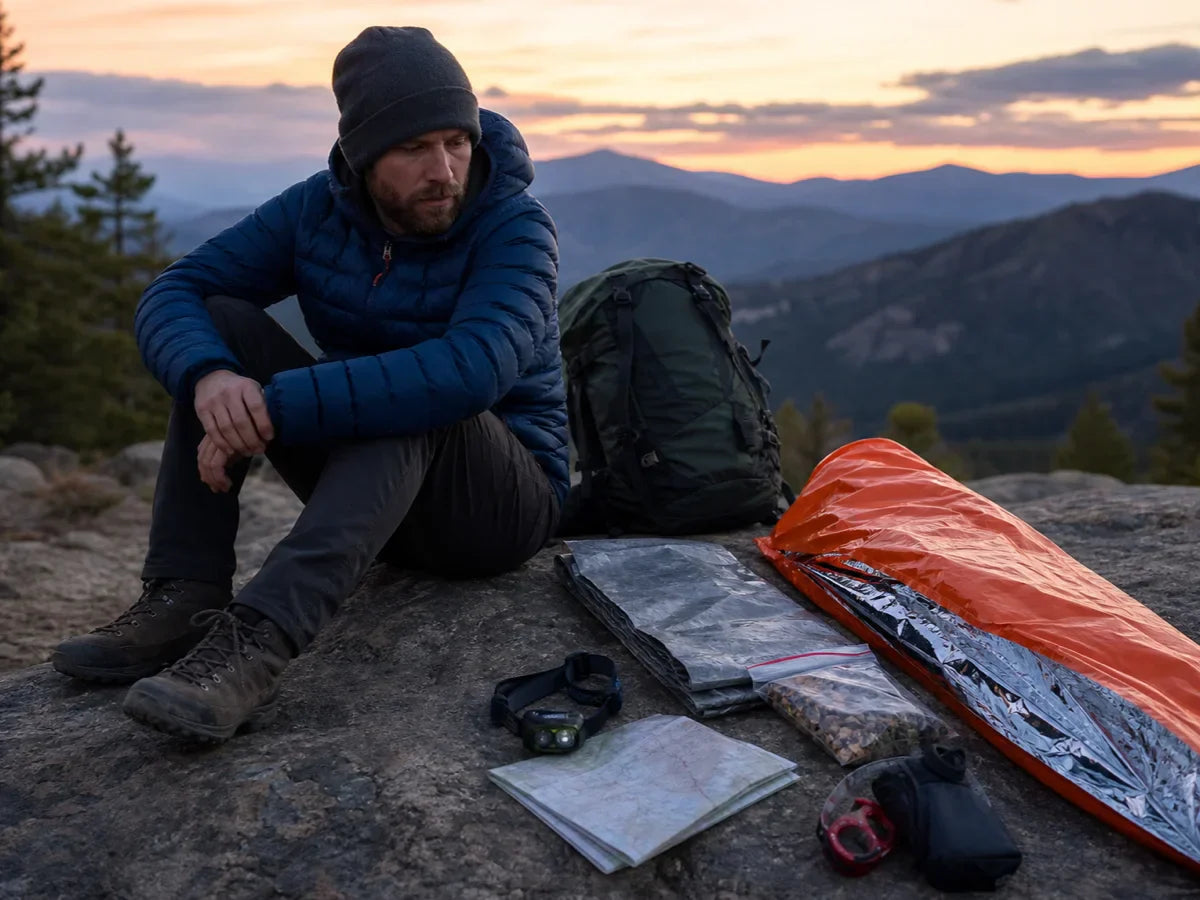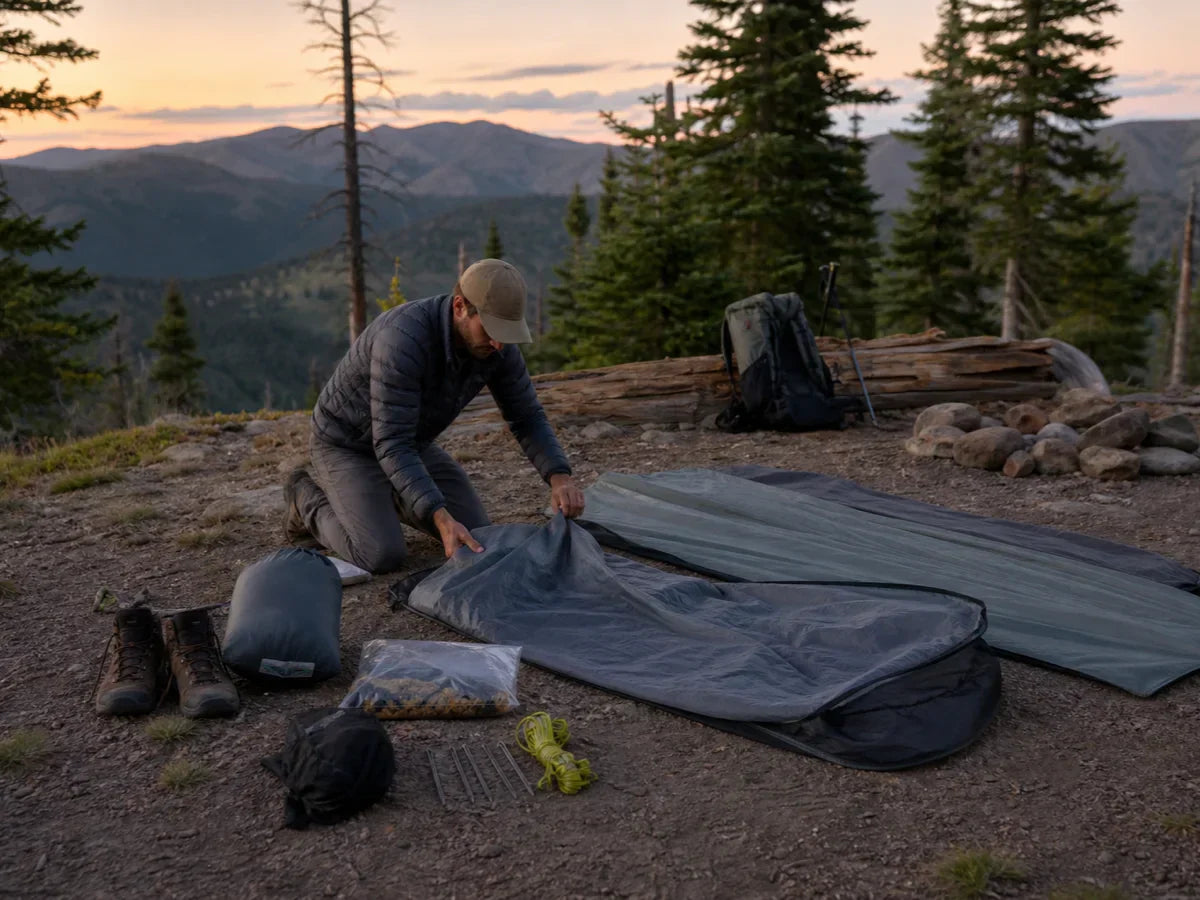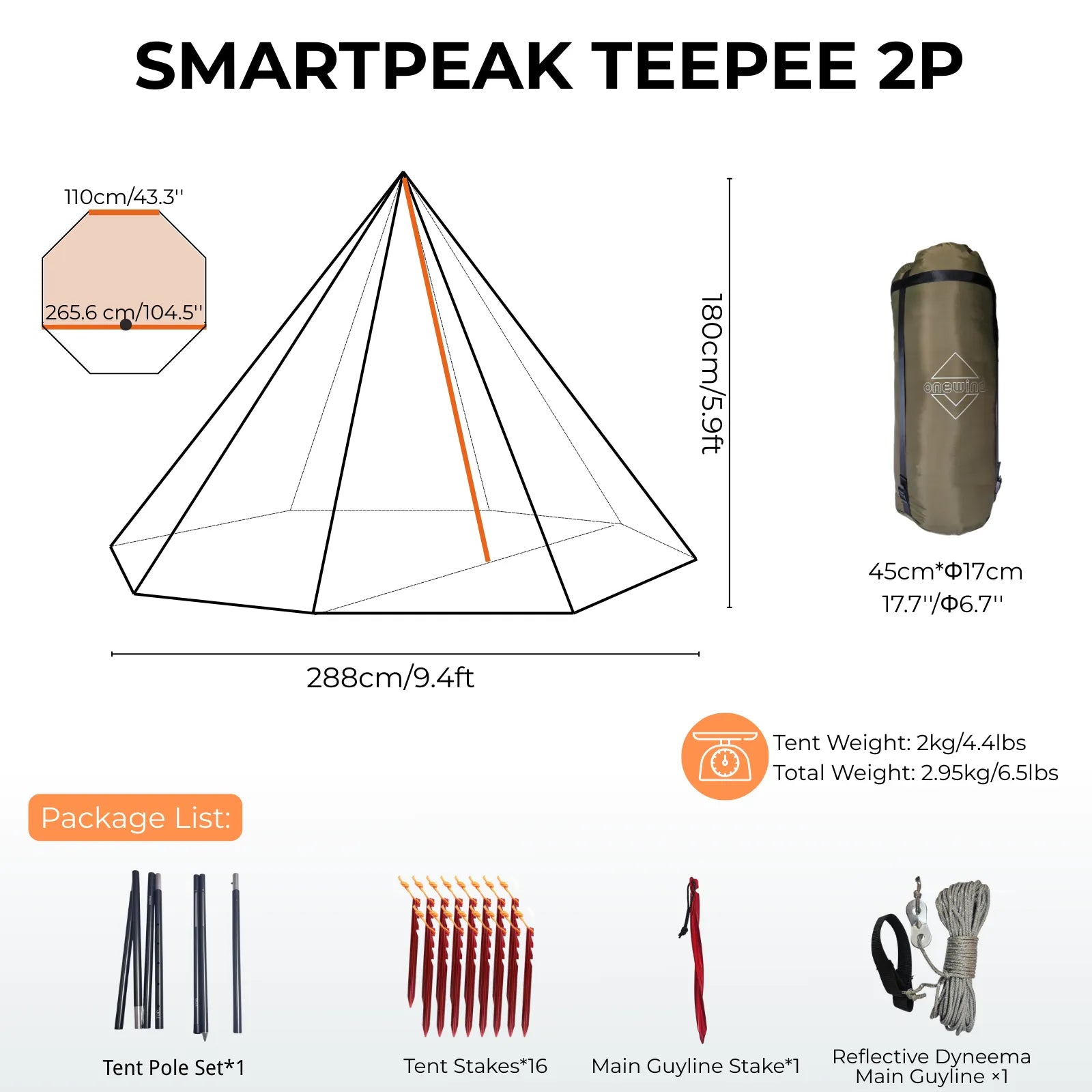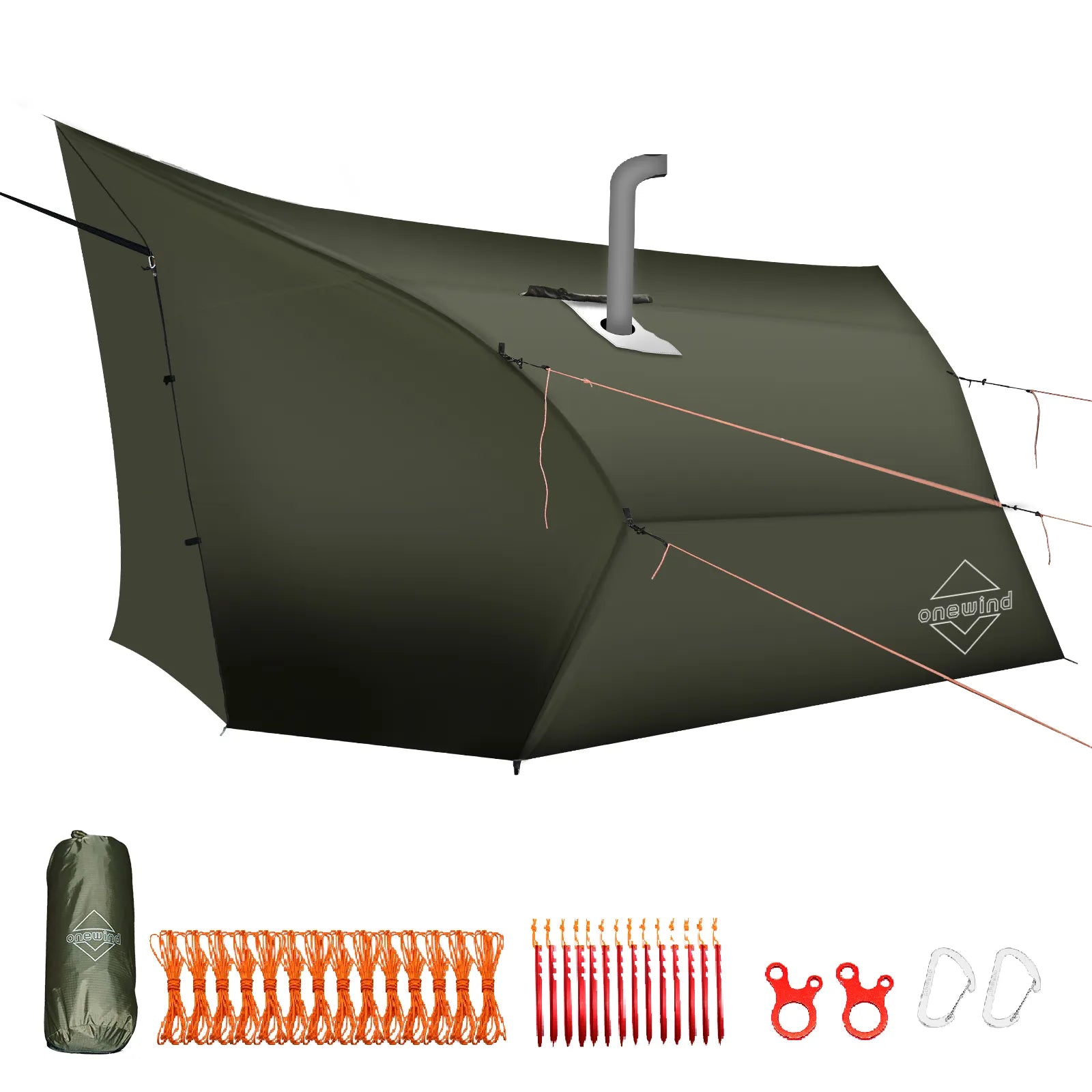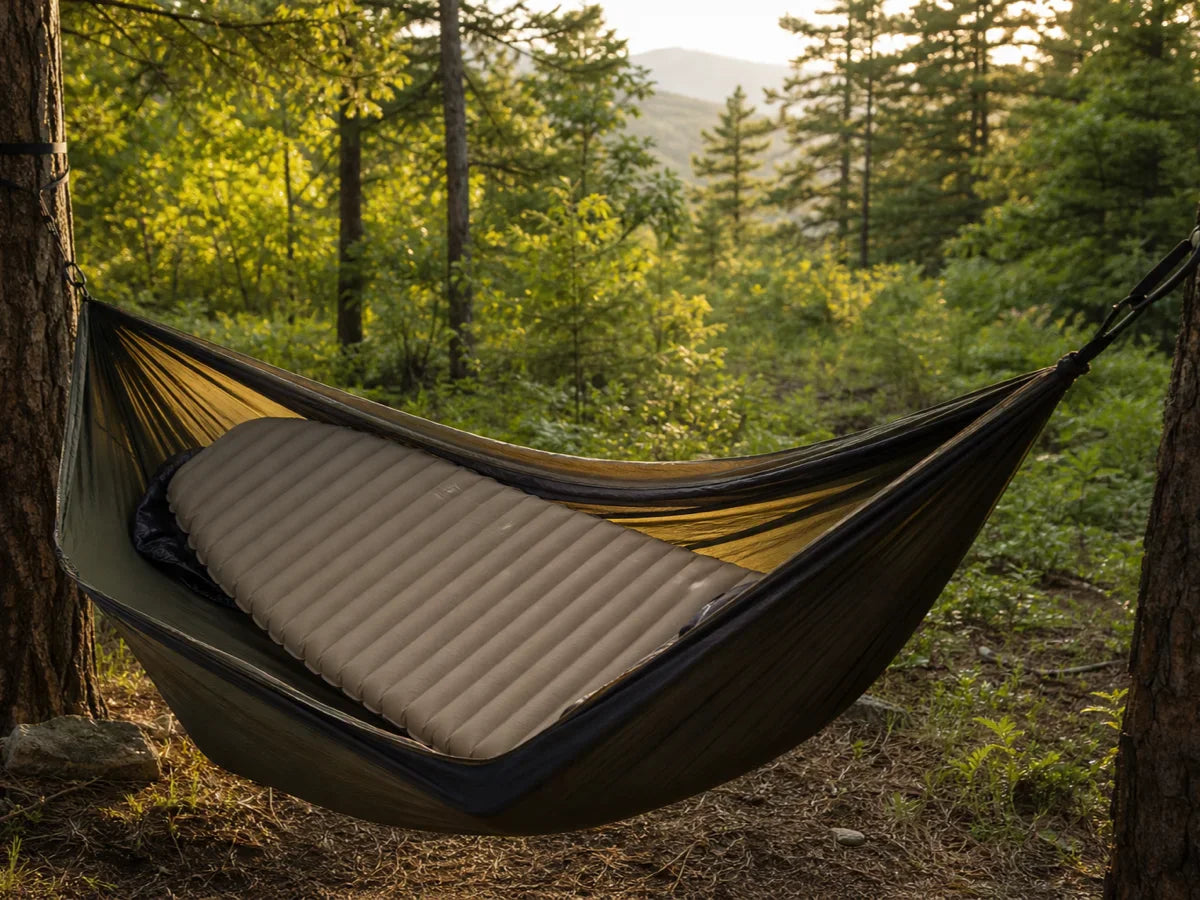

A 2 person bivy tent sounds like the smallest possible answer for two sleepers.
It is usually a bigger decision than the label suggests.
REI's bivy guidance separates simple bivy sacks from more tent-like bivy shelters because bug protection, weather closure, headroom, and condensation all change the experience.
That distinction matters even more when two people are involved.
According to that REI expert source, bivy shelters can protect from rain and insects, but tight space and condensation remain tradeoffs.
One low shelter has to handle two bodies, two pads, two wet rain jackets, two pairs of boots, two breathing zones, and two different midnight exit habits.
I built this guide around a stricter test.
Do not ask, "Can two people fit?"
Ask, "Will both people wake up dry, unstressed, unbitten, and still speaking to each other?"
A shared low bivy shelter can work for a narrow kind of trip.
Two separate solo shelters, two roomier solo tarp-tents, or a shared tarp over separate sleep areas is often calmer.
That is especially true when dew, ticks, food smells, wet gear, and rain entry are part of the night.
What You'll Learn

- ✓ Use a two-sleeper failure test before buying a low shared shelter.
- ✓ Decide whether a couple should share one low shelter or carry two separate solo systems.
- ✓ Keep wet boots, packs, bug repellent, food smells, and rain gear out of the sleeping zone.
- ✓ Understand why the Ultralight SoloVent Bivy Tent and Solo Skyshade Tartent should be treated as single-person paths, not two-person shelters.
- ✓ Know when a 12 ft silnylon tarp solves the two-person problem better than a bigger bivy label.
This guide does not replace the solo fit test in our bivy tent 1 person guide.
It answers a different question.
The question here is what happens when two sleepers share space, weather, bugs, and mistakes.
Quick Answer

A 2 person bivy tent is not automatically a smart upgrade from a one-person bivy.
It is a partner-compatibility test.
Choose one shared low shelter only if both sleepers can handle limited headroom, limited shoulder room, one disturbed entry zone, and very little protected gear space.
Choose two solo shelters if either sleeper wakes often, needs a separate exit, dislikes tight spaces, or wants independent ventilation.
Choose a tarp-first setup if the weather problem is wet gear, rain entry, or a shared dry zone.
I would rather see two people sleep in two compact solo shelters under one tarp than watch them force a shared bivy into a job it cannot do.
The Decision Framework

I use five questions before I recommend any two-person bivy setup.
Can both sleepers lie down without shoulder pressure, pad overlap, or sleeping bag wall contact?
Can either person leave at night without crawling across the other person?
Can both people vent the shelter without one person closing the only airflow path?
Can boots, packs, wet layers, and cook items stay outside the sleep zone but still protected?
Can scented items follow local storage rules without ending up near either person's head?
If the answer to any question is no, the lower-regret path is usually separation.
That can mean two low solo bivy shelters.
It can mean two roomier solo shelters.
It can mean one large tarp over two separate sleep systems.
The shape matters less than the workflow.
For two people, workflow beats capacity.
Fit Test 1: Capacity Is Not Compatibility
Truth About Using a Bivy - When, Where, Why and Why Not

Capacity tells you how many people the shelter claims to hold.
Compatibility tells you whether both people can actually sleep.
Those are not the same measurement.
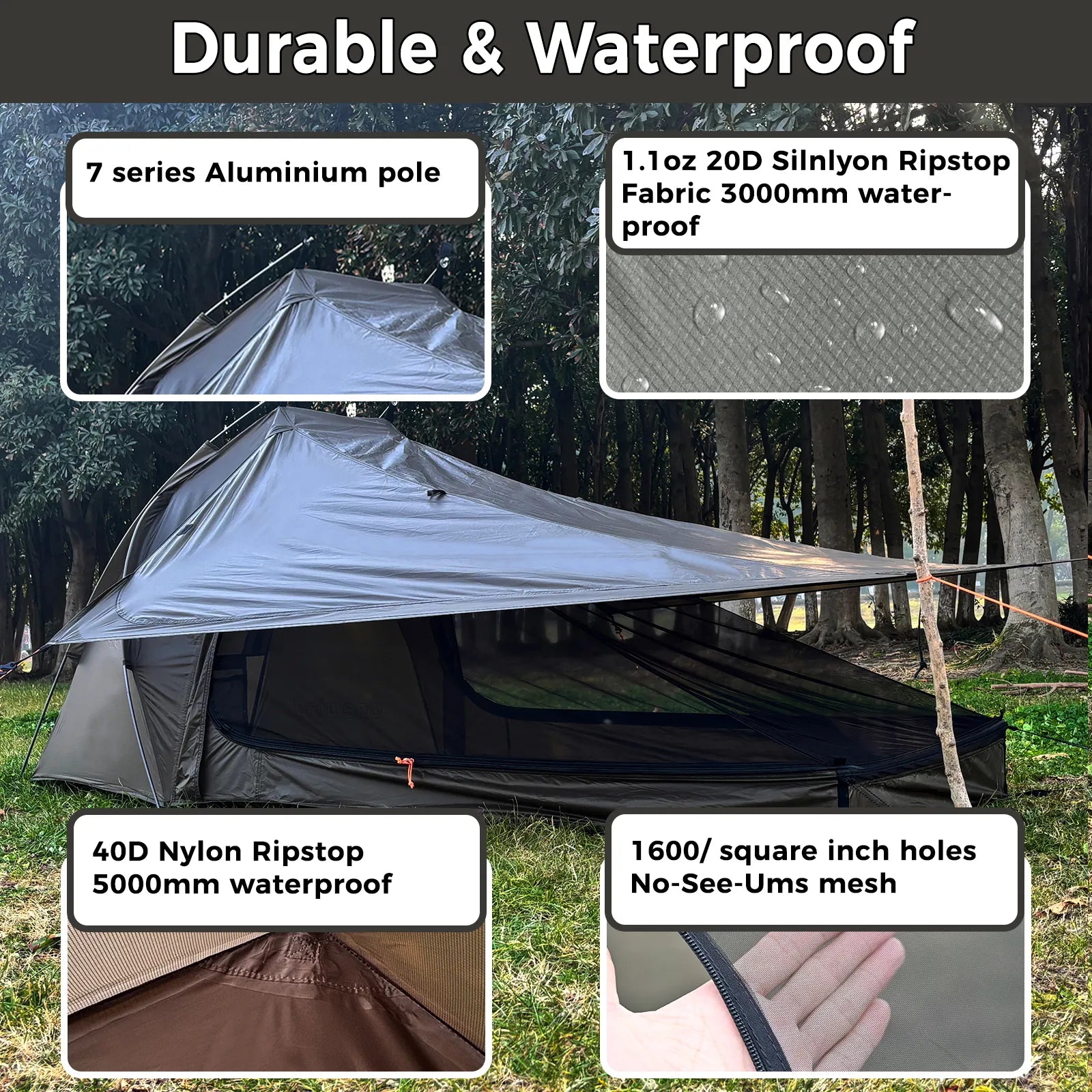
The Onewind SoloVent product data lists a 1 person shelter with an 82.7 inch length, 23.6 inch width, 39.4 inch height, and 37 ounce listed weight.
That makes it useful as one low-footprint solo path.
It does not make one unit a two-person solution.
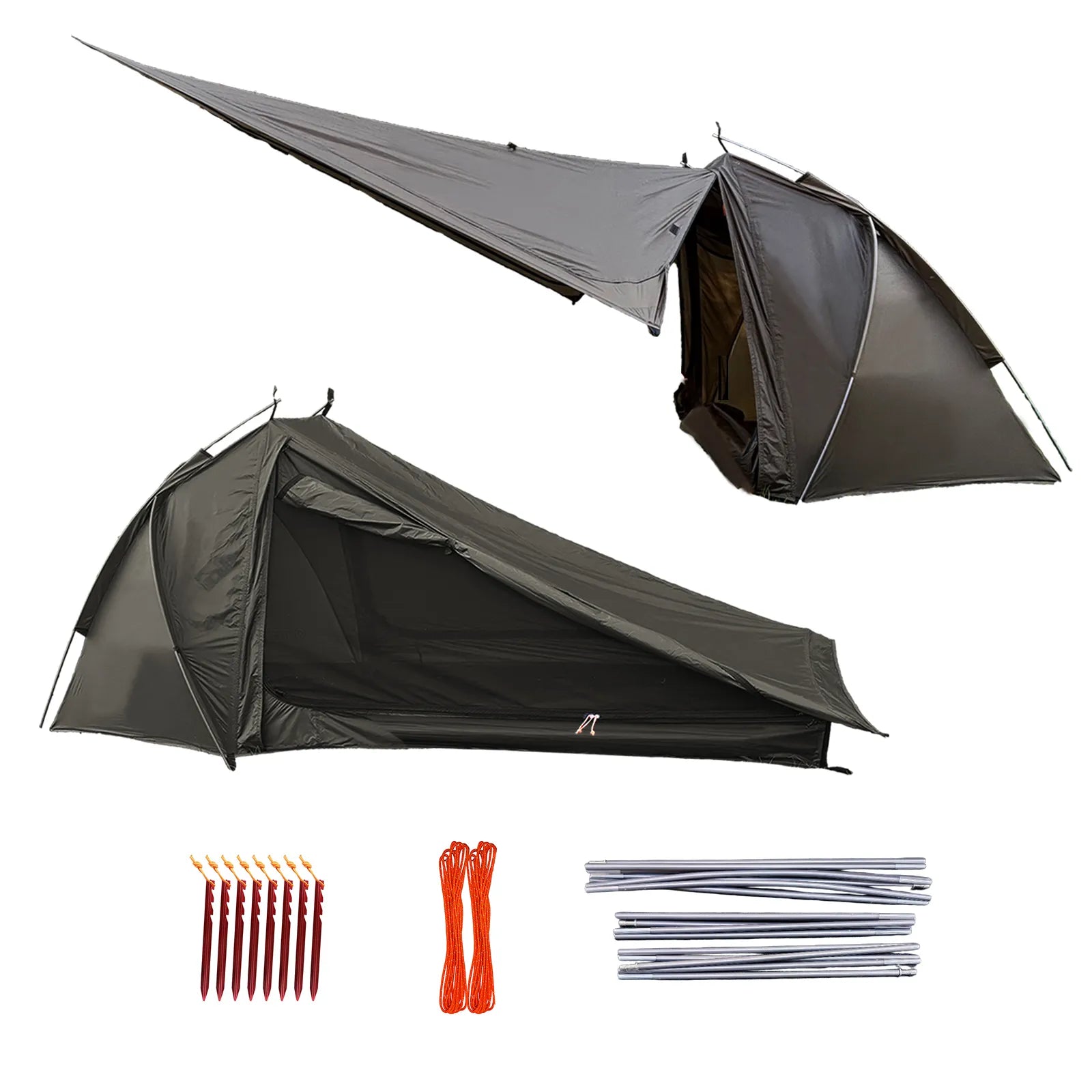
The Solo Skyshade Tartent is also listed as single person, with a 90.5 inch length, a 35.5 inch width tapering to 27.5 inches, and a 39.4 inch height.
That extra room can make one person's night calmer.
It still does not turn one shelter into a couple shelter.
I would test any two-person bivy claim with the exact pads and bags first.
Put both pads inside.
Zip or close the shelter as if rain were starting.
Have one person roll to the side.
Have the other person unzip and exit.
If the test turns into elbows, knees, damp fabric, and jokes about divorce, the shelter failed before the trip started.
Fit Test 2: Two People Create Two Condensation Problems
How to reduce condensation in your bivvy

REI warns that bivies can face condensation because they behave like small single-wall shelters.
With two sleepers, the margin gets smaller.
That report is why I treat two-person ventilation as a pass/fail item, not a comfort upgrade.
One person's breath is manageable when the shelter has enough airflow and loft clearance.
Two people's breath, wet socks, damp jackets, and closed vents can turn the same shell into a morning wipe-down job.
Waterproof fabric is only one piece of the answer.
Waterproof fabric can stop rain from outside.
It cannot remove moisture that both sleepers bring inside.
The two-person move is to protect airflow, not kill it.
A shared tarp can help because it lets the couple keep a doorway or mesh area more open during drizzle.
Two separate shelters help because each sleeper manages a smaller moisture bubble.
Either answer can beat one cramped low shelter with everything zipped shut.
Fit Test 3: Bugs, Ticks, and Scented Items Need a System

CDC guidance puts ticks in grassy, brushy, and wooded areas.
CDC also recommends treating boots, clothing, and camping gear with 0.5% permethrin where appropriate, using EPA-registered repellents, and checking gear and bodies after exposure.
According to CDC, the gear check matters because ticks can ride back on clothing and packs after the campsite is packed.
That matters because low shelters often put people closer to grass, brush edges, and boot clutter.
Two sleepers also create more scented-item management.
NPS food-storage guidance treats food, trash, toiletries, sunscreen, bug repellent, fuel, and cookware as bear-attracting items.
Those items should not end up in a sleeping shelter just because the shelter has no vestibule.
That NPS source is the reason I do not put repellent or toiletries beside a sleeper's head in the suggested layout.
I would separate the camp into three zones.
Sleep zone.
Boot and pack zone.
Scented-item zone.
If the planned 2 person bivy tent cannot support those zones, the trip needs a tarp or separate shelters.
Product Path: What Onewind Gear Actually Fits

This section matters because the wrong product claim would mislead the reader.
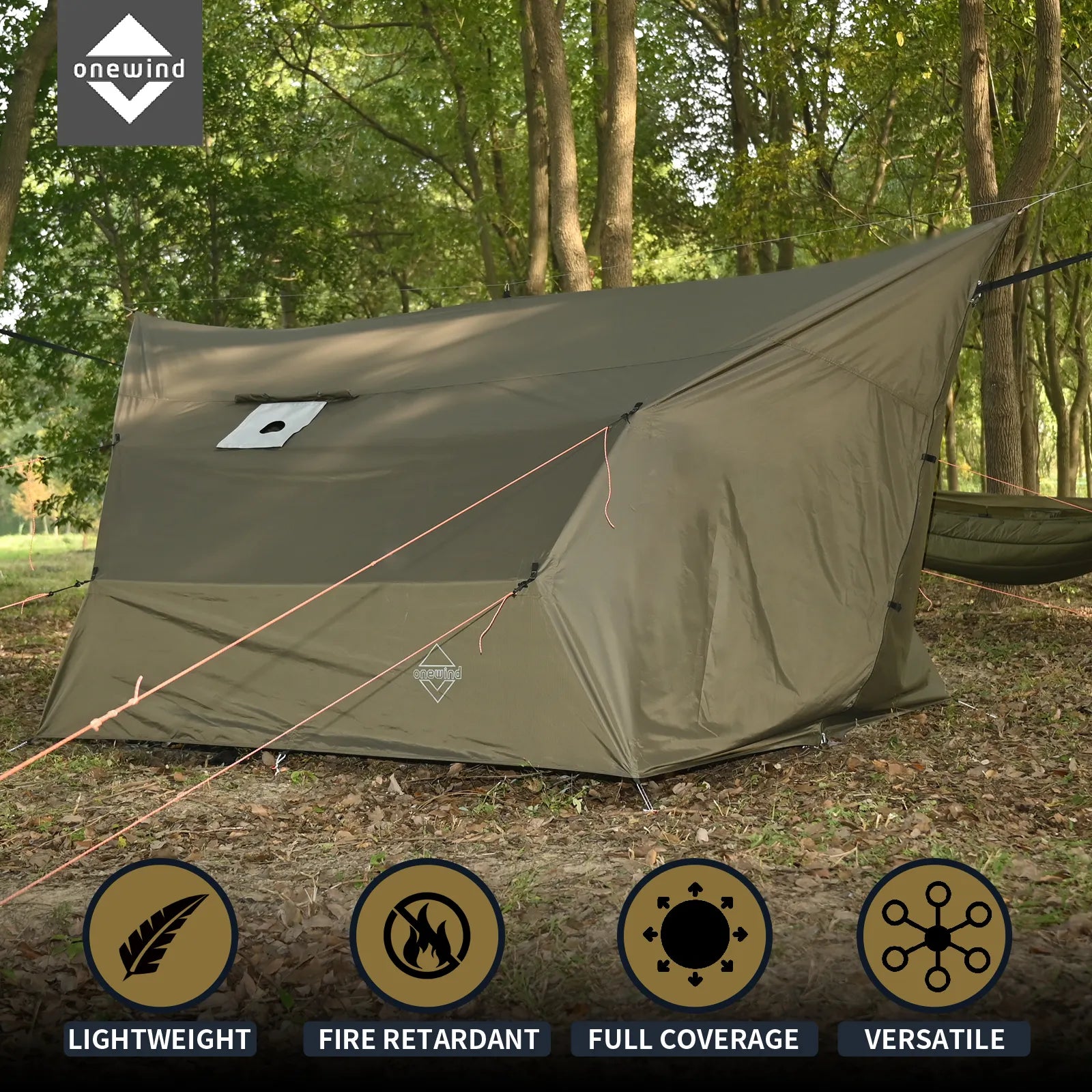
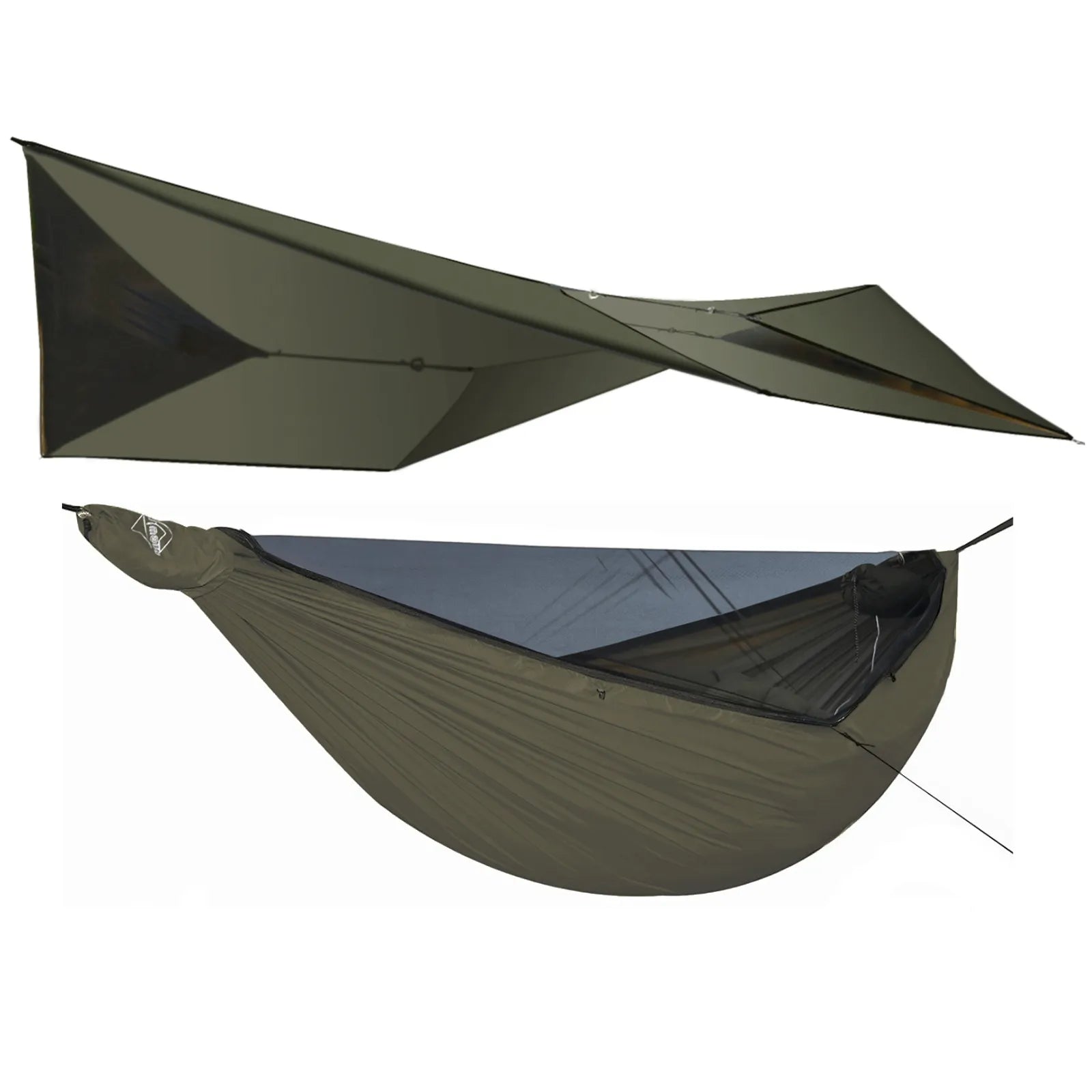
The Ultralight SoloVent Bivy Tent is a single-person bivy tent path.
The Solo Skyshade Tartent is also a single-person shelter path.
For two people, the natural use case is two separate units or a mixed system, not one unit shared by two adults.
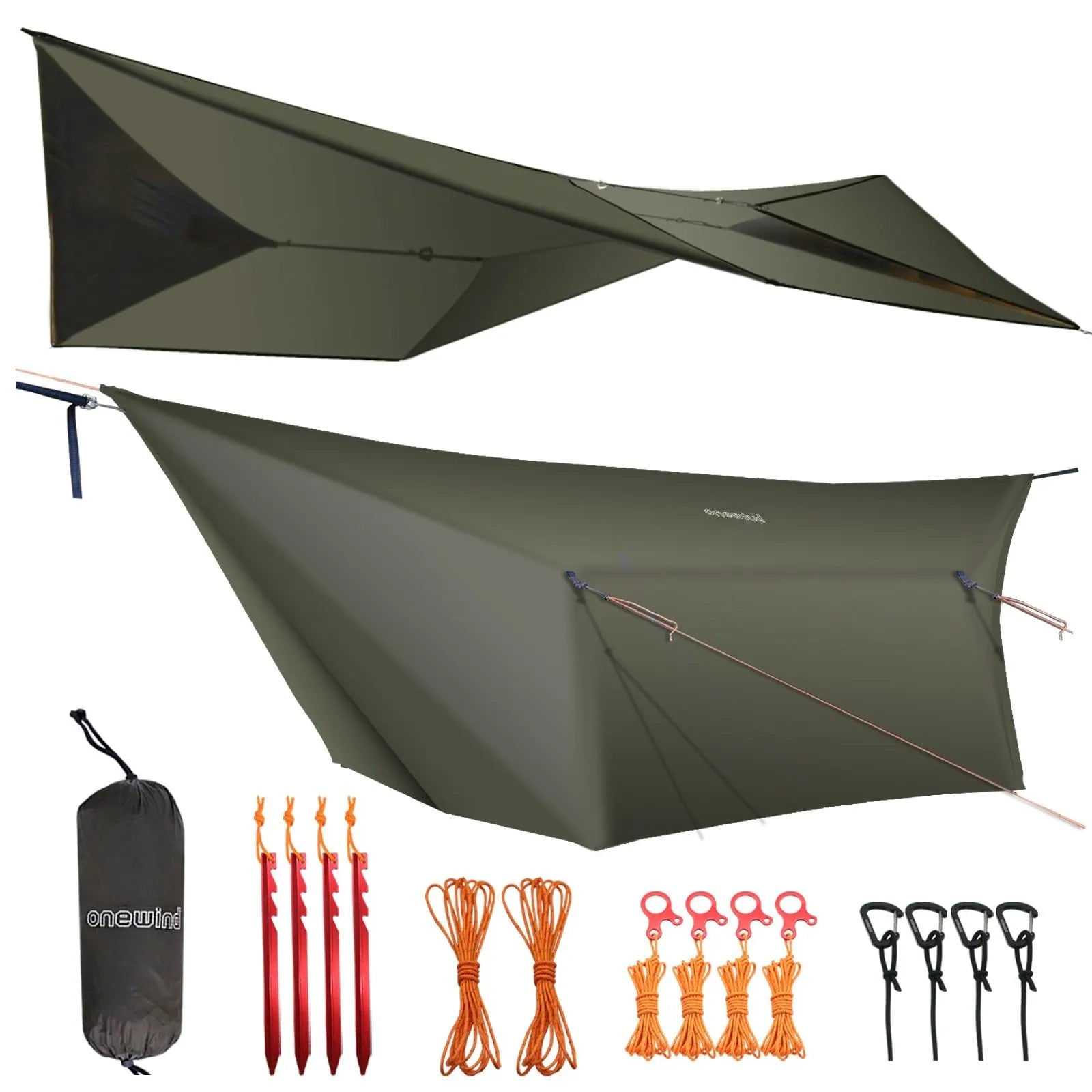
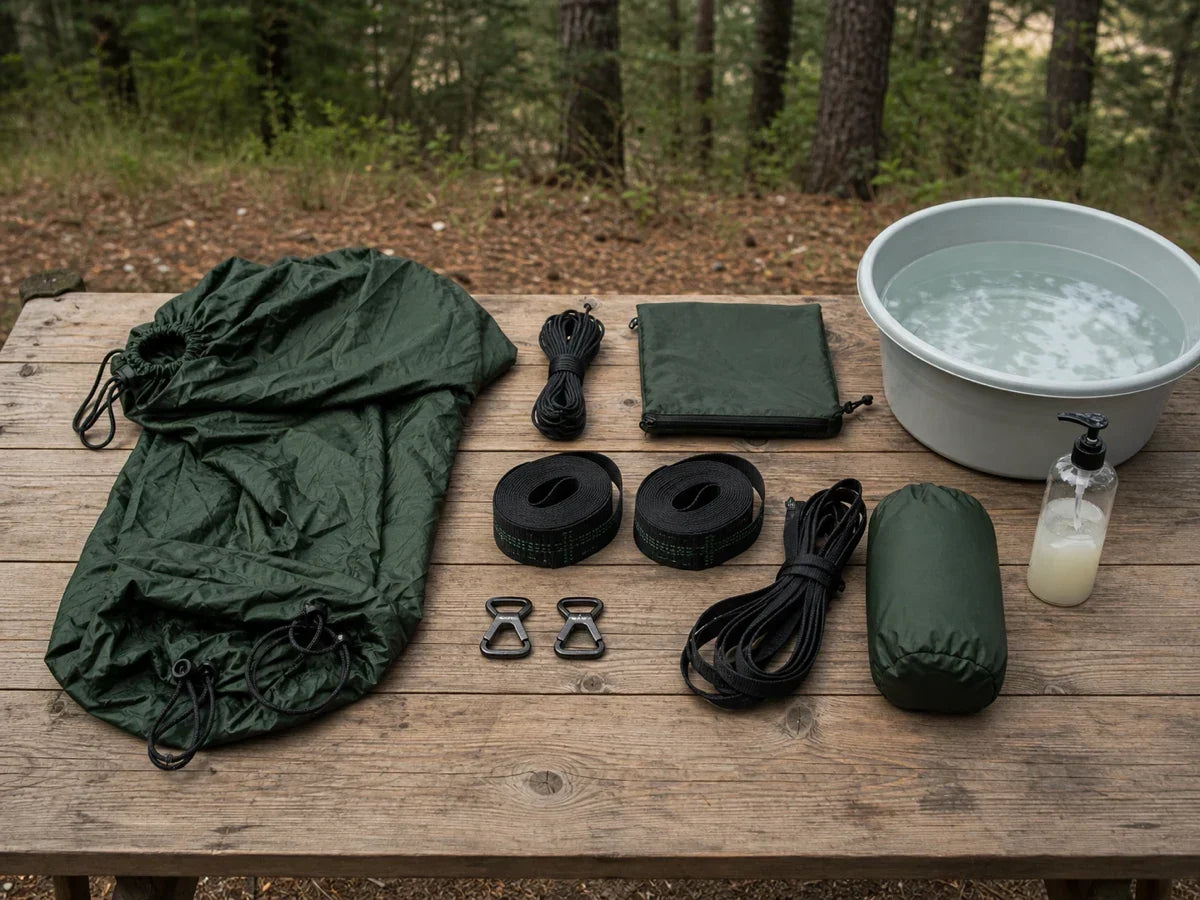
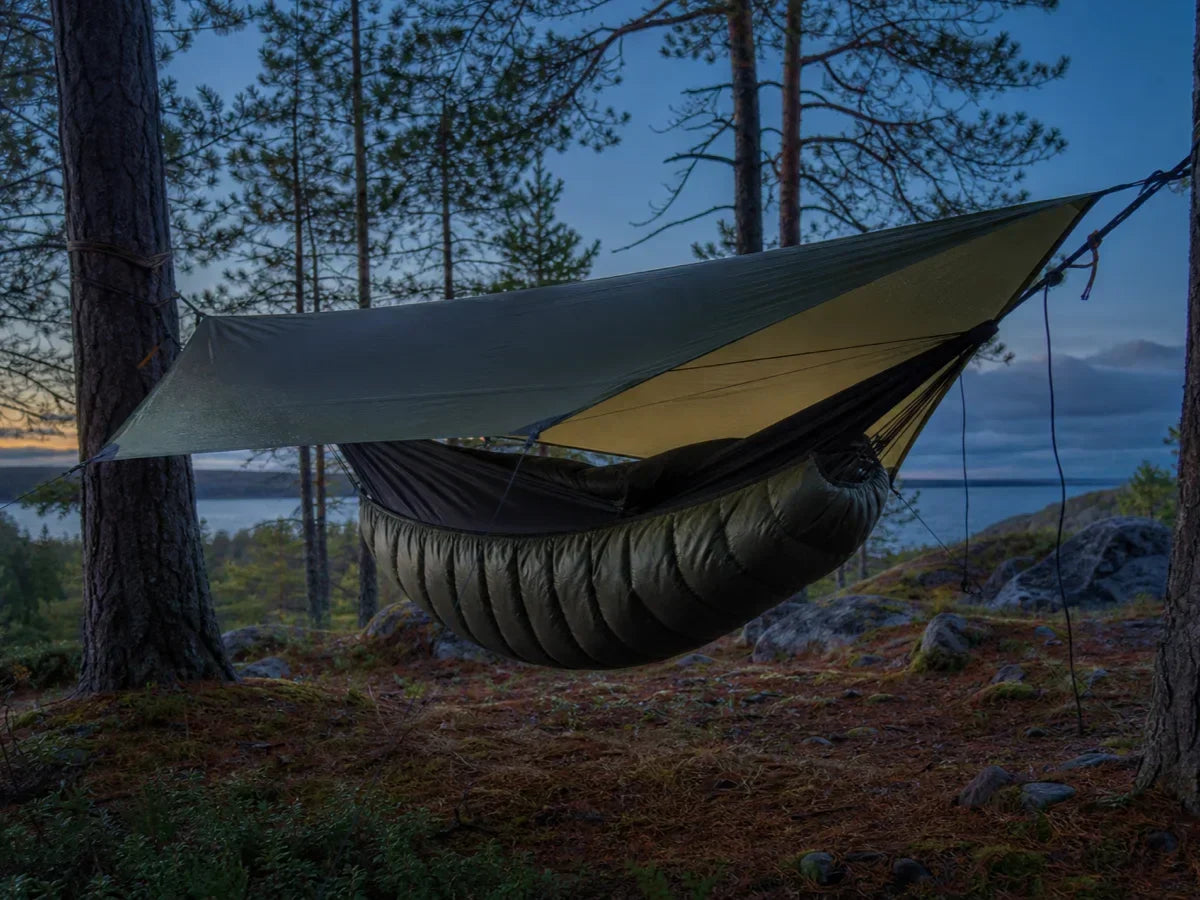
The 12 ft silnylon tarp is the product that most directly answers the shared problem.
It gives two people a common dry work area while preserving separate sleep spaces.
That is the exact tradeoff many couples miss.
They shop for a bigger sleep shell when the missing piece is actually covered entry and gear staging.
Scenario 1: A Couple Wants the Smallest Possible Overnight Shelter

The temptation is obvious.
One shelter sounds lighter, cheaper, and simpler.
That logic works only if the couple needs the same thing from the night.
If both people sleep still, tolerate low space, and only need protection for a short dry-to-mixed overnight, a shared bivy-style shelter can be reasonable.
If one person needs more room, reads late, wakes often, or exits at night, the simplicity disappears.
Now one zipper controls two people.
One condensation mistake affects two bags.
One wet boot pile blocks the shared entry.
I would treat this as a backyard test, not a first-night gamble.
Set the shelter up at home.
Use both real pads and bags.
Spend at least 30 minutes inside with the entry set as it would be in rain.
Have each person exit once.
Verdict: Choose one shared bivy only after both people pass the movement and exit test; otherwise choose two solo shelters.
Scenario 2: Two Bikepackers Arrive Late

Bikepacking changes the equation because packed volume and pitch speed matter.
Two riders may arrive tired, hungry, and low on daylight.
A tiny footprint can be more valuable than interior comfort.
But two exhausted people also make more mistakes.
One person may dump wet gloves near the entry.
The other may need to open the shelter again for a headlamp, snack, or battery pack.
Two compact solo systems often beat one shared cramped shell in this scenario.
Each rider can pitch independently.
Each rider can vent independently.
Each rider can exit without waking the other.
A shared tarp can still cover bikes, shoes, or bags if rain is likely.
I would not make the shelter a shared bottleneck unless the site is so small that one low footprint is the only ethical option.
Verdict: For most late-arrival bikepacking partners, choose two compact solo shelters and add shared tarp cover when weather threatens.
Scenario 3: Dew, Ticks, and Bugs Are Likely

Bug season turns a two-person bivy from a sleep question into an entry routine.
The problem is not only whether the mesh exists.
The problem is how often the mesh opens.
One person may cook later.
One person may leave boots outside in wet grass.
One person may bring bug repellent close to the sleeping area because there is nowhere else to put it.
CDC tick guidance makes the boot and clothing plan part of the shelter plan.
NPS scented-item guidance makes the repellent, toothpaste, wrappers, and food bag part of the shelter plan too.
That is a lot to manage through one low doorway.
A shared tarp makes the routine easier because both people can stage boots and packs under cover before entering their own sleep zones.
Separate shelters also reduce the damage from one person's late entry.
Verdict: In bug and dew conditions, prioritize two clean entry routines plus shared cover over one shared low bivy.
Scenario 4: One Partner Has Not Tested Tight Shelters

Tight-space tolerance is not a spreadsheet number.
Experienced bivy users may like low shelters.
First-time low-shelter users may feel trapped after ten minutes.
The only honest test is to try it before the real trip.
This matters more for a couple because one person's panic exit becomes the other person's disrupted night.
It also matters because rain makes everything feel smaller.
A dry backyard bivy test is forgiving.
A wet remote campsite is not.
I would never use a first shared low-shelter night as a relationship test.
Let each person test the entry, zipper, headroom, and side-sleeping position alone first.
Then test the two-person layout.
If one person hesitates, move up in space.
The Solo Skyshade Tartent is a more logical one-person upgrade path when the problem is personal room, not shared sleeping.
Verdict: If either partner has not tested tight shelters, choose two separate systems or a roomier solo shelter path before trying a shared bivy.
Scenario 5: Rain Makes Shared Cover More Useful Than Shared Sleep

Rain exposes the difference between sleeping space and working space.
A bivy protects the sleeping bag.
It does not automatically create a dry place to change socks, sort packs, eat, or put on shells.
Two people need that dry place more than one person does.
A shared tarp becomes the better investment when rain changes the camp routine.
One tarp can create a common porch.
Two separate sleep systems can sit under or beside that cover.
Boots can stay out of the sleeping fabric.
Packs can stay covered.
One person can wake early without crawling over the other.
The 12 ft silnylon tarp fits this role better than trying to turn a sleep shell into a living room.
Verdict: If rain changes clothes, boots, packs, or cooking, solve shared cover first and choose sleep shelters second.
Common Mistakes With 2 Person Bivy Tent

Most mistakes come from trusting a capacity label more than the night routine.
That is the wrong order.
Two people should first decide how they will enter, vent, store gear, manage scents, avoid bugs, and exit.
Then they should choose the shelter shape.
The mistakes below are the ones I would check before spending money.
Mistake 1: Treating Capacity as a Sleep-Quality Promise

Two pads on the floor do not prove two good nights.
The missing measurement is movement.
Can both people roll?
Can one person sit up enough to find a headlamp?
Can a wet jacket come off without touching the other person's quilt?
Can the door open without dripping onto the second sleeper?
If the answer is no, the shelter is not compatible even if it is technically full.
I would treat capacity as the first filter only.
Comfort, ventilation, and exit control are the real filters.
Mistake 2: Using One Low Shelter as a Gear Closet

A two-person shelter does not remove two people's gear.
It only changes where the gear goes.
Four boots, two packs, two rain shells, two cook kits, and two sets of small items add up quickly.
If all of that moves inside a low bivy, the sleeping space collapses.
If it stays outside with no cover, dew and insects become the morning problem.
The tarp-first question keeps the gear plan honest.
Where will the gear live if it rains at 2 a.m.?
If there is no answer, the shelter plan is incomplete.
Mistake 3: Forgetting Scented Items

Food is not the only scented item.
NPS includes trash, toiletries, sunscreen, bug repellent, fuel, and cookware in the wider scented-item problem.
That matters in a low shelter because the easy mistake is to tuck small items beside your head.
Two people double the odds of someone doing that.
Use this rule before packing.
If local rules require secure storage, follow them.
If the item smells like food, fuel, repellent, soap, or trash, do not treat the sleeping shelter as the storage locker.
This is another reason a shared dry zone can be useful.
It gives you a place to sort without turning the sleep zone into a pantry.
Mistake 4: Skipping the Backyard Movement Test

The backyard test sounds too simple, so people skip it.
That is exactly why it works.
A two-person bivy test should include both pads, both bags, both pillows, both headlamps, both rain jackets, and both pairs of shoes.
Close the shelter.
Open the shelter.
Have one person exit.
Have that person come back in.
Have both people roll to the side.
If the process is annoying in dry grass, it will be worse in rain.
Do not discover that at midnight.
Mistake 5: Buying Shared Sleep When the Real Need Is Shared Cover

Many two-person bivy problems are actually tarp problems.
Reddit discussions around bivies repeatedly circle back to the same user complaint: tiny shelters can look efficient until condensation, wet gear, or entry friction shows up after dark.
The couple does not need one bigger sleeping tube.
They need a dry place to enter, stage boots, open packs, and handle wet layers.
That is why two solo shelters under one shared tarp often feel better than one shared low shelter.
Each person gets personal sleep control.
Both people get shared cover.
The tarp also protects the relationship because one person's mess stays out of the other's sleeping bag.
I would choose that structure whenever the forecast includes real rain or heavy dew.
The Quick Decision Checklist

Here is the cleanest way to decide.
Choose a shared 2 person bivy tent only when both people pass the tight-space, entry, exit, and gear-staging tests.
Choose two SoloVent-style bivy shelters when each person wants a low-footprint sleep-only setup.
Choose two Solo Skyshade Tartent style shelters when each person wants more personal room.
Choose a 12 ft tarp over separate sleep systems when the real issue is rain entry, boots, packs, or shared dry workspace.
If you are still unsure, do not start with the tightest option.
Start with separation and shared cover.
That setup is slightly less romantic on paper.
It is often much better at 3 a.m.