
SELF's camp shoe roundup treats camp footwear as a category problem, not a single right product, and that is the useful starting point for ultralight hikers.
Some campers want recovery comfort after a long day in wet hiking shoes.
Some need something secure enough for a water run, a midnight bathroom walk, or a rocky bear-hang route.
Some should skip camp shoes because the extra item creates more packing clutter than it solves.
The decision is not "sandals or no sandals."
The better question is whether a second pair of footwear solves a repeated camp job that your hiking shoes, bare feet, socks, or site routine cannot solve cleanly.
I would also decide where those shoes sleep before I decide whether they deserve pack space, because wet shoes tossed under a hammock or inside a tent can create the exact morning problem camp shoes were supposed to prevent.
What You'll Learn
- ✓ You will get a field decision framework instead of another list of footwear picks.
- ✓ You will see why "ultralight" only matters after the shoe handles the job you actually need.
- ✓ You will have four trip scenarios that separate worth-carrying shoes from dead weight.
- ✓ You will know how to keep dirty or wet footwear away from quilts, tent floors, hammocks, and sleeping bags.
- ✓ You will leave with a short checklist you can run before packing.
Quick Answer
If the job is repeated, wet, sharp, public, or done in the dark, camp shoes can earn their weight.
If the job is vague comfort, one-night luxury, or a backup for conditions you are unlikely to face, leave them home.
If you carry them, do not end the decision at footwear.
Plan a contained, visible, easy-to-reach overnight spot so the next morning does not start with a cold, wet, muddy, or occupied shoe.
The Decision Framework

Start with the job.
Camp shoes that cannot name their job usually become pack ballast.
According to SELF's product survey, the category spreads across sandals, clogs, water shoes, and recovery-style footwear, which proves the job matters more than the label.
A sandal that drains well can be smart for creek crossings and water hauls.
A foam slip-on can be pleasant on flat ground after a high-mileage day.
A thin sock shoe can feel light in the pack but fail if the route from hammock to bear canister crosses roots, gravel, or wet wood.
The second part is storage.
Footwear has contact with mud, duff, wet leaves, shared bathroom floors, insect habitat, and morning dew.
If that footwear ends up against a quilt, underquilt, tent floor, or hammock body, the comfort gain can disappear by sunrise.
I prefer a carry decision that includes the overnight plan, because a neat camp at 8 p.m. often looks different after condensation, wind, and a half-awake midnight exit.
Fit Test 1: One Diagonal Lay Does Not Become Two

Treat this odd title as a useful warning: one good use does not turn one pair of ultralight camp shoes into two, three, or four separate systems.
A shoe that is perfect for standing beside the tent may be poor for a slick creek crossing.
A water shoe that protects toes may feel damp and annoying as recovery footwear.
A thin hotel-style slipper may feel light in the spreadsheet and useless on gravel.
Reddit ultralight discussions often circle this exact tradeoff, with some hikers defending bare feet or loosened trail runners and others carrying sandals only after repeated wet-shoe nights.
That community argument is not noise.
It shows that the decision fails when the shoe is asked to solve every camp problem at once.
I would rather carry a slightly less clever shoe that handles one repeated job well than a featherweight option that only works in a campsite I cannot guarantee.
The pass-fail line is simple.
If you can say "these shoes solve this one camp job better than my hiking shoes," keep testing.
If you cannot say that, the lighter choice is no camp shoes.
Fit Test 2: Weather, Bugs, and Insulation Still Need to Fit

Weather and insects do not care that the shoes were ultralight.
According to CDC tick prevention guidance, checking gear and clothing is part of reducing tick exposure after time outdoors, and that public-health source matters because footwear sits directly in that contact zone.
That does not mean every shoe on the ground becomes dangerous.
It means the storage plan should make inspection easy, not awkward.
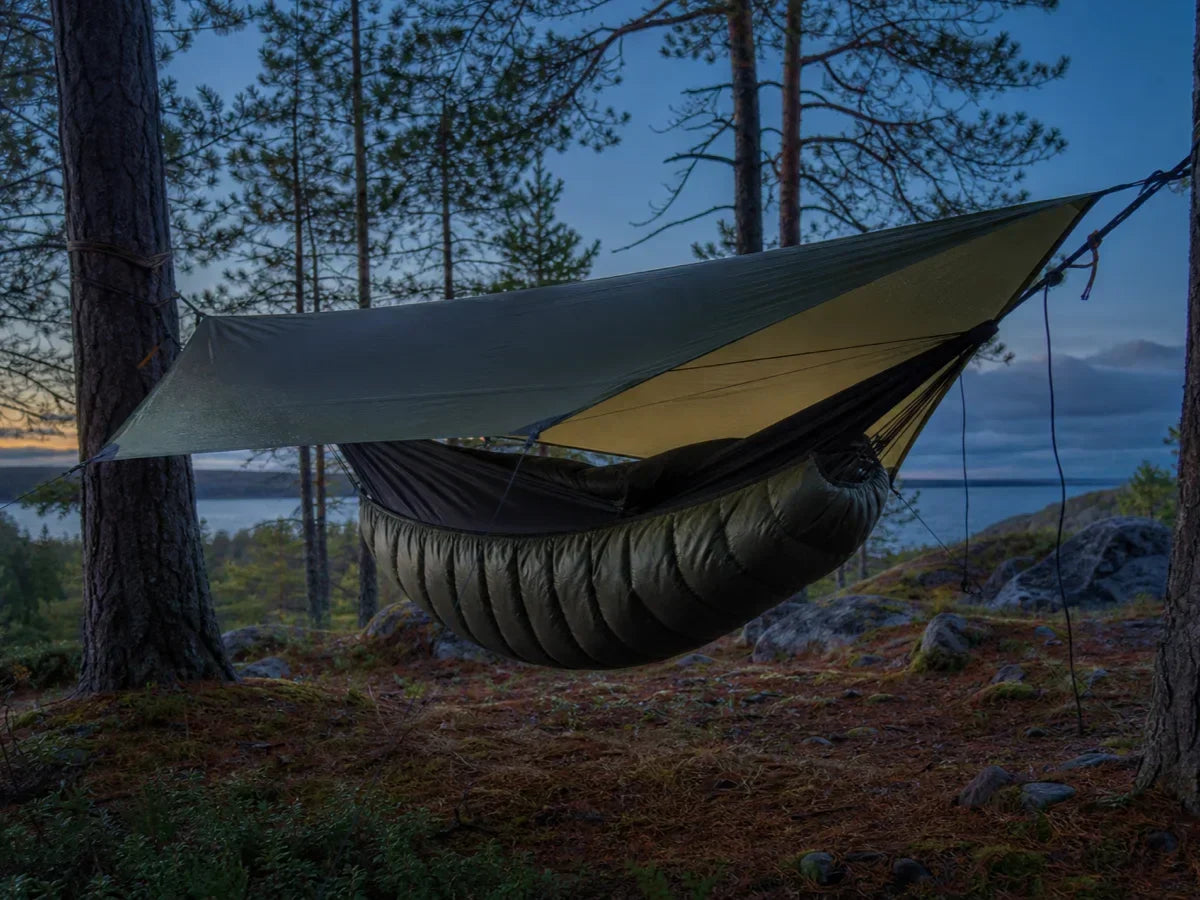
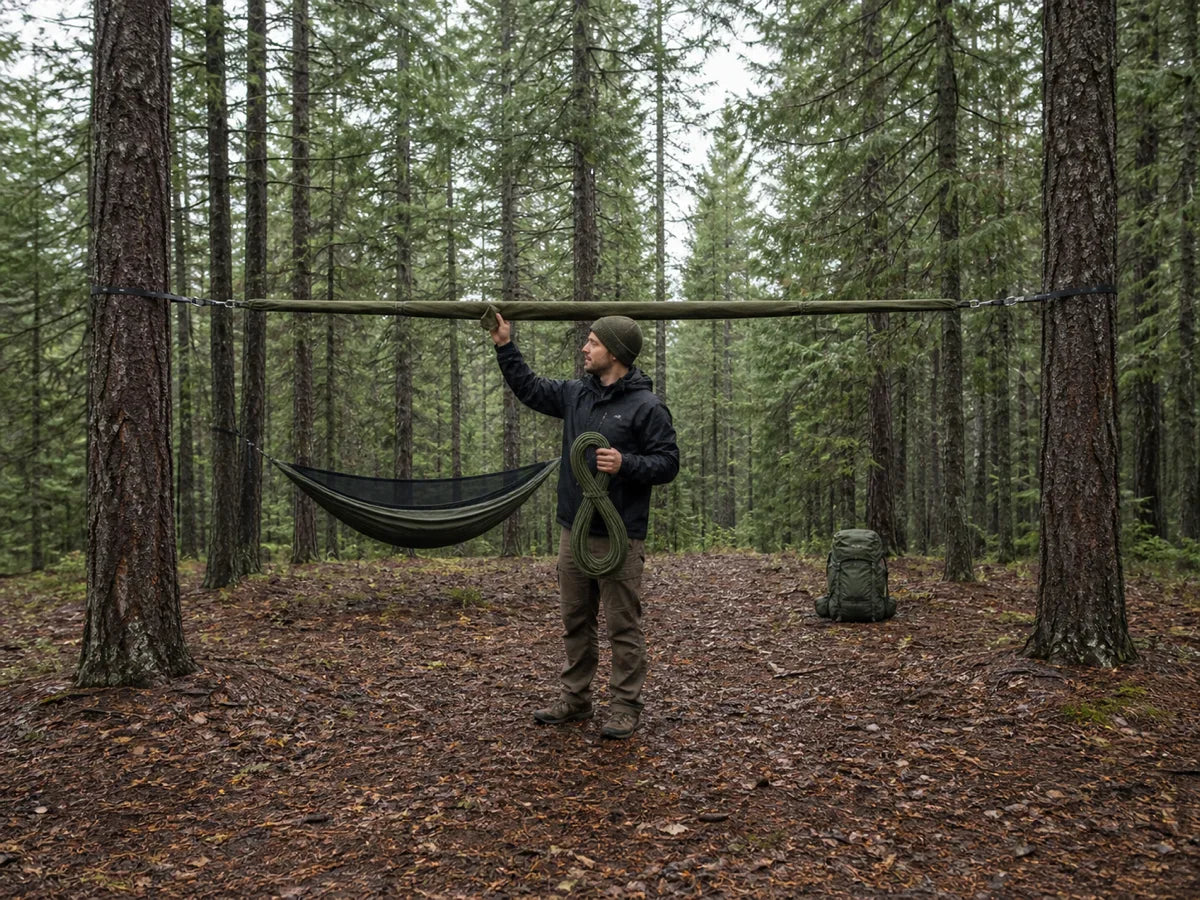
A hammock camper has no tent floor to create a neat vestibule boundary.
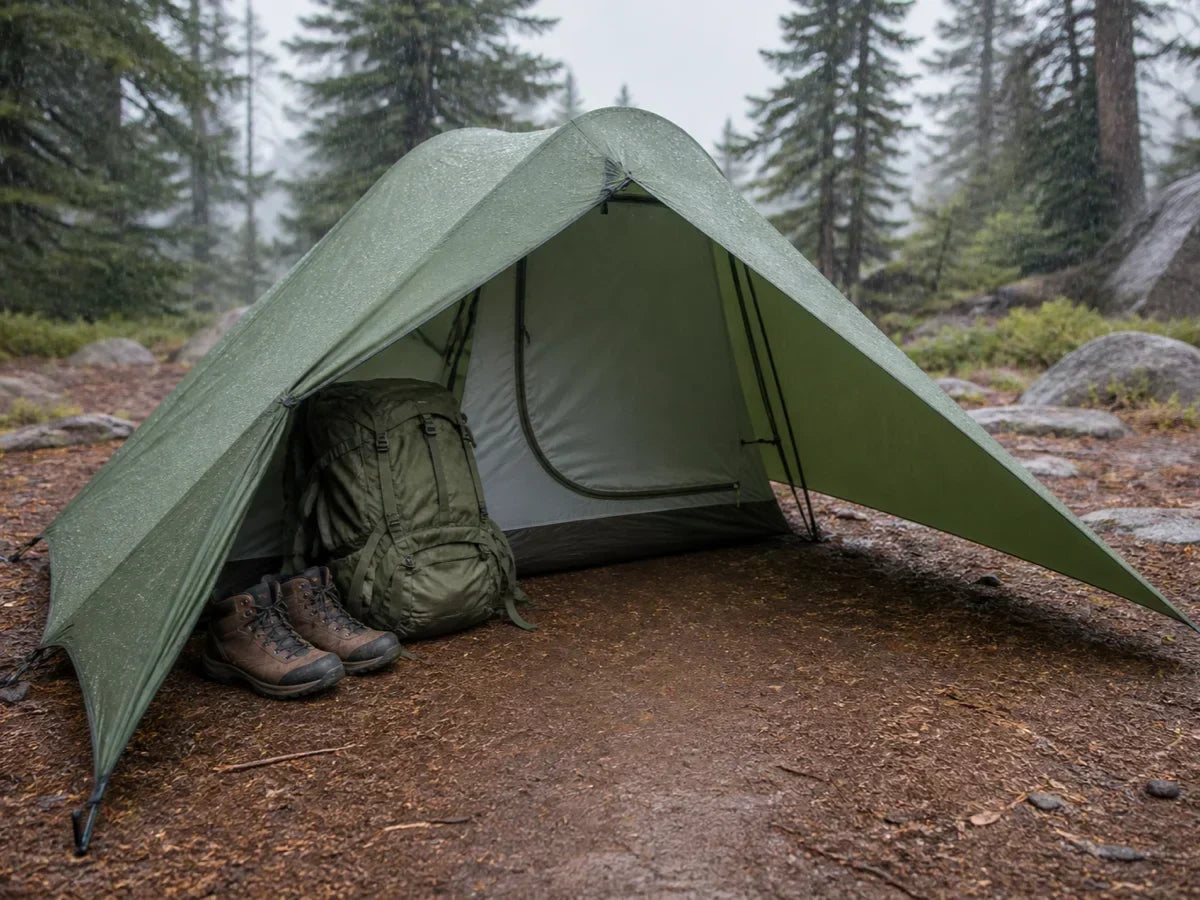
A tent camper has a floor, but dirty shoes inside the door can still grind grit into sleeping pads, quilts, and socks.
A tarp camper may have the cleanest ultralight setup on paper and the messiest footwear problem in practice.
I want wet or dirty footwear close enough to reach, far enough from insulation, and contained enough that a windy night does not scatter it into wet leaves.
If the shoes are open sandals or clogs, shake and inspect them before stepping in.
If the shoes are wet trail runners, loosen the laces, open the tongue, and keep the muddy soles pointed away from sleep gear.
Fit Test 3: Many Camp Shoe Pages List Product Picks But
Lightweight Camp Shoes : Xero Shoes Z-Trail vs Skinners 2.0

Many camp shoe pages list product picks, but the missing step is a go/no-go test for ultralight backpackers who are deciding whether extra ounces are justified.
Use the test before you read another roundup.
For a water-heavy route, the shoe needs drainage, grip, and enough security to stay on when wet.
For recovery at camp, the shoe needs comfort, warmth compatibility with socks, and low fuss during tired movement.
For shared shelters, huts, or campground bathrooms, the shoe needs cleanliness and quick on-off behavior.
For hammock camping, the shoe needs an overnight home because there is no vestibule by default.
This is the first point where a storage item can enter the system.
The Onewind Boots Sack for Camping is not a camp shoe, but according to Onewind product data it is a 40g / 1.4oz ripstop nylon storage sack with a zipper closure, hanging feature, washable fabric, quick drying behavior, and a 40cm x 26cm x 24cm capacity.
That makes it a lightweight containment option when the problem is dirty or wet footwear near sleep gear, not a replacement for choosing footwear that fits the route.
Scenario 1: Backpacker with wet hiking shoes deciding whether camp shoes are worth the extra weight.

Wet hiking shoes create a real camp problem because the hiker still has chores after reaching camp.
Water has to be filtered.
Food has to be stored.
Shelter tension has to be checked after the fabric relaxes.
Walking barefoot through wet duff or gravel to avoid putting soaked hiking shoes back on is a poor trade.
For this scenario, camp shoes earn their weight when they are secure enough for chores and simple enough to dry or shake clean.
Sandals with a heel strap, light water shoes, or other secure minimalist footwear make more sense than loose slides if the ground is uneven.
The storage plan matters after the chores are done.
If hiking shoes are muddy, keep them out of the sleeping area and away from down insulation.
If the camp shoes are wet too, give them a predictable place where they can drip or dry without touching the quilt.
The Boots Sack can work as a contained overnight spot once the wettest drip stage is handled, especially when a hammock camper wants footwear off the ground and visible.
Verdict: Carry ultralight camp shoes if wet hiking shoes are likely and camp chores require real walking; skip them if the campsite is dry, short, and chore-light.
Scenario 2: Hammock camper with no tent floor trying to keep shoes out of dew, bugs, and mud overnight.

Hammock camping changes the camp shoe decision because there is no floor to separate clean gear from dirty footwear.
The area under the hammock can look like open storage, but it is also where shoes meet dew, splash, leaves, and insects.
A half-awake step into a cold shoe at 5 a.m. is annoying.
A half-awake step into a shoe with a spider, beetle, tick, slug, or muddy puddle inside is worse.
I would not treat a boot sack as an animal-proof container, and the article should not promise that.
I would treat it as a visibility and isolation tool.
Onewind lists the Boots Sack as 1.1 oz ripstop nylon with water-resistant protection, a zipper closure, a carry handle, and a compact packed size of 4cm x 8cm.
Those details fit the hammock problem because the storage is light, hangable, and easy to separate from sleep insulation.
Pair it with a tarp pitch that keeps the sack under coverage, then inspect footwear before wearing.
If your camping gear system already has a clear ridgeline, gear sling, or dry zone, the sack becomes one more containment choice rather than the whole solution.
Verdict: Carry camp shoes only if you need them for camp movement, but always give hammock footwear a planned overnight home.
Scenario 3: Tent camper who wants clean sleep gear and fewer surprises when putting shoes on the next morning.

Tent campers often assume the vestibule solves the footwear problem.
It helps, but it does not solve everything.
Wind can push rain under a vestibule edge.
Condensation can dampen open shoes.
Muddy soles can still smear across the entry area when someone crawls in tired.
Camp shoes make sense here when they protect the sleep area from dirty hiking footwear and give the camper a cleaner way to move around camp.
They make less sense when they become the third pair of footwear in a two-night kit.
I would keep one clean boundary: sleep socks stay inside, dirty shoes stay outside the sleep area, and camp shoes live where they can be reached without dragging grit across the tent floor.
The Boots Sack can sit near the tent entry as a containment choice for muddy footwear, especially if the pair is small enough to fit the listed 40cm x 26cm x 24cm dimensions.
The sack should not be packed full of wet shoes and then shoved against a sleeping bag.
Use it to separate mess, not to hide moisture.
Verdict: Carry camp shoes if they protect the sleep area and make camp chores cleaner; skip them if the vestibule routine already keeps dirt contained.
Scenario 4: First trip with limited time to test the setup

A first trip is a poor place to discover that your camp shoes slide off on wet roots.
It is also a poor place to discover that your no-shoe routine fails the first time you need to leave the shelter in the dark.
If time is limited, reduce variables.
Use hiking shoes you trust, socks you trust, and camp footwear that has already walked across a yard, driveway, wet grass, and bathroom floor.
If the trip is short and dry, skipping camp shoes can be the cleanest ultralight choice.
If the forecast is wet or the site requires shared facilities, carry a simple pair and accept the small weight penalty.
For hammock users testing a new 11ft ultralight camping hammock, the footwear question should be part of the backyard hang.
Where do shoes go when you lie diagonally?
Where do they go when rain starts?
Can you reach them without swinging a muddy sole into the underquilt?
If you use an underquilt protector, keep footwear from rubbing or dripping on that layer too.
Verdict: For a first trip, carry simple proven camp shoes only when the route or campsite creates a clear job; otherwise simplify the system and test storage at home.
Common Mistakes With Ultralight Camp Shoes

The mistakes all come from treating camp shoes as a product category before treating them as a camp behavior.
Weight, comfort, drainage, and pack volume matter, but they matter after the job is named.
The same logic applies to storage.
Footwear that has walked through mud, shared bathrooms, wet leaves, or tick habitat deserves a defined boundary at night.
Mistake 1: Treating Capacity as a Sleep-Quality Promise
My favorite shoes for every adventure

Capacity is useful, but it is not a sleep-quality promise.
Onewind's 40cm x 26cm x 24cm size gives enough room for many boot or camp shoe pairs, and the product page says the sack can also hold a handful of small items.
That is a storage fact.
It does not mean muddy footwear becomes clean, dry, odorless, or harmless to insulation.
Use capacity to separate dirty gear from clean gear.
Do not use it as permission to ignore drying, inspection, or site hygiene.
If shoes are soaked, give them air before containment when conditions allow.
If shoes are muddy, keep the soles from contacting the sleeping bag, tent floor, hammock fabric, or quilt shell.
Mistake 2: Forgetting the Underquilt Has to Stay Centered

This title sounds like insulation advice, but it applies directly to footwear.
A hammock underquilt works because it stays centered and lofted under the sleeper.
Dirty shoes placed below that system can rub the shell, drip onto fabric, or force awkward entry and exit.
The risk grows when the camper is tired, the ground is wet, and the tarp is pitched low.
Create a shoe zone outside the swing path.
Hang the footwear or sack where it stays under shelter coverage but away from quilt movement.
Keep soles pointed away from fabric.
That small boundary prevents a storage convenience from becoming a sleep-system problem.
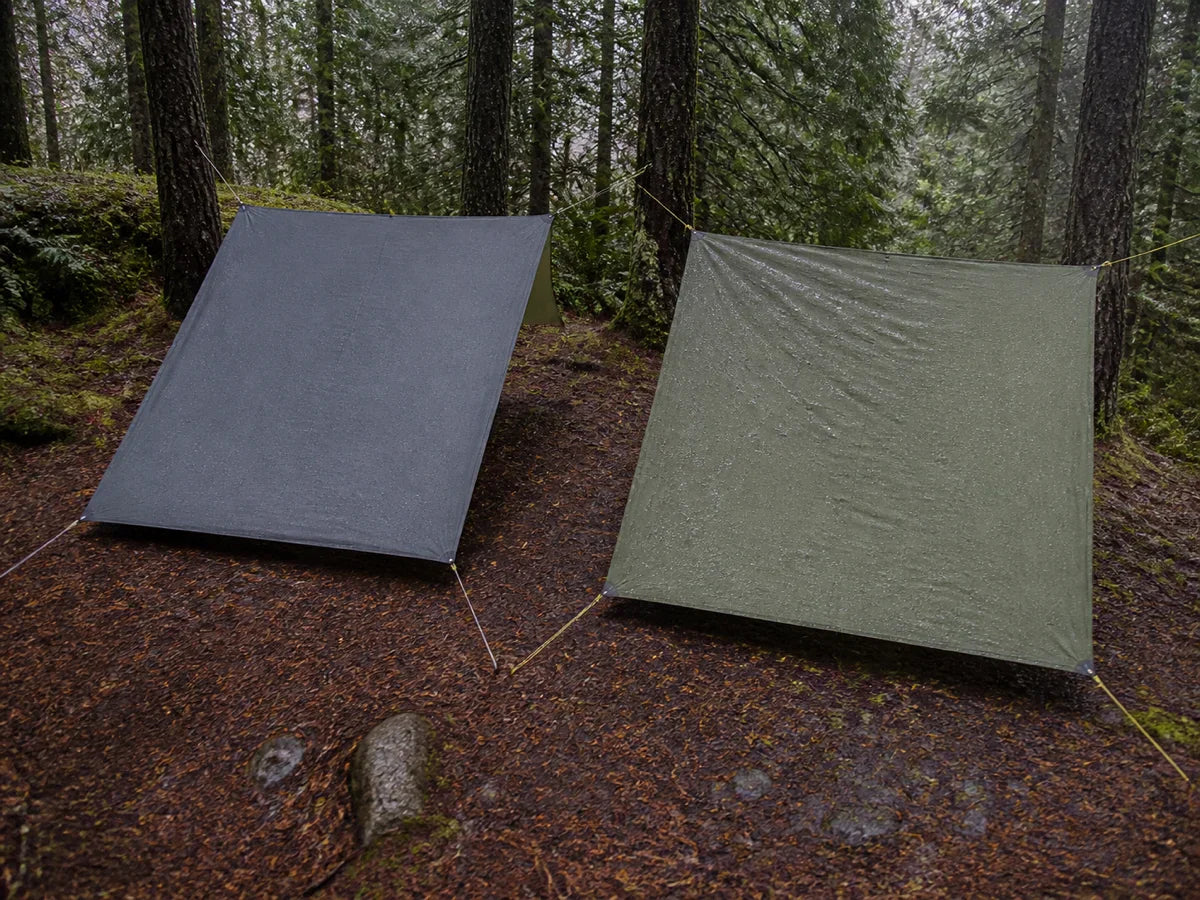
Mistake 3: Assuming One Tarp and Bug Net Covers Every Two-Person Layout

Shelter coverage is not the same as footwear management.
A tarp can cover the sleeping area and still leave shoes in splashback.
A bug net can protect the sleeper and still leave sandals open on wet leaves.
A two-person camp can double the confusion because each person has a different entry angle, shoe size, and night routine.
Do not assume one tarp edge becomes a shared closet.
Assign storage before dark.
If one person uses camp shoes and the other only loosens hiking shoes, both still need a clean boundary.
The goal is a morning where nobody grabs the wrong wet shoe or kicks dirty footwear into the sleeping area.
Mistake 4: Skipping the Backyard Movement Test

A backyard test catches problems that product pages cannot show.
Walk wet grass.
Step on gravel.
Carry a full water bottle.
Put the shoes on with cold hands.
Try the path from shelter to a bathroom or bear-storage spot.
Then leave the shoes in the planned overnight location and check them in the morning.
If they collect water, leaves, or insects in a backyard, they will not become neater in a forest camp.
This test also protects the no-shoe plan.
If you can comfortably do all camp movements in loosened hiking shoes or socks during the test, skipping camp shoes may be the smarter ultralight call.
Mistake 5: Many Camp Shoe Pages List Product Picks

Product lists are useful for narrowing models.
They are weak at deciding whether you need camp shoes at all.
A roundup can describe drainage, comfort, price, and style, but it cannot know whether your trip has wet roots, public showers, a hammock with no floor, or a shelter partner who enters from the opposite side.
Read lists after the framework, not before it.
First decide carry or skip.
Then decide shoe type.
Then decide where the dirty, wet, or buggy footwear goes overnight.
Only after those three decisions should model weight and price become the main filter.
The Quick Decision Checklist
Choose ultralight camp shoes when they solve a named job that repeats during the trip.
Skip them when they are only a comfort fantasy for a dry, short, low-movement camp.
If you carry them, make storage part of the decision from the start.
A light camp shoe can still create a messy morning if it spends the night in dew, mud, or leaf litter.
A boot sack can help keep footwear contained and separated, especially for hammock campers or tent campers who want a cleaner boundary near sleep gear.
It is still only one part of the system.
The best result is simple: shoes that match the camp job, a sleep area that stays clean, and a morning where you can put footwear on without a cold surprise.