Bivy Tent 1 Person: The Fit Test Before You Sleep Low

A 1-person bivy tent works only when your body, sleep system, airflow, boots, pack, food smells, and morning routine all fit. Use this field test before choosing a low solo shelter.
Solo camper beside a low green one-person bivy tent at sunrise after a dewy night.

A 1-person bivy tent is not judged by whether one adult can physically crawl inside.

It is judged by the morning result.

Did your quilt stay lofted and dry?

Did you have enough airflow to avoid a wet ceiling?

Did your boots, pack, food smells, and wet rain shell stay outside the sleep area without becoming a second problem?

I compared the Onewind product dimensions, REI's bivy-selection guidance, CDC tick guidance, and NPS food-storage rules for this guide.

According to REI's expert bivy guidance, people who frequently travel solo are one of the core bivy-sack user groups.

That source also reports the same tradeoff that matters here: compact weather protection can come with tight space and condensation management.

The answer is narrower than most bivy tent advice makes it sound.

A one-person bivy tent works when it solves sleep protection only.

It fails when you ask it to become a dressing room, gear closet, cooking shelter, bug-proof vestibule, and rain porch at the same time.

The safer decision is simple.

Choose a 1-person bivy tent when your body, pad, quilt, forecast, and gear routine all pass the fit test.

Choose a tarp-tent setup or roomier one-person tent when any one of those pieces fails.

What You'll Learn

Organized one-person bivy tent learning layout with pad, quilt, tarp, boots, pack, and bug protection arranged before a solo trip
Skill What You Will Be Able To Decide
Fit check Whether your pad, shoulders, footbox, and sleep position fit without wall contact
Weather check When low shelter airflow is enough and when condensation risk gets too high
Bug check How mesh, entry routine, and CDC tick guidance affect a low solo shelter
Gear staging Where boots, pack, wet rainwear, and scented items go overnight
Product path When SoloVent, Solo Skyshade, or tarp coverage is the better Onewind fit
  • ✓ Use the morning-result test instead of trusting a one-person label.
  • ✓ Measure body length, pad width, sleeping-bag loft, and shoulder movement before the trip.
  • ✓ Decide when a structured bivy shelter is enough and when a larger covered workspace is smarter.
  • ✓ Keep dew, insects, ticks, scented items, and wet gear from turning a good bivy night into a bad morning.

This guide does not repeat the basic definition from what is a bivy sack.

It assumes you already know a bivy is a compact sleep shelter.

Here, the job is deciding whether the 1-person version will work for your body and your morning.

Quick Answer

Solo camper choosing between a compact bivy tent, tarp-tent shelter, and tarp coverage on a clean trailhead gear layout
Your Situation Best Move Why
One dry-to-mixed overnight, late arrival, small legal site Choose a structured 1-person bivy tent Tiny footprint and fast sleep setup matter most
Heavy dew, bugs, damp grass, short trip Choose bivy tent plus strict staging routine Mesh and airflow help, but boots and pack still need a plan
Rain likely while changing layers or sorting gear Add tarp coverage or choose Solo Skyshade The problem is workspace, not only sleep protection
Multiple wet nights or long storm wait Choose a roomier one-person tent or tarp-tent Moisture and gear tasks compound
First bivy trip or claustrophobia unknown Practice in the yard first Tight shelters are not learned well at midnight

A 1-person bivy tent is a good answer when you only need protected sleep.

It is a weak answer when you need protected camp life.

The distinction matters because the shelter can protect your quilt while still leaving your boots soaked in dew.

It can block insects at the mesh while your food bag sits too close to your head.

It can keep rain off the shell while condensation wets the inside if you close every vent.

Use this rule first.

If the problem is sleeping, a bivy tent can win.

If the problem is working, changing, cooking, sorting, or waiting, add a tarp or move up in shelter size.

The Decision Framework

TO BIVY OR NOT TO BIVY? Outdoor Research Stargazer Bivy

Solo camper laying out a one-person bivy tent, tarp, boots, pack, and quilt before choosing the right sleep-first shelter
If This Is True Choose Avoid
You fit without quilt or footbox wall contact 1-person bivy tent Oversized tent just for one short night
You expect dew but not long rain Bivy tent plus vent and gear plan Fully closing every vent
You need covered entry and dry boot storage Bivy plus tarp Forcing wet gear into the sleep shell
You need to sit up and change layers inside Solo Skyshade or one-person tent Low bivy-only setup
Food smells or wildlife rules require separation Bear canister or approved storage away from shelter Food, trash, toiletries, or bug spray in the bivy

I use four tests before I recommend a 1-person bivy tent.

The first test is body fit.

The second test is insulation clearance.

The third test is weather and airflow.

The fourth test is the outside-the-shell routine.

REI describes bivy shelters as low-rise shelters that can block bugs and rain, but also notes that tight space and condensation can become real drawbacks.

The same expert article says full-length zippers and overlapping openings can give more ventilation options.

That matches the field logic.

The bivy can be excellent at one job and poor at another.

For a one-night solo route, the low footprint can be the whole reason to carry it.

For a rainy base camp, the same low shelter can feel like the wrong tool in the first hour.

Fit Test 1: Measure the Sleep System, Not the Label

Top-down campsite fit test showing a camper, sleeping pad, quilt loft, shoulders, and footbox inside a low one-person bivy tent
Item to Check Pass Condition Fail Signal
Body length Head and feet do not press the shell Footbox touches fabric when lying flat
Pad width Pad lies flat without curling sidewalls Pad lifts fabric or blocks mesh
Quilt or bag loft Loft stays uncompressed at shoulders and feet Insulation presses into wet wall
Turn room You can roll from back to side Elbow or knee collapses the sidewall
Exit path Zipper opens without dragging wet fabric inside You have to crawl through damp gear

A one-person label only tells you the design target.

It does not tell you whether your winter bag, wide pad, pillow, knees, and elbows fit together.

The Onewind SoloVent listing gives a concrete number to start with: 82.7 inches long, 23.6 inches wide, and 39.4 inches high.

I compared that listed length against a standard 72 inch sleeping pad and a puffy footbox before writing the fit rule.

The data point that matters is not only body length.

Those numbers make it a sleep-first shelter.

They do not make it a gear room.

I would test it at home with the exact pad and quilt I plan to carry.

Lie down.

Zip or close the shelter to the same level you would use in rain.

Roll to one side.

Flex both knees.

Point your toes.

If your footbox or shoulders push hard into the wall, you have not passed the fit test.

That pressure matters because a waterproof shell can still collect condensation inside.

Touching that inner wall is how a dry bag becomes a damp bag.

Fit Test 2: Airflow Is Part of Fit

Low one-person bivy tent with mesh vent open at dusk and visible airflow path above a dry quilt
Setup Choice What It Helps What to Watch
Mesh door partly open under cover Breath moisture escape Wind-blown drizzle
Foot vent aligned with breeze Crossflow Splash from low ground
Head end slightly raised Face comfort Pitch tension
Quilt kept off walls Dry insulation Narrow pad or restless sleep
Microfiber towel packed Morning wipe-down Treat as backup, not the main plan

Airflow is not a luxury in a low shelter.

It is part of the shelter's capacity.

REI describes condensation as a potential bivy factor because a bivy behaves much like a single-wall shelter.

That expert warning is why I treat vent space as part of the fit measurement.

That is why I do not count a bivy as "fitting" until the sleeper can fit while leaving the venting path open.

The bad version is easy to picture.

Rain starts.

The camper closes everything.

Breath and body moisture stay inside.

The quilt footbox touches the wall.

The morning problem looks like a leak, but the source was often inside the shelter.

A one-person bivy tent should let you keep some protected airflow in the expected weather.

If you cannot do that, the trip is asking for a different shelter system.

Fit Test 3: The Morning Surprise Test

Morning one-person bivy tent scene with dew on grass, dry boots under cover, pack staged away, and camper checking the entry calmly
Morning Surprise Prevent It Before Sleep
Wet boots Put boots under tarp edge, pack cover, or upside-down cover
Crawling insects Close mesh before cooking, keep entry clear, treat clothing where appropriate
Tick exposure Avoid tall grass and brushy edges, follow CDC repellent guidance
Food smell near head Store food, trash, toiletries, sunscreen, fuel, and repellent by local rules
Panic exit Keep headlamp and shoes reachable but outside the sleep fabric

This is the section most product pages skip.

The sleep shell is only one part of the night.

Your boots still exist.

Your backpack still exists.

Your wet rain shell still exists.

Your snack wrapper still exists.

CDC guidance says ticks live in grassy, brushy, and wooded areas, and it recommends treating boots, clothing, and camping gear with 0.5% permethrin where appropriate.

That CDC data changes where I would pitch a low shelter in bug season.

NPS bear guidance is even more direct about scented items.

Food, garbage, toiletries, sunscreen, bug repellent, and fuel can all count as food to wildlife.

That does not mean every bivy site is bear country.

It means a low solo shelter should never make you lazy with smells.

The morning test is blunt.

Can you wake up, unzip, put on dry footwear, grab your light, and pack without finding soaked boots, ants in the food bag, or a damp quilt?

If not, the shelter setup is incomplete.

What To Do With Boots, Pack, and Food Smells

Organized low bivy campsite showing boots under a tarp edge, pack covered, food storage away from the sleep area, and headlamp at entry
Item Best Overnight Location Why
Boots Under tarp edge, pack cover, or dedicated boot cover Keeps dew and insects out
Backpack Pack liner closed, pack cover on, away from splash Keeps sleep shell uncluttered
Wet rain shell Outside sleep insulation, under cover Avoids moving water into the bivy
Food and trash Approved storage away from shelter Follows wildlife rules and reduces odor risk
Bug repellent and sunscreen With scented items unless local rules differ NPS treats scented products as food-like attractants

A low bivy tent tempts people to solve gear storage by pulling gear inside.

That is usually the wrong answer.

Inside space is for the sleeper, pad, quilt, and a few small dry items.

Everything else needs a routine.

I keep headlamp, glasses, and phone in the same tiny dry spot every night.

I keep footwear reachable but outside the sleep fabric.

I keep food and scented items out of the bivy completely.

Leave No Trace guidance also says to pack out trash, leftover food, and litter.

That report-style rule matters because a low solo shelter has no vestibule to hide trash or wrappers.

That matters more in a bivy setup because there is no vestibule to hide sloppy habits.

The cleaner the outside routine, the calmer the morning.

When SoloVent Makes Sense

Structured low green one-person bivy tent pitched on drained ground with mesh head clearance, dry quilt, and compact solo pack nearby
SoloVent Detail What It Means for the Decision
82.7 in length Works for many solo sleepers, but tall sleepers must test footbox clearance
23.6 in width Sleep-first width, not gear-storage width
39.4 in height Better head clearance than a flat bivy sack
37 oz listed weight Strong fit for compact solo travel
3000mm canopy and 5000mm floor Weather protection still needs venting and site choice
Insect-proof mesh Useful when bug pressure is part of the trip

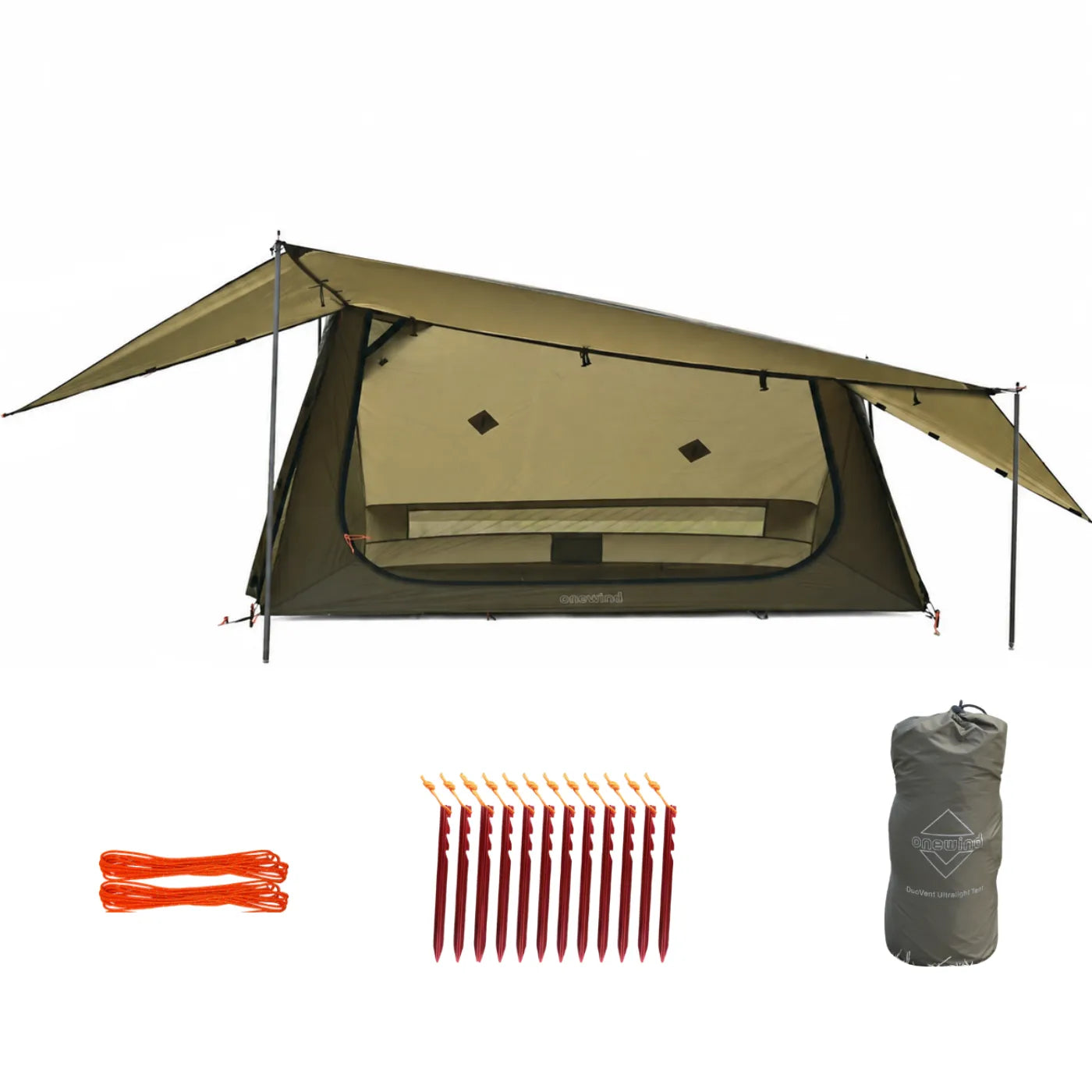
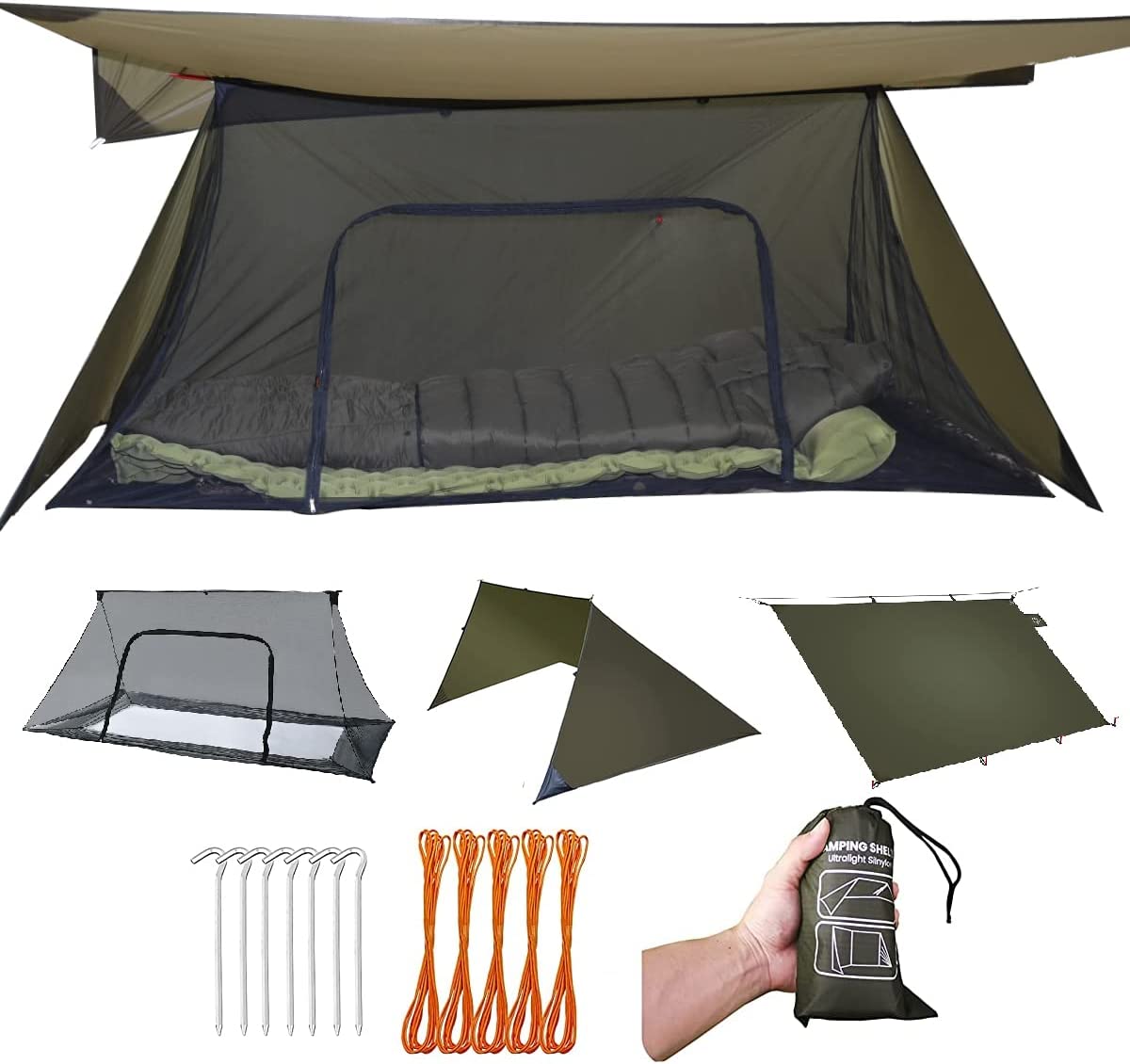
The Ultralight SoloVent Bivy Tent makes sense when the reader wants a structured bivy shelter rather than a flat sack.

The product page lists it as a 1-person, 3-season shelter with a 37 oz weight and no trekking pole requirement.

Those product data points are why I separate fast-travel use from long-rain camp use.

Those details matter for late arrivals and bikepacking stops.

You can pitch a low shelter without depending on a trekking pole already being in your kit.

The 39.4 inch listed height matters because face clearance changes comfort.

It does not remove the need to test the narrow width.

My recommendation is to treat SoloVent as a strong compact-sleep option.

Do not treat it as a tiny version of a full tent room.

When Solo Skyshade or a 12 Ft Tarp Makes More Sense

Roomier one-person tarp-tent shelter beside a separate 12 ft tarp creating a dry entry zone for boots and pack
Problem Better Move Internal Link
Need more shoulder and gear space Solo Skyshade Tartent Solo Skyshade Tartent
Need covered entry for boots and pack Add tarp coverage 12 ft silnylon tarp
Need bug-protected sleep but not big living space SoloVent Ultralight SoloVent Bivy Tent
Need a broader shelter shelf Browse shelter collection Shelter collection

The Solo Skyshade Tartent is the better path when the camper still wants one-person simplicity but needs more room.

Onewind lists it at 90.5 inches long and 35.5 inches wide tapering to 27.5 inches.

The listed data also gives a useful weight comparison: 1230g for fabric only and 1400g with poles.

That is a different comfort profile than a narrow bivy tent.

It also weighs more at 1230g fabric only or 1400g with poles.

That tradeoff is easy to defend when rain chores matter.

The 12 ft silnylon tarp solves a different problem.

It gives the low bivy setup a dry working edge.

That edge can protect boots, pack, rain shell, and the entry routine.

If the sleep shell fits but the outside routine does not, a tarp may be the cleanest fix.

Scenario 1: Solo Backpacker on a One-Night Route

Solo backpacker comparing a compact bivy tent and a roomier one-person shelter before a short overnight route
Variable Green Light Red Light
Trip length One night Several wet nights
Forecast Dry, cool, or light mixed weather Sustained rain
Camp arrival Late but simple Long camp hangout
Gear load Minimal solo pack Bulky winter kit
Comfort need Sleep only Sit-up living room

This is the cleanest 1-person bivy tent use case.

The camper walks all day, reaches a small legal site late, eats away from the sleep spot, and needs a fast protected bed.

I would choose a structured bivy tent here if the fit test passes.

The low footprint is a real advantage.

The setup is not trying to become a lounge.

The biggest risk is overpacking the sleep area.

Keep the pack covered outside.

Keep scented items stored by local rules.

Keep the vent path open enough for the conditions.

Verdict: choose a 1-person bivy tent when the trip is one short sleep stop, not a camp hangout.

Scenario 2: Bikepacker or Fast Hiker Reaching Camp Late

Bikepacker pitching a compact one-person bivy tent beside a gravel bike at dusk with no trekking pole in use
Need Why the Bivy Tent Helps Watchout
Fast pitch Fewer parts at dusk Still stake it cleanly
Small site Fits on compact durable ground Avoid low drainage pockets
No trekking poles Useful for riders Check included pole structure
Low profile Less wind exposure than tall shelter Less interior room
Simple pack Smaller packed shelter Gear cover still needed

Bikepackers and fast hikers often care more about a tiny footprint than a big interior.

The SoloVent product page says no trekking pole is required.

That matters when the camper rides instead of hikes.

I would still do the same daylight rehearsal.

Pitch it once before the trip.

Find the head end and foot end.

Practice getting in without dragging wet shoes across the quilt.

Set the pack where you can reach essentials without sleeping on top of them.

This setup rewards consistency.

It punishes improvisation after dark.

Verdict: choose a 1-person bivy tent for late fast travel if you can pitch, vent, and stage gear from memory.

Scenario 3: Dew, Bugs, and Damp Grass

How to Stay Bug Free When Cowboy Camping, Using a Bivvy, Under a Tarp, in a Tent, Etc

One-person bivy tent in a grassy campsite at sunrise with dew outside, mesh closed, and boots protected under a small tarp edge
Risk Bivy Tent Response Extra Step
Dew on shell Waterproof fabric helps Vent before sleep
Bugs at dusk Mesh barrier helps Close entry before cooking
Ticks in grass Site choice matters Follow CDC repellent and check guidance
Wet shoes Bivy does not solve it Use tarp edge or boot cover
Damp pack Bivy does not solve it Use pack liner and cover

This is the trip where a bivy tent can look perfect at sunset and still create a bad morning.

The shell may be fine.

The mesh may be fine.

The problem is everything outside the shell.

CDC recommends avoiding brushy areas with high grass and leaf litter when reducing tick exposure.

I treat that as safety data, not a comfort preference.

That advice changes site choice for a low sleeper.

Do not pitch in the prettiest grass if a durable, drained, shorter-surface site is nearby and legal.

Close the mesh before bugs peak at dusk.

Keep boots covered.

Keep wet layers out of the quilt.

This is also where a tarp edge earns its weight.

Verdict: choose the bivy tent only with a dew-and-bug staging routine, and add tarp coverage when boots or pack cannot stay dry.

Scenario 4: First Bivy Trip or Claustrophobia Unknown

Beginner testing a one-person bivy tent in a backyard with pad, quilt, headlamp, and boots staged exactly like a real trip
Backyard Test Pass Standard
20 minutes lying still No rising panic or face-fabric discomfort
Side roll Shoulders and knees do not collapse walls
Full zipper routine You can open and exit without snagging
Simulated rain mode Vents stay partly usable
Gear staging Boots, light, and pack have repeatable positions

REI warns that tight bivy space can feel uncomfortable for some campers.

That expert warning is the reason I prefer a backyard test over guessing.

I take that warning seriously.

A bivy tent can look rational on a spreadsheet and feel wrong after ten minutes zipped in.

The fix is cheap.

Test it before the trip.

Use the actual pad.

Use the actual quilt.

Use the actual pillow.

Put boots where you plan to put them.

Turn off the lights.

Stay inside for at least 20 minutes.

If you feel trapped, do not force the first real test in rain.

Verdict: beginners should run a backyard sleep-system test before choosing a bivy tent as primary shelter.

Common Mistakes With a 1-Person Bivy Tent

Overhead campsite mistake map showing a low bivy tent with closed vents, boots in dew, food near head, and pack blocking the entry
Mistake What It Usually Causes
Buying by one-person label only Quilt contact and poor sleep
Closing every vent in drizzle Condensation mistaken for a leak
Sleeping with food smells nearby Wildlife risk and rule problems
Leaving boots open in grass Wet footwear or insect surprise
Using low shelter for long-rain living Frustration and wet gear

Most bivy tent failures start before the trip.

The camper buys the category instead of testing the use case.

The spec sheet says one person.

The campsite says something else.

The mistakes below are the ones I would fix before buying more gear.

Mistake 1: Treating Waterproof as Condensation-Proof

Camper wiping condensation from the inside of a low bivy tent while the outside shell sheds dew at sunrise
Assumption Better Test
Waterproof shell means dry inside Can I vent in the expected rain?
Higher rating solves all moisture Does my quilt touch the wall?
Closed shelter is safer Is breath moisture trapped?
Wet inside means fabric failed Check condensation and wall contact first

A waterproof shell blocks outside water.

It does not delete the moisture from your breath.

REI's bivy guidance explains that condensation can collect on treated bivy fabric.

That is the reason fit and airflow belong in the same decision.

If the quilt touches the wall, the shell can be doing its job and still make the sleep system feel wet.

Do not judge the setup only after the bad night.

Test the venting mode before the trip.

Pack a small towel for morning wipe-down.

Use the towel as backup, not permission to close every vent.

Mistake 2: Using the Bivy as a Gear Closet

Compact bivy tent with too much gear crowding the entry beside a cleaner setup with pack and boots staged under cover
Gear Should It Sleep Inside? Why
Quilt and pad Yes Core sleep system
Headlamp and phone Maybe, in a tiny dry pocket Fast exit and navigation
Boots No Moisture, dirt, insects
Wet rain shell No Moves water into insulation
Food and trash No Wildlife and odor rules

The easiest way to make a one-person bivy tent feel too small is to put two systems inside it.

Your body is one system.

Your pack is another.

The bivy is built for the first system.

It is not built for both.

NPS food-storage guidance says not to store food in your tent or backpack in bear areas and to secure scented items immediately.

NPS also reports that bears can treat toiletries, sunscreen, bug repellent, fuel, and trash as food-like attractants.

Even outside bear country, that rule is a useful discipline.

Keep smells away from sleep.

Keep wet gear away from insulation.

Keep the entry clear.

Mistake 3: Ignoring Site Drainage

Low bivy tent moved from a damp grass hollow to raised durable ground with water draining away after rain
Site Feature Green Light Red Light
Ground shape Slightly raised and flat Bowl, rut, or puddle path
Vegetation Durable sparse surface Tall grass or heavy leaf litter
Wind Light airflow possible Dead still hollow
Water Away from runoff Below slope or near wash
Exit Clear step-out area Brush against zipper side

Low shelters live close to the ground.

That makes site choice more important, not less.

A tent with a bigger footprint can sometimes forgive a mediocre patch.

A bivy tent has less margin.

I look for drained durable ground before I think about views.

I avoid low grass when tick pressure is part of the season.

I avoid leaf-litter pockets when rain is possible.

I also avoid pitching with the zipper side pushed into brush.

The first exit of the morning should be boring.

That is the point.

Mistake 4: Choosing SoloVent When You Really Need Solo Skyshade

Camper comparing a narrow bivy tent with a roomier Solo Skyshade style tarp-tent layout before a rainy solo trip
Need SoloVent Bivy Tent Solo Skyshade Tartent
Lowest sleep footprint Stronger fit Larger than needed
More shoulder and gear room Limited Stronger fit
Rainy clothing changes Weak Better
No trekking pole dependency Strong Uses included poles
Short overnight Strong Good but heavier

This is not a product ranking.

It is a job match.

The Ultralight SoloVent Bivy Tent is the compact sleep-first answer.

The Solo Skyshade Tartent is the roomier single-person answer.

The Skyshade dimensions give more width and length, but the listed weight also goes up.

That tradeoff is worth it when the trip includes rain chores, gear sorting, or a beginner who needs more personal space.

Choose the shelter that matches the job.

Do not make the smaller shelter apologize for not being the bigger one.

Mistake 5: Forgetting the Fast Exit

Night bivy tent entry with shoes placed for quick step-out, headlamp clipped near zipper, and clear path away from brush
Exit Item Where It Belongs
Headlamp Same side as zipper, reachable by touch
Shoes Protected and toe-open away from rain splash
Glasses Small dry pocket or hard case
Knife or repair item Legal, safe, and reachable if normally carried
Pack strap Not across the zipper path

A low shelter should not feel like a trap.

That is part comfort and part layout.

Put the headlamp in the same place every time.

Put footwear where your hand finds it without searching through wet grass.

Keep the zipper path clear.

Keep guylines out of the first step if you can.

This is not fear-based camping.

It is basic night ergonomics.

The first ten seconds after waking should not require solving a puzzle.

The Quick Decision Checklist

Solo camper reviewing final bivy tent checklist at dusk with shelter, tarp, boots, pack, and food storage already staged
Check Pass Means If It Fails
✓ Length No head or foot pressure Choose a longer shelter
✓ Width Pad and shoulders do not collapse walls Choose roomier shelter
✓ Loft Quilt stays off fabric Change pad, bag, or shelter
✓ Airflow Venting works in forecast Add tarp or choose tent
✓ Boots Protected outside sleep shell Add tarp edge or cover
✓ Pack Covered and not blocking exit Re-stage or upsize
✓ Food smells Stored by local rules Fix before sleep
✓ Bugs and ticks Mesh, site, and repellent plan ready Move site or add protection

Use this checklist before buying and before pitching.

The first four rows decide whether the shelter fits.

The last four rows decide whether the morning works.

I would choose the Ultralight SoloVent Bivy Tent when the checklist passes and the trip is short, solo, and sleep-focused.

I would choose the Solo Skyshade Tartent when the camper wants one-person simplicity with more room.

I would add the 12 ft silnylon tarp when the bivy fits but the entry and gear routine need cover.

For a broader shelter comparison, use the bivy vs tent guide and the existing bivy tent guide.

The final answer is not "bivy tents are good" or "bivy tents are too small."

The final answer is conditional.

If you pass the fit test and morning surprise test, a 1-person bivy tent can be a sharp solo shelter.

If you fail either test, choose more covered space before the trip teaches the lesson at 5 a.m.

Frequently Asked Questions

It is big enough when your body, pad, quilt loft, shoulders, and footbox fit without pressing the walls. According to the SoloVent product data, the compact fit starts from 82.7 inches of length and 23.6 inches of width, so wide pads and bulky quilts need a home test.

Usually no. A 1-person bivy tent is a sleep-first shelter. Using the SoloVent width data of 23.6 inches, the interior is better reserved for your pad, quilt, and a few small dry items.

You need a tarp when rain entry, boots, pack storage, or cooking protection matter. According to the article framework, if the bivy fits your sleep system but not your gear routine, tarp coverage solves more than a larger bivy shell.

Keep protected airflow open, avoid low damp hollows, keep quilt loft away from the walls, and do not fully seal the shelter unless weather forces it. REI's bivy guidance reports condensation as a possible factor in low single-wall shelters.

SoloVent is the compact low-footprint bivy-tent path at 82.7 inches long and 23.6 inches wide. Solo Skyshade is better when you want more one-person room, with listed dimensions of 90.5 inches long and 35.5 inches wide tapering to 27.5 inches.

Keep boots protected outside the sleep fabric under a tarp edge, boot cover, or pack cover. NPS food-storage guidance treats food, trash, toiletries, sunscreen, fuel, and repellents as scented items that should be stored according to local wildlife rules.

Choose your one-person shelter path

솔로 스카이쉐이드 타르텐트

솔로 스카이쉐이드 타르텐트

4 reviews
Rs. 17,300.00 Rs. 18,400.00
Shop Now →

Continue Exploring

Related Articles

Solo camper beside a waterproof bivy-style shelter after rain at sunrise.

Waterproof Bivy Sack: How to Stay Dry Without Trapping Condensation

Solo camper beside a low structured bivy sack tent at sunrise.

Bivy Sack Tent: The Hybrid Shelter Explained

Related Products

Sold out
DuoVent Ultralight Tent ((Pre-Order – Ships in 15 Days)) DuoVent Ultralight Tent ((Pre-Order – Ships in 15 Days))
Summit Solo Teepee Hot Tent with Stove Jack Summit Solo Teepee Hot Tent with Stove Jack
Summit Solo Teepee Hot Tent with Stove Jack
Sale priceRs. 23,100.00 INR
2 reviews
Save 12%
Camping Shelter for Sale | Onewind Outdoors Camping Shelter | Onewind Outdoors
초경량 생존 쉘터 세트---모듈형 텐트
Sale priceRs. 9,200.00 INR Regular priceRs. 10,400.00 INR
1 review
네뷸라 12' 육각형 타프 해먹 비 오는 날 방수 천 네뷸라 12' 육각형 타프 해먹 비 오는 날 방수 천

Leave a comment

All comments are moderated before being published.

이 사이트는 hCaptcha에 의해 보호되며, hCaptcha의 개인 정보 보호 정책 서비스 약관 이 적용됩니다.

Free & Fast Shipping

We Offer Free & Fast Shipping Worldwide over 199$