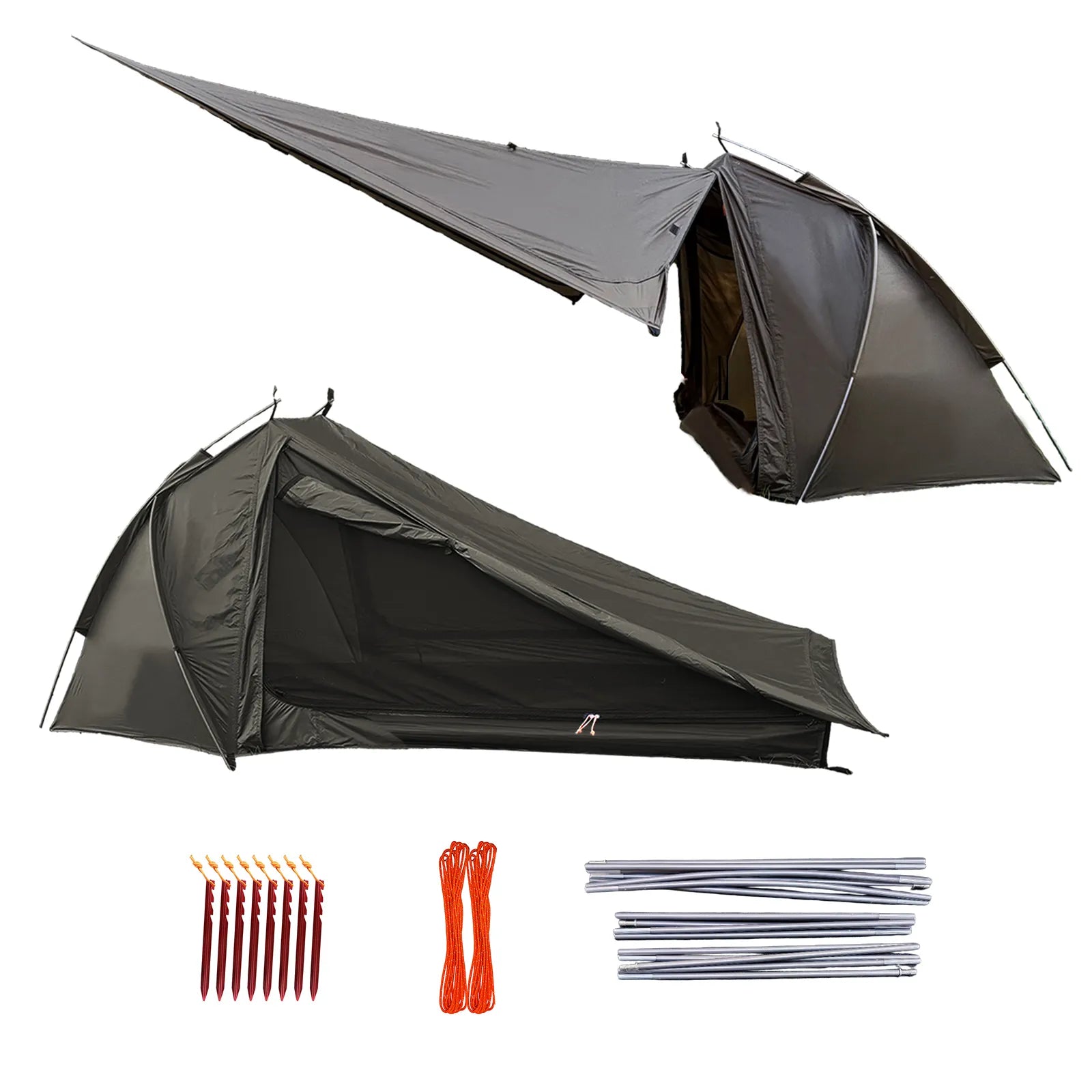

Ho confrontato la scelta comune del telo antipioggia per amaca da 10', 11' e 12' con i problemi pratici che continuano a emergere nelle guide di montaggio e nei forum sull’amaca: estremità dell’amaca bagnate, pioggia spinta dal vento, schizzi di ritorno, modalità veranda che non può abbassarsi rapidamente e sospensione che convoglia l’acqua sotto un telo perfettamente impermeabile.
Il motivo utile non era un numero impermeabile più grande.
Era una copertura.
La scelta con minor rimpianto è derivata dal chiedersi dove può arrivare la pioggia quando l’amaca è carica: il corpo dell’amaca, le estremità raccolte, la sospensione, l’apertura laterale e la zona di schizzi a terra.
Per la maggior parte dei campeggiatori in amaca da 10' a 11', il punto di partenza sicuro è un telo antipioggia con una vera sporgenza alle estremità, un angolo laterale che possa chiudersi in caso di maltempo e un montaggio che si possa modificare prima che la tempesta raggiunga il campo.
Il tessuto impermeabile è ancora importante, ma lo è solo dopo che il telo è מספיק grande e abbastanza basso da tenere la pioggia lontana dal sistema di riposo.
Cosa imparerai
- ✓ Saprai perché un telo antipioggia può risultare impermeabile e comunque lasciare bagnate le estremità dell’amaca.
- ✓ Riceverai un semplice controllo della copertura in 5 passaggi prima di acquistare o ripiegare un telo.
- ✓ Vedrai quattro scenari di viaggio che trasformano lo stesso tarp nella scelta giusta o in quella sbagliata.
- ✓ Saprai come considerare la modalità veranda come un’impostazione di comfort, non come una promessa contro la tempesta.
- ✓ Uscirai con una checklist che puoi eseguire al punto di partenza del sentiero in meno di 5 minuti.
Risposta rapida
Se usi un'amaca da 11' e desideri un unico telo antipioggia per normali uscite bagnate, inizia con un telo da 12', a meno che il peso dello zaino non abbia un limite massimo rigido.
Se prevedi pioggia spinta dal vento, non affrontarla affidandoti solo al grado di impermeabilità.
Scegli una chiusura laterale maggiore, una linea di colmo più bassa, una migliore scelta del sito oppure un telo con porte.
Se desideri una veranda da usare come soggiorno, trattala come una soluzione temporanea per il bel tempo.
La veranda dovrebbe calare rapidamente perché la pioggia raramente si preoccupa della tua prima foto dell’allestimento.
Il quadro decisionale
Come montare un telo antipioggia per amaca
Inizia con la lunghezza dell’amaca.
Un telo antipioggia che sulla carta coincide appena con la lunghezza dell’amaca può risultare insufficiente una volta che il dormiente carica l’amaca e gli angoli della sospensione cambiano.
Per un'amaca da 11 piedi, preferirei rinunciare a qualche oncia piuttosto che svegliarmi con le estremità raccolte che si trovano sul bordo della linea di gocciolamento.
Il secondo controllo è l’angolo laterale.
Un’ampia falda del tetto dà una sensazione di spaziosità, ma lascia un’ampia apertura laterale per la pioggia obliqua.
Il terzo controllo è il percorso dell’acqua.
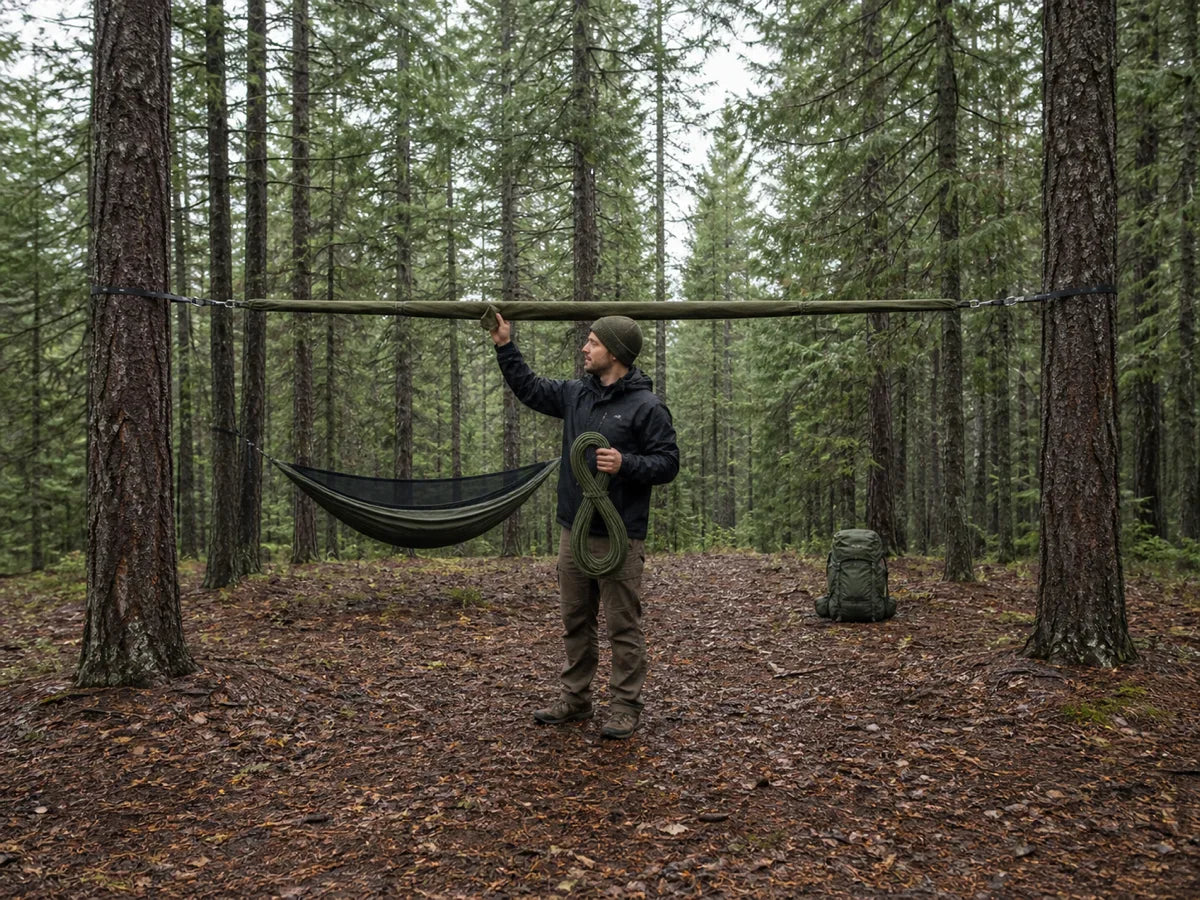
L'ordine di montaggio dell'Hennessy Hammock integra sospensione, fissaggio del telo antipioggia, picchettamento e regolazione a carico in un'unica sequenza sul campo, rispecchiando ciò che accade in campeggio: il riparo dimostra davvero il suo valore solo dopo che peso e condizioni meteorologiche lo mettono alla prova.
Il quarto controllo è il comportamento a terra.
Le linee guida Leave No Trace privilegiano superfici resistenti, quindi la soluzione migliore è una geometria migliore e una scelta del sito adeguata, non scavare il terreno né ampliare i danni per forzare un angolo perfetto del picchetto.
Secondo quel rapporto sulle superfici durevoli, il campeggio migliore è quello che consente di ottenere un piazzamento asciutto senza ampliare i danni intorno agli alberi o alla vegetazione tenera.
Il quinto controllo è la velocità.
Se abbassare il telone richiede 10 minuti di nodi e tentativi, la modalità veranda diventa un problema non appena il vento cambia.
Test di vestibilità 1: il grado di carico non è il grado di comfort
Ignora la parola “capacità” quando valuti un telo antipioggia.
La capacità si riferisce all’amaca, alle cinghie e alla ferramenta.
Il comfort sotto la pioggia appartiene all’intero sistema.
Controllo la copertura dopo che una persona è effettivamente nella amaca, perché l’assetto vuoto spesso sembra migliore dell’assetto con una persona che dorme.
L’amaca si abbassa.
Le estremità si muovono.
L'angolo di sospensione cambia.
Il telo antipioggia non estende magicamente la sua copertura per seguire quei cambiamenti.
Ecco perché le discussioni della comunità sulla dimensione del tarp per amache da 11' continuano a tornare sempre allo stesso problema: una lunghezza del tarp che sembra quasi sufficiente può risultare insufficiente una volta che entrano in gioco vento e cedimento.
Come fonte di attrito per l’utente, quei thread del forum sono utili perché mostrano lo stesso dibattito sulla taglia in un linguaggio semplice da campeggiatori, non come un test di laboratorio.
Se il sovratelo ha l’aspetto giusto solo quando l’amaca è vuota, non ha superato il test di vestibilità.
La versione verde chiaro è noiosa nel migliore dei modi.
Entrambe le estremità raccolte si collocano bene all’interno del bordo del telo, i pannelli laterali possono essere abbassati e i picchetti mantengono un angolo pulito senza rovinare il terreno fragile.
Test di adattamento 2: una disposizione diagonale non diventa due
Una tenda antipioggia per amaca protegge una forma diagonale in movimento, non un rettangolo piatto.
Questo è importante perché il dormiente non si sdraia perfettamente lungo la linea centrale.
Il corpo si sposta verso un lato.
Le spalle e i piedi creano il vero bersaglio della pioggia.
Un telone più ampio può essere utile perché copre meglio la sistemazione in diagonale, ma la larghezza non trasforma una sola corsia protetta in due corsie indipendenti per dormire.
Vedo che i principianti commettono questo errore quando acquistano un telo spazioso per una “copertura extra” e poi danno per scontato che possa coprire allo stesso modo ogni tipo di montaggio.
Non può.
La lunghezza della linea di colmo protegge le estremità.
La larghezza laterale protegge la disposizione diagonale.
L’altezza del tenda determina quanta pioggia può entrare sotto il bordo.
Se dormi profondamente in diagonale, controlla l’apertura laterale sul lato delle spalle e sul lato dei piedi prima di fidarti del montaggio.
Se due persone stanno oziando vicino al telo, chiamalo ombra o copertura da campeggio.
Non definirla una protezione antipioggia comprovata per tutta la notte finché la posizione reale per dormire non si trova all'interno del telo superiore.
Test di vestibilità 3: il meteo, gli insetti e l’isolamento devono ancora adattarsi
La protezione dalla pioggia è solo uno strato del sistema dell'amaca.
La zanzariera ha bisogno di spazio.
Il sottoquilt deve rimanere centrato.
La sospensione necessita di un rompigetto per l’acqua.
Il telo deve avere un’inclinazione laterale sufficiente a proteggere tutto questo, non solo il tessuto dell’amaca.
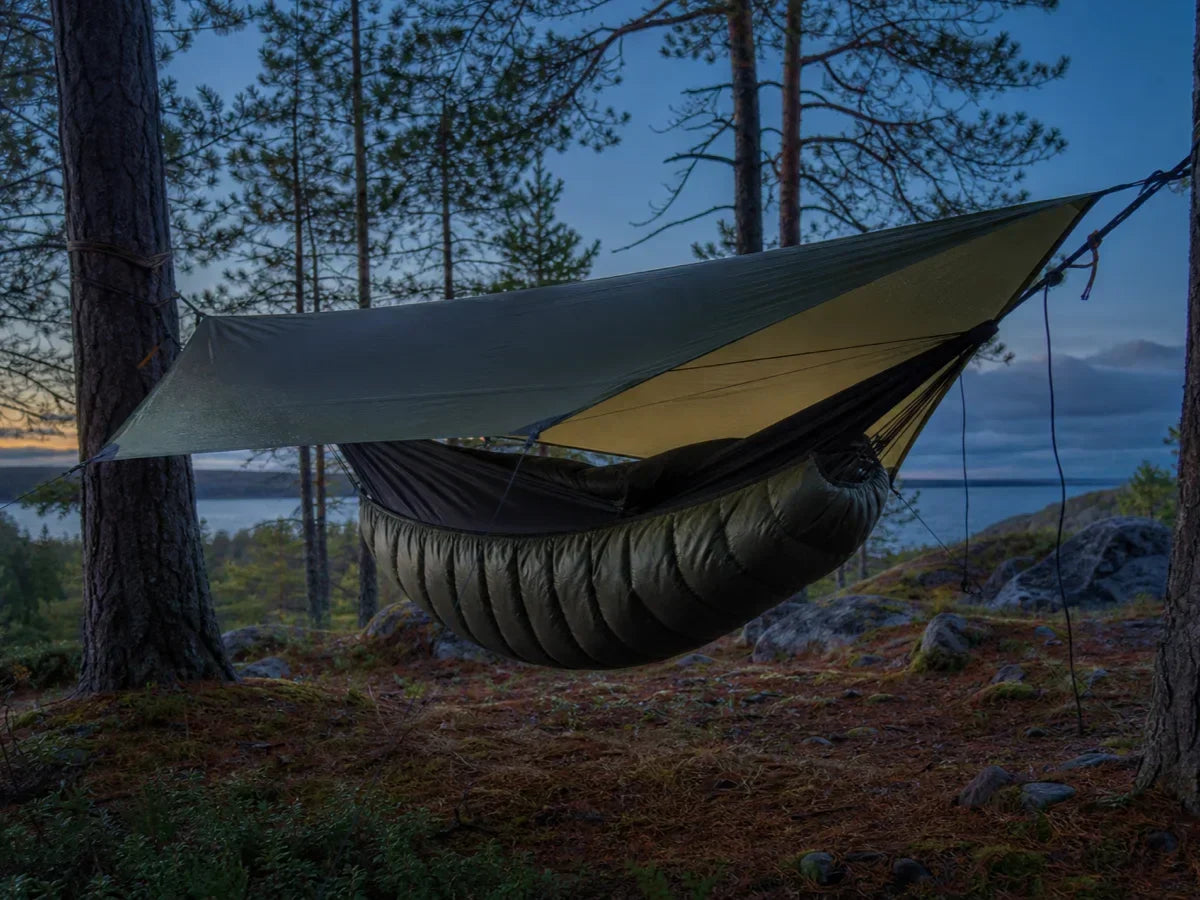
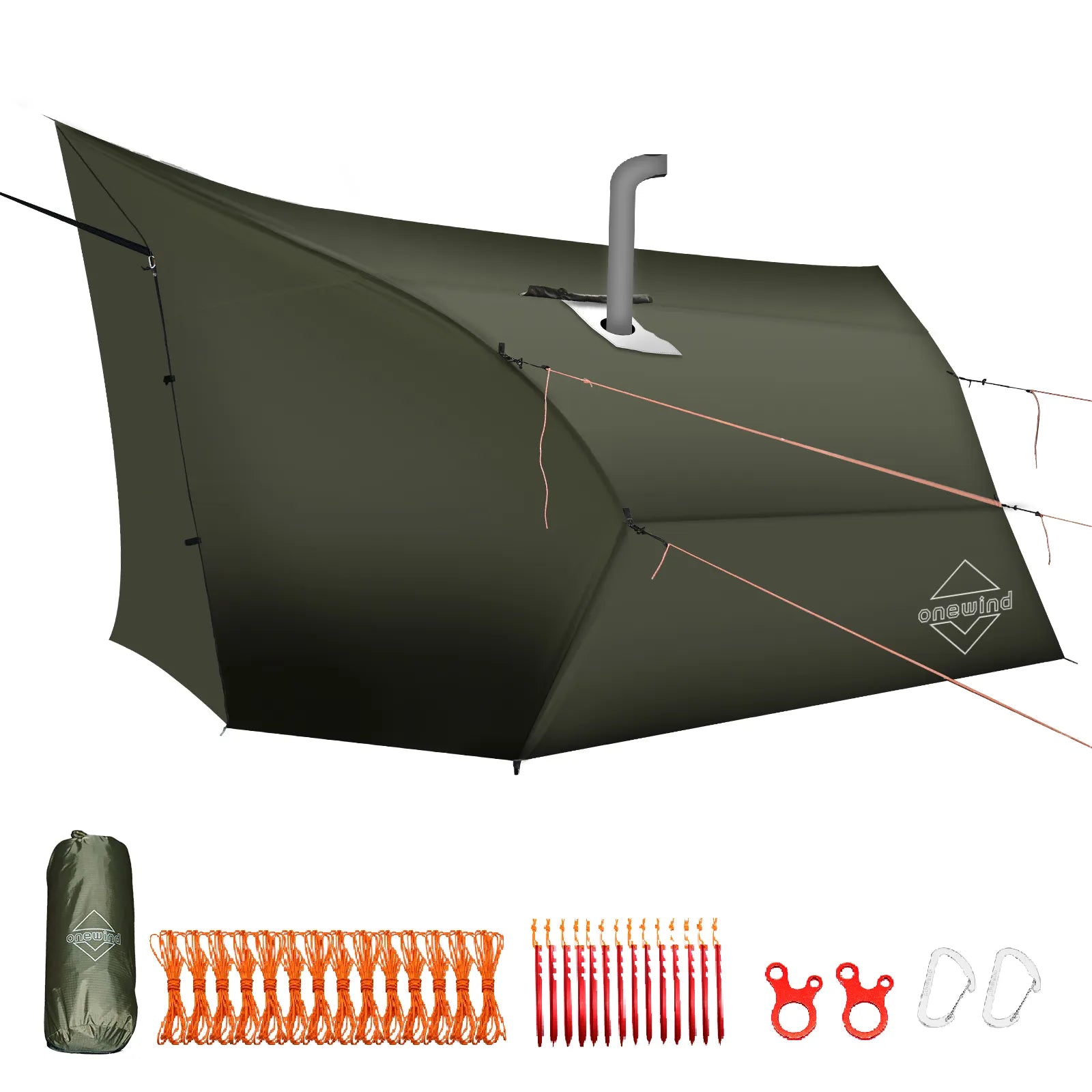
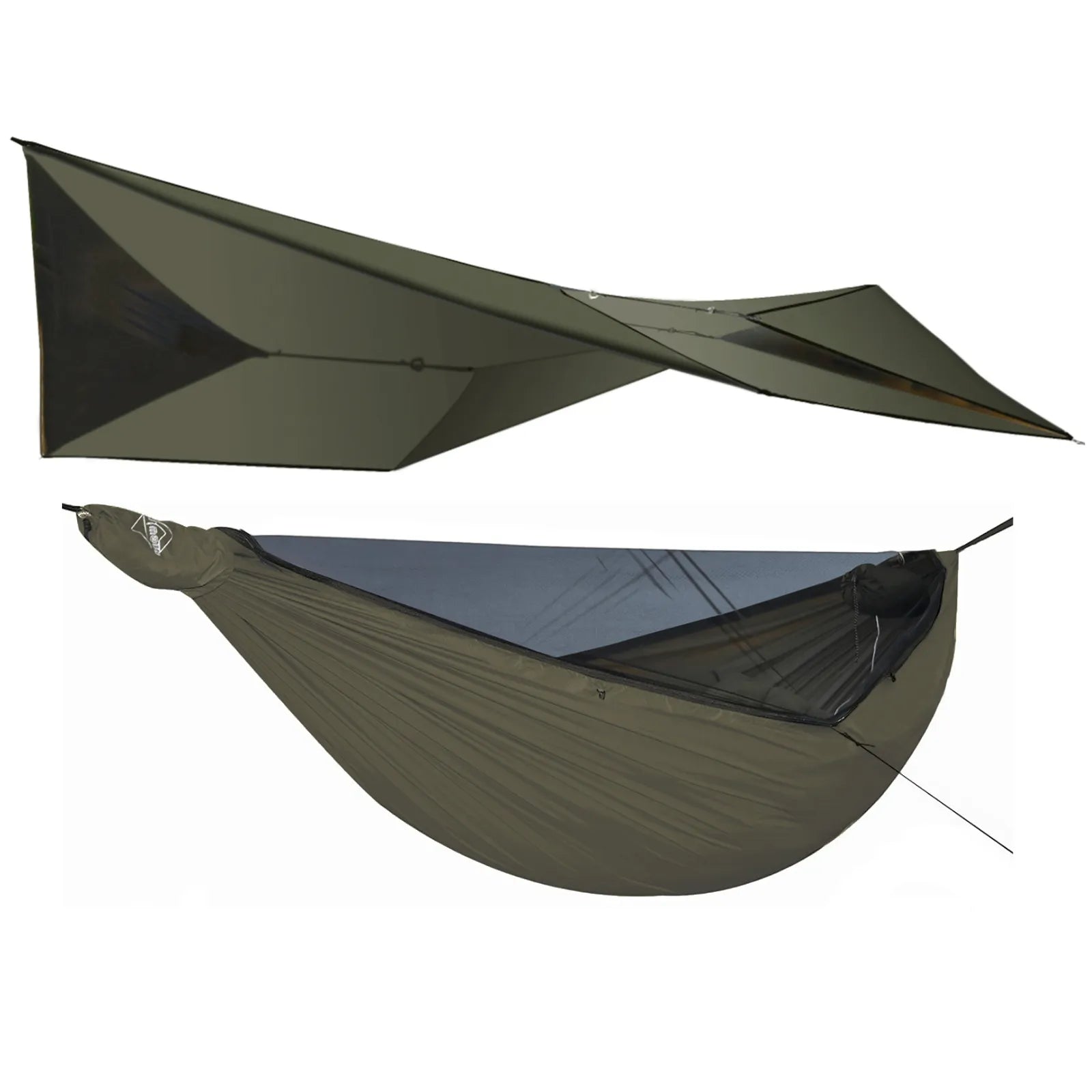
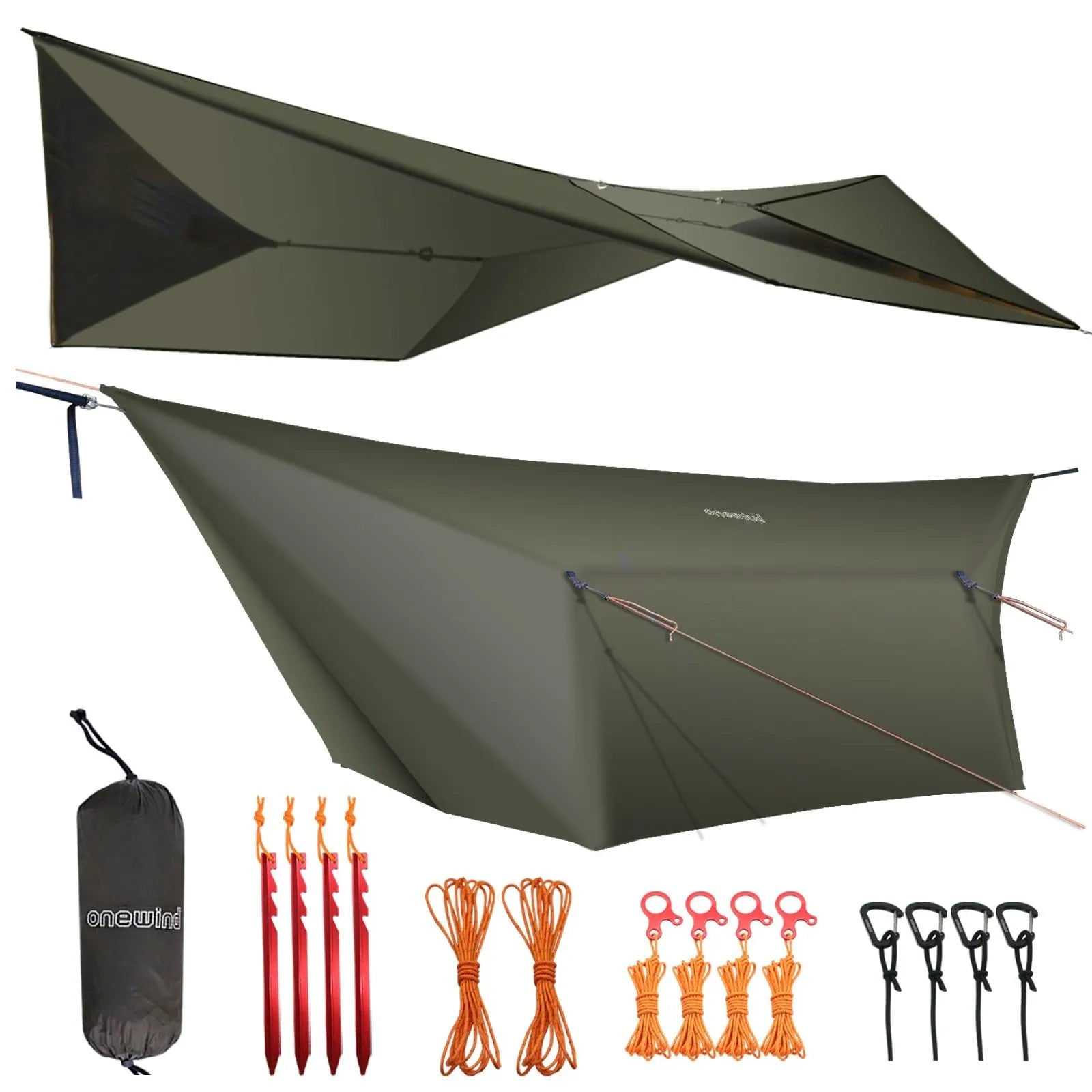
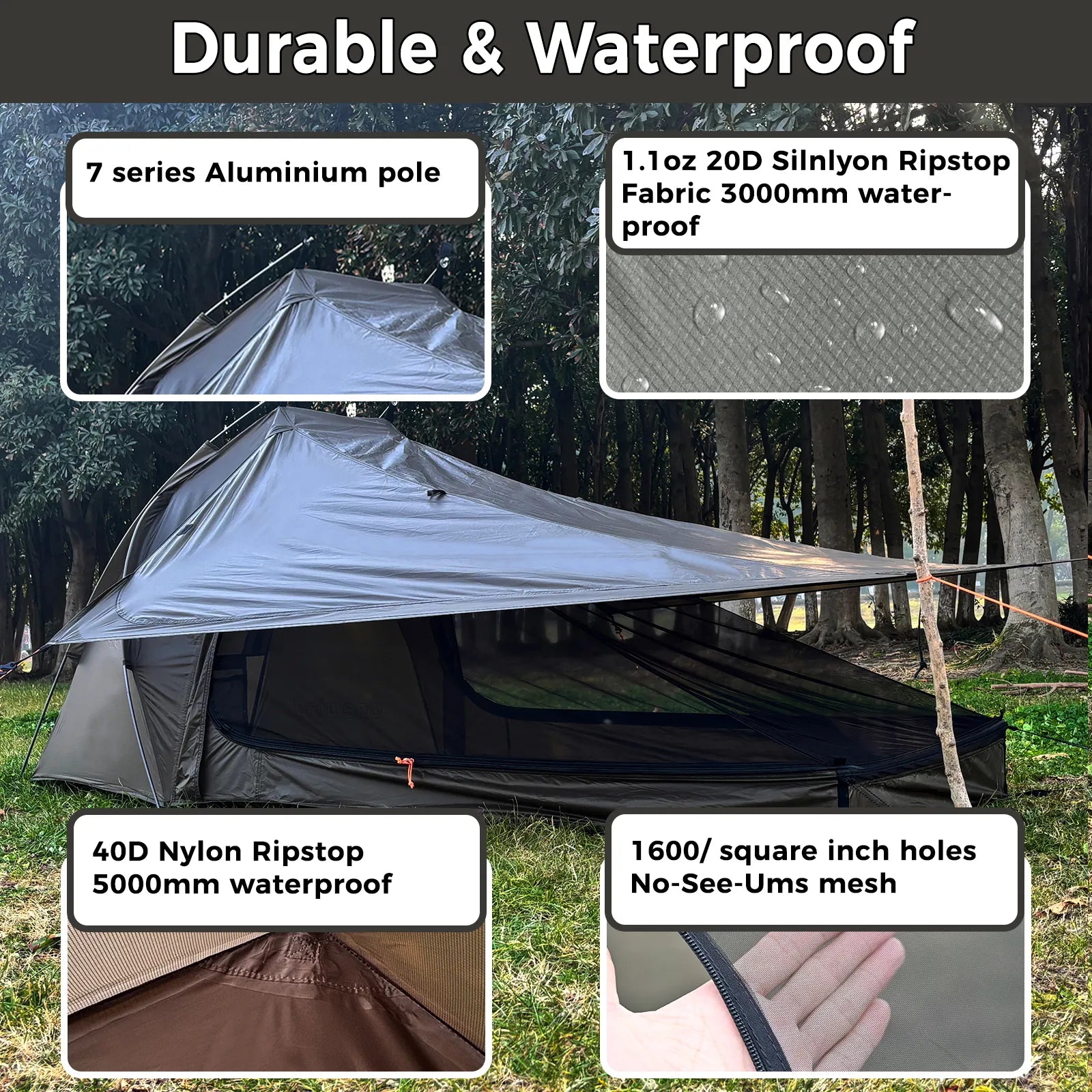
di Onewind Telo antipioggia esagonale per amaca Nebula da 12' fornisce un esempio utile della via di mezzo equilibrata: 12' x 9.7', 20D ripstop silnylon da 1,1 oz, rivestimento in silicone e PU da 4000 mm, e peso totale di 650 g / 1,43 lb con sospensione.
I dati del prodotto di Onewind elencano anche le parti del kit che influenzano la velocità di montaggio: tiranti riflettenti, picchetti in alluminio, sistemi di raccolta dei tiranti e un sacco contenitore a doppia estremità.
Quei numeri contano perché descrivono contemporaneamente la copertura e il costo di mantenimento.
Non cancellano il giudizio di configurazione.
Un telo esagonale può coprire bene molti viaggi in amaca da 10' e 11', ma non è un riparo completo con porte invernali.
Se gli insetti sono numerosi, controlla se la tua zanzariera resta ancora sospesa in modo corretto quando il telo scende più in basso.
Se il freddo è il vero rischio, verifica se il sottocoperta mantiene il volume e resta centrato dopo che sei entrato nell’amaca.
Se è probabile la pioggia, aggiungi dei rompigoccia prima che l’acqua possa seguire la sospensione verso l’interno.
Scenario 1: Principiante con un’amaca da 11' che cerca di decidere se un telo antipioggia da 10', 11' o 12' sia sufficiente.
Il rischio per i principianti è acquistare il telo antipioggia che corrisponde troppo da vicino alla lunghezza dell’amaca.
Un'amaca da 11' sotto un telo da 11' può sembrare perfetta in giardino quando il tempo è calmo.
Il problema si presenta quando l’amaca è sotto carico, la pioggia cade in diagonale e le estremità raccolte si trovano vicine al bordo.
Per un rilassamento estivo leggero, un telo superiore più corto può funzionare se la sospensione è tesa, il sito è protetto e accetti un margine minore in caso di tempesta.
Per una normale pioggia notturna, sceglierei il telo da 12'.
Quell’ulteriore margine della linea di colmo offre alle estremità più spazio prima che la pioggia le raggiunga.
Inoltre offre a un principiante maggiore tolleranza mentre impara l’angolazione dei picchetti e l’altezza della linea del colmo.
Onewind Telo antipioggia esagonale da 12' si adatta a questo ruolo perché abbina una lunghezza di 12' a una larghezza di 9.7' e include tiranti, picchetti e un sacco di trasporto.
Ciò rende più facile standardizzare l’assetto prima della prima uscita in condizioni di bagnato.
Tuttavia, la decisione finale non è l’etichetta del prodotto.
Tendilo con il peso sull’amaca, poi osserva entrambe le estremità dal lato della pioggia.
Verdetto: scegli un telo antipioggia da 12' per un'amaca da 11', a meno che i tuoi viaggi non siano solo con bel tempo e tu abbia già testato il telo più corto caricato.
Scenario 2: Zaino in spalla che ha acquistato un telone leggero ma si sveglia con le estremità dell’amaca bagnate a causa della pioggia diagonale.
Il telo leggero non ha fallito perché era leggero.
È fallito perché la pioggia ha trovato le estremità esposte.
Un telo minimalista può essere eccellente per le escursioni in zone protette, dove gli alberi bloccano il vento e le previsioni restano miti.
Diventa un cattivo affare quando la pioggia soffia oltre la cresta e sotto l’apertura laterale.
Le discussioni su Reddit e nei forum dedicati all’amaca spesso distinguono tra “funziona con la pioggia normale” e “adatto alle tempeste”, e questa distinzione qui è importante.
La soluzione inizia dal passo prima dell’acquisto.
Abbassa la linea di colmo.
Chiudi il lato sopravvento.
Aggiungi gocce di rottura alla sospensione.
Spostati fuori dal terreno basso soggetto a schizzi se una superficie resistente nelle vicinanze offre un drenaggio migliore.
Se queste modifiche lasciano comunque le estremità dell'amaca vicino al bordo, acquista una copertura maggiore invece di un numero di rivestimento più alto.
Un rivestimento da 4000 mm non può proteggere il tessuto che si trova all’esterno del telo esterno.
Per un escursionista con zaino che desidera una via di mezzo, un telo esagonale da 12' è spesso un compromesso migliore rispetto al telo di copertura più piccolo possibile.
Verdetto: mantieni il telo leggero per previsioni di bel tempo, ma porta un telo antipioggia più lungo o più avvolgente quando la pioggia obliqua è realistica.
Scenario 3: Campeggiatore che utilizza la modalità veranda per il comfort, poi deve abbassare rapidamente il telo quando il vento cambia direzione.
Consigli per il montaggio del telo per amaca
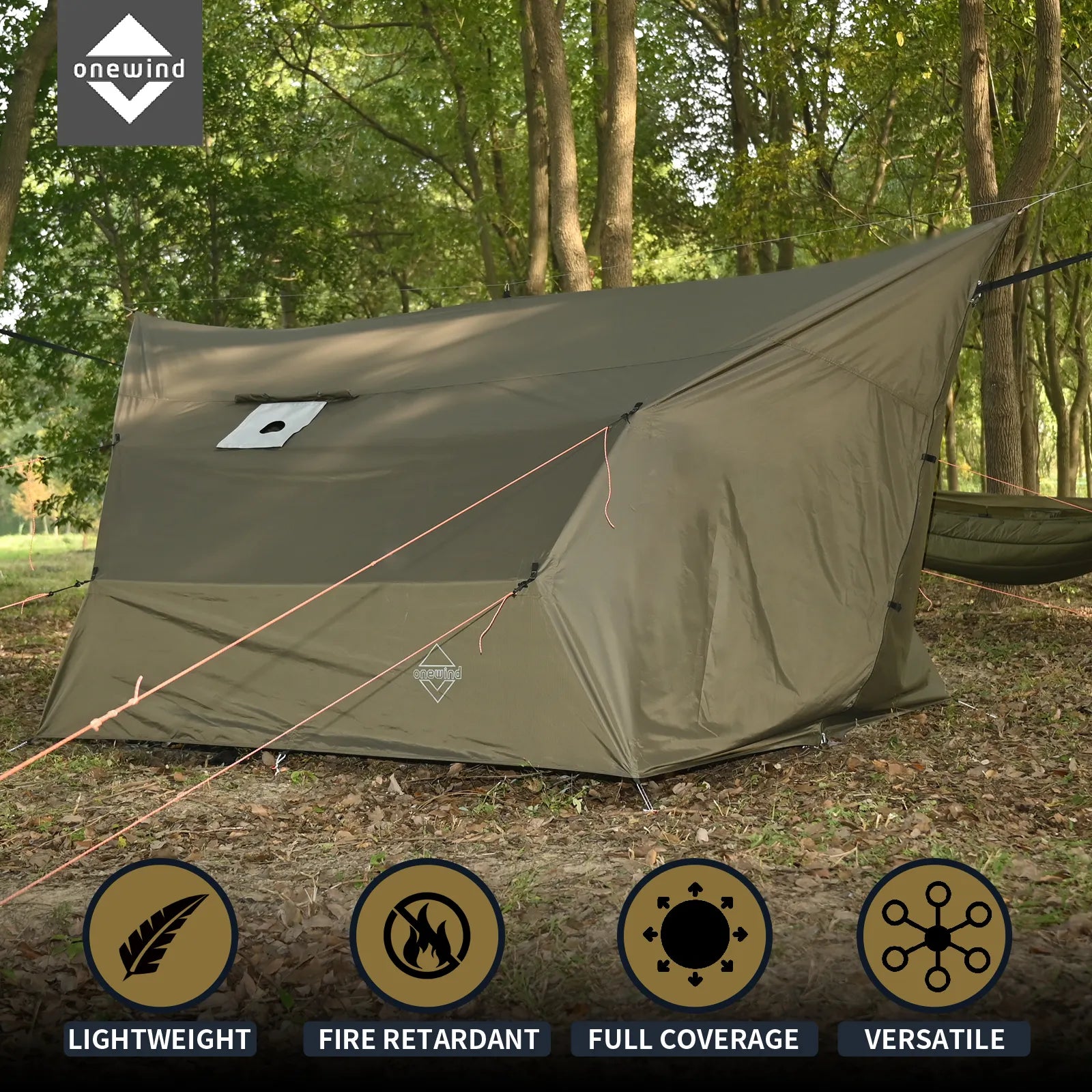
La modalità veranda è un'impostazione di comfort per il campeggio.
Non è un piano per tempesta di per sé.
Il lato rialzato offre più spazio per la testa, una vista e ombra per cucinare con tempo mite.
Lo stesso lato rialzato diventa una presa per la pioggia quando il vento cambia direzione.
Tratto la modalità veranda come una finestra aperta.
Usalo finché le condizioni lo consentono, ma regola le linee in modo che la finestra possa chiudersi rapidamente.
Ciò significa che i picchetti sopravvento sono già posizionati, i tiranti non sono aggrovigliati e il bordo del telo può scendere senza spostare l’intera amaca.
Se hai bisogno di bastoncini da trekking o pali per teloni, tienili come uno strato di comodità piuttosto che come un elemento strutturale che rallenta il montaggio.
Il Pali per telone Onewind può aiutare a creare uno spazio veranda nei campi con bel tempo, ma il telo antipioggia necessita comunque di un'opzione rapida a bassa inclinazione.
Esegui l’esercitazione prima che faccia buio.
Alza il portico.
Abbassalo.
Verifica se l’amaca, la zanzariera e il sottocoperta rimangono all’interno dell’ombra della pioggia.
Verdetto: usa la modalità veranda solo quando puoi convertirla in modalità bassa tempesta in pochi minuti senza ricostruire il campo.
Scenario 4: Primo viaggio con tempo limitato per testare l’allestimento
Il primo viaggio è quello in cui il perdono conta più dell’astuzia.
Non conosci ancora la velocità del tuo nodo, l’altezza di sospensione che preferisci, il modello locale del vento o come si comporta il tuo telo quando è bagnato.
Eviteri un telo antipioggia con margine stretto per quel viaggio.
Scegli una copertura maggiore, meno decisioni personalizzate e un’installazione ripetibile.
Il primo test dovrebbe avvenire prima della pioggia.
Appendi l'amaca.
Caricalo con il tuo corpo o con uno zaino pesante.
Tira il telone abbastanza in basso da proteggerti dalle intemperie.
Guarda a entrambe le estremità.
Quindi versa acqua da una bottiglia sulla sospensione all’esterno del telo antizanzare e osserva dove si dirige.
Quel piccolo test individua la comune sorpresa della cinghia bagnata prima delle 2 del mattino.
Per i campeggiatori che stanno assemblando l’intero sistema, un’amaca da 11', una zanzariera abbinata, l’isolamento termico e un telo antipioggia dovrebbero essere testati insieme, non un articolo alla volta.
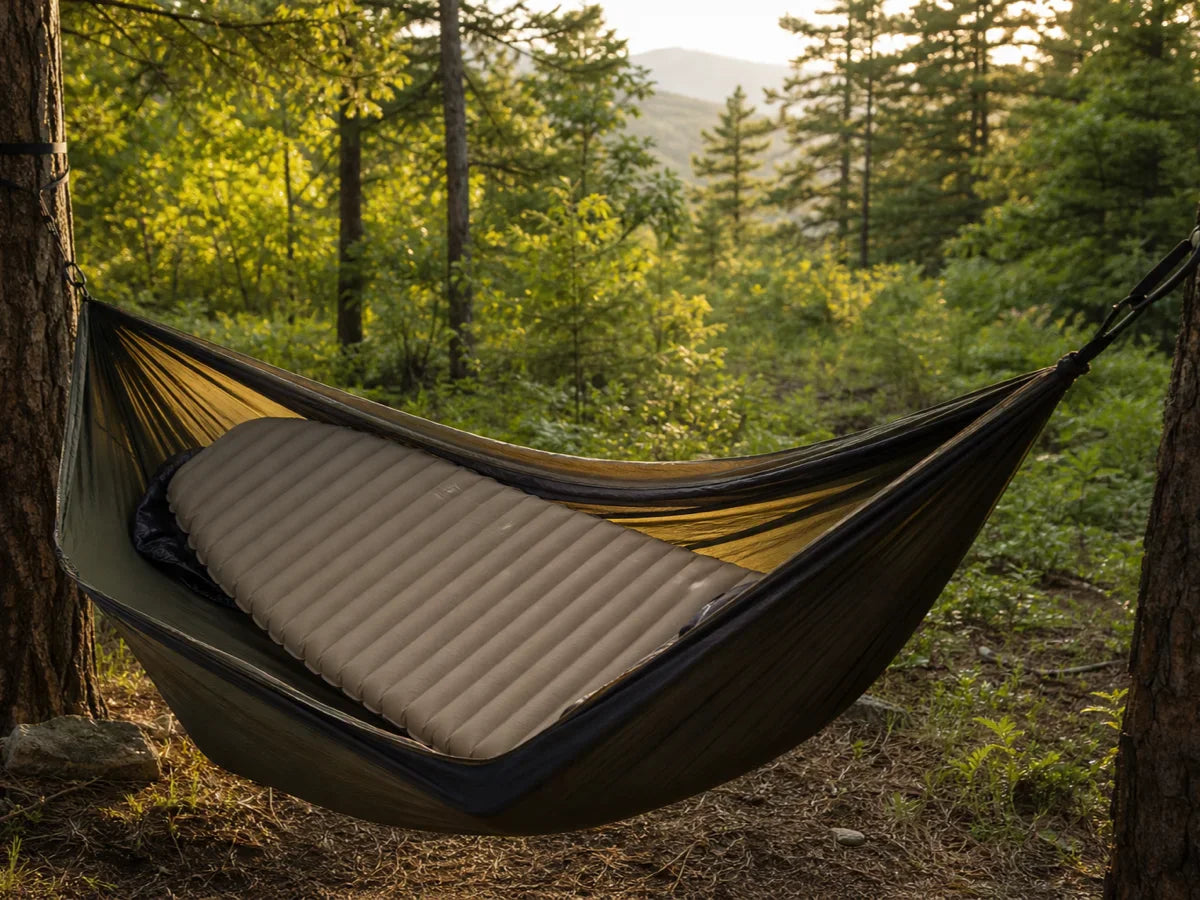
Il Amaca da campeggio Onewind 11' e un telo antipioggia da 12' costituiscono una coppia pratica per il test, perché la relazione tra le lunghezze è facile da vedere.
Verdetto: in un primo pernottamento bagnato, scegli il telo antipioggia con tolleranza di montaggio e testa il sistema caricato prima del tramonto.
Errori comuni con il telo antipioggia per amaca
La maggior parte degli errori con il telo antipioggia deriva dal fidarsi dell’etichetta prima di controllare la forma in campeggio.
Una pagina prodotto può indicare il grado di impermeabilità, il peso del tessuto e le dimensioni da imballato.
Quei numeri aiutano, ma non mostrano se la pioggia può raggiungere le estremità dell’amaca, il sottoquilt, la zanzariera o il sistema di sospensione.
Usa i prossimi cinque errori come una rapida verifica prima di fare la valigia.
Errore 1: considerare la capacità come una promessa di qualità del sonno
La capacità non ti dice se il telo esterno protegge la posizione di riposo carica.
L’amaca può sostenere il dormiente in modo sicuro mentre il telo antipioggia lascia comunque l’estremità esposta.
Controllo l’ombra della pioggia dopo che sull’amaca c’è peso, perché quella è l’unica forma che conta durante la notte.
Guarda dal lato sopravento.
Se riesci a vedere l’estremità raccolta vicino al bordo del telo, la pioggia diagonale potrebbe probabilmente raggiungerla.
La soluzione non è un’amaca più resistente.
La soluzione è un maggiore sbalzo, un’inclinazione più bassa, una migliore chiusura laterale o un sito migliore.
Evita questo errore testando l’intera configurazione con la stessa altezza di sospensione e lo stesso angolo di riposo che prevedi di usare durante il viaggio.
Errore 2: dimenticare che il copripiumino inferiore deve rimanere centrato
Un sottopiumino può trasformare una montatura di tarp dall’aspetto asciutto in un sistema letto bagnato.
La trapunta pende sotto l’amaca, così può stare più vicina agli schizzi laterali e ai rimbalzi d’acqua.
Se il telone è montato alto per garantire comfort, il sottoquilt può essere il primo elemento isolante a intercettare la nebbia o la pioggia obliqua.
Controllo il quilt dopo essere salito nell’amaca perché la posizione cambia sotto carico.
La trapunta dovrebbe rimanere centrata, sollevata e all'interno della zona riparata dalla pioggia.
Se si sposta verso un lato, abbassa quel lato del telone oppure regola la sospensione del piumino.
Fallo prima di andare a letto.
L’isolamento bagnato è più difficile da sistemare al buio di un tirante allentato.
Errore 3: presumere che un solo telo e una zanzariera coprano ogni disposizione per due persone
Una sola copertura antipioggia può diventare un buon tetto ombreggiante per un gruppo.
Ciò non significa che protegga ogni configurazione di riposo per due persone.
Due amache modificano l’ingombro protetto.
Cambiano anche la forma della zanzariera, gli angoli di sospensione e le aperture laterali.
Le discussioni sui forum dedicati alle amache mostrano spesso questa frizione, perché le persone vogliono che un unico telone funzioni come riparo per dormire, veranda e spazio di ritrovo.
Si tratta di lavori diversi.
Per due persone che dormono, controlla separatamente ciascuna estremità dell'amaca.
Poi controlla la distanza tra le amache.
Quindi verifica se entrambe le zanzariere pendono ancora correttamente sotto il telo esterno.
Se qualsiasi tessuto per dormire si trova fuori dall’area protetta, usa teloni separati, un riparo più grande oppure una disposizione con una migliore spaziatura degli alberi.
Errore 4: Molte pagine del telo antipioggia iniziano con impermeabile
La classificazione di impermeabilità è facile da confrontare.
La copertura è più difficile, quindi gli acquirenti la saltano.
Quella scorciatoia crea la domanda sbagliata.
La prima domanda non è “quanto è impermeabile questo tessuto?”
La prima domanda è “cosa può raggiungere la pioggia?”
Una volta che la risposta è “non il corpo della mia amaca, non le mie estremità, non il mio underquilt e non il mio percorso di sospensione bagnato”, la specifica del rivestimento conta.
Il telo antipioggia Onewind Nebula indica un rivestimento in silicone e PU da 4000 mm, un dato solido sul lato del tessuto per il normale utilizzo come riparo per amaca.
Abbinalo all’ingombro di 12' x 9.7' e al peso del sistema di 650 g, e il prodotto diventa più facile da posizionare: un tarp esagonale bilanciato per gli amanti dell’amaca attenti alla copertura.
Non trasformarlo in una garanzia contro le tempeste.
L’esposizione al vento invernale può comunque richiedere porte, una falda più bassa o un sito diverso.
Errore 5: molte guide di configurazione mostrano una superficie pulita e giusta
Le foto dell’allestimento con bel tempo nascondono la parte difficile.
Mostrano un tono alto pulito, lati aperti e un’amaca ordinata sospesa in aria calma.
Una notte bagnata pone domande diverse.
La linea di colmo può abbassarsi?
Il lato sopravento può chiudersi?
Le picchetti possono reggere senza sprofondare in un terreno fragile?
La tenda esterna può restare lontana dalla zanzariera e dal sottotelo isolante quando si è seduti in posizione bassa?
Puoi apportare quelle modifiche al buio?
Mi piace praticare due montaggi per lo stesso telo: uno a veranda e uno da tempesta.
La pendenza del portico è per lo spazio abitativo.
Il riparo antitempesta serve per dormire all’asciutto.
Se conosci solo l’inclinazione del portico, conosci solo metà del telo antipioggia.
La lista di controllo per una decisione rapida
- ✓ Se utilizzi un'amaca da 10' a 11' e campeggi sotto una pioggia normale, scegli una copertura prima della dimensione minima da ripiegata.
- ✓ Se campeggi in zone esposte al vento, scegli una struttura più bassa, una maggiore chiusura laterale o porte, prima di affidarti soltanto al rivestimento.
- ✓ Se desideri un tarp equilibrato per molti viaggi in amaca, il Onewind Nebula Telo antipioggia esagonale per amaca da 12' è il prodotto che confrontarei per primo perché offre una copertura di 12' x 9,7', sospensione inclusa, tiranti riflettenti, picchetti in alluminio e un kit completo dal peso totale di 1,43 lb.
- ✓ Se il tuo viaggio riguarda più che altro l’ombra, un riparo con zanzariera o una copertura per il gruppo, sfoglia il Collezione di teloni e rifugi e scegli in base al passo di cui hai più bisogno.
- ✓ Se hai ancora dei dubbi, monta il telo a casa con il peso nell’amaca e valuta l’ombra della pioggia dal lato sopravvento.
Scegli il telo antipioggia che continua ad apparire noioso anche dopo quel test.
Noioso è asciutto.

Shop the 12' hammock rain fly
Shop Now →