
Search for a camping blanket and you get a ranked list.
Warmest. Most packable. Best value.
A 1.2 pound down blanket sits three rows above a heated blanket, as if those two things compete for the same spot in your car.
They do not.
The reason most people end up disappointed is simpler than any of those rankings.
They bought a blanket to do a sleeping bag's job, or they skipped one that would have fixed the three coldest hours of their trip.
So this article does not rank blankets.
It asks which job you need covered, then tells you what that job costs in ounces and dollars.
What You'll Learn
Quick Answer

A camping blanket is a second axis, not a cheaper sleeping bag.
It does two things a bag structurally cannot.
It works while you are awake and moving.
And it layers onto the sleep system you already own to extend its range.
It fails at the thing people most often buy it for, which is being a rated sleep system on its own.
- ✓ Choose a blanket if you need warmth for the hours between dinner and sleep, or a layer to stretch an existing bag or quilt.
- ✓ Choose synthetic fill for damp conditions and campfire proximity, down for pure warmth per ounce, wool only when a vehicle carries it.
⚠ Avoid buying a blanket as your primary sleep insulation for a specific overnight low. That is a quilt or a bag, and the rating on it means something different.
Before spending anything, unzip the sleeping bag you already own and camp one night with it open. That free test tells you whether the gap you are filling is warmth, posture, or the awake hours.
The Job A Sleeping Bag Cannot Do
A sleeping bag is engineered for a very specific situation.
One person. Motionless.
Sealed inside an envelope.
Lying down.
You can see that in how bags are rated. Under ISO 23537, a bag is tested with a heated manikin wearing standard pyjamas and a cold weather mask, curled up on a standardized mat inside a climate-controlled room, measuring the power required to hold its temperature.
That produces three numbers: Comfort, where a standard woman in a relaxed posture is just not feeling cold, Limit, where a standard man curled up is just not feeling cold, and Extreme, where hypothermia becomes the concern. The Limit figure is the one retailers usually put on the tag.
Read that test description again and notice what is missing from it.
Nobody is sitting up.
Nobody is walking to the fire.
Nobody has one arm out holding a mug.
Between dinner and sleep there are usually two or three hours where you are cold, awake, and not going to get into a sleeping bag about it.
That is the gap a blanket fills, and it is the only piece of camp insulation designed for a body that is doing things.
The Free Test Nobody Sells You
Before comparing products, do this.
Take the sleeping bag you already own.
Unzip it completely.
Camp one night with it spread over you like a duvet.
This is not a compromise suggestion.
According to campers who have done it for years, it is simply what they do, and they say so bluntly. One reply in a thread about blanket recommendations put it this way: "Just open your bag and use it as blanket. I don't think I've ever used my sleeping bag as a bag lol."
Another camper described the same habit: "I use my mummy sleeping bags as a quilt, unzipped. Gives me freedom to roll around while still being nearly as warm as if zipped up. Then if it gets really cold, I can zip the bag properly for more warmth."
One night of that tells you which of three problems you actually have.
If you slept better and warm enough, your problem was posture, and you may not need to buy anything at all.
If you slept better but got cold, your problem is insulation, and the answer is a quilt with a real rating rather than a blanket.
If you were fine in bed but still miserable around the fire, that is the blanket-shaped gap, and the rest of this article is for you.
Affiliate roundups will never lead with this test, because it sells nothing.
Why Your Mummy Bag Feels Wrong
The complaint that drives most blanket purchases is not cold.
It is confinement.
A camper asking for blanket recommendations described it precisely: "I hate my current sleeping bag because I feel like I have to lay flat like a corpse inside to be even remotely comfortable, it's too tight around my legs and doesn't allow me to switch from my side to my back easily."

Reddit users who sleep on their side or stomach report this hardest of all. A roof-top-tent camper choosing between a down bag and wool blankets concluded: "since I am a side/stomach sleeper I will go with the blankets. I tried the mummy bag as a blanket and it was difficult to sleep on my side."
A second complaint comes up constantly, and it is worth naming because it changes what you should buy.
It is the fabric.
The same camper who hated the corpse posture also said she did not love "the synthetic, swishy feeling of most of the fabrics." That is a real preference.
It is why fleece and wool keep selling despite losing every weight comparison.
Note the honest counterweight from the same Reddit threads.
One camper who prefers blankets added: "sleeping bag stays a little warmer and holds you in better."
Freedom of movement costs you drafts.
That is the trade, and it is worth being concrete about where the drafts come in.
A zipped bag seals at the neck and along one side. An open blanket seals nowhere, so every time you roll, air moves.
That is why the layering pattern beats the either/or: a blanket tucked inside an open bag gives you the movement without giving up the perimeter.
Material Maps To Job, And The Spread Is Enormous
Once you know the job, material stops being a preference.
It becomes arithmetic.
Look at the top and bottom rows.
Down at 1.2 pounds against wool at 5 pounds 4 ounces is a 4.4x weight spread.
That is at broadly comparable prices.
That single comparison answers the material question faster than any warmth ranking. If the blanket rides on your back, wool is disqualified before you consider anything else about it. If it rides in a vehicle, wool's weight costs you nothing and its durability near a fire starts to matter.
Onewind's own blankets sit in this synthetic row, and the full quilts collection shows where blankets end and rated quilts begin.
For the middle ground, synthetic is the honest default.
It handles damp better than down, survives campfire proximity better, and costs less.
There is one quantified warmth figure worth knowing, because it is rare. CleverHiker's testers found that a Rumpl Original Puffy wrapped around a heated sock at 136F in a 60F room for thirty minutes lost only 3.2 degrees, third-warmest among the blankets they tested.
That is a real measured number.
It is also the only one of its kind in this category, which tells you how little standardized testing exists here.
The Heated Blanket Math
Heated blankets appear in nearly every camping blanket roundup, usually ranked against down and synthetic blankets as though they were peers.
They are not peers.
They are a blanket plus a power station.

Here are the actual numbers from a battery manufacturer rather than a blanket brand, whose own guidance showed that the power tail is the real constraint.
Runtime examples make it concrete.
A 300Wh battery running a 60W blanket gives about five hours.
A 1000Wh battery running a 100W blanket gives about ten hours.
The manufacturer's own guidance is that overnight use wants a battery over 1000Wh, and that real runtimes come in shorter because of inverter losses, cold temperatures, battery health and heat settings.
A power station in that class is a serious object.
It is not something you add to a backpack, and not something you buy casually to make a blanket work.
So the honest verdict: a heated blanket is a legitimate choice when you are already carrying a large battery for other reasons. Choose it for van life, overlanding, or a base camp you drive to. Avoid it anywhere else, and do not treat it as comparable to a 1.2 pound down blanket just because a roundup put them in the same list.
How Cold Can You Actually Go
This is where the community evidence is more useful than any product page, because people report real nights.
Blankets alone hold up to roughly 35F.
One roof-top-tent camper: "Blankets for me, but I've only been in it down to 35ish. If colder I'd prob bring a bag."
An unzipped bag plus a blanket extends that. A car camper described using "an old rectangle bag, fully unzipped and one of those fleece on one side, polyester other side blankets," and reported that combination as "fine for me down to 30 degrees," while noting he sleeps warm.
Layering inside the bag works too, and adds a benefit nobody advertises. One camper: "I like to tuck a blanket into my sleeping bag, much more comfortable. Just a little blanket makes a big difference and it dries fast if you get rained out."
A blanket dries faster than a bag.
In a wet week that matters more than a few degrees.
For reference on what a rated system gives you instead, one camper cited a Therm-a-Rest Vesper 20 as "Comfort rated to about 30 or 32 and limit 20F," and said the comfort rating held true for her.
That is the comparison to hold in your head.
A blanket gets you to about 35F with freedom of movement.
A rated quilt gets you to about 30F with a number you can plan against.
One more thing surfaces in every one of these threads, and it has nothing to do with the blanket. As one camper put it while recommending quilts: "Key is a good pad."
No top layer fixes insulation you are crushing underneath you. If you are cold from below, that is a different purchase entirely.
Where Onewind Sits, Honestly
The gap the community keeps naming is real.
It is a price gap.
A camper researching this described the market exactly: a $30 entry sleeping bag on one end, wool and down comforters "easily $250-300" on the other, and a request for "any good options in between."
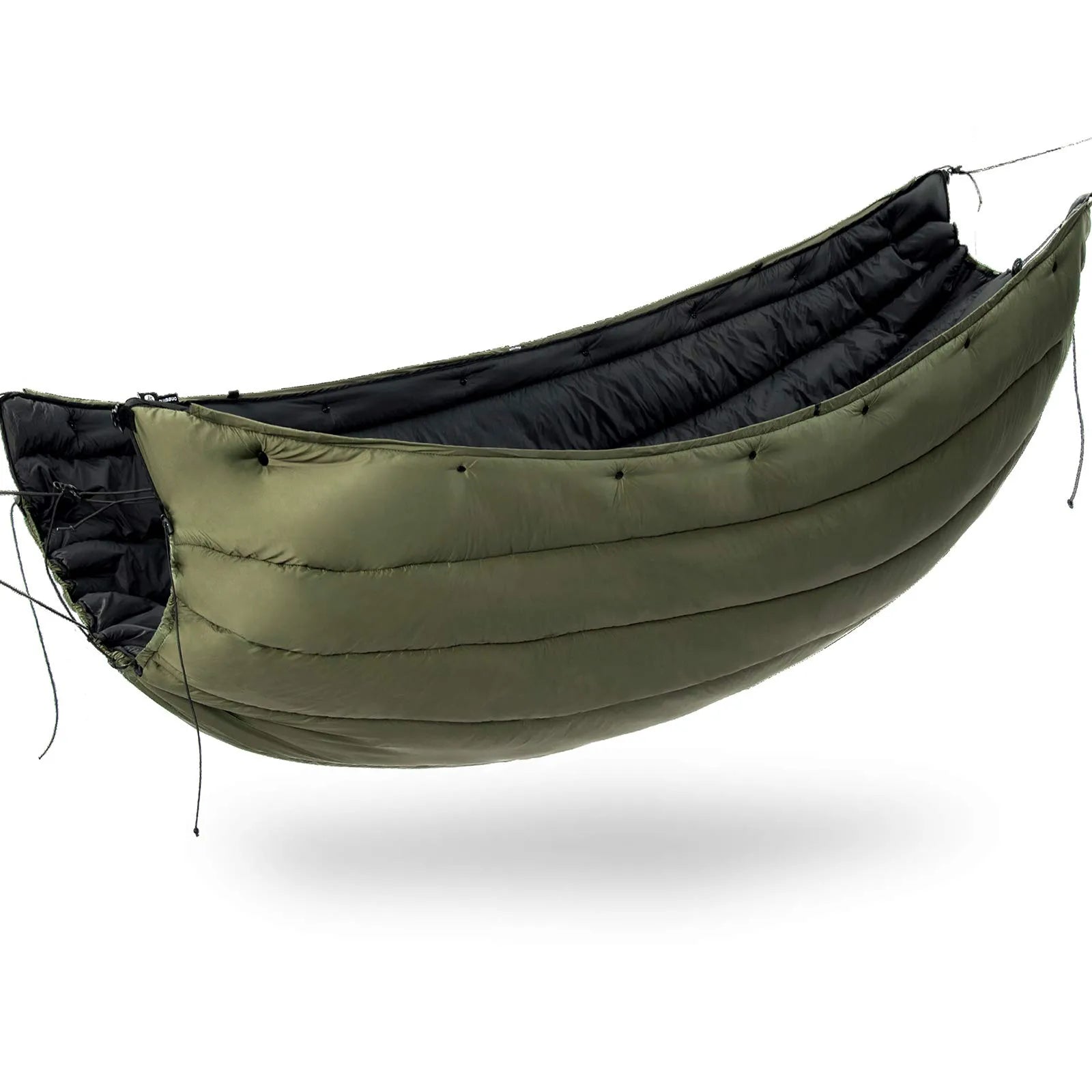
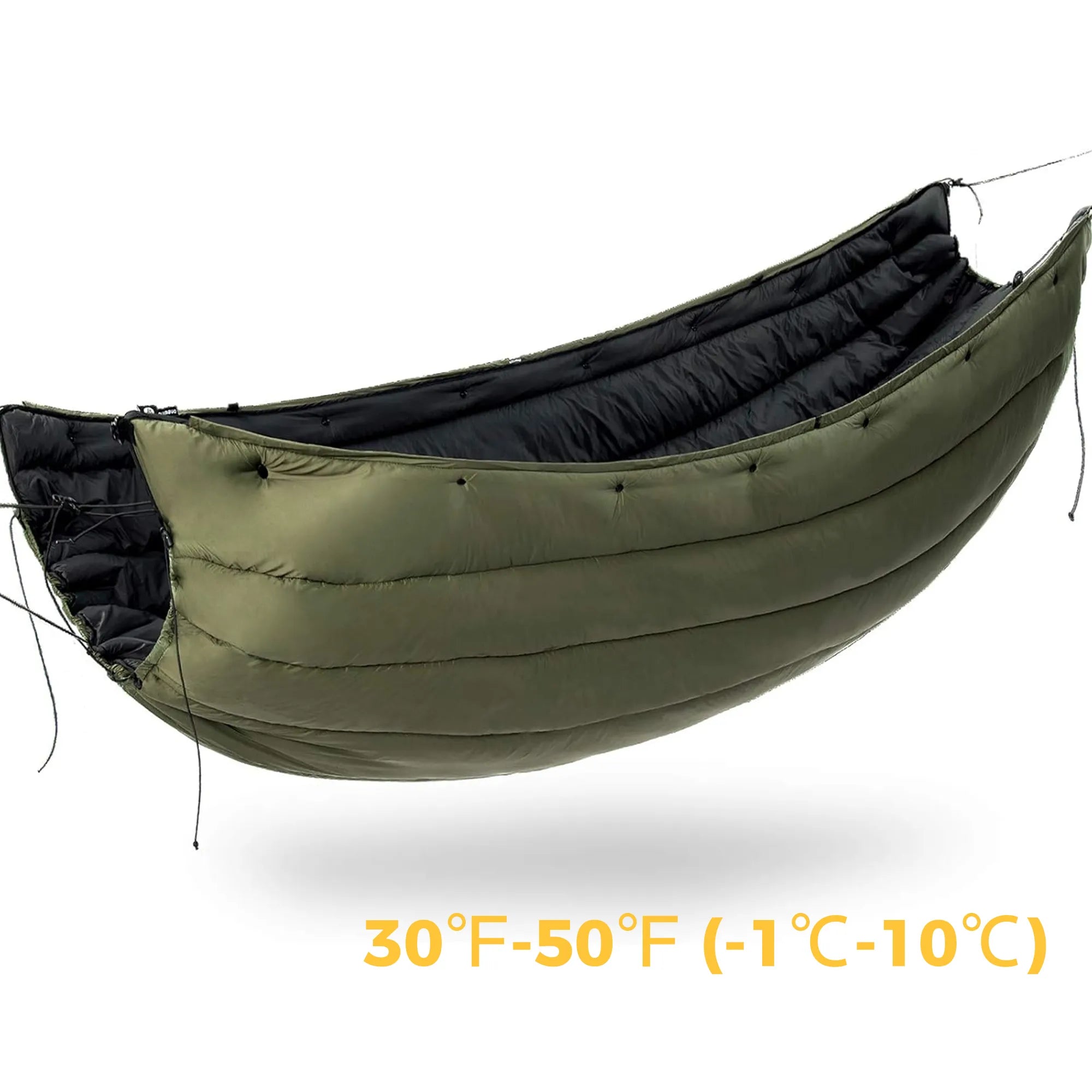
Onewind's camping blanket at $84.90 in OD Green and the Dark Navy version at $82.90 sit in that gap, with a 3/4 size at $52.90 that weighs 1.9 lbs including its stuff sack and is rated to 40F.
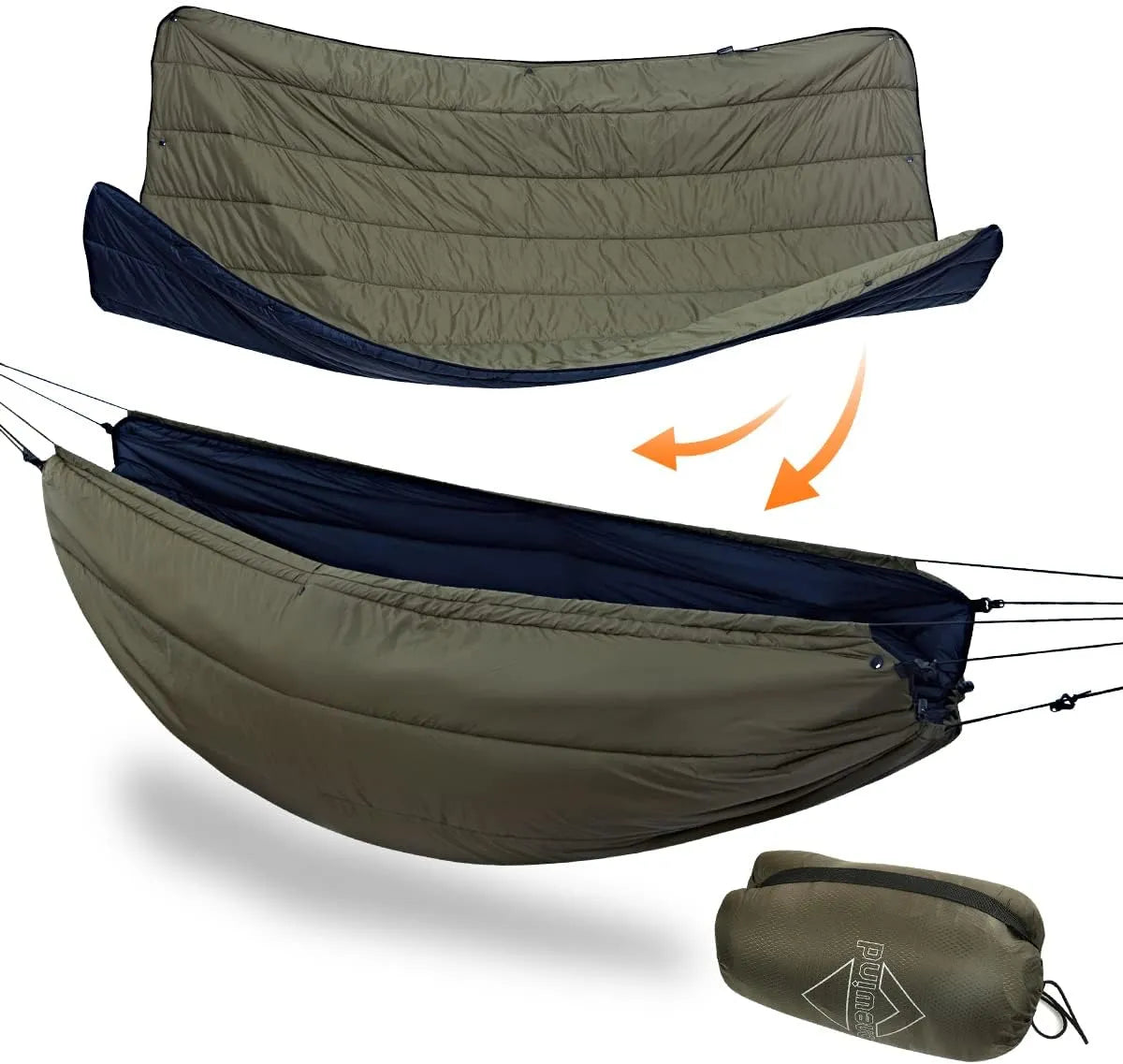
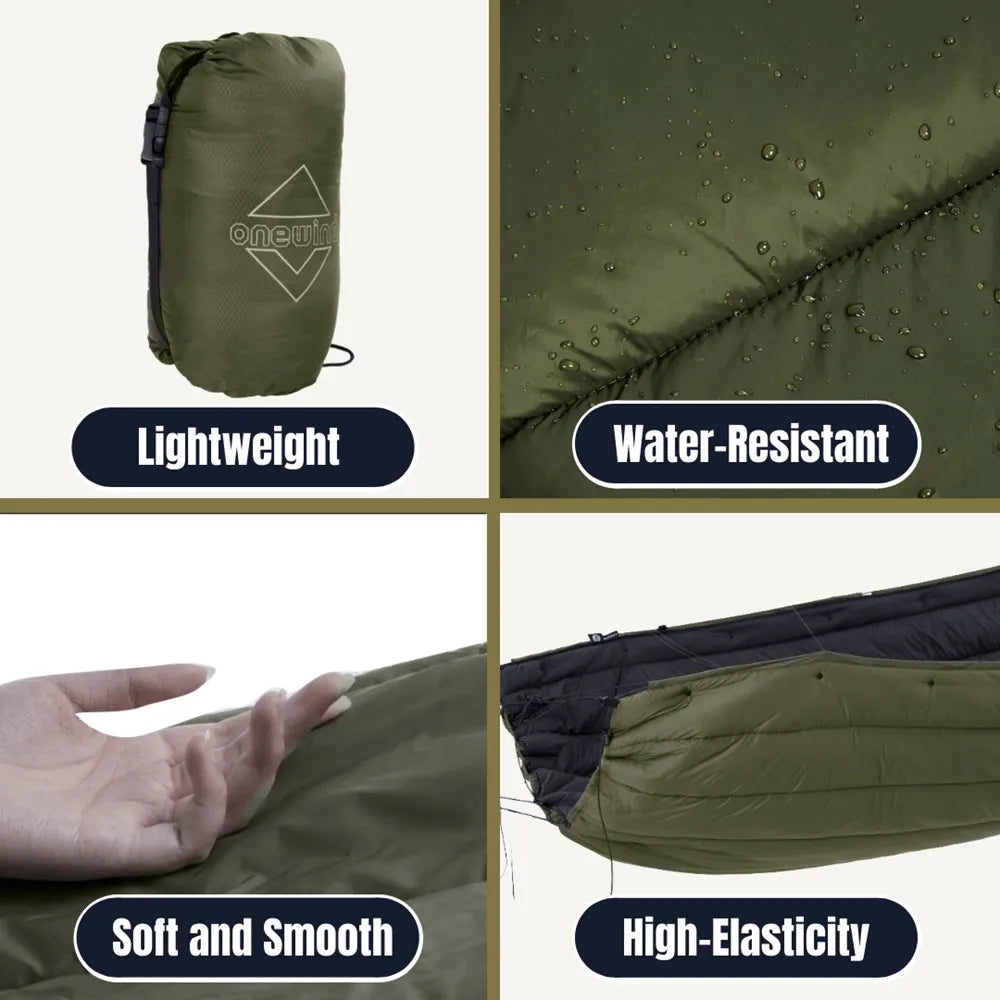
They are built from 1.1 oz 20D 400T nylon with Sorona insulation, which puts them in the synthetic column above, and the 3/4 size undercuts the Rumpl Original on both weight and price.
If you want the same insulation in a wearable rated layer instead, the OD green topquilt poncho at $75.90 is the closest sibling in the line.
Two features are worth stating plainly rather than overselling.
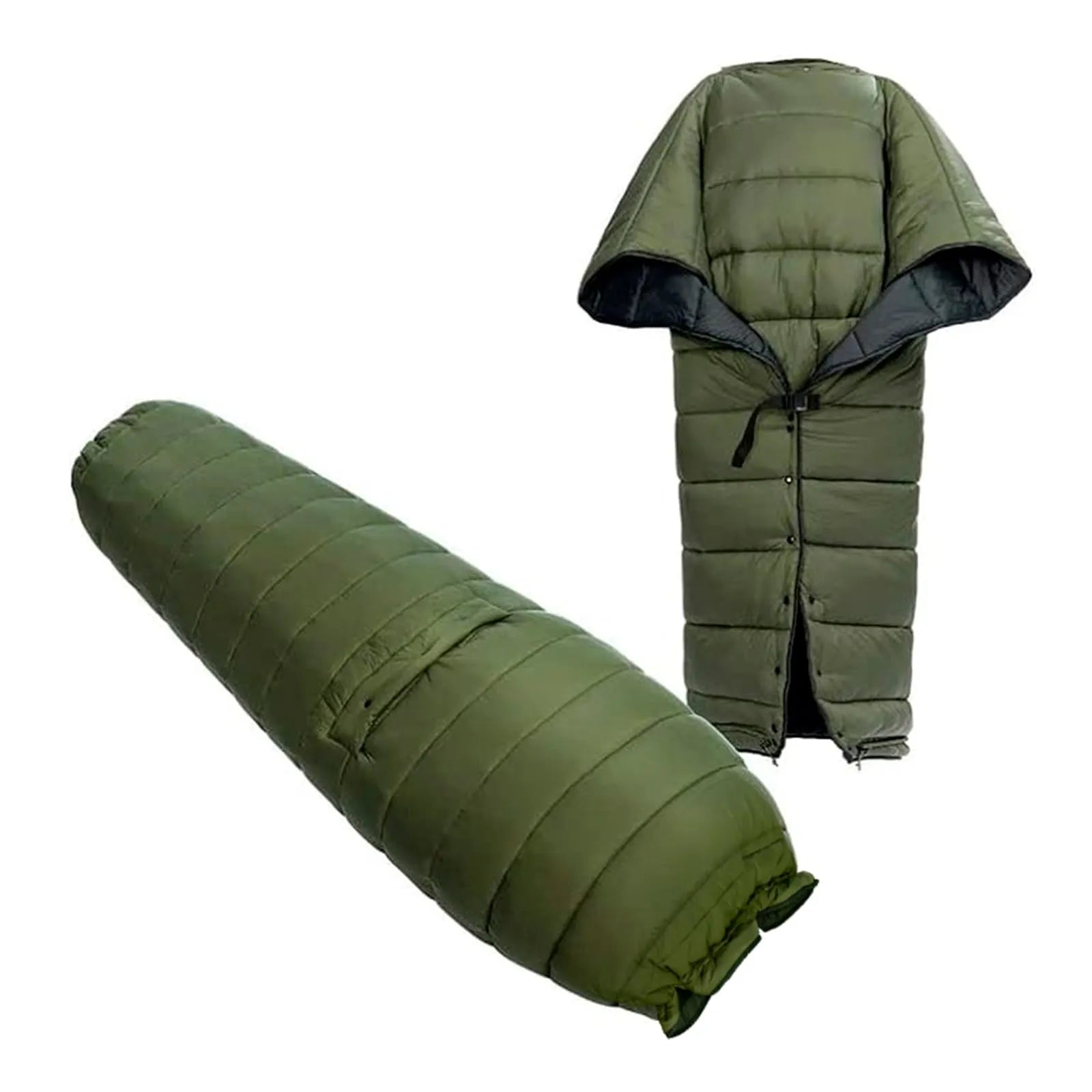
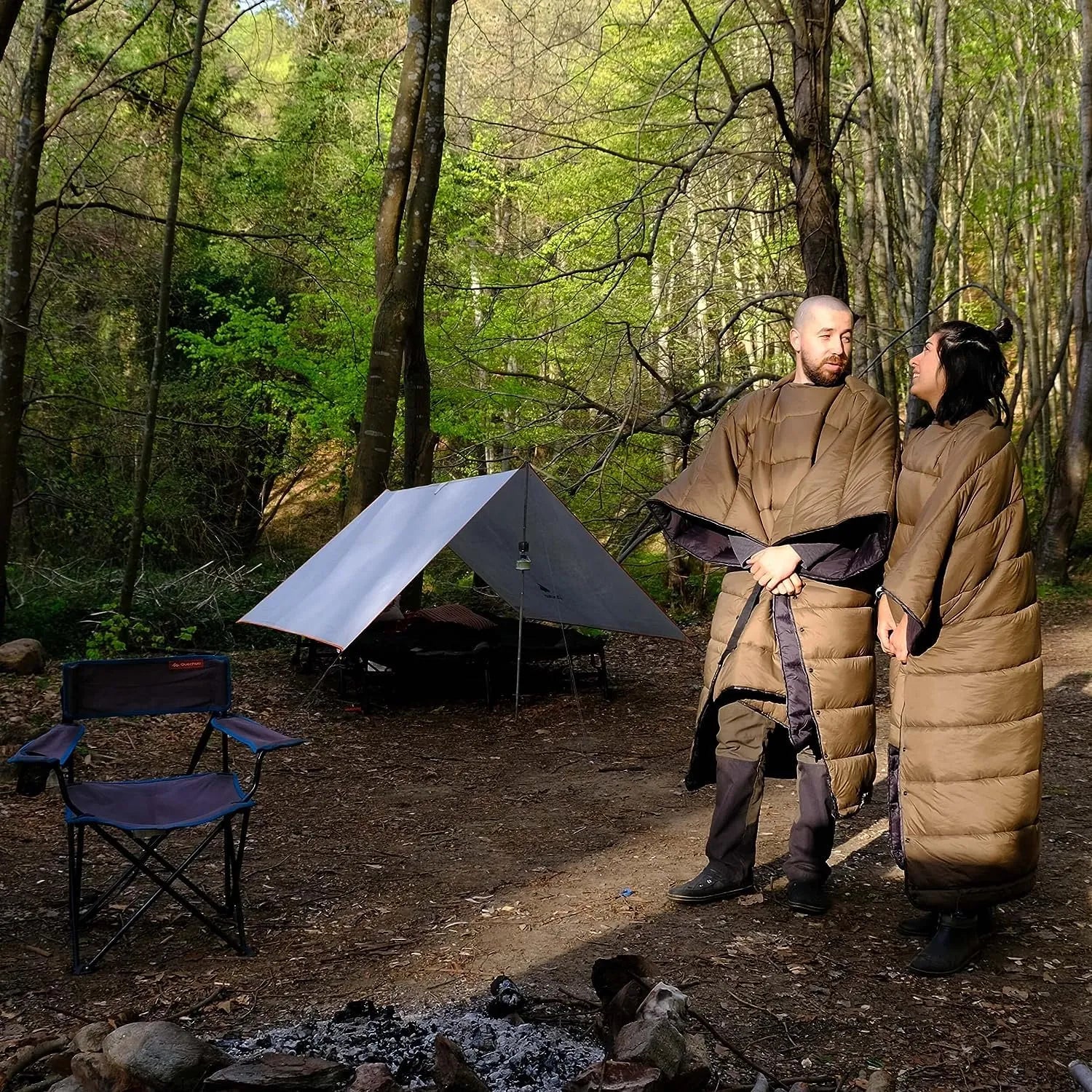
The side snaps convert the blanket into a poncho, which is the awake-hours job made literal.
Hands free, warm, still able to cook.
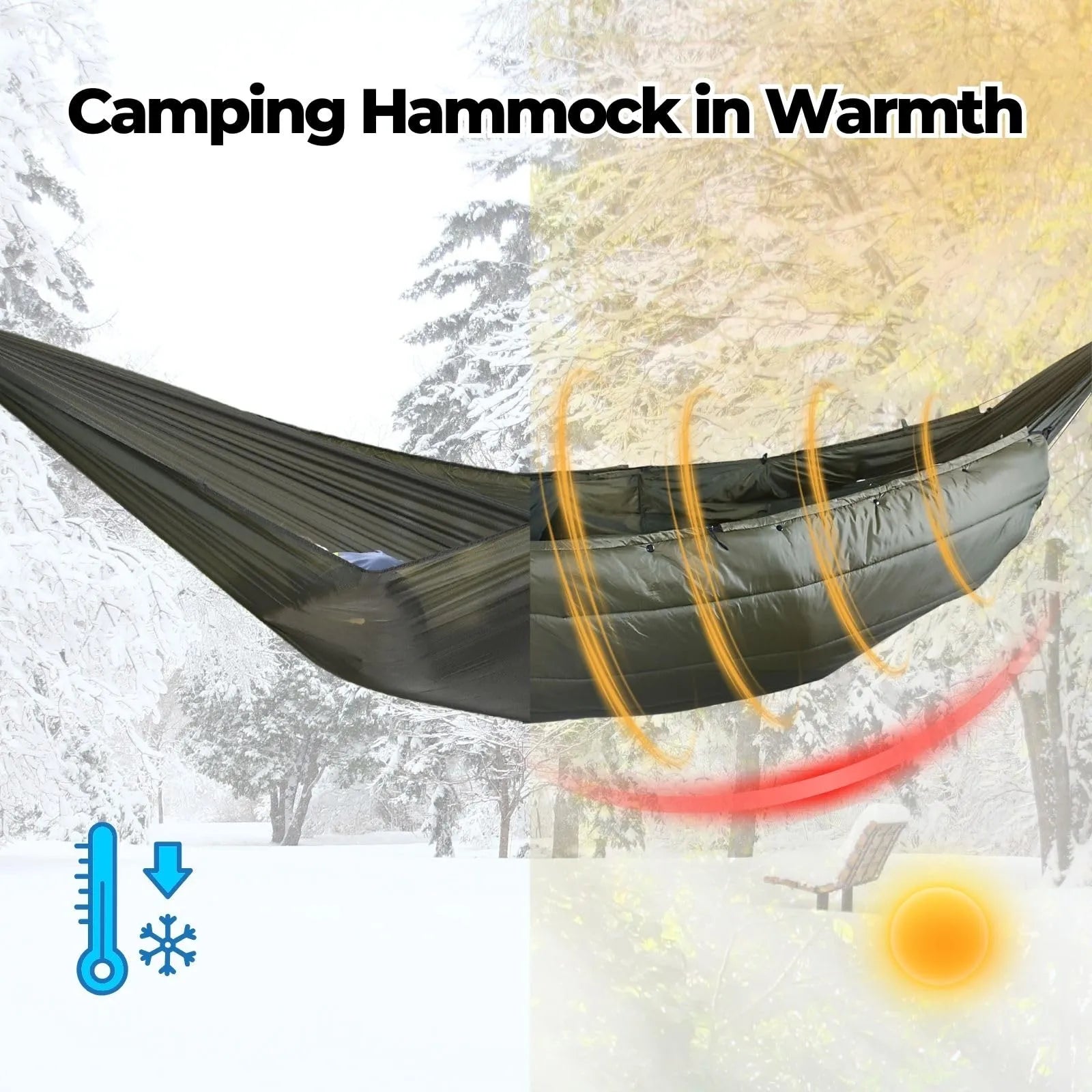
The same snaps attach it to a Onewind underquilt, which is what turns it from a loose top layer into part of a hammock sleep system. The underquilt and blanket combo at $144.90 packages that pairing.
Neither feature is unique to Onewind, and it would be dishonest to imply otherwise.
The Coalatree Kachula converts to a hooded poncho.
The Kammok Bobcat converts to an underquilt or a 45-degree bag at $199. What Onewind offers is that feature set at the bottom of the price band rather than the top.
The whole insulation range sits in the all quilt products collection if you want to compare blankets against quilts side by side.
And what Onewind does not sell is just as relevant to your decision. There is no Onewind wool blanket, no fleece blanket, and no heated blanket. If the material section pointed you at one of those, buy it from someone else.
Scenario 1: You Are A Side Sleeper Who Hates Mummy Bags
This is the most common reason people start shopping for blankets, and the most common reason they buy the wrong thing.
Your problem is posture.
A blanket solves posture, but so does an unzipped bag, and so does a quilt.
Only one of those three comes with a temperature rating.
For hammock campers specifically, our top quilt guide and the topquilt poncho selection guide cover the rated alternatives to a loose blanket.
The fabric complaint is separate and has its own cheap fix. Several campers recommend a liner in cotton, silk, jersey or wool to change the feel without changing the insulation.
The rated options if the test points that way are the Hammock Topquilt Poncho at $75.90, the Solstice down topquilt at $189.90, and the Equinox down topquilt at $269.90.
Verdict: Unzip your bag first. If you sleep better but cold, buy a quilt rather than a blanket, and see our camping quilt versus sleeping bag guide for that decision.
Scenario 2: You Car Camp And Weight Is Irrelevant
Here the entire weight column of the material table stops applying to you.
Wool becomes a legitimate choice rather than a penalty.
It is also the material that handles campfire sparks and years of rough use best.
The heated option also opens up, but only under the condition already covered: you need a power station over 1000Wh for a full night, and that has to be something you were bringing anyway.
If you want the poncho conversion without the blanket, the Topquilt Poncho XL Deluxe at $81.90 and the OneTouch pad strap version at $85.90 cover that job with a rated quilt instead.
Verdict: For most car campers, choose comfort and durability over specs. Wool or a large synthetic blanket both work, and you should avoid paying an ultralight premium for a product that will never leave the vehicle.
Scenario 3: You Are Backpacking And Counting Ounces
Be honest with yourself here, because the answer is often that no blanket earns the space.
A quilt does the sleeping job with a real rating at similar weight.
If you carry a blanket as well, you are paying ounces purely for the awake hours and for redundancy.
The one strong case is a very light down blanket in a group, where it doubles as a shared layer around camp and an emergency extra for whoever gets cold.
A double ended stuff sack at $8.49 is the small piece that makes a blanket actually packable in a pack.
Verdict: Prioritize a rated quilt for the pack, and add a blanket only if the awake-hours comfort is worth 1.2 pounds to you. See our hammock top quilt guide for the rated option.
Scenario 4: You Hammock Camp And Want A Top Layer
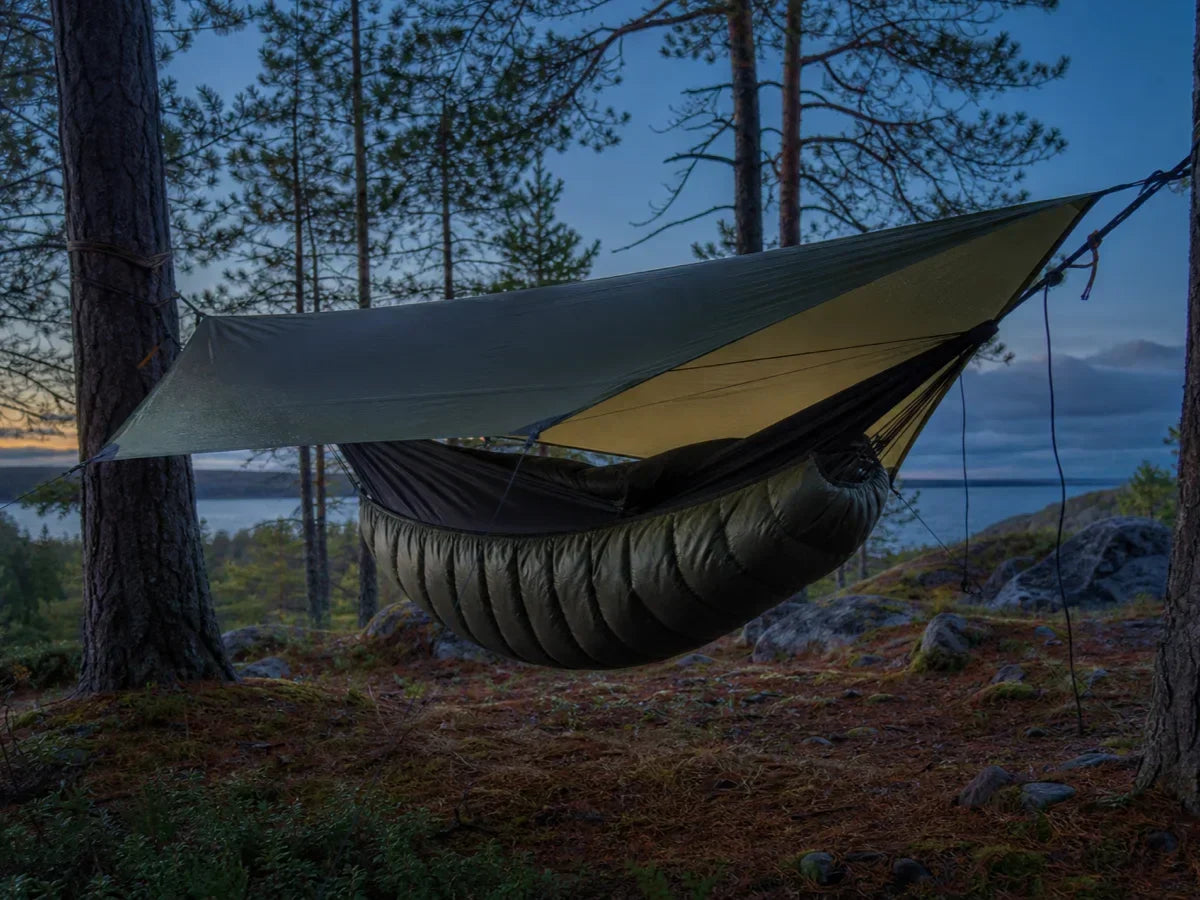
A hammock makes the drafting problem worse, because you are suspended in moving air on all sides.
The underquilt and blanket combo at $144.90 exists precisely because those two layers are designed to snap together rather than be fought into place separately.
A loose blanket in a hammock slides and lets air in at every edge.
A blanket that physically attaches to the sleep system does not, which is the point of the snap integration.
The bottom insulation question is separate and more important, and if you are cold underneath, no top layer fixes it.
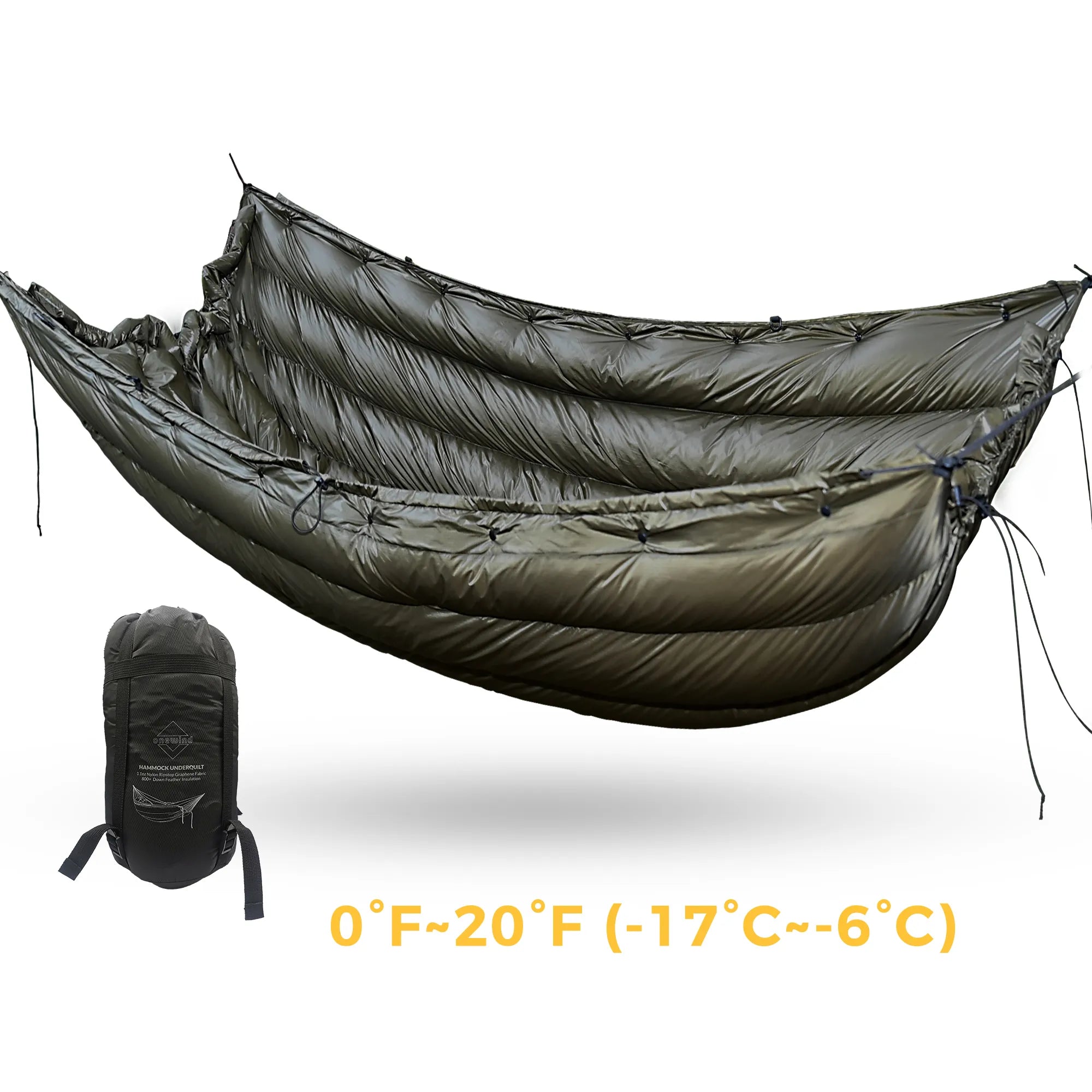
That is the job of an underquilt such as the Flare at $89.90, the Solstice down at $189.00 or the Equinox down at $249.00, optionally with an underquilt protector at $27.90, and a double layer hammock at $59.90 if you would rather run a pad underneath.
Our double layer hammock guide covers the pad-sleeve route, and the underquilt buying guide covers the quilt route.
Verdict: Choose a blanket that attaches to your quilt or underquilt rather than a loose one, and treat it as a supplement to a topquilt rather than a replacement for it.
Scenario 5: You Are Stuck Between A $30 Bag And A $250 Comforter
This is the exact position the community keeps describing, and it has a clear answer.
Do the free test first.
If the gap is real, the $52 to $90 band is where synthetic fill with a proper shell starts.
That is enough blanket for the awake hours and for layering.
The $250 tier buys either wool's durability or down's weight savings.
Both are real, and neither is necessary for most people's actual use.
Verdict: For most buyers, choose a mid-band synthetic blanket after the free test, and avoid the $250 tier unless you have specifically identified wool durability or down weight as your constraint.
Choosing Your Blanket
Three questions in order. The first one that answers itself is your answer.
A few defaults worth stating outright.
For most people the honest first step costs nothing. Unzip your bag, sleep one night, and find out whether you have a posture problem, an insulation problem, or an awake-hours problem.
For most buyers who confirm the awake-hours gap, a mid-band synthetic blanket is the right purchase, and the ultralight and luxury tiers are both avoidable.
Unless you camp exclusively from a vehicle, avoid wool, because 5 pounds 4 ounces is a lot to carry for a preference.
And do not buy any blanket expecting it to replace a rated sleep system. The testers who measure these things say it plainly, and the campers who use them agree: a blanket is for stargazing and the campfire, and for making the bag you already own work a little harder.

The rankings will keep telling you which blanket is warmest.
Ask which hours you are actually cold instead.
The choice gets much easier.