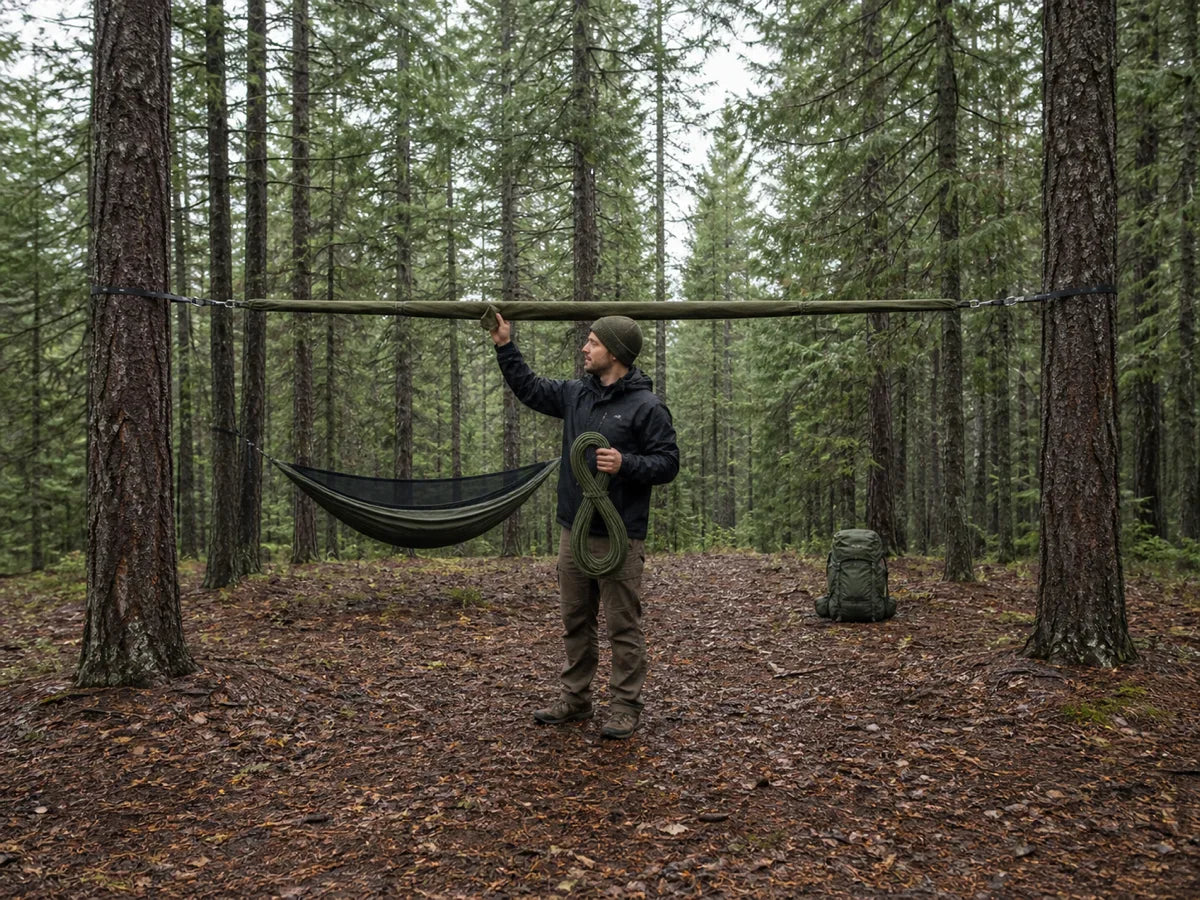

Outdoor Gear Lab testete 14 Hängematten für Rucksacktouren und stellte für den Hängemattenkörper allein eine Gewichtsspanne von 15,7 Unzen bis 43,9 Unzen fest.
Dieses Gewicht von 28 Unzen verschwindet, wenn man die anderen drei Komponenten hinzufügt, die jedes Hängemattensystem benötigt: Aufhängung, Tarp und Isolierung.
Ich habe Gewichtsangaben von CleverHiker, Outdoor Gear Lab, Andrew Skurka und den Foren von Backpacking Light verglichen, um den Rahmen für das Gesamtgewicht des Systems aufzubauen, der in jedem Produktvergleichs-Ranking auf der ersten Seite fehlt.
Das Ergebnis: Der Hängemattenkörper macht nur 20–30 % des Gesamtgewichts des Systems aus. Das Tarp und die Isolierung zusammen machen 60–80 % aus.
Die Optimierung der falschen Komponente ist der häufigste Gewichtsfehler beim ultraleichten Hängematten-Backpacking.
Jeder erstklassige Leitfaden listet Hängemattenkörper vom leichtesten bis zum schwersten auf, ohne Ihnen zu zeigen, wie sich das Gesamtgewicht des Systems über verschiedene Gewichtsziele hinweg verändert.
Dieser Artikel bietet Ihnen einen Gewichtsbudget-Allocator für drei Zielvorgaben: komplette Systeme unter 3 lb, unter 4 lb und unter 5 lb.
Wenn Sie Ihr Zielgewicht bereits kennen, springen Sie bitte zur Quick-Answer-Tabelle unten.
Wenn Sie das Gewicht eines Hängemattensystems mit dem eines Zeltes vergleichen und sich fragen, was tatsächlich weniger wiegt, beginnen Sie mit dem Entscheidungsrahmen.
Was Sie lernen werden
Dieser Artikel beantwortet fünf Fragen, die kein einzelner Leitfaden auf der ersten Seite gemeinsam abdeckt.
Jede Empfehlung basiert auf getesteten Gewichtsangaben oder dem Konsens der Community erfahrener Ultralight-Backpacker.
Für keinen Abschnitt müssen Sie die anderen zuerst lesen.
Schnelle Antwort
Wenn Sie eine Entscheidung in einer Minute treffen müssen, verwenden Sie diese Tabelle.
Die These: Für die meisten Rucksacktouristen ist das Drei-Jahreszeiten-System unter 4 Pfund der empfohlene optimale Kompromiss, weil es Gewichtsersparnis mit Langlebigkeit über alle vier Komponenten hinweg ausbalanciert.
Sub-3 lb ist erreichbar, sollte aber erfahrenen Fernwanderern vorbehalten bleiben, die die Haltbarkeitskompromisse ultradünner Stoffe und die Nutzung nur bei warmem Wetter akzeptieren.
Das Entscheidungsrahmenwerk
Drei Gewichtsbudget-Stufen unterscheiden ein Ultraleicht-System von einem Standard-Setup.
Ich habe die Komponentengewichte aus den Testdaten von 2026 von CleverHiker, den Hängemattenbewertungen von GearandHome unter 1 lb und der Ausrüstungsliste von Andrew Skurka zusammengestellt, um die Zuordnungstabelle zu erstellen, die kein Produktvergleich bietet.
Hier ist der Konsens, geordnet als Gewichtsbudget statt als Produktbewertung.
Stufe 1: System unter 3 lb (Sollten Sie sich für maximale Gewichtsersparnis entscheiden?)
- ✓ Am besten für Weitwanderer auf dem PCT, AT oder CDT in den Sommermonaten.
Erfordert Hängemattenstoff mit 7–15D, Whoopie-Sling-Aufhängung, ultraleichtes Silnylon-Tarp und Verwendung nur bei warmem Wetter ohne Unterquilt.
Die Backpacking-Light-Foren-Community bestätigt: Unter 3 Pfund ist machbar, begrenzt Sie aber auf Temperaturen über 10 °C, wenn Sie kein zusätzliches Isolationsgewicht mitführen.
⚠️ Diese Stufe opfert die Haltbarkeit. Ein 7D-Hängemattenkörper reißt an rauer Rinde, scharfen Ästen oder bei scheuerndem Kontakt mit Felsen. Jedes auf dieser Stufe eingesparte Gramm geht zu Lasten der Zuverlässigkeit.
Stufe 2: System unter 4 Pfund (der empfohlene ideale Bereich für die meisten Rucksackwanderer)
- ✓ Balanciert die Haltbarkeit des 20-30D-Gewebes mit einer spürbaren Gewichtsersparnis bei allen vier Komponenten.
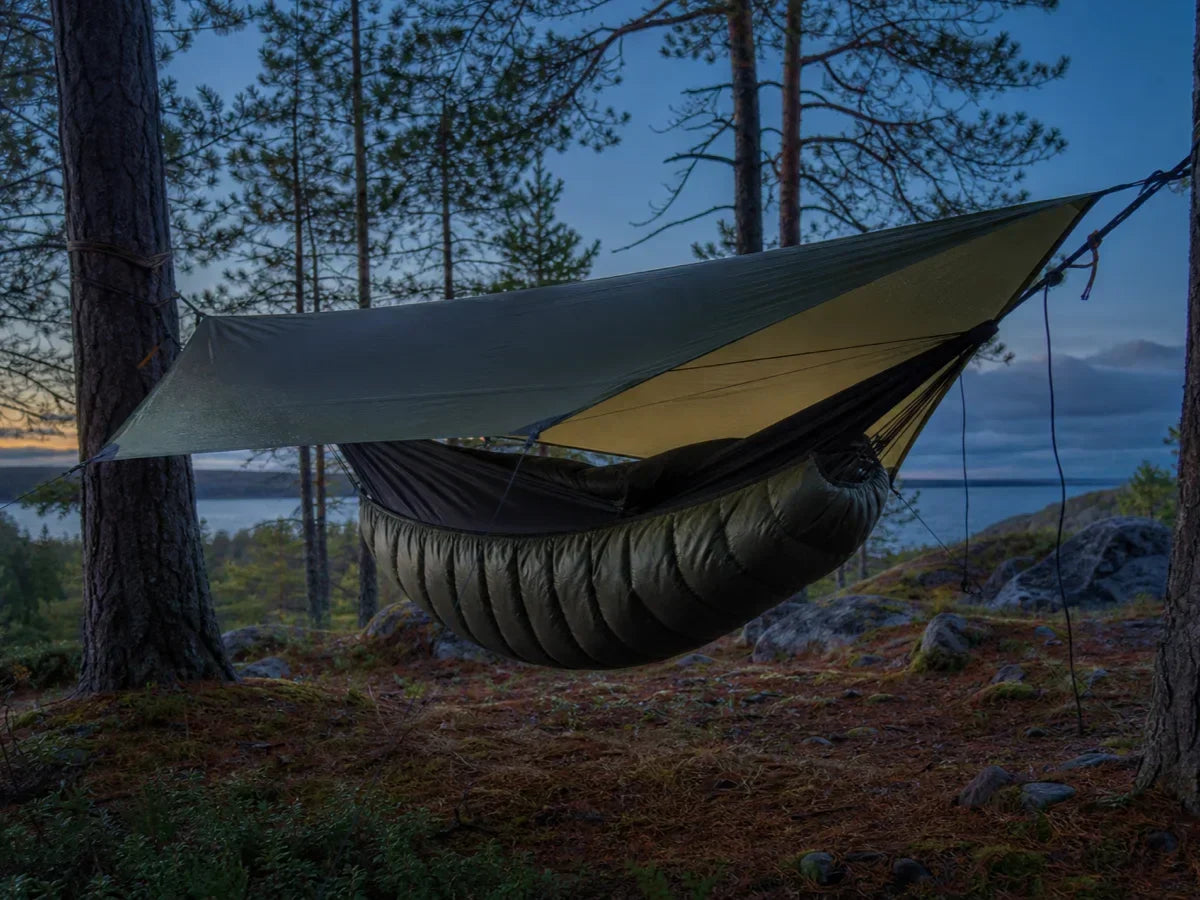
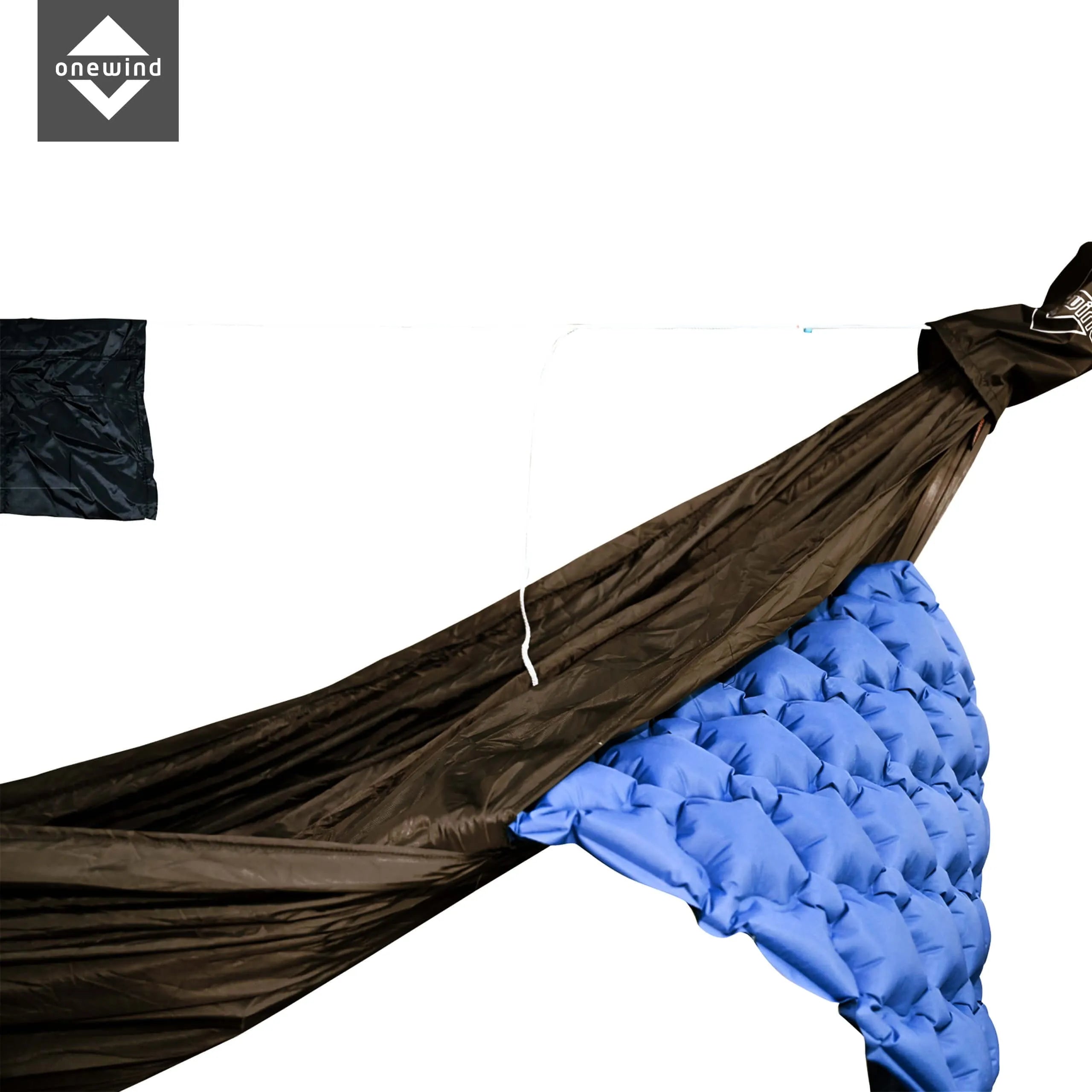
Deckt den Einsatz in drei Jahreszeiten ab (Temperaturen bis zu 2–4 °C) mit einem leichten Underquilt.
Gemeinsamer Konsens aus r/ultralight: 20D-Nylon ist die beliebteste Stoffwahl für Ultraleicht-Rucksackreisende, die Gewicht sparen möchten, ohne ständig Angst vor Rissen zu haben.
Dies ist die Gewichtsklasse, in der das Gewicht eines Hängemattensystems direkt mit dem eines Ultraleichtzelts konkurriert (2–3 Pfund für ein Zelt gegenüber 2,5–3,5 Pfund für dieses System).
Stufe 3: System unter 5 Pfund (Sollten Sie sich für volle Vier-Jahreszeiten-Fähigkeit entscheiden?)
- ✓ Fügt Isolationsgewicht hinzu, das ganzjähriges Hängematten-Camping ermöglicht, auch bei Temperaturen unter dem Gefrierpunkt.
Auf dieser Stufe übersteigt das Gesamtgewicht des Systems die meisten ultraleichten Zeltaufbauten um 0,45 bis 0,9 kg.
Der Kompromiss ist klar: Sie entscheiden sich für eine Hängematte wegen Komfort und Schlafqualität, nicht wegen Gewichtsersparnis.
Die Analyse der Thru-Hiking-Hängematte von The Hiking Life bestätigt: Winter-Hängemattensysteme wiegen durchweg mehr als entsprechende Winterzelt-Systeme, sobald man das Gewicht von Unterquilt, Oberquilt und Winter-Tarp hinzufügt.
{% include 'youtube', id: 'bnaRtmIrQgM' %}
Szenario 1: Weitwanderer, der ein Drei-Jahreszeiten-Hängemattensystem unter 3 lb für lange Trails zusammenstellt
Sie planen eine Teilwanderung des PCT im Juli und August mit einem strikten Basisgewichts-Ziel von 10 Pfund.
Ihr aktuelles Hängemattensystem wiegt 4,5 lbs und Sie müssen es auf unter 3 lbs reduzieren, um Ihr Basisgewichts-Ziel zu erreichen.
Die Gewichtsaufstellung für ein echtes System unter 3 lb, aufgebaut aus von CleverHiker und GearandHome getesteten Komponenten:
Diese Gesamtsumme wirkt unglaublich niedrig, aber sie erfordert bestimmte Kompromisse.
Der 10D-Stoff schränkt Sie bei der sorgfältigen Auswahl der Bäume ein (keine Baumarten mit rauer Rinde) und erfordert beim Aufbau einen schonenden Umgang.
Die Minimalabdeckung des Tarps schützt Sie vor Regen direkt von oben, lässt Sie jedoch seitlich vom Wind getriebenem Regen ausgesetzt.
Keine Isolierung bedeutet, dass Temperaturen unter 10 °C Sie um 3 Uhr morgens wecken werden.
Der Konsens der r/ultralight-Community: Systeme unter 3 Pfund funktionieren für Sommer-Durchwanderungen auf gut gepflegten Wegen, bei denen die Baumauswahl vorhersehbar ist und das Wetter zuverlässig mitspielt.
Urteil: Ein System unter 3 Pfund ist für sommerliche Weitwanderungen erreichbar, sollte jedoch als spezialisierter Aufbau und nicht als Standard angesehen werden. Für die meisten Rucksackwanderer kosten die Gewichtseinsparungen von 3 Pfund auf unter 3 Pfund in Strapazierfähigkeit und Komfort mehr, als sie beim Rucksackgewicht einsparen.
Szenario 2: Wochenend-Rucksacktourist, der 2 Pfund von seinem aktuellen Hängematten-Setup einsparen möchte, ohne alles zu ersetzen
Tipps für das ultraleichte Hängematten-Setup für Weitwanderungen
Du gehst 6–10 Wochenenden pro Jahr campen, dein aktuelles System wiegt 5,5 lbs, und du möchtest auf 3,5 lbs herunterkommen, ohne ein komplett neues Set zu kaufen.
Der wirkungsvollste einzelne Austausch ist normalerweise die Aufhängung, nicht der Hängemattenkörper.
Hier ist die Gewichtseinsparungs-Prioritätenreihenfolge aus dem Gemeinschaftskonsens auf Hammock Forums und r/ultralight:
Der Austausch der Aufhängung ist die beste Investition, da er pro ausgegebenem Dollar das meiste Gewicht einspart – ganz ohne Lernaufwand.
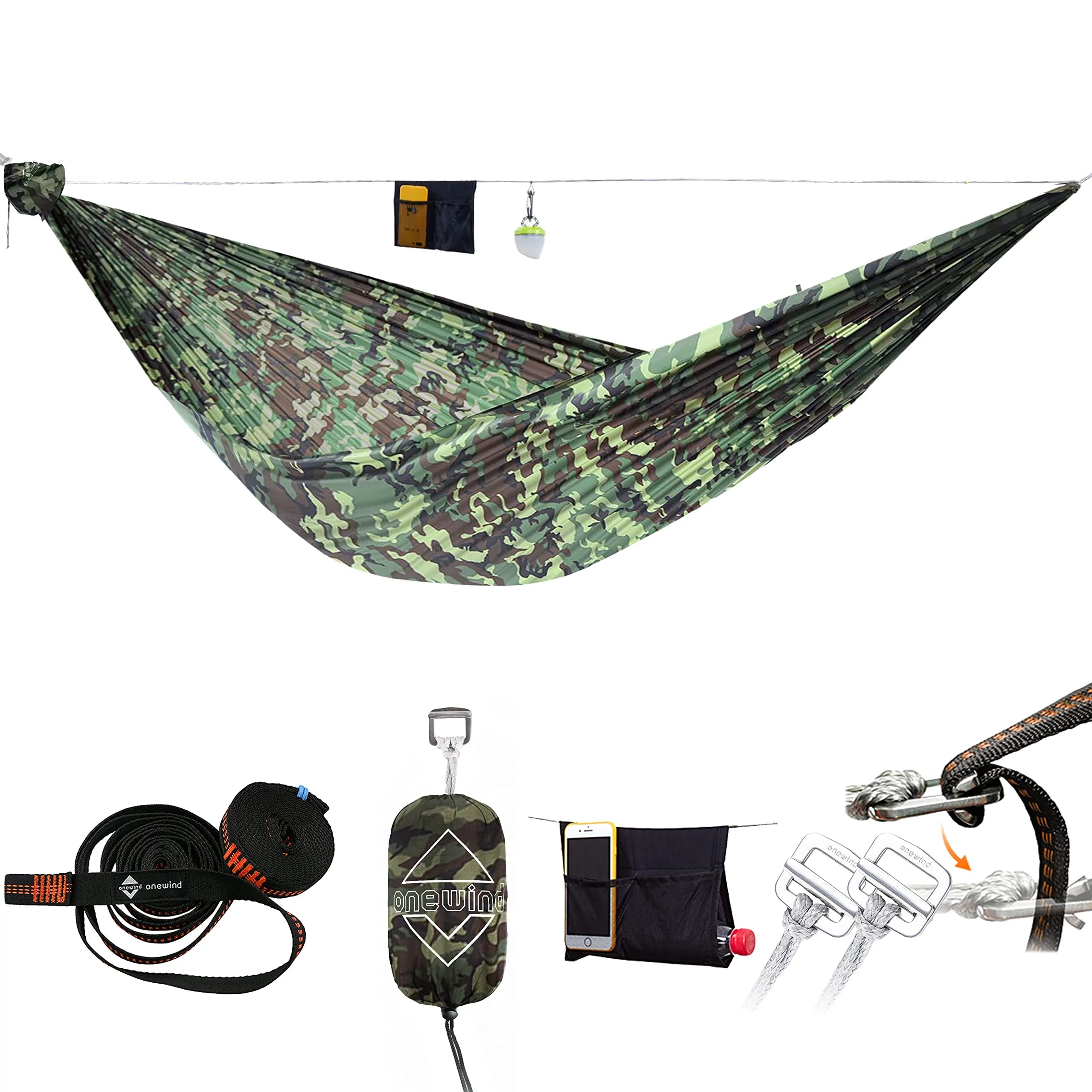
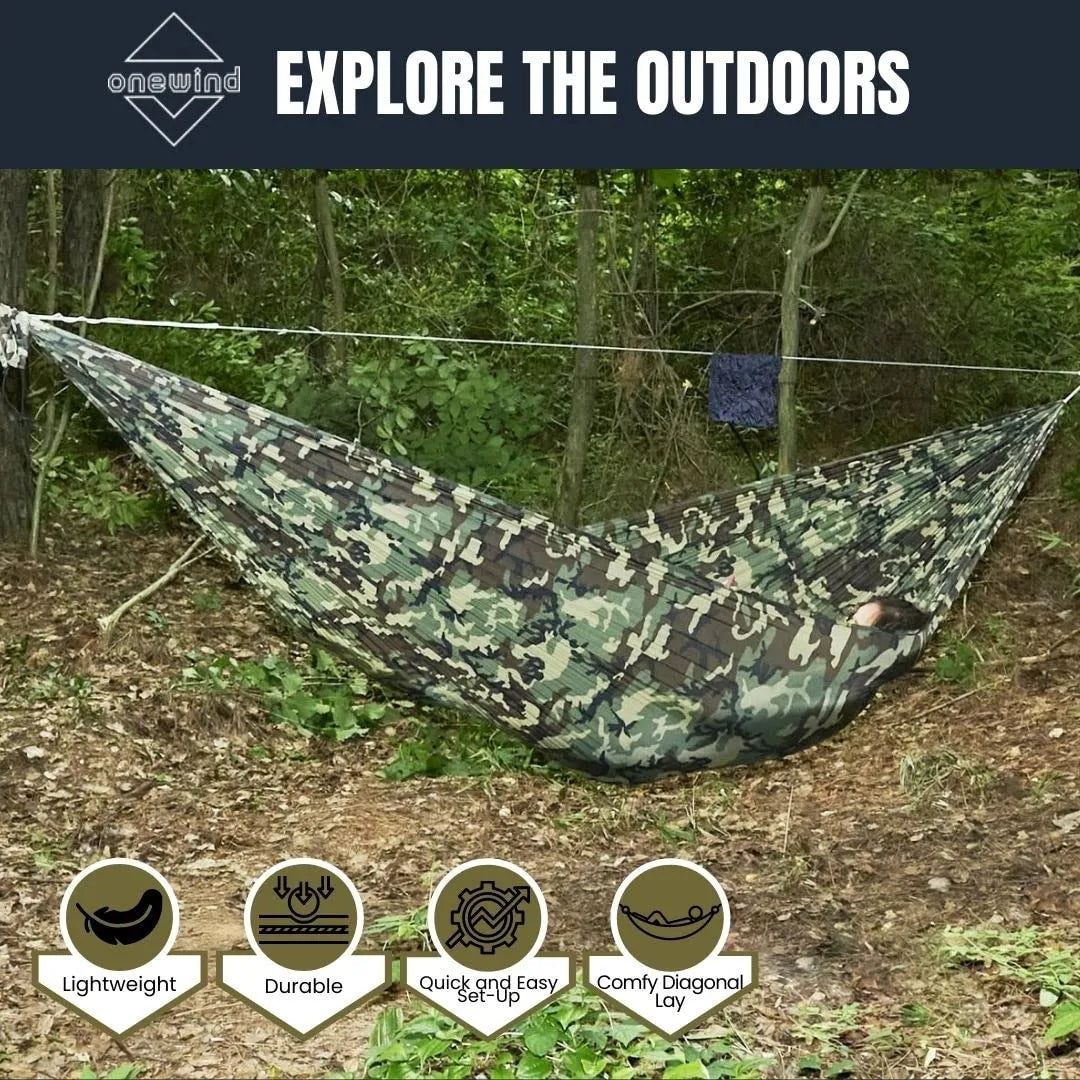
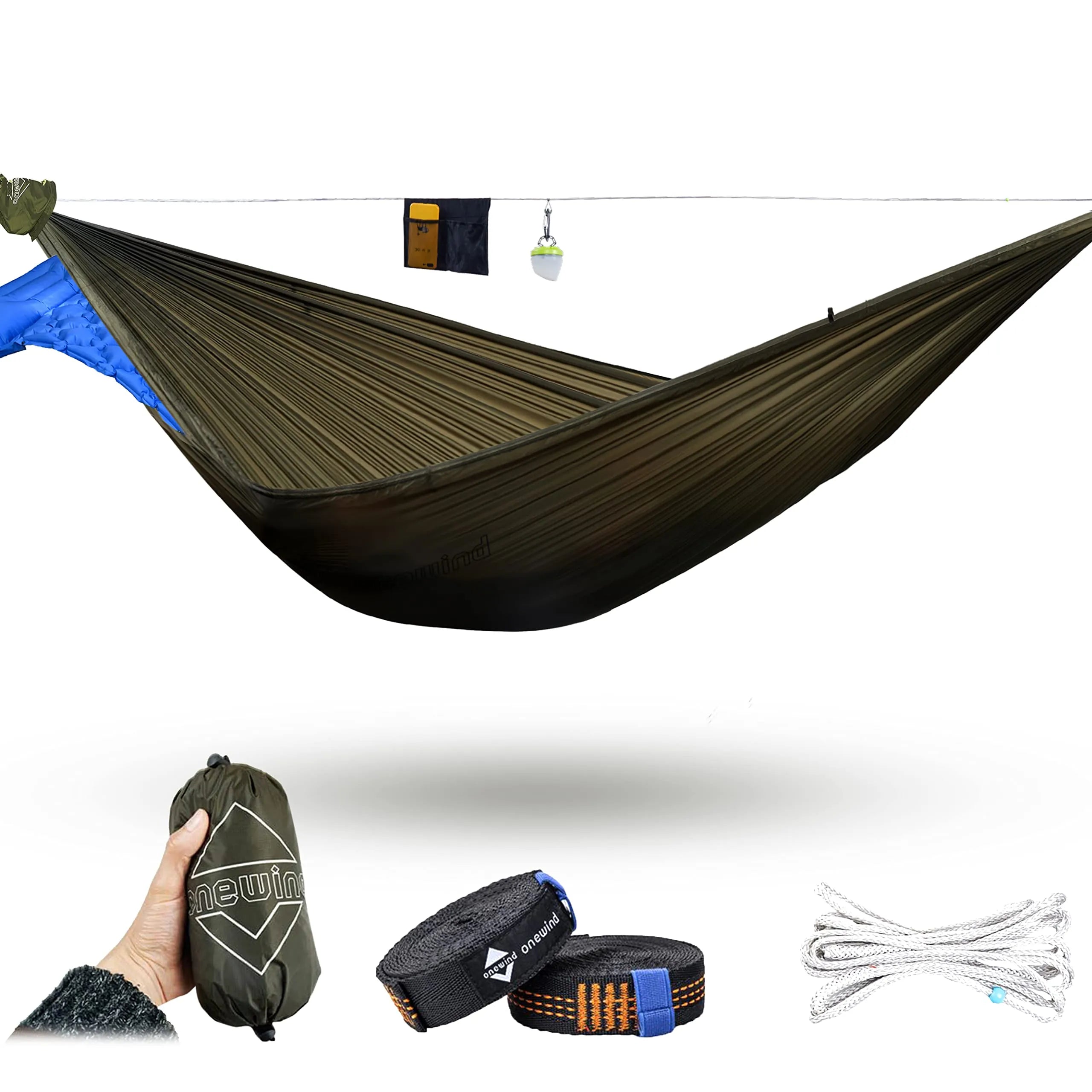
Der Onewind Ultralight-Hängematte bietet die 20D-Gewebeoption, die den idealen Kompromiss zwischen Gewichtsersparnis und Haltbarkeit für den Einsatz am Wochenende bietet.
⚠️ Vermeiden Sie den Fehler, nur den Hängemattenkörper aufzurüsten. Eine 7 oz Hängematte in Kombination mit 10 oz Daisy Chains und einer 24 oz Plane ergibt ein 41 oz System. Eine 14 oz Hängematte in Kombination mit 2 oz Whoopie Slings und einer 16 oz Plane ergibt ein 32 oz System. Die schwerere Hängematte im optimierten System wiegt insgesamt weniger.
Urteil: Beginnen Sie mit dem Austausch der Aufhängung (Whoopie Slings für 15–30 $, spart sofort 4–8 oz), dann ersetzen Sie die Plane und ziehen Sie anschließend einen leichteren Hängemattenkörper in Betracht. Priorisieren Sie das Gesamtgewicht des Systems gegenüber jeder einzelnen Komponente.
Szenario 3: Zeltcamper erwägt den Wechsel zur Hängematte, ist aber wegen des Gesamtgewichts des Systems besorgt
Sie tragen derzeit ein ultraleichtes Zelt mit 2,5 lb und fragen sich, ob ein Hängematten-System Gewicht einsparen würde.
Die ehrliche Antwort hängt von der Jahreszeit ab.
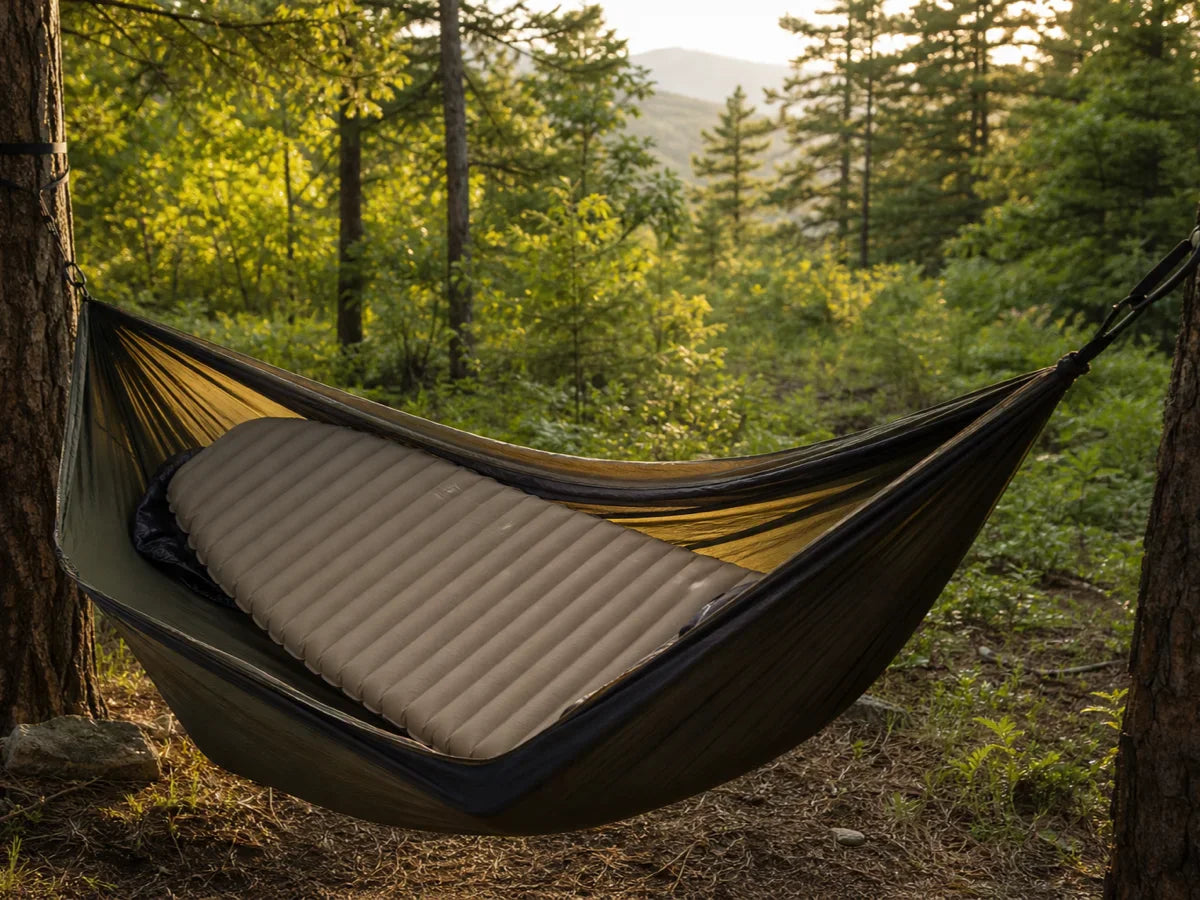
Die Analyse von The Hiking Life zum Weitwandern bestätigt dieses Muster: Hängemattensysteme gewinnen im Sommer den Gewichtsvergleich, weil sie keine Isolierung benötigen, verlieren jedoch zunehmend mit sinkenden Temperaturen, da Hängematten sowohl oben als auch unten Isolierung benötigen (Untersteppdecke), während Zelte nur unten Isolierung benötigen (Isomatte).
Die Community-Daten aus reddits r/ultralight machen den Fall eindeutig: Ein Hängemattensystem ist nicht in erster Linie eine Entscheidung zur Gewichtsersparnis. Es ist eine Entscheidung für Komfort und Schlafqualität.
- ✓ Hängemattenvorteile, die das Gewicht rechtfertigen: kein ebener Untergrund nötig, keine Steine unter dem Rücken, bessere Luftzirkulation im Sommer, aufgehängt über Schlamm und Pfützen und deutlich bessere Schlafqualität für Seitenschläfer.
❌ Das Gewichtsnachteil ist bei Drei-Jahreszeiten- und Wintereinsatz real. Wenn dir das Packgewicht über alles geht, ist ein Zelt unter 16 °C die bessere Wahl.
Urteil: Wechseln Sie zu einer Hängematte, wenn Sie Schlafqualität über das Packgewicht stellen. Der Gewichtsaufschlag für den Einsatz in drei Jahreszeiten beträgt 0,5–1 Pfund, was die meisten Rucksackwanderer für einen deutlich besseren Schlaf als akzeptabel ansehen. Wechseln Sie nicht in der Erwartung, unter 60 °F Gewicht zu sparen.
Szenario 4: Ultralight-Enthusiast, der zwischen 7D- und 20D-Gewebe für Gewicht vs. Haltbarkeit wählt
Sie bauen ein neues Ultraleicht-System auf, und der Hängemattenkörper ist die letzte Komponente, die noch ausgewählt werden muss.
Die Denier-Entscheidung bestimmt einen Gewichtsunterschied von 4–10 oz und einen erheblichen Unterschied in der Haltbarkeit.
Die Backpacking-Light-Community ist bei dieser Entscheidung gespalten, aber der Konsens tendiert dazu, 20D als Standard für die meisten Ultraleicht-Rucksackwanderer zu wählen.
Der Gewichtsunterschied zwischen 7D und 20D bei einer 9-Fuß-Hängematte beträgt ungefähr 6–8 oz.
Diese Ersparnis von 6–8 oz geht mit einem Haltbarkeitsverlust einher, der sich mit der Zeit verstärkt: 7D-Gewebe entwickelt Mikrorisse durch den Kontakt mit rauer Rinde, Astspitzen und sogar Fingernägeln beim Aufbau.
GearandHome-Tests von Hängematten unter 1 Pfund bestätigen: Die leichtesten Modelle (7-10D) erfordern deutlich mehr Sorgfalt bei der Handhabung und bei der Auswahl der Bäume als ihre 20D-Pendants.
Die Kosten-pro-Unze-Rechnung: Wenn Sie 50–80 $ mehr für eine 7D-Hängematte im Vergleich zu einem 20D-Modell ausgeben, sparen Sie 6–8 oz, was ungefähr 8–12 $ pro eingesparter Unze entspricht. Bei diesem Verhältnis sparen Sie mehr Gewicht pro Dollar, indem Sie die Aufhängung austauschen (spart 6 oz für 15 $) oder Ihre Plane aufrüsten (spart 6 oz für 60 $).
Urteil: Wählen Sie 20D als Standard für die meisten ultraleichten Rucksacktouren. Gehen Sie nur auf 7–10D herunter, wenn Sie ein System unter 2 lb für Sommer-Through-Hiking zusammenstellen UND die Einschränkungen bei der Handhabung akzeptieren. Die Gewichtseinsparungen von 20D auf 7D sind real, kosten jedoch pro Unze mehr als die Einsparungen, die bei Aufhängung und Tarp möglich sind.
{% include 'youtube', id: 'c_xQuBw3MP8' %}
Häufige Fehler, die ultraleichte Hängematten-Konstruktionen ruinieren
Dieselben fünf Gewichtsfehler tauchen immer wieder in Bauberichten im Hammock Forums, in Ausrüstungsbewertungen auf r/ultralight und in Diskussionen auf Backpacking Light auf.
Jedes einzelne fügt einem System, das darauf ausgelegt ist, sie zu eliminieren, unnötige Unzen hinzu.
Keiner davon hat mit der Wahl der falschen Marke zu tun. Alle drehen sich darum, die falsche Komponente zu optimieren oder misszuverstehen, wo das Gewicht im System tatsächlich liegt.
Fehler 1: Das Gewicht der Hängematte optimieren und dabei Plane und Isolierung ignorieren
Der häufigste Ultralight-Fehler besteht darin, 200 $ für einen 7 oz schweren Hängemattenkörper auszugeben und ihn dann mit 10 oz schweren Gurten unter einer 24 oz schweren Plane aufzuhängen.
Diese Kombination wiegt insgesamt 41 oz.
Eine Hängematte mit 14 oz und 2 oz Whoopie-Schlingen unter einer Silnylon-Plane mit 14 oz wiegt 30 oz.
❌ Die schwerere Hängematte im optimierten System spart 11 oz gegenüber der leichteren Hängematte im unoptimierten System.
- ✓ Die Lösung: Optimieren Sie immer das Gesamtgewicht des Systems, nicht das Gewicht einzelner Komponenten. Beginnen Sie mit den Komponenten mit dem höchsten Anteil (Tarp und Isolierung), bevor Sie nach Einsparungen im einstelligen Unzenbereich beim Hängemattenkörper suchen.
Fehler 2: Das leichteste Denier-Gewebe wählen, ohne den Einsatzzweck zu berücksichtigen
Vollständiger Gewichtsvergleich und Test des Hängemattensystems
Die Backpacking Light-Foren dokumentieren wiederholte Fälle von Besitzern von 7D-Hängematten, die ihre Hängematte bereits in der ersten Saison zerrissen haben.
Das Fehlermuster ist vorhersehbar: raue Rinde an Kiefern, scharfe abgebrochene Aststummel oder ein Hängenbleiben des Fingernagels beim nächtlichen Positionswechsel.
❌ Eine zerrissene Hängematte auf Meile 40 einer 100-Meilen-Teilstreckenwanderung ist kein Gewinn durch Gewichtsersparnis.
- ✓ Die Lösung: Passen Sie die Denierzahl an Ihre tatsächliche Nutzungsfrequenz und die Bedingungen an. Reservieren Sie 7-10D für Systeme, die nur bei warmem Wetter auf gut gepflegten Wegen mit Bäumen mit glatter Rinde verwendet werden.
Fehler 3: Die Verwendung von Daisy-Chain-Riemen an einem ultraleichten System
Greenbellys Whoopie-Sling-Leitfaden bestätigt: Daisy Chains sind in den meisten Ultraleicht-Aufbauten das größte unnötige Gewicht.
Die r/ultralight-Community bezeichnet Daisy Chains als die „Anfänger-Gewichtssteuer“, weil sie 170–280 g hinzufügen, die Whoopie Slings ohne Funktionsverlust einsparen.
Whoopie-Schlingen lassen sich auf die Größe einer Zahnbürste zusammenpacken, wiegen weniger als 2 oz pro Paar und bieten eine stufenlose Verstellung statt fester Schlaufenpositionen.
❌ Eine Hängematte mit 7 oz und 10 oz Daisy Chains wiegt mehr als eine Hängematte mit 14 oz und 2 oz Whoopie Slings. Die Aufhängung macht die Ersparnis der Hängematte zunichte.
- ✓ Die Lösung: auf Whoopie Slings umsteigen. Die Lernkurve dauert zwei Übungseinheiten in Ihrem Garten. Die Gewichtsersparnis hält ein Leben lang.
Fehler 4: Gewicht der reinen Hängematte mit dem des vollständigen Zelt-Systems vergleichen
Dieser Fehler taucht in jedem Hängematten-Forum auf, wenn Neulinge posten: „Meine Hängematte wiegt 12 oz, das Zelt meines Freundes wiegt 32 oz. Ich habe 20 oz gespart!“
Dieser Vergleich ist falsch, weil ein Hängemattenkörper allein kein Untersystem eines Unterstands ist.
Ein Zelt vereint Konstruktion, Wetterschutz und Bodenisolierung in einem Paket.
Ein Hängemattensystem erfordert vier separate Komponenten, um einen gleichwertigen Schutz zu bieten: Hängemattenkörper, Aufhängung, Tarp und Isolierung.
❌ Einen Hängemattenkörper mit einem Zelt-System zu vergleichen, ist, als würde man eine Jacke mit einem kompletten Lagensystem vergleichen.
- ✓ Die Lösung: Vergleichen Sie immer das Gesamtgewicht des Systems. Ein Hängemattensystem für drei Jahreszeiten (3–4 lbs) ist mit einem Zelt für drei Jahreszeiten (2,5–3,5 lbs) konkurrenzfähig, gewinnt aber nicht durchgängig allein beim Gewicht.
Fehler 5: Die Gewichtstragfähigkeitsberechnung bei Stoffen unter 10D überspringen
Die vom Hersteller angegebenen Gewichtswerte gehen von neuem Stoff unter Laborbedingungen mit gleichmäßig verteilter statischer Last aus.
Der reale Einsatz bringt dynamische Belastungen (Ein- und Aussteigen), Punktbelastungen (Ellbogen, Knie), Abrieb durch Kontakt mit der Baumrinde und kumulative UV-Schädigung über Monate der Nutzung mit sich.
Die Testnotizen von GearandHome besagen, dass Hängematten mit einem Gewicht von unter 1 lb niedrigere Tragfähigkeiten haben, die für Camper über 180 lbs oder für Personen, die eine Hängematte gemeinsam mit neben ihnen verstautem Gepäck nutzen, relevant werden.
❌ Ein 200-Pfund-Camper in einer 7D-Hängematte mit einer Tragfähigkeit von 250 Pfund hat vor Berücksichtigung dynamischer Lasten und Materialverschleiß nur 50 Pfund Sicherheitsreserve. Laut Berichten im Backpacking Light-Forum verringert sich diese Reserve durch UV-Belastung und wiederholte Belastungszyklen messbar.
- ✓ Die Lösung: Ziehen Sie 30–40 lbs von den Herstellerangaben ab, um eine echte Sicherheitsreserve zu erhalten. Wenn Sie über 180 lbs wiegen, wählen Sie mindestens 15D. Wenn Sie über 200 lbs wiegen, wählen Sie unabhängig von Ihren Gewichtsziele mindestens 20D.
Die Schnell-Entscheidungs-Checkliste
Verwenden Sie diese Checkliste, bevor Sie Ihr ultraleichtes Hängemattensystem aufbauen oder aufrüsten.
- ✓ Vor dem Kauf: Berechnen Sie das Gesamtgewicht Ihres Systems über alle vier Komponenten hinweg, nicht nur über den Hängemattenkörper.
- ✓ Vor dem Austausch: Prüfen Sie die Prioritätsreihenfolge der Gewichtseinsparungen. Zuerst den Austausch der Aufhängung ($15-30, spart 6 oz), dann die Plane, dann den Hängemattenkörper.
- ✓ Vor dem Vergleich mit Zelten: Verwenden Sie das Gesamtgewicht des Systems einschließlich Aufhängung, Tarp und Isolierung. Ein Hängemattenkörper allein ist kein Schutz.
Wenn Sie sich noch für die größere Shelter-Familie entscheiden, vergleichen Sie die Gewichtsnachteile mit dem vollen ultraleichte Hängemattenkollektion anstatt einen Hängemattenkörper isoliert zu beurteilen.
Für eine umfassendere erste Schutzentscheidung kombinieren Sie dieses Gewichtsrahmenwerk mit unserem Hängematte vs. Zelt-Unterstand-Anleitung bevor du dich für ein komplettes Set entscheidest.
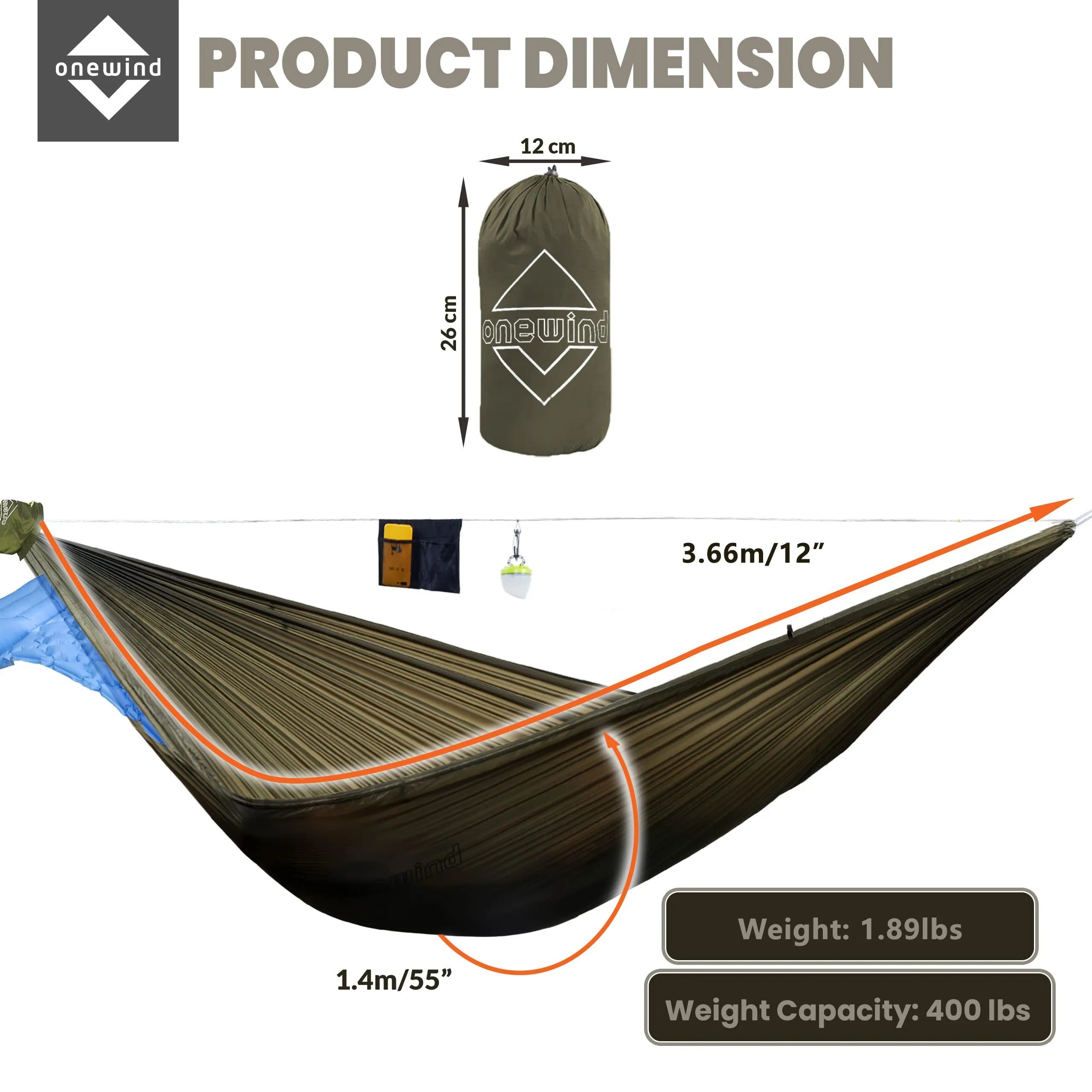
Der Onewind ultraleichte Camping-Hängematte Bietet die 20D-Gewebeoption in einer Länge von 11 Fuß, die eine korrekte diagonale Liegeposition unterstützt – der Ausgangspunkt für ein Drei-Jahreszeiten-System unter 4 Pfund.
⚠️ Eine letzte Regel aus der Community: Das leichteste System ist nicht das beste System. Das beste System ist dasjenige, bei dem jede Komponente zu deinem Gewichtsziele, deinem Einsatzzweck und deinen Anforderungen an die Haltbarkeit passt – ohne auch nur einen schwachen Punkt.