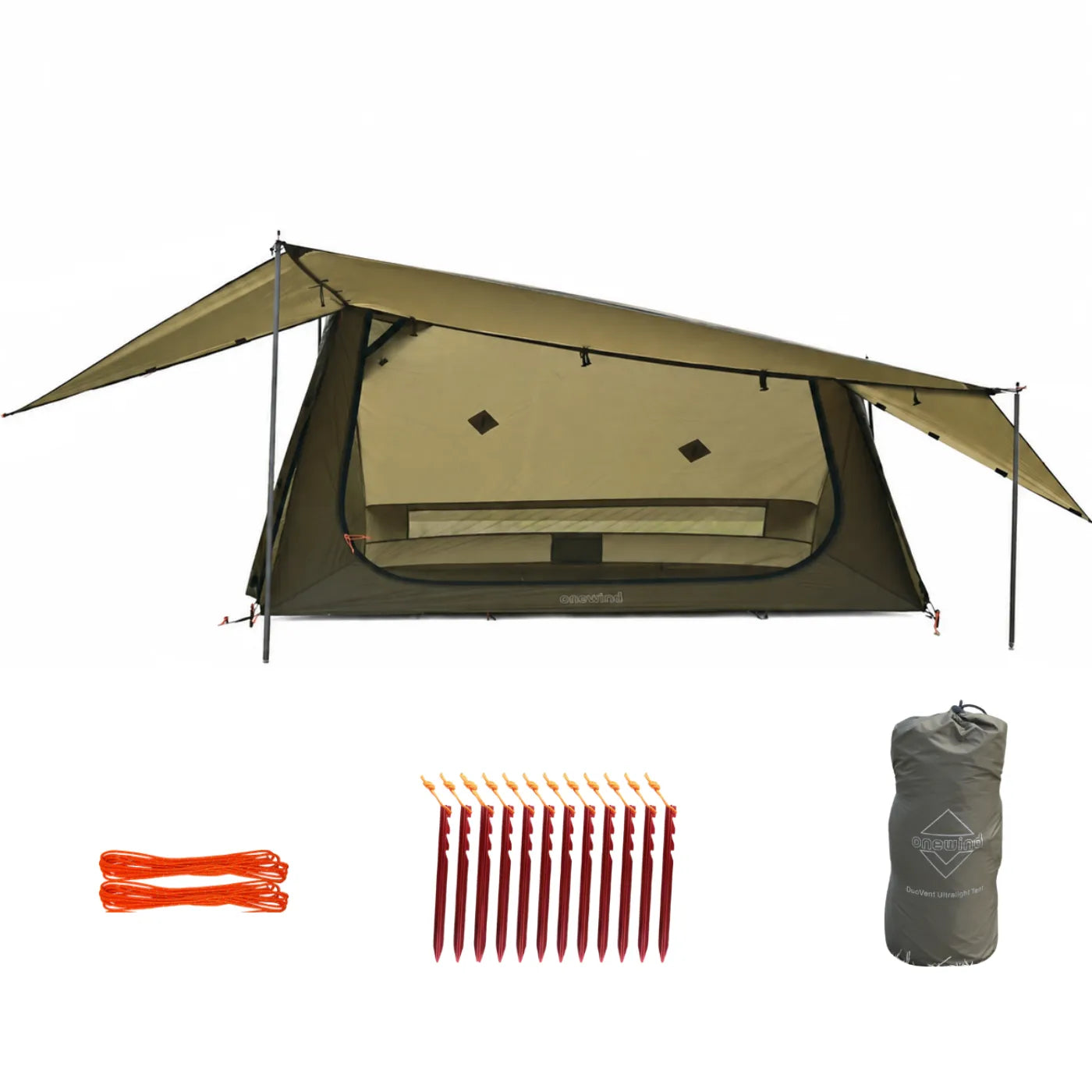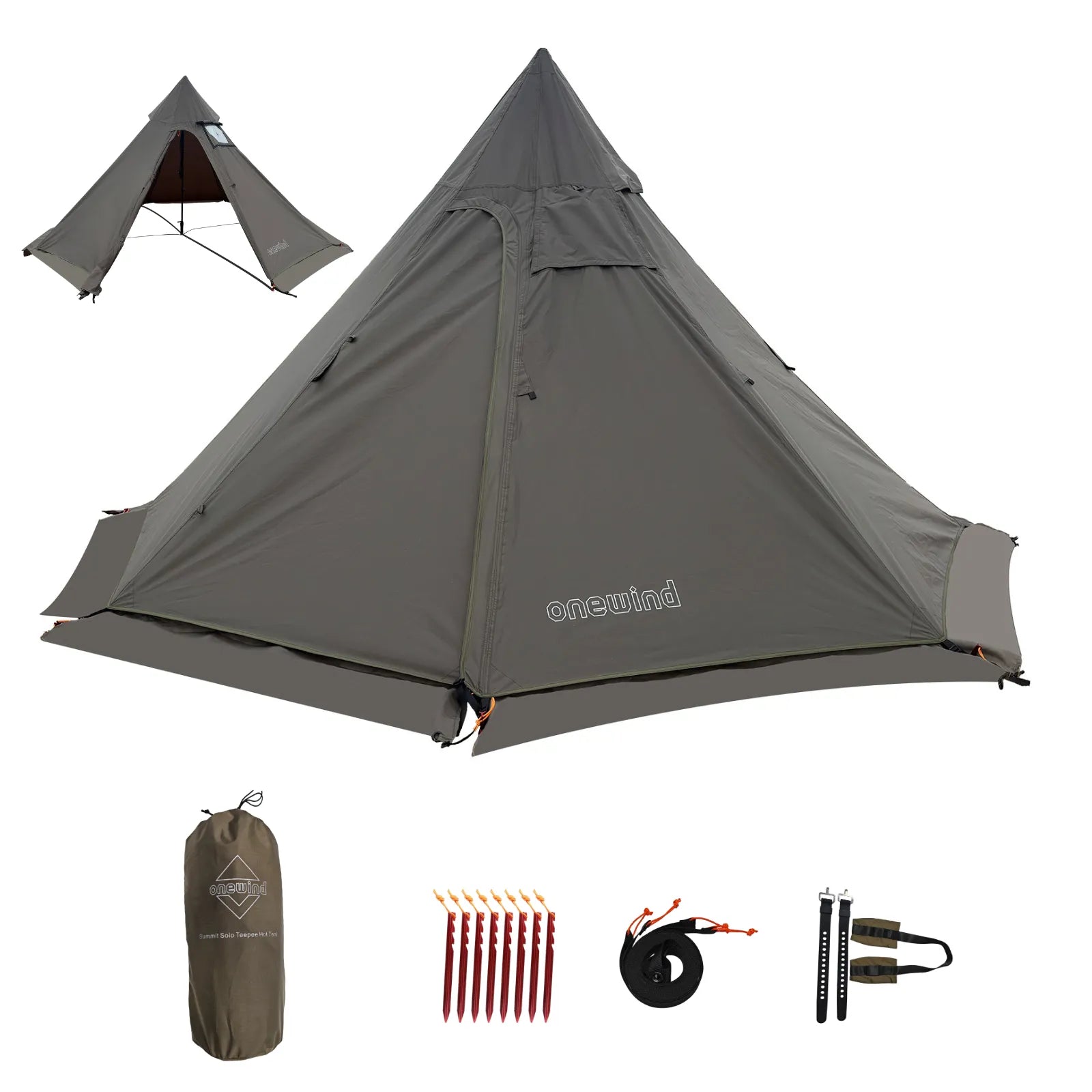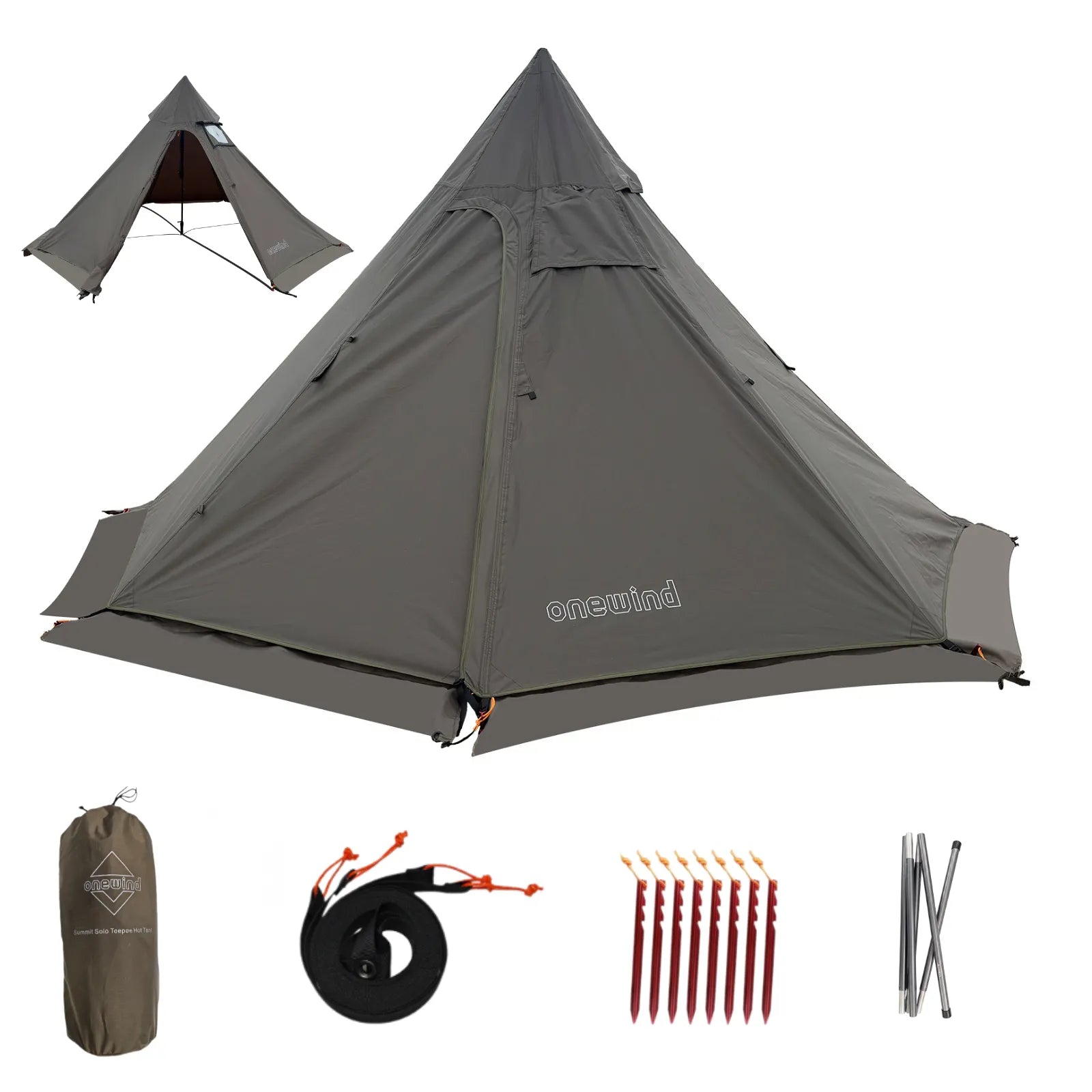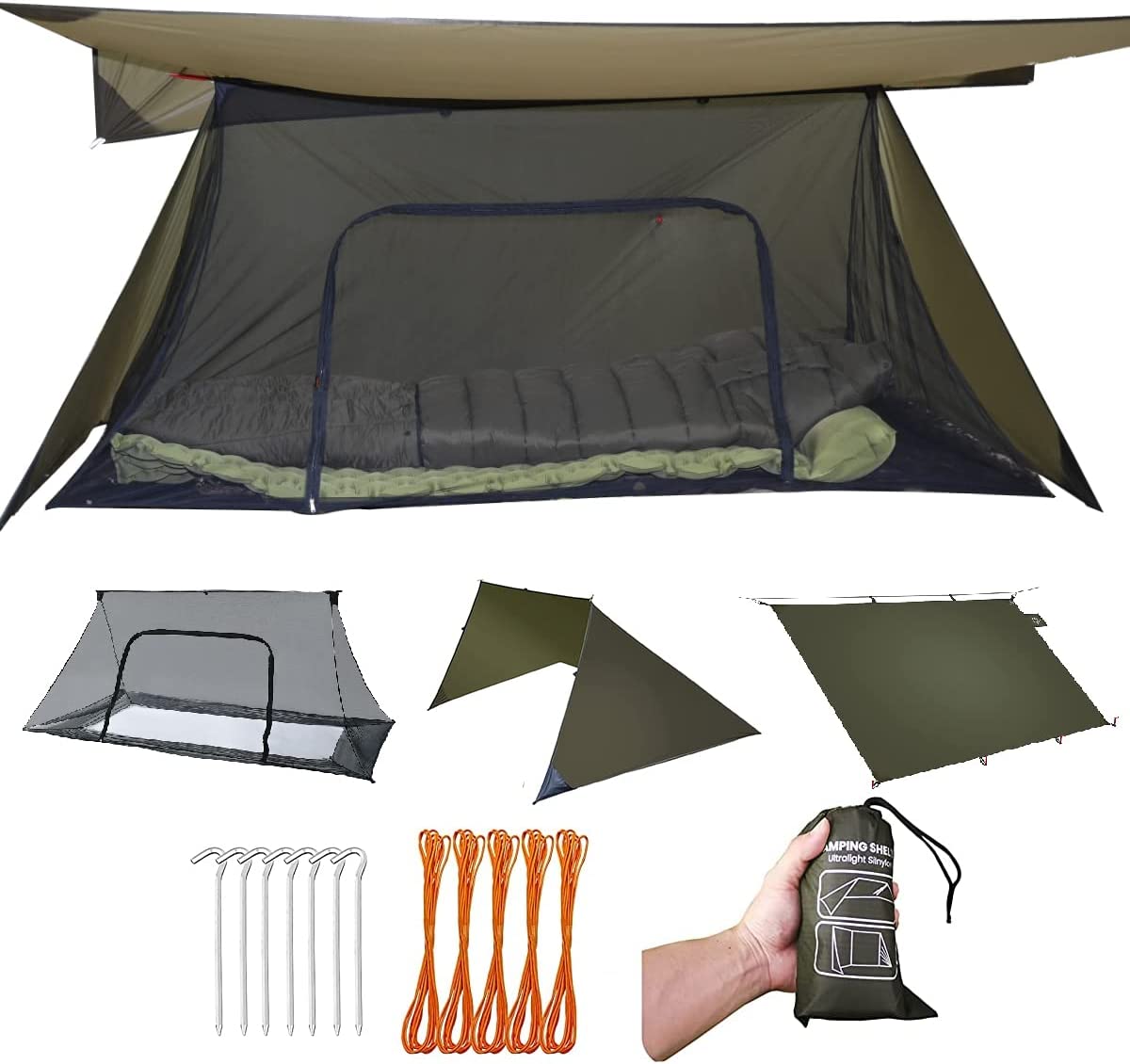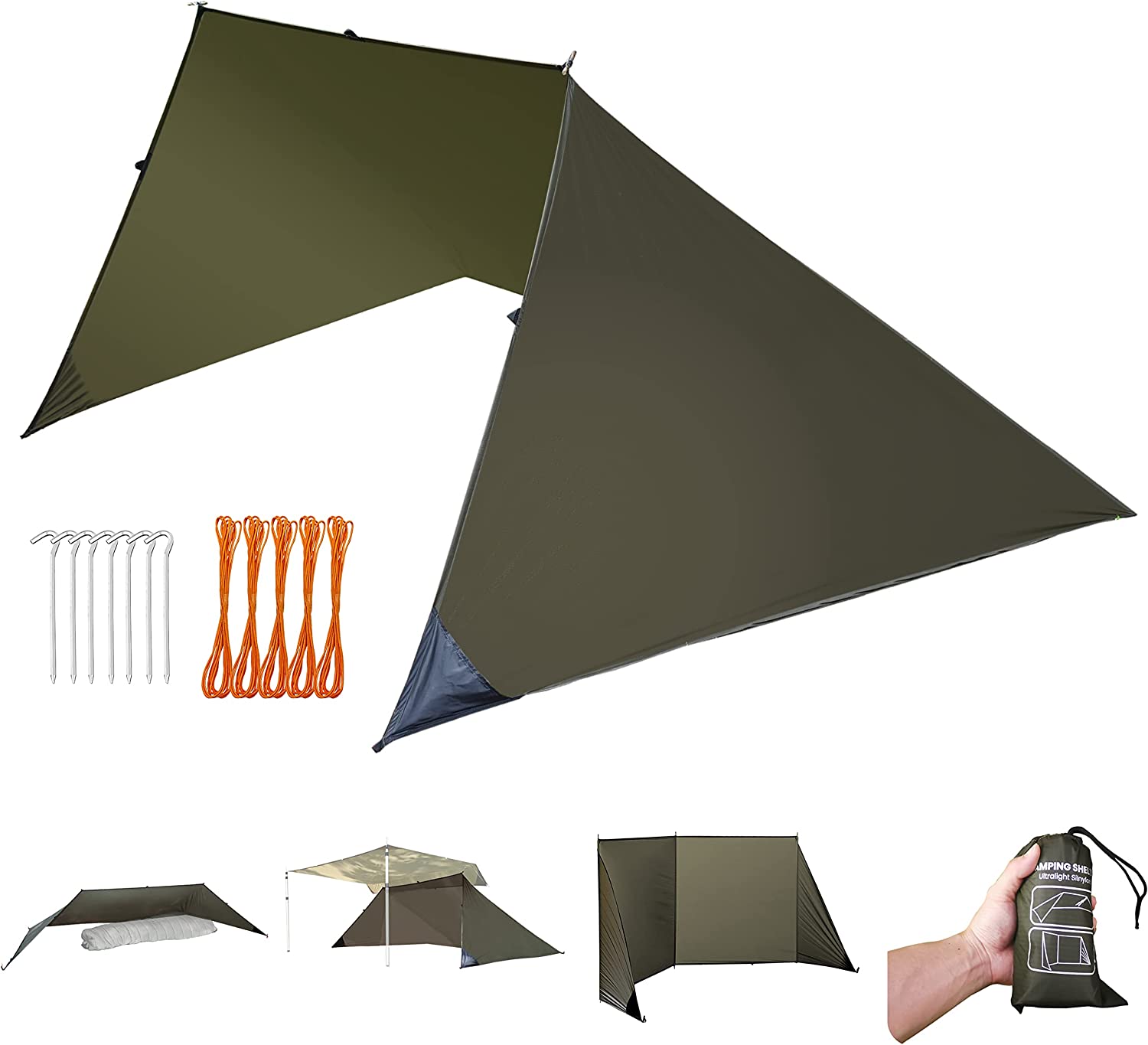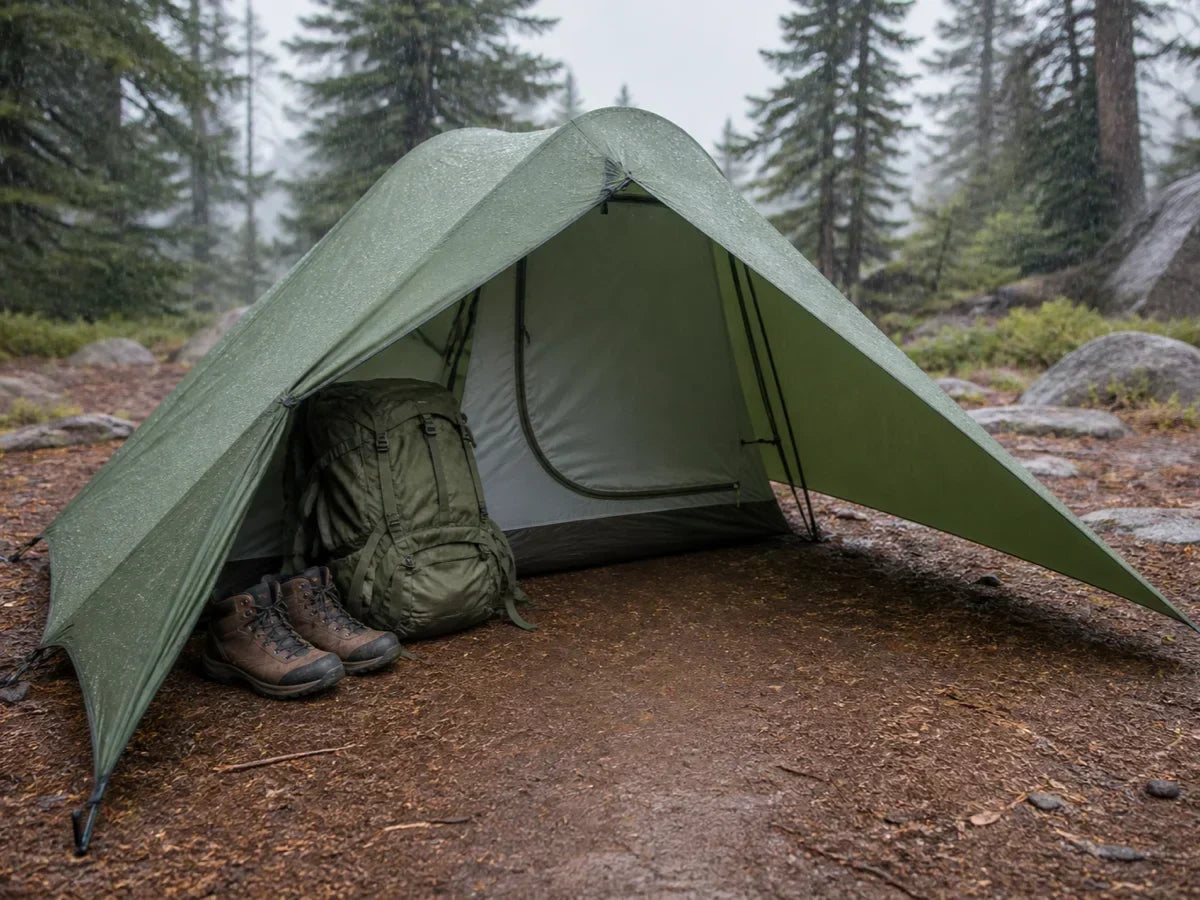

Ett bivacksäckstält står i det smala utrymmet mellan två välbekanta skydd.
Det ger en ensam sovande mer form, nätutrymme och väderskydd än en platt bivacksäck.
Det skapar fortfarande inte sittutrymmet, tamburförvaringen eller den långa regnskyddskomforten hos ett enmanstält.
Det är hela beslutet.
Välj ett bivy-tält när resan belönar ett kompakt, sovfokuserat skydd och du vill ha tyget borta från ansiktet.
Välj något större när komfort på lägret, skyddad hantering av utrustning eller flera blöta nätter är viktigare än en låg profil.
Vad du kommer att lära dig
- ✓ Avgör om ett bivi-säckstält verkligen är en uppgradering jämfört med en platt bivi-säck för dina resor.
- ✓ Vet när en tarp fortfarande hör hemma ovanför ett lågt uppbyggt skydd.
- ✓ Använd ett 6-stegs installationsflöde före den första blöta övernattningen.
- ✓ Jämför Solo Skyshade Tartent och SoloVent utan att behandla någon av dem som en universell ersättning för tält.
Du kommer inte att få en generell produktlista.
Du kommer att få ett beslut om fältet.
Den användbara frågan är inte "är en bivacksäck verkligen ett tält?"
Den användbara frågan är: ”vilket problem försöker jag lösa jämfört med en vanlig bivackpåse?”
Om svaret är ansiktsutrymme, insektsnät, snabbare insteg och en mer stabil sovform, kan kategorin vara logisk.
Om svaret är att byta kläder i skydd, förvara en ryggsäck inuti, laga mat i dåligt väder eller sitta igenom en storm, är ett större skydd det bättre valet.
Enligt OutdoorGearLabs testkategorier för bivy är de användbara prestandakategorierna väderskydd, komfort, packad storlek och ventilation.
Det ursprungliga ramverket är användbart eftersom ett bivacksäckstält kan förbättra komforten och ventilationskontrollen utan att automatiskt lösa varje väder- eller förvaringsproblem.
Snabbt svar
Ett bivacktält är bäst för korta soloturer där sovutrymmet är viktigare än boytan.
Det är ett bättre alternativ än en platt säck när den sovande ogillar tyg nära ansiktet, vill ha nätskärm mot insekter eller vill ha ett skydd som håller formen utan en stor tältyta.
Det är fel svar när camparen verkligen vill ha ett litet tältutrymme.
Låga skydd belönar en disciplinerad uppsättning.
De bestraffar vaga förväntningar.
Beslutsramverket
Börja med tältvolym.
Ett tält ger dig utrymme runt kroppen.
En bivy-säck ger dig tyg runt sovsystemet.
Ett bivacksäckstält tillför precis tillräckligt med struktur för att göra bivackupplevelsen mindre trång.
Den konstruktionen kan hålla nätet borta från ansiktet, lyfta huvudänden, skapa en renare ingång och förhindra att yttertältet kollapsar mot isoleringen.
Det skapar ingen veranda.
Det får inte blöta stövlar att försvinna.
Det låter dig inte sitta igenom två timmars regn medan du sorterar utrustning bekvämt.
Den bästa köparen är ärlig om dessa begränsningar före den första natten.
Vad ett bivacksäckstält tillför
Den första fördelen är psykologisk.
En platt bivackpåse kan kännas effektiv på papperet och instängd vid midnatt.
Den extra strukturen hos ett bivacksäckstält ger huvudområdet en fast form, så att sovaren inte behöver kämpa med löst tyg varje gång hen vänder sig om.
Den andra fördelen är ventilationskontroll.
När nät och ventiler stannar där de hör hemma blir luftflödet enklare att hantera.
Det betyder inte att kondens försvinner.
Det betyder att skyddet ger dig bättre verktyg.
Den tredje fördelen är en renare ingång.
En formad öppning är lättare att använda i mörkret än en slapp säcköppning, särskilt när kängor, pannlampa och regnjacka ligger förberedda utanför.
Detta är verkliga vinster.
De är också små vinster.
Skyddet är fortfarande sömn först.
Vad det fortfarande inte löser
Köp inte struktur och förvänta dig ett rum.
Det misstaget är vanligt eftersom ordet "tält" förändrar förväntningarna.
Ett bivy-tält kan vara mer bekvämt än en platt bivy-säck utan att bete sig som ett tält.
Skillnaden är viktigast i dåligt väder.
En torr natt kan utrustningen ligga kvar packad, stövlarna kan stå bredvid skyddet och den lilla ytan känns effektiv.
En våt natt blir varje exponerad sak ett litet problem.
Din ryggsäck behöver ett överdrag.
Din regnjacka behöver en plats att droppa av.
Dina stövlar måste vara lätt åtkomliga utan att blöta ner täcket.
Om de uppgifterna är centrala för resan, lös dem innan du väljer skyddet.
Den hybrida stegen
Denna stege håller kategorin tydlig.
En nödbivack är inte ett helgtält bara för att den är liten.
En insektsbivy är inte ett regnskydd bara för att den har en dragkedja.
En bågformad bivack och ett bivacksäckstält förbättrar formen, men de är fortfarande lågavlastande skydd.
Ett tält för en person är större eftersom det har mer att göra.
Det rätta valet är inte den minsta produkt du kan stå ut med.
Det rätta valet är den minsta artikel som fortfarande klarar själva resan.
Om rutten har kända campingplatser, en mild väderprognos och en plan för att sova ensam, kan den mindre änden av stegen fungera.
Om rutten har osäkert väder, långa lägerdagar eller hantering av våt utrustning, gå upp ett steg på stegen innan resan tvingar fram lärdomen.
Installationsarbetsflöde
Video: jämförelse mellan bivy med båge och bivy-liknande skydd
Öva på tältpitchen innan den första riktiga turen.
Låga skydd lämnar mindre utrymme för slarv med spänningen.
En nedhängande panel som skulle vara irriterande i ett tält kan vidröra ditt täcke i ett bivy-säcktält.
Börja med marken.
Undvik lågt liggande fickor, uppenbara avrinningvägar och gräs som kommer att blöta ner undersidan till morgonen.
Sedan orientera ingången.
Vindriktning, dropp från träd och lutningen under din axel spelar alla större roll när skyddet är lågt.
Pinn upp skyddet tills nätet och ytterduken håller sin avsedda form.
Överstrama inte ett hörn och låt inte huvudänden kollapsa.
Ventilera skyddet innan du känner dig fuktig.
Morgonen är terminsbetyget.
Rör vid den inre väggen, täckets fotbox och madrassens kant.
Om de är fuktiga, ändra platsval, ventilation eller presenningens täckning nästa gång.
Ventilation och kondens
Kondensation är inte ett fel hos ett visst varumärke eller en viss modell.
Det är den viktigaste färdigheten för att sätta upp ett lågvolymsskydd.
Reddit-diskussioner om ultralätt utrustning rapporterar samma uppdelning om och om igen: användare som gillar bivacksäckar lovordar deras lilla fotavtryck och snabba uppsättning, medan användare som slutar använda dem oftast nämner kondens, trångt utrymme vid ansiktet eller friktion i vått väder.
Ett bivy-tält har mindre luft runt den sovande än ett tält.
Din andedräkt, kroppsvärme, fuktiga strumpor och våta skaltyg delar alla det lilla luftrummet.
Struktur hjälper eftersom den kan hålla tyget borta från täcket och hålla ventilerna i användbara positioner.
Den kan inte ta bort fukt.
Den bästa vanan är tidigt luftflöde.
Öppna ventilen innan insidan känns fuktig.
Håll täcket borta från att tryckas mot väggen.
Undvik att dra in våta regnkläder i sovområdet.
Om vädret tvingar allt att stänga, försöker skyddet säga dig något.
Du kan behöva ett tarp-tak ovanför eller ett tält i stället för ett bivvy-liknande skydd.
När en tarp fortfarande hör hemma ovanför den
Video: jämförelse av hooped bivy-skydd för kompakt camping
Ett tarp är inte ett erkännande av att bivysäcktältet misslyckades.
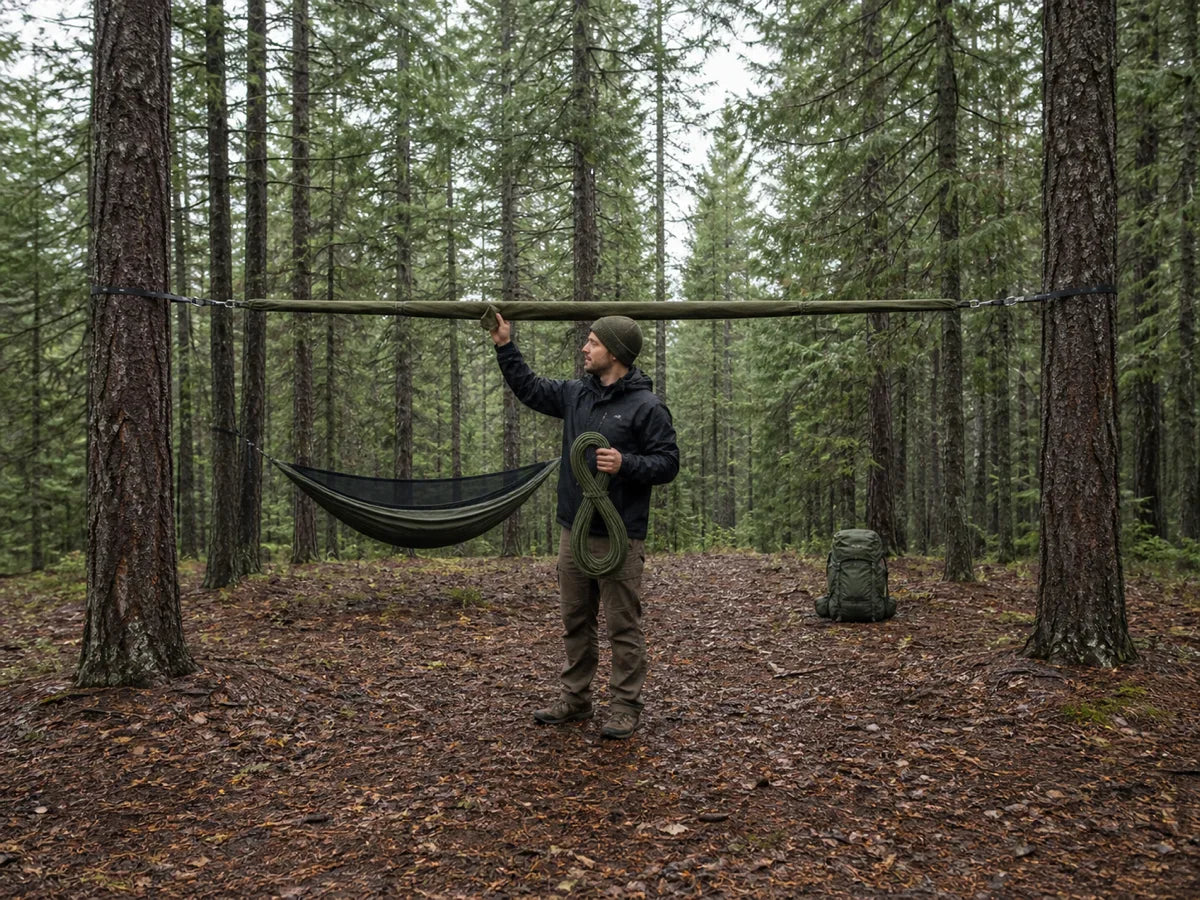
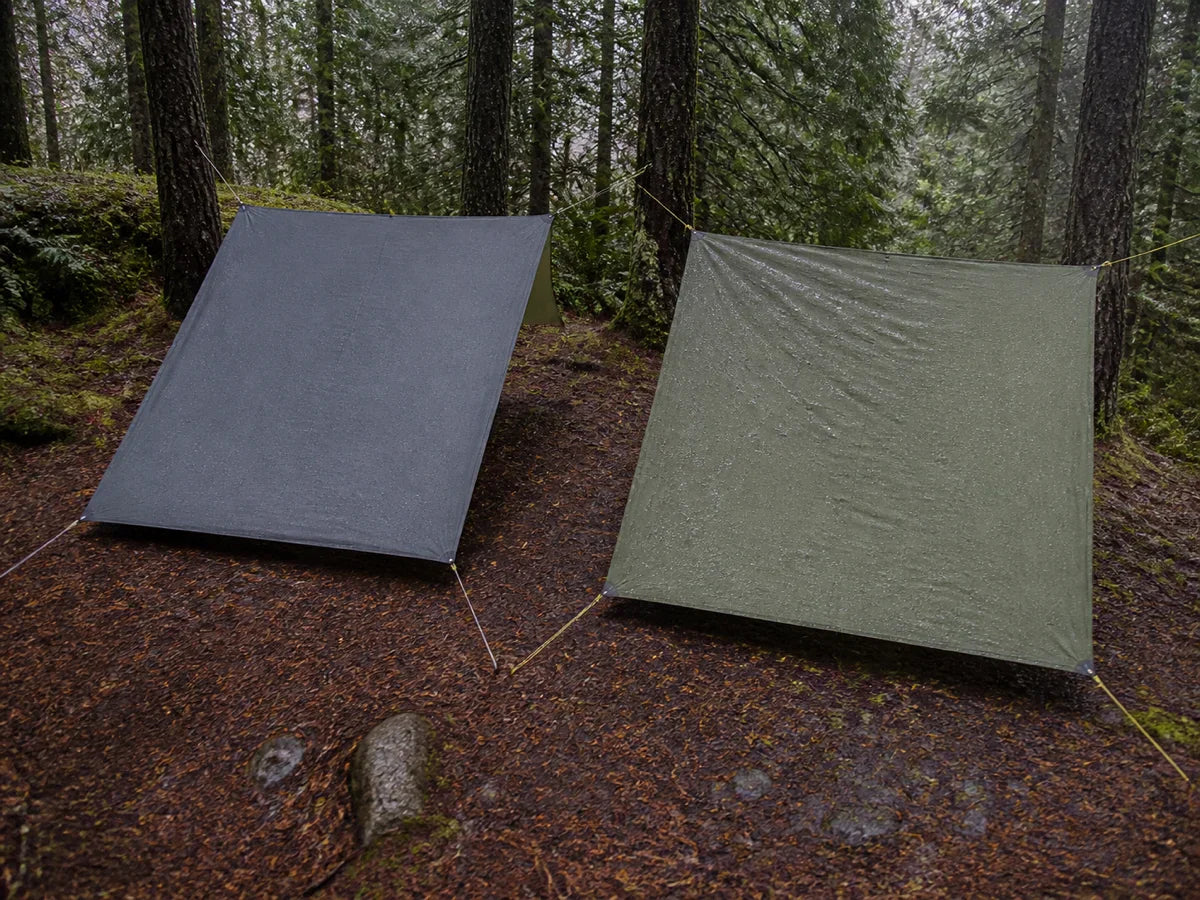
Det är ett sätt att ge ett lågt skydd en arbetszon.
Tarpen skyddar ingången, stövlarna, ryggsäcken och regnskalet.
Det gör också att du kan ventilera bivacken mer självsäkert eftersom öppningen är mindre exponerad.
För våta turer spelar detta större roll än några få uns i ett kalkylblad.
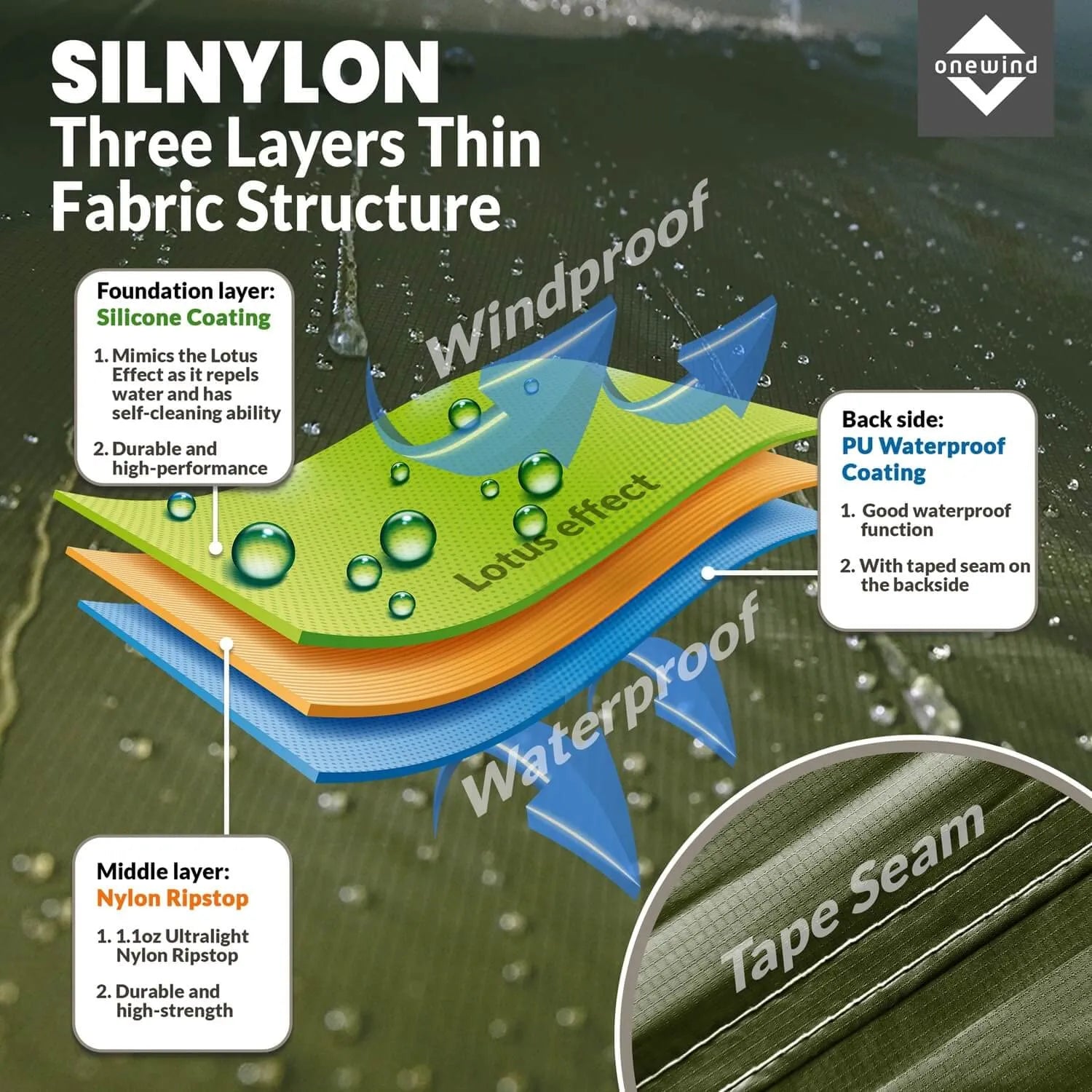
Misstaget är att tro att vattentätt tyg ensamt löser allt för lägret.
Vattentätt tyg kan skydda sovsystemet och ändå lämna dig med blöta stövlar, en blöt ryggsäck och en trång ingång.
Om du förväntar dig regn eller kraftig dagg, kombinera bivysäckstältet med en liten tarp eller välj ett tält med absid.
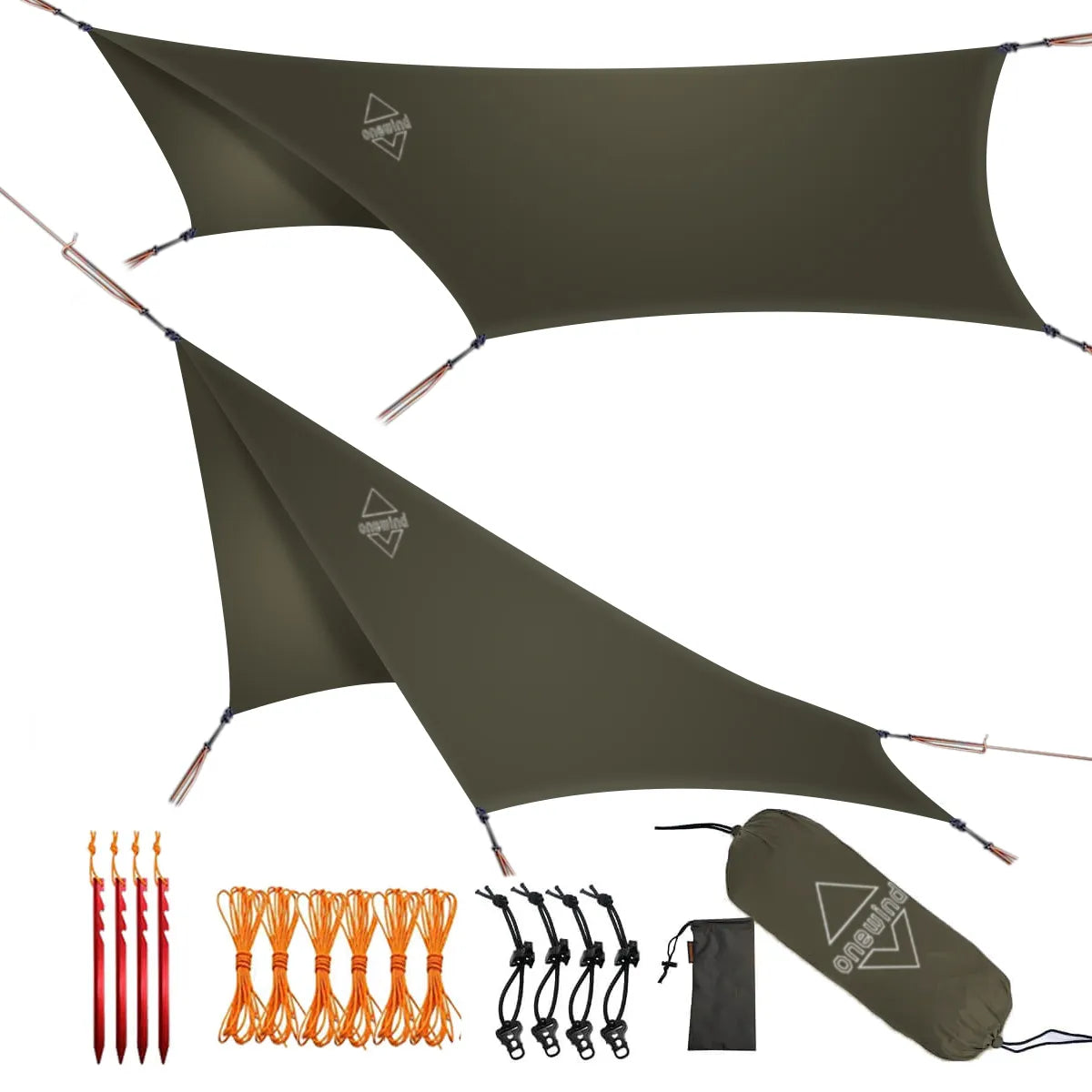
För Onewind-kunderna, den Onewind 12 fot silnylontarp kan stödja det jobbet med våt inträde när rutten kräver överskydd ovanifrån.
Fältrapporter från användare med minimalt skydd visar varför detta är viktigt: när stövlar, packning och ytterlager är våta måste sovskyddet göra mer än att bara täcka quilten.
Var Solo Skyshade Tartent passar in
The Solo Skyshade Tartent är produktlänken att börja med om du vill ha ett mer tarp-/tälttypiskt solo-skydd i denna bivy-liknande avvägning.
Den är positionerad som en bivacktältprodukt med en modulär skyddsvinkel, varianten OD Green och ett aktuellt produktpris på 149,99 USD vid den tidpunkt då denna artikel förbereddes.
Det användbara sättet att tolka det är inte "detta ersätter alla enmanstält."
Det användbara sättet att läsa det är: "det här hör hemma i den strukturerade kategorin för ensamma skydd."
Det är vettigt för en campare som vill ha diskret täckning, mer form än en platt säck och en kompakt uppsättning för ensam användning.
Det är mindre lämpligt för någon som vill ha en rymlig interiör, en gemensam campingyta eller ett skydd med förtältet i första hand.
Använd den när resan passar skyddet.
Tvinga inte skyddet att passa fel resa.
Var SoloVent passar in
Onewinds nuvarande live-sida för bivy-produkten är den Ultralätt SoloVent-bivackentält.
Det spelar roll eftersom äldre handtag kan skapa förvirring när läsare jämför bivy-liknande produkter.
Använd den aktuella produktlänken när läsaren vill ha ett strukturerat bivy-liknande enmansskydd med fokus på sömn först.
SoloVent-korridoren är tydlig: mer form och utrymme än en platt bivy-säck, men fortfarande inte ett tältutrymme.
Det gör den användbar för camparen som redan accepterar bivacksystemet men vill ha mindre ansiktskontakt, bättre kontroll över meshen och en mer väldefinierad uppsättning.
Om läsaren fortfarande funderar mellan de bredare kategorierna, skicka dem till den Bivackpåse vs tältguide.
Om de behöver den grundläggande definitionen först, skicka dem till vad är en bivacksäck.
Scenario 1: Nybörjare oroad över klaustrofobi
Bedömning: välj endast ett bivacktält för en kontrollerad första tur.
Strukturen är poängen här.
En nybörjare som oroar sig för klaustrofobi bör inte börja med det allra trängsta möjliga skyddet och hoppas att känslan blir bättre klockan 2 på natten.
Använd en tomt i trädgården eller en kort övernattning för att testa om huvudändens struktur är tillräcklig.
Kliv in i tältet helt, dra igen nätpanelen med dragkedjan, sträck dig efter vatten, rulla över och kliv ut igen.
Om den sekvensen känns hanterbar kan kategorin fungera.
Om det känns stressigt innan resan börjar är lösningen ett enmanstält.
Skyddet ska minska ångesten, inte bli själva läxan.
Scenario 2: Platt bivacksäck jämfört med strukturerad bivacksäckstält
Bedömning: välj det strukturerade alternativet när komfort är det verkliga hindret.
En platt bivacksäck är effektiv när den som sover redan accepterar ett trångt utrymme.
Det glänser när prognosen är mild, marken är hållbar och camparen vill ha ett så litet planerat sovskydd som möjligt.
Ett bivy-säcktält får sin extra struktur när den platta säckens svagheter spelar roll.
Dessa svagheter gäller vanligtvis yttertyget, placeringen av insektsnätet, öppningens form och kontakten med täcket.
Om det är därför du tvekar, är struktur ingen lyx.
Det är funktionen du köper.
Om du bara är ute efter den minsta packade varan, håll dig till platt.
Om du är ute efter en bättre natt, satsa på struktur.
Scenario 3: Cykelpackare med kompakta väskor
Slutsats: välj ett bivacksäcktält om ditt cykelbagage värderar kompakt form högre än utrymme på campingen.
Cykelpackare bryr sig ofta lika mycket om packad form som om packad vikt.
Ett skydd som passar en styrrulle eller ramväska kan vara lättare att leva med än ett mer skrymmande tältpaket.
Det är där ett bivy-säcktält kan vara meningsfullt.
Det ger en ensam resenär ett tydligt sovskydd utan att kräva en stor tältplats.
Den svaga punkten är utrustningshantering.
Cykelskor, hjälm, vattentätt ytterskal och små väskor behöver fortfarande en plan.
I torrt väder kan den planen vara enkel.
Vid regn, lägg till ett taköverhäng eller välj ett skydd med absid.
Cykeln gör inte våta kläder mindre våta.
Det gör bara kompakt packning ännu mer värdefull.
Scenario 4: Camper i vått väder
Slutsats: lägg till en presenning eller välj ett tält.
Ett bivaksäckstält kan hantera en del väder, men blöta lägerbestyr är större än att sova.
Du måste fortfarande gå in utan att dra med vatten upp på täcket.
Du måste fortfarande se till att stövlarna är lättåtkomliga.
Du behöver fortfarande en plats för ryggsäcken.
Du behöver fortfarande tillräckligt med luftflöde så att insidan inte blir fuktig och instängd.
Ett presenningstak löser flera av de problemen samtidigt.
Det ger dig en torr ingångszon, en plats att ställa utrustning på och större trygghet att hålla ventilerna öppna.
Om resan är kort och regnet är lätt kan den kombinationen fungera.
Om resan är lång och blöt är ett tält ofta det enklare skyddet.
Scenario 5: Tält för en person vs bivacksäckstält för 1–2 nätter
Bedömning: välj bivackpåsen för snabb sömn, välj tältet för campingtid.
För en eller två nätter kan bivacktältet vara ett smart mellanalternativ.
Resan är tillräckligt kort för att kompakthet har ett verkligt värde och vädermisstag har mindre tid att förvärras.
Det fungerar bäst när du anländer sent, sover och flyttar på dig på morgonen.
Det fungerar sämre när du planerar att sitta kvar på lägret, byta lager under skydd, organisera utrustning eller vänta ut vädret.
Det är den ärliga skillnaden.
Ett tält är inte alltid bättre.
Det är bättre när du behöver de funktioner som ett tält erbjuder.
Ett bivacksäckstält är bättre när du inte vill bära på den där utrustningen.
Vanliga misstag med bivacktält
Mönstret är enkelt.
De flesta misslyckanden beror på att man förväntar sig att ett bivy-tält ska bete sig som något annat.
Det är inte en platt nödsäck.
Det är inte ett komplett tält.
Det är ett kompakt, strukturerat enpersons-tält.
Använd det på det sättet.
Misstag 1: Lita för mycket på vattentätt tyg
Vattentätt tyg skyddar endast de delar som det faktiskt täcker.
Det täcker inte alla uppgifter i lägret.
Din packning kan fortfarande bli blöt.
Dina stövlar kan fortfarande fyllas med regn.
Din quilt kan fortfarande komma i kontakt med en fuktig vägg om tältet sjunker ihop.
Lösningen är att separera väderskydd från boyta.
Om du behöver en torr arbetsyta, lägg till en presenning eller välj ett tält.
Om du bara behöver sovskydd på en kort mild tur kan bivacksäcken tält vara enkel.
Misstag 2: Att stänga varje ventil eftersom det känns säkrare
Att stänga alla ventiler kan göra att skyddet känns skyddat under de första tio minuterna.
Det kan göra insidan fuktig till morgonen.
Ett lågt skydd behöver luftflöde eftersom den som sover där skapar fukt hela natten.
Lösningen är att vädra innan problemet börjar.
Använd nät, skyddade öppningar och tarp-täckning när väderprognosen tillåter det.
Om regnet tvingar igen varje öppning, betrakta det som en signal för val av skydd.
Tältet kan behöva mer takskydd eller större invändig volym.
Misstag 3: Att ta med tältförväntningar till ett bivackskydd
Ett bivy-överdragstält kan kännas utmärkt när uppgiften är att sova.
Det kan kännas frustrerande när jobbet är att bo i läger.
Planera inte att sortera en full packning inuti.
Planera inte att byta ut skrymmande lager inuti.
Planera inte att vänta ut en lång storm inomhus om du inte redan vet att du tål låga skydd väl.
Lösningen är att namnge ditt lägerbeteende innan du köper.
Om du vandrar tills det blir mörkt, sover och ger dig av tidigt, är kategorin stark.
Om du gillar lugna kvällar på campingen, ta med ett rymligare skydd.
Misstag 4: Att ignorera produktpassform
Välj inte en produkt bara för att den ligger nära rätt kategori.
Välj den eftersom resan passar dess design.
The Solo Skyshade Tartent är den bättre interna länken när läsaren vill ha ett strukturerat tarp-/tältliknande enmansskydd.
The Ultralätt SoloVent-bivackentält är den bättre interna länken när läsaren är närmare ett bivy-tält med fokus på sömn.
Båda hör hemma i det strukturerade samtalet om soloskydd.
Ingen av dem bör beskrivas som en universell ersättning för tält.
Den ärliga skillnaden skapar rätt förväntningar innan kassan.
Checklista innan du packar en
Använd denna checklista före den första riktiga resan.
Slå upp skyddet en gång i dagsljus.
Stoppa in din faktiska liggunderlag och ditt täcke.
Lägg dig ner i tio minuter.
Rulla åt båda sidor.
Ta med pannlampan och vattenflaskan.
Ta dig ut utan att dra täcket genom entrén.
Bestäm sedan var stövlar, ryggsäck och regnjacka ska placeras.
Om den torra övningsbollen känns obekväm kommer en våt spårboll att kännas ännu värre.
Åtgärda det hemma.
Slutgiltig dom
Ett bivy-säcktält är ett kompakt ensamskydd för campare som vill ha struktur utan att behöva bära med sig ett helt tältutrymme.
Det löser problem med ansiktsutrymme, nätets form och viss komfort som förekommer hos platta bivacksäckar.
Det löser inte förvaring i vestibulen, utrymme för att sitta upp eller långvarigt boende i vått väder.
Om du vill ha den tältliknande sidan av kategorin, börja med den Solo Skyshade Tartent.
Om du vill ha sidan för bivacktält med fokus på sömn, jämför den med den Ultralätt SoloVent-bivackentält.
Om väderskydd är den saknade pusselbiten, utforska det bredare Onewind skyddssamling och lägg till täckning med tarp innan vädret bestämmer åt dig.