
The best camping hammock for most beginners is an 11-foot model chosen as a complete sleep system, not the cheapest hammock body.
This guide compares current camping hammocks by usable length, included gear, carry weight, and total overnight cost. The quick picks below cover budget lounging, overnight comfort, backpacking, rain-ready car camping, and cold-weather planning.

How this comparison was built: we cross-referenced 12 hammock and system listings with four expert review sources, then compared sleep length, included gear, and overnight-system cost. Onewind prices and availability were verified through Shopify on August 4, 2026. Competitor prices are estimates, and this is a specification-and-review comparison rather than a claim that every model was personally field tested.
Quick Answer
Choose by the job first. A short lounger can be cheap and fun, but an overnight hammock needs enough length, tree-friendly suspension, weather protection, and insulation for the forecast.
The simplest current rain-ready path
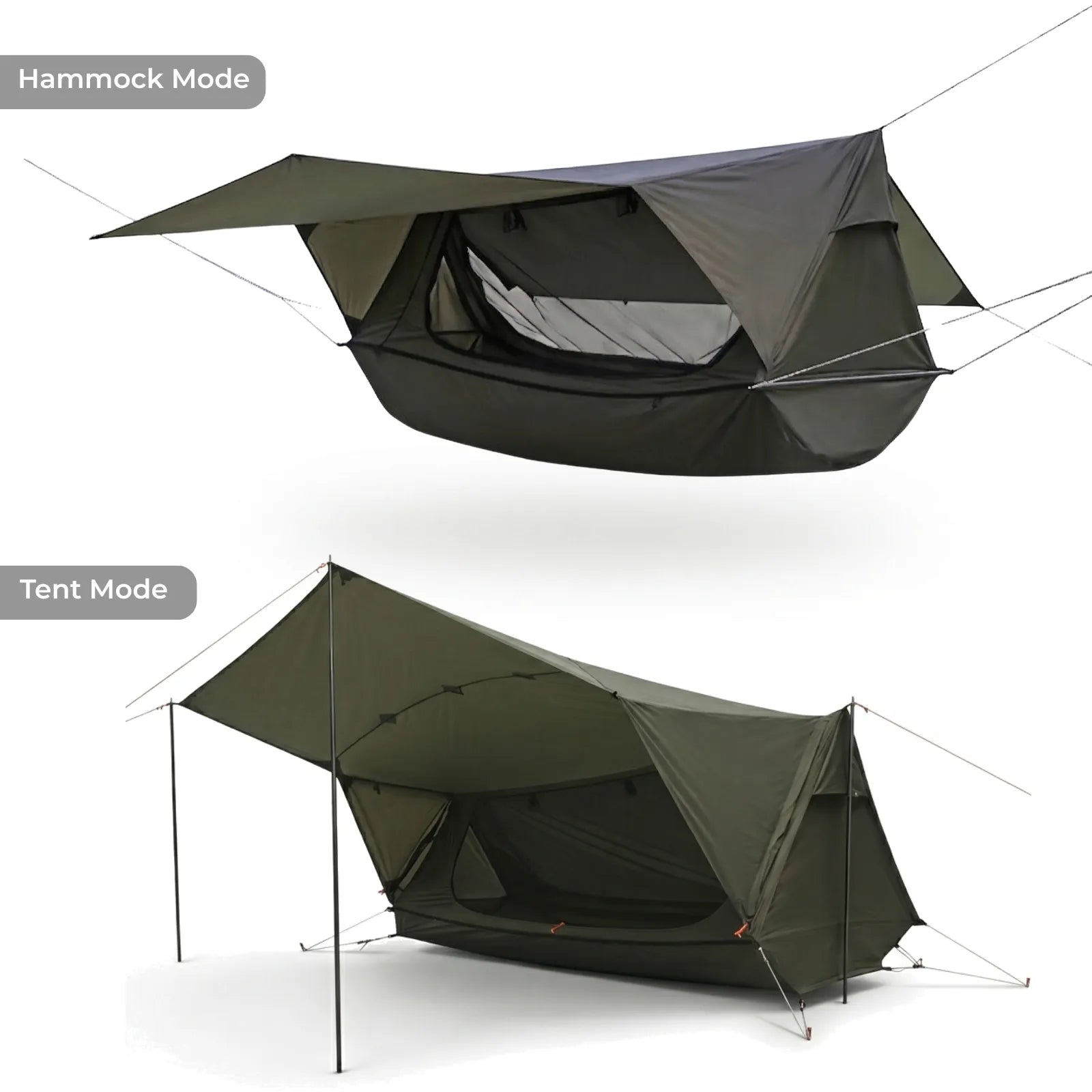
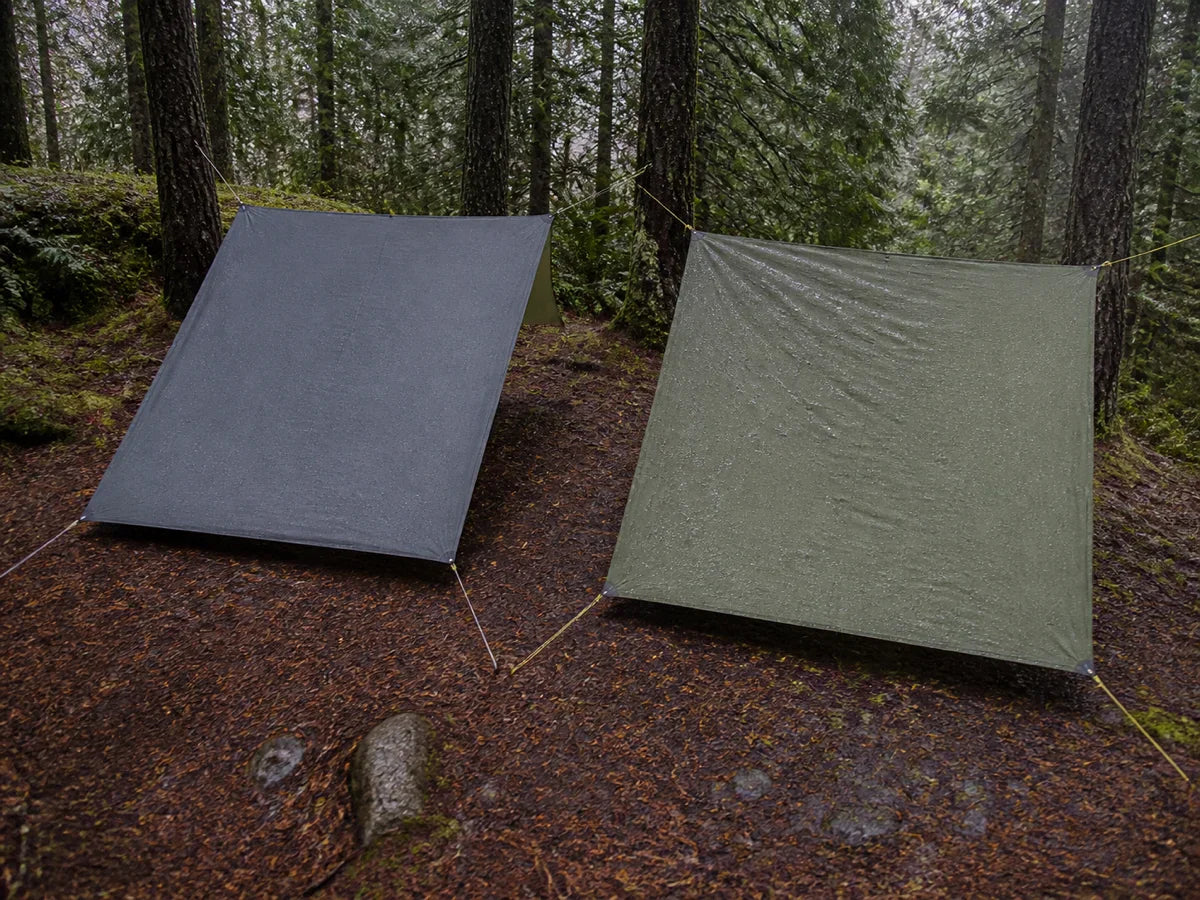
The 11-foot hammock and 12-foot tarp bundle keeps the two largest shelter pieces in one purchase. Add bug protection and insulation only when the trip requires them.
See the 11' Hammock + 12' Tarp Bundle — $149.90Best Camping Hammocks by Total Budget
A hammock-body price is not an overnight-system price. Count suspension, rain protection, bug protection, and insulation separately, then remove any component already included with the hammock.
Price check: Onewind prices above were verified on August 4, 2026. The Aerie plus Nebula figure is $69.90 + $79.90. Prices can change, so confirm the product page before purchase.
This is the cost mistake most roundups create: they compare a bare hammock with a shelter-ready system. The right comparison is the cost of the setup you can actually use on the planned trip.
The 11-Foot Rule (And Why Short Hammocks Fail)
This is the single most important thing most beginners get wrong.
The physics are simple.
A gathered-end hammock forces you into a curved "banana" shape when you lie straight.
The diagonal lie fixes this: you lie at roughly 15–30 degrees off-center, and the hammock flattens out.
But diagonal lying requires extra fabric length.
In a 9-foot hammock, there isn't enough material to lie diagonally without your feet and head pressing against the edges.
In an 11-foot hammock, you have room to spread out.
This is why the Onewind 11ft Camping Hammock and the 11ft Zipper Hammock exist at that specific length.
It's not marketing. It's geometry.
The beginner mistake: buying a cheap 8'4" ultralight hammock for $30, sleeping terribly for two nights, and concluding that "hammock camping isn't for me."
The hammock was fine.
The length wasn't.
Best Camping Hammocks and Systems Compared
The useful comparison is not popularity alone. Length decides whether a gathered-end hammock has room for a diagonal lay, while included components decide what the first usable night will cost.
Three takeaways: the Kammok Roo is a light day-use option, not the overnight recommendation in this guide; the Aerie includes straps and removable bug protection; and the Onewind 11ft Ultralight now has its own product page rather than pointing to the Aerie listing.
Fabric Denier: The Hidden Trade-Off

Denier measures thread thickness.
Higher denier = heavier, tougher, stiffer.
Lower denier = lighter, more packable, more fragile.
For beginners: start with 70D.
It forgives mistakes: dragging the hammock on dirt, overtightening, rubbing against rough bark.
You can always go lighter later when you know what you're doing.
The Onewind 11ft Camping Hammock uses 70D nylon.
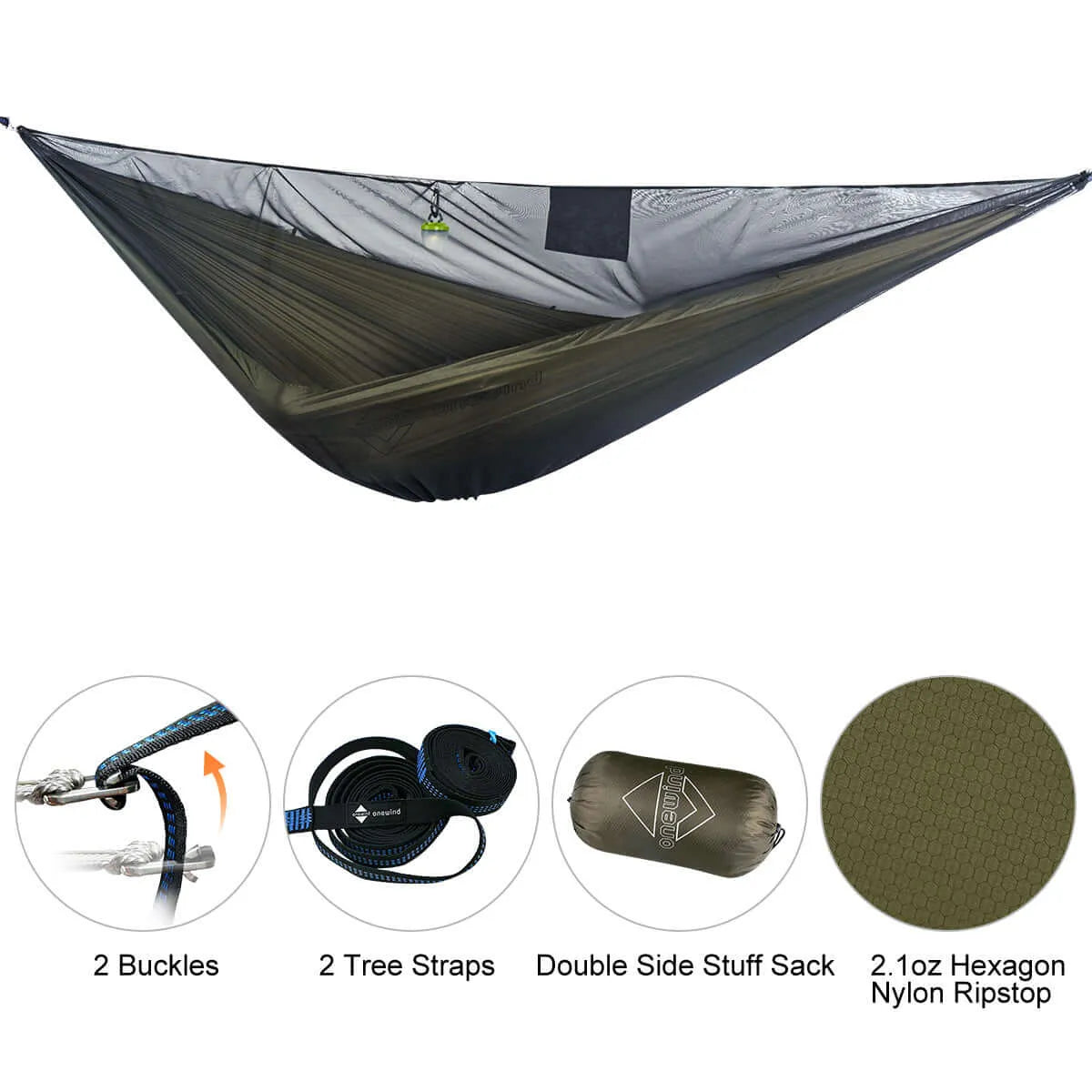
The 11ft Ultralight uses 40D 1.7 oz ripstop, is listed for up to 300 lb, and currently includes two 12-foot tree straps.
Same length, same brand. The difference is who it's built for.
The IF/THEN Decision Framework
Do not choose a hammock from a generic winner badge. Choose the next trip, then buy the minimum complete system that performs that job.
6 Scenarios: Find Yours
Scenario 1: Park and Backyard Lounger (Never Sleeping In It)
System: a simple lounge hammock with tree-friendly suspension. Check the current vendor price and verify that straps are included before buying.
You fit this scenario if you want to read, nap, or relax rather than sleep outside overnight. Length, rain coverage, bug protection, and insulation matter less here because the hammock is not replacing a shelter.
Verdict: buy the simplest lounging setup that includes usable straps. Do not pay for overnight layers you will not use.
Scenario 2: Car Camper Replacing a Tent (Comfort Priority)

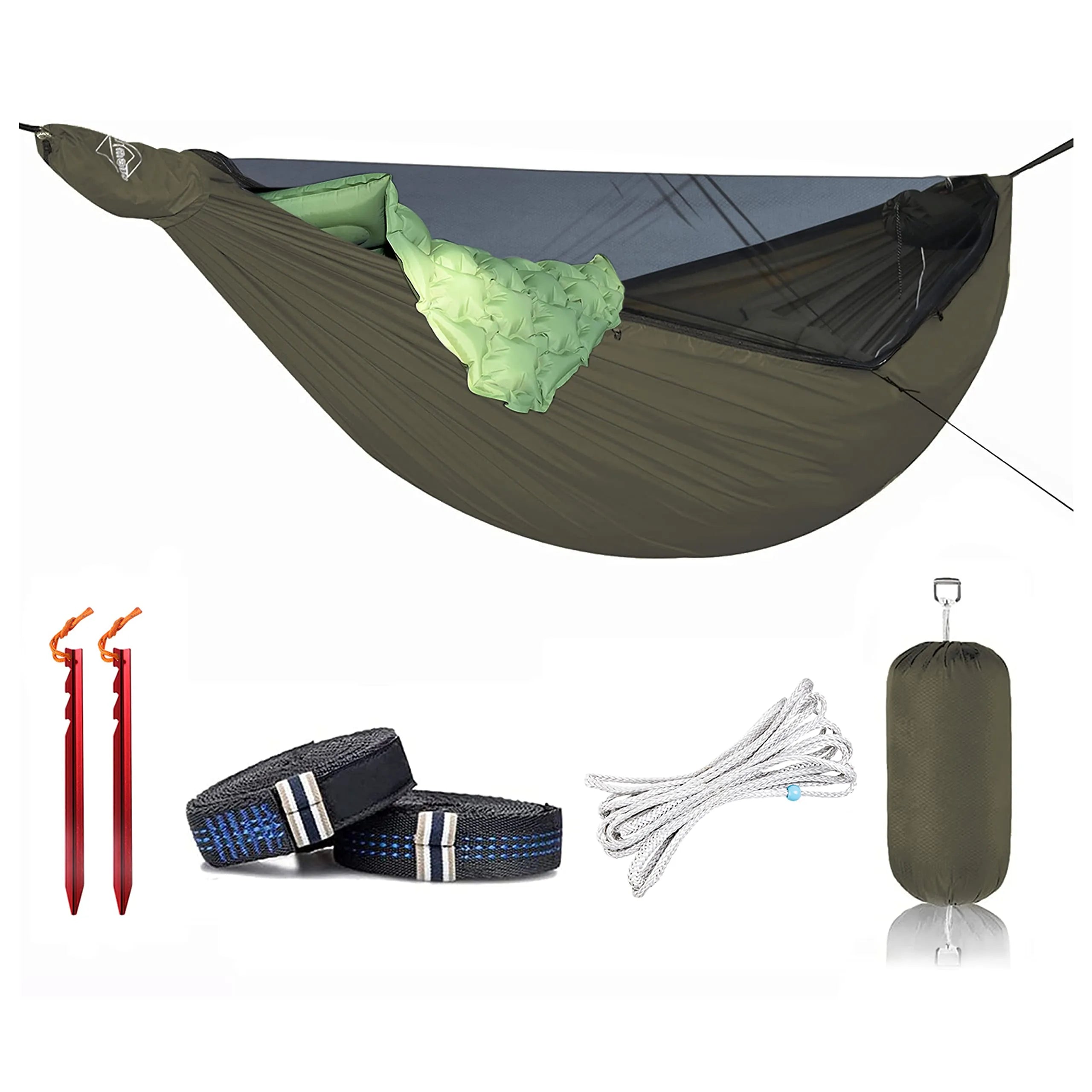
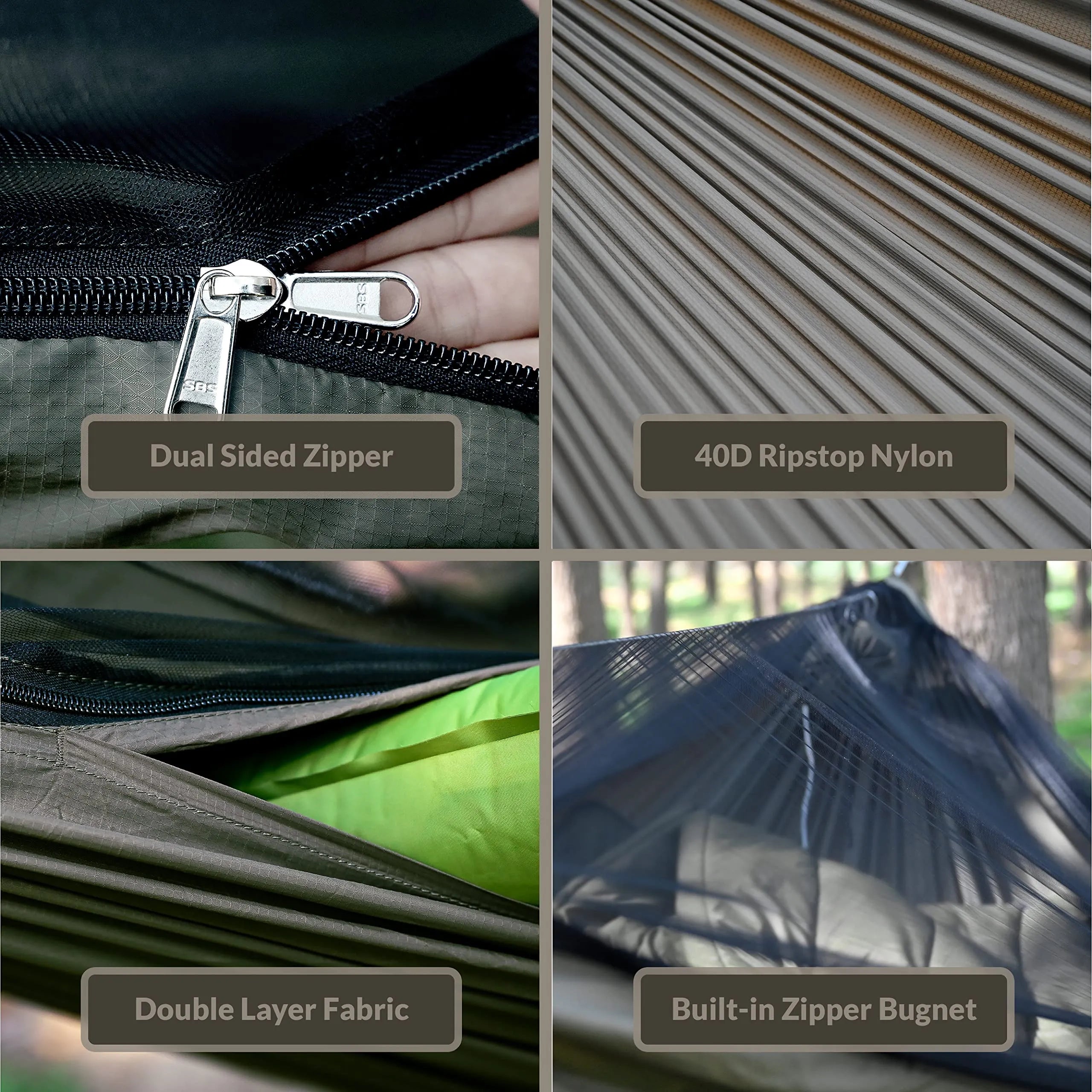
System: Aerie 11ft Double + Nebula 12ft tarp. $149.80 at the August 4, 2026 price check. The Aerie already includes straps and a removable bug net.
You fit this if:
- ✓ You drive to campgrounds (weight doesn't matter)
- ✓ You sleep poorly on the ground
- ✓ You want a flat sleeping position
- ✓ You camp in 3-season weather (spring through fall)
Why 11 feet matters here: you're sleeping in this thing for 8 hours.
The diagonal lie turns a hammock from "swinging banana" into a genuinely flat sleeping surface.
As covered in our complete setup guide, the 30-degree hang angle combined with the diagonal lie makes the difference between a rough night and a great one.
Setup checklist:
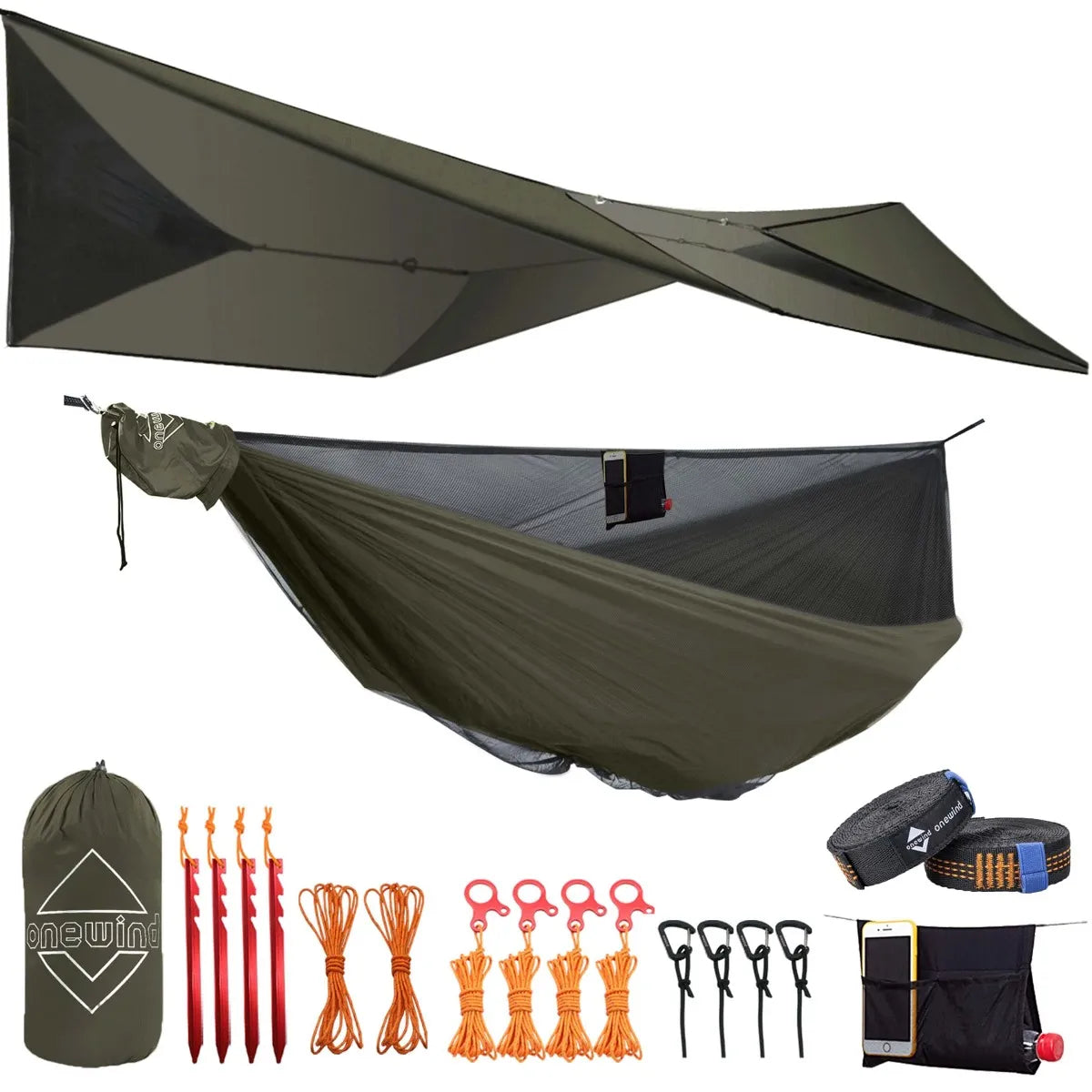
- ✓ Aerie 11ft Double: 11-foot hammock, suspension, ridgeline, and removable bug net
- ✓ Nebula 12ft tarp: rain coverage for the full hammock length
- ✓ Temperature-rated underquilt: add only when forecast lows require bottom insulation
Verdict: Choose the mid-range 11-foot system if comfort is your top priority.
Scenario 3: Backpacker Cutting Weight (Every Ounce Counts)
System: 11ft Ultralight + Bottom Entry Bugnet + Nebula 12ft tarp. $137.79 at the August 4, 2026 price check. The hammock already includes two 12-foot straps.
You fit this if:
- ✓ You hike to camp (packing weight is critical)
- ✓ You've used hammocks before (not your first time)
- ✓ You accept durability trade-offs for weight savings
- ✓ Your typical base weight target is under 12 lbs
The 11ft Ultralight uses 40D 1.7 oz ripstop to balance packed weight, durability, and a full 11-foot sleeping length.
Paired with the silnylon tarp, you shave almost a full pound off your shelter system.
For context: our hammock vs tent weight comparison shows a 3-season hammock system weighs roughly the same as a comparable tent system until you optimize each component.
Do not start here only because the word ultralight sounds better. The lighter fabric rewards careful setup, but the full 11-foot length still matters more for sleep than choosing a very short day hammock.
Verdict: Pick the ultralight setup only if you already know hammock fundamentals.
Scenario 4: Budget-First Buyer (Best Value Under $100)
System: Onewind 11ft Ultralight at $34.99 with two 12-foot straps. Add the Bottom Entry Bugnet for a $57.89 bug-ready base.
This stays under $100 only before rain protection and insulation. A real overnight budget must still include a tarp and, when temperatures require it, an underquilt.
Verdict: use the under-$100 tier to buy the correct 11-foot sleep platform first. Do not pretend it is a complete all-weather system.
Scenario 5: Tall or Heavy User (6'+ or 200+ lbs)
System: Aerie 11ft Double or a verified high-capacity 11-foot cottage hammock, plus weather protection and insulation matched to the trip.
You fit this if:
- ✓ You're over 6 feet tall
- ✓ You weigh over 200 lbs
- ✓ Standard 9-foot hammocks feel cramped
- ✓ You need 400+ lb weight capacity
Two numbers matter here: length and capacity.
Length: at 6'2", your diagonal lie in a 9'6" hammock puts your head and feet against the edges. In an 11-foot hammock, you have 18+ inches of extra fabric.
Capacity: most hammock capacity ratings are static load. Your body exerts dynamic force when you shift, sit up, or get in. A 200 lb person should use a 350+ lb capacity hammock minimum.
The Onewind 11ft at 400 lbs capacity handles this with margin.
The ENO DoubleNest also rates 400 lbs but is only 9'6". Too short for tall users sleeping overnight.
Verdict: Prioritize 11-foot length and 400+ lb capacity before any other feature.
Scenario 6: Cold-Weather Beginner (Wants to Camp Below 50°F)
System: Any 11ft hammock + straps + tarp + bug net + underquilt. ~$280–$400 total.
You fit this if:
- ✓ You camp in spring or fall when nights drop below 50°F
- ✓ You want to extend your camping season past summer
- ✓ You understand this adds $100–$200 to system cost
The sleeping bag under you compresses in a hammock.
Compressed insulation doesn't insulate.
This is why 65–70% of your body heat escapes through the bottom of a hammock.
An underquilt hangs below the hammock, stays lofted, and traps warm air.
We covered this in detail in our underquilt buying guide.
Quick temperature guide:
Don't start with cold-weather hammock camping. Get your basic system dialed in warm weather first, then add insulation as you learn.
Verdict: Add an underquilt only after your warm-weather setup is stable.
5 Mistakes That Kill the Beginner Experience
How to Hang a Camping Hammock

Mistake 1: Buying a Hammock Without Straps
Most hammocks (including the ENO DoubleNest, ENO SingleNest, Kammok Roo, and Grand Trunk) ship without suspension straps.
New buyers don't realize this until the package arrives.
Then they spend another $30–$40 on straps and wait for a second shipment.
How to avoid: Check "straps included" in the comparison table above. Or buy Onewind Tree Straps at the same time as your hammock.
Mistake 2: Getting a Hammock Too Short for Sleeping

An 8'4" Kammok Roo Single is an excellent day hammock.
It's a terrible sleeping hammock.
The diagonal lie requires extra length.
How to avoid: If you plan to sleep overnight, buy 11 feet minimum. If you're only lounging, any length works.
Mistake 3: Hanging Too Tight
Beginners pull their hammock taut like a trampoline.
This creates extreme pressure on the anchor points and makes the banana curve worse.
The correct hang has visible sag, roughly a 30-degree angle between the strap and the tree.
Our hammock setup guide shows exactly how to measure this.
Mistake 4: Skipping the Tarp ("It Won't Rain")
It will rain.
Even if the forecast says 0% chance, dew alone soaks a hammock by 3 AM.
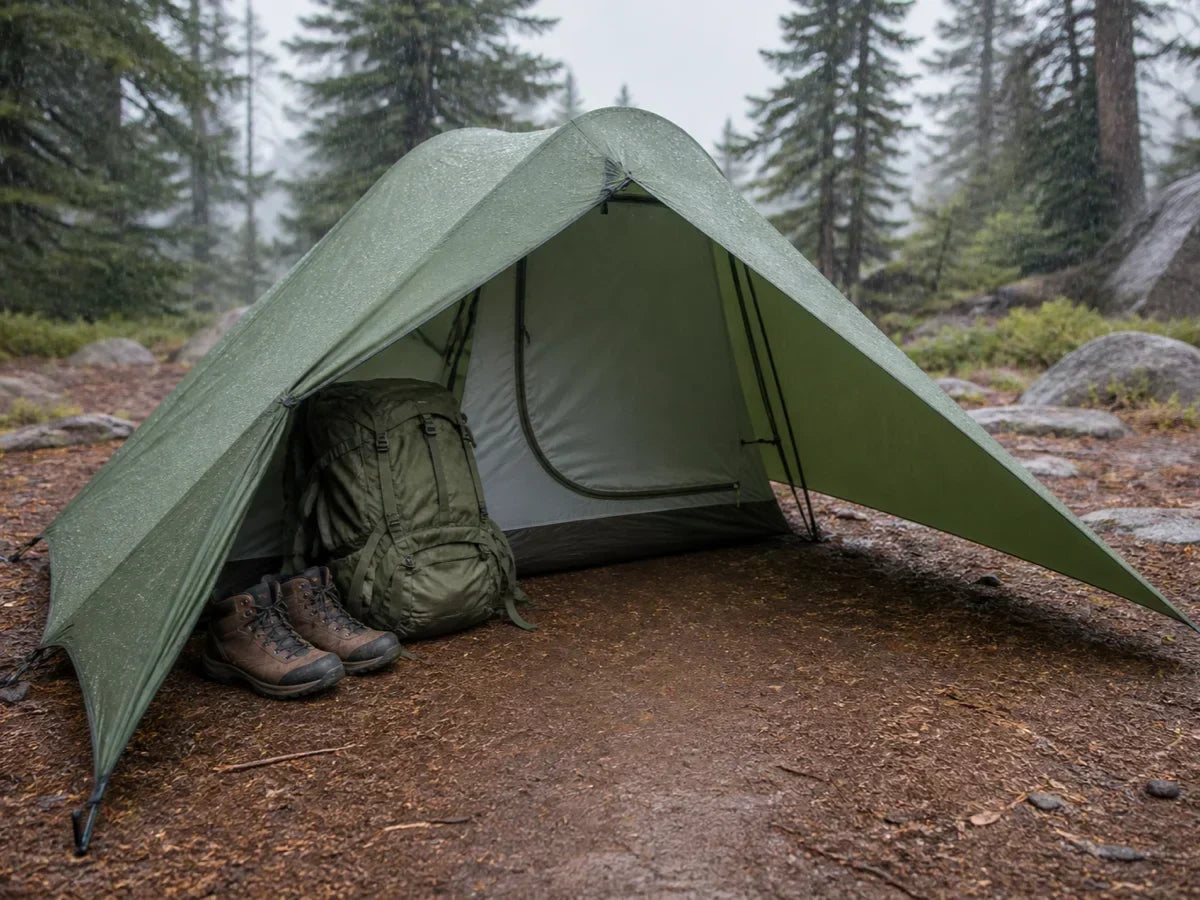
A tarp isn't rain protection. It's condensation protection.
The 12' Hammock Tarp covers the full hammock length.
If you need more storm coverage, browse the Tarp Collection.
How to avoid: Budget for a tarp from day one. It's not optional for overnight use.
Mistake 5: Ignoring Tree Requirements
Trees need to be 10–15 feet apart, 6+ inches in diameter, and alive (dead trees drop branches).
Straps must be 1.5 inches wide minimum. Most campgrounds enforce this to prevent tree damage.
40% of random wooded sites don't have usable trees for hammock camping.
How to avoid: Scout your site for tree spacing before buying. If you camp in open areas (desert, beach, alpine above treeline), hammock camping won't work.
Cost Reality Check After Your First 5 Trips
Most beginners overpay in the first month because they buy upgrades before fixing setup basics.
Start by improving hang angle, tarp pitch, and bug net fit.
Then upgrade only the component that causes repeat discomfort.
For most people that means: length first, insulation second, premium fabric last.
The Bottom Line
The best camping hammock for beginners isn't a single product. It's the right system for your use case.
If you are lounging only: choose a simple hammock with included tree-friendly straps and confirm the current vendor price.
If you are car camping overnight: start with the 11ft hammock + 12ft tarp bundle at $149.90, then add bug protection and insulation as the trip requires.
If you are backpacking: the 11ft Ultralight starts at $34.99 with straps included; budget separately for rain, bugs, and temperature-rated insulation.
The hammock body is only one line in the shelter budget. Included suspension, rain coverage, bug protection, and insulation determine the real trip cost.
Plan for the whole system from day one, and you won't waste money replacing components that don't work together.
Your Next Move
Start here:
→ Aerie 11ft Double. Current best-value base when you want straps and removable bug protection included.
→ 11ft Hammock + 12ft Tarp Bundle. The current shortcut when rain coverage is the next purchase.
→ Complete Hammock Collection. Browse all options by style.
Already have a hammock?
→ Hammock Setup Guide. The 7-step field-tested method.
→ Hammock vs Tent Comparison. Still deciding?
→ Underquilt Guide. Ready for cold weather?
How We Put This Together
We cross-referenced published hammock reviews from 4 expert sources: GearJunkie, Outdoor Life, Treeline Review, and CleverHiker.
Data from product specs and pricing sheets showed that total system cost is the real decision variable for beginners.
We cross-referenced product specs, calculated total system costs that no individual review shows, and matched recommendations to specific beginner scenarios.
Product recommendations include Onewind products where they genuinely fit the scenario, not as default picks.
Reddit user discussions were checked to verify first-time setup pain points before drafting the scenario guidance.
Onewind prices and availability were rechecked through Shopify on August 4, 2026; competitor prices remain approximate and should be confirmed with the vendor.

Shop the 11' Hammock + 12' Tarp Bundle
Shop Now →