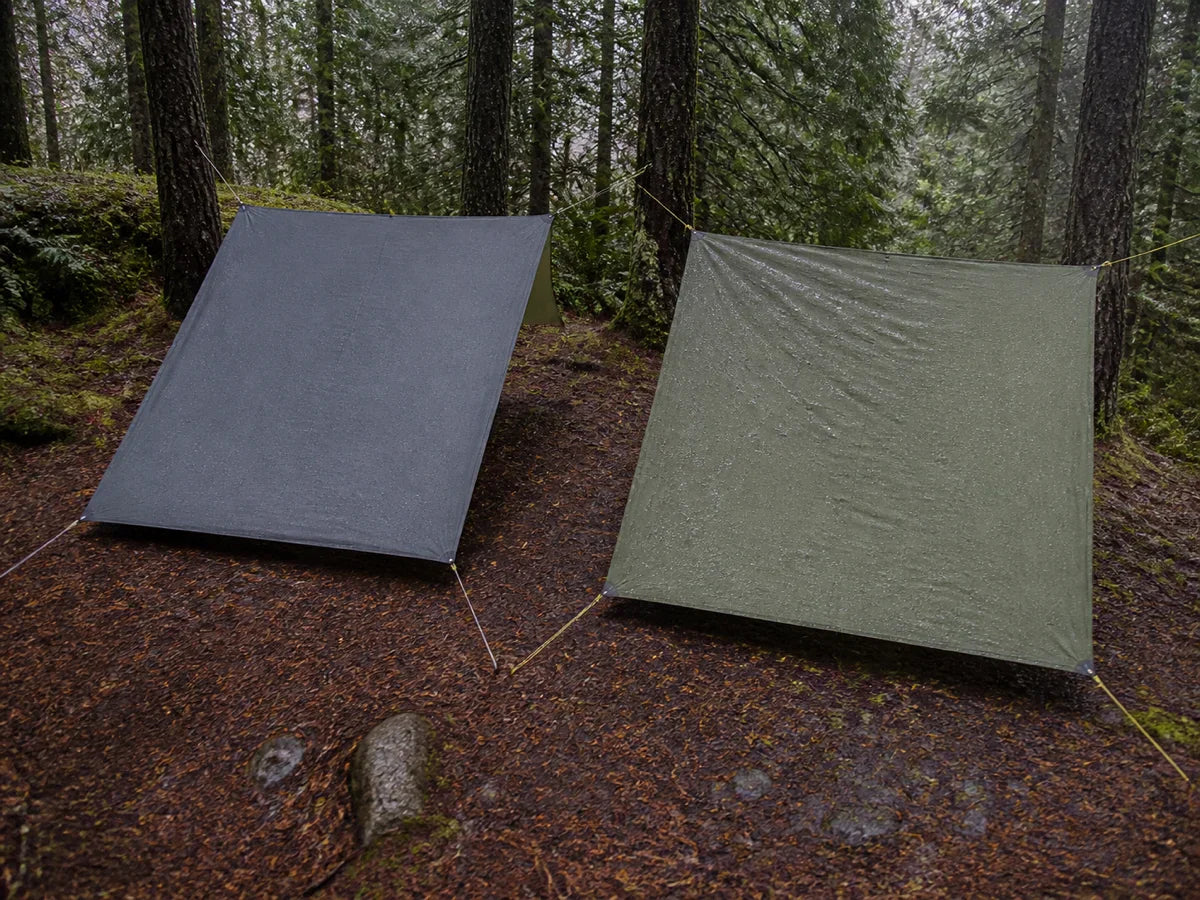

We hebben 14 kampeertouwen vergeleken op 4 deskundige beoordelingssites en iets berekend wat geen van hen je laat zien: de totale systeemkosten.
De hangmat zelf is slechts 30–40% van wat je uiteindelijk daadwerkelijk zult uitgeven.
Een hangmat van $70 wordt een opstelling van $180 voor een overnachting zodra je banden, zeil en muggennet toevoegt.
Een premium hangmat van $130 wordt $310.
De meeste gidsen voor de “beste hangmat” rangschikken producten op zichzelf, alsof je in een kale hangmat gaat slapen zonder regenbescherming en zonder bescherming tegen insecten.
Je zult het niet doen.
Deze gids berekent wat beginners daadwerkelijk betalen voor een compleet systeem voor een overnachting, verdeeld over 3 budgetniveaus, en koppelt vervolgens elk niveau aan de gebruikssituatie waarin het logisch is.
Wat je in deze gids zult leren
[VISUEEL: best-camping-hammock-for-beginners-what-youll-learn.webp, infographic met de 3 budgetniveaus: $90 / $180 / $300 met opsomming van de onderdelen]
- ✓ De totale systeemkosten voor 3 budgetniveaus, niet alleen hangmatprijzen ($80–$300+ alles inbegrepen)
- ✓ Waarom elke hangmat $30–$40 aan banden vereist, apart verkocht (de grootste verrassing voor beginners)
- ✓ De 11-voetregel: waarom kortere hangmatten ervoor zorgen dat beginners een hekel krijgen aan kamperen in een hangmat
- ✓ Een vergelijkingstabel van 10+ hangmatten met gewicht, capaciteit, materiaal en actuele prijzen
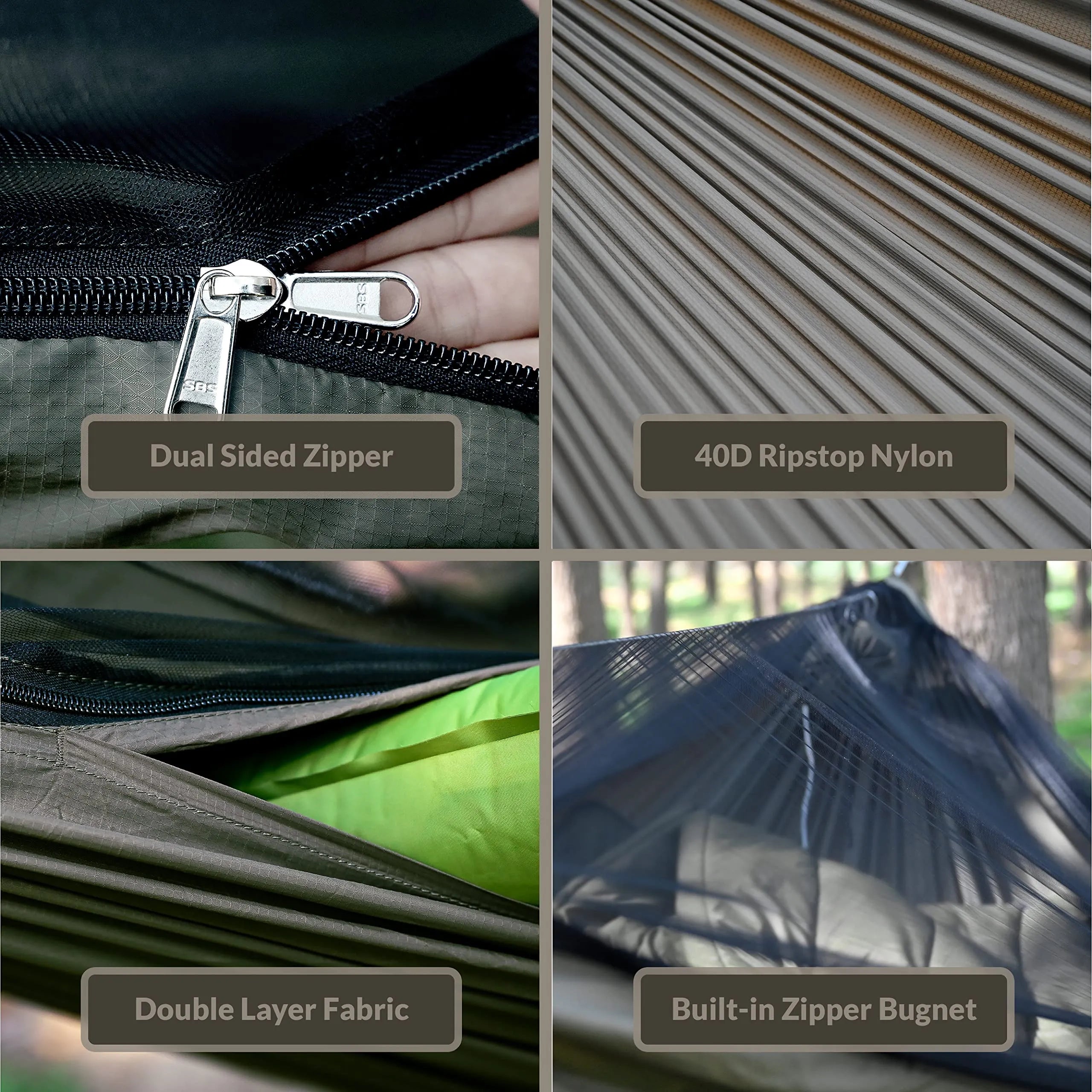
- ✓ De afweging van de denier van de stof: 30D vs. 40D vs. 70D (gewicht, duurzaamheid, gevoel)
- ✓ IF/THEN-besliskader op basis van hoe je de hangmat daadwerkelijk gaat gebruiken
- ✓ 6 specifieke scenario’s: vind de jouwe en krijg een concrete systeemaanbeveling
Snelle Antwoord
Als je gewoon een ligstoel voor het park of de achtertuin wilt → Wise Owl Outfitters + inbegrepen riemen. $30 in totaal. Klaar.
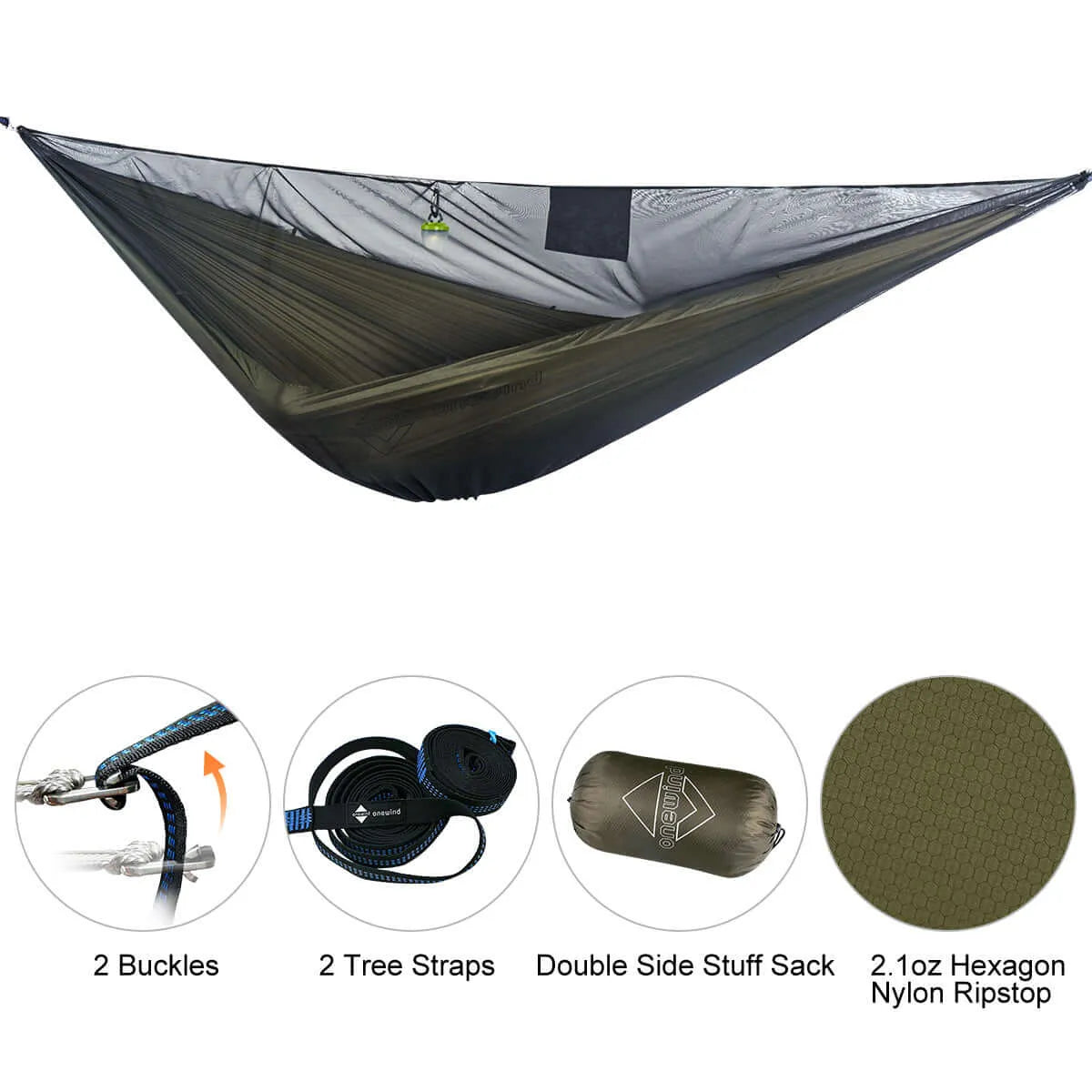
Als je ’s nachts in je auto wilt kamperen → Onewind 11 ft kampeerhangmat + boomriemen + 12' hangmatzeil + muggennet. ~$180 totaal.
Als je een tent vervangt voor backpacken → Kammok Roo Single + Python-riemen + ultralichte tarp. Ongeveer $250 in totaal. Elke gram telt hier.
Als je 1,83 m of langer bent of 90+ kg weegt → Kies voor een hangmat van 11 voet met een draagvermogen van meer dan 400 lb. Vermijd ultralichte modellen.
Nog steeds niet zeker? → Begin met een complete set van ongeveer $120. Je kunt later afzonderlijke onderdelen upgraden zonder het hele systeem te vervangen.
Het getal dat niemand je laat zien: totale systeemkosten
Elke gids voor de “beste kampeerhangmat” beoordeelt hangmatten als op zichzelf staande producten.
Dat is alsof je een tentdoek beoordeelt zonder de stokken of buitentent.
Dit kost een complete hangmatopstelling voor een overnachting eigenlijk:
De hangmat is 33–43% van de totale kosten.
Alleen al de banden voegen $25–$40 toe, iets wat in de meeste reviews nooit wordt genoemd.
De budgetcategorie geeft je een overnachting op de camping.
De middensegment geeft je comfortabel kamperen voor één nacht.
Het premium niveau bespaart gewicht en biedt extra gemak, maar zorgt er niet voor dat u beter slaapt.
Wat elk niveau je daadwerkelijk oplevert
Budget ($90 totaal): Je slaapt buiten in een hangmat. De hangmat zal korter zijn (9'6"), de tarp zal eenvoudig zijn en het muggennet zal niet perfect passen. Maar het werkt.
Middenklasse ($180 totaal): De lengte van de hangmat van 11 voet verandert alles. Je kunt eindelijk diagonaal liggen voor een vlakke slaaphouding. De tarp biedt je voldoende bescherming. Het muggennet valt niet op je gezicht.
Premium (€300 totaal): Lichtere materialen, eenvoudigere opstelling, beter vakmanschap. De ripstop Dream-Tex van de Warbonnet Blackbird is echt een mooiere stof. Maar de verbetering van de slaapkwaliteit ten opzichte van het middensegment is marginaal.
De 11-voetregel (en waarom korte hangmatten falen)
Dit is het allerbelangrijkste wat de meeste beginners verkeerd doen.
De natuurkunde is eenvoudig.
Een hangmat met verzamelde uiteinden dwingt je in een gebogen "bananen"vorm wanneer je recht ligt.
De diagonale ligging lost dit op: je ligt ongeveer 15–30 graden uit het midden, en de hangmat vlakt uit.
Maar diagonaal liggen vereist extra stoflengte.
In een hangmat van 9 voet is er niet genoeg materiaal om diagonaal te liggen zonder dat je voeten en hoofd tegen de randen drukken.
In een hangmat van 11 voet heb je ruimte om je uit te strekken.
Dit is waarom de Onewind 11 ft kampeerhangmat en de 11 ft hangmat met rits bestaat in die specifieke lengte.
Het is geen marketing. Het is geometrie.
De beginnersfout: een goedkope ultralichte hangmat van 8'4" kopen voor $30, twee nachten vreselijk slapen en concluderen dat "kamperen in een hangmat niets voor mij is."
De hangmat was prima.
De lengte klopte niet.
De complete hangmatvergelijking (10+ modellen)
Hier vind je elke hangmat die het overwegen waard is, met de specificaties die er echt toe doen voor beginners.
Drie dingen springen eruit uit deze tabel.
Eerste: de ENO DoubleNest is de meest aanbevolen hangmat op alle 4 beoordelingssites, maar hij is slechts 9'6" lang. Om in te luieren is hij perfect. Om in te slapen is hij te kort.
Tweede: tegen hetzelfde prijsniveau van $70, de Onewind Aerie Dubbel inclusief banden, ridgeline en muggennet. Voor de ENO DoubleNest zijn apart aangeschafte banden ter waarde van $30–$40 vereist.
Derde: elke ultralichte hangmat (Kammok Roo, Hummingbird, ENO Sub6) is korter dan 9 voet. Het zijn hangmatten voor overdag en om in te loungen, op de markt gebracht als "kampeer"hangmatten. Als je van plan bent erin te slapen, controleer dan eerst de lengte.
Stofdenier: de verborgen afweging
Denier meet de dikte van draden.
Hogere denier = zwaarder, steviger, stijver.
Lagere denier = lichter, beter samendrukbaar, kwetsbaarder.
Voor beginners: begin met 70D.
Het vergeeft fouten: de hangmat over vuil slepen, te strak aantrekken, langs ruwe schors wrijven.
Je kunt later altijd lichter gaan als je weet wat je doet.
De Onewind 11 ft kampeerhangmat gebruikt 70D nylon.
De Ultralicht 11 ft gebruikt 30D ripstop voor gewichtsbesparing.
Dezelfde lengte, hetzelfde merk. Het verschil is voor wie het is ontworpen.
Het ALS/DAN-besliskader
Niet te veel over nadenken.
Beantwoord drie vragen en je weet precies wat je moet kopen.
Vraag 1: Ga je er ’s nachts in slapen?
Eno hangmat opzetten voor beginners: een stapsgewijze handleiding
Vraag 2: Hoe kom je naar het kamp?
Vraag 3: Wat is uw budget?
6 scenario’s: vind de uwe
Scenario 1: Park- en achtertuinligstoel (Nooit erin slapen)
Elke budget-enkele hangmat met inbegrepen banden. Totaal $30.
Je past hierin als:
- ✓ Je wilt lezen, een dutje doen of ontspannen (niet overnachten)
- ✓ Je hebt bomen in je tuin of bezoekt parken met bomen
- ✓ U wilt geen accessoires onderzoeken
- ✓ Uw budget is minder dan $50
Beste keuze: Wise Owl Outfitters (~$30, inclusief 9-voet banden, draagvermogen van 400 lb, 54.000+ Amazon-beoordelingen met 4,8 sterren).
De Wise Owl is goedkoop, wordt geleverd met banden en is perfect om in te ontspannen.
Niet te veel over nadenken.
Voor $30 kun je het over twee jaar vervangen zonder je zorgen te maken.
Oordeel: koop de goedkoopste complete lounge-opstelling en sla accessoires voor overnachten over.
Scenario 2: Auto-camper ter vervanging van een tent (comfort als prioriteit)
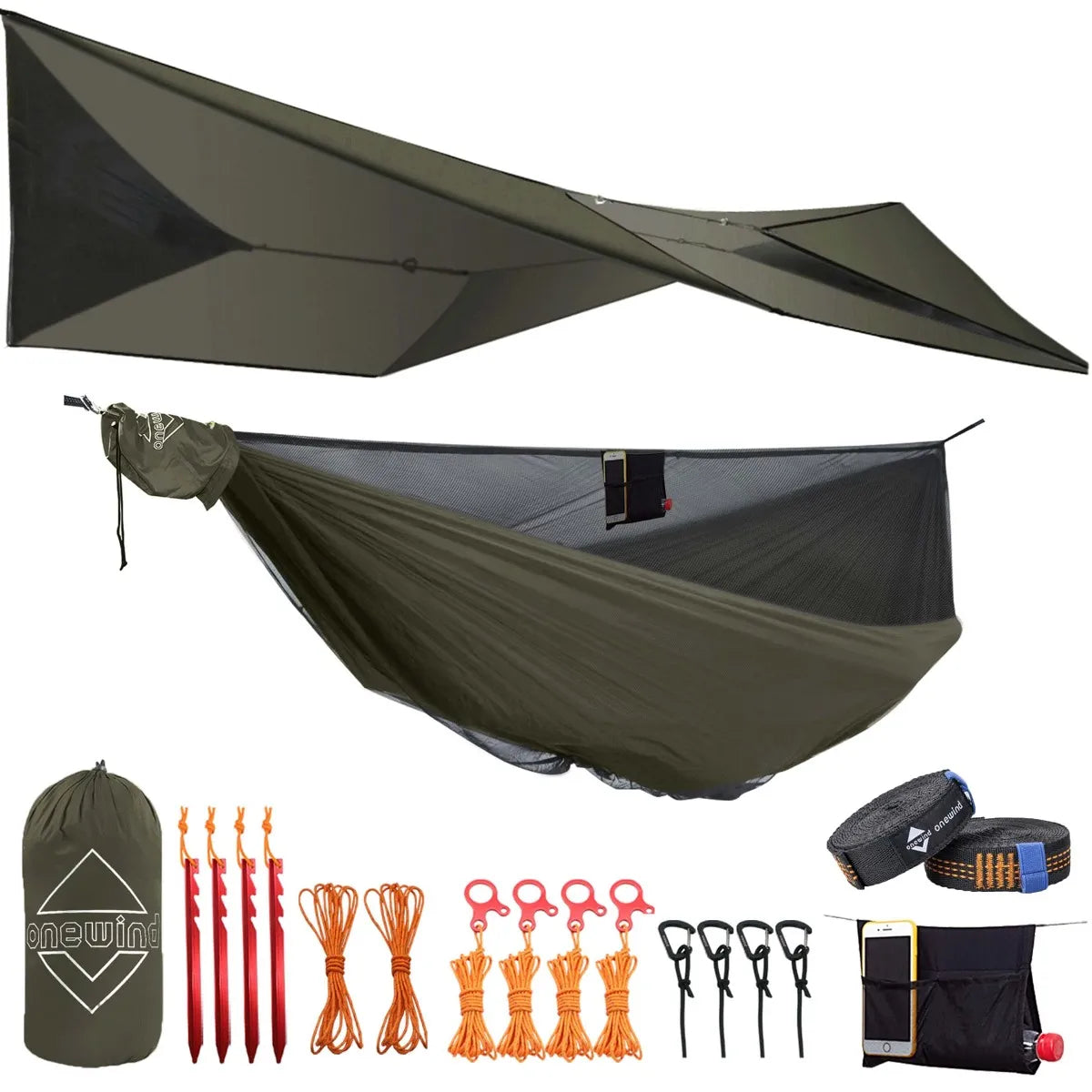
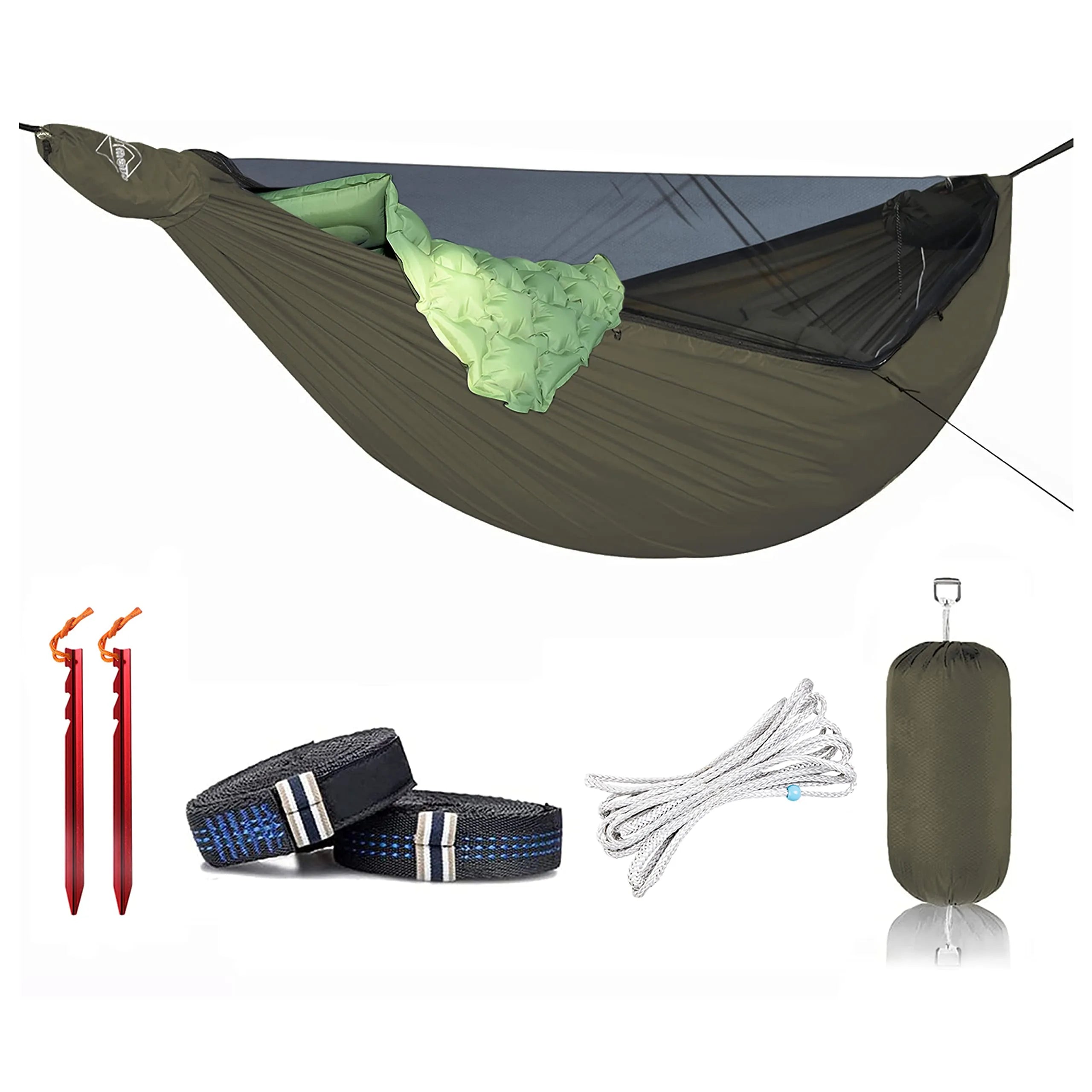
Systeem: Onewind 11 ft kampeerhangmat + Boomriemen + 12' hangmatzeil + Muskietennet met onderingang. ~$180 totaal.
Je past hierin als:
- ✓ Je rijdt naar campings (gewicht maakt niet uit)
- ✓ Je slaapt slecht op de grond
- ✓ Je wilt een vlakke slaappositie
- ✓ Je kampeert in 3-seizoensweer (van lente tot herfst)
Waarom 11 voet hier belangrijk is: je slaapt 8 uur in dit ding.
De diagonale ligstand verandert een hangmat van een “zwenkende banaan” in een echt vlak slaapoppervlak.
Zoals behandeld in onze volledige installatiegids, de hanghoek van 30 graden in combinatie met de diagonale ligpositie maakt het verschil tussen een ruwe nacht en een geweldige.
Instelchecklist:
- Onewind 11 ft kampeerhangmat: 70D nylon, 400 lbs, 11' lengte
- Boomriemen: 1,5" breedte, voldoet aan Leave No Trace
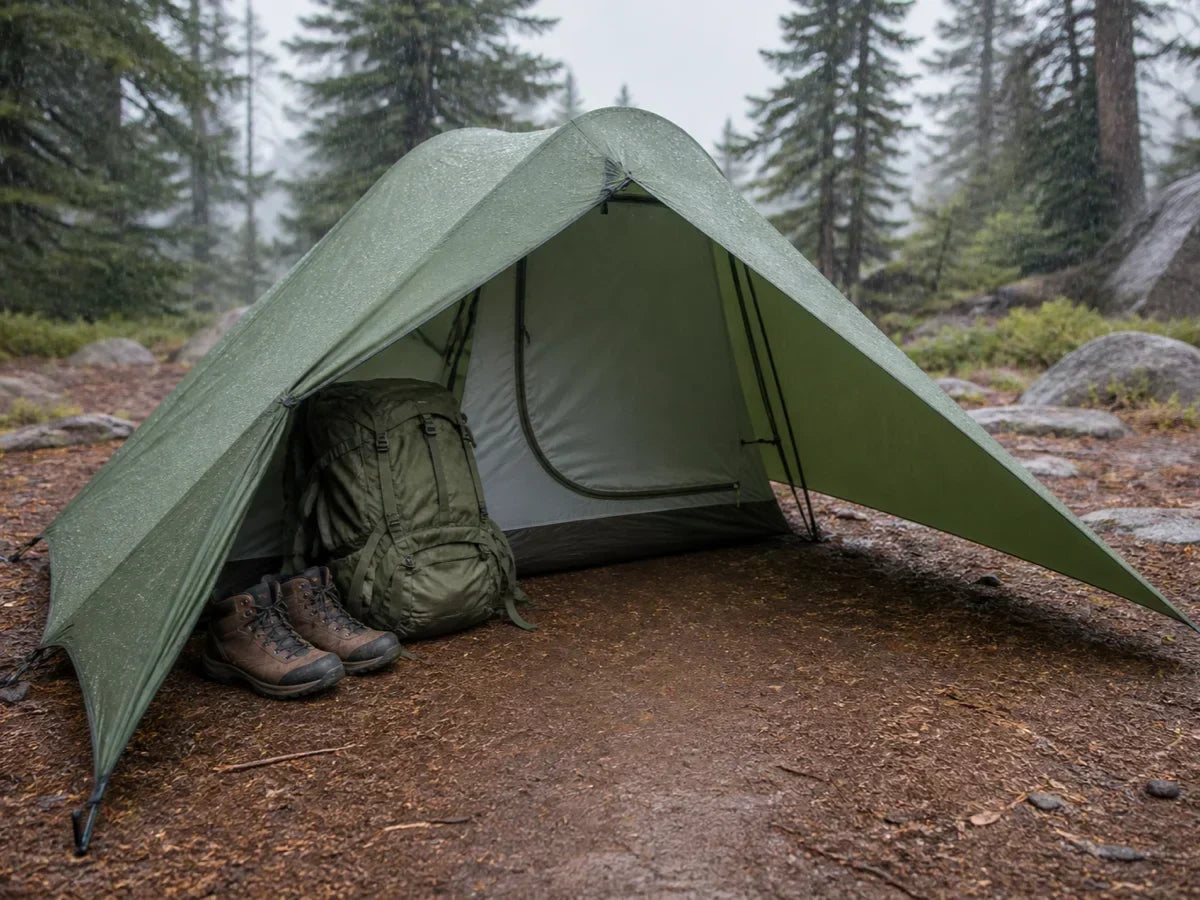
- 12' hangmatzeil: volledige dekking, houdt regen tegen
- Muskietennet met onderingang: houdt muggen buiten zonder op je gezicht te vallen
Oordeel: kies het 11-voet systeem uit het middensegment als comfort uw hoogste prioriteit is.
Scenario 3: Backpacker die het gewicht verlaagt (elk onsje telt)
Systeem: Onewind Ultralight 11ft + Ultralichte boomriemen + Silnylon ultralichte tarp. Ongeveer $200 in totaal.
Je past hierin als:
- ✓ Je wandelt naar de camping (het gewicht van je bepakking is cruciaal)
- ✓ Je hebt eerder hangmatten gebruikt (niet je eerste keer)
- ✓ U accepteert inlevering op duurzaamheid voor gewichtsbesparing
- ✓ Uw typische basisgewichtdoel ligt onder de 12 lbs
De 30D ripstop-nylon op de Ultralicht 11 ft Bespart 7 oz vergeleken met de 70D-versie.
Gecombineerd met de silnylon tarp, haal je bijna een heel pond van je sheltersysteem af.
Voor de context: onze hangmat versus tent gewichtsvergelijking toont een hangmatssysteem voor 3 seizoenen dat ongeveer evenveel weegt als een vergelijkbaar tentensysteem, totdat je elk onderdeel optimaliseert.
Begin hier niet als je nog nooit in een hangmat hebt gekampeerd. De 30D-stof is minder vergevingsgezind bij beginnersfouten (te strak aantrekken, over de grond slepen, ruw contact met boomschors).
Oordeel: kies alleen de ultralichte opstelling als je de basisprincipes van hangmatten al kent.
Scenario 4: Budgetgerichte koper (beste prijs-kwaliteit onder $100)
Systeem: Grand Trunk UL Starter + budgetriemen + budgetzeil. Ongeveer $90 in totaal.
Je past hierin als:
- ✓ Je wilt hangmattencampen uitproberen zonder grote investering
- ✓ Je bent tevreden met "goed genoeg" voor je eerste seizoen
- ✓ Je bent van plan losse onderdelen te upgraden als je het mooi vindt
- ✓ Alleen voor zomerkamperen (niet voor koud weer)
De Grand Trunk Ultralight Starter kost ongeveer $35 en wordt geleverd met een levenslange garantie tegen fabricagefouten EN normale slijtage.
Die garantie is belangrijk. Je kunt hem misbruiken terwijl je leert en toch een vervanging krijgen.
Met 12 oz en 9'6" is het niet ideaal om er 's nachts in te slapen (zie de 11-voetregel hierboven).
Maar voor zomerse tripjes van 1–2 nachten, waarbij je test of hangmatkamperen iets voor jou is, is dit de goedkoopste manier om daarachter te komen.
Upgradepad: als je het leuk vindt, vervang de hangmat dan door een model van 11 voet en behoud de banden en het grondzeil.
Oordeel: Gebruik dit als een proef met laag risico en verleng daarna eerst de duur.
Scenario 5: Lange of zware gebruiker (1,80 m of langer of 90+ kg)
Systeem: Onewind 11 ft kampeerhangmat of Warbonnet Blackbird XLC + versterkte banden. Ongeveer $180–$250 in totaal.
Je past hierin als:
- ✓ Je bent langer dan 1,80 meter
- ✓ U weegt meer dan 200 lbs
- ✓ Standaard hangmatten van 9 voet voelen krap aan
- ✓ U heeft een draagvermogen van meer dan 400 lb nodig
Twee cijfers zijn hier belangrijk: lengte en capaciteit.
Lengte: bij 1,88 m ligt u diagonaal in een hangmat van 2,90 m, waardoor uw hoofd en voeten tegen de randen komen. In een hangmat van 3,35 m heeft u meer dan 45 cm extra stof.
Capaciteit: de meeste draagkrachtwaarden voor hangmatten zijn statische belastingen. Je lichaam oefent een dynamische kracht uit wanneer je beweegt, rechtop gaat zitten of instapt. Een persoon van 200 lb moet minimaal een hangmat met een draagkracht van 350+ lb gebruiken.
De Onewind 11 ft bij een draagvermogen van 400 lbs kan dit hier met voldoende marge aan.
De ENO DoubleNest heeft ook een draagvermogen van 400 lbs, maar is slechts 9'6". Te kort voor lange gebruikers die er een hele nacht in slapen.
Oordeel: geef prioriteit aan een lengte van 11 voet en een draagvermogen van meer dan 400 lb boven elke andere eigenschap.
Scenario 6: Beginner bij koud weer (wil kamperen onder 50°F)
Systeem: Elke hangmat van 11 ft + banden + tarp + muskietennet + onderquilt. ~$280–$400 in totaal.
Je past hierin als:
- ✓ Je kampeert in de lente of herfst wanneer de nachten onder de 50°F dalen
- ✓ Je wilt je kampeerseizoen verlengen tot na de zomer
- ✓ U begrijpt dat dit $100–$200 toevoegt aan de systeemkosten
De slaapzak onder je wordt samengedrukt in een hangmat.
Samengeperste isolatie isoleert niet.
Daarom ontsnapt 65–70% van je lichaamswarmte via de onderkant van een hangmat.
Een onderdeken hangt onder de hangmat, blijft volumineus en houdt warme lucht vast.
We hebben dit uitgebreid behandeld in onze aankoopgids voor onderdeken.
Snelle temperatuurgids:
Begin niet met hangmatkamperen bij koud weer. Stem je basisopstelling eerst af op warm weer en voeg daarna isolatie toe naarmate je meer leert.
Oordeel: voeg pas een onderquilt toe nadat je opstelling voor warm weer stabiel is.
5 fouten die de beginnerservaring verpesten
Hoe hang je een kampeerhangmat op
[VISUAL: beste-kampeerhangmat-voor-beginners-veelvoorkomende-fouten.webp, illustratie van 5 beginnersfouten: geen banden, te kort, te strak, geen tarp, slechte bomen]
Fout 1: Een hangmat kopen zonder banden
De meeste hangmatten (inclusief de ENO DoubleNest, ENO SingleNest, Kammok Roo en Grand Trunk) worden geleverd zonder ophangriemen.
Nieuwe kopers beseffen dit pas wanneer het pakket aankomt.
Daarna geven ze nog eens $30–$40 uit aan banden en wachten ze op een tweede zending.
Hoe te voorkomen: Controleer "riemen inbegrepen" in de vergelijkingstabel hierboven. Of koop Onewind Boomriemen tegelijkertijd als uw hangmat.
Fout 2: Een hangmat kopen die te kort is om in te slapen
Een Kammok Roo Single van 8'4" is een uitstekende daghangmat.
Het is een verschrikkelijke slaaphangmat.
De diagonale ligging vereist extra lengte.
Hoe te voorkomen: Als u van plan bent er een nacht in te slapen, koop dan minimaal 11 voet. Als u er alleen in wilt loungen, werkt elke lengte.
Fout 3: Te strak ophangen
Beginners spannen hun hangmat strak als een trampoline.
Dit veroorzaakt extreme druk op de ankerpunten en maakt de bananenkromming erger.
De juiste hang heeft een zichtbare doorhang, met ongeveer een hoek van 30 graden tussen de riem en de boom.
Onze hangmatopzetgids laat precies zien hoe je dit moet meten.
Fout 4: De tarp overslaan ("Het gaat niet regenen")
Het zal regenen.
Zelfs als de voorspelling 0% kans aangeeft, maakt alleen al dauw een hangmat tegen 3 uur ’s nachts kletsnat.
Een tarp is geen regenbescherming. Het is bescherming tegen condensatie.
De 12' hangmatzeil bedekt de volledige lengte van de hangmat.
Als je meer stormbescherming nodig hebt, bekijk dan de Tarpcollectie.
Hoe te voorkomen: Reserve vanaf het begin budget voor een zeil. Voor gebruik ’s nachts is het niet optioneel.
Fout 5: Het negeren van de vereisten van bomen
Bomen moeten 3–4,5 meter uit elkaar staan, een diameter van meer dan 15 cm hebben en levend zijn (dode bomen laten takken vallen).
Banden moeten minimaal 1,5 inch breed zijn. De meeste campings handhaven dit om schade aan bomen te voorkomen.
40% van willekeurige beboste locaties heeft geen bruikbare bomen voor hangmatkamperen.
Hoe te voorkomen: Controleer uw locatie op boomafstand voordat u koopt. Als u kampeert in open gebieden (woestijn, strand, alpine boven de boomgrens), dan werkt hangmatkamperen niet.
Kostenrealiteit na uw eerste 5 ritten
De meeste beginners betalen in de eerste maand te veel omdat ze upgrades kopen voordat ze de basis van de configuratie op orde hebben.
Begin met het verbeteren van de ophanghoek, de tarp-opstelling en de pasvorm van het muggennet.
Vervang daarna alleen het onderdeel dat herhaaldelijk ongemak veroorzaakt.
Voor de meeste mensen betekent dat: eerst de lengte, daarna de isolatie, en als laatste de premiumstof.
De kern van de zaak
De beste kampeerhangmat voor beginners is niet één enkel product. Het is het juiste systeem voor jouw gebruikssituatie.
Als je lekker wilt loungen: $30 Wise Owl, klaar.
Als je ’s nachts met de auto kampeert: Onewind 11ft systeem voor ongeveer in totaal $180.
Als je aan het backpacken bent: Ultralicht 11ft-systeem tegen ongeveer $200 in totaal.
De hangmat zelf is 30–40% van uw totale uitgaven.
Plan het hele systeem vanaf dag één, en u verspilt geen geld aan het vervangen van onderdelen die niet samen werken.
Je volgende zet
Begin hier:
→ Onewind 11 ft kampeerhangmat. Beste prijs-kwaliteitverhouding voor slapen tijdens een overnachting.
→ Boomriemen. Het accessoire dat elke hangmat nodig heeft.
→ Complete hangmatcollectie. Blader door alle opties op stijl.
Heb je al een hangmat?
→ Handleiding voor het opzetten van een hangmat. De in de praktijk geteste methode in 7 stappen.
→ Vergelijking tussen hangmat en tent. Nog steeds aan het twijfelen?
→ Onderquilt-gids. Klaar voor koud weer?
Hoe we dit hebben samengesteld
We hebben hangmatbeoordelingen geanalyseerd van 4 deskundige bronnen: GearJunkie, Buitenleven, Treeline-beoordeling, en CleverHiker.
Gegevens uit productspecificaties en prijslijsten toonden aan dat de totale systeemkosten de werkelijke beslissingsvariabele zijn voor beginners.
We hebben productspecificaties met elkaar vergeleken, de totale systeemkosten berekend die geen enkele afzonderlijke beoordeling laat zien, en aanbevelingen afgestemd op specifieke beginnersscenario’s.
Productaanbevelingen bevatten Onewind-producten wanneer ze daadwerkelijk bij de situatie passen, niet als standaardkeuze.
Discussies van Reddit-gebruikers zijn gecontroleerd om pijnpunten bij de eerste installatie te verifiëren voordat de scenariohandleiding werd opgesteld.
De totale systeemkostentabellen geven de prijzen voor 2026 weer op het moment van het onderzoek.

Shop the 11' Hammock + 12' Tarp Bundle
Shop Now →