Camping Shoe Storage: Where to Put Boots Overnight

A practical guide to storing shoes and boots overnight at camp so dew, bugs, dirt, and morning surprises do not ruin day two.
Boot Sack and hiking shoes stored at camp under cover

Eight public outdoor references point to the same quiet failure point: shoes are the first thing many campers remove at night and the first thing they regret ignoring in the morning.

I compared product specs, official scorpion safety guidance, weather references, and camper discussions.

The useful data from that comparison is practical: one 40g storage item can matter more than a larger gear upgrade if it keeps the only pair of hiking shoes dry, covered, and predictable.

REI expert advice also shows why "camp shoes" searches drift toward what to wear around camp, while this guide focuses on where footwear goes after it comes off.

The pattern was consistent.

Camping shoe storage is not a neatness problem.

It is a morning-risk problem.

Your shoes can be dry at 9 p.m. and damp by sunrise because dew forms on exposed surfaces at night.

Your tent can stay cleaner if boots stay outside, but outside storage creates a second risk: bugs, slugs, spiders, scorpions, and other ground-level visitors can find the open shoe mouth before you do.

The best answer is not always "inside the tent" or "outside the tent."

The best answer is the storage spot that controls the highest overnight risk without creating a worse one.

What You'll Learn

Clean tent zone with contained boot storage
You will learn Why it matters on day two
How to choose between tent, vestibule, outside cover, hanging storage, and a boot sack The right storage zone changes with dew, bugs, mud, and tent space
Why shoes can get wet without rain Dew is condensation, so open ground storage can fail on clear calm nights
Why official scorpion guidance changes the morning routine NPS and CDC guidance supports checking or shaking shoes left out overnight
When a 40g boot sack is worth packing It gives dirty shoes a covered container without taking over the sleeping area
What mistake causes the fastest morning scare Open shoe mouths on the ground invite moisture and small visitors

I use a risk order instead of a gear order.

First check moisture.

Then check dirt and odor.

Then check bugs and small animal access.

Then choose the storage zone.

That order keeps the advice practical for a small backpacking tent, a hammock under a tarp, and a car-camping site with several pairs of shoes near the door.

Quick Answer

Your overnight condition Choose this storage method
Shoes are clean, dry, and low odor Inside tent on a towel or small mat
Shoes are muddy, damp, or smelly Vestibule, covered outside zone, or boot sack
Clear humid night with wet grass expected Covered storage, not open ground
Warm desert or scorpion-risk campsite Covered storage plus morning inspection or shake-out
Hammock camp with no tent floor Hanging boot sack or covered tarp-edge storage
Family camp with several dirty pairs One controlled shoe zone outside the clean sleep area

If the shoes are clean and the tent has space, choose inside storage.

If the shoes are dirty but the rainfly creates a real vestibule, choose vestibule storage.

If the shoes must stay outside the clean sleep zone, choose a covered bag, hanging point, or boot sack.

Unless the campsite is clearly low-risk, inspect or shake out the shoes before you put a foot inside.

That last step matters most in scorpion, spider, ant, slug, and warm-weather habitats.

The Decision Framework

Covered boot storage under tarp edge after dew

Start with the failure you are trying to prevent.

I separate camping shoe storage into four questions.

Question Green light Red flag Better storage call
Will dew or rain splash reach the shoes? Dry covered ground Wet grass, open sky, low tarp edge Covered bag, vestibule, or hang point
Will dirt enter the sleep area? Shoes are brushed and dry Mud, sand, pine needles, odor Keep outside the inner tent
Can bugs or small animals enter the shoe opening? Cold dry site with low activity Warm ground, desert, slugs, ants, scorpions Cover openings and inspect in morning
Can you reach shoes safely at night? Stable landing zone near door Barefoot walk into wet or unknown ground Put camp shoes or boots in predictable reach

If one red flag appears, do not treat shoe storage as a loose habit.

Choose a controlled zone.

For a tent, that usually means a vestibule, a towel just inside the door, or a bag beside the door.

For a hammock, that usually means a bag clipped under the tarp line or hung near the hammock entry.

For car camping, that can mean a small bin, boot tray, or dedicated bag near the tent entrance.

The goal is not sterile footwear.

The goal is a predictable shoe location that is covered, contained, and checked before use.

YouTube: https://www.youtube.com/watch?v=2JCP98SQys4

Risk 1: Dew Can Soak Shoes With No Rain

Dew forming around covered camp shoes under a tarp

According to Britannica, dew is water droplets formed at night by condensation of water vapor on surfaces exposed to the sky.

That explains the classic camping surprise: the forecast stayed dry, but the shoes were wet at dawn.

Exposed shoes cool with the ground and open air.

The shoe fabric, laces, tongue, and insole edge can all collect moisture.

Grass makes the problem worse because the shoe sits inside a wet surface layer.

Open dirt is not always better because dust can turn tacky and cling to soles.

A vestibule helps when the rainfly actually covers the shoe zone and keeps splash away.

A tarp edge helps only if the shoes sit under the drip line, not beside it.

A boot sack helps when the footwear must stay outside the sleep area but should not sit open to the sky.

The test is practical.

If you would not leave a down jacket in that exact spot overnight, do not leave open shoes there and expect a dry morning.

YouTube: https://www.youtube.com/watch?v=M7rYXL8rWwI

Risk 2: Dirty Shoes Can Ruin the Sleep Zone

Muddy boots contained outside the clean tent zone

Dirty shoes create a different kind of failure.

They keep your feet functional, but they can make the inner tent gritty, damp, and unpleasant fast.

Reddit user discussions show the split clearly.

Campers who keep boots inside often use a towel, bag, or door-corner system.

Campers who reject inside storage often point to mud, smell, sand, and the tiny floor area in one-person shelters.

Both sides are right in different conditions.

I treat the inner tent as the clean zone.

Shoes enter that zone only when they are dry enough to contain on a towel or inside a dedicated bag.

If the shoes are wet, muddy, or full of needles, they stay outside the clean zone.

That does not mean fully outside in the open.

It means outside the clean sleep fabric but still inside a controlled storage method.

The right middle ground is often a vestibule mat, a small waterproof ground piece, or a closed shoe bag.

Risk 3: Bugs and Small Animals Like Open Spaces

Checking covered shoe storage for scorpions at camp

Open shoes create a dark protected pocket.

That pocket is exactly the part your foot meets first in the morning.

According to NPS Big Bend, backpackers and campers should check bedding, clothing, and shoes if they have been left out overnight.

The CDC/NIOSH source gives a similar scorpion report for outdoor workers: shake out clothing or shoes before putting them on.

That does not mean every campsite is dangerous.

It means open footwear on the ground deserves a routine.

In humid forests, the visitor may be a slug, spider, beetle, or ant cluster.

In desert or warm rocky camps, the risk can include scorpions.

In snake country, the shoe itself is not the whole safety story, but blind barefoot movement around camp is still a bad plan.

A closed bag reduces open access.

A covered vestibule reduces exposure.

A hang point reduces ground contact.

A camping tarp mosquito net can also help define a cleaner bug-aware shelter zone when the rest of the camp is active.

None of those options replaces the morning check.

The safe habit is storage plus inspection, not storage instead of inspection.

Risk 4: The Morning Scare Is a Planning Failure

Morning shoe check before leaving camp

The worst shoe-storage failure happens before coffee.

You wake up cold.

You need the bathroom.

Your shoes are outside, wet, dark, and possibly occupied.

That is how a small storage choice becomes a sudden scare.

The fix starts before sleep.

Point shoe openings away from the most exposed side of the shelter.

Keep the shoes in the same location every night.

Close the bag or cover the opening.

Leave a small towel or mat where your socked foot can land.

Keep a headlamp reachable before the first step.

I like the three-second morning routine.

Look first.

Tap or shake.

Then wear.

That routine costs less time than drying wet socks or dealing with a sting.

When Inside-Tent Storage Wins

Camping tips with shoe storage and clean camp routines

Choose inside storage when Avoid inside storage when
Shoes are dry enough to contain Shoes are muddy or soaked
Tent has a real door-corner zone The tent floor is already cramped
Nighttime access matters Odor will stay trapped inside
Bugs outside are the bigger concern Dirt inside is the bigger concern

Inside storage is the lowest-friction answer when the shoes are already clean enough.

It keeps footwear warmer.

It keeps the shoe opening away from most ground-level visitors.

It gives fast access for midnight exits.

The cost is space and cleanliness.

A one-person backpacking tent may not have enough spare floor for boots, rain pants, pack, and sleep gear.

A family tent can hold shoes, but a pile of shoes near the door can spread dirt farther than expected.

Use inside storage with a boundary.

That boundary can be a towel, pack liner, small bag, or corner mat.

Do not put muddy soles directly on the tent floor.

If you need to bring wet shoes inside for safety, contain them first.

The win condition is dry feet tomorrow without sacrificing the clean sleep area tonight.

When Vestibule Storage Wins

Boots stored under a covered vestibule

A vestibule is the default storage answer for many tent campers because it solves two problems at once.

It keeps shoes outside the inner tent.

It keeps them under the rainfly.

That works only when the vestibule is truly covered.

Check the drip line before you trust it.

A shoe sitting one inch outside the fly edge can collect splash all night.

A shoe sitting in a low ground pocket can get wet from runoff even under a fly.

A shoe with the opening facing sideways can still invite bugs.

Use the vestibule when the ground is flat, the fly reaches far enough, and you can place the shoe mouth under cover.

Add a small mat if the ground is muddy.

Add a bag if bugs are active.

Move to hanging storage if water pools under the vestibule.

The vestibule is a covered porch, not a sealed locker.

When a Boot Sack Wins

Onewind Boot Sack packed beside hiking boots

An Onewind Boot Sack wins when shoes need to stay out of the clean sleep area but should not stay open on the ground.

The Onewind Boot Sack fits that job because it is small enough to justify as a dedicated control layer.

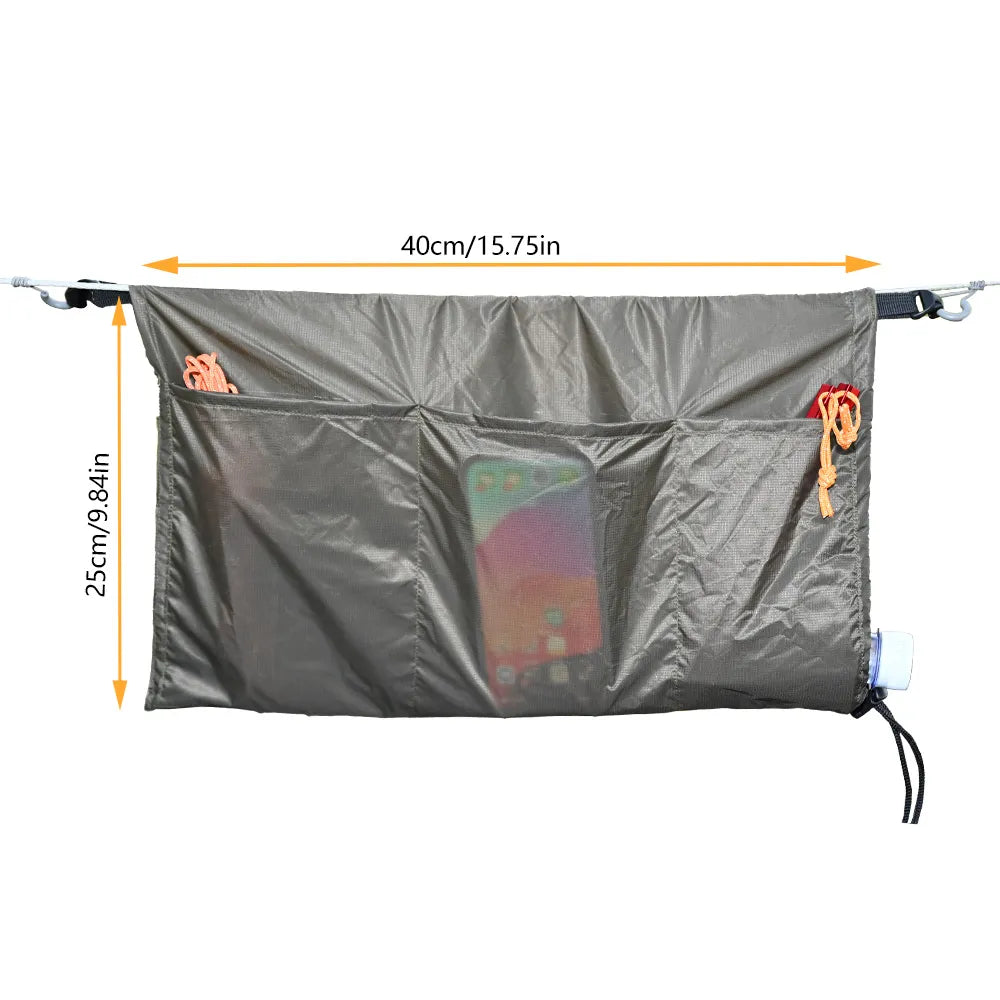
Onewind lists the sack at 40g / 1.4 oz.

The listed unpacked size is 40cm x 26cm x 24cm.

The listed packed size is 4cm x 8cm.

The material is 1.1 oz nylon ripstop with PU coating.

It has a zipper, handle, quick-drying washable fabric, and a footwear shape meant for boots, shoes, slippers, and similar camp footwear.

That makes the product role specific.

It keeps wet or dirty footwear contained.

It reduces exposure to dew and light rain splash.

It makes shoe openings less available to bugs.

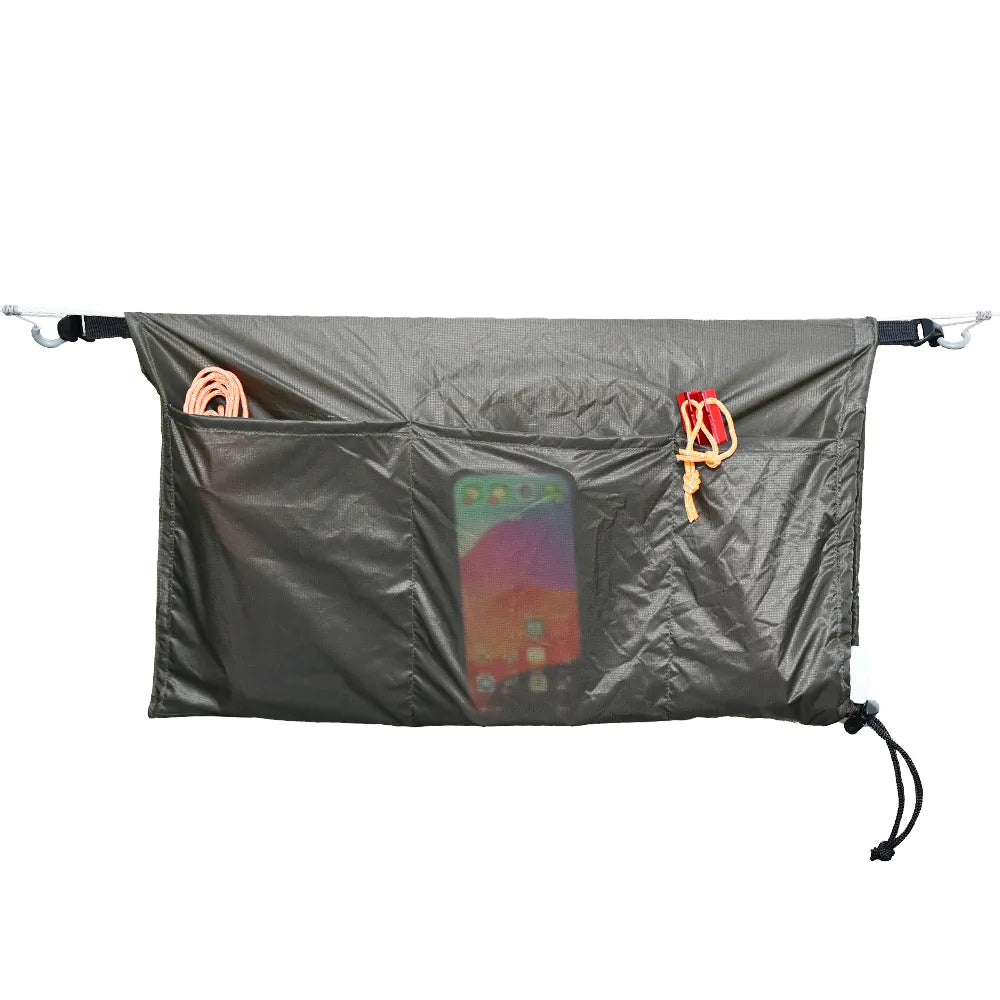
It gives hammock campers a bag they can clip or hang under tarp coverage.

It does not make a venom-proof vault.

It does not replace checking shoes in scorpion habitat.

It does not replace bear-country food and scent rules.

Use it as a cleaner, covered overnight shoe zone.

That is the right promise.

When Hanging Storage Wins

Hanging boot sack under a hammock tarp

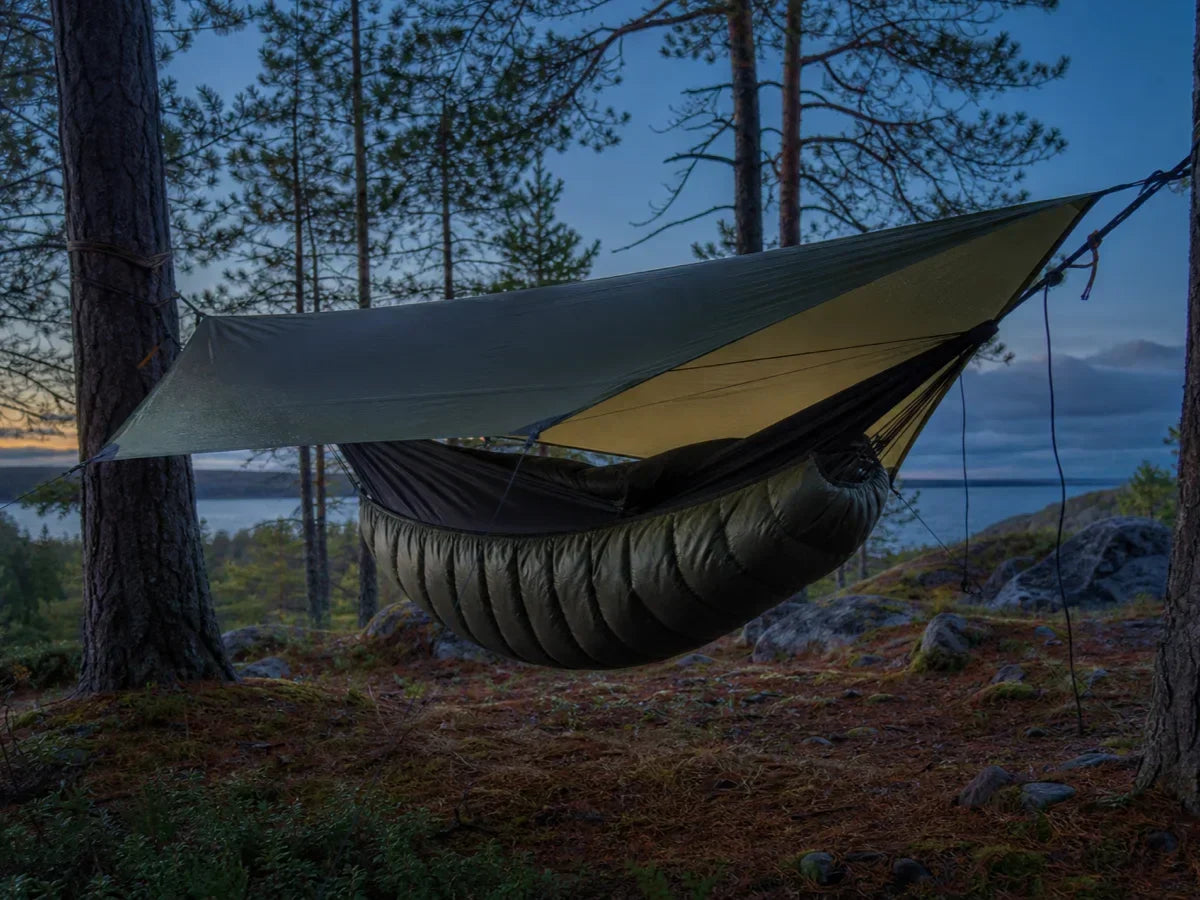
Hanging storage matters most for hammock campers and floorless tarp setups.

Without a tent floor, shoes often end up under the hammock, near the tarp edge, or beside the suspension.

That can work in dry weather.

It fails when the ground is wet, the tarp pitch is narrow, or bugs are active.

Clip a shoe bag to a ridgeline organizer, carabiner, tree strap accessory point, or tarp-safe hang point only if it will not distort the shelter pitch.

A larger 12 ft hammock tarp shelter gives more covered edge room for this kind of low, reachable storage.

Keep the bag under coverage.

Keep it low enough to reach without standing barefoot in wet ground.

Keep it away from food and scented items.

Do not hang heavy wet boots from a weak mesh pocket or bug net.

The best hanging setup is boring.

It holds the shoes off the ground.

It keeps them covered.

It does not pull your tarp out of shape.

It lets you find footwear without searching around in the dark.

Scenario 1: Clear Humid Night With No Rain Forecast

Dew-safe shoe storage under tarp cover

Clear sky.

The forecast says dry.

The grass already feels cool before sleep.

This is the classic dew trap.

Britannica's dew explanation matters here because the risk is not rainfall.

The risk is nighttime condensation on exposed surfaces.

If shoes sit open on grass, expect damp uppers, wet laces, and a colder first step.

Choose vestibule storage if the fly line fully covers the shoes.

Choose a boot sack or covered bag if the shoes must stay outside the tent.

Choose inside storage only if the shoes are clean enough to contain.

Do not leave them uncovered beside the door just because the forecast is dry.

Verdict: Choose covered storage, not open ground, when clear humid weather can create dew-soaked shoes by dawn.

Scenario 2: Small Tent or Hammock With Muddy Boots

Muddy boots contained outside a small shelter

The shoes are dirty.

The shelter is small.

The sleep area needs to stay clean.

At that point, the "just bring them inside" answer breaks down.

A one-person tent may have room for a sleeping pad, quilt, and a few essentials.

Muddy boots can turn that floor into a grit tray.

A hammock camp has even less indoor floor logic because there is no tent floor.

Choose a vestibule mat if the tent has good coverage.

Choose a boot sack if the shoes are wet, dirty, or awkward to place.

Choose hanging storage under a tarp if you are in a hammock.

Keep the shoe zone reachable from the shelter entrance.

Do not place boots where runoff can move under them.

Verdict: Choose a contained outside-the-sleep-zone setup when muddy boots and small shelter space collide.

Scenario 3: Warm Campsite With Bugs, Scorpions, or Slugs

Morning inspection of covered boots in bug habitat

Warm ground changes the storage decision.

The shoe is no longer just a wet item.

It is a dark pocket near ground level.

Research from NPS Big Bend advises campers to check shoes left out overnight.

CDC/NIOSH advises shaking out shoes or clothing before putting them on in scorpion settings.

That is enough to change the default.

Do not leave open shoes on bare ground with the mouth exposed.

Choose a closed bag, covered vestibule, or hanging point.

Keep shoe openings covered even if the soles stay outside.

Inspect in the morning with light.

Shake or tap before wearing.

Avoid overclaiming the gear.

A boot sack reduces access, but the morning check still stays in the routine.

Verdict: Choose covered storage plus inspection when insects, spiders, scorpions, slugs, or other small animals can enter open shoes.

Scenario 4: The First Bathroom Walk Before Sunrise

Shoes checked before a dark morning exit

This scenario is about access.

You need shoes before you are fully awake.

The ground is wet.

The light is low.

The shoe location is not obvious.

That combination creates the sudden scare.

Place the shoes where your hand expects them.

Keep a headlamp within reach.

Keep a dry sock landing zone inside the door.

Keep the shoe opening covered or the bag closed.

If the shoes are outside, do not step out barefoot to find them.

If they are in a vestibule, face them toe-out so you can lift and inspect them.

If they are in a boot sack, open the bag with the shoe mouth pointed away from your foot.

The routine should work in the dark.

Verdict: Choose predictable reach, covered storage, and a shake-out routine for any camp where a wet or occupied shoe would create a morning shock.

Common Mistakes With Camping Shoe Storage

Condensation and overnight moisture problem

Mistake What it causes Better move
Trusting the dry forecast Dew-wet shoes Cover shoes anyway on clear humid nights
Leaving shoe mouths open Bugs or debris inside Cover, bag, or invert after checking conditions
Bringing all dirty shoes inside Grit and odor in sleep area Create a contained door zone
Treating gear as animal-proof False confidence Store plus inspect
Forgetting nighttime access Barefoot wet-ground walk Put shoes and light in reach

The mistakes all come from treating shoes as an afterthought.

Footwear is mission-critical gear.

If it gets soaked, lost, frozen, or occupied, the next day starts badly.

I would rather spend three minutes choosing a shoe zone than spend the first hiking hour with wet socks or a stressed-out camp partner.

The sections below turn the common errors into checks.

Mistake 1: Leaving Shoes on Open Ground

Open-ground shoe storage mistake

Open ground feels convenient at bedtime.

It is also the weakest storage option.

It exposes shoes to dew from above, splash from the side, mud from below, and small visitors from the opening.

The risk rises on clear calm nights, wet grass, desert ground, and buggy summer camps.

A better setup does not need to be complicated.

Move the shoes under a fly line.

Place them on a small mat.

Put them in a boot sack.

Hang them under tarp cover.

If you have no gear, at least turn the opening downward only after checking that no moisture will pool into the shoe.

Open ground should be the emergency option, not the default storage system.

Mistake 2: Solving Dirt by Creating Moisture

Wet boots covered too tightly with poor ventilation

Campers often move dirty shoes outside to protect the tent.

That solves grit.

It can create moisture.

A shoe left outside the fly line may stay cleaner than the tent but still become wet.

A shoe sealed too tightly while soaked can trap stink and slow drying.

The fix is to separate "covered" from "sealed."

Use a vestibule when airflow matters and the weather protection is reliable.

Use a water-resistant boot sack when containment matters more than full drying.

Open and air shoes in the morning when conditions allow.

Remove insoles only if you can keep them clean and find them before packing.

The right overnight setup protects the next morning, not the long-term storage of wet footwear at home.

Mistake 3: Assuming a Boot Sack Replaces Inspection

Boot sack opened before morning shoe check

A boot sack improves the storage zone.

It does not cancel biology.

NPS and CDC guidance both support checking or shaking items like shoes after overnight exposure in scorpion-risk contexts.

Use that guidance as the safety floor.

Close the bag at night.

Keep the bag off wet ground when possible.

Open it in the morning.

Look into the shoe.

Tap or shake before wearing.

That routine is not overkill in warm or desert settings.

It is a low-cost habit with a high downside if skipped.

The product helps you control exposure.

Your morning check confirms the shoe is ready for your foot.

Those two steps work together.

Mistake 4: Mixing Food Storage With Shoe Storage

Separate boot storage and food storage zones

A shoe bag is for footwear.

It is not a food bag.

It is not a scent-proof wildlife system.

It is not a bear-country shortcut.

That boundary matters because camp storage categories can blur after dark.

Dirty socks, snacks, sunscreen, toothpaste, and shoes should not all land in one random gear pile.

Keep footwear in its own zone.

Follow local food and scented-item rules for food, trash, toiletries, and cooking gear.

If a campsite requires a bear canister, locker, hang, or other approved storage method, use that system for attractants.

Use the boot sack for boots.

Use the wildlife storage method for wildlife rules.

Clear categories prevent bad habits.

Mistake 5: Forgetting Packability Until the Last Mile

Packed 40g boot sack beside backpack

Any shoe-storage method has a carry cost.

A plastic bin works for car camping.

It is absurd for backpacking.

A towel works if you already need a towel.

A full dry bag works if it is already in the kit.

A dedicated boot sack works when its weight and packed size stay small enough to justify the control it adds.

Onewind lists the Boot Sack at 40g / 1.4 oz and 4cm x 8cm packed.

That is why it belongs in the backpacking conversation.

It is not trying to replace a large gear vestibule.

It is solving one narrow job: contain footwear overnight without making the sleep area dirty or leaving shoes fully exposed.

Pack it when that job appears on your trip.

Skip it when your shelter already solves the problem cleanly.

The Quick Decision Checklist

Check Choose
Shoes are dry, clean, and low odor Inside tent on towel
Shoes are muddy or soaked Outside the inner tent, contained
Vestibule has full fly coverage Vestibule with opening protected
Ground is wet or buggy Boot sack or hanging covered storage
Scorpion or warm critter habitat Covered storage plus shake-out
Hammock camp with no floor Hang a boot sack under tarp coverage
Car camp with several pairs Bin, tray, or shared shoe zone
  • ✓ Check the forecast, but do not trust a dry forecast to prevent dew.
  • ✓ Check the fly line, because coverage matters more than the word "vestibule."
  • ✓ Check the shoe opening, because the inside of the shoe is the first contact point.
  • ✓ Check the morning route, because bathroom walks happen before full attention.
  • ✓ Check the product claim, because a water-resistant boot sack is a storage aid, not a wildlife guarantee.

My default is simple enough to remember.

Clean and dry shoes can come inside on a boundary.

Dirty shoes stay outside the clean sleep zone.

Exposed shoes need cover.

Shoes in critter habitat need inspection.

Final Verdict

Final camping shoe storage verdict

Camping shoe storage should answer one question: what would ruin tomorrow morning fastest?

If the answer is dew, choose covered storage.

If the answer is mud or odor, keep shoes out of the clean sleep zone.

If the answer is bugs, scorpions, spiders, slugs, or a dark first step, cover the shoe opening and inspect before wearing.

If your tent vestibule already handles those jobs, use it.

If your hammock or small tent setup leaves shoes exposed, use a small hanging bag or boot sack.

If you want a dedicated lightweight option from the camp storage collection, the Onewind Boot Sack fits the narrow job well: 40g, water-resistant ripstop nylon, zippered, packable, and shaped for footwear.

Treat it as a cleaner overnight boot zone.

Do not treat it as a guarantee.

The best morning is boring.

Your shoes are where you left them.

They are dry enough.

They are not full of grit.

They do not surprise you.

That is the whole win.

Frequently Asked Questions

Use a covered vestibule, inside-tent towel zone, hanging bag, or boot sack based on the main risk. If shoes are wet or muddy, keep them out of the clean sleep area. According to CDC and NPS style scorpion guidance, shoes left out overnight should be checked or shaken before wearing.

Yes. According to Britannica, dew is nighttime condensation on surfaces exposed to the sky, especially on calm clear nights. Shoes left on grass, dirt, or open ground can be damp by dawn even after a dry forecast.

A closed boot sack reduces open access and keeps footwear contained, but it should not be treated as guaranteed wildlife protection. In scorpion-risk areas, NPS and CDC source guidance supports checking or shaking shoes and clothing before putting them on.

Inside works when shoes are dry enough and you can contain dirt on a towel or bag. Outside works only if the footwear is protected from dew, rain splash, and small animals. A vestibule or 40g water-resistant boot sack is the middle option for many trips.

The lightest option is using a shelter feature you already carry, such as a vestibule, tarp edge, or small ground cloth. If you need a dedicated contained bag, the Onewind Boot Sack is listed at 40g / 1.4 oz and packs to 4cm x 8cm.

Pack a cleaner overnight boot zone

캠핑용 부츠 백

캠핑용 부츠 백

2 reviews
Rs. 1,800.00 Rs. 2,000.00
Shop Now →

Continue Exploring

Related Articles

Ultralight 2 person backpacking tent floor fit with two wide pads

Ultralight 2 Person Backpacking Tent Guide: The Floor-Fit Framework

Hammock top quilt insulation setup in forest campsite

Hammock Top Quilt: The Insulation Decision That Changes Everything

Hammock with green rain fly tarp set up between trees in a forest campsite

Hammock Rain Fly: The Shape-to-Scenario Decision Framework

Related Products

배낭 커버 / 장비 해먹 배낭 커버 / 장비 해먹
배낭 커버 / 장비 해먹
Sale priceFrom Rs. 2,100.00 INR
16 reviews
Save 23%
Compression Sack | Onewind Outdoors Sleeping Bag Camping Sack | Onewind Outdoors
실리논 압축 자루
Sale priceFrom Rs. 1,000.00 INR Regular priceRs. 1,300.00 INR
6 reviews
장비 보관 해먹 장비 보관 해먹
장비 보관 해먹
Sale priceRs. 2,300.00 INR
36 reviews
햄모크 리드지라인 오거나이저 플러스 햄모크 리드지라인 오거나이저 플러스

Leave a comment

All comments are moderated before being published.

이 사이트는 hCaptcha에 의해 보호되며, hCaptcha의 개인 정보 보호 정책 서비스 약관 이 적용됩니다.

Free & Fast Shipping

We Offer Free & Fast Shipping Worldwide over 199$