
Pull your hammock nearly flat at a 5-degree hang and a 200-pound sleeper puts 1,148 pounds of pull on each anchor, which is roughly the weight of a grand piano hanging off a bumper you never checked.
Every guide to hanging a hammock without trees gives you the same menu.
A stand, posts in the ground, your vehicle, some existing structure, a set of poles, or giving up and sleeping on the ground.
Not one of them tells you how much force that anchor is about to see.
That number is the entire safety question, and it is not intuitive, because it depends far more on your hang angle than on your body weight.
I compared the ranking no-trees guides against rigging references and state park regulations, and the gap was identical every time: the option lists carry no numbers, and the pages that carry numbers never mention the no-trees case.
So this guide does the joining. You get the force at the anchor first, then a three-question test you can run on the bumper, the post, or the pergola standing in front of you.
What You'll Learn
I built this around one number and three questions, because a list of ideas cannot tell you whether the specific thing in front of you will hold.
Here is what each part settles.
Quick Answer
Hanging without trees is a load problem before it is a creativity problem, so solve it in that order.
Get the number, check the direction of pull, then demand a published rating.
The rest of this guide explains why each call is what it is.
The Anchor Load Test

I stopped choosing anchors from lists the day I worked out what a flat hang actually does to the numbers.
Three questions, asked in order, decide whether any no-tree anchor is safe.
The first is quantitative, the second is structural, and the third is simply whether anyone has published a rating you can check.
Anything that fails a question is not a marginal choice, it is a no.
Question 1: What Force Actually Lands on the Anchor
Hammock Safety: Why the Angle of Your Suspension Matters | Dutchware Gear

The force on each anchor equals your body weight divided by twice the sine of the hang angle, measured from horizontal.
That formula sounds academic until you see what it does across the range people actually hang at.
At the widely recommended 30-degree hang, each anchor carries exactly one body weight.
Every degree flatter than that costs you more, and the cost accelerates.
Here is the detail that convinced me this table belongs in a hammock article rather than a rigging manual.
The 30-degree hammock rule is numerically the same thing as the 120-degree critical angle that rope rescuers use, which is the angle where each leg of a two-point system carries 100 percent of the load.
Hammock culture arrived at 30 degrees through comfort, and rescue rigging arrived at the same geometry through load math, according to the angular vector force tables published in rigging references.
Two independent sources report the same multipliers to three digits, one from rope rescue and one from a hammock hang calculator, which is about as much agreement as you get on a number like this.
So the cheapest safety upgrade available to you costs nothing.
Hang with sag.
Pulling a hammock tight because it looks neater is the single most expensive mistake on this list, and letting it curve fixes it instantly.
The supporting geometry is worth committing to memory.
Set your anchor points 10 to 15 feet apart, or use hammock length plus 3 to 4 feet as your rule.
An 11-foot hammock wants 13 to 15 feet of span, which is why an 11-foot hammock on a 12-foot stand sits too low.
Keep your structural ridgeline at roughly 83 percent of hammock length, put the sit height at 16 to 18 inches, and never let the lowest point of the hammock sit higher than about 18 inches off the ground.
Question 2: Which Direction Does the Anchor Pull

A hammock pulls sideways, and almost every anchor people improvise was built to carry weight straight down.
This is the failure mode the ranking guides never name, and the hammock community names it constantly.
On a widely shared post of a hammock strung between sailboat masts, the top replies were not about weight at all.
One reader noted that it was one of the few setups on the forum that actually is designed for lateral loads, and another predicted the usual objection that a concrete post is not safe for a lateral load.
That is the whole insight in two Reddit comments from users who hang every weekend.
A concrete post, a porch column, a masonry pillar, a fence post, and a deck railing are all vertical-compression structures.
They are excellent at holding a roof up and they retain very little of that strength when you pull them sideways at hammock height, because the load arrives as a bending moment at the base rather than as compression down the axis.
So prefer anchors whose load path is already horizontal.
A hitch receiver, a purpose-built stand, or a beam bolted to posts that sit in concrete footings are all designed to take a pull rather than a press.
Two structural cautions follow from the same logic.
Never hang corner to corner across a pergola, because that racks the frame out of square and loads the joints in the one direction they were not designed for.
Skip picnic tables entirely, because they tip long before they break.
Question 3: Is It Rated, or Are You Guessing

A rated anchor publishes a number you can check against the table in Question 1.
An unrated anchor publishes nothing, and the correct decision there is to walk away rather than to test it with your body in the dark.
The truck bed case deserves a note, because it is common and it looks fine in photographs.
When one hanger posted a bed setup using cross-boards, readers immediately pointed out that the boards were fastened neither to each other nor to the truck.
The owner's defense was that his friend's body weight held them in place, which is exactly the reasoning Question 1 exists to interrupt.
Scenario 1: The Bare Backyard, Permanent

Here portability is worth nothing and capacity plus cure time are everything.
You have two honest options: set posts in concrete, or buy an arc stand and stop thinking about it.
A 12-foot steel stand runs about 147.6 by 35.4 by 47.6 inches, weighs roughly 31.9 pounds, and holds about 450 pounds.
Material changes the number more than you would guess, since a steel arc is rated around 500 pounds while a hardwood pine arc lands at 400 to 450 pounds depending on span.
Budget steel stands sit in the 89 to 130 dollar band, mid-range models run 150 to 250 dollars, and premium portables reach 250 to 360 dollars.
If you want the posts instead, read the next section first, because the specification is genuinely unsettled.
Verdict: for most homeowners who simply want to lie down this weekend, buy the arc stand and skip the concrete.
Scenario 2: Car Camping on Treeless Ground
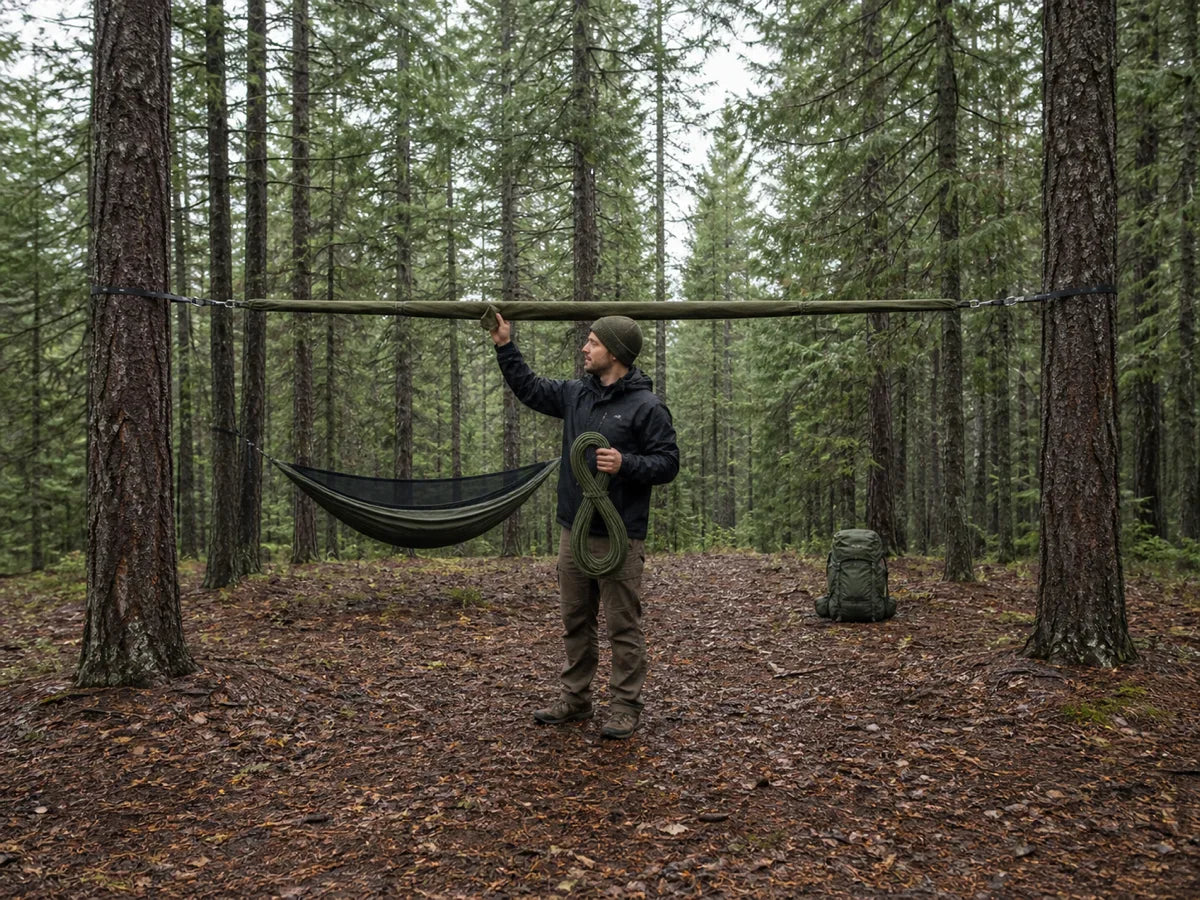
No trees? No problem! Advanced hammock camping setup

Desert, beach, prairie, and most developed campgrounds in open country fall here.
Weight barely matters because the vehicle carries it, so buy capacity and span rather than grams.
A hitch-mounted stand into a 2-inch Class III or IV receiver is the strongest rated option in this scenario at 275 to 300 pounds, and it has the advantage of using a structure engineered for horizontal pull.
The trade is that your vehicle becomes furniture for the night.
If you would rather keep the car free, a portable stand works and the specifications are public.
Roof racks can work, but only at the capacity printed in your owner's manual, and you should run webbing to the rack's end rather than clipping mid-span.
Verdict: choose the hitch stand if the vehicle stays parked, and the portable stand if it does not.
Scenario 3: Treeless Backpacking

This is where I have to give you the answer no competing guide will print.
No commercially available hammock stand is backpacking-viable.
The lightest well-documented option weighs 11 to 14 pounds, and its own maker states outright that it is not suitable for backpacking.
That is heavier than most people's entire shelter, sleep, and pack system combined, so carrying one up a trail is not a compromise, it is a different sport.
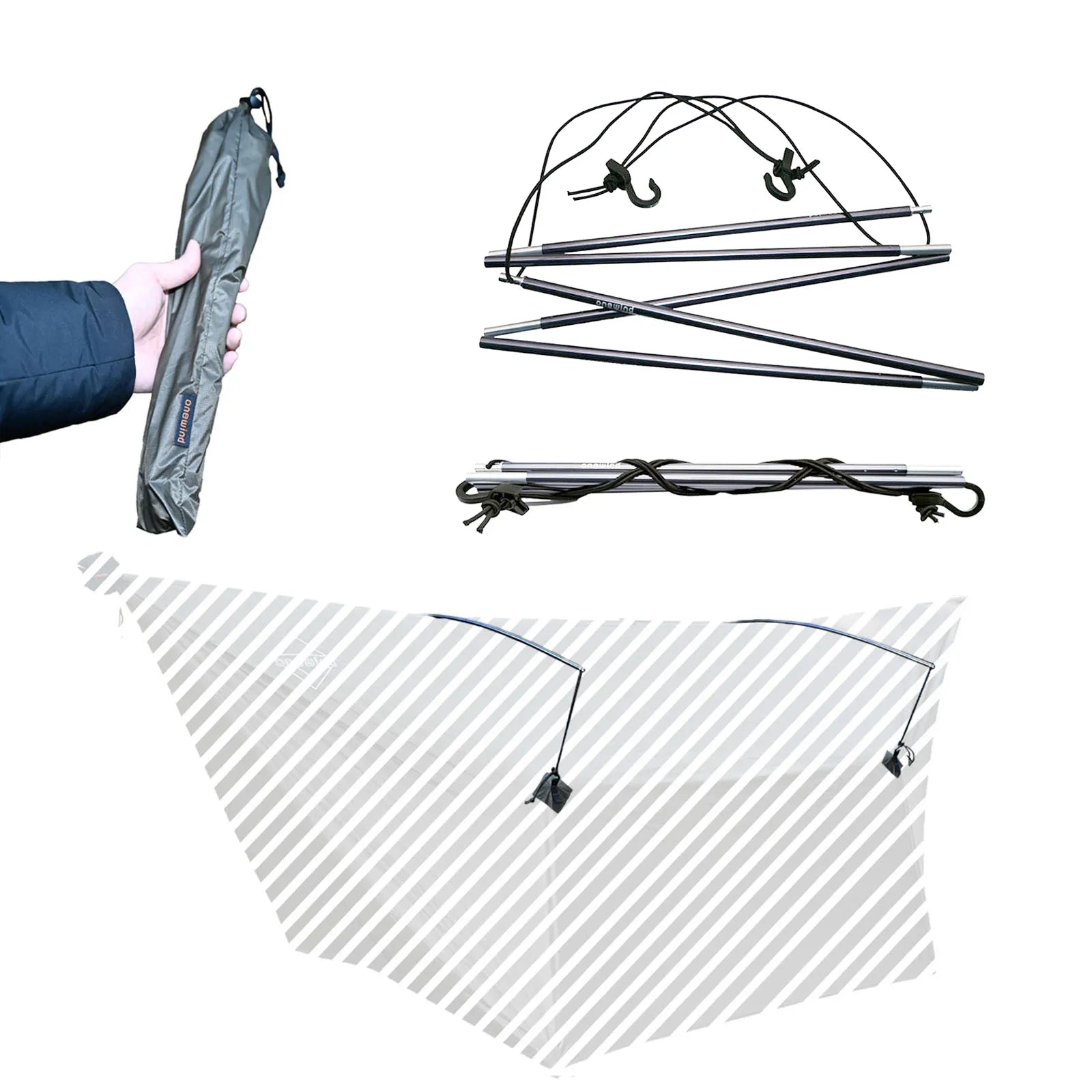
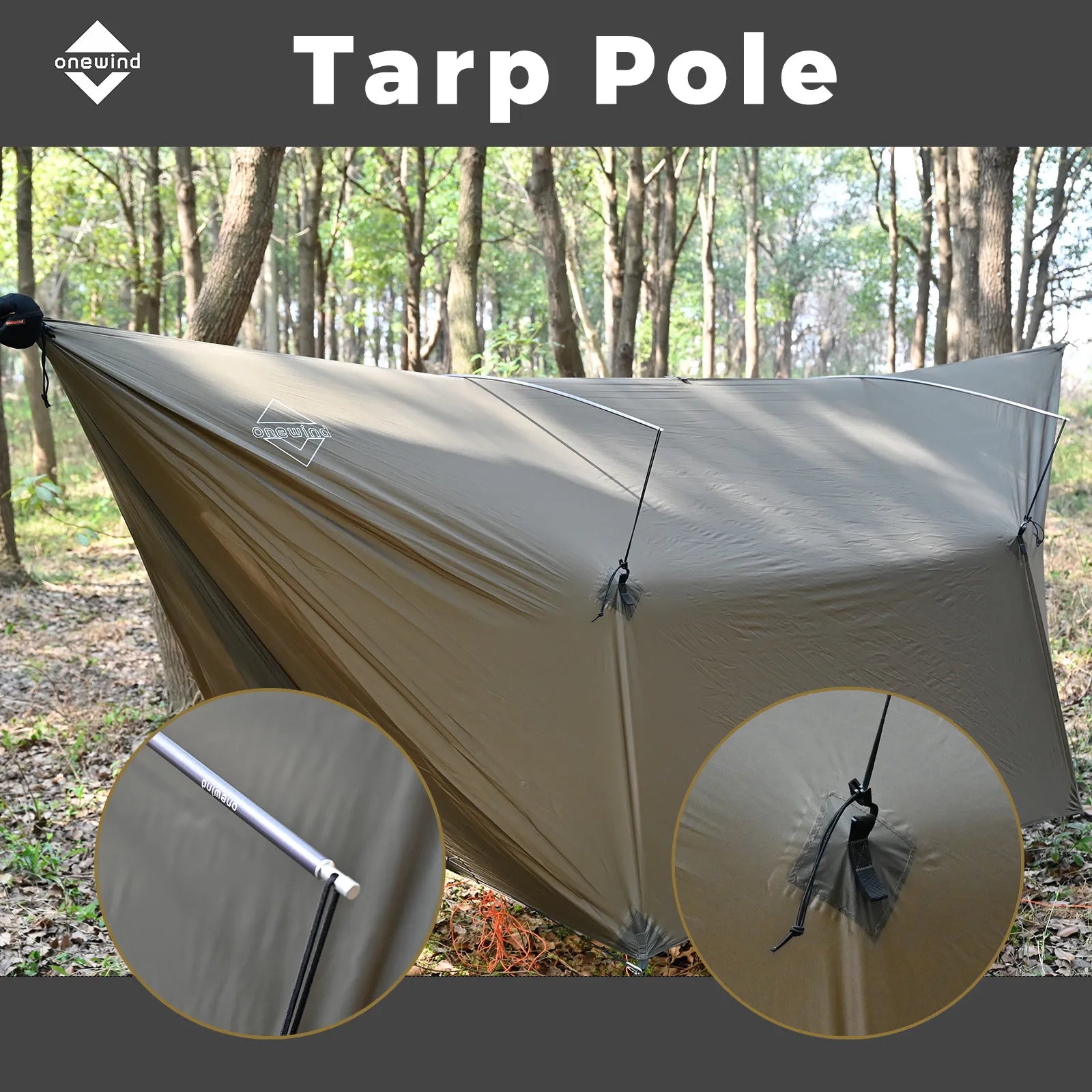
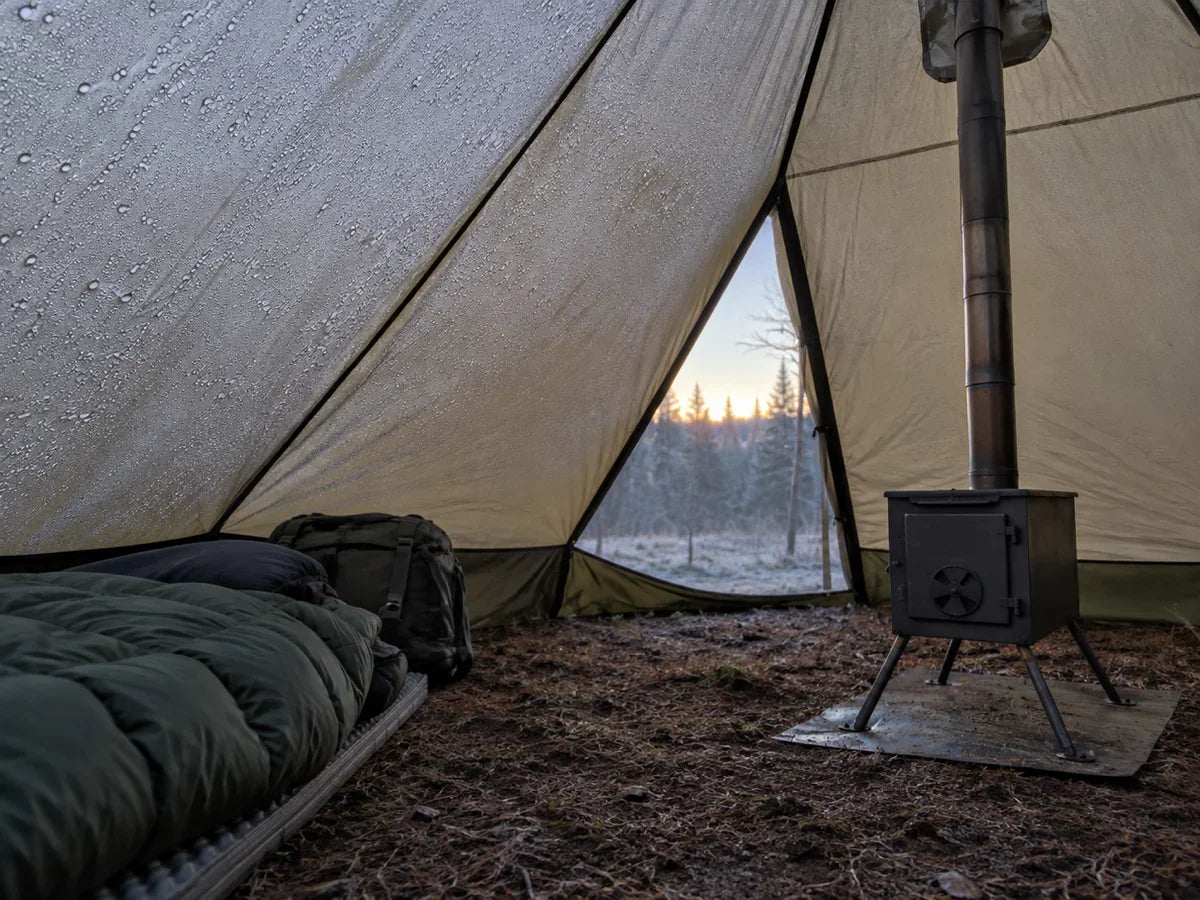
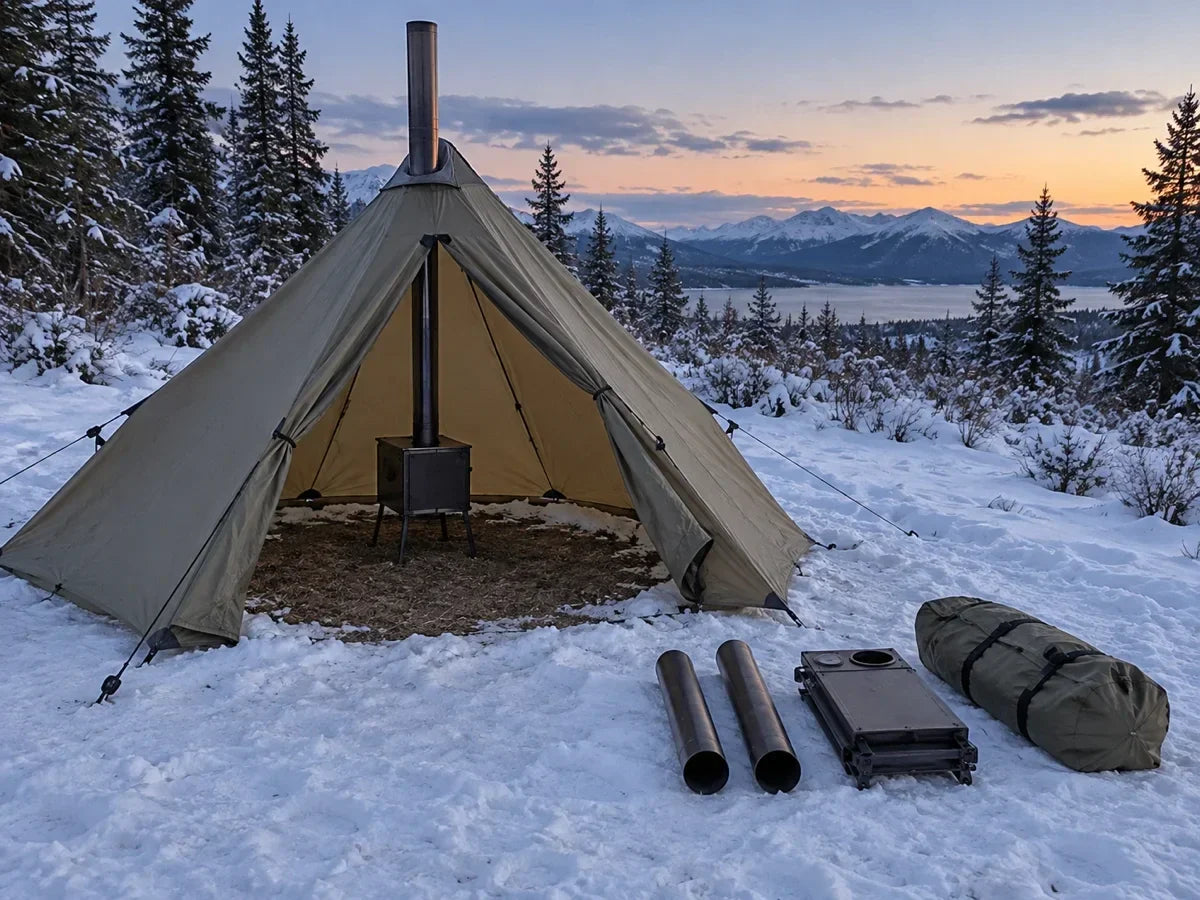
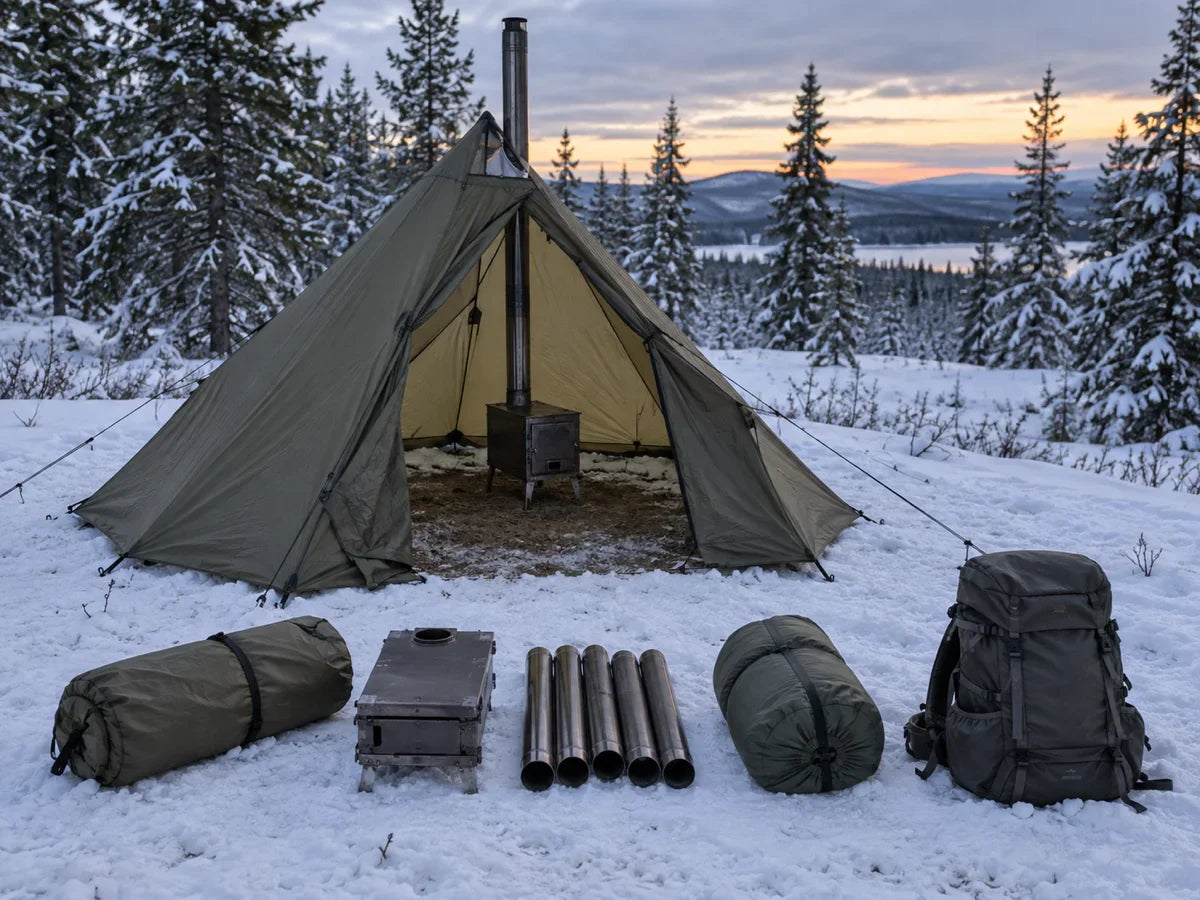
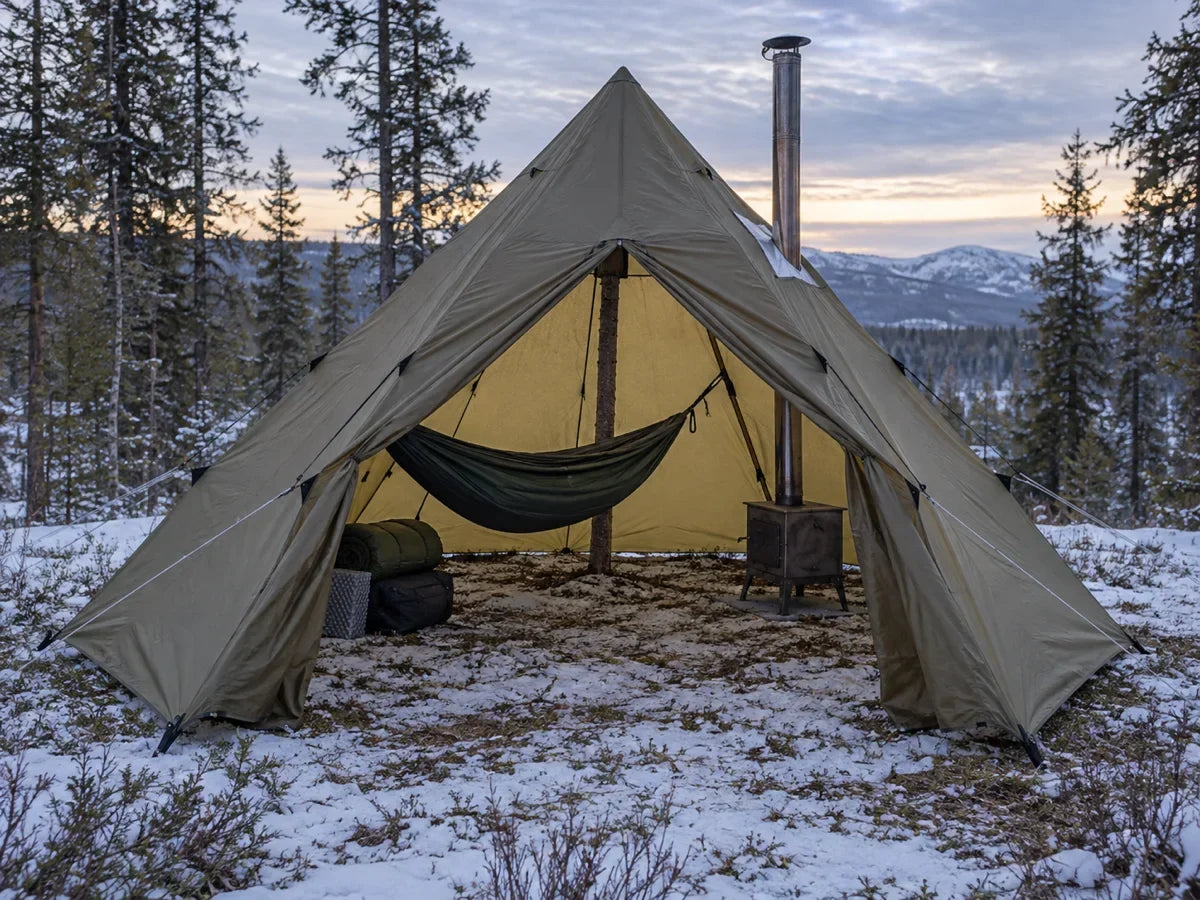
If you are walking into treeless terrain, the working answer is to go to ground under a tarp pitched on trekking poles or dedicated poles.
You keep the tarp you already carry, you sleep on the ground, and you accept that this trip is not a hammock trip.
This is the case where our gear genuinely fits, because we do not sell a hammock stand and will not pretend otherwise.
A 12-foot silnylon tarp pitched on tarp poles with stakes and guyline is the shelter that survives a treeless night in a pack you can actually carry.
If you have never pitched a tarp without trees, our camping tarp poles guide covers the height and stability framework that makes a pole-supported pitch stable in wind.
Verdict: leave the hammock at home and carry a tarp, because no stand on the market is worth its weight on a trail.
Scenario 4: Trees Present, Attachment Banned

This scenario surprises people, and it is growing fastest.
The site is full of healthy trees and you may not touch any of them.
Joshua Tree, Redwood, Bryce, Canyonlands, New River Gorge, Big Bend, and Guadalupe all restrict or ban attaching hammocks to trees, which means a free-standing support is not a preference but a legal requirement.
So the anchor question resolves before you even open the load table.
Bring a stand or plan to sleep on the ground, because the trees in front of you are decoration as far as your hammock is concerned.
Check the specific park's current rules before you drive, since these change and enforcement varies by unit.
Verdict: bring a free-standing support or plan a ground night, because no anchor technique makes a banned tree legal.
Scenario 5: Trees Present but Restricted

Here you may attach, but only within published limits, and this is a compliance problem rather than an anchor problem.
Wisconsin's state park rules are the clearest published example and they read like a specification.
Texas sets different numbers, requiring at least 8 inches of trunk diameter and 2-inch straps.
Notice that the same rule set which bans attaching to other objects and fixtures explicitly permits free-standing stands, which tells you how regulators think about this.
If your straps are narrow webbing or bare rope, this is the scenario that sends you shopping, and wide hammock tree straps clear both state minimums while spreading load across the bark.
Verdict: fix the straps rather than hunting for an alternative anchor, because the trees here are legal and your webbing is not.
Scenario 6: Beach and Deep Sand

Sand defeats the two solutions that work everywhere else.
Stands sink under point loads, and the maker of the best-documented portable stand warns specifically that sand fouls its telescoping tubes.
Stakes are close to useless here, because pullout resistance in loose sand is a fraction of what the same stake delivers in packed soil.
Anchor makers who publish load charts have found that soil class changes pullout strength by an order of magnitude, which is why a number measured in clay tells you nothing about a beach.
The working answer is a buried anchor, where you bury a filled bag or stuff sack horizontally and bring the line up to the surface, so the load spreads across the sand above the anchor rather than trying to grip it.
I want to be honest about the limits of this advice.
Anchor manufacturers refuse to guarantee pullout figures at all, and one states plainly that the only way to predict the pullout strength of any anchor at a specific site is an on-site proof test.
So treat every published sand number as a guideline, set your hang low, and test with your weight before you commit to sleeping.
Verdict: bury a deadman anchor and hang low, and do not expect a stand or a stake to work in sand.
Scenario 7: Apartment Balcony or Rental

You cannot drill, so every anchor that requires a fastener is off the table before you start.
That leaves free-standing options only, and the constraint is footprint rather than capacity.
Measure your usable length first, because a 12-foot steel stand needs roughly 147.6 inches of floor, which is longer than many balconies.
If the space will not take a full stand, a shorter stand paired with a shorter hammock is the honest fix, not a tighter hang on a long one.
Verdict: measure the floor before you buy, and never treat the railing as an anchor.
Do not anchor to a balcony railing under any circumstances.
A railing is a guard against falling outward, it is rated for nothing you are about to do to it, and it fails both Question 2 and Question 3.
Scenario 8: Pergola, Porch, or Deck

This is the highest-risk scenario in the guide, because you are judging a load path somebody else built and you cannot see inside it.
A pergola or porch works only if two things are true.
The beams must be bolted to the posts rather than toe-nailed, and the posts must sit in concrete footings rather than in surface brackets.
Standard surface post bases resist almost no lateral load, which puts most decorative pergolas straight into the avoid column.
When you cannot verify either condition, treat the structure as unrated and move to a stand.
Hang along the beam rather than corner to corner, keep the hang low so a failure drops you inches instead of feet, and load it gradually with your weight before you trust it overnight.
Verdict: if you cannot confirm bolted beams and footed posts, treat the structure as unrated and use a stand.
The DIY Post Question Nobody Has Settled

I went looking for an engineered specification for a hammock post under lateral load and could not find one, so I am going to show you the disagreement rather than invent a number.
The gap between 24 and 48 inches is not a rounding difference, it is the difference between a post that pivots in wet soil and one that does not.
Practitioners argue for 6x6 partly because a 4x4 warps outdoors and partly because the bending moment at the base is what actually fails.
Concrete volume follows from whichever you choose, and I calculated these from published bag yields rather than quoting them.
A 12-inch diameter hole 36 inches deep displaces about 2.36 cubic feet, and a 6x6 post occupies about 0.63 of that, leaving roughly 1.73 cubic feet, or three 80-pound bags with a fourth for overage.
Fast-setting concrete changes the weekend math, since the manufacturer states it sets in 20 to 40 minutes and is poured dry into the hole before soaking with water.
If you want a number from me: go 6x6, go at least 36 inches deep, and set the second post at hammock length plus 24 inches.
Common Mistakes

The first mistake is hanging tight, which is the flat-angle trap in Question 1 and the one that quietly multiplies your anchor load.
The second is reading a weight capacity as a safety margin, when the stand's rating assumes a sane hang angle rather than the flat one you just built.
The third is trusting a vertical structure sideways, which is Question 2 and the reason porch columns and railings keep appearing in failure stories.
The fourth is confusing anchor safety with site safety.
That distinction has real consequences in the terrain where trees are missing.
When one hanger posted a clever desert setup using climbing cams in rock, the highest-voted replies ignored the anchors entirely and objected that the camp was pitched in an arroyo.
An experienced desert commenter pushed back hard on normalizing the practice, warning that flash floods start far away and can arrive under a clear forecast, sometimes from a reservoir release rather than rain.
A perfect anchor in a dry wash is still a bad night.
The fifth mistake is buying a stand for a trip it cannot serve, which is the backpacking case, and the fix is to plan a ground night instead.
The Quick Decision Checklist
Run this before you lie down anywhere without trees.
The number comes first, the direction comes second, and the rating settles it.
Once you have run those three questions, the menu every other guide hands you sorts itself into obvious yes and obvious no, and you stop guessing about the thing holding you three feet off the ground.