
Un paquete de 10 estacas Y de aluminio de 15 g pesa unos 150 g antes de la bolsa de transporte, lo que equivale aproximadamente al peso de un pequeño tentempié de sendero.
Ese número parece fácil de reducir hasta que un único anclaje débil permite que la lona se combe, que un refugio con bastones de trekking pierda su forma o que una esquina a barlovento empiece a desplazarse sobre el suelo húmedo.
Comparé las especificaciones del producto, la guía de montaje de REI, las notas de soporte de Cascade Designs/MSR, las pruebas independientes de estacas y los informes de la comunidad ultraligera para esta guía.
El principio es directo: las estacas ultraligeras para tienda de campaña solo funcionan cuando la estaca aún coincide con la carga.
La decisión de luz verde no es «comprar la estaca más ligera».
La decisión de luz verde es "ahorrar gramos después del punto de anclaje, mientras el tipo de terreno, el clima y el plan de recuperación siguen teniendo sentido."
Lo que aprenderás
Aprenderás a construir un kit de estacas en lugar de copiar una lista de productos.
Haz una pregunta sobre el embalaje antes de mirar otro gráfico de gramos.
¿Cuáles estacas pueden fallar sin grandes consecuencias y cuáles estacas mantienen la forma del refugio?
Los anclajes de esquina, los anclajes de la línea de cumbrera, los anclajes de la cúspide y los vientos de barlovento merecen más respeto que los puntos de sujeción laterales bajos sobre suelo firme y en calma.
Reviso primero esos puntos de alta carga.
Luego decido si la estaca más ligera aún tiene suficiente forma, profundidad y visibilidad para hacer el trabajo.
Respuesta rápida
Para la mayoría de los mochileros, el kit de piquetas ultraligeras más seguro es mixto.
Utilice estacas Y o V más resistentes donde el refugio soporte una carga real.
Use ganchos más ligeros o estacas más delgadas solo donde la carga de la línea sea menor y el suelo sea firme.
Lleva al menos una estaca de repuesto, porque una estaca perdida puede convertir una hoja de cálculo de peso perfecta en un mal campamento.
Según Cascade Designs/MSR, las tiendas normalmente se envían con piquetas y vientos para una instalación normal, pero distintas condiciones pueden requerir diferentes anclajes o piezas de repuesto.
Esa es toda la regla de compra en una sola frase.
La configuración normal no es cualquier configuración.
El marco de decisión

Utilice cuatro preguntas antes de comprar.
¿Qué está sujetando el ancla?
¿Qué tipo de suelo sujetará la estaca?
¿Qué sucede si ese anclaje falla?
¿Puedes encontrar y quitar la estaca por la mañana?
Esas preguntas convierten una actualización ultraligera vaga en un mapa de equipaje.
También explican por qué dos excursionistas pueden tener razón con kits de estacas diferentes.
Una lona para hamaca sobre suelo firme del bosque puede usar un kit diferente al de un refugio con bastones de trekking sobre grava alpina suelta, incluso si ambos excursionistas quieren piquetas de tienda ultraligeras.
Según REI, las estacas normalmente deben clavarse completamente en la mayoría de los suelos, dejando solo lo suficiente expuesto para fijar el cordón.
Esa instrucción favorece las estacas que aún tienen suficiente longitud, perfil y diseño de la cabeza después de reducir el peso.
Si un pequeño gancho no puede soportar un tirón firme con la mano, los gramos ahorrados no son útiles.
Si una estaca en Y sujeta la esquina de barlovento, el borde de vuelo o la cima de la lona, los gramos extra pueden ser el seguro contra el mal tiempo más barato de todo el equipo.
No dejar rastro añade otro límite: elige superficies duraderas y evita ampliar el impacto del campamento.
No resuelvas un problema de bajo riesgo socavando terreno frágil hasta que se sostenga.
Mueve el punto de anclaje, cambia la estaca o cambia el lugar antes de convertir una superficie frágil en una zanja.
Esa norma de bajo impacto importa aún más con el equipo ultraligero, porque los anclajes diminutos tientan a las personas a trabajar el suelo más de lo que el suelo puede soportar.
Prueba de ajuste 1: la clasificación de carga no es la clasificación de confort
Estacas de tienda de campaña y cómo utilizarlas

El encabezado dice capacidad de carga, pero la versión de la estaca es prioridad de carga.
Un kit de piquetas no necesita que cada pieza sea igualmente resistente.
Necesita las piezas más resistentes donde el fallo más duele.
Comparo los puntos de anclaje antes que los gramos.
La punta de un refugio con bastones de trekking puede sostener la forma de todo el refugio.
Un punto de sujeción lateral bajo solo puede alejar la tela de su hombro.
Esos dos trabajos no deberían usar automáticamente la misma estaca ultraligera.
Piensa en el kit como un pequeño presupuesto.
Gasta poder de sujeción donde el refugio se vuelve más silencioso, más seco y más estable.
Ahorra peso en la parte de la cuerda que realiza un trabajo menor y cuando el campamento te ofrezca un suelo blando.
Según REI, los campistas deben fijar las esquinas temprano con viento y mantener la tienda de campaña controlada mientras la montan.
Esa orientación del viento te indica qué anclajes reciben un tratamiento premium.
El anclaje que evita que el refugio se mueva merece más capacidad de sujeción que el anclaje que solo ordena un pequeño panel.
Prueba de ajuste 2: muchas páginas de clasificación enumeran las mejores estacas, pero ellas

Las listas de clasificación te ayudan a identificar buenos productos.
No empaquetan tu refugio.
CleverHiker evalúa las estacas de tienda de campaña por peso, capacidad de compactación, durabilidad, poder de sujeción y facilidad de uso, que es el conjunto correcto de variables.
El paso que falta es asignar esas variables a puntos de anclaje.
Un kit para el primer viaje puede comenzar con cuatro anclajes más resistentes para esquinas, líneas de cumbrera, picos o puntos de barlovento.
Luego, añade dos a cuatro anclajes más ligeros para vientos de menor carga.
Luego, añade una o dos piezas de repuesto si el clima, la distancia o un terreno rocoso aumentan el coste del fallo.
Para muchos refugios, eso crea un kit de 8 a 10 estacas.
El número exacto depende de las puertas, los vestíbulos, los puntos de sujeción del toldo, la forma de la lona y de si compartes anclajes entre una lona de suelo y una esquina de la tienda.
No retire una estaca del kit hasta que sepa de qué lazo provino.
Preferiría ahorrar gramos en ropa extra antes que reemplazar cada estaca de alta carga por un gancho frágil.
Las categorías de prueba de OutdoorGearLab también apuntan a compensaciones, no a un único ganador.
La pregunta correcta no es "¿Qué estaca gana?"
La pregunta correcta es: "¿Qué estaca gana en este hoyo, bajo esta línea, en este suelo?"
Prueba de ajuste 3: Muchas páginas de producto enumeran el material
¿Deberías mejorar tus piquetas de tienda? Explicación de las estacas para tienda.

El material importa, pero la forma suele decidir cómo se comporta ese material en el suelo.
El aluminio puede ser ligero y lo suficientemente rígido para un uso general amplio.
El titanio puede ser muy ligero, pero las formas de gancho delgadas pueden doblarse o girar bajo cargas laterales más fuertes.
La fibra de carbono puede reducir gramos, pero los informes de campo y las pruebas independientes suelen considerar el riesgo de rotura como el compromiso.
El acero puede soportar maltrato, pero rara vez pertenece a un equipo de mochilero ultraligero, a menos que el terreno duro o el camping en coche cambien la decisión.
Los anclajes de plástico y anchos pueden ayudar en la arena o la nieve porque la superficie importa más que el peso compacto del paquete.
La forma es el traductor de campo para todos esos materiales.
Un perfil en Y ofrece al suelo más resistencia que una estaca redonda.
Un gancho se guarda de forma compacta y pesa poco, pero sacrifica superficie.
Una estaca de estilo clavo puede clavarse en terrenos más duros, pero es posible que no sujete tan bien en suelo suelto.
Una estaca ancha de arena o nieve parece ineficiente en la mochila hasta que el suelo se niega a sujetar una estrecha.
El ejemplo de Onewind es útil porque una estaca en Y de aluminio 7075 de 15 g y 7 pulgadas se sitúa en el centro de esta compensación.
No es la estaca más ligera posible.
Es una ancla ligera de uso general para tiendas de campaña, lonas, esterillas, toldos y líneas de cubiertas para lluvia de hamacas cuando el terreno y la carga se ajustan a la forma.
Para un ejemplo directo de producto, Estacas de tienda de aluminio Onewind tiene sentido después de que decidas que el punto de anclaje necesita una estaca en forma de Y, ligera pero más resistente.
Escenario 1: Mochilero que sustituye las estacas pesadas antes de un viaje de fin de semana.

El viaje es corto, el pronóstico es normal y el campista quiere reducir el peso del equipaje sin reconstruir todo el sistema de refugio.
El error es reemplazar todas las estacas a la vez porque el nuevo conjunto parece más ligero en la báscula.
Comience con el mapa del refugio.
Marca las cuatro esquinas, los puntos del doble techo o del vestíbulo y los vientos que mantienen la forma de la pared.
Según Cascade Designs/MSR, la configuración normal incluye suficientes piquetas y vientos, pero las condiciones pueden requerir anclajes diferentes o repuestos.
El juego de existencias te da la cantidad.
No te ofrece la ruta de actualización ideal.
Sustituya primero las estacas de mayor carga por estacas en Y o en V, ligeras pero resistentes.
Entonces considera apuestas más pequeñas para los puntos con menor probabilidad.
Lleva una de repuesto para el fin de semana, porque las superficies rocosas, las piquetas perdidas y las piquetas dobladas son lo bastante comunes como para importar.
No probaría por primera vez un kit de piquetas ultraligero completamente nuevo durante la llegada de una tormenta.
Métele una sola vez a la luz del día y marca qué anclajes requieren más tensión manual.
Si una estaca ya parece dudosa en el patio trasero o en el parque local, no se volverá más fiable después de que la lluvia ablande el campamento.
Veredicto: Actualice como un kit mixto, no como un reemplazo completo de la tienda de campaña, porque el primer recorte de peso debe preservar los puntos de anclaje más resistentes del refugio.
Escenario 2: excursionista ultraligero tentado a comprar los ganchos de titanio absolutamente más ligeros para cada punto de anclaje.

El excursionista ve una estaca con gancho diminuta y empieza a multiplicar el ahorro de gramos.
La hoja de cálculo se ve genial.
El campamento puede que no.
Los ganchos pequeños pueden funcionar en puntos de poca carga en suelo firme, pero son una mala opción por defecto para cualquier anclaje.
Los informes de Reddit sobre ultraligero suelen plantear esto como un problema de apuestas mixtas: estacas más resistentes donde la carga importa, y estacas más ligeras donde el riesgo es menor.
La prueba clave es un tirón firme con la mano después de que la estaca esté completamente asentada.
Si la estaca se tuerce, se desliza o se dobla, el número en la escala deja de ser el número decisivo.
Utiliza los ganchos más ligeros en los tensores laterales, las esquinas de la lona de suelo o los puntos de respaldo.
Mantén anclajes más resistentes en las cimas, las esquinas, los lados de barlovento y cualquier tensor que proteja el espacio interior.
También hay un coste de manipulación.
Las pequeñas estacas oscuras desaparecen entre la hojarasca, se doblan bajo la presión de pies apresurados y pueden ser más difíciles de retirar con los dedos fríos.
Si la estaca ahorra gramos pero ralentiza cada montaje y desmontaje, puede ser más una herramienta para el día de la carrera que una herramienta para un viaje normal.
Veredicto: Utiliza los ganchos de titanio más ligeros de forma selectiva, no en todas partes, porque los puntos de mayor carga determinan si el refugio sigue funcionando.
Escenario 3: usuario de un refugio con lona o de un refugio con bastones de trekking cuyas anclas de la cumbrera o línea de cumbrera soportan más carga que los tensores laterales inferiores.

Una lona o un refugio con bastones de trekking puede trasladar más responsabilidad a unos pocos anclajes.
Las líneas de la cresta y la línea de cumbrera no son decorativas.
Mantienen la altura del refugio, la forma de la tela y el perfil frente a tormentas.
Si un anclaje de la cumbrera se desprende, el refugio puede perder espacio libre para la cabeza y protección contra las inclemencias del tiempo al mismo tiempo.
La guía de montaje de REI sobre el anclaje en condiciones de viento es relevante aquí porque el lado de barlovento puede cargar el refugio antes de que el montaje esté terminado.
Da a los anclajes de la cúspide y de barlovento las estacas más resistentes del kit.
Utilice estacas más ligeras en los tensores laterales inferiores después de que la estructura principal esté asegurada.
Si el suelo está suelto, cambia a anclajes más anchos, estacas más largas, métodos de anclaje enterrado o apoyo con rocas, en lugar de intentar que una estaca pequeña haga el trabajo de un anclaje de pico.
Para refugios modulares con lona, el kit de estacas forma parte de la estructura.
Aquí es donde la expresión "estaca de tienda" puede confundir a los campistas con lona.
La estaca no solo sirve para sujetar la tela al suelo.
Puede mantener al mismo tiempo la altura del poste de sujeción, el ángulo de la pared, el espacio libre de entrada y el desagüe de la lluvia.
Veredicto: Coloca primero tus estacas ultraligeras más resistentes en las cúspides de la lona y en las líneas de cumbrera, y luego ahorra gramos en los vientos laterales de menor carga.
Escenario 4: Primer viaje con tiempo limitado para probar la configuración

El problema del primer viaje es la incertidumbre.
Es posible que no conozca el tipo de suelo del campamento, la verdadera exposición al viento o cómo se comporta el refugio bajo la tensión de la lluvia.
Este no es el momento adecuado para la reducción de estacas más agresiva.
Empaca un kit mixto conservador.
Utilice de cuatro a seis estacas más resistentes para los anclajes que definen la forma del refugio.
Utilice dos a cuatro piquetas más ligeras para los puntos de menor carga si su refugio las utiliza.
Añade uno o dos repuestos porque es en el primer viaje donde más se nota la falta de equipo.
Según REI, llevar estacas adicionales forma parte de la preparación práctica para montar la tienda de campaña.
También prefiero cuerdas de tiro visibles o cabezales brillantes en las primeras salidas, porque los errores al recoger el equipo ocurren rápido en la penumbra de la mañana.
Si el primer viaje sale bien, recorta el kit después de saber qué anclajes realmente funcionaron.
Después del viaje, clasifica las estacas en tres montones.
Un montón contenía una estructura real.
Un montón sostenía una tela ligera con forma.
Un paquete nunca salió de la bolsa.
Solo la tercera pila es una candidata fácil para una reducción de peso.
Veredicto: Para un primer viaje no probado, lleve un conjunto mixto conservador y reduzca el peso después de que el refugio haya demostrado su eficacia.
Errores comunes con las estacas para tiendas ultraligeras

La mayoría de los errores con las estacas ultraligeras provienen de tratar el peso como la única señal.
El peso importa.
La capacidad de sujeción, la forma, el material, la visibilidad y el terreno también importan.
Los siguientes errores son los que convierten un corte inteligente del equipo en un problema de refugio.
Error 1: Tratar la capacidad como una promesa de calidad del sueño

La mala suposición es que una estaca es o suficientemente fuerte o no lo suficientemente fuerte.
La mejor pregunta es qué tan bien protege la noche.
Una estaca de esquina débil puede no hacer que la tienda se derrumbe de inmediato.
Puede aflojar el toldo, desplazar el suelo, aumentar el golpeteo de la tela o permitir que la tela mojada toque la pared interior.
Eso es un fallo en la calidad del sueño antes de convertirse en un fallo estructural.
Las reseñas independientes de las estacas utilizan la durabilidad y la capacidad de sujeción porque esos rasgos se manifiestan bajo tensión real.
Trato los anclajes de alta carga como puntos de protección del sueño.
Ahorra peso donde una avería sea molesta.
No lo guardes primero donde una falla haga que el refugio sea ruidoso, húmedo o inestable.
Esto es especialmente cierto para quienes duermen y acampan bajo la lluvia.
Un anclaje que mantiene el doble techo alejado de la tienda interior puede proteger más la comodidad de lo que una estaca más ligera puede proteger el peso de la mochila.
Error 2: Suponer que una sola lona y una mosquitera cubren todos los diseños para dos personas

El encabezado provino de la especificación automatizada, pero el error de la estaca es real: una etiqueta de refugio no crea una respuesta de una estaca.
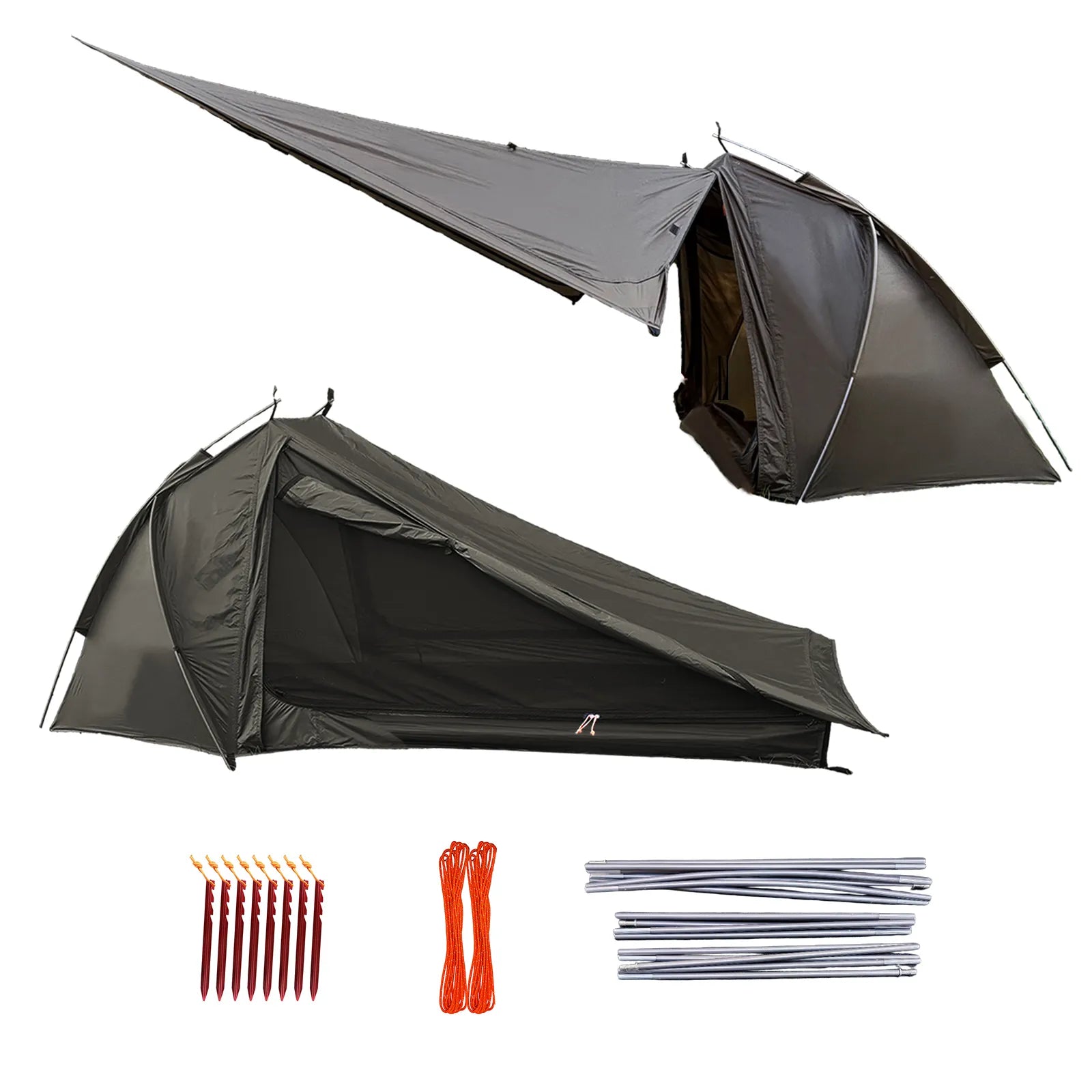
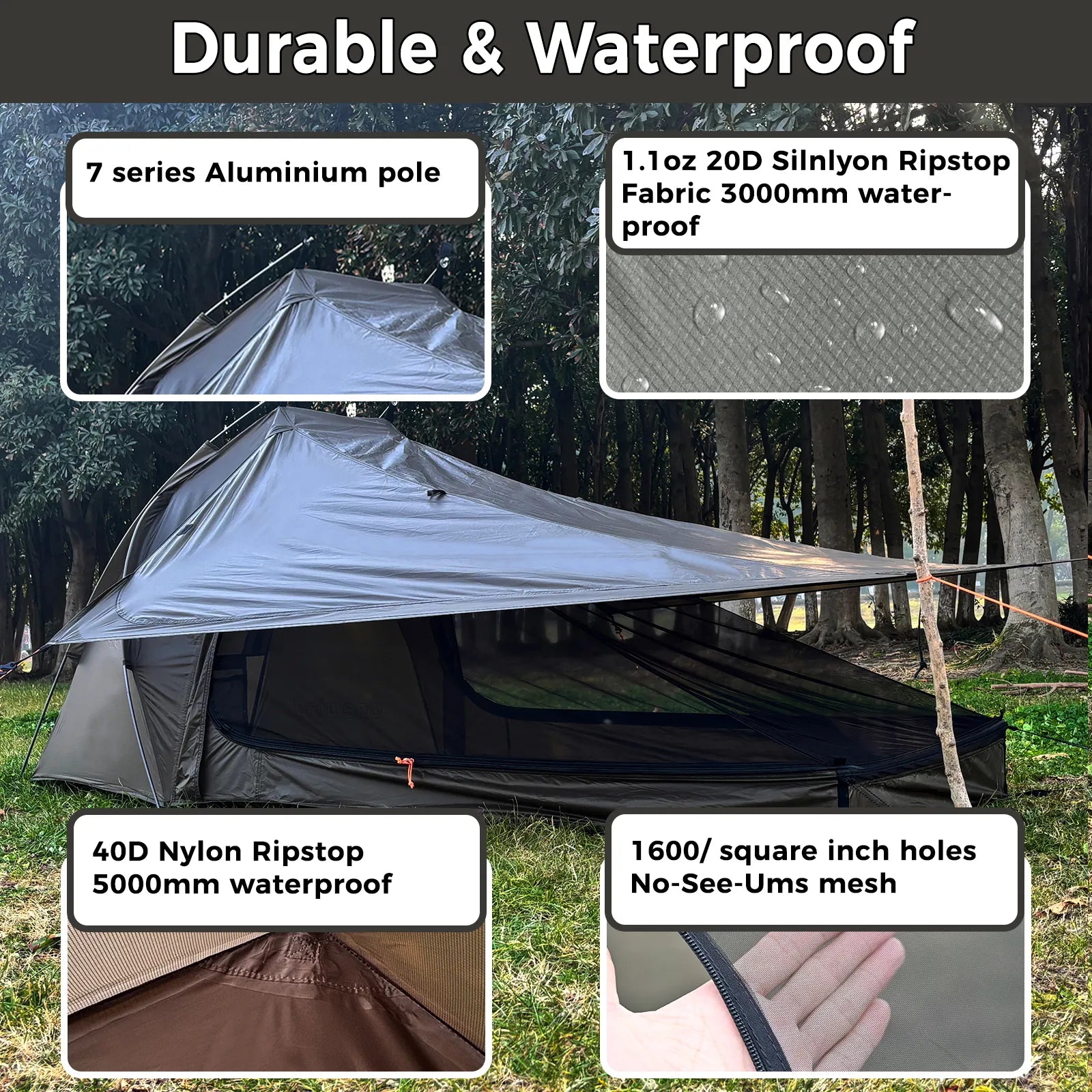
Una lona plana, una lona con forma, un refugio con bastones de trekking, una tienda independiente, una lona bivy y un toldo impermeable para hamaca cargan las estacas de manera diferente.
Una mosquitera puede añadir puntos de tensión.
Un vestíbulo puede añadir puntos críticos frente a las inclemencias del tiempo.
Una línea de cumbrera puede soportar mucha más carga que un panel lateral.
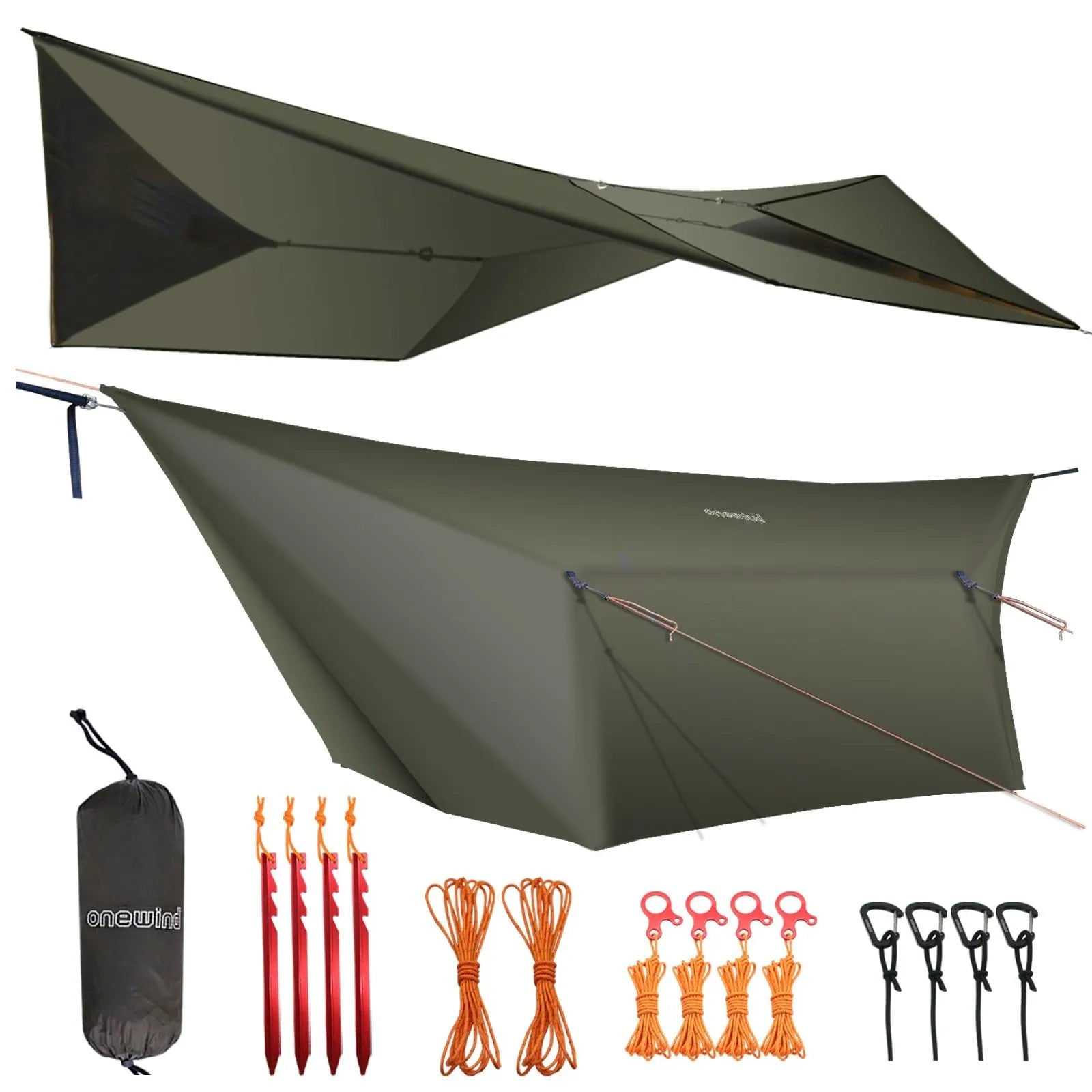
La colección de estacas de Onewind abarca tiendas de campaña, lonas, suelos impermeables, marquesinas y uso como cubierta para lluvia de hamacas, lo cual es un recordatorio útil.
La misma estaca puede ser adecuada en una disposición y débil en otra.
Mapea el refugio antes de empacar el kit de estacas.
No asigne el kit basándose únicamente en la etiqueta del producto.
Dibujo este mapa como trabajos de anclaje, no como nombres de equipo.
Las etiquetas son «cima», «esquina de barlovento», «vestíbulo», «salida lateral» y «lona de suelo», porque esas palabras me indican cuánto importa el fallo.
Error 3: Muchas páginas de clasificación enumeran las mejores apuestas, pero

El error es tratar a un ganador de ranking como un plan de empaque.
Una lista de las mejores estacas es una entrada.
No es la respuesta final.
CleverHiker y OutdoorGearLab evalúan múltiples características de rendimiento, que es exactamente por lo que un solo número no puede decidir el equipo.
El peso sin la capacidad de sujeción es solo la mitad de la historia.
La capacidad de sujeción sin facilidad de empaquetado puede ser la elección equivocada para una ruta larga.
La durabilidad sin ajuste al suelo aún puede fallar en arena o nieve.
Utiliza clasificaciones para preseleccionar candidatos.
Luego asigna candidatos a puestos ancla.
Ese paso extra es donde realmente se toma la decisión de ultraligero.
Una lista puede recompensar la opción más ligera.
Otro informe podría premiar mantener la posición.
Tu refugio todavía necesita una respuesta función por función, porque una estaca que gana en una categoría puede ser incorrecta para un punto de anclaje.
Error 4: Muchas páginas de productos enumeran el material

Las listas de materiales son útiles, pero pueden ocultar la forma y el suelo.
7075 aluminio, titanio, fibra de carbono, acero y plástico no son decisiones por sí mismos.
Un gancho de titanio delgado y una estaca de titanio en V más ancha no se comportan igual.
Una estaca de aluminio en forma de Y y un pasador redondo de aluminio no soportan la misma carga lineal.
Según REI, la arena y la nieve requieren piquetas diseñadas para esos entornos.
El material es solo una de las opciones.
Para suelo de mochilero en general, Estacas de tienda de aluminio Onewind ofrece una opción intermedia práctica: lo suficientemente ligero para llevarlo en la mochila, con una forma que proporciona más agarre que un pasador fino y visible gracias a los cordones de tirador reflectantes.
No le pida a la misma estaca que sustituya a un anclaje real para arena o nieve cuando el terreno indique lo contrario.
Error 5: Construir un marco de poder de sujeción por gramo

El error es omitir el marco y saltar directamente a la escala.
La capacidad de sujeción por gramo comienza con el trabajo del ancla.
Una estaca de pico que sostiene la altura del refugio requiere una mayor capacidad de sujeción.
Una sujeción lateral baja requiere menos.
El suelo blando eleva el requisito.
El viento la vuelve a levantar.
El empaquetado oscuro añade otro requisito: visibilidad.
Los cordones reflectantes y las cabezas brillantes no hacen una estaca más resistente, pero te ayudan a encontrarla antes de abandonar el campamento.
Si quieres una regla de campo sencilla, usa esta: empaca la estaca más ligera que supere las pruebas de carga, terreno, clima y extracción.
Si falla una prueba, no es la piqueta ultraligera adecuada para ese anclaje.
También cuento cuántas estacas puedo perder antes de que el refugio quede comprometido.
Para un viaje corto con buen tiempo, un repuesto puede ser suficiente.
Para una excursión remota con tarp, con suelo rocoso y exposición al viento, la opción más segura puede ser llevar dos repuestos o una pequeña combinación de cuerda de respaldo y opciones de anclaje enterrado.
La lista de verificación para una decisión rápida
Utilice la lista de verificación antes de comprar y antes de empacar.
Si quieres un kit de estacas en Y ligero de uso general, empieza con Estacas de tienda de aluminio Onewind y empareja cada estaca con un trabajo de anclaje real.
Para sistemas de refugio que ejercen más carga sobre las esquinas de la lona, los picos o los puntos del toldo impermeable, compare el más ancho Colección de lonas y refugios antes de decidir cuántas estacas y repuestos llevar.
Para arena, nieve, suelo congelado o viento expuesto, elija primero el método de anclaje y la estaca ultraligera en segundo lugar.

Shop lightweight tent stakes
Shop Now →