
We reviewed outdoor ethics guidance, camp furniture field reviews, product source details, and community friction around chairs versus stools.
A collapsible camping stool looks like a tiny comfort upgrade, but it only earns space when it solves a repeated camp job.
A stool is not a cheaper camp chair. It is a fast task seat for cooking, changing shoes, filtering water, fishing, sorting gear, and short rests when the ground is wet, cold, buggy, or covered in grit.
That distinction matters because outdoor seating fails in two opposite ways.
Some campers carry a full chair when they only need a clean perch for five-minute chores. Others bring a tiny stool and expect it to replace back support around a long fire-ring evening.
The better test is not "Do I want a seat?" The better test is "What kind of sitting will I actually do?"
The research pattern is consistent: small seats work best when the sitting is short, repeated, and tied to a specific camp task.
Data from the seat-category research also found that portability claims are less useful than the actual sitting job.
This guide uses that task-seat test.
If your camp life includes short, repeated sitting jobs and you care about packed size, a collapsible camping stool can make sense.
If your trip is built around long lounging, back support, soft ground, or car-camp comfort, choose a chair or a larger seat instead.
What You'll Learn

- ✓ Decide whether your sitting is task seating or lounge seating.
- ✓ Compare a stool, chair, sit pad, and backpack seat without guessing.
- ✓ Use ground condition as a safety and campsite-impact filter.
- ✓ Know when a tripod stool is useful and when it is the wrong tool.
- ✓ Choose the right Onewind product path only after the use case is clear.
The useful question is not whether a collapsible camping stool is comfortable in a store aisle.
The useful question is whether your trip has enough stool-shaped jobs.
A stool wins when you need short, stable, quick sitting.
It loses when you need relaxed support for long sessions.
Quick Answer

Still unsure?
Choose no stool for your next short backpacking trip and track how often you wished for a real seat.
Choose a stool when that wish happens during tasks, not only while imagining camp comfort at home.
The Decision Framework

Use the task-seat test before you buy or pack a collapsible camping stool:
A stool is best when it prevents small annoyances from stacking up.
Wet pants while changing shoes.
Kneeling in mud to cook.
Sitting on a cold bear canister.
Balancing on a rock while filtering water.
Those are stool jobs.
A chair is best when sitting itself is the activity.
Reading for an hour, watching a fire, hanging at a basecamp, recovering after a hard hike, or giving your back a break are chair jobs.
A stool can survive those moments, but it does not solve them well.
Fit Test 1: Stool vs Chair vs Sit Pad

This table is where many campers make the wrong upgrade.
They compare a stool to a chair on comfort alone, then decide the stool is worse.
Of course it is worse for lounging.
That is not its job.
Compare the stool to kneeling, squatting, balancing on a log, or using your pack as a dirty bench.
In those moments, the stool starts to make more sense.
It gives you enough height to work, enough separation from the ground to stay cleaner, and enough speed that you actually use it.
If you only want a better way to rest your back, skip the stool.
If you want a small camp tool that happens to be a seat, keep testing.
Fit Test 2: Where a Tripod Stool Works Well

A tripod stool works best when the ground is uneven but firm.
Three legs can settle without rocking as much as a four-leg seat on lumpy dirt, roots, gravel, or a worn campsite pad.
The simple shape also makes it quick to unfold, move, and store.
That does not make it magic.
A tripod stool still has small contact points.
On soft sand, mud, snow, deep duff, or wet meadow, the feet can sink.
On fragile vegetation, narrow feet can concentrate pressure.
On a slope, the stool can feel less secure than it looked in your garage.
Use a tripod stool where the surface already handles camp traffic: packed dirt, gravel, rock, established campsites, dry grass that can tolerate use, or durable kitchen zones.
Avoid making a new sitting spot just because the stool is portable.
The best tripod-stool user is active around camp.
They sit, stand, cook, move, sort, and sit again.
The worst user expects a small stool to feel like a recliner.
Fit Test 3: Durable Surface and Campsite Impact

According to Leave No Trace guidance, durable surfaces and compact campsite use are part of low-impact camping.
The National Park Service reports the same principle in its Seven Principles summary: concentrate use on existing trails and campsites in popular areas, and keep campsites small.
Leave No Trace guidance is clear about using durable surfaces and keeping campsites small.
That principle applies to seating.
A stool should help you use the existing camp area better, not encourage you to spread into fragile vegetation for a nicer view.
Before you place the stool, ask three questions:
The source pattern is practical: the stool should support the camp routine: cooking, shoe changes, filtering, packing, and short rests near durable ground.
If it tempts you to build a separate lounge zone, it is working against good campsite behavior.
That is also why a small stool can be better than dragging logs or rearranging rocks.
The right portable seat avoids making furniture from the site.
Scenario 1: Backpacker Deciding If a Stool Earns Pack Weight

Verdict: Usually skip it first, then add it only if short sitting tasks keep bothering you.
You fit this scenario if your pack weight is tight, your camp routine is simple, and you usually eat, filter water, and sleep without spending much time sitting around.
For many backpackers, a sit pad or backpack already solves enough of the problem.
A collapsible stool starts to make sense when you repeatedly need a raised perch.
Maybe you cook in wet camps, change shoes often, fish at camp, or have knees that dislike repeated squatting.
Maybe your trips include long evenings where standing and kneeling get old, but you still cannot justify a full chair.
Do a two-trip test.
On the first trip, bring no stool and write down every moment where a raised seat would have made a task easier.
On the second trip, bring the stool only if those moments were real and repeated.
Setup checklist:
- Pack the stool only after shelter, water, insulation, and rain protection are handled.
- Use it on durable ground, not fragile vegetation.
- Treat it as a task seat, not a lounge chair.
- Skip it for high-mileage trips where every item must serve multiple jobs.
Scenario 2: Car Camper Choosing Between Compact Stool and Full Chair

Verdict: Choose a chair for main seating; use a stool as a second task seat.
Car camping changes the math.
If you have vehicle space and expect to sit for long periods, a full chair is usually the better main seat.
Back support, armrests, cup holders, and a wider base matter when the trip includes campfire time, reading, family meals, or relaxed evenings.
A compact stool still has a role.
It works beside the stove, next to the cooler, near the tent door, or as an extra guest seat when someone does not need a full chair.
It is easier to move around camp than a large chair and less annoying to tuck away when the site gets crowded.
The mistake is buying a stool because it is smaller, then expecting it to satisfy the same comfort job as a chair.
For car camping, the stool is not the throne.
It is the helper seat.
Setup checklist:
- Bring one real chair for each person who will lounge.
- Add a stool for cooking, shoe changes, or overflow seating.
- Keep the stool in the kitchen or gear zone, not the fire-ring lounge.
- Use it on firm ground where feet will not sink.
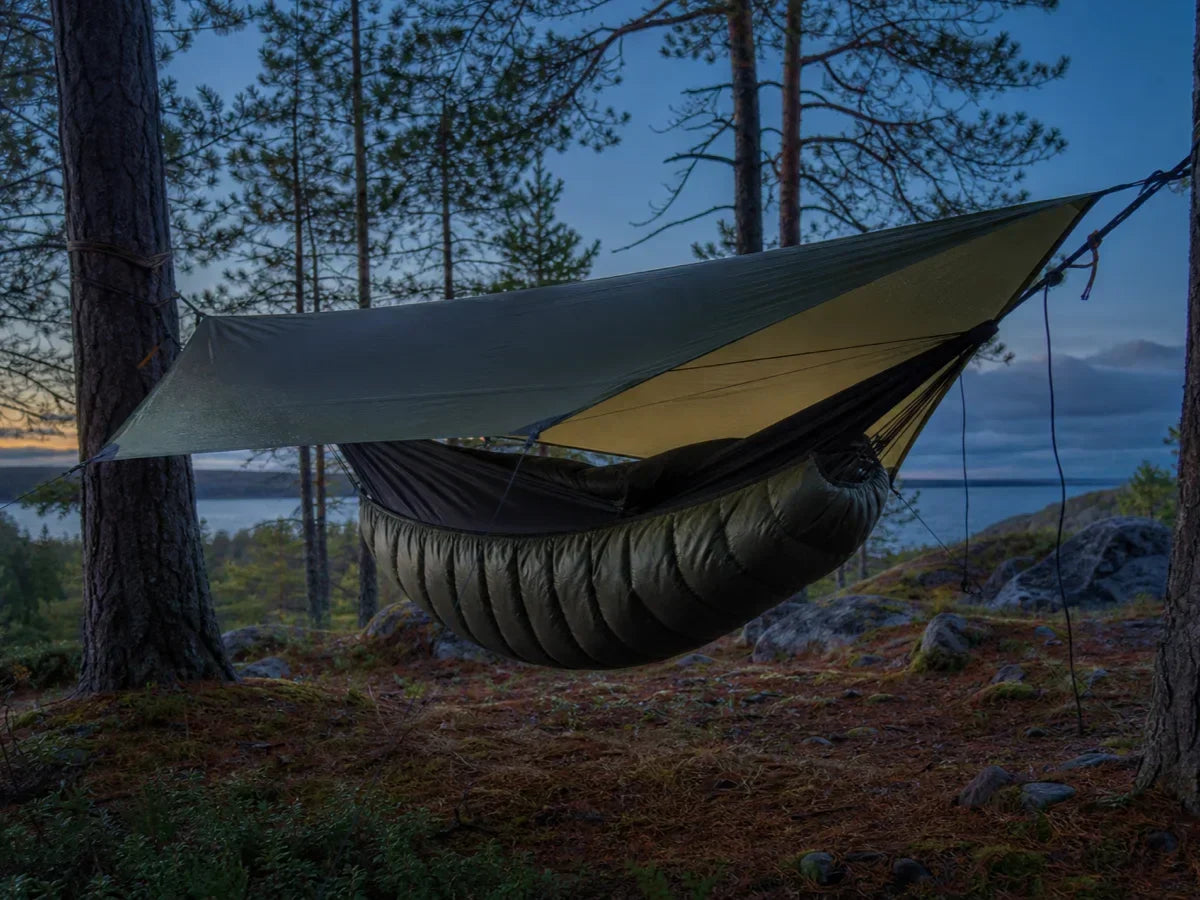
Scenario 3: Hammock Camper Who Wants a Small Seat for Shoes, Cooking, and Wet Ground

Verdict: A collapsible camping stool can be worth it if your hammock site is wet, low, or awkward for ground tasks.
Hammock campers often underestimate how much time they spend half-standing and half-crouching.
Shoes come off under the tarp.
Socks need changing.
Dinner gets cooked low.
Gear gets sorted from a hanging position.
If the ground is wet or buggy, a small stool can make camp feel more controlled.
The stool should stay under the tarp edge or near the durable kitchen zone.
It gives you a cleaner place to change footwear and a better posture for short camp chores.
It also keeps you from using the hammock as a chair every time you need to do a small task, which can be awkward when the quilt, bug net, or tarp is already arranged.
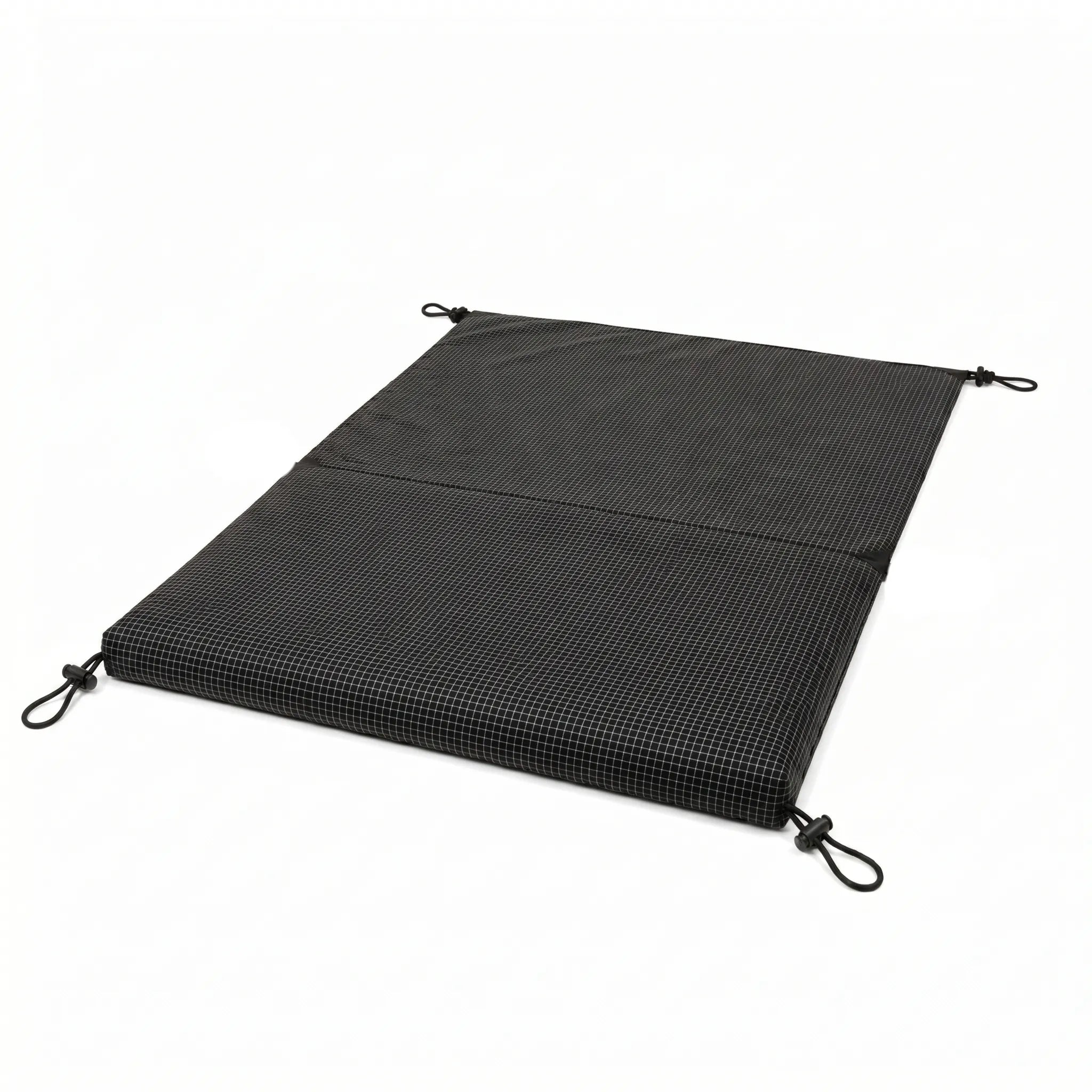
For this use case, the Onewind Camping Tripod Chair Pad is best framed as a compact camp task seat.
Pair it with a real sleep system, not as a substitute for one.
If your goal is sleep comfort, prioritize hammock, tarp, insulation, and pillow first.
Setup checklist:
- Place the stool on durable ground under or near tarp coverage.
- Use it for shoes, cooking checks, water filtering, and gear sorting.
- Do not use it to expand camp into fragile vegetation.
- Store it where it will not trip you during a night exit.
Scenario 4: Angler or Hunter Who Sits Briefly and Changes Locations

Verdict: A stool is one of the better seating choices when you sit briefly, stand often, and move locations.
Anglers, hunters, photographers, and wildlife watchers often need a different seat than campers who stay at a fire ring.
The sitting is shorter, more deliberate, and more mobile.
You may want to glass a slope, tie a lure, wait near water, change socks, or take a quiet lunch without unpacking a full chair.
A collapsible stool fits that rhythm.
It opens quickly, keeps you above wet ground, and packs away without turning every stop into a furniture setup.
A tripod shape can also handle uneven firm ground better than a rigid four-leg stool.
Field reports on ultralight chairs and camp furniture point to the same failure mode: small feet can sink when the ground is soft.
The failure point is soft ground.
River edges, mud, snow, and saturated grass can make narrow feet sink or wobble.
In those places, choose rock, gravel, packed dirt, or a sit pad.
Setup checklist:
- Use the stool for short waits, not all-day blinds unless comfort is proven.
- Test it with the footwear and clothing you actually wear.
- Keep it quiet when folding and moving.
- Pick durable ground before you sit.
Scenario 5: Family or Group Campsite Where Extra Guest Seating Is Useful

Verdict: A stool is useful as overflow seating, but not as the main chair for everyone.
Family and group campsites create seat chaos.
Someone needs a place to put on shoes.
Someone else wants to sit while cooking.
A child steals the best chair.
A guest shows up without seating.
A compact stool can solve those little moments without taking the space of another full chair.
That does not mean every camper should get a stool.
Adults who plan to sit for a long meal or evening will still want chairs.
Kids may use stools well for short tasks, but they also tip, drag, and move things around camp.
The best role is controlled overflow: one or two stools that live near the kitchen, tent door, or gear zone.
If the group campsite is already crowded, a small stool can help keep activity compact.
Place it where people already move instead of spreading the camp footprint.
Setup checklist:
- Use stools for shoe changes, camp kitchen helpers, and short overflow seats.
- Keep full chairs for long meals and evening comfort.
- Teach kids to place stools on flat durable ground.
- Pack the stool away before dark if it becomes a tripping hazard.
Common Mistakes With Collapsible Camping Stool

Most stool mistakes come from treating the category too broadly.
A stool is not automatically ultralight, comfortable, stable, ethical to place anywhere, or useful on every trip.
It is a small tool with a narrow job.
Respect that job and the stool can be useful.
Ignore it and the stool becomes dead weight or an annoying campsite object.
Mistake 1: Skipping the Backyard Movement Test

A stool can feel fine for ten seconds in a store or garage and still fail at camp.
The problem is movement.
You do not just sit.
You twist to cook, lean to tie shoes, reach for a bottle, stand up with tired legs, and sit again in bulky layers.
Before packing a stool, rehearse the actual moves.
Put on the boots you use outside.
Sit with a stove-height task in front of you.
Pretend to filter water.
Change socks.
Reach behind you for a pack.
Stand up on tired legs.
If the stool feels unstable, too low, or too narrow during those motions, do not assume camp will fix it.
Camp usually makes the problem worse because the ground is less level and your body is more tired.
Mistake 2: Comparing Stool Comfort to Chair Comfort

This mistake creates false disappointment.
A stool will usually lose to a chair on long-session comfort.
It has no back support, less seat area, and fewer relaxed positions.
That does not make it bad.
It means the comparison is wrong.
Compare a stool to the thing it replaces: squatting, kneeling, sitting on a wet log, balancing on a bear canister, or using your pack as furniture.
If the stool improves those moments, it is doing its job.
If you want to sit for an hour after dinner, do not force the stool to be something else.
Bring a chair, especially for car camping.
The honest stool buyer is happier because they stop expecting lounge comfort from task-seat gear.
Mistake 3: Assuming Tripod Means Stable Everywhere

Three legs can help on uneven firm ground because the stool does not need four points to touch evenly.
That does not mean a tripod stool works on every surface.
Soft ground is still soft ground.
Narrow feet can sink.
A slope can still make the seat feel unsafe.
Wet roots and loose duff can still move.
The field fix is direct: test the ground before trusting the stool.
Press each foot into the surface.
Shift your weight slowly.
Sit where the ground is already durable instead of moving farther into untouched vegetation.
If the stool sinks, switch to rock, gravel, packed dirt, a flat campsite pad, or a sit pad.
Do not dig the feet in deeper and call it stable.
Mistake 4: Ignoring Durable Surface Rules

A portable seat can quietly expand a campsite.
Someone carries the stool to a nicer view.
Then another person follows.
Then a cooking item moves.
Soon the durable camp zone has crept into grass, moss, or soft soil.
Use the stool to concentrate camp activity, not spread it.
Keep it near the established kitchen, tent door, hammock tarp, or packed dirt area.
If the best view requires sitting on fragile vegetation, skip the seat or move to a durable surface.
This is one reason a stool can be better than making camp furniture from natural objects.
You can bring your own seat and leave rocks, logs, plants, and site structure alone.
Mistake 5: Pretending a Stool Has Back Support

Back support is not a small feature.
For some campers, it is the whole reason to bring a seat.
If you have back pain, expect long campfire evenings, or want to read in comfort, a stool is probably the wrong primary seat.
That does not mean the stool is useless.
It may still work as a kitchen seat, shoe-change seat, or extra perch.
But do not make it your main comfort plan if the real need is support.
The refusal rule is blunt: if the sentence starts with "I need to lean back," choose a chair.
If the sentence starts with "I need a quick clean place to sit while I do this task," a stool is still in the running.
The Quick Decision Checklist

The bottom line: pack a collapsible camping stool when it solves tasks you already do.
Skip it when you are only hoping a small object will create chair-level comfort.
If the task-seat test points to a stool, the Onewind Camping Tripod Chair Pad is the product path to review.
If your real issue is camp sleep comfort, look at a camping pillow instead.
If your issue is organizing small items near camp, an accessory pouch may solve more than another seat.
For the rest of the kit around this decision, browse the camping gear collection.

Shop the compact camp task seat
Shop Now →