
SELFs Camping-Schuh-Übersicht behandelt Camping-Fußbekleidung als ein Kategorisierungsproblem und nicht als ein einzelnes, richtiges Produkt, und das ist der nützliche Ausgangspunkt für Ultraleichtwanderer.
Einige Camper wünschen sich Komfort zum Erholen nach einem langen Tag in nassen Wanderschuhen.
Manche brauchen etwas, das sicher genug ist für einen Wasserlauf, einen nächtlichen Gang zur Toilette oder eine felsige Bärenhang-Route.
Manche sollten auf Camp-Schuhe verzichten, da der zusätzliche Gegenstand mehr Packchaos verursacht, als er löst.
Die Entscheidung lautet nicht „Sandalen oder keine Sandalen“.
Die bessere Frage ist, ob ein zweites Paar Schuhe eine wiederkehrende Aufgabe im Camp löst, die Ihre Wanderschuhe, bloßen Füße, Socken oder die Ablaufroutine vor Ort nicht sauber lösen können.
Ich würde auch entscheiden, wo diese Schuhe über Nacht untergebracht werden, bevor ich entscheide, ob sie Platz im Rucksack verdienen, denn nasse Schuhe, die unter einer Hängematte oder in einem Zelt herumgeworfen werden, können genau das morgendliche Problem verursachen, das Campingschuhe eigentlich verhindern sollten.
Was Sie lernen werden
- ✓ Sie erhalten stattdessen einen Entscheidungsrahmen für das Feld statt einer weiteren Liste von Schuh-Empfehlungen.
- ✓ Sie werden sehen, warum „ultraleicht“ erst dann wirklich zählt, wenn der Schuh die Aufgabe bewältigt, die Sie tatsächlich brauchen.
- ✓ Sie werden vier Reiseszenarien haben, die tragewürdige Schuhe von unnötigem Ballast unterscheiden.
- ✓ Sie werden wissen, wie Sie schmutziges oder nasses Schuhwerk von Bettdecken, Zeltböden, Hängematten und Schlafsäcken fernhalten.
- ✓ Sie erhalten eine kurze Checkliste, die Sie vor dem Packen durchgehen können.
Schnelle Antwort
Wenn die Arbeit wiederholt, nass, scharfkantig, öffentlich oder im Dunkeln ausgeführt wird, können Campingschuhe ihr Gewicht wert sein.
Wenn der Einsatz unklarer Komfort, einmaliger Luxus oder eine Reserve für Bedingungen ist, denen Sie wahrscheinlich nicht begegnen werden, lassen Sie sie zu Hause.
Wenn Sie sie tragen, beschränken Sie die Entscheidung nicht auf das Schuhwerk.
Planen Sie einen geschützten, gut sichtbaren und leicht erreichbaren Übernachtungsplatz, damit der nächste Morgen nicht mit einem kalten, nassen, schlammigen oder belegten Schuh beginnt.
Das Entscheidungsrahmenwerk
Beginnen Sie mit der Arbeit.
Campingschuhe, die ihren Zweck nicht benennen können, werden meist zu unnötigem Gepäckballast.
Laut der Produktumfrage von SELF umfasst die Kategorie Sandalen, Clogs, Wasserschuhe und Schuhe im Erholungsstil, was beweist, dass der Einsatzzweck wichtiger ist als die Bezeichnung.
Eine Sandale mit guter Drainage kann bei Bachüberquerungen und beim Tragen von Wasser eine kluge Wahl sein.
Ein Schaumstoff- Schlupfschuh kann sich nach einem Tag mit vielen Kilometern auf ebenem Untergrund angenehm anfühlen.
Ein dünner Sockenschuh kann im Gepäck leicht wirken, aber versagen, wenn die Route von der Hängematte zum Bärenkanister über Wurzeln, Kies oder nasses Holz führt.
Der zweite Teil ist die Aufbewahrung.
Schuhe kommen mit Schlamm, Laubstreu, nassen Blättern, gemeinsam genutzten Badezimmerböden, Insektenlebensräumen und Morgentau in Kontakt.
Wenn dieses Schuhwerk am Ende gegen eine Steppdecke, eine Unterdecke, den Zeltboden oder den Hängemattenkörper drückt, kann der Komfortgewinn bis zum Sonnenaufgang wieder verschwinden.
Ich bevorzuge eine Mitnahmeentscheidung, die den Übernachtungsplan einbezieht, denn ein ordentlicher Lagerplatz um 20 Uhr sieht nach Kondensation, Wind und einem halb wachen nächtlichen Aufbruch oft ganz anders aus.
Passformtest 1: Eine diagonale Liegeweise wird nicht zu zwei
Behandeln Sie diesen seltsamen Titel als nützlichen Warnhinweis: Ein guter Einsatzzweck macht aus einem Paar ultraleichter Campingschuhe nicht zwei, drei oder vier separate Systeme.
Ein Schuh, der sich perfekt eignet, um neben dem Zelt zu stehen, kann für das Überqueren eines glitschigen Bachs ungeeignet sein.
Ein Wasserschuh, der die Zehen schützt, kann sich als Erholungs-Schuhwerk feucht und unangenehm anfühlen.
Ein dünner Hotel-Pantoffel mag sich in der Praxis leicht anfühlen und auf Kies nutzlos sein.
Reddit-Diskussionen über ultraleichtes Wandern drehen sich oft genau um diesen Zielkonflikt, wobei einige Wanderer barfuß oder mit locker geschnürten Trailrunning-Schuhen unterwegs sind und andere Sandalen erst nach wiederholten Nächten mit nassen Schuhen mitnehmen.
Dieser Community-Streit ist kein Lärm.
Es zeigt, dass die Entscheidung scheitert, wenn der Schuh darum gebeten wird, jedes Camp-Problem auf einmal zu lösen.
Ich würde lieber einen etwas weniger cleveren Schuh tragen, der eine wiederkehrende Aufgabe gut bewältigt, als eine federleichte Option, die nur auf einem Campingplatz funktioniert, den ich nicht garantieren kann.
Die Bestehensgrenze ist einfach.
Wenn du sagen kannst: „Diese Schuhe lösen diese eine Camping-Aufgabe besser als meine Wanderschuhe“, dann teste weiter.
Wenn Sie das nicht sagen können, ist die leichtere Wahl, ganz auf Camp-Schuhe zu verzichten.
Anprobe-Test 2: Wetter, Insekten und Isolierung müssen ebenfalls noch passen
Wetter und Insekten scheren sich nicht darum, dass die Schuhe ultraleicht waren.
Laut den CDC-Richtlinien zur Zeckenprävention gehört die Kontrolle von Ausrüstung und Kleidung dazu, um die Zeckenexposition nach Zeit im Freien zu verringern, und diese öffentliche Gesundheitsquelle ist wichtig, weil sich Schuhwerk direkt in dieser Kontaktzone befindet.
Das bedeutet nicht, dass jeder Schuh auf dem Boden gefährlich wird.
Das bedeutet, dass der Aufbewahrungsplan die Inspektion erleichtern und nicht erschweren sollte.
Ein Hängematten-Camper hat keinen Zeltboden, um eine saubere Vorgrenzung des Vorraums zu schaffen.
Ein Zeltcamper hat zwar einen Boden, aber schmutzige Schuhe direkt an der Tür können dennoch Schmutz in Isomatten, Steppdecken und Socken einreiben.
Ein Tarp-Camper mag auf dem Papier das sauberste Ultralight-Setup haben, in der Praxis aber das chaotischste Schuhproblem.
Ich möchte nasse oder schmutzige Schuhe in Reichweite, aber weit genug von der Isolierung entfernt und so sicher verstaut, dass eine windige Nacht sie nicht in nasse Blätter verstreut.
Wenn es sich bei den Schuhen um offene Sandalen oder Clogs handelt, schütteln Sie sie aus und prüfen Sie sie, bevor Sie hineinschlüpfen.
Wenn die Schuhe nasse Trailrunning-Schuhe sind, lockern Sie die Schnürsenkel, öffnen Sie die Zunge und halten Sie die schlammigen Sohlen von der Schlafausrüstung weg.
Praxistest 3: Auf vielen Camp-Schuh-Seiten werden Produktauswahlen aufgeführt, aber
Leichte Camp-Schuhe: Xero Shoes Z-Trail vs. Skinners 2.0
Viele Seiten mit Camp-Schuhen listen Produktauswahlen auf, aber der fehlende Schritt ist ein Go/No-Go-Test für Ultraleicht-Backpacker, die entscheiden, ob zusätzliche Unzen gerechtfertigt sind.
Machen Sie den Test, bevor Sie eine weitere Zusammenfassung lesen.
Für eine route mit viel wasser braucht der schuh drainage, halt und genug sicherheit, um auch nass fest am fuß zu bleiben.
Für die Erholung im Lager benötigt der Schuh Komfort, Wärme, Kompatibilität mit Socken und wenig Aufwand bei müden Bewegungen.
Für gemeinsam genutzte Unterkünfte, Hütten oder Sanitäranlagen auf dem Campingplatz muss der Schuh sauber sein und sich schnell an- und ausziehen lassen.
Beim Hängematten-Camping braucht der Schuh ein Zuhause für die Nacht, da standardmäßig kein Vorraum vorhanden ist.
Dies ist der erste Punkt, an dem ein Lagerelement in das System eingeführt werden kann.
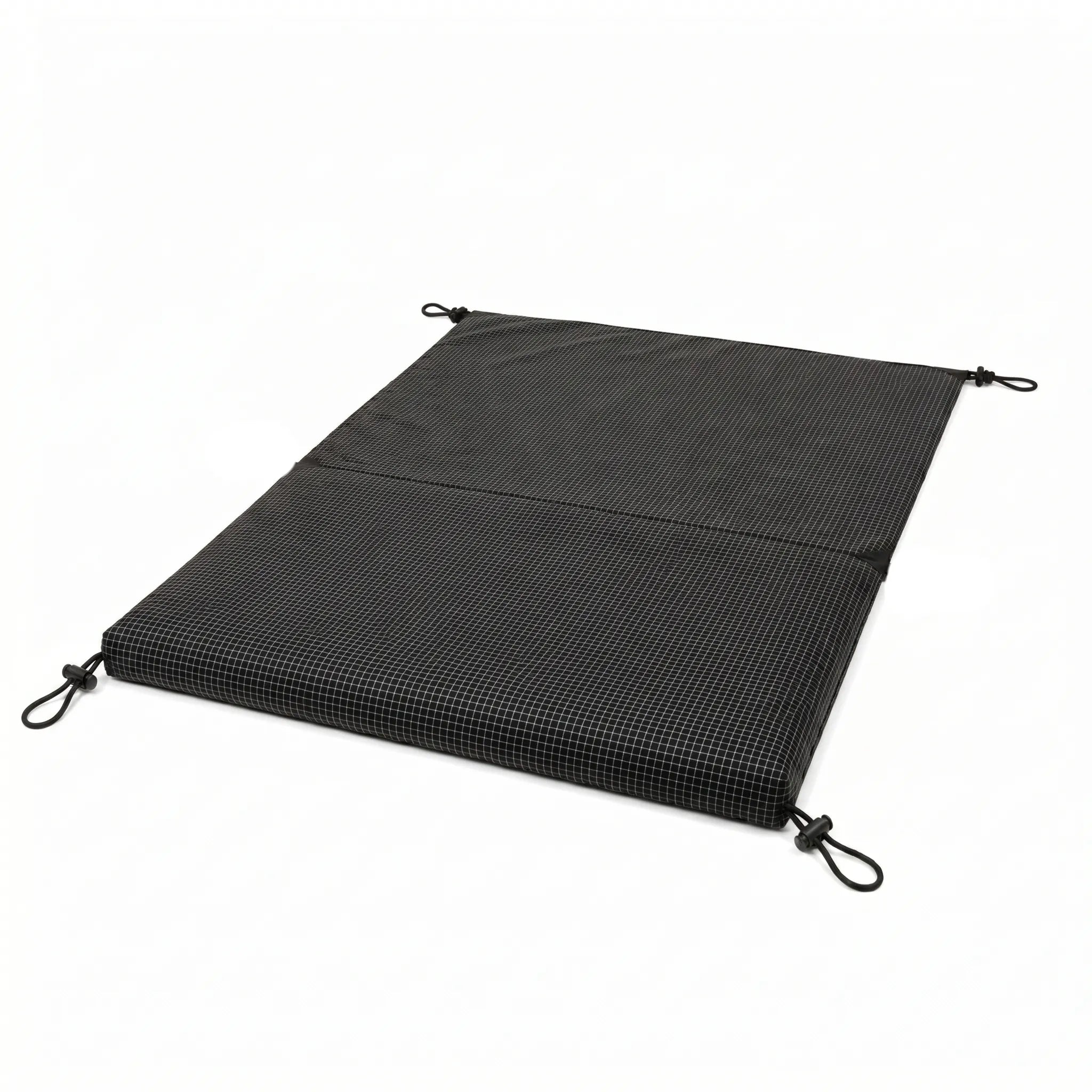
Der Onewind Stiefelbeutel für Camping ist kein Campingschuh, sondern laut Onewind-Produktdaten ein 40 g / 1,4 oz Ripstop-Nylon-Aufbewahrungssack mit Reißverschluss, Aufhängemöglichkeit, waschbarem Stoff, schnelltrocknendem Verhalten und einem Fassungsvermögen von 40 cm x 26 cm x 24 cm.
Das macht es zu einer leichten Aufbewahrungsmöglichkeit, wenn das Problem schmutziges oder nasses Schuhwerk in der Nähe von Schlafausrüstung ist, nicht zu einem Ersatz für die Wahl von Schuhwerk, das zur Route passt.
Szenario 1: Rucksackreisender mit nassen Wanderschuhen, der darüber nachdenkt, ob Campingschuhe das zusätzliche Gewicht wert sind.
Nasse Wanderschuhe verursachen ein echtes Problem im Camp, weil der Wanderer nach der Ankunft im Camp immer noch Aufgaben zu erledigen hat.
Wasser muss gefiltert werden.
Lebensmittel müssen gelagert werden.
Die Spannung des Shelters muss überprüft werden, nachdem sich der Stoff entspannt hat.
Barfuß durch nasses Laub oder Kies zu laufen, um nicht wieder die durchnässten Wanderschuhe anziehen zu müssen, ist ein schlechter Tausch.
Für dieses Szenario machen sich Camp-Schuhe durch ihr Gewicht bezahlt, wenn sie sicher genug für Arbeiten sind und so einfach, dass sie trocknen oder ausgeschüttelt sauber werden können.
Sandalen mit Fersenriemen, leichte Wasserschuhe oder anderes sicheres minimalistisches Schuhwerk sind sinnvoller als lockere Slipper, wenn der Untergrund uneben ist.
Der Aufbewahrungsplan ist wichtig, nachdem die Hausarbeiten erledigt sind.
Wenn Wanderschuhe schlammig sind, halten Sie sie vom Schlafbereich und von Daunenisolierung fern.
Wenn auch die Camp-Schuhe nass sind, geben Sie ihnen einen vorhersehbaren Platz, an dem sie abtropfen oder trocknen können, ohne die Steppdecke zu berühren.
Der Boots Sack kann als geschützter Übernachtungsplatz dienen, sobald die nasseste Tropfphase überstanden ist, insbesondere wenn ein Hängematten-Camper das Schuhwerk vom Boden fernhalten und sichtbar aufbewahren möchte.
Urteil: Tragen Sie ultraleichte Camp-Schuhe mit, wenn nasse Wanderschuhe wahrscheinlich sind und die Arbeiten im Camp echtes Gehen erfordern; verzichten Sie darauf, wenn der Campingplatz trocken, klein und arbeitsarm ist.
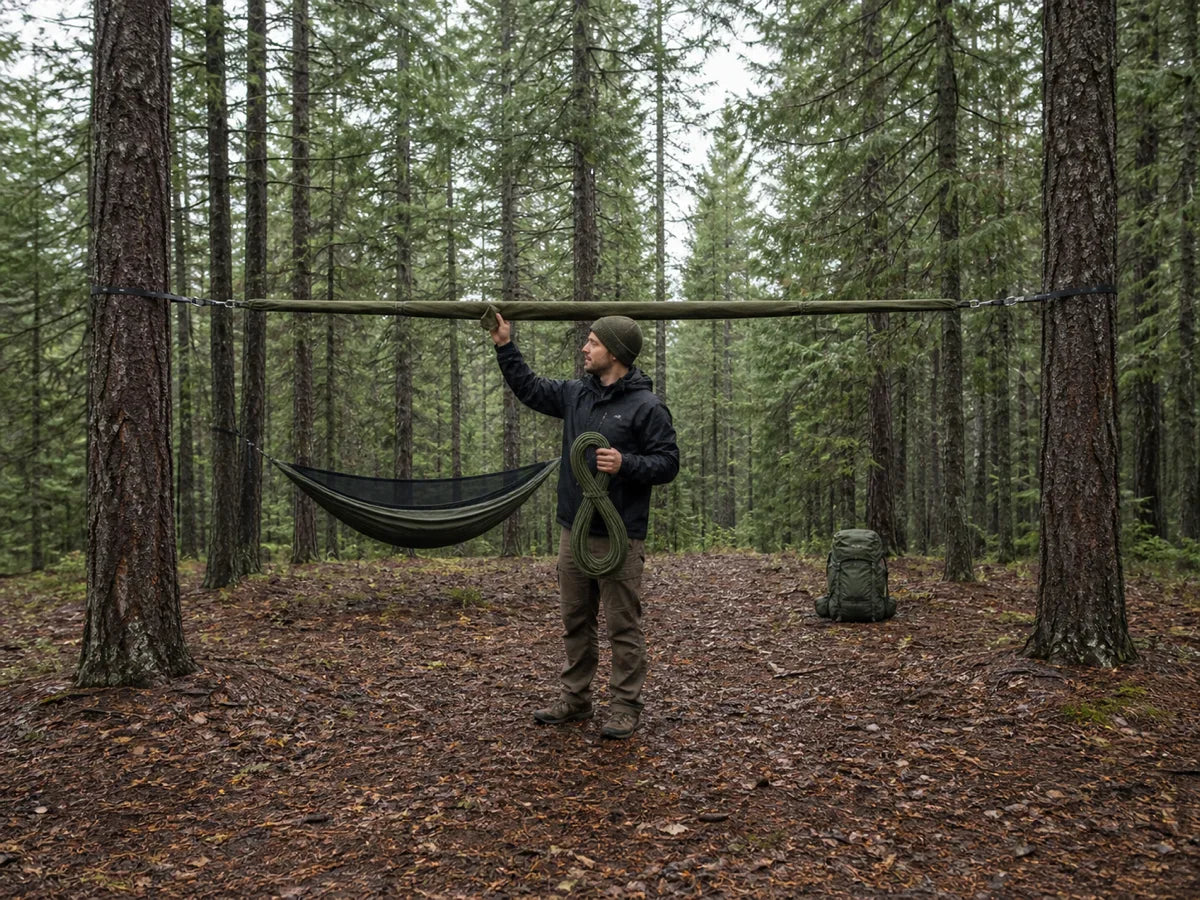
Szenario 2: Hängematten-Camper ohne Zeltboden, der Schuhe über Nacht vor Tau, Insekten und Schlamm schützen möchte.
Hängematten-Camping verändert die Entscheidung für Campingschuhe, weil es keinen Boden gibt, der saubere Ausrüstung von schmutzigem Schuhwerk trennt.
Der Bereich unter der Hängematte kann wie offener Stauraum wirken, ist aber auch der Ort, an dem Schuhe mit Tau, Spritzwasser, Blättern und Insekten in Berührung kommen.
Ein halb verschlafener Schritt in einen kalten Schuh um 5 Uhr morgens ist ärgerlich.
Ein halb schlaftrunkener Schritt in einen Schuh mit einer Spinne, einem Käfer, einer Zecke, einer Nacktschnecke oder einer schlammigen Pfütze darin ist schlimmer.
Ich würde einen Stiefelsack nicht als tiersicheren Behälter behandeln, und der Artikel sollte das auch nicht versprechen.
Ich würde es als ein Sichtbarkeits- und Isolationswerkzeug betrachten.
Onewind führt den Boots Sack aus 1,1 oz Ripstop-Nylon mit wasserabweisender Schutzfunktion, einem Reißverschluss, einem Tragegriff und einer kompakten Packgröße von 4 cm x 8 cm auf.
Diese Details passen zum Hängemattenproblem, weil die Aufbewahrung leicht, aufhängbar und einfach von der Schlafisolierung zu trennen ist.
Kombinieren Sie es mit einem Tarp-Aufbau, der den Sack unter der Abdeckung hält, und prüfen Sie dann das Schuhwerk vor dem Tragen.
Wenn Ihr Campingausrüstung Wenn das System bereits über eine klare Ridgeline, einen Gear Sling oder eine Dry Zone verfügt, ist der Sack nur noch eine weitere Aufbewahrungsoption statt die Gesamtlösung.
Urteil: Tragen Sie Camp-Schuhe nur, wenn Sie sie für Bewegungen im Lager benötigen, aber geben Sie der Hängematten-Fußbekleidung immer ein geplantes Zuhause über Nacht.
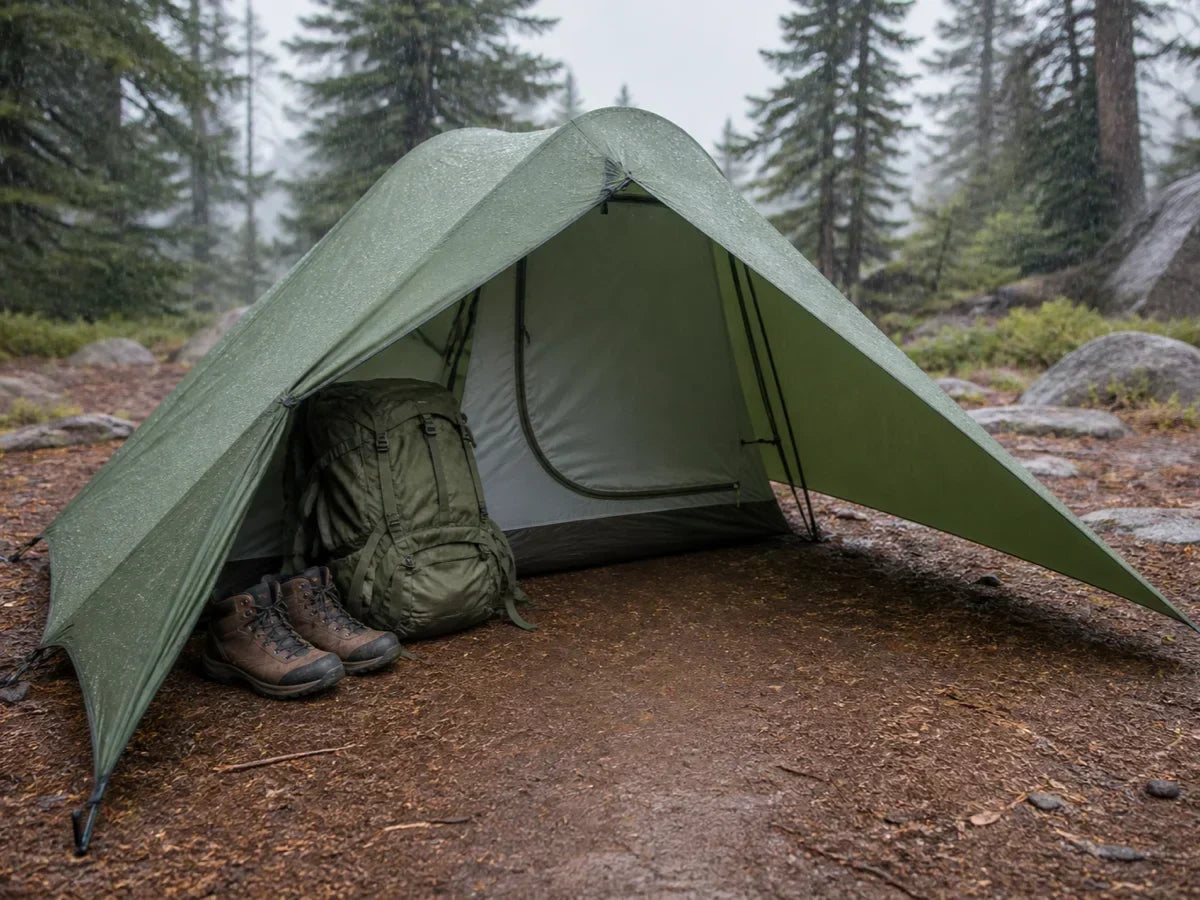
Szenario 3: Zeltcamper, der saubere Schlafausrüstung und weniger Überraschungen beim Anziehen der Schuhe am nächsten Morgen möchte.
Zeltcamper gehen oft davon aus, dass die Apsis das Schuhproblem löst.
Es hilft, aber es löst nicht alles.
Wind kann Regen unter eine Vorzeltkante drücken.
Kondensation kann offene Schuhe feucht machen.
Schmutzige Sohlen können den Eingangsbereich trotzdem verschmieren, wenn jemand müde hineinkriecht.
Camp-Schuhe sind hier sinnvoll, da sie den Schlafbereich vor schmutzigem Wanderwerkzeug schützen und dem Camper eine sauberere Möglichkeit geben, sich im Camp zu bewegen.
Sie machen weniger Sinn, wenn sie zum dritten Paar Schuhe in einem Zwei-Nächte-Set werden.
Ich würde eine klare Grenze ziehen: Schlafsocken bleiben drinnen, schmutzige Schuhe bleiben außerhalb des Schlafbereichs, und Camp-Schuhe stehen dort, wo man sie erreichen kann, ohne Schmutz über den Zeltboden zu schleppen.
Der Boots Sack kann in der Nähe des Zelteingangs als Aufbewahrungsmöglichkeit für schlammiges Schuhwerk stehen, insbesondere wenn das Paar klein genug ist, um in die angegebenen Maße von 40 cm x 26 cm x 24 cm zu passen.
Der Sack sollte nicht voll mit nassen Schuhen gepackt und dann gegen einen Schlafsack gedrückt werden.
Verwenden Sie sie, um Unordnung zu trennen, nicht um Feuchtigkeit zu verbergen.
Urteil: Nimm Camp-Schuhe mit, wenn sie den Schlafbereich schützen und die Lagerarbeiten sauberer machen; verzichte darauf, wenn die Vorzelt-Routine Schmutz bereits zuverlässig begrenzt.
Szenario 4: Erster Trip mit begrenzter Zeit, um das Setup zu testen
Eine erste Reise ist ein schlechter Zeitpunkt, um festzustellen, dass Ihre Campingschuhe auf nassen Wurzeln wegrutschen.
Es ist auch ein schlechter Zeitpunkt, um festzustellen, dass Ihre Routine ohne Schuhe beim ersten Mal versagt, wenn Sie im Dunkeln die Unterkunft verlassen müssen.
Wenn die Zeit begrenzt ist, reduzieren Sie die Variablen.
Verwenden Sie Wanderschuhe, denen Sie vertrauen, Socken, denen Sie vertrauen, und Camp-Schuhe, die bereits über einen Rasen, eine Einfahrt, nasses Gras und einen Badezimmerboden gelaufen sind.
Wenn die Tour kurz und trocken ist, kann das Weglassen von Camp-Schuhen die sauberste ultraleichte Wahl sein.
Wenn die Wettervorhersage nass ist oder der Standort Gemeinschaftseinrichtungen erfordert, nimm ein einfaches Paar mit und akzeptiere den kleinen Gewichtsnachteil.
Für Hängemattennutzer, die ein neues testen 11 Fuß ultraleichte Camping-Hängematte, die Schuhfrage sollte Teil des Treffens im Hinterhof sein.
Wo kommen die Schuhe hin, wenn man sich diagonal hinlegt?
Wohin gehen sie, wenn es zu regnen beginnt?
Kannst du sie erreichen, ohne eine schlammige Sohle in den Unterquilt zu schwingen?
Wenn Sie ein verwenden Unterquilt-Schutz, verhindern Sie auch, dass Schuhwerk auf dieser Schicht reibt oder darauf tropft.
Urteil: Für die erste Tour einfache, bewährte Camp-Schuhe nur dann mitnehmen, wenn die Route oder der Campingplatz einen klaren Zweck dafür schafft; andernfalls das System vereinfachen und die Aufbewahrung zu Hause testen.
Häufige Fehler bei ultraleichten Camp-Schuhen
Alle Fehler entstehen daraus, dass man Campingschuhe zuerst als Produktkategorie betrachtet und erst danach als Verhalten beim Campen.
Gewicht, Komfort, Entwässerung und Packvolumen sind wichtig, aber erst nachdem die Aufgabe benannt wurde.
Die gleiche Logik gilt auch für die Aufbewahrung.
Schuhe, die durch Schlamm, gemeinsam genutzte Badezimmer, nasse Blätter oder Zeckenlebensraum gelaufen sind, verdienen nachts eine klare Grenze.
Fehler 1: Kapazität als Versprechen für Schlafqualität zu betrachten
Meine Lieblingsschuhe für jedes Abenteuer
Kapazität ist nützlich, aber keine Garantie für Schlafqualität.
Die Größe von Onewind mit 40 cm x 26 cm x 24 cm bietet ausreichend Platz für viele Paar Stiefel oder Campingschuhe, und auf der Produktseite steht, dass der Sack auch eine Handvoll kleiner Gegenstände aufnehmen kann.
Das ist eine Speichersache.
Das bedeutet nicht, dass schlammiges Schuhwerk sauber, trocken, geruchsfrei oder ungefährlich für die Isolierung wird.
Verwenden Sie das Fassungsvermögen, um schmutzige Ausrüstung von sauberer Ausrüstung zu trennen.
Verwenden Sie dies nicht als Erlaubnis, das Trocknen, die Inspektion oder die Sauberkeit der Baustelle zu vernachlässigen.
Wenn Schuhe durchnässt sind, lassen Sie sie vor dem Verstauen an der Luft trocknen, wenn die Bedingungen es zulassen.
Wenn Schuhe schlammig sind, vermeiden Sie, dass die Sohlen den Schlafsack, den Zeltboden, den Hängemattenstoff oder das Außenmaterial der Steppdecke berühren.
Fehler 2: Vergessen, dass das Underquilt zentriert bleiben muss
Dieser Titel klingt wie eine Empfehlung zur Isolierung, gilt aber direkt für Schuhe.
Eine Hängematten-Unterdecke funktioniert, weil sie zentriert bleibt und unter dem Schläfer bauschig aufliegt.
Schmutzige Schuhe, die unter diesem System platziert werden, können an der Schale reiben, auf den Stoff tropfen oder ein ungeschicktes Ein- und Aussteigen erzwingen.
Das Risiko steigt, wenn der Camper müde ist, der Boden nass ist und die Plane niedrig aufgespannt ist.
Schaffen Sie einen Schuhbereich außerhalb des Schwenkbereichs.
Hängen Sie das Schuhwerk oder den Sack dort auf, wo es unter der Abdeckung geschützt bleibt, aber nicht in den Bewegungsbereich der Steppdecke gerät.
Die Sohlen vom Stoff fernhalten.
Diese kleine Grenze verhindert, dass eine praktische Aufbewahrungslösung zu einem Problem für das Schlafsystem wird.
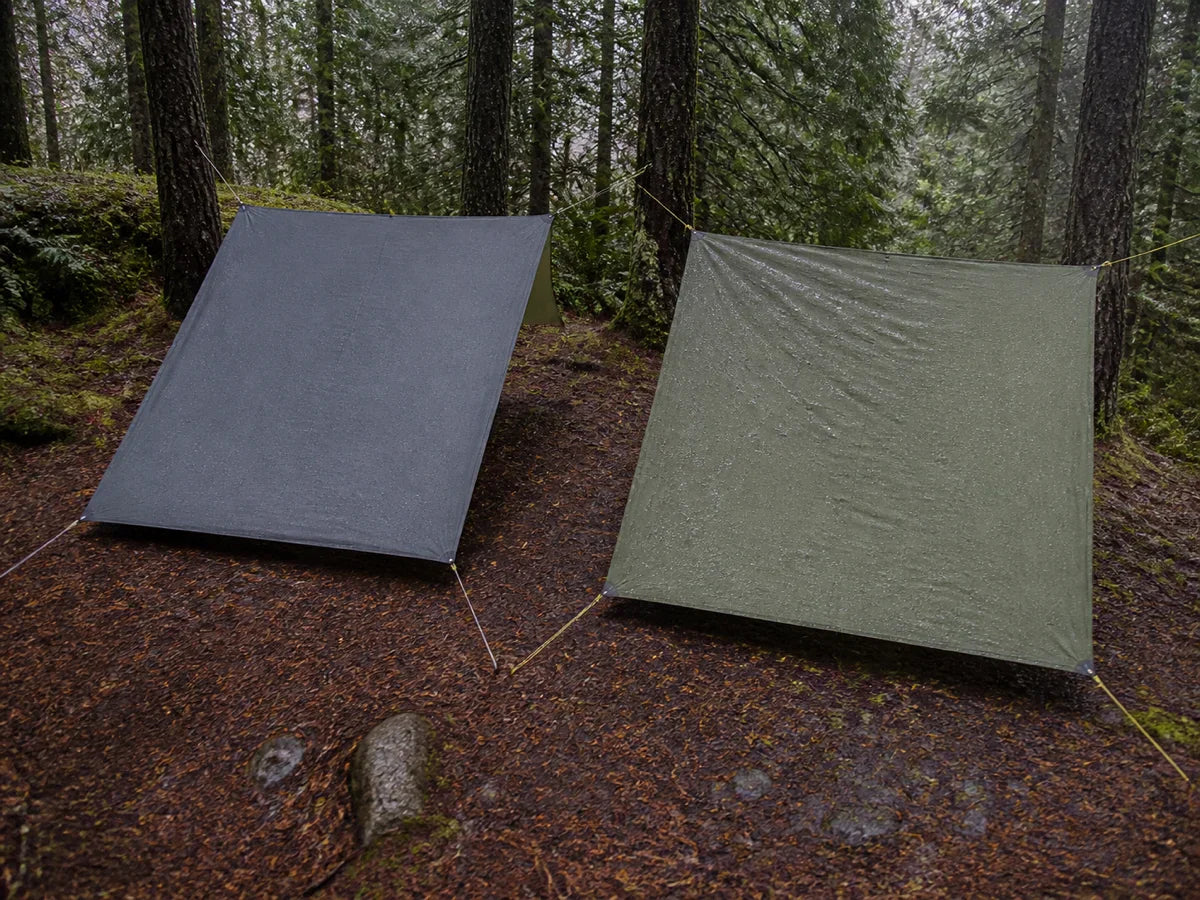
Fehler 3: Annahme, dass eine Plane und ein Moskitonetz jede Zwei-Personen-Anordnung abdecken
Der Schutz des Unterstands ist nicht dasselbe wie die Verwaltung von Schuhwerk.
Eine Plane kann den Schlafbereich abdecken und trotzdem Schuhe vor Spritzwasser schützen.
Ein Moskitonetz kann den Schlafenden schützen und dennoch Sandalen auf nassen Blättern offen lassen.
Ein Zwei-Personen-Camp kann die Verwirrung verdoppeln, weil jede Person einen anderen Einstiegswinkel, Schuhgröße und eine andere Nachtroutine hat.
Gehen Sie nicht davon aus, dass eine Zeltplane einen gemeinsamen Kleiderschrank ergibt.
Weisen Sie den Stauraum vor Einbruch der Dunkelheit zu.
Wenn eine Person Camp-Schuhe benutzt und die andere nur ihre Wanderschuhe lockert, brauchen trotzdem beide eine klare saubere Trennung.
Das Ziel ist ein Morgen, an dem niemand den falschen nassen Schuh greift oder schmutziges Schuhwerk in den Schlafbereich tritt.
Fehler 4: Den Bewegungs-Test im Garten überspringen
Ein Test im Garten entdeckt Probleme, die Produktseiten nicht zeigen können.
Gehen Sie durch nasses Gras.
Tritt auf Kies.
Tragen Sie eine volle Wasserflasche.
Ziehe die Schuhe mit kalten Händen an.
Probieren Sie den Weg vom Unterstand zu einer Toilette oder einem Bärenaufbewahrungsort.
Dann lassen Sie die Schuhe am geplanten Übernachtungsort und prüfen Sie sie am Morgen.
Wenn sie Wasser, Blätter oder Insekten in einem Hinterhof sammeln, werden sie in einem Waldlager nicht ordentlicher.
Dieser Test schützt auch den Schuhverzichtsplan.
Wenn Sie während des Tests alle Bewegungen im Lager bequem in gelockerten Wanderschuhen oder Socken ausführen können, ist es möglicherweise die klügere ultraleichte Entscheidung, auf Camp-Schuhe zu verzichten.
Fehler 5: Viele Camp-Schuh-Seiten listen Produktempfehlungen auf
Produktlisten sind nützlich, um Modelle einzugrenzen.
Sie sind unsicher, ob Sie überhaupt Campingschuhe benötigen.
Eine Übersicht kann Entwässerung, Komfort, Preis und Stil beschreiben, aber sie kann nicht wissen, ob Ihre Tour nasse Wurzeln, öffentliche Duschen, eine Hängematte ohne Boden oder einen Shelter-Partner hat, der von der gegenüberliegenden Seite einsteigt.
Lesen Sie die Listen nach dem Framework, nicht davor.
Zuerst entscheiden: mitnehmen oder überspringen.
Dann die Schuhart auswählen.
Dann entscheide, wohin das schmutzige, nasse oder von Käfern befallene Schuhwerk über Nacht kommt.
Erst nach diesen drei Entscheidungen sollten Modellgewicht und Preis zum Hauptfilter werden.
Die Schnell-Entscheidungs-Checkliste
Wählen Sie ultraleichte Camp-Schuhe, wenn sie eine klar benannte Aufgabe lösen, die sich während der Reise wiederholt.
Überspringe sie, wenn sie nur eine Komfortfantasie für ein trockenes, kurzes, bewegungsarmes Camp sind.
Wenn Sie sie mitnehmen, machen Sie die Aufbewahrung von Anfang an zu einem Teil der Entscheidung.
Ein leichter Campingschuh kann dennoch für einen unordentlichen Morgen sorgen, wenn er die Nacht in Tau, Schlamm oder Laub verbringt.
Ein Stiefelsack kann dabei helfen, Schuhe ordentlich aufzubewahren und voneinander zu trennen, insbesondere für Hängematten-Camper oder Zeltcamper, die eine sauberere Abgrenzung in der Nähe ihrer Schlafausrüstung wünschen.
Es ist immer noch nur ein Teil des Systems.
Das beste Ergebnis ist einfach: Schuhe, die zur Campingarbeit passen, ein Schlafbereich, der sauber bleibt, und ein Morgen, an dem Sie Ihre Schuhe ohne kalte Überraschung anziehen können.