
Jeder Vergleich, den Sie gelesen haben, stuft im Vergleich zu synthetischem Material die Eigenschaften in einer Tabelle ab und überlässt es Ihnen dann zu erraten, welche Eigenschaften für Ihr Setup wichtig sind.
Bei einer Hängematte ist genau dieses Rätselraten das eigentliche Problem.
Die Entscheidung fällt nicht wirklich grundsätzlich gegen synthetische Materialien aus.
Es kommt auf einen Teil Ihres Schlafsystems an, das Underquilt, und auf eine Frage dazu: Können Sie es trocken und bauschig halten?
Antworten Sie ehrlich darauf, und das Material wählt sich selbst.
Was Sie lernen werden
Schnelle Antwort
Daunen gewinnen im Datenblatt, und für eine Topquilt oder einen Schlafsack, der über Ihnen liegt und trocken bleibt, sollten Sie einfach Daunen kaufen.
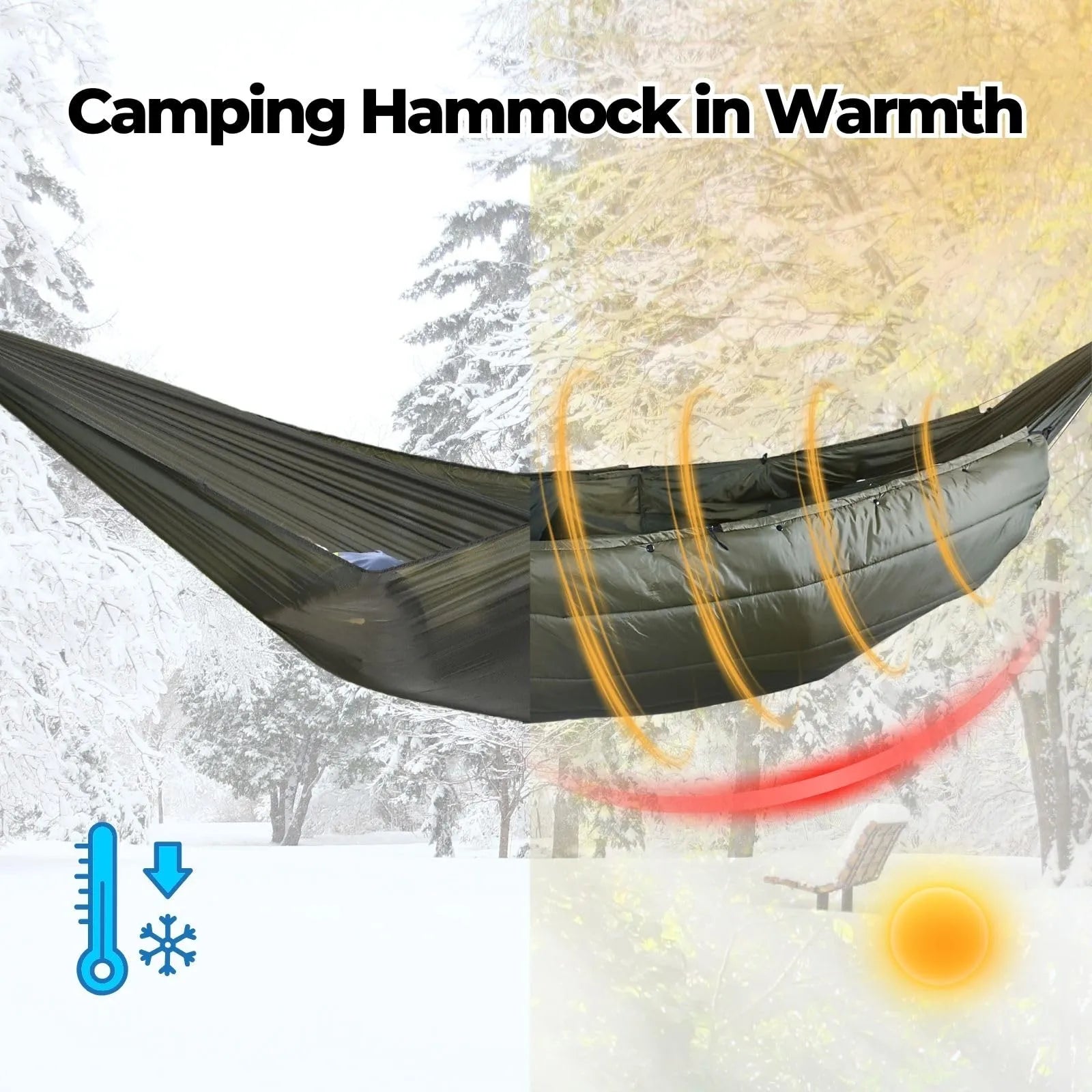
Das Argument ist nur für den Underquilt wichtig, also das Teil, das unter dir im Wind und bei Kondenswasser hängt.
Daunen sind leichter, lassen sich kleiner verpacken und halten länger.
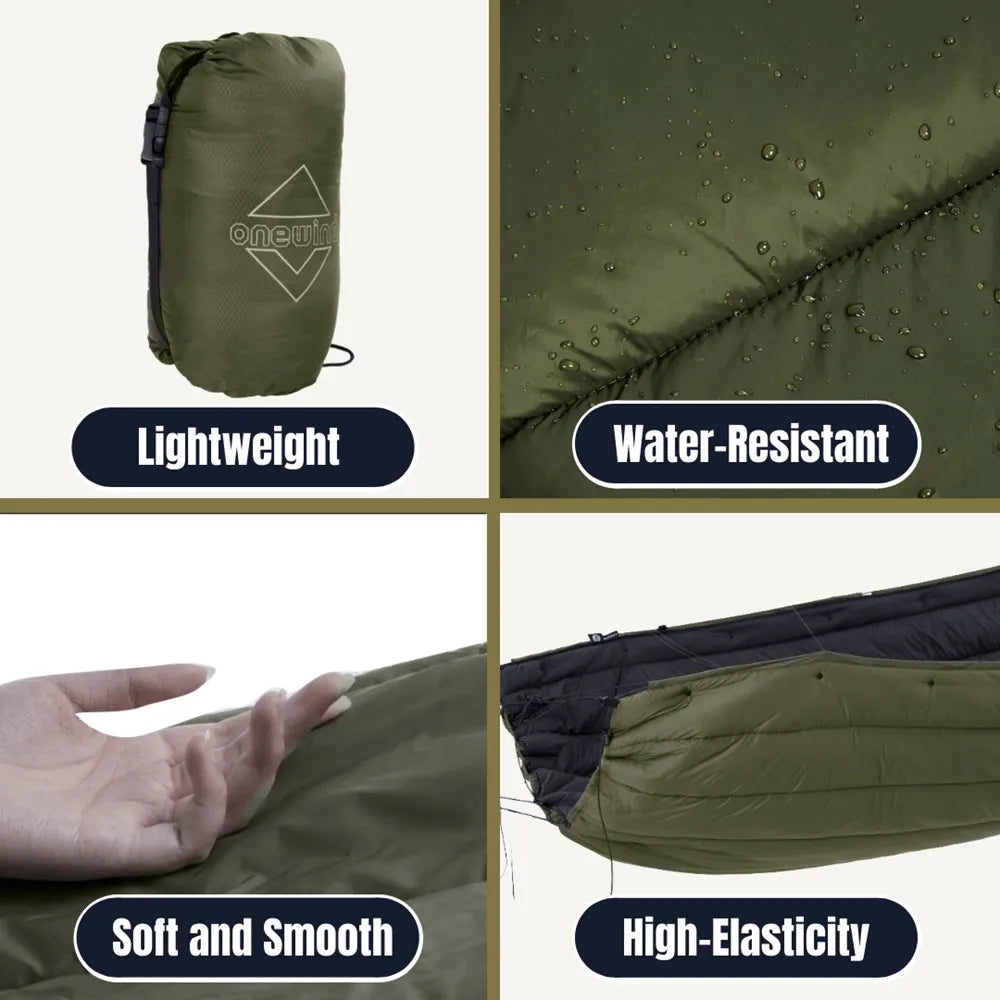
Synthetik isoliert auch bei Feuchtigkeit, trocknet schnell, kostet weniger und steckt grobe Beanspruchung problemlos weg.
- ✓ Wählen Sie Daune, wenn Sie bei kaltem und trockenem Wetter campen, Ihre Ausrüstung in einem trockenen Packsack aufbewahren, eine gut gespannte Plane verwenden und auf jedes Gramm achten.
- ✓ Wählen Sie Synthetik, wenn Sie Anfänger sind, ein knappes Budget haben, bei feuchtem Wetter campen, nachts schwitzen oder jemals auf den Boden ausweichen müssen.
⚠ Kaufen Sie Daunen nicht nur, weil eine Tabelle sie als wärmer einstuft, und stellen Sie dann fest, dass ausgerechnet die Stelle an einer Hängematte, die am schwersten trocken zu halten ist, genau dort liegt, wo Sie sie aufgehängt haben.
Bevor Sie irgendetwas ausgeben, fügen Sie Ihrem vorhandenen Setup einen Underquilt-Protektor hinzu und prüfen Sie, ob Ihr Feuchtigkeitsproblem an der Füllung oder einfach an der Exposition liegt.
Das Datenblatt sagt Daunen, und das Datenblatt hat recht
Beginnen Sie damit, ihr gebührend Anerkennung zu zollen, denn anhand der Zahlen, die ein Geschäft Ihnen zeigt, gewinnt es klar.
Unze für Unze bietet Daunen mehr Bauschkraft als synthetisches Material, sodass es pro Gramm mehr Wärme speichert.
REI's eigener Leitfaden bringt es auf den Punkt: Daune hat das bessere Wärme-Gewichts-Verhältnis, Punkt.
Es lässt sich zudem kompakter verpacken und hält länger.
Ein Hersteller von Daunendecken, Hammock Gear, beschreibt die Langlebigkeit so, dass ein Schlafsystem „alle fünf Jahre statt alle drei Jahre“ ersetzt werden müsse, und bezeichnet eine synthetische Füllung in einem Packsack als „in der Form vergleichbar mit einem klumpigen Basketball“.
Hier ist die ehrliche Eigenschaften-Tabelle, bevor wir sie verkomplizieren.
Lies nur die ersten drei Zeilen, und darunter sieht es wie der offensichtliche Kauf aus.
Der gesamte Artikel befindet sich in den letzten drei Reihen und in einem Wort in Reihe fünf: nass.
Die eine Zahl, die der Shop nie anzeigt: Nass
Jede Zusammenfassung sagt „Daunen verlieren bei Nässe an Wärmeleistung“ und geht dann weiter, als wäre das nur eine Fußnote.
Für ein Underquilt ist es die Überschrift.
Die zahlenbasierte Analyse von Backpacking Light ergab, dass eine nasse synthetische Jacke etwa 60 bis 70 Prozent ihrer Trockenwärme behält, während ein nasses herkömmliches Daunenstück nur etwa 5 bis 10 Prozent behält.
Das ist keine kleine Lücke. Das ist der Unterschied zwischen kühl und unterkühlt.
Jetzt hat das Daunenlager eine Antwort: hydrophobe Daunen, behandelt, um Feuchtigkeit zu widerstehen.
Es hilft. REI weist darauf hin, dass behandeltes Daunenmaterial „leichte Feuchtigkeit abweisen kann, ohne die Bauschkraft zu beeinträchtigen.“
Das Schlüsselwort ist leicht.
Outdoor Life führte den entscheidenden Fall an und berichtete die Grenze klar.
Als ein PrimaLoft-Silver-Teil und ein mit hydrophoben Daunen gefülltes Teil beide vollständig durchnässt, ausgewrungen und eine Stunde lang zum Aufbauschen liegen gelassen wurden, stellte der Tester fest, dass „das Primaloft Silver die bessere Isolierung bot.“
So behandelt verengt sich die nasse Lücke. Sie schließt sie nicht.
Sobald deine Füllung wirklich durchnässt ist, ist synthetisches Material weiterhin im Vorteil, mit oder ohne Behandlung.
Oberseite versus Unterseite: Wo der Kampf tatsächlich stattfindet
Hier ist die Perspektive, die bei den generischen Vergleichen fehlt.
Ein Schlafsystem hat zwei Seiten, und sie sind nicht demselben Wetter ausgesetzt.
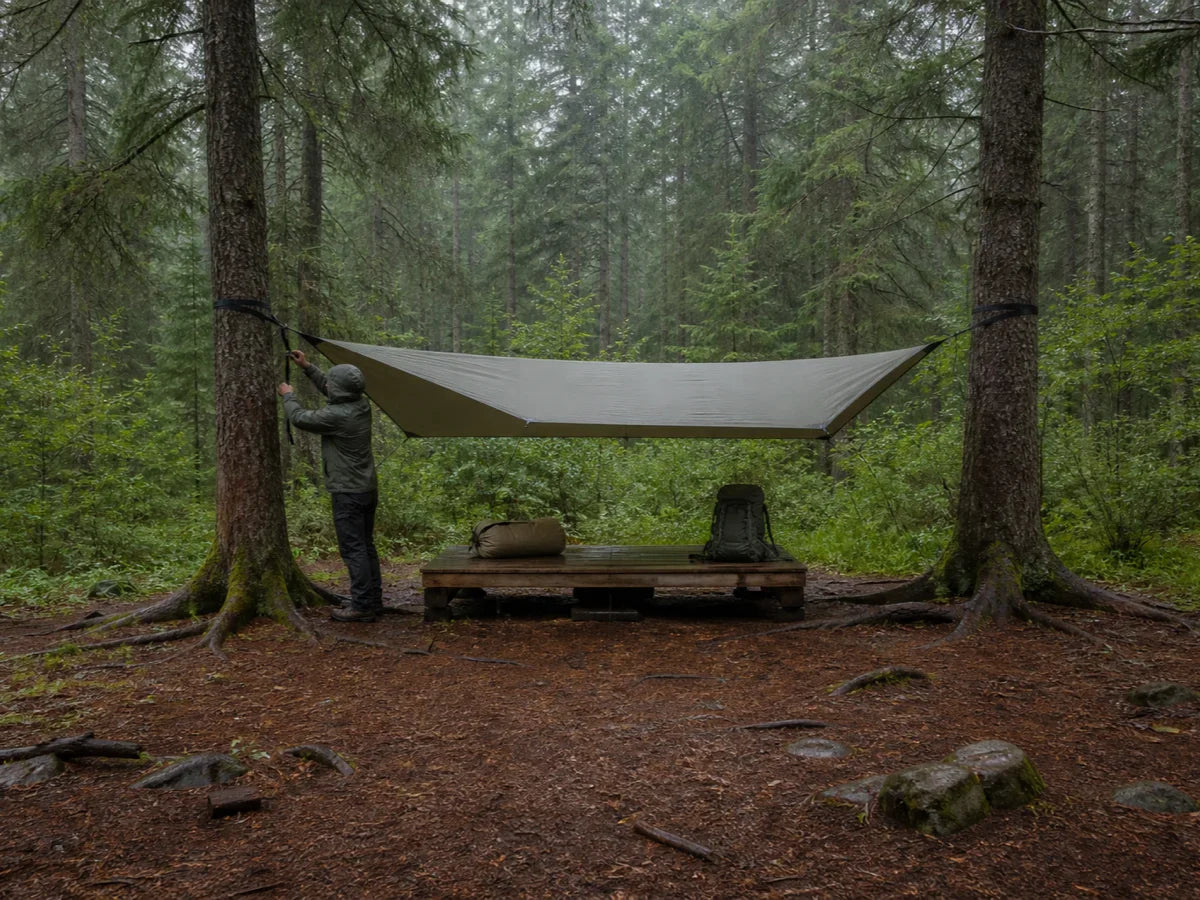
Ihre Oberdecke oder Ihr Schlafsack liegt über Ihnen, innerhalb des Tarps, geschützt durch Ihre Körperwärme, die hindurch aufsteigt.
Es bleibt bei fast jedem vernünftigen Aufbau trocken.
Für die Oberseite ist Daunen die naheliegende Wahl, und Sie können sich keine Sorgen mehr machen.
Das Underquilt ist eine ganz andere Sache.
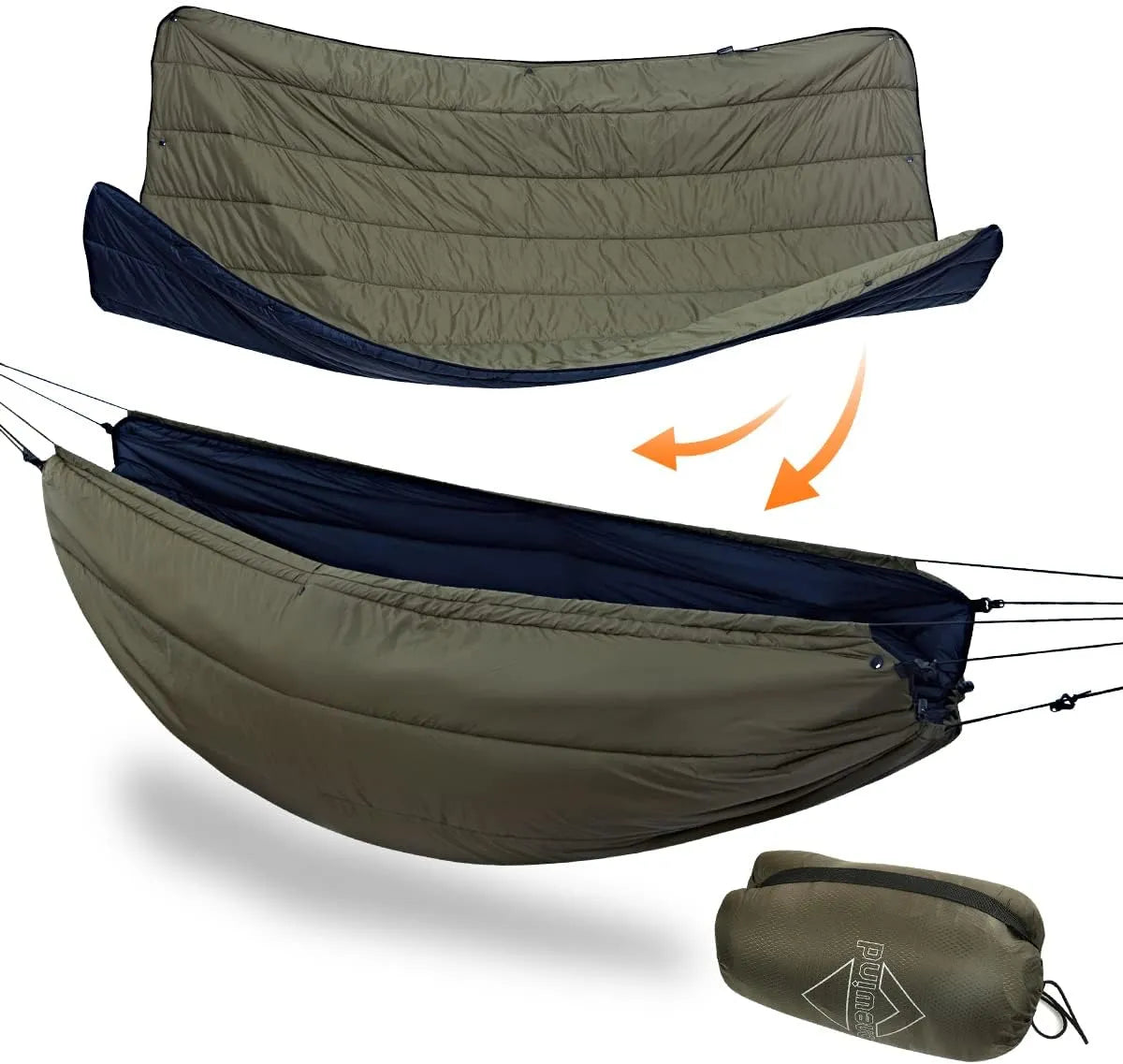
Es hängt unter der Hängematte, außerhalb deines Körpers, in freier Luft.
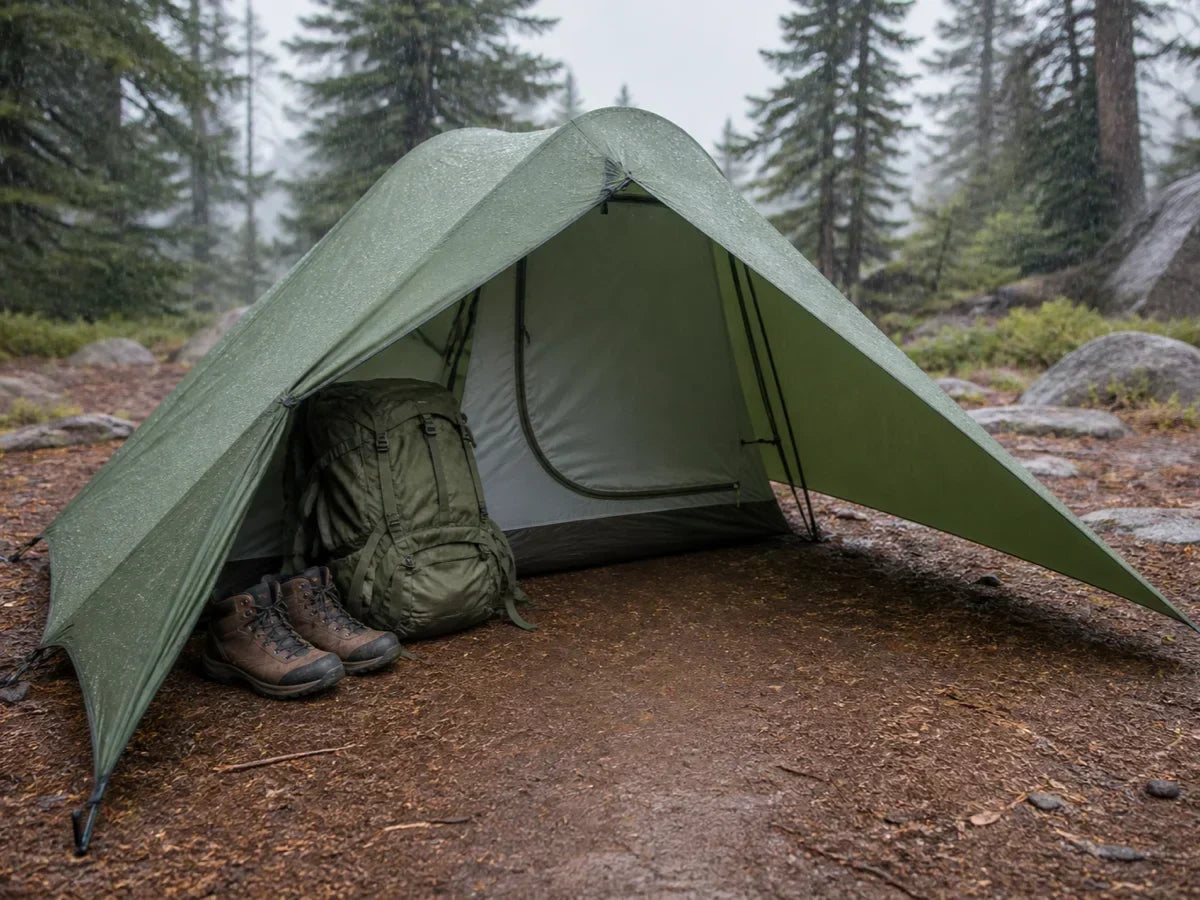
Es befindet sich genau in dem Bereich, in dem kalter Wind unter die Plane zieht und sich Kondensation bildet und abtropft.
Das ist das eine Isolierstück an einer Hängematte, das die Annahme „trocken halten“ nur schwer schützen kann.
Wenn ein Diagramm also sagt „nach unten, es sei denn, es ist nass“, lautet die ehrliche Übersetzung für einen Aufhänger: nach unten für den oberen Teil und eine echte Frage für den unteren Teil.
Stellen Sie sich eine einzige kalte, feuchte Nacht vor, um zu sehen, warum der Unterschied wichtig ist.
Ihre Oberdecke verbringt die Nacht zwischen Ihrem Körper und der Plane gefangen, von unten gewärmt und nie von Außenluft berührt.
Dein Underquilt verbringt dieselbe Nacht in dieser Außenluft, fängt jeden Tropfen auf, den das Tarp abwirft, und jede Böe, die darunter hindurchstreicht.
Gleiche Füllung, gleiche Bewertung, zwei völlig unterschiedliche Einsatzzwecke.
Deshalb ist es ein Fehler, ein einziges Material für das gesamte System zu kaufen.
Die richtige Entscheidung ist, jede Seite nach dem zu beurteilen, womit sie tatsächlich konfrontiert ist, und beim Underquilt ist das Feuchtigkeit, die man nicht vollständig kontrollieren kann.
Worauf Ihre Unterdecke tatsächlich ausgesetzt ist
Eine Underquilt ist drei Belastungen ausgesetzt, denen eine Topside-Decke größtenteils aus dem Weg geht.
Zunächst: Kondensation. Warme, feuchte Luft trifft auf eine kalte Plane und lässt feine Tropfen direkt auf die darunterliegende Steppdecke herabregnen.
Zweitens, Kompression bei der Lagerung. Ein Reddit-Nutzer in r/hammockcamping beschrieb Daunen, die „in meiner Wohnsituation oft komprimiert waren“, wodurch das Bauschvolumen schon vor Reisebeginn zusammengepresst wird.
Drittens, die Boden-Alternative. Wenn es an einem Standort keine geeigneten Bäume gibt und man auf dem Boden landet, berichtete derselbe Hänger, dass „die Daunen keinen Wärmeeffekt hatten“, sobald das Körpergewicht sie plattgedrückt hatte.
Eine Topquilt muss niemals das Daraufliegen überstehen. Eine Underquilt manchmal schon.
Beachten Sie das Muster. Wenn die Bedingungen kontrolliert werden, gewinnt Daune auch unten.
Jede Zeile, in der die künstliche Variante gewinnt, ist eine Zeile, in der die Kontrolle entglitten ist.
Was die Temperaturangabe voraussetzt
Eine Temperaturangabe ist ein Versprechen, das in einem Labor gemacht wird, und dieses Versprechen setzt eine trockene, vollständig aufgelockerte Füllung voraus.
Mountain Equipment erklärt, dass eine ISO-23537-Bewertung von einer beheizten Prüfpuppe in einer kontrollierten Kammer stammt, wobei die Leistung gemessen wird, die erforderlich ist, um eine festgelegte Temperatur zu halten.
Die Zahl gilt nur, solange die Isolierung ihre volle Bauschkraft hat.
Eine Daunen-Unterdecke, die eine Nacht voller Kondensation aufgesogen hat und stellenweise platt geworden ist, ist nicht mehr die 20-Grad-Decke auf dem Etikett.
Das Etikett hat sich nicht geändert. Die Steppdecke hat sich geändert.
Synthetik verliert in derselben feuchten Nacht weniger Bauschkraft, sodass ihre tatsächliche Wärmeleistung weniger von der angegebenen Bewertung abweicht.
Das ist die praktische Bedeutung von warm, wenn es nass ist.
Das bedeutet nicht, dass Kunstfaser wärmer ist als Daunen.
Es bedeutet, dass Kunstfaser auch bei einer feuchten Nacht standhält, während Daune das oft nicht tut.
Ein Hänger in einem trockenen Klima kann einer Daunenfüllkraft vertrauen. In einem feuchten sollte man dieselbe Zahl mit Skepsis betrachten.
Die Preislücke bei realen Produkten
Die Premium-Daunen klingen abstrakt beängstigend und erweisen sich in realen Katalogen als gut handhabbar.
Schauen Sie sich eher passende Underquilts als Jacken an.
Ein Ausrüstungsvergleich bei Skilled Outdoors bezifferte eine synthetische OneTigris-Unterdecke auf etwa 86 $ gegenüber der Daunenvariante für etwa 133 $.
Im Premiumsegment lag eine synthetische Underquilt von ENO bei etwa 175 US-Dollar, während die Daunenvariante von ENO bei ungefähr 300 US-Dollar lag.
Der reale Daunenaufschlag bei einer Underquilt liegt ungefähr bei 1,5- bis 2-mal, nicht bei dem 5-fachen, das der Kauf von Jacken vermuten lässt.
Der Onewind-Schritt von Synthetik zu Daune, ungefähr 90 $ bis 189 $, entspricht den Lücken von OneTigris und ENO.
Für ein erstes Unterbett ist diese Lücke bares Geld wert.
Für eine fünfte Tour, bei der Sie bereits mit Kondensation kämpfen, kann das Geld für das falsche Problem ausgegeben sein.
Der Gewichtsunterschied ist kleiner, als Sie denken
Das andere Argument gegen Daunen ist das Gewicht, und das stimmt, aber die Größe hängt davon ab, was Sie tragen.
Bei vergleichbaren Bewertungen ist der Gewichtsunterschied zwischen den Unterquilts gering.
Skilled Outdoors führte den ENO Vulcan mit Kunstfaser mit 30 Unzen und den ENO Blaze mit Daunen mit 24 Unzen auf.
Das ist ein Unterschied von 6 Unzen, den die Quelle beim Autocamping als „vernachlässigbar“ und nur beim Rucksackwandern, wenn jedes Unze zählt, als „bemerkenswert“ bezeichnet.
Die Lücke wird bei Taschen größer, wo die Füllmengen höher sind.
Outdoor Life verglich einen synthetischen Schlafsack mit 40 Grad, der 1 Pfund 6 Unzen wog und 13 Unzen Füllung enthielt, mit einem Daunenschlafsack mit 850er Bauschkraft, der bei 1 Pfund lag und nur 8 Unzen Füllung hatte.
Für einen Autocamper oder Wochenend-Hiker fällt ein Aufpreis von 6 Unzen für ein Underquilt nicht ins Gewicht.
Für einen Weitwanderer, der jedes Gramm zählt, ist dies genau die Art von Zahl, die den Aufpreis für Daunen rechtfertigt.
Pflege und Langlebigkeit, die stillen Kosten
Die letzte Lücke ist die, an die niemand gerne denkt: Pflege und Lebensdauer.
Daunen halten länger, aber nur, wenn man sie gut behandelt.
Es benötigt eine schonende Wäsche mit einem speziellen Daunenreiniger, ein langes Trocknen bei niedriger Hitze mit Trocknerbällen, um das Volumen wiederherzustellen, und eine trockene Lagerung, bei der es niemals zusammengedrückt aufbewahrt wird.
Überspringe diese Routine und selbst gute Daunenmatten frühzeitig.
Synthetische Stoffe verlangen fast nichts davon.
Es lässt sich leicht waschen, trocknet innerhalb von Stunden und verzeiht es, zwischen den Reisen in einen Sack gestopft zu werden.
Der Handel erscheint am äußersten Ende der Zeitleiste.
Bei guter Pflege kann Daune viele Jahre lang bauschig bleiben, während synthetische Füllung mit jedem harten Kompressionszyklus etwas an Bauschkraft verliert.
Hammock Gear, ein Hersteller von Daunen, beschreibt den Unterschied so, dass man ein System alle fünf statt alle drei Jahre ersetzt.
Daunen belohnen Geduld und bestrafen Vernachlässigung, und Synthetik macht das Gegenteil.
Für die meisten Menschen, die eine Steppdecke feucht verstauen und sie bis zur nächsten Reise in einer Tasche vergessen, begünstigt dieses Muster im ersten Jahr unauffällig Synthetik.
Daunen ziehen sich über die Jahre nur dann weiter nach vorne, wenn die Pflegegewohnheit tatsächlich gelebt wird und nicht nur ein Wunsch bleibt.
Was die Gemeinschaft in feuchten Regionen tatsächlich tut
Hier ist die Überraschung, die diesen Artikel ehrlich hält.
Selbst in bekanntlich feuchten Regionen steigen erfahrene Hängemattennutzer nicht einfach auf Synthetik um.
Ein Anfänger in r/hammockcamping fragte direkt nach Daune versus Synthetik für die „feuchten/regnerischen“ südlichen Appalachen.
Die oberste Antwort berichtete den Gemeinschaftskonsens: „Daunen sind der wahre Champion“, und bei Feuchtigkeitsbedenken wurde „meist die Empfehlung eines UQ-Protektors“ ausgesprochen.
Lesen Sie das sorgfältig. Die Standardausführung für feuchte Länder ist nicht synthetisch. Sie besteht aus Daune plus einem Schutz, einer leichten wasserabweisenden Hülle, die Tropfen und Spritzwasser von der Decke fernhält.
Das synthetische Beispiel ist enger gefasst und spezifischer als „es regnet hier“.
Es ist für Fälle gedacht, in denen Sie die Daunenquilte nicht zuverlässig trocken halten können: starke nächtliche Kondensation, Ausrüstung, die dauerhaft komprimiert gelagert wird, ein begrenztes Budget, das weder einen Daunenquilt noch einen Schutzbezug zulässt, oder als Absicherung für den Boden.
Beim Material selbst ist dieselbe Community präzise. Wie es ein Benutzer von Hängematten ausdrückte: „Beim Verhältnis von Gewicht und Temperatur bekommst du nichts Besseres als Apex ohne Daune“, wobei Climashield Apex als synthetischer Maßstab genannt wurde, nach dem man Ausschau halten sollte.
Wo Onewind sitzt, ehrlich gesagt
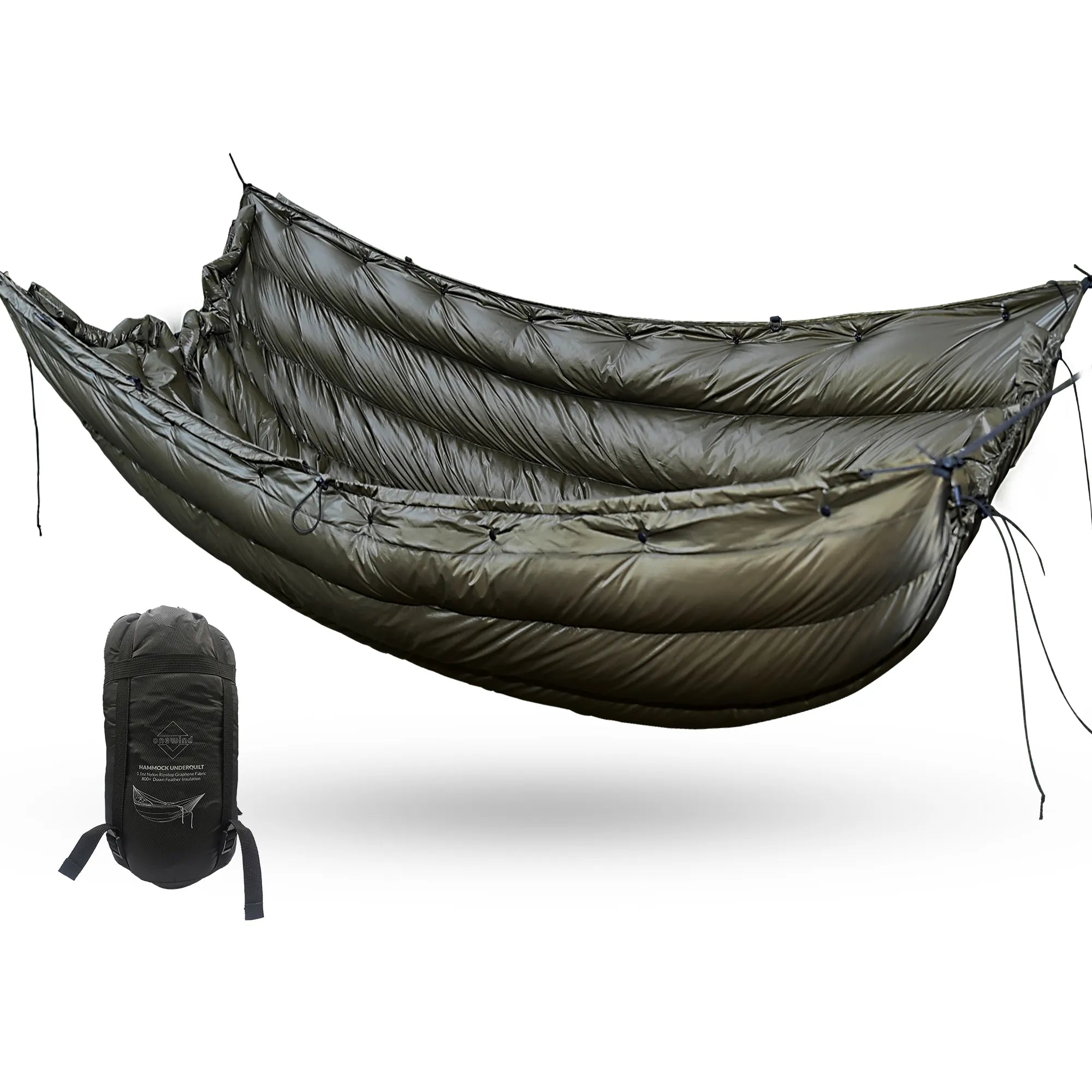
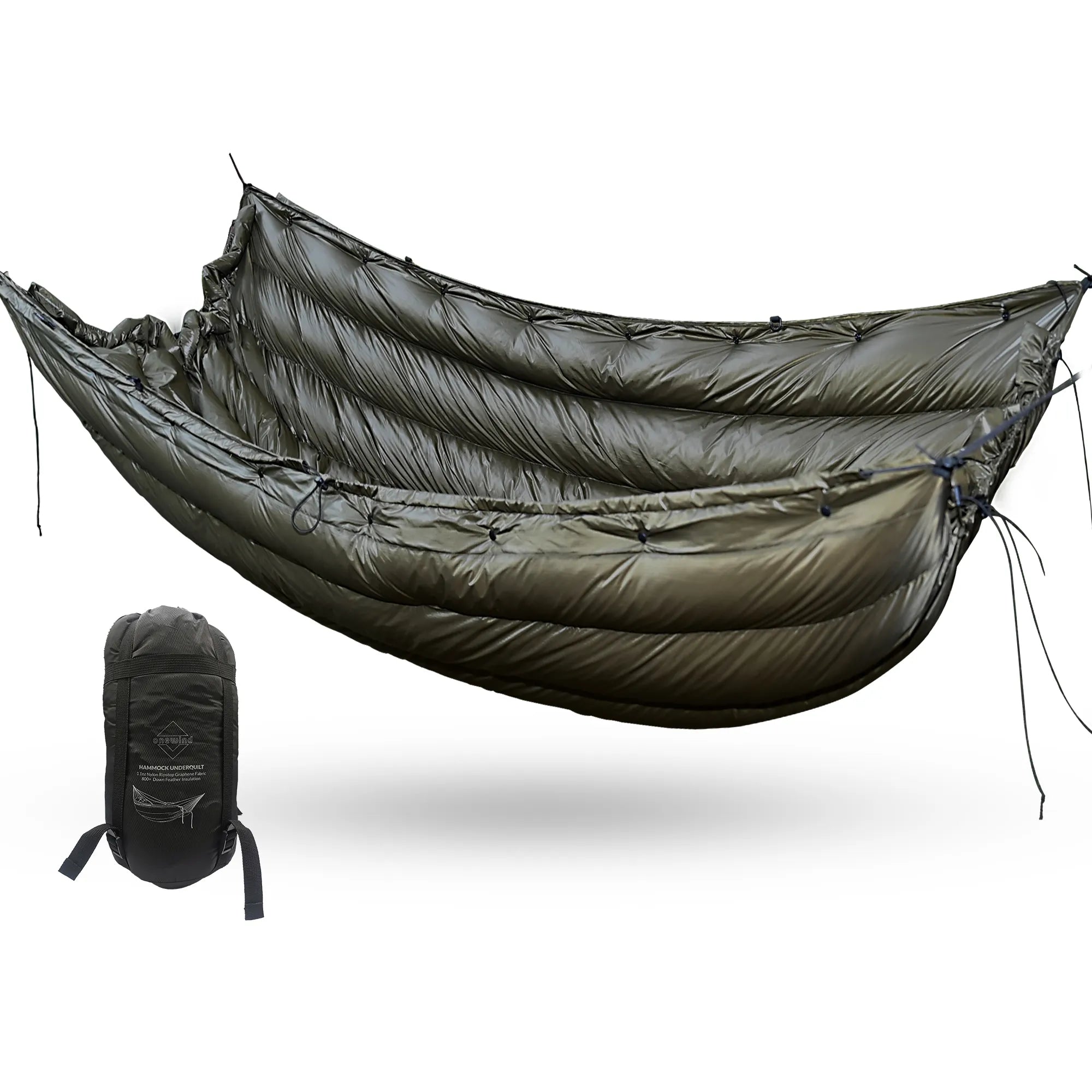
Onewind verkauft beide Seiten dieser Entscheidung, daher gibt es hier keine eindeutige Antwort, die man durchsetzen könnte.
Das macht die ehrliche Empfehlung zu einem Entscheidungsbaum statt zu einer Verkaufsrede.
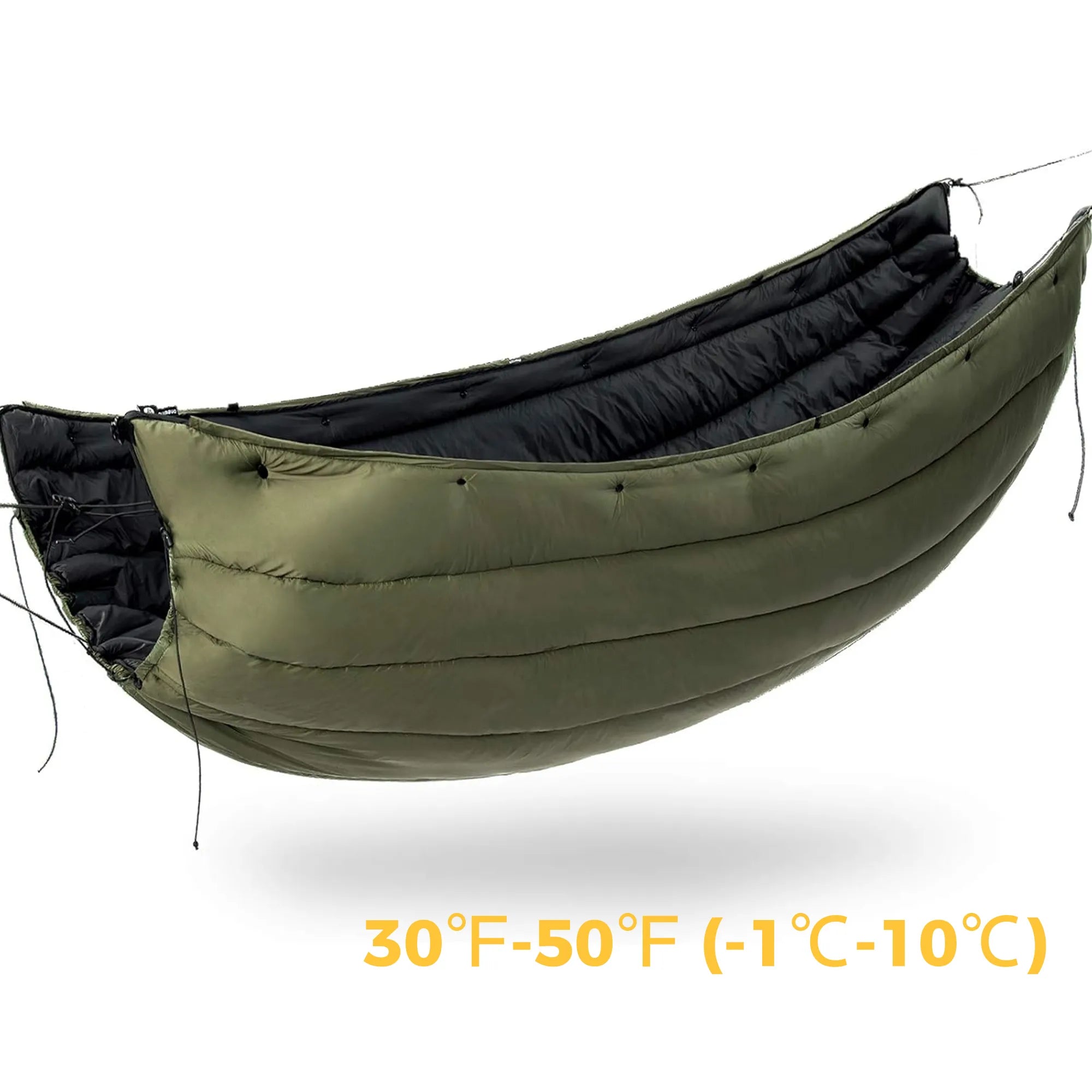
Auf der synthetischen Seite, die Flare Hängematten-Unterdecke ist 89,90 $ für die Bewertung von 30 bis 50 °F und 74,90 $ für 40 bis 60 °F.
Der Brücken-Hängematten-Unterdecke ist 94,99 $ und der Flare Underquilt und Decken-Kombination ist 144,90 $
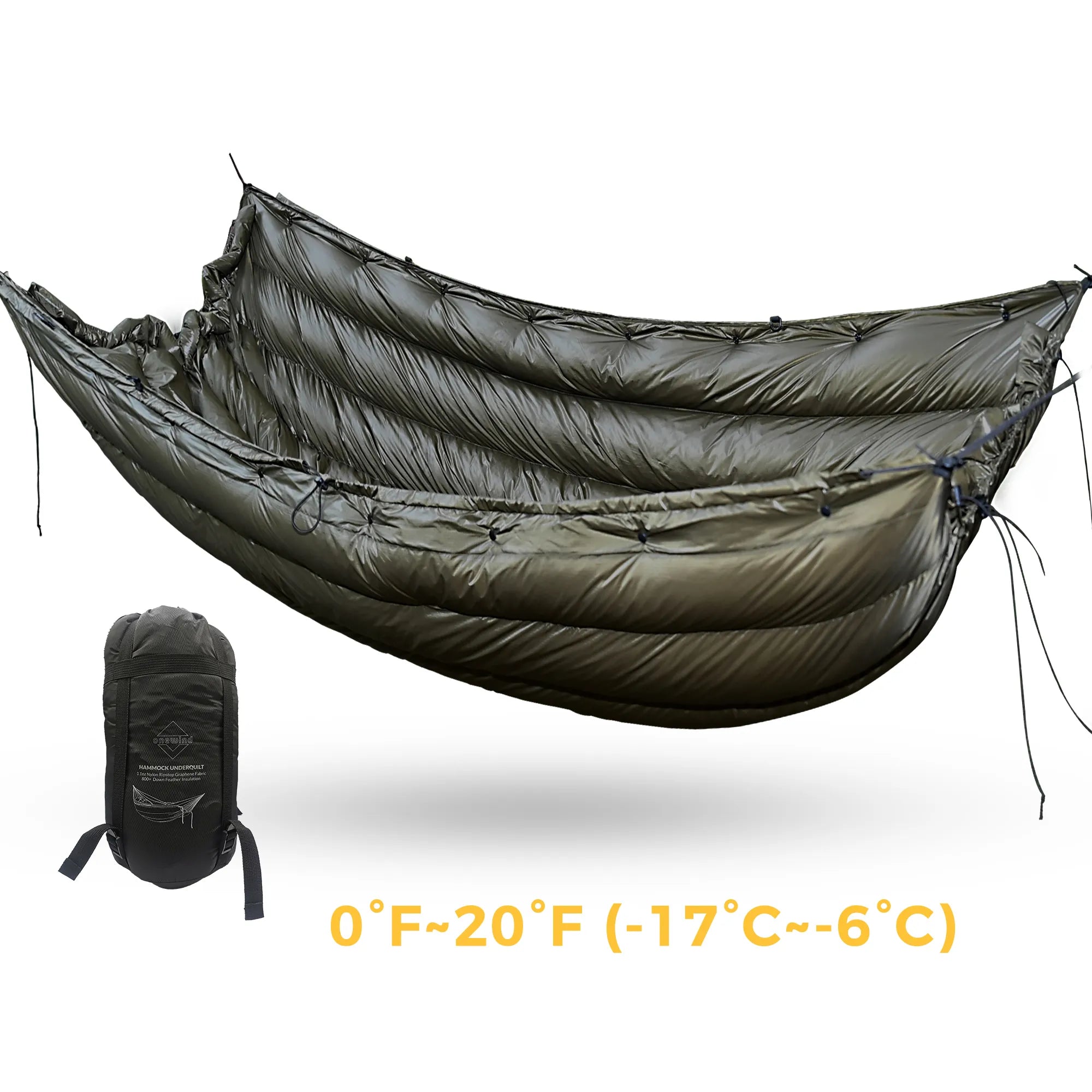
Auf der anderen Seite, der Solstice Daunen-Unterdecke ist 189,00 $ für 32 bis 59 °F ausgelegt, und der Equinox Daunen-Unterdecke ist für 249,00 $ bis hinunter zu 0 °F bewertet.
Die gesamte Produktpalette lebt in den Hängematten-Unterdecke-Kollektion.
Wenn Sie bereits wissen, dass Daunen das Richtige für Sie sind, finden Sie die tiefergehenden Kaufdetails in der Daunen-Hängematten-Unterdecke-Leitfaden.
Für den Mittelweg, den die Feuchtland-Community empfiehlt, füge die Hängematten-Unterquilt-Schutz für 27,90 $ zu einer Daunendecke.
Szenario 1: Sie hängen in einer feuchten, regnerischen Region
Dies ist der Fall der südlichen Appalachen, und die Antwort ist nicht die offensichtliche.
Wenn du ein gutes Tarp aufstellen und die Steppdecke trocken lagern kannst, solltest du Daune kaufen und einen Schutz hinzufügen, denn genau das macht die erfahrene Gruppe tatsächlich.
Wählen Sie Kunstfaser, wenn die Luftfeuchtigkeit Ihre Ausrüstung Nacht für Nacht an ihre Grenzen bringt, nicht nur, weil der Wetterbericht Regen vorhersagt.
Urteil: Daunen plus ein Schutz für die meisten Hängematten in feuchten Regionen mit ordentlichen Gewohnheiten. Synthetisch, wenn Kondensation zuverlässig gewinnt.
Szenario 2: Sie sind Anfänger mit kleinem Budget
Ein erstes Underquilt sollte nachsichtig sein, denn im ersten Jahr wird das Quilt feucht gestopft und komprimiert gelagert.
Für die meisten Anfänger ist der klügere Kauf ein synthetisches Underquilt für etwa 90 $, nicht ein Daunen-Quilt für 189 $, den du noch nicht zu schützen gelernt hast.
Steigen Sie später auf Daune um, sobald Trockenbleiben zur Gewohnheit geworden ist und Sie das geringere Gewicht sowie das kleinere Packmaß wünschen.
Urteil: Wähle zuerst synthetisch. Daunen sind das Upgrade, das du dir verdienst, nicht das Eintrittsticket.
Szenario 3: Du zählst Unzen in kaltem, trockenem Land
Kalt und trocken ist genau der Fall, für den Daune entwickelt wurde, und sie liefert. Wenn die Luft trocken und kalt ist, wird die Steppdecke nie nass, sodass die einzige Schwäche von Daunen niemals zum Tragen kommt.
Unten sollten Sie wegen seiner Wärme pro Unze und seines kleinen Packmaßes Priorität darauf legen und für Tiefstwerte in der Übergangszeit auf eine 20- oder sogar 0-Grad-Bewertung aufstocken.
Ein Aufhänger warnte, dass eine 30-Grad-Decke in kalten Nächten „ziemlich unterlegen“ sei, also sollte man sie nicht unterschätzen.
Urteil: Runter, und stelle sie kälter ein, als du denkst, dass du es brauchst.
Szenario 4: Ihr Underquilt wird immer wieder feucht
Wenn Ihre Steppdecke an den meisten Morgen feucht ist, ist die Materialwahl bereits für Sie getroffen.
Synthetik behält im nassen Zustand den Großteil ihrer Wärme und trocknet in wenigen Stunden bei Sonne oder Wind, während Daune vollständig und sorgfältig getrocknet werden muss.
Wählen Sie hier synthetisch, auch wenn Preis und Gewicht Daune begünstigen, denn eine warme, feuchte Decke schlägt eine kalte, auf dem Papier trockene.
Urteil: Synthetisch. Eine Steppdecke, die auch nass funktioniert, ist mehr wert als eine, die nur trocken funktioniert.
Szenario 5: Manchmal muss man auf dem Boden schlafen
Eine Underquilt setzt voraus, dass du aufgehängt bist, und genau bei der einen Gelegenheit, bei der das nicht zutrifft, versagt Daune am stärksten.
Unter Körpergewicht wird Daune auf nichts komprimiert, sodass ein Hängemattenschläfer, der mit einer Daunen-Unterdecke auf den Boden ausweicht, praktisch unisoliert ist.
Wenn Übernachtungen auf dem Boden eine reale Möglichkeit sind, solltest du dich nicht auf Daunen unten verlassen und stattdessen entweder eine Kunstfaserfüllung verwenden oder für diesen Fall eine Schlafmatte mitnehmen.
Für das Gleichgewicht zwischen Aufhängung und Bodenisolierung, die Kaufberatung für Hängematten-Unterdecke deckt das gesamte Schlafsystem ab.
Urteil: Synthetisch oder eine Isomatte, wenn der Boden jemals infrage kommt. Daune nur, wenn Sie den Hänger nie verlassen.
Die Wahl Ihrer Isolierung
Die gesamte Entscheidung reduziert sich auf vier Fragen, in dieser Reihenfolge.
Daunen sind nicht besser, und synthetische Materialien sind nicht besser.
Daune ist besser, wenn man sie trocken und bauschig halten kann, was in einer Hängematte oben leicht und unten schwierig ist.
Synthetik ist genau dort besser, wo diese Kontrolle verloren geht – also genau dort, wo die meisten Menschen tatsächlich campen.
Für die meisten, die zum ersten Mal eine Hängematte aufhängen, und für alle in feuchten Regionen ohne eingespielte Trockenroutine sollten Sie mit Kunstfaser beginnen und Daune als das Upgrade betrachten.
Wenn Sie bereit sind, das gesamte Schlafsystem und nicht nur die Füllung zu vergleichen, ist die Beste Kaufberatung für Unterquilts für Hängematten und der Leitfaden zum Vergleich von Camping-Steppdecke und Schlafsack hier fortsetzen, wo dies aufhört.

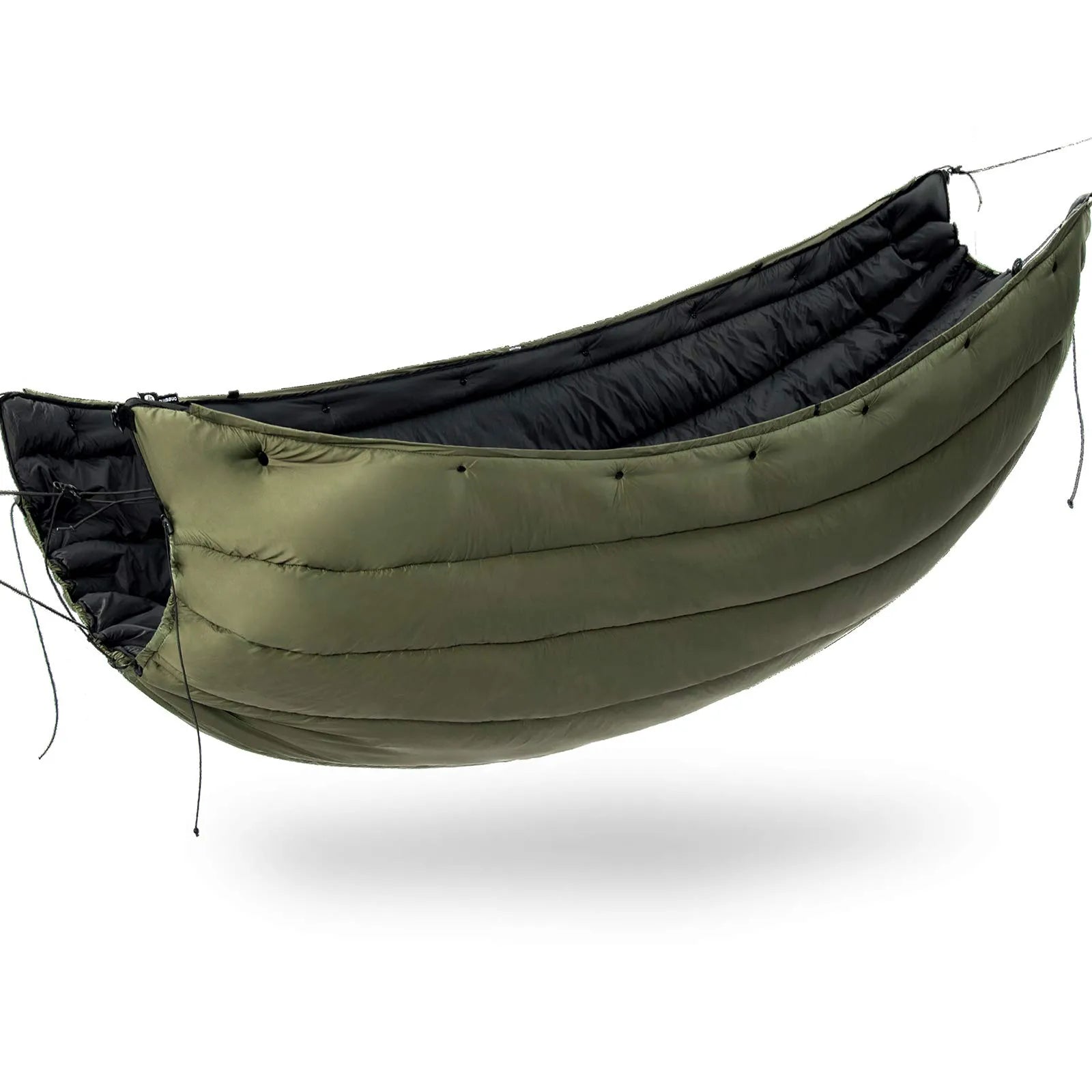
Onewind Flare Synthetic Underquilt, $89.90
Shop Now →