
I compared the common 10', 11', and 12' hammock rain fly decision against the field problems that keep showing up in setup guides and hammock forums: wet hammock ends, wind-driven rain, splashback, porch mode that cannot drop fast, and suspension that carries water under a perfectly waterproof tarp.
The useful pattern was not a bigger waterproof number.
It was coverage.
The lower-regret choice came from asking what rain can reach after the hammock is loaded: the hammock body, the gathered ends, the suspension, the side opening, and the ground splash zone.
For most 10' to 11' hammock campers, the safe starting point is a rain fly with real end overhang, a side angle that can close down in weather, and a pitch you can change before the storm reaches camp.
Waterproof fabric still matters, but it only matters after the tarp is large enough and low enough to keep rain off the sleep system.
What You'll Learn
- ✓ You will know why a rain fly can test waterproof and still leave the hammock ends wet.
- ✓ You will get a simple 5-step coverage check before you buy or pack a tarp.
- ✓ You will see four trip scenarios that turn the same tarp into the right choice or the wrong choice.
- ✓ You will know how to treat porch mode as a comfort setting, not a storm promise.
- ✓ You will leave with a checklist you can run at the trailhead in under 5 minutes.
Quick Answer
If you use an 11' hammock and want one rain fly for normal wet trips, start with a 12' fly unless pack weight has a hard ceiling.
If you expect wind-driven rain, do not solve that with waterproof rating alone.
Choose more side closure, a lower ridgeline, better site selection, or a tarp with doors.
If you want a porch for sitting room, treat it like a temporary fair-weather pitch.
The porch should drop quickly because rain rarely cares about your first setup photo.
The Decision Framework
How To Set Up A Hammock Rainfly

Start with hammock length.
A rain fly that barely matches the hammock length on paper can come up short once the sleeper loads the hammock and the suspension angles change.
For an 11' hammock, I would rather give up a few ounces than wake up with the gathered ends sitting at the edge of the drip line.
The second check is side angle.
A high pitch feels roomy, but it leaves a wide side opening for diagonal rain.
The third check is water path.
Hennessy Hammock's setup order puts suspension, rainfly attachment, staking, and loaded adjustment into one field sequence, which matches what happens in camp: the shelter only proves itself after weight and weather touch it.
The fourth check is ground behavior.
Leave No Trace guidance pushes durable surfaces, so the answer is better geometry and site choice, not trenching soil or widening damage to force a perfect stake angle.
According to that durable-surface report, the better campsite is the one that lets you get a dry pitch without expanding damage around trees or soft vegetation.
The fifth check is speed.
If lowering the tarp takes 10 minutes of knots and guesswork, porch mode becomes a liability once the wind turns.
Fit Test 1: Load Rating Is Not Comfort Rating

Ignore the word “capacity” when you judge a rain fly.
Capacity belongs to the hammock, straps, and hardware.
Comfort under rain belongs to the whole system.
I check coverage after a person is actually in the hammock because the empty setup often looks better than the sleeping setup.
The hammock drops.
The ends move.
The suspension angle changes.
The rain fly does not magically stretch its coverage to follow those changes.
This is why community threads about tarp size for 11' hammocks keep circling the same problem: a tarp length that sounds close can feel exposed once wind and sag enter the picture.
As a user-friction source, those forum threads are useful because they show the same sizing argument in plain camper language, not as a lab test.
If the fly only looks right while the hammock is empty, it has not passed the fit test.
The green-light version is boring in the best way.
Both gathered ends sit well inside the tarp edge, the side panels can pitch down, and the stakes hold a clean angle without tearing up fragile ground.
Fit Test 2: One Diagonal Lay Does Not Become Two

A hammock rain fly protects a moving diagonal shape, not a flat rectangle.
That matters because the sleeper does not lie straight down the centerline.
The body shifts toward one side.
The shoulder and feet create the real rain target.
A wider tarp can help because it covers the diagonal lay better, but width does not turn one protected lane into two independent sleep lanes.
I see beginners make this mistake when they buy a roomy tarp for “extra coverage” and then assume it can cover every hang style equally.
It cannot.
The ridgeline length protects the ends.
The side width protects the diagonal lay.
The pitch height decides how much rain can blow under the edge.
If you sleep hard on the diagonal, check the side opening on the shoulder side and foot side before you trust the setup.
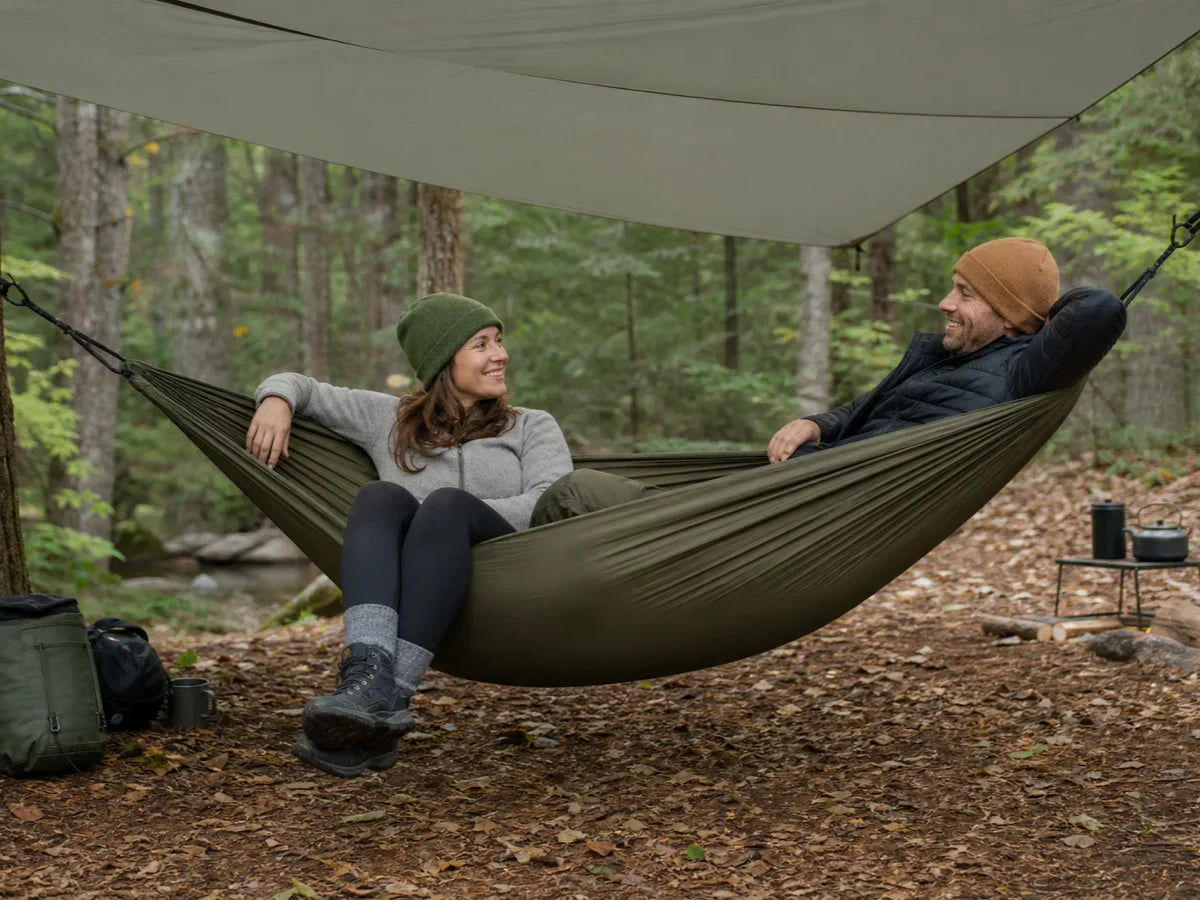
If two people are lounging near the tarp, call it shade or camp cover.
Do not call it proven overnight rain protection until the actual sleeping position sits inside the fly.
Fit Test 3: Weather, Bugs, and Insulation Still Need to Fit

Rain coverage is only one layer of the hammock system.
The bug net needs space.
The underquilt needs to stay centered.
The suspension needs a water break.
The tarp needs enough side angle to shield all of that, not just the hammock fabric.
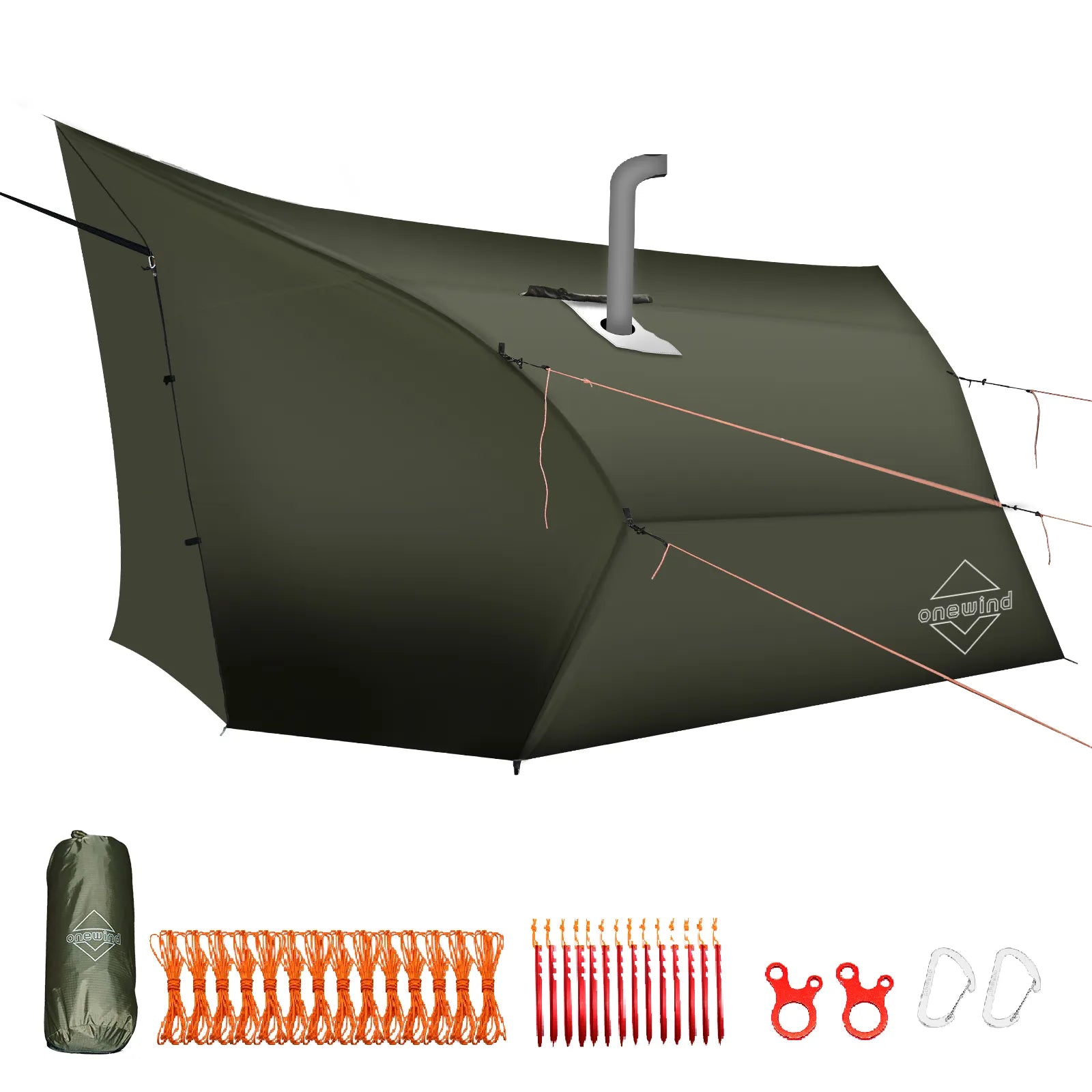
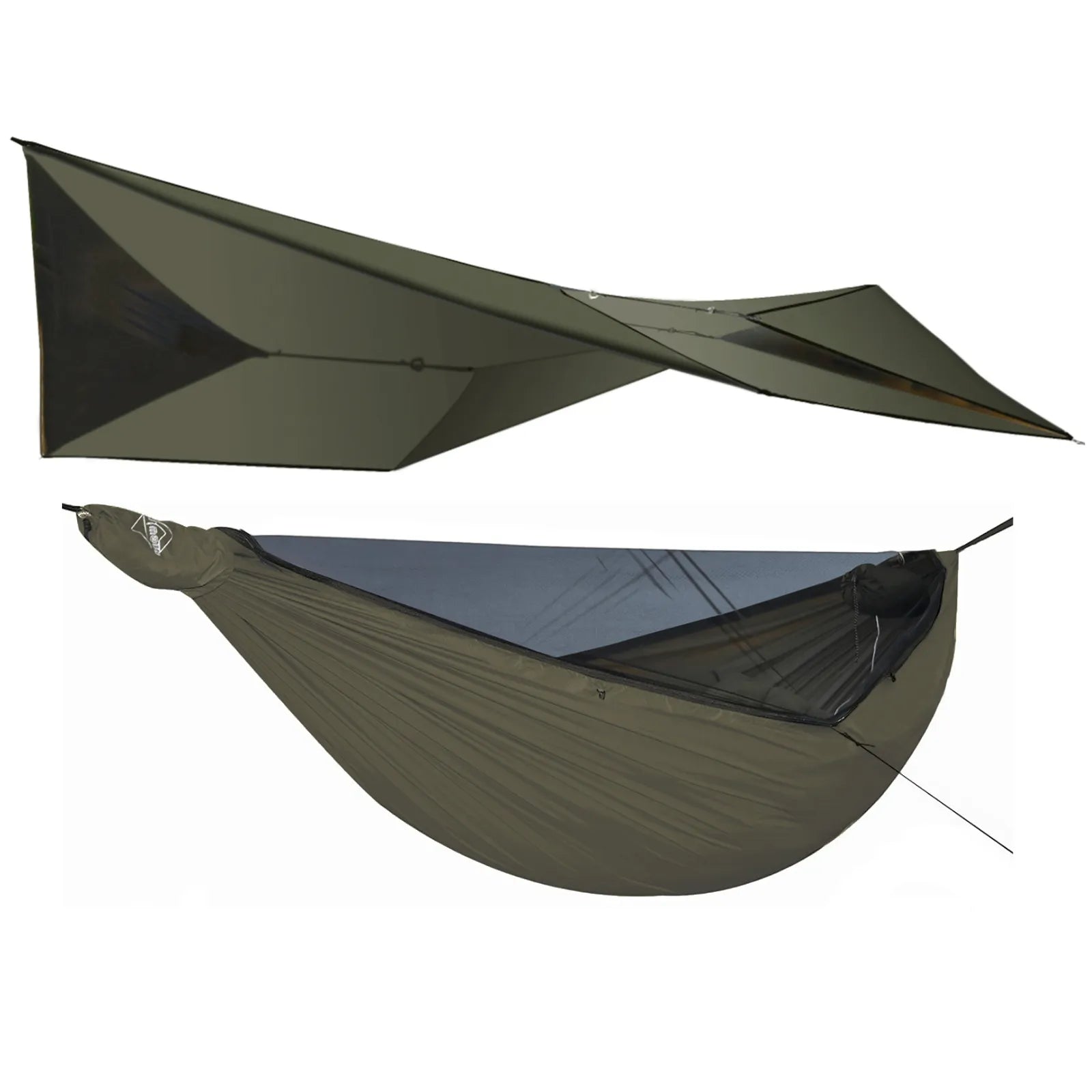
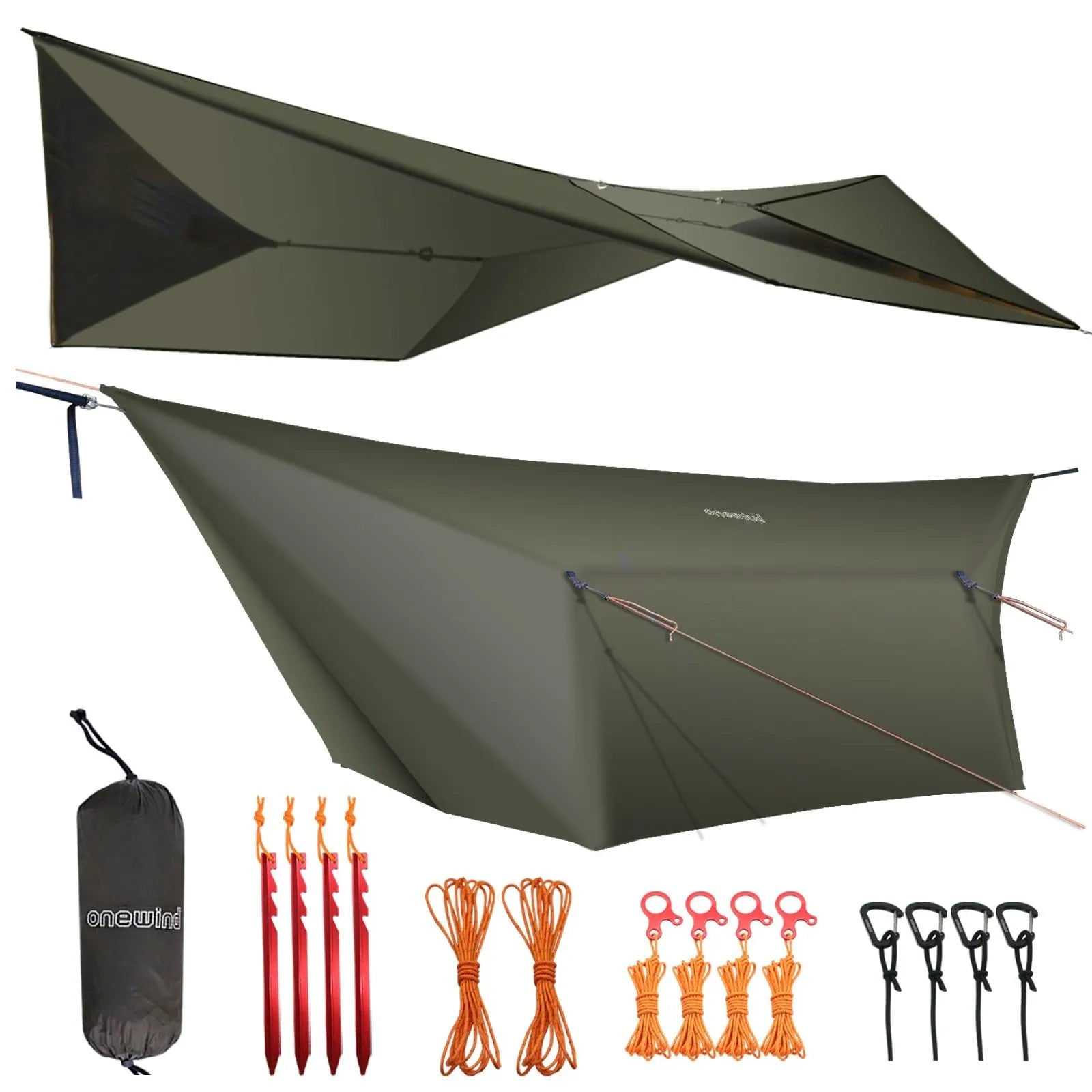
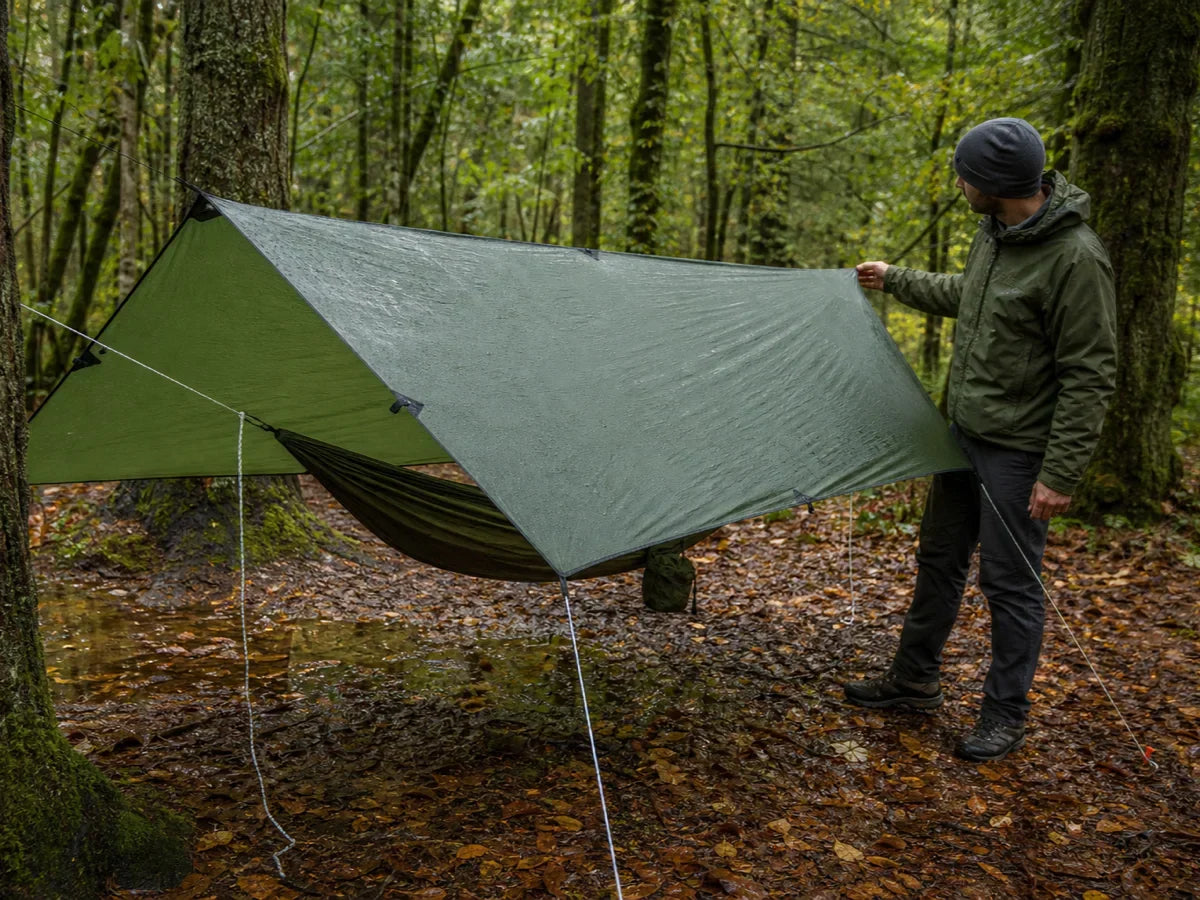
Onewind's Nebula 12' Hexagonal Hammock Rain Fly gives a useful example of the balanced middle: 12' x 9.7', 1.1 oz 20D ripstop silnylon, silicone and PU 4000 mm coating, and 650 g / 1.43 lb total weight with suspension.
Product data from Onewind also lists the kit parts that affect setup speed: reflective guylines, aluminum stakes, guyline collection systems, and a double-ended stuff sack.
Those numbers matter because they describe coverage and carry cost at the same time.
They do not erase setup judgment.
A hex tarp can cover many 10' and 11' hammock trips well, but it is not a full winter-door shelter.
If bugs are heavy, check whether your bug net still hangs cleanly when the tarp drops low.
If cold is the real risk, check whether the underquilt keeps loft and stays centered after you enter the hammock.
If rain is likely, add drip breaks before water can follow the suspension inward.
Scenario 1: Beginner with an 11' hammock trying to decide whether a 10', 11', or 12' rain fly is enough.

The beginner risk is buying the rain fly that matches the hammock length too closely.
An 11' hammock under an 11' fly can look fine in the yard when the weather is calm.
The problem shows up when the hammock is loaded, the rain falls at an angle, and the gathered ends sit close to the edge.
For mild summer lounging, a shorter fly can work if the hang is tight, the site is protected, and you accept less storm margin.
For normal overnight rain, I would choose the 12' fly.
That extra ridgeline margin gives the ends more room before rain reaches them.
It also gives a beginner more forgiveness while learning stake angle and ridgeline height.
The Onewind 12' hex rain fly fits this role because it pairs 12' length with 9.7' width and includes guylines, stakes, and a stuff sack.
That makes the setup easier to standardize before the first wet trip.
Still, the final call is not the product label.
Pitch it with weight in the hammock, then look at both ends from the rain side.
Verdict: choose a 12' rain fly for an 11' hammock unless your trips are fair-weather only and you have already tested the shorter fly loaded.
Scenario 2: Backpacker who bought a light tarp but wakes up with wet hammock ends from diagonal rain.

The light tarp did not fail because it was light.
It failed because the rain found the exposed ends.
A minimalist fly can be excellent on protected trips where trees block wind and the forecast stays gentle.
It becomes a poor trade when the rain blows across the ridgeline and under the side opening.
Reddit and hammock forum discussions often separate “works in normal rain” from “storm-worthy,” and that distinction matters here.
The fix starts with pitch before purchase.
Lower the ridgeline.
Close the windward side.
Add drip breaks to the suspension.
Move out of splash-prone low ground if a durable nearby surface gives better drainage.
If those changes still leave the hammock ends near the edge, buy more coverage rather than a higher coating number.
A 4000 mm coating cannot protect fabric that sits outside the fly.
For a backpacker who wants a middle path, a 12' hex tarp is often a better compromise than the smallest possible fly.
Verdict: keep the light tarp for fair forecasts, but carry a longer or more enclosed rain fly when diagonal rain is realistic.
Scenario 3: Camper using porch mode for comfort, then needing to drop the tarp fast when wind shifts.
Hammock Tarp Setup Tips

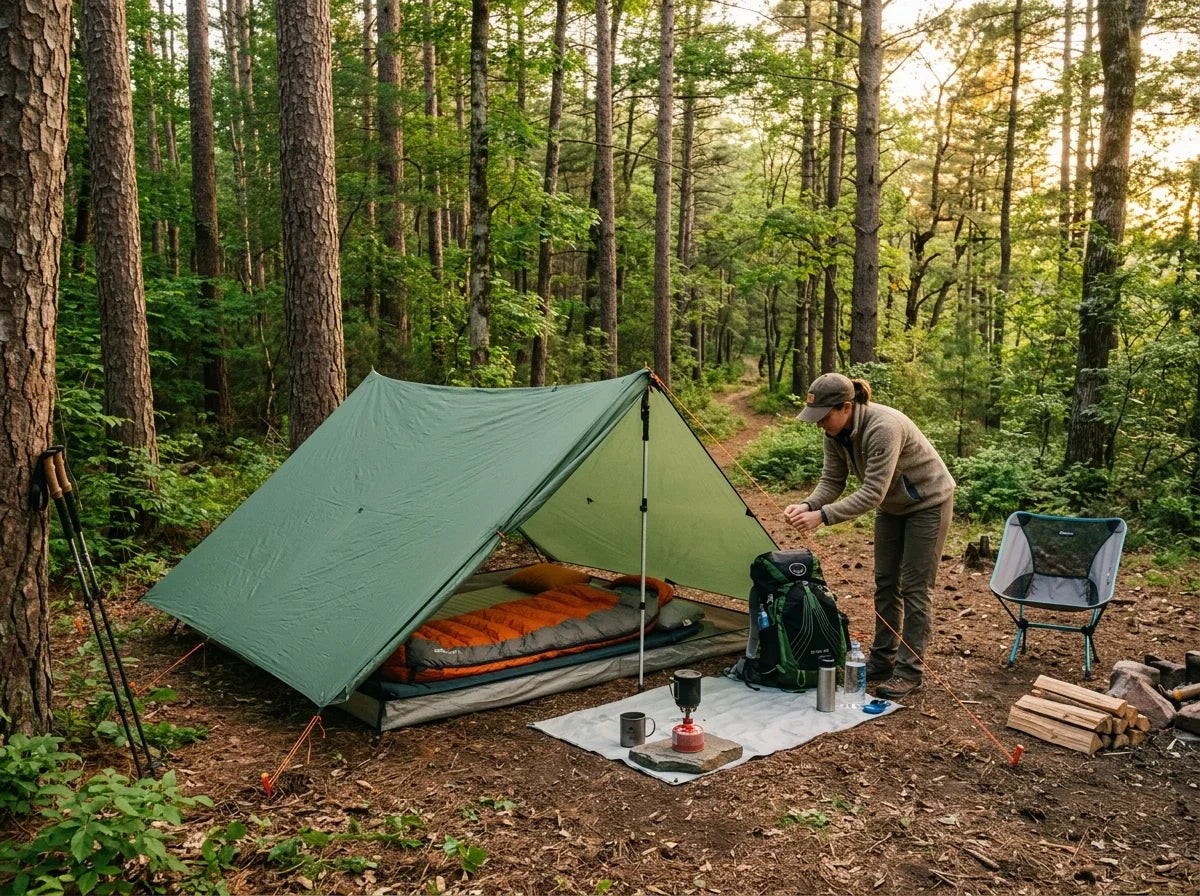
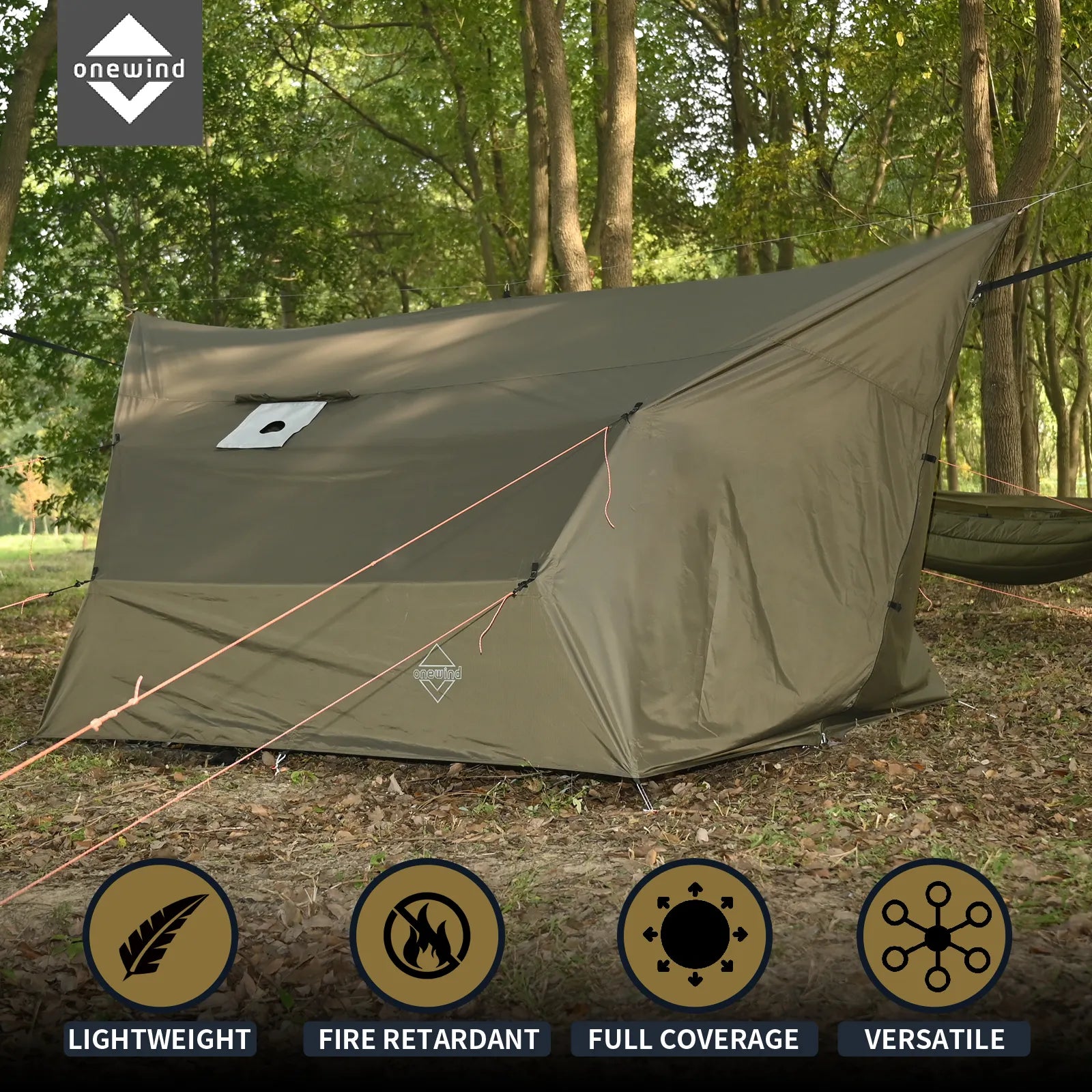
Porch mode is a camp comfort setting.
It is not a storm plan by itself.
The raised side gives headroom, a view, and cooking shade in mild weather.
The same raised side becomes a rain scoop when wind changes direction.
I treat porch mode like an open window.
Use it while conditions allow it, but set the lines so the window can close fast.
That means the windward stakes are already placed, the guylines are not tangled, and the tarp edge can drop without moving the whole hammock.
If you need trekking poles or tarp poles, keep them as a convenience layer rather than a structural delay.
The Onewind tarp poles can help create porch space on fair-weather camps, but the rain fly still needs a fast low-pitch option.
Run the drill before dark.
Raise the porch.
Drop it.
Check whether the hammock, bug net, and underquilt stay inside the rain shadow.
Verdict: use porch mode only when you can convert to low storm mode in a few minutes without rebuilding camp.
Scenario 4: First trip with limited time to test the setup

The first trip is where forgiveness matters more than cleverness.
You do not yet know your knot speed, your preferred hang height, your local wind pattern, or how your tarp behaves when wet.
I would avoid a narrow-margin rain fly for that trip.
Choose more coverage, fewer custom decisions, and a repeatable setup.
The first test should happen before rain.
Hang the hammock.
Load it with your body or a heavy pack.
Pull the tarp low enough for weather.
Look at both ends.
Then pour water from a bottle onto the suspension outside the fly and watch where it travels.
That small test catches the common wet-strap surprise before 2 a.m.
For campers building the whole system, an 11' hammock, a matching bug net, insulation, and a rain fly should be tested together, not one item at a time.
The Onewind 11' camping hammock and a 12' rain fly make a practical test pair because the length relationship is easy to see.
Verdict: on a first wet overnight, choose the rain fly with setup forgiveness and test the loaded system before sunset.
Common Mistakes With Hammock Rain Fly

Most rain fly mistakes come from trusting the label before checking the shape in camp.
A product page can list waterproof rating, fabric weight, and packed size.
Those numbers help, but they do not show whether rain can reach your hammock ends, underquilt, bug net, or suspension.
Use the next five mistakes as a quick audit before you pack.
Mistake 1: Treating Capacity as a Sleep-Quality Promise

Capacity does not tell you whether the fly protects the loaded sleep position.
The hammock may hold the sleeper safely while the rain fly still leaves the end exposed.
I check the rain shadow after the hammock has weight in it because that is the only shape that matters overnight.
Look from the windward side.
If you can see the gathered end near the tarp edge, diagonal rain can probably reach it.
The fix is not a stronger hammock.
The fix is more overhang, lower pitch, better side closure, or a better site.
Avoid this mistake by testing the full setup with the same suspension height and sleep angle you plan to use on the trip.
Mistake 2: Forgetting the Underquilt Has to Stay Centered

An underquilt can turn a dry-looking tarp pitch into a wet sleep system.
The quilt hangs below the hammock, so it can sit closer to side spray and splashback.
If the tarp is pitched high for comfort, the underquilt may be the first insulation to catch mist or angled rain.
I check the quilt after I get into the hammock because the position changes under load.
The quilt should stay centered, lofted, and inside the rain shadow.
If it shifts toward one side, lower that side of the tarp or adjust the quilt suspension.
Do this before bedtime.
Wet insulation is harder to fix in the dark than a loose guyline.
Mistake 3: Assuming One Tarp and Bug Net Covers Every Two-Person Layout

One rain fly can make a good group shade roof.
That does not mean it protects every two-person sleep layout.
Two hammocks change the protected footprint.
They also change the bug-net shape, suspension angles, and side openings.
Hammock forum discussions often show this friction because people want one tarp to work as a sleeping shelter, porch, and hangout space.
Those are different jobs.
For two sleepers, check each hammock end separately.
Then check the gap between the hammocks.
Then check whether both bug nets still hang cleanly under the fly.
If any sleeping fabric sits outside the protected area, use separate tarps, a larger shelter, or a layout with better tree spacing.
Mistake 4: Many Rain Fly Pages Lead with Waterproof

Waterproof rating is easy to compare.
Coverage is harder, so buyers skip it.
That shortcut creates the wrong question.
The first question is not “how waterproof is this fabric?”
The first question is “what can rain reach?”
Once the answer is “not my hammock body, not my ends, not my underquilt, and not my wet suspension path,” the coating spec matters.
The Onewind Nebula rain fly lists silicone and PU 4000 mm coating, which is a strong fabric-side data point for normal hammock shelter use.
Pair that with the 12' x 9.7' footprint and 650 g system weight, and the product becomes easier to place: a balanced hex tarp for coverage-minded hammock campers.
Do not turn that into a storm guarantee.
Exposed winter wind can still call for doors, a lower pitch, or a different site.
Mistake 5: Many Setup Guides Show a Clean Fair

Fair-weather setup photos hide the hard part.
They show a clean high pitch, open sides, and a neat hammock hanging in calm air.
A wet night asks different questions.
Can the ridgeline drop?
Can the windward side close?
Can the stakes hold without moving into fragile ground?
Can the fly stay clear of the bug net and underquilt while sitting low?
Can you make those changes in the dark?
I like practicing two pitches for the same tarp: one porch pitch and one storm pitch.
The porch pitch is for living space.
The storm pitch is for sleeping dry.
If you only know the porch pitch, you only know half of the rain fly.
The Quick Decision Checklist
- ✓ If you use a 10' to 11' hammock and camp in normal rain, choose coverage before the smallest packed size.
- ✓ If you camp in exposed wind, choose lower pitch, more side closure, or doors before relying on coating alone.
- ✓ If you want one balanced tarp for many hammock trips, the Onewind Nebula 12' Hexagonal Hammock Rain Fly is the product I would compare first because it gives 12' x 9.7' coverage, included suspension, reflective guylines, aluminum stakes, and a 1.43 lb total kit.
- ✓ If your trip is more about shade, bug-net shelter, or group cover, browse the Tarps & Shelters collection and choose by the pitch you need most.
- ✓ If you are still unsure, set the tarp up at home with weight in the hammock and judge the rain shadow from the windward side.
Choose the rain fly that still looks boring after that test.
Boring is dry.

Shop the 12' hammock rain fly
Shop Now →