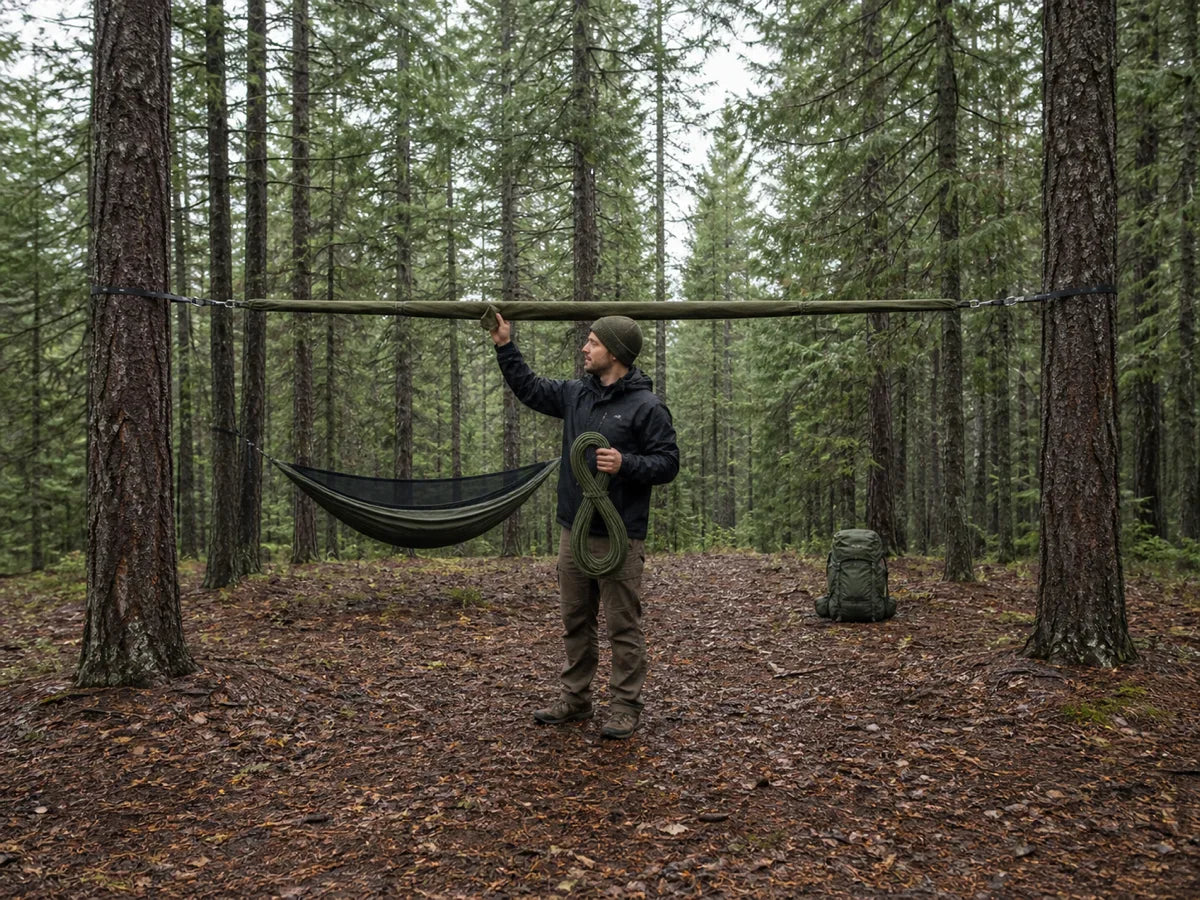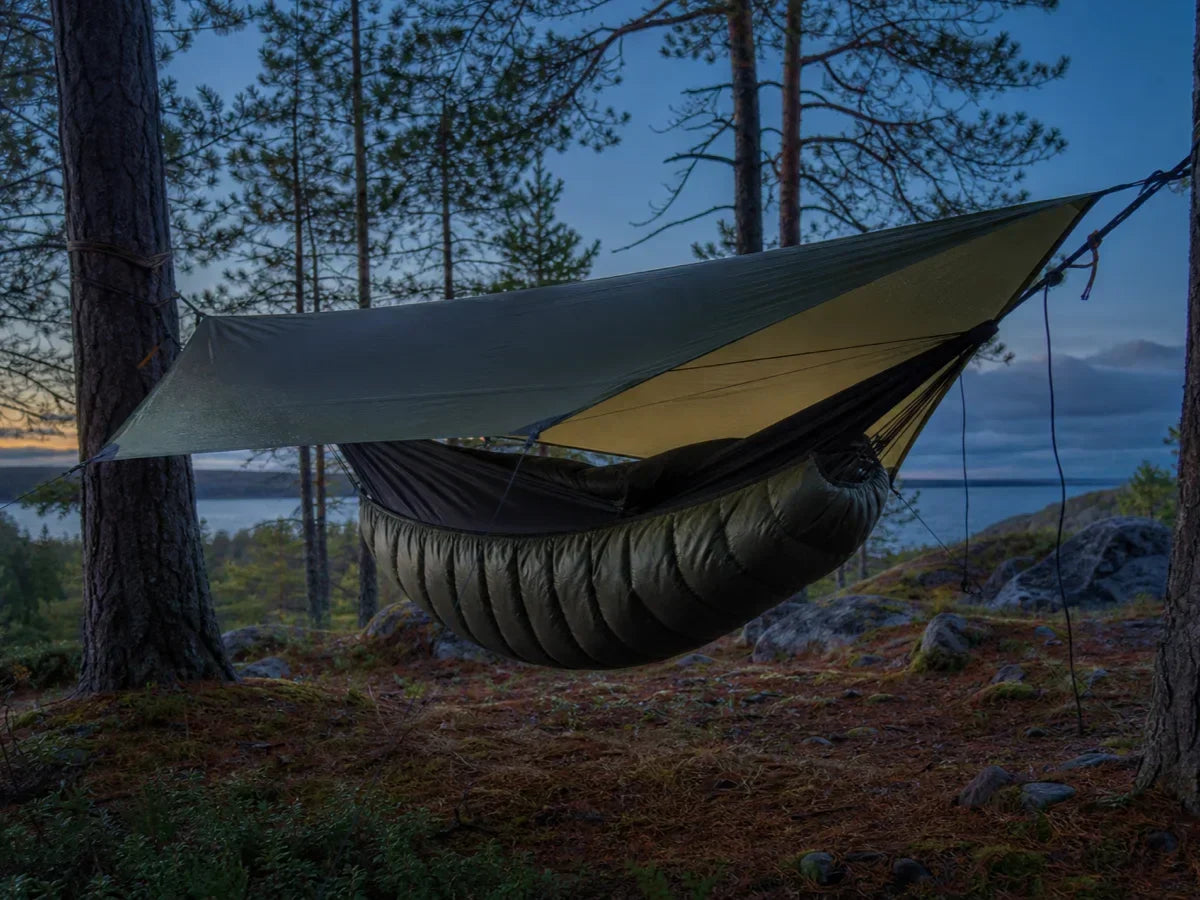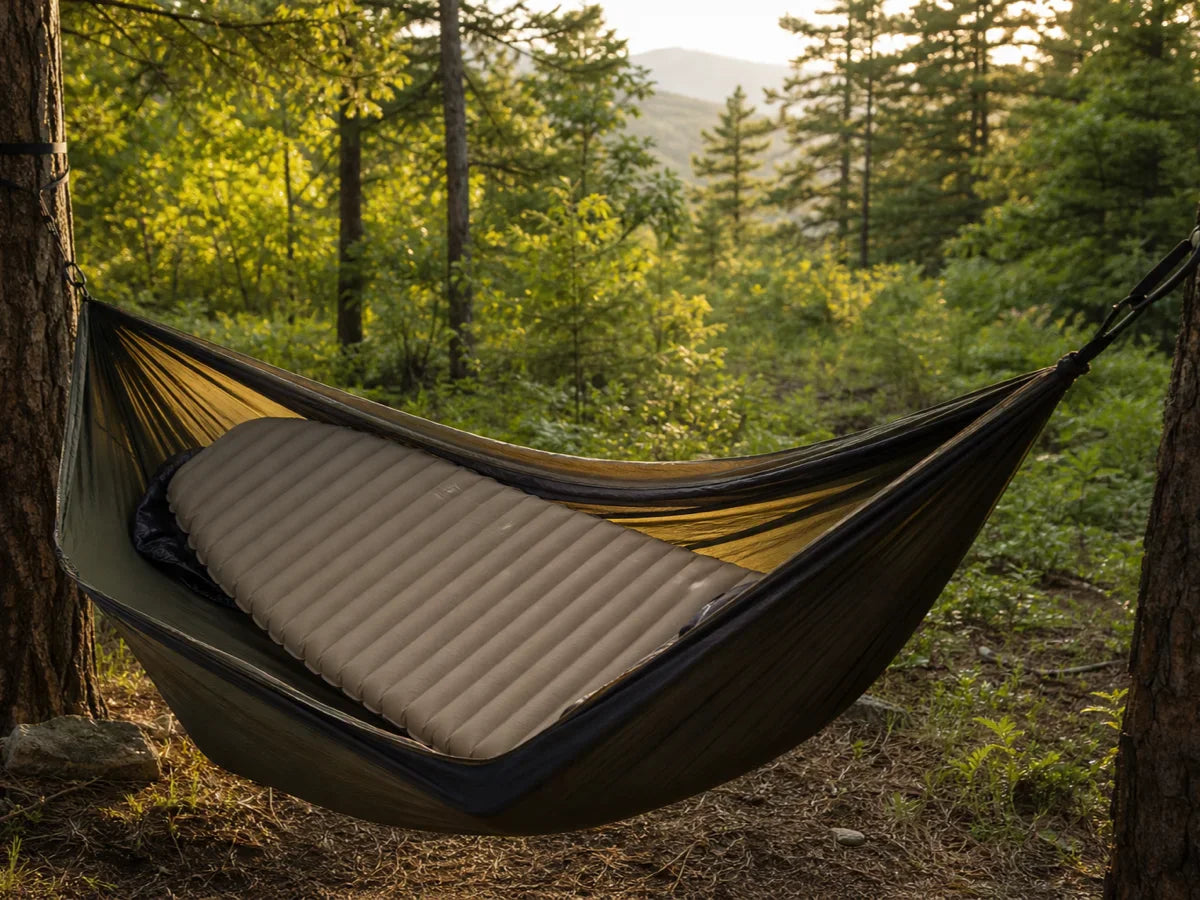

Outdoor Gear Lab ha testato 14 amache da trekking e ha rilevato un intervallo di peso da 15,7 once a 43,9 once per il solo corpo dell’amaca.
Quel peso extra di 28 once scompare quando aggiungi gli altri tre componenti richiesti da ogni sistema di amaca: sospensione, telone e isolamento.
Ho confrontato i dati sul peso di CleverHiker, Outdoor Gear Lab, Andrew Skurka e i forum di Backpacking Light per costruire il quadro del peso del sistema totale mancante in ogni classifica delle recensioni di prodotto presenti nella prima pagina.
Il risultato: il corpo della tua amaca rappresenta solo il 20-30% del peso totale del sistema. Il telone e l’isolamento insieme rappresentano il 60-80%.
Ottimizzare il componente sbagliato è l’errore più comune nel peso nel backpacking in amaca ultraleggero.
Ogni guida ai primi posti elenca i corpi dell’amaca dal più leggero al più pesante senza mostrarti come cambia il peso totale del sistema al variare degli obiettivi di peso.
Questo articolo ti offre un allocatore del budget di peso per tre obiettivi: sistemi completi sotto le 3 libbre, sotto le 4 libbre e sotto le 5 libbre.
Se conosci già il tuo peso obiettivo, passa direttamente alla tabella della risposta rapida qui sotto.
Se stai confrontando il peso di un sistema amaca con quello di una tenda e ti stai chiedendo quale pesi davvero meno, inizia dal Quadro decisionale.
Cosa imparerai
Questo articolo risponde a cinque domande che nessuna singola guida nella prima pagina copre insieme.
Ogni raccomandazione si basa su dati di peso testati o sul consenso della comunità di backpacker ultraleggeri esperti.
Nessuna sezione richiede di leggere prima le altre.
Risposta rapida
Se hai bisogno di prendere una decisione in un minuto, usa questa tabella.
La tesi: per la maggior parte dei backpacker, il sistema a tre stagioni sotto le 4 libbre è il punto ideale consigliato perché bilancia il risparmio di peso con la durata di tutti e quattro i componenti.
Sotto le 3 libbre è possibile, ma dovrebbe essere riservato agli escursionisti esperti che accettano i compromessi in termini di durata dei tessuti ultra-sottili e l’uso limitato alle condizioni di clima caldo.
Il quadro decisionale
Tre livelli di budget di peso separano un sistema ultraleggero da una configurazione standard.
Ho compilato i pesi dei componenti dai dati di test 2026 di CleverHiker, dalle recensioni di amache sotto 1 lb di GearandHome e dalla lista dell’attrezzatura di Andrew Skurka per creare la tabella di allocazione che nessuna raccolta di prodotti fornisce.
Ecco il consenso, organizzato come un budget di peso anziché come una classifica di prodotti.
Livello 1: Sistema inferiore a 3 libbre (Dovresti scegliere il massimo risparmio di peso?)
- ✓ Ideale per gli escursionisti che affrontano il PCT, l'AT o il CDT nei mesi estivi.
Richiede tessuto per amaca da 7-15D, sospensione con whoopie sling, telo ultraleggero in silnylon e utilizzo esclusivo per clima caldo senza sottoquilt.
La comunità del forum Backpacking Light conferma: stare sotto le 3 libbre è possibile, ma ti limita a temperature superiori a 50 °F senza il peso dell’isolamento.
⚠️ Questo livello sacrifica la durabilità. Un corpo amaca in 7D si strappa su corteccia ruvida, rami appuntiti o contatto abrasivo con la roccia. Ogni grammo risparmiato a questo livello costa in affidabilità.
Livello 2: Sistema sotto le 4 libbre (il punto ideale consigliato per la maggior parte dei escursionisti con zaino)
- ✓ Bilancia la durata del tessuto 20-30D con un significativo risparmio di peso su tutti e quattro i componenti.
Copre l’uso in tre stagioni (temperature fino a 35-40 °F) con un sottotelo leggero.
Consenso della community di r/ultralight: il nylon 20D è la scelta di tessuto più popolare per gli escursionisti ultraleggeri che desiderano risparmiare peso senza il costante timore di strappi.
Questo è il livello in cui il peso del sistema amaca compete direttamente con il peso di una tenda ultraleggera (da 2-3 libbre per una tenda contro 2,5-3,5 libbre per questo sistema).
Livello 3: Sistema sotto le 5 libbre (Dovresti scegliere la piena capacità per quattro stagioni?)
- ✓ Aggiunge peso all’isolamento che consente il campeggio in amaca tutto l’anno, anche a temperature sotto lo zero.
A questo livello, il peso totale del sistema supera di 1-2 libbre la maggior parte delle configurazioni di tende ultraleggere.
Il compromesso è chiaro: si sceglie un’amaca per il comfort e la qualità del sonno, non per risparmiare peso.
L'analisi dell'amaca per trekking in stile thru-hiking di The Hiking Life conferma: i sistemi amaca invernali superano costantemente in peso i sistemi tenda invernali equivalenti una volta aggiunti il peso del sottoquilt, del top quilt e del tarp invernale.
{% include 'youtube', id: 'bnaRtmIrQgM' %}
Scenario 1: escursionista di lunga percorrenza che costruisce un sistema amaca per tre stagioni sotto le 3 libbre per lunghi sentieri
Stai pianificando un'escursione su un tratto del PCT in luglio e agosto con un obiettivo rigoroso di peso base di 10 libbre.
Il tuo sistema amaca attuale pesa 4,5 libbre e devi ridurlo a meno di 3 libbre per raggiungere il tuo obiettivo di peso base.
La ripartizione del peso per un vero sistema sotto le 3 libbre costruito con componenti testati da CleverHiker e GearandHome:
Quel totale sembra impossibilmente basso, ma richiede compromessi specifici.
Il tessuto 10D ti impone una selezione attenta degli alberi (nessuna specie con corteccia ruvida) e una manipolazione delicata durante il montaggio.
La tenda telonata a copertura minima ti protegge dalla pioggia direttamente dall’alto, ma ti lascia esposto alla pioggia spinta dal vento dai lati.
Senza isolamento, temperature inferiori a 10 °C ti sveglieranno alle 3 del mattino.
Il consenso della comunità r/ultralight: i sistemi sotto le 3 libbre funzionano per i thru-hike estivi su sentieri ben mantenuti, dove la scelta degli alberi è prevedibile e le finestre meteorologiche sono affidabili.
Verdetto: Un sistema sotto le 3 libbre è realizzabile per il trekking estivo di lunga distanza, ma va considerato una configurazione specializzata, non quella predefinita. Per la maggior parte dei trekker, il risparmio di peso da 3 libbre a meno di 3 libbre costa più in termini di durabilità e comfort di quanto faccia risparmiare nel peso dello zaino.
Scenario 2: Escursionista del fine settimana che desidera ridurre di 2 libbre il proprio setup per amaca senza sostituire tutto
Consigli per configurare un'amaca ultraleggera per il thru-hiking
Vai in campeggio 6-10 weekend all’anno, il tuo sistema attuale pesa 5,5 libbre e vuoi scendere a 3,5 libbre senza acquistare un kit completamente nuovo.
La singola sostituzione con il maggiore impatto è di solito il sistema di sospensione, non il corpo dell’amaca.
Ecco l'ordine di priorità per il risparmio di peso secondo il consenso della comunità su Hammock Forums e r/ultralight:
La sostituzione delle sospensioni è il miglior ritorno sull’investimento perché consente di risparmiare il maggior peso per ogni dollaro, senza alcuna curva di apprendimento.
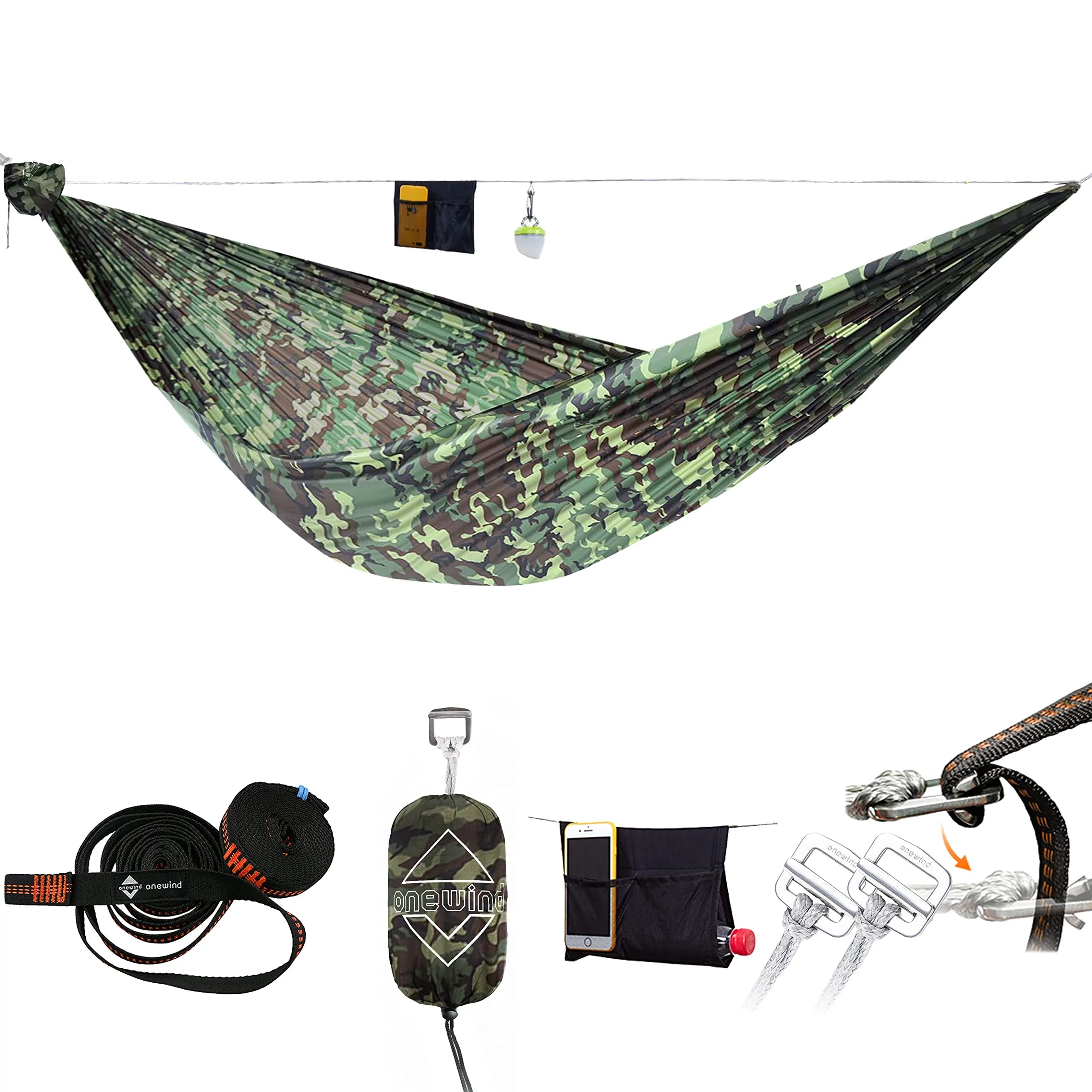
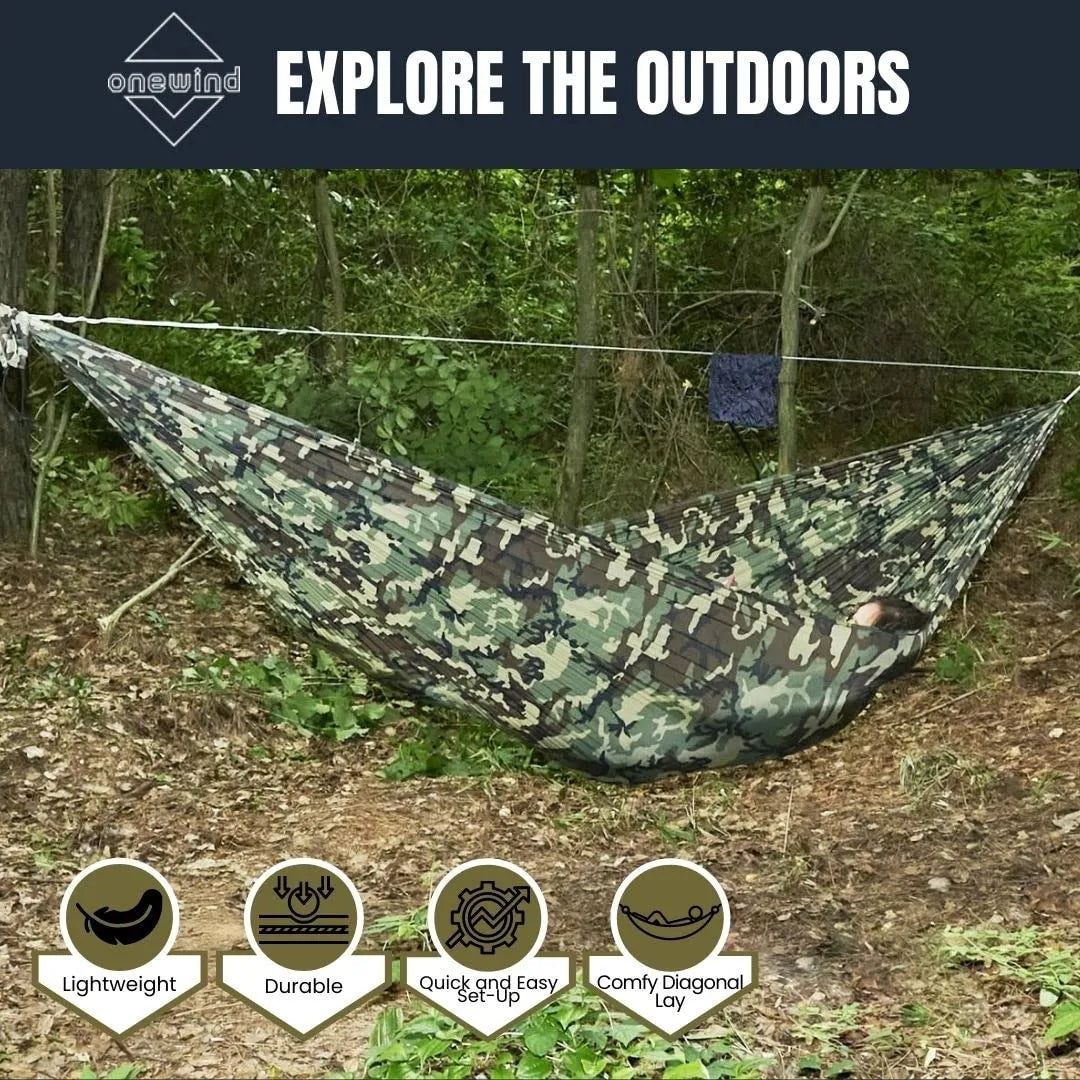
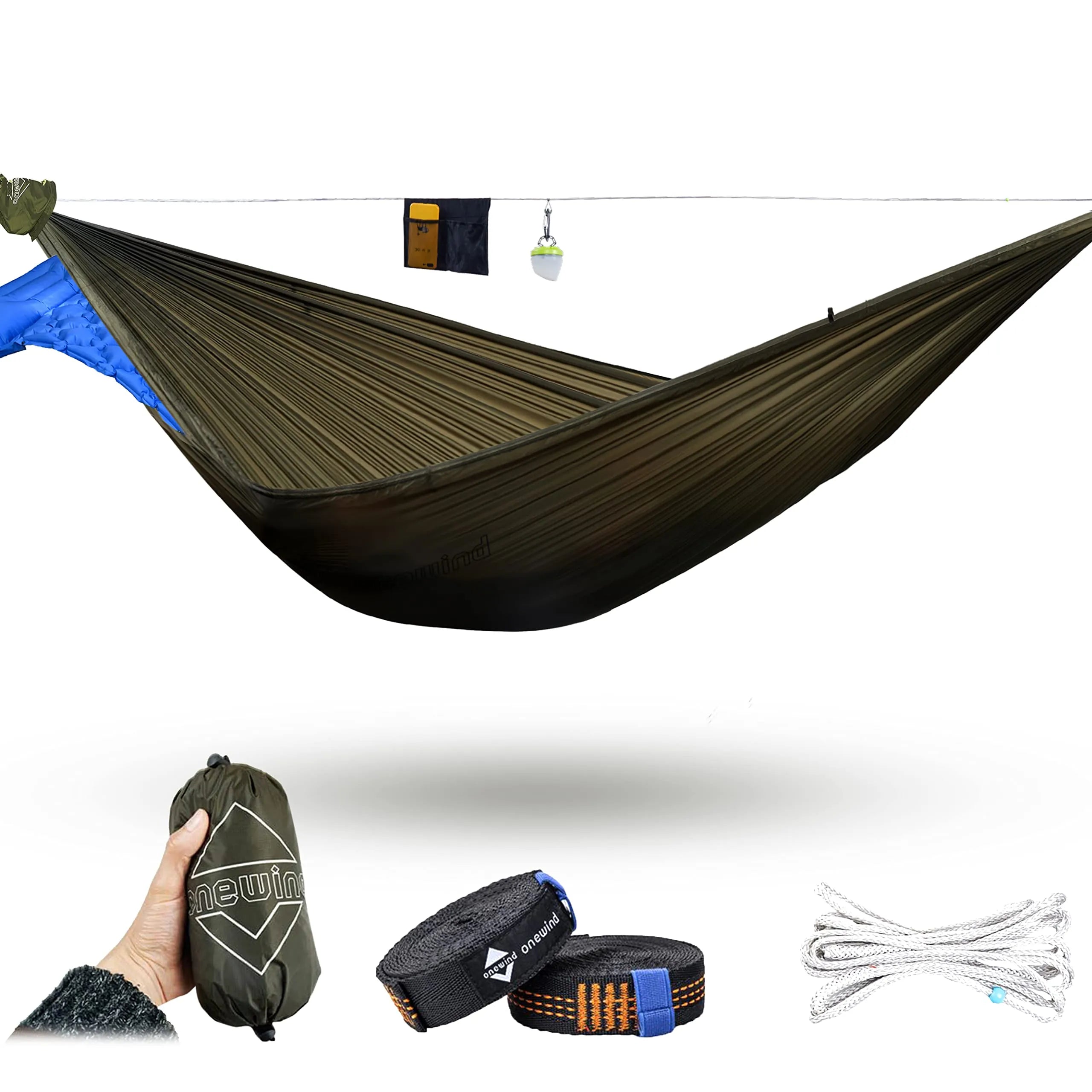
Il Onewind Amaca ultraleggera offre l’opzione in tessuto 20D che rappresenta il giusto equilibrio tra risparmio di peso e durata per un uso nel fine settimana.
⚠️ Evita l’errore di aggiornare solo il corpo dell’amaca. Un’amaca da 7 oz abbinata a catene daisy da 10 oz e a un telo da 24 oz crea un sistema da 41 oz. Un’amaca da 14 oz abbinata a imbracature whoopie da 2 oz e a un telo da 16 oz crea un sistema da 32 oz. L’amaca più pesante nel sistema ottimizzato pesa complessivamente meno.
Verdetto: Inizia con la sostituzione della sospensione (sling whoopie da 15-30 $, risparmia subito 4-8 oz), poi sostituisci il telo, quindi valuta un corpo amaca più leggero. Dai priorità al peso totale del sistema rispetto a qualsiasi singolo componente.
Scenario 3: Campeggiatore in tenda che sta valutando di passare all’amaca ma è preoccupato per il peso totale del sistema
Attualmente porti con te una tenda ultraleggera da 2,5 lb e ti chiedi se un sistema amaca ti farebbe risparmiare peso.
La risposta onesta dipende dalla stagione.
L'analisi del trekking di lunga percorrenza di The Hiking Life conferma questo schema: i sistemi amaca vincono il confronto di peso in estate perché non richiedono isolamento, ma perdono progressivamente con il calare delle temperature perché le amache richiedono isolamento sopra E sotto (sottocoperta termica), mentre le tende richiedono isolamento solo al di sotto (materassino da riposo).
I dati della community di r/ultralight di Reddit lo dimostrano chiaramente: un sistema amaca non è principalmente una scelta per risparmiare peso. È una scelta orientata al comfort e alla qualità del sonno.
- ✓ Vantaggi dell’amaca che giustificano il peso: nessun terreno da livellare, nessuna pietra sotto la schiena, migliore circolazione dell’aria in estate, sospesa sopra fango e pozzanghere e qualità del sonno nettamente migliore per chi dorme di lato.
❌ La penalità di peso è reale per l’uso in tre stagioni e in inverno. Se per te il peso nello zaino viene prima di tutto, sotto i 15 °C un tent vince.
Verdetto: Passa a un’amaca se dai priorità alla qualità del sonno rispetto al peso dello zaino. La penalizzazione di peso per l’uso nelle tre stagioni è di 0,5-1 lb, cosa che la maggior parte dei backpacker considera accettabile per un sonno notevolmente migliore. Non passare all’amaca aspettandoti un risparmio di peso sotto i 60°F.
Scenario 4: Appassionato di ultraleggeri che sceglie tra tessuto 7D e 20D per il rapporto tra peso e durata
Stai costruendo un nuovo sistema ultraleggero e il corpo dell’amaca è l’ultimo componente da scegliere.
La scelta del denari determina una differenza di peso di 4-10 oz e un notevole divario in termini di durata.
La comunità di Backpacking Light è divisa su questa decisione, ma il consenso tende a privilegiare il 20D come scelta predefinita per la maggior parte degli escursionisti ultraleggeri.
La differenza di peso tra 7D e 20D su un'amaca da 9 piedi è di circa 6-8 once.
Quel risparmio di 6-8 oz comporta un costo in termini di durata che si accumula nel tempo: il tessuto 7D sviluppa micro-lacerazioni a contatto con corteccia ruvida, punte dei rami e persino unghie durante il montaggio.
I test di GearandHome sulle amache sotto 1 lb confermano: i modelli più leggeri (7-10D) richiedono una gestione e una scelta degli alberi significativamente più attente rispetto alle loro controparti in 20D.
La matematica del costo per oncia: spendere 50-80 dollari in più per un’amaca 7D rispetto a un modello 20D fa risparmiare 6-8 once, con un costo di circa 8-12 dollari per oncia risparmiata. A questo rapporto, si risparmia più peso per dollaro sostituendo la sospensione (risparmia 6 once per 15 dollari) oppure aggiornando il proprio telo di protezione (risparmia 6 once per 60 dollari).
Verdetto: Scegli 20D come scelta predefinita per la maggior parte del backpacking ultraleggero. Passa a 7-10D solo se stai costruendo un sistema sotto le 2 libbre per un trekking estivo in stile thru-hiking E accetti i limiti di maneggevolezza. Il risparmio di peso da 20D a 7D è reale, ma costa di più per oncia rispetto ai risparmi ottenibili nella sospensione e nel telo.
{% include 'youtube', id: 'c_xQuBw3MP8' %}
Errori comuni che compromettono le configurazioni di amache ultraleggere
Gli stessi cinque errori di peso compaiono ripetutamente nei thread di costruzione di Hammock Forums, nelle recensioni dell’attrezzatura su r/ultralight e nelle discussioni di Backpacking Light.
Ognuno aggiunge once non necessarie a un sistema progettato per eliminarle.
Non si tratta di scegliere il marchio sbagliato. Si tratta di ottimizzare il componente sbagliato o di fraintendere dove si trovi effettivamente il peso nel sistema.
Errore 1: ottimizzare il peso del corpo dell’amaca ignorando il telo e l’isolamento
L’errore ultraleggero più comune è spendere 200 dollari per un corpo amaca da 7 oz e poi appenderlo con cinghie da 10 oz sotto un telo da 24 oz.
Questa combinazione pesa in totale 41 oz.
Un'amaca da 14 oz con cinghie whoopie da 2 oz sotto un telo in silnylon da 14 oz pesa 30 oz.
❌ L’amaca più pesante nel sistema ottimizzato fa risparmiare 11 oz rispetto all’amaca più leggera nel sistema non ottimizzato.
- ✓ La soluzione: ottimizzare sempre il peso totale del sistema, non il peso dei singoli componenti. Inizia dai componenti con la percentuale più alta (tarp e isolamento) prima di inseguire risparmi di pochi grammi sul corpo dell’amaca.
Errore 2: scegliere il denier del tessuto più leggero senza adattarlo al proprio caso d’uso
Confronto completo del peso del sistema amaca e recensione
I forum di Backpacking Light documentano casi ripetuti di proprietari di amache 7D che hanno strappato la loro amaca entro la prima stagione.
La modalità di guasto è prevedibile: corteccia ruvida sui pini, monconi di rami spezzati e appuntiti, oppure un’unghia che si impiglia durante la regolazione della posizione a mezzanotte.
❌ Un’amaca strappata al miglio 40 di un’escursione di 100 miglia non è una vittoria del risparmio di peso.
- ✓ La soluzione: abbina il denari alla tua effettiva frequenza d’uso e alle condizioni. Riserva i 7-10D per sistemi usati solo con clima caldo su sentieri ben mantenuti con alberi dalla corteccia liscia.
Errore 3: Utilizzare cinghie a catena a margherita su un sistema ultraleggero
La guida alle whoopie sling di Greenbelly conferma: le cinghie a margherita sono il più grande peso superfluo nella maggior parte delle configurazioni ultraleggere.
La comunità di r/ultralight definisce i daisy chain la “tassa sul peso per principianti” perché aggiungono 6-10 oz che le whoopie sling eliminano senza alcuna perdita funzionale.
Le imbracature Whoopie si ripiegano fino alle dimensioni di uno spazzolino da denti, pesano meno di 2 oz per coppia e offrono una regolazione infinita invece di posizioni di anello fisse.
❌ Un'amaca da 7 oz con catene a margherita da 10 oz pesa più di un'amaca da 14 oz con funi whoopie da 2 oz. La sospensione annulla il risparmio dell'amaca.
- ✓ La soluzione: passare alle cinghie whoopie. La curva di apprendimento richiede due sessioni di pratica nel tuo giardino. Il risparmio di peso dura per sempre.
Errore 4: confrontare il peso della sola amaca con il peso dell’intero sistema tenda
Questo errore compare in ogni forum di amache quando i nuovi arrivati pubblicano: "La mia amaca pesa 12 oz, la tenda del mio amico pesa 32 oz. Ho risparmiato 20 oz!"
Quel confronto è falso perché un’amaca da sola non è un sistema di riparo.
Una tenda include struttura, protezione dalle intemperie e isolamento dal suolo in un unico pacchetto.
Un sistema di amaca richiede quattro componenti separati per offrire un riparo equivalente: corpo dell’amaca, sospensione, telo e isolamento.
❌ Confrontare il corpo di un'amaca con un sistema tenda è come confrontare una giacca con un sistema di stratificazione completo.
- ✓ La soluzione: confronta sempre il peso totale del sistema. Un sistema amaca per tre stagioni (3-4 lb) è competitivo con una tenda per tre stagioni (2,5-3,5 lb), ma non vince in modo costante solo in termini di peso.
Errore 5: Saltare il calcolo del peso-capacità sui tessuti sotto i 10D
Le valutazioni del peso del produttore presuppongono tessuto nuovo in condizioni di laboratorio con carico statico distribuito uniformemente.
L’uso nel mondo reale introduce carichi dinamici (salire e scendere), carichi puntuali (gomiti, ginocchia), abrasione dovuta al contatto con la corteccia e degrado UV cumulativo nel corso di mesi di utilizzo.
Le note di test di GearandHome indicano che le amache da meno di 1 libbra hanno una capacità di carico inferiore, un aspetto rilevante per i campeggiatori oltre le 180 libbre o per chi condivide l’amaca con l’attrezzatura riposta accanto a sé.
❌ Un campeggiatore di 200 libbre in un'amaca 7D con portata nominale di 250 libbre dispone di un margine di soli 50 libbre prima di considerare i carichi dinamici e il degrado del tessuto. Secondo i resoconti del forum Backpacking Light, tale margine si riduce in modo misurabile con l’esposizione ai raggi UV e i cicli di stress ripetuti.
- ✓ La soluzione: sottrai 30-40 libbre dalle valutazioni del produttore per un margine di sicurezza reale. Se pesi oltre 180 libbre, scegli almeno 15D. Se pesi oltre 200 libbre, scegli almeno 20D indipendentemente dagli obiettivi di peso.
La lista di controllo per una decisione rapida
Usa questa lista di controllo prima di costruire o migliorare il tuo sistema amaca ultraleggero.
- ✓ Prima dell'acquisto: calcola il peso totale del tuo sistema considerando tutti e quattro i componenti, non solo il corpo dell'amaca.
- ✓ Prima di effettuare la sostituzione: controlla l’ordine di priorità del risparmio di peso. Prima la sostituzione delle sospensioni (15-30 $, consente di risparmiare 6 oz), poi il telo, quindi il corpo dell’amaca.
- ✓ Prima di confrontarlo con le tende: usa il peso totale del sistema, inclusi sospensione, tarp e isolamento. Un'amaca da sola non è un riparo.
Se stai ancora scegliendo la famiglia di ripari più grande, confronta i compromessi di peso con il modello completo collezione di amache ultraleggere invece di giudicare un singolo corpo dell’amaca in isolamento.
Per una decisione più ampia sulla prima tenda-rifugio, abbina questo criterio di peso con il nostro Guida al rifugio: amaca vs tenda prima di impegnarti in un kit completo.
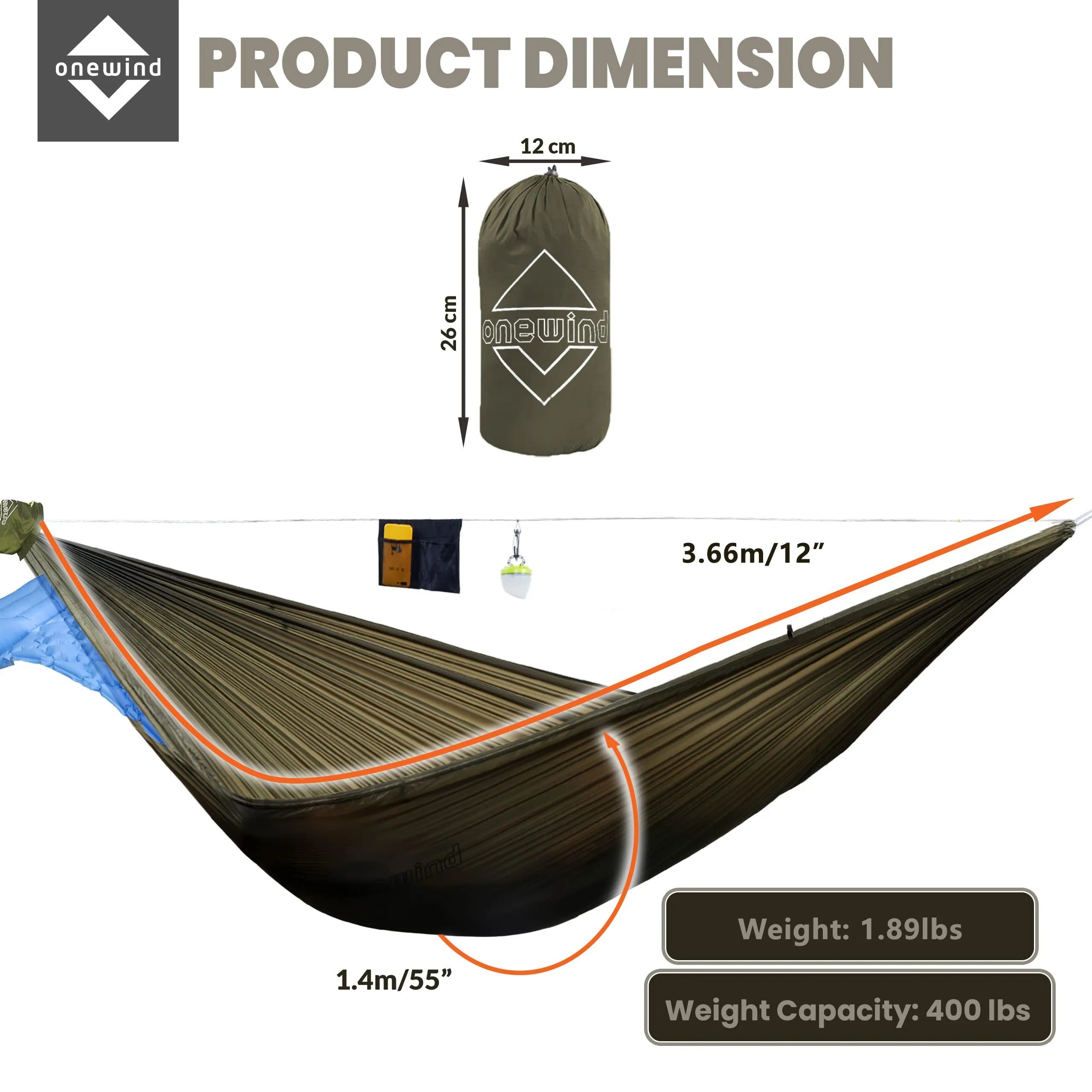
Il Amaca da campeggio ultraleggera Onewind fornisce l'opzione in tessuto 20D in una lunghezza di 11 piedi che consente una corretta posizione diagonale, il punto di partenza per un sistema a tre stagioni sotto le 4 libbre.
⚠️ Un’ultima regola della community: il sistema più leggero non è il sistema migliore. Il sistema migliore è quello in cui ogni componente corrisponde al tuo obiettivo di peso, al tuo caso d’uso e alle tue esigenze di durata, senza un solo anello debole.

Shop the recommended setup
Shop Now →