
La mayoría de los consejos para comprar hamacas empieza con la pregunta equivocada.
Pregunta cuál hamaca es la mejor.
Una mejor pregunta es si tu problema actual de sueño es realmente un problema de forma de hamaca.
Ahí es donde una hamaca puente se gana su lugar.
No se aligera automáticamente.
No es automáticamente más sencillo.
No es la primera hamaca adecuada para todos los campistas.
Una hamaca de puente existe porque algunos campistas quieren una superficie para dormir más plana y similar a una cama de la que ofrece una hamaca de extremos recogidos.
El comercio tiene dos caras.
Obtienes una estructura con barras separadoras, una superficie de descanso más ancha, mayor facilidad para dormir de lado y menos presión en los hombros.
También obtienes más piezas, una huella de lona más amplia, preguntas sobre aislamiento específicas para hamacas puente y una configuración que merece práctica.
Elegiría una hamaca tipo puente solo cuando el problema de comodidad fuera lo suficientemente real como para justificar esas responsabilidades.
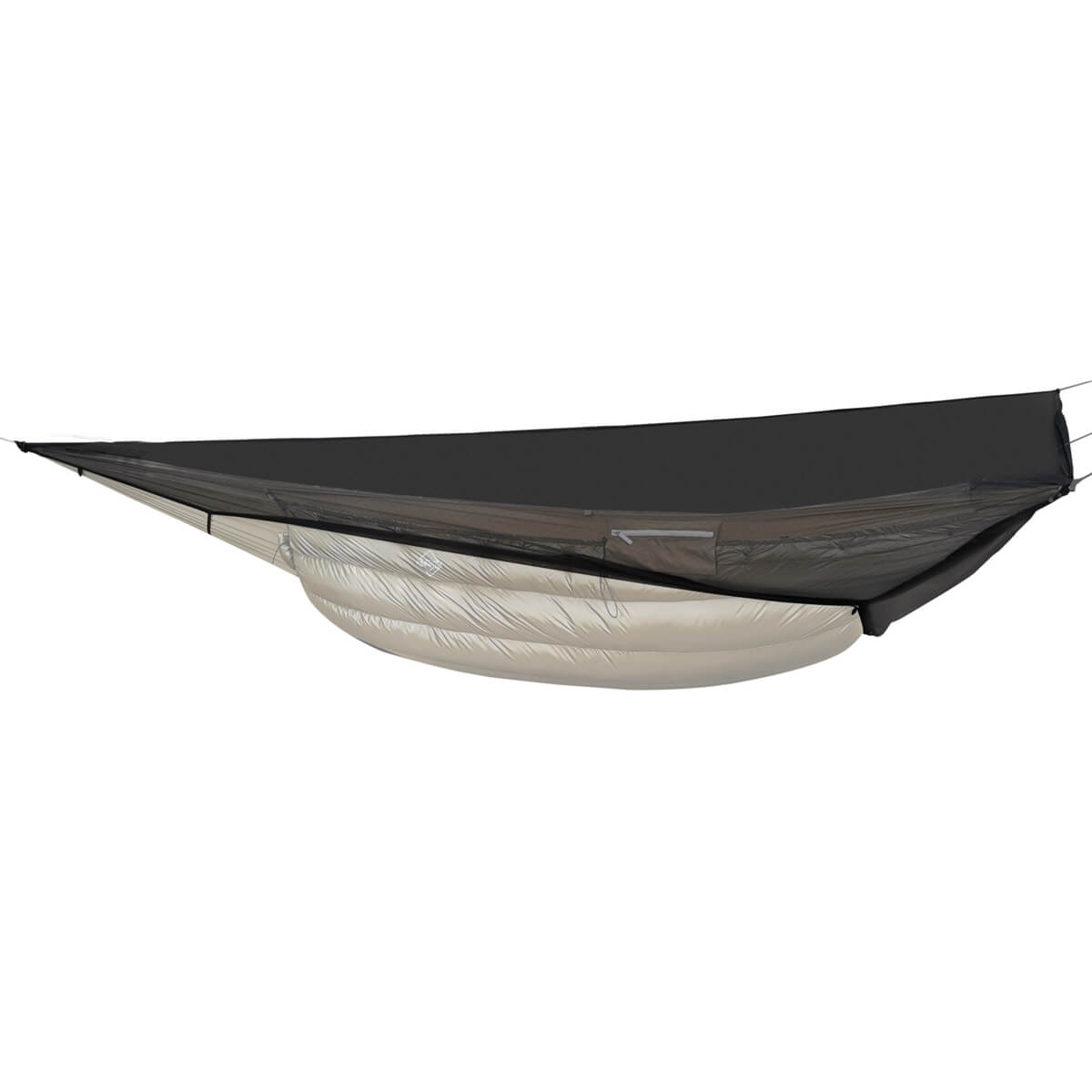
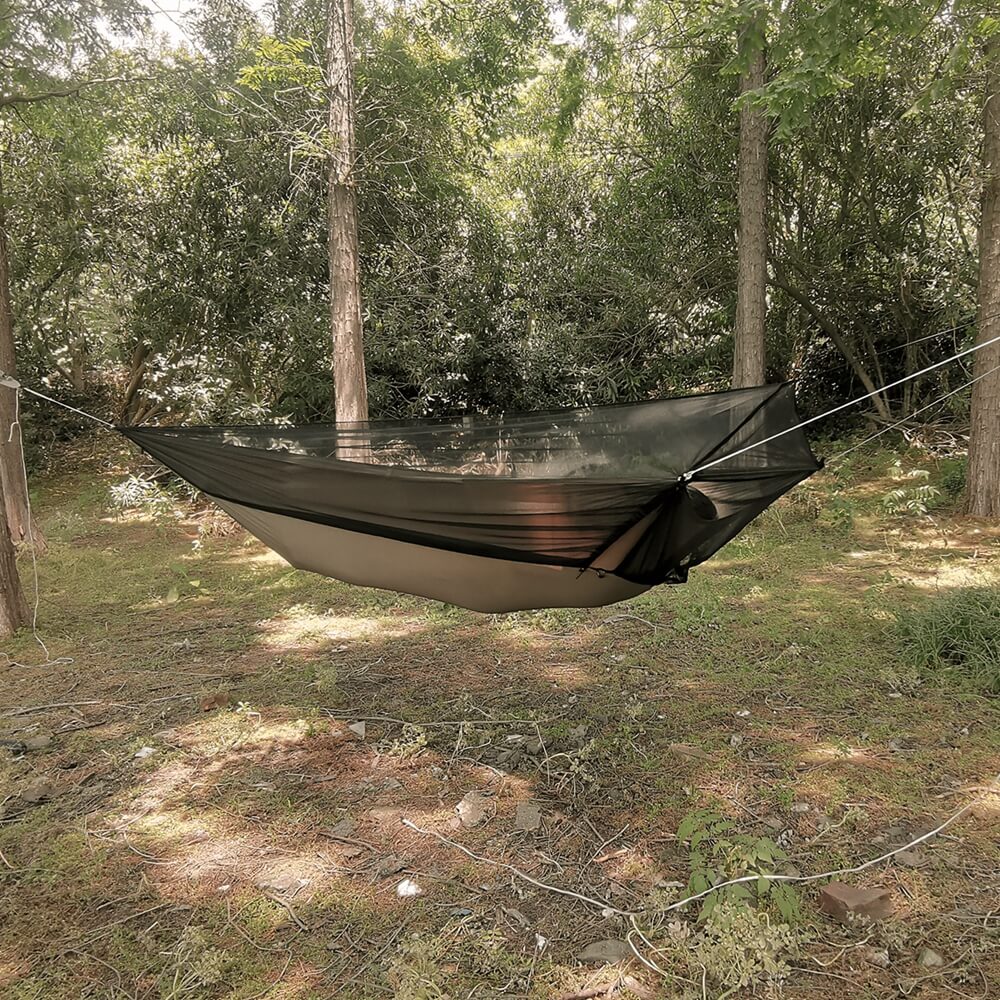
Según la página del producto de la hamaca Crystal Bridge de Onewind, la Crystal utiliza una cama de nailon monofilamento 20D, malla desmontable antiinsectos de 1600 orificios/pulgada², barras separadoras de aluminio 7075, una longitud de cuerpo de 82 pulgadas, una barra para la cabeza de 42 pulgadas y una barra para los pies de 29 pulgadas.
Esos números explican mejor la categoría que cualquier eslogan.
El extremo ancho de la cabeza y el extremo estrecho de los pies están ahí para cambiar la forma en que descansa tu cuerpo.
Esa es la razón principal para considerar el diseño.
Mapa de iconos para esta guía: PASS significa comprar con confianza, CAUTION significa probar primero y WAIT significa que una hamaca más sencilla aún puede ser mejor.
Lo que aprenderás
Aprenderás por qué las hamacas de puente son diferentes de las hamacas de extremo recogido.
Aprenderás cuándo importa la forma de una base más plana.
Aprenderás por qué las hamacas tipo puente pueden sentirse diferentes al entrar y al moverse.
Aprenderás cómo las redes mosquiteras, las lonas y los aislantes inferiores cambian la decisión de compra.
Aprenderá cuándo la Hamaca Crystal Bridge es una buena opción.
También aprenderás cuándo le diría a un comprador que espere.
Esa última respuesta es la que más importa.
Una guía útil sobre el porqué no debería empujar a todos los lectores hacia el mismo producto.
Debe separar a los compradores con intención real de los navegantes curiosos.
Respuesta rápida

Elige una hamaca de puente cuando la postura al dormir sea el factor limitante.
Elige una hamaca de extremo recogido cuando la simplicidad sea el factor limitante.
La colección de hamacas puente de Onewind se centra en la comodidad de descanso en posición horizontal y en el apoyo para quienes duermen de lado o boca arriba.
Esa es la promesa correcta.
La promesa se debilita cuando se vende como universal.
Las hamacas tipo puente son las mejores para los campistas que pueden identificar el problema de sueño que desean resolver.
Son menos convincentes para los campistas que ya duermen bien en una hamaca de extremo recogido.
Usa este artículo como una prueba de ajuste.
No lo utilices como una lista de exageraciones.
La razón principal: la forma del sueño
Reseña de mejora de hamaca puente

La razón más fuerte para elegir una hamaca de puente no es la novedad.
Es la posición del cuerpo.
Una hamaca de extremo recogido se estrecha hacia ambos extremos.
Una colocación en diagonal puede aplanar esa curva.
Muchos campistas duermen bien de esa manera.
Algunos no.
Esos campistas suelen describir compresión en los hombros, presión en las caderas, tensión en las rodillas o la sensación de que la hamaca sigue tirando de ellos de vuelta a una sola posición.
Una hamaca puente responde a eso con estructura.
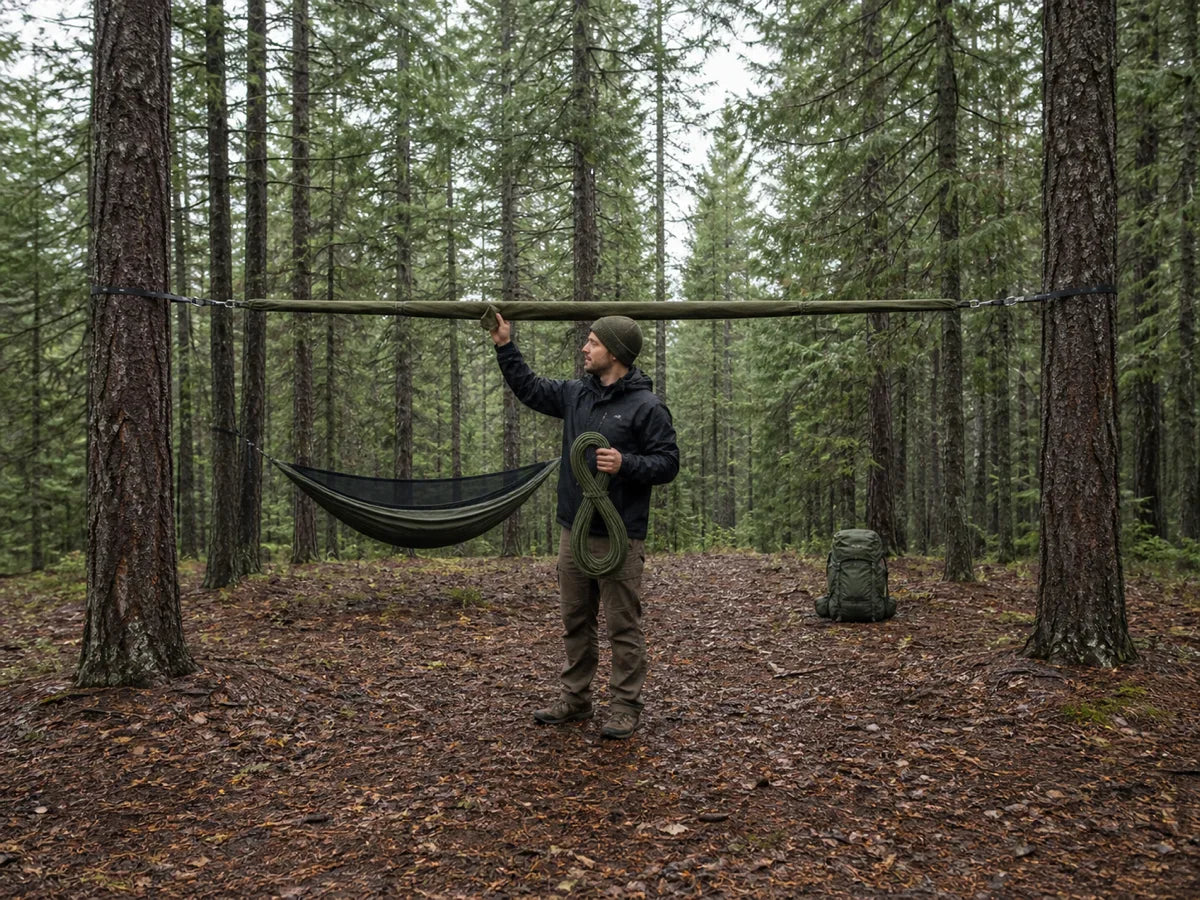
Las barras separadoras mantienen la cama abierta.
La plataforma de tela se vuelve más definida.
El cuerpo puede tumbarse más plano.
Eso no lo convierte en una solución médica.
Lo convierte en una solución geométrica.
El detalle medido en la hamaca Crystal Bridge es útil aquí.
Según la página del producto, la anchura en la cabecera es de 42 pulgadas y la anchura en los pies es de 29 pulgadas.
Esas dimensiones muestran cómo la hamaca crea amplitud donde muchos durmientes más la necesitan.
Si tu problema es el estrechamiento de hombros, ese ancho importa.
Si tu problema es simplemente aprender a colgar una hamaca, ese ancho puede no ser la primera solución.
Beneficio 1: Mejor potencial para dormir de lado
Las personas que duermen de lado son la audiencia más fácil de entender.
A menudo quieren una línea de cadera más plana.
Quieren espacio para girar.
Quieren que el borde de la hamaca se mantenga alejado de la cara y los hombros.
Una hamaca de estilo puente les proporciona un mejor punto de partida.
No garantiza un sueño lateral perfecto.
El tamaño del cuerpo, la altura de suspensión, la geometría de la barra separadora, la tensión de la tela y la elección de la almohada siguen siendo importantes.
La prueba es práctica.
¿Puedes girarte de lado sin luchar contra la hamaca?
¿Puede tu hombrera descansar sin que se apriete la tela?
¿Pueden doblarse tus rodillas de forma natural?
¿Puedes mantener esa posición durante más de unos pocos minutos?
Si es así, una hamaca de puente tiene una ventaja real.
Si no, el diseño puede que aún no se adapte a tu cuerpo.
Probaría a dormir de lado antes de llamar a cualquier hamaca puente la mejor hamaca puente para ti.
Por eso la adecuación del producto supera el bombo de la categoría.
Beneficio 2: Forma de cama más definida
Una hamaca de puente se siente más como una cama suspendida que como una lona de extremo fruncido.
Esa diferencia también ayuda a quienes duermen boca arriba.
A algunos que duermen boca arriba les gusta la sensación de capullo de las hamacas de extremos recogidos.
Otros prefieren menos curvatura y un soporte más predecible.
Las hamacas de puente sirven al segundo grupo.
La hamaca Crystal Bridge utiliza barras separadoras de aluminio 7075.
El sistema de barras crea la forma de la cama antes de que te acuestes.
Eso es diferente de una hamaca de extremos recogidos, donde tu posición diagonal crea gran parte de la planitud.
La ventaja es la repetibilidad.
Puedes montar la hamaca puente y obtener una forma de cama más definida en cada ocasión.
La responsabilidad es el control de configuración.
Las barras separadoras deben instalarse correctamente.
La suspensión debe estar equilibrada.
La entrada y la salida necesitan práctica.
El diseño aporta estructura.
El usuario todavía tiene que gestionarlo.
Beneficio 3: Protección modular contra insectos

La protección contra insectos no es un detalle menor en el campamento en hamaca.
Un mosquito puede arruinar una composición plana perfecta.
Los jejenes pueden hacer que un campamento sea inutilizable sin una malla adecuada.
La hamaca Crystal Bridge cuenta con una mosquitera desmontable de malla fina antiinsectos con 1600 orificios/pulg2, según la página de producto de Onewind.
Eso lo hace útil para acampar en distintas estaciones.
Utilice la red en bosques húmedos de verano.
Retírelo cuando el aire esté fresco y los insectos hayan desaparecido.
Esto es mejor que un recinto permanente para campistas que quieren noches al aire libre.
También es más limpio que forzar una malla antinsectos aleatoria alrededor de una forma de puente.
La geometría del puente puede complicar la protección separada contra insectos.
La red necesita despejar el perfil de la barra separadora.
Debe cerrarse con cremallera sin atascarse.
Debe mantenerse alejado de tu cara y tus brazos.
Necesita ventilarse.
Por eso, una hamaca tipo puente con protección contra insectos a juego puede ser más útil que un complemento genérico.
Responsabilidad 1: Práctica de estabilidad
Las hamacas de puente pueden resultar poco familiares durante la primera instalación.
Eso no significa que sean malos.
Significa que el patrón de movimiento es diferente.
Las discusiones sobre hamacas puente en Reddit suelen girar en torno al mismo punto de fricción: las primeras veces pueden resultar inestables hasta que el usuario aprende a sentarse, centrar el peso y girar.
Ese informe de la comunidad es útil porque transforma el miedo en una prueba de campo.
No juzgues una hamaca de puente solo por la primera sentada incómoda.
No lo lleves directamente a un campamento duro tampoco.
Prueba de baja intensidad.
Siéntate en el centro.
Balancea ambas piernas lentamente hacia dentro.
Recuéstate.
Gírese de lado.
Alcance su equipo.
Salir sin agarrar la mosquitera.
Repita hasta que el movimiento se sienta aburrido.
Ese es el punto de referencia.
Si la hamaca todavía se siente inestable después de practicar, elige la configuración más estable o reconsidera la categoría.
Responsabilidad 2: Ancho de la lona

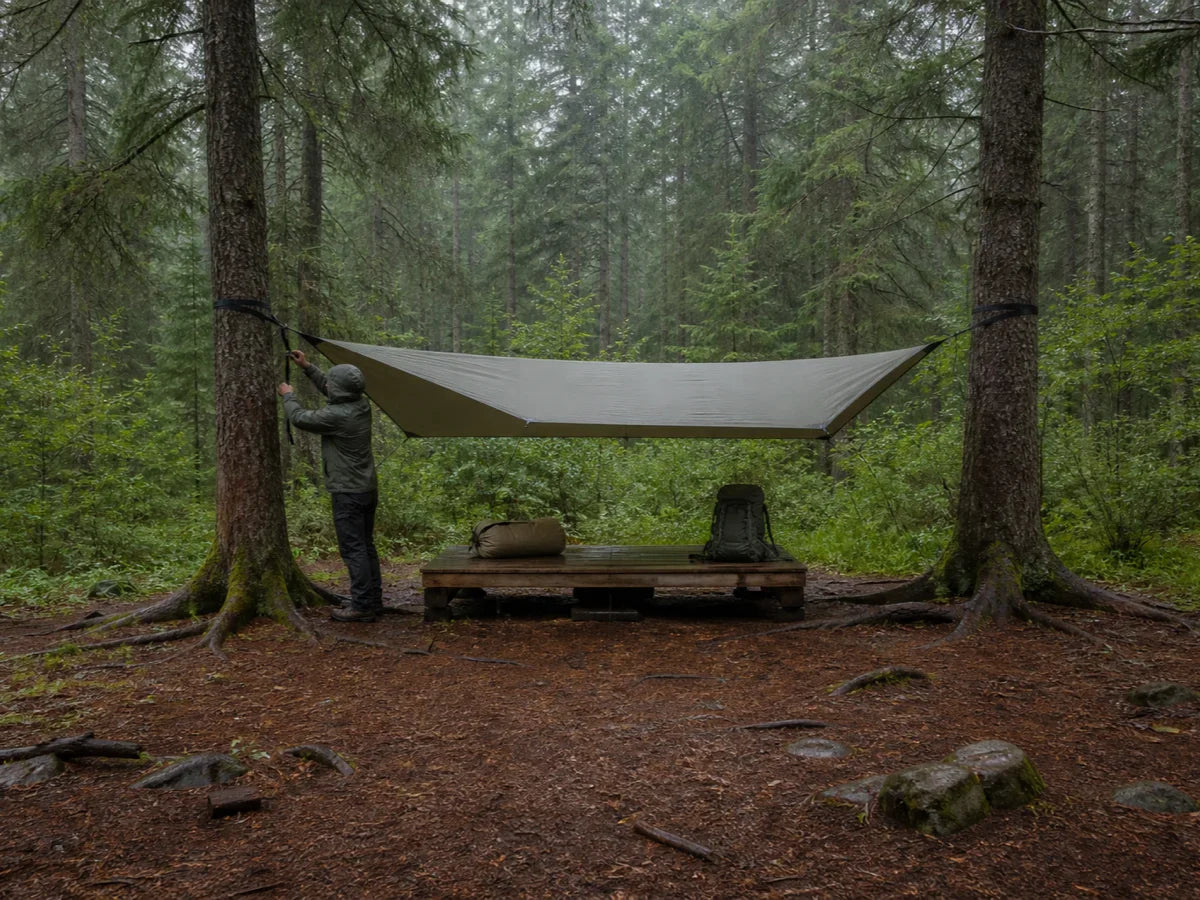
Las hamacas puente cambian tu huella contra la lluvia.
Las barras separadoras crean amplitud.
El ancho cambia la cobertura de la lona.
Una lona que funcione sobre una hamaca de extremo recogido puede dejar demasiado expuestos los extremos de las barras de una hamaca de puente.
Según la página del producto Onewind Tarp for Bridge Hammock, la cobertura para hamacas tipo puente debe tener en cuenta ese perfil más ancho.
Esa es la razón práctica por la que existe una lona de puente.
Usa esta lona.
Presentamos la hamaca puente.
Cárgalo con el peso corporal.
Monta la lona.
Comprueba la cobertura del extremo del manillar.
Baja un lado para el viento.
Compruebe la entrada.
Simule la lluvia lateral con una manguera o una comprobación visual conservadora.
Si los extremos de las barras quedan cerca de la línea de goteo, solucione la cobertura de la lona antes de la primera tormenta.
La comodidad de estar acostado no sirve cuando el refugio falla.
Responsabilidad 3: Aislamiento inferior

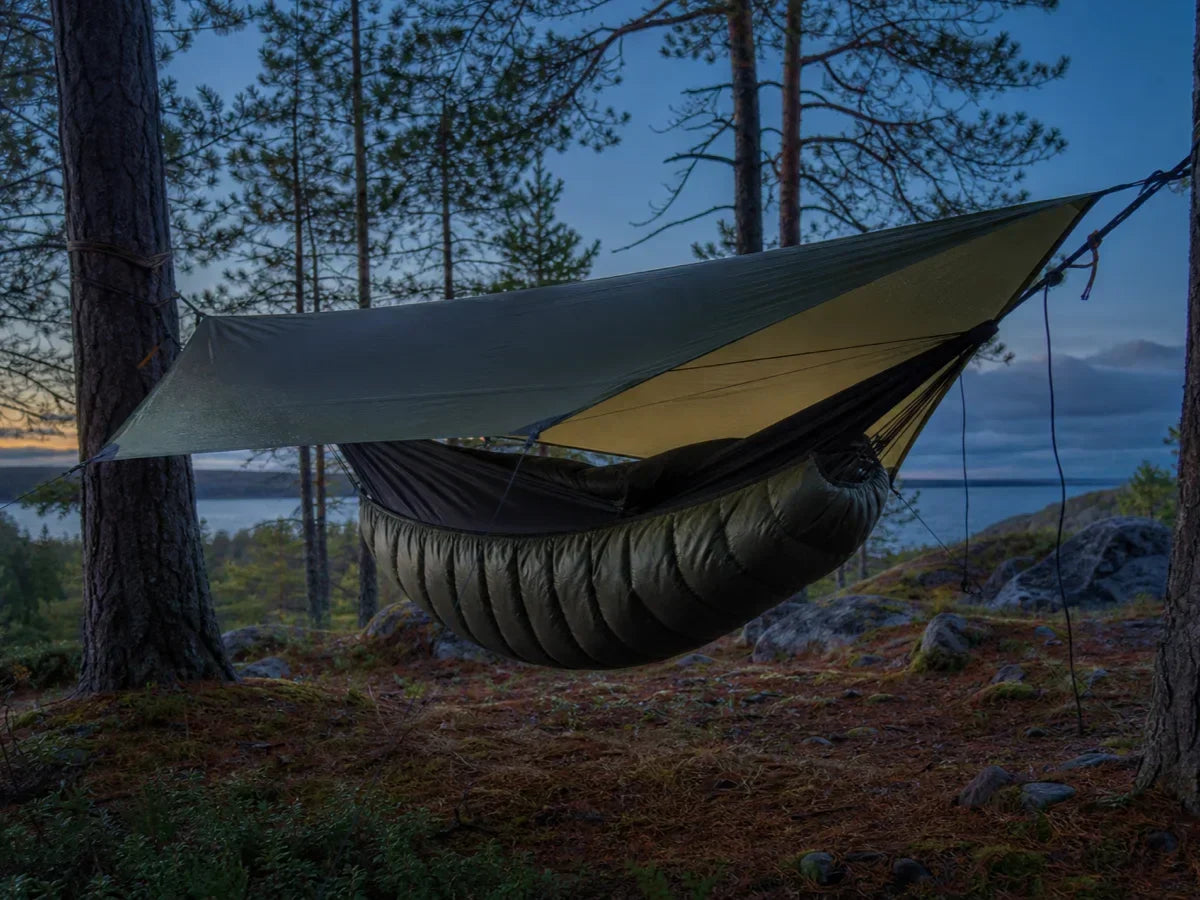
Una hamaca de puente puede sentirse como una cama.
Todavía está suspendido en el aire.
El aire frío sigue moviéndose por debajo.
Tu cuerpo sigue comprimiendo el aislamiento si dependes solo de un saco de dormir debajo de ti.
Según la página del producto Onewind Bridge Hammock Underquilt, el aislamiento inferior específico para hamacas puente forma parte del sistema para su uso en climas fríos.
Ese punto importa porque muchos compradores de puente por primera vez se centran solo en el cuerpo de la hamaca.
Olvidan la parte inferior del sistema de descanso.
La prueba del cubrecolchón debe hacerse con tu cuerpo dentro de la hamaca.
Túmbate boca arriba.
Gírate de lado.
Pide a alguien que compruebe el sello lateral.
Sienta los canales fríos cerca del hombro y la cadera.
Ajusta antes del viaje.
No diagnostique cada zona fría como una clasificación de temperatura insuficiente.
A veces, el problema es el ajuste.
Prueba de ajuste de la hamaca Crystal Bridge
El Hamaca Puente de Cristal se ajusta a este punto de decisión.
El producto no es la respuesta a todas las preguntas sobre hamacas.
Es una respuesta a un perfil de ajuste específico.
Elígelo cuando quieras una posición plana de hamaca puente y protección modular contra insectos.
Elija la versión estable de 4 correas cuando su primera prioridad sea la comodidad controlada.
Elige la versión UL de 2 correas cuando el peso de la mochila importe y estés dispuesto a practicar.
Espere si aún no ha resuelto las necesidades de lona o aislamiento para los viajes que realmente realiza.
¿Por qué no comprar simplemente la hamaca más barata?
Reseña del aislante inferior y la lona para hamaca Crystal Bridge de Onewind
Las decisiones sobre hamacas baratas solo funcionan cuando el riesgo es bajo.
Una siesta en el patio trasero tiene bajo riesgo.
Una noche cálida de acampada en coche tiene un riesgo moderado.
Un viaje en temporada de entretiempo húmeda tiene mayor riesgo.
La hamaca más barata puede ser suficiente para probar si disfrutas colgando por encima del suelo.
Es un mal punto de referencia para juzgar la comodidad al dormir de lado, la cobertura del toldo o el aislamiento en clima frío.
Usa la opción más barata cuando el objetivo sea la curiosidad.
Utiliza una hamaca de puente cuando el objetivo sea resolver un problema medido de forma al dormir.
Esa diferencia mantiene honesta la decisión de compra.
Escenario 1: Durmiente de lado con presión en el hombro
Tu hamaca de extremo recogido funciona para descansar.
Falla cuando intentas dormir de lado.
Tu hombro se siente atrapado.
Tu cadera gira.
Te despiertas luchando contra la tela.
Este es el caso de uso más limpio de una hamaca de puente.
El problema no es la habilidad general para acampar.
El problema es la forma de dormir.
Una hamaca de puente merece la pena probarla porque su estructura aborda directamente el punto de fallo.
Empezaría con una configuración estable en lugar de buscar primero la versión más ligera.
La comodidad es la razón de la compra.
La estabilidad te ayuda a evaluar la comodidad sin luchar contra la curva de aprendizaje.
Veredicto: Pase para hamaca de puente, con la primera prueba más segura de 4 correas estables.
Escenario 2: Durmiente boca arriba que quiere la sensación de una cama de campamento
No necesitas dormir de lado.
Quieres una posición para dormir boca arriba más plana.
No te gusta la sensación de capullo de una hamaca de extremo fruncido.
Este es otro buen caso de hamaca tipo puente.
La categoría te da una forma de cama más definida.
Las barras separadoras hacen parte del trabajo de dar forma por ti.
La precaución es la expectativa.
Una hamaca de puente no es una cama de campaña rígida.
Todavía se mueve.
Sigue bloqueándose.
Todavía necesita un lugar adecuado y una suspensión.
Si quieres sentir una cama al aire libre sin dormir en el suelo, las hamacas puente merecen una prueba.
Veredicto: Apruebe si la forma similar a una cama importa más que la menor cantidad posible de piezas.
Escenario 3: Mochilero eligiendo entre 4 lb y 2,6 lb
Quieres una disposición plana.
También cuenta el peso.
Los números de Crystal hacen que esta decisión sea concreta.
La configuración Stable figura con 4 lb.
La configuración de UL figura en 2.6 lb.
Esa diferencia de 1,4 lb es significativa en una mochila.
Es menos útil en un campamento al que se puede llegar en coche.
No elijas la versión más ligera solo porque se ve mejor en una tabla.
Elígelo porque el viaje recompensa el ahorro y puedes montarlo con confianza.
Haría una prueba completa en el patio trasero antes de llevar la versión UL de 2 correas en una ruta de muchos kilómetros.
Esa prueba debe incluir la entrada, dormir de lado, la cobertura de la lona, el ajuste del subedredón y el embalaje.
Veredicto: PRECAUCIÓN para excursionistas con mochila, con UL de 2 correas solo después de practicar el montaje.
Escenario 4: Campista de verano con muchos insectos
Tus viajes se realizan cerca del agua, en bosques húmedos o durante la temporada de mosquitos.
La presión de los insectos no es teórica.
Es la razón por la que duermes o no duermes.
Una hamaca de puente con protección contra insectos desmontable es útil aquí.
La malla antiinsectos de 1600 orificios/pulg² desmontable de Crystal ofrece dos modos.
El modo de red maneja trayectos defectuosos.
Los modos abiertos hacen que los viajes sean más frescos con menos insectos.
La prueba es acceso con cremallera.
¿Puedes entrar sin arrastrar la red?
¿Puedes darle la vuelta sin presionar la malla contra tu piel?
¿Se puede ventilar la hamaca?
Si es así, la mosquitera es un motivo real de compra.
Veredicto: Pasa cuando los insectos son comunes y la flexibilidad al aire libre sigue siendo importante.
Escenario 5: Campista para lluvia o clima frío
Quieres una hamaca tipo puente para condiciones meteorológicas reales.
Esto es posible.
No es solo para hamacas.
La lona debe cubrir el perfil de la barra separadora.
El underquilt debe coincidir con la cama de puente.
El orden de instalación debe mantener el aislamiento seco.
El Toldo para hamaca puente y Aislante inferior para hamaca puente son las piezas del sistema que hay que evaluar antes de viajes con humedad o fríos.
No compre solo la lona de la hamaca y espere que el resto se solucione después.
La lluvia y el frío ponen rápidamente en evidencia las fallas del sistema.
Veredicto: PRECAUCIÓN hasta que la cobertura de la lona y el sellado del underquilt superen una prueba de campo.
Escenario 6: Principiante minimalista
Quieres menos piezas.
Quieres una menor complejidad de configuración.
No estás seguro de si acampar en hamaca es para ti.
No tiene un problema específico de dormir de lado ni de presión en el hombro.
Este es un mal ajuste para una hamaca de puente.
La opción más sencilla es una hamaca de extremo recogido.
Según la página del producto de la hamaca de camping Onewind de 11 pies, un modelo de extremo recogido sigue siendo la opción más limpia de Onewind para el camping básico en hamaca.
Ese método te permite aprender a seleccionar árboles, la altura de las correas, el montaje de la lona y los conceptos básicos del aislamiento con menos componentes.
Después de eso, puedes decidir si la fotografía en plano vale la pena la mejora.
Veredicto: Espera con la hamaca de puente y empieza con una configuración de extremos fruncidos más sencilla.
Prueba de campo 1: La prueba de forma de sueño
Esta prueba proporciona mejor evidencia que leer diez opiniones más.
Coloca la hamaca baja.
Acuéstate en tu posición real para dormir.
Permanezca allí durante al menos diez minutos.
Gira una vez.
Alcanza una vez.
Salir una vez.
Si la forma resuelve el problema, lo sabrás.
Si no lo hace, es posible que la categoría no sea su respuesta.
Prueba de campo 2: La prueba de preparación del sistema
Las hamacas puente funcionan mejor cuando se tratan como sistemas.
El cuerpo de la hamaca es solo una parte.
La lona puente protege el perfil más ancho.
El edredón inferior tipo puente se encarga del calor en la parte inferior.
La mosquitera atrapa insectos.
La suspensión controla la estabilidad.
La comodidad medida proviene de todo el conjunto, no solo de la tela de la cama.
Por eso no publicaría un veredicto personal hasta que esta prueba de campo se complete.
Qué leer a continuación
Este artículo responde por qué.
El artículo de configuración debe responder al cómo.
El artículo comparativo debe responder frente a.
El artículo de la mosquitera debe responder a la protección contra insectos.
El artículo sobre la lona y el saco aislante inferior debería abordar la preparación para las condiciones meteorológicas.
Esa separación importa para los lectores y los motores de búsqueda.
Cada página debe resolver una tarea.
Lista de verificación final de compra
Elige una hamaca de puente cuando la razón sea específica.
Elígelo para que quede más plano.
Elígelo por su potencial para dormir de lado.
Elígelo para reducir la presión en los hombros.
Elígelo para una protección modular contra insectos cuando los insectos importan.
Elígelo cuando estés listo para probar todo el sistema.
No lo elijas porque suena como la opción avanzada.
El equipo avanzado solo es mejor cuando resuelve el problema adecuado.
Para el campista adecuado, una hamaca puente puede transformar el campamento en hamaca de tolerable a realmente reparador.
Para el campista equivocado, añade piezas antes de añadir valor.
Ese límite es la verdadera respuesta a por qué elegir una hamaca de puente.