
Most hammock buying advice starts with the wrong question.
It asks which hammock is best.
A better question is whether your current sleep problem is actually a hammock-shape problem.
That is where a bridge hammock earns its place.
It is not automatically lighter.
It is not automatically simpler.
It is not the right first hammock for every camper.
A bridge hammock exists because some campers want a flatter, more bed-like sleep platform than a gathered-end hammock gives them.
The trade has two sides.
You get spreader-bar structure, a wider sleep bed, easier side-sleeping potential, and less shoulder squeeze.
You also get more parts, a wider tarp footprint, bridge-specific insulation questions, and a setup that deserves practice.
I would choose a bridge hammock only when the comfort problem is real enough to justify those responsibilities.
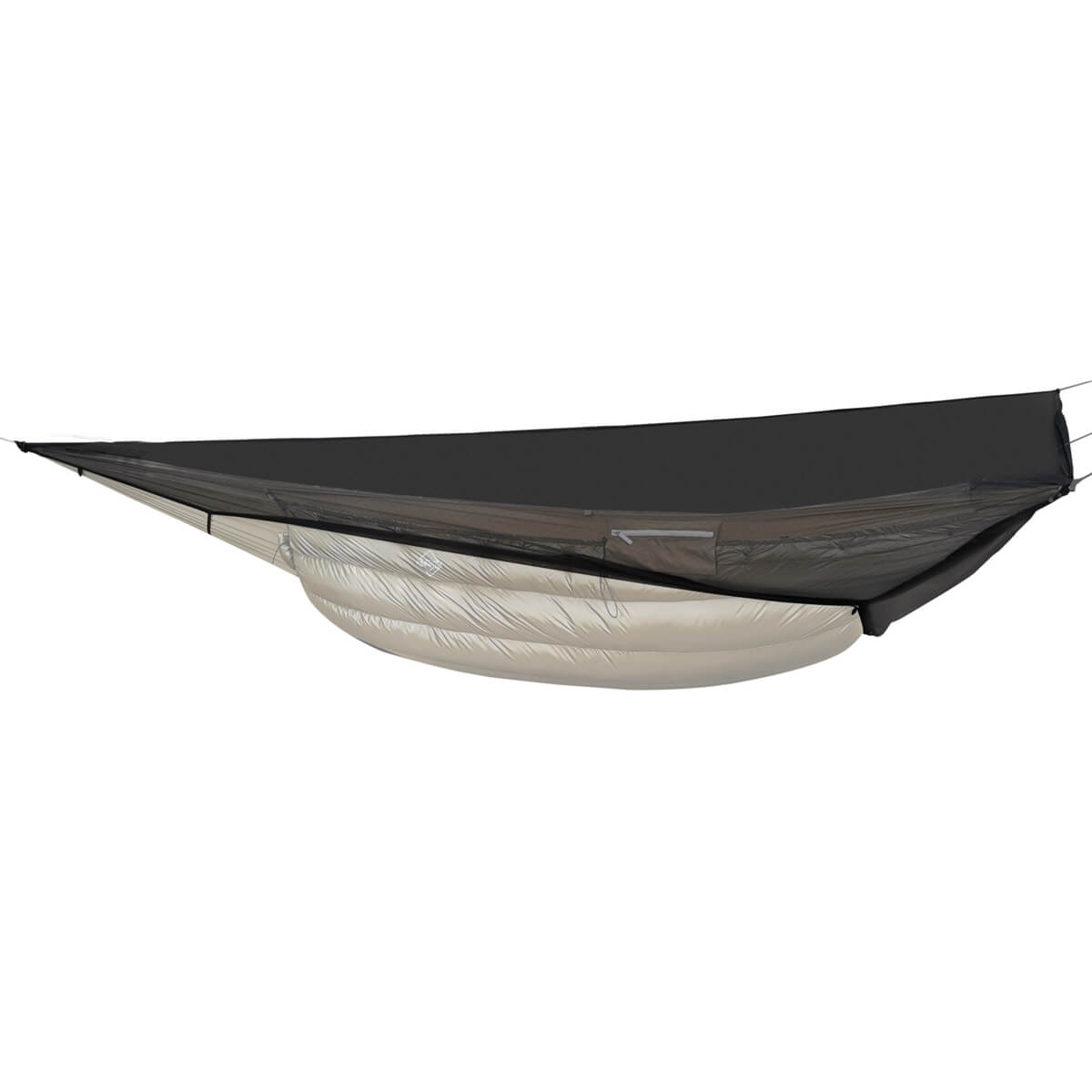
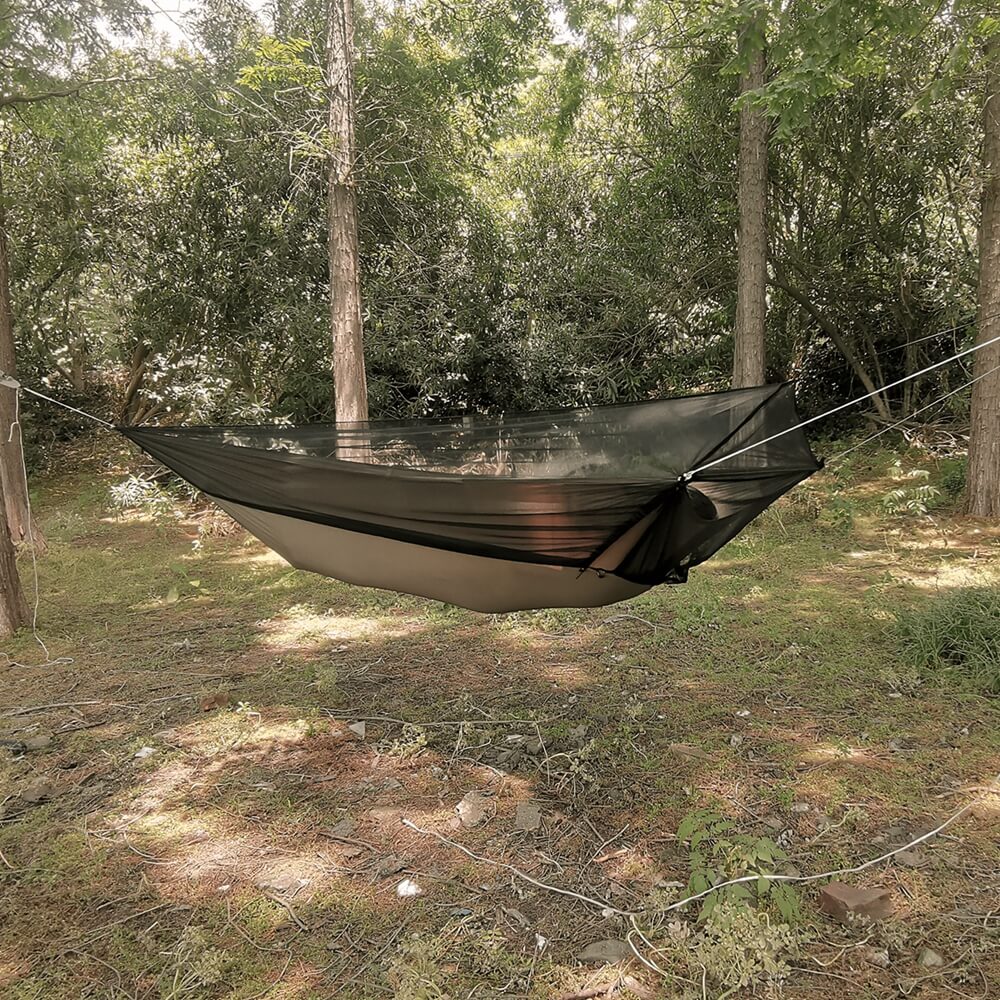
According to the Onewind Crystal Bridge Hammock product page, the Crystal uses a 20D monofilament nylon bed, detachable 1600 holes/in2 no-see-um mesh, 7075 aluminum spread bars, an 82 in body length, a 42 in head bar, and a 29 in foot bar.
Those numbers explain the category better than any slogan.
The wide head end and tapered foot end are there to change how your body rests.
That is the whole reason to consider the design.
Icon map for this guide: PASS means buy confidently, CAUTION means test first, and WAIT means a simpler hammock may still be better.
What You'll Learn
You will learn why bridge hammocks are different from gathered-end hammocks.
You will learn when the flatter bed shape matters.
You will learn why bridge hammocks can feel different during entry and movement.
You will learn how bug nets, tarps, and underquilts change the buying decision.
You will learn when the Crystal Bridge Hammock is a good fit.
You will also learn when I would tell a buyer to wait.
That last answer matters most.
A useful why guide should not push every reader toward the same product.
It should separate real-fit buyers from curious browsers.
Quick Answer

Choose a bridge hammock when sleep shape is the bottleneck.
Choose a gathered-end hammock when simplicity is the bottleneck.
The Onewind Bridge Hammock collection frames bridge hammocks around flat-lay comfort and side/back sleeper support.
That is the correct promise.
The promise becomes weak when it is sold as universal.
Bridge hammocks are best for campers who can name the sleep problem they want to solve.
They are less convincing for campers who already sleep well in a gathered-end hammock.
Use this article as a fit test.
Do not use it as a hype list.
The Core Reason: Sleep Shape
Bridge hammock upgrade review

The strongest reason to choose a bridge hammock is not novelty.
It is body position.
A gathered-end hammock narrows toward both ends.
A diagonal lay can flatten that curve.
Many campers sleep well that way.
Some do not.
Those campers often describe shoulder squeeze, hip pressure, knee tension, or the feeling that the hammock keeps pulling them back into one position.
A bridge hammock answers that with structure.
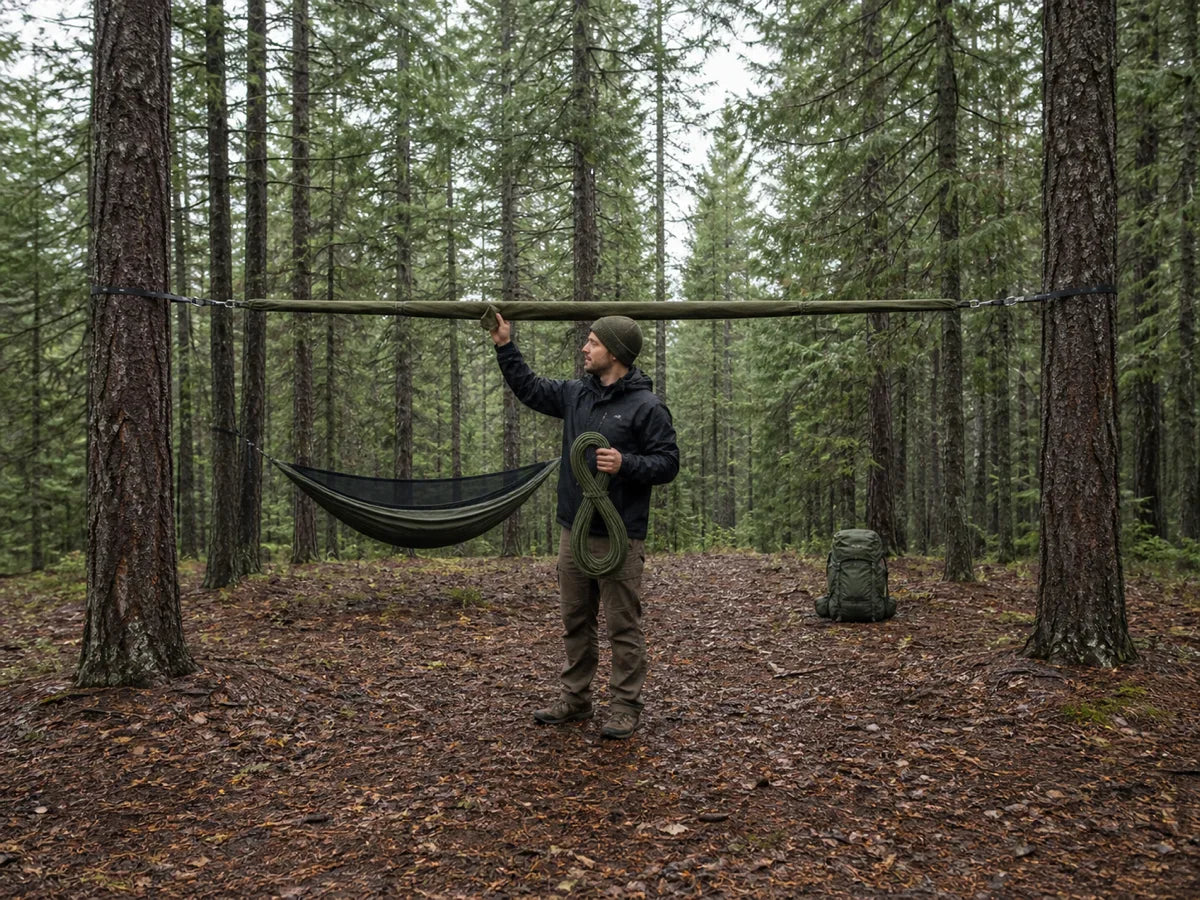
Spreader bars hold the bed open.
The fabric platform becomes more defined.
The body can lie flatter.
That does not make it a medical solution.
It makes it a geometry solution.
The measured detail on the Crystal Bridge Hammock is useful here.
According to the product page, the head spread is 42 in and the foot spread is 29 in.
Those dimensions show how the hammock creates width where many sleepers need it most.
If your problem is shoulder squeeze, that width matters.
If your problem is simply learning how to hang a hammock, that width may not be the first fix.
Benefit 1: Better Side-Sleeping Potential
Side sleepers are the easiest audience to understand.
They often want a flatter hip line.
They want room to rotate.
They want the hammock edge to stay away from the face and shoulders.
A bridge style hammock gives them a better starting point.
It does not guarantee perfect side sleep.
Body size, hang height, spreader-bar geometry, fabric tension, and pillow choice still matter.
The test is practical.
Can you turn onto your side without fighting the hammock?
Can your shoulder rest without fabric squeeze?
Can your knees bend naturally?
Can you hold that position for more than a few minutes?
If yes, a bridge hammock has a real advantage.
If no, the design still may not fit your body.
I would test side sleeping before calling any bridge hammock the best bridge hammock for you.
That is why product fit beats category hype.
Benefit 2: More Defined Bed Shape
A bridge hammock feels more like a suspended bed than a gathered-end sling.
That difference helps back sleepers too.
Some back sleepers like the cocoon feel of gathered-end hammocks.
Others want less curve and more predictable support.
Bridge hammocks serve the second group.
The Crystal Bridge Hammock uses 7075 aluminum spread bars.
The bar system creates the bed shape before you lie down.
That is different from a gathered-end hammock, where your diagonal position creates much of the flatness.
The advantage is repeatability.
You can set up the bridge hammock and get a more defined bed shape every time.
The responsibility is setup control.
Spreader bars need to be installed correctly.
Suspension needs to be balanced.
Entry and exit need practice.
The design gives structure.
The user still has to manage it.
Benefit 3: Modular Bug Protection

Bug protection is not a small detail in hammock camping.
One mosquito can wreck a perfect flat lay.
No-see-ums can make a campsite unusable without proper mesh.
The Crystal Bridge Hammock has a detachable no-see-um bug net with 1600 holes/in2, according to Onewind's product page.
That makes it useful for mixed-season camping.
Use the net in humid summer woods.
Remove it when the air is cool and insects are gone.
This is better than permanent enclosure for campers who want open-air nights.
It is also cleaner than forcing a random bug net around a bridge shape.
Bridge geometry can complicate separate bug protection.
The net needs to clear the spreader-bar profile.
It needs to zip without dragging.
It needs to stay off your face and arms.
It needs to vent.
That is why a bridge hammock with matched bug protection can be more useful than a generic add-on.
Responsibility 1: Stability Practice
Bridge hammocks can feel unfamiliar during the first setup.
That does not mean they are bad.
It means the movement pattern is different.
Reddit bridge hammock discussions often circle the same friction point: the first few entries can feel tippy until the user learns how to sit, center weight, and turn.
That community report is useful because it turns fear into a field test.
Do not judge a bridge hammock only by the first awkward sit.
Do not take it straight into a hard campsite either.
Test it low.
Sit in the center.
Swing both legs in slowly.
Lie back.
Turn onto your side.
Reach for your gear.
Exit without grabbing the bug net.
Repeat until the motion feels boring.
That is the benchmark.
If the hammock still feels unstable after practice, choose the more stable configuration or reconsider the category.
Responsibility 2: Tarp Width

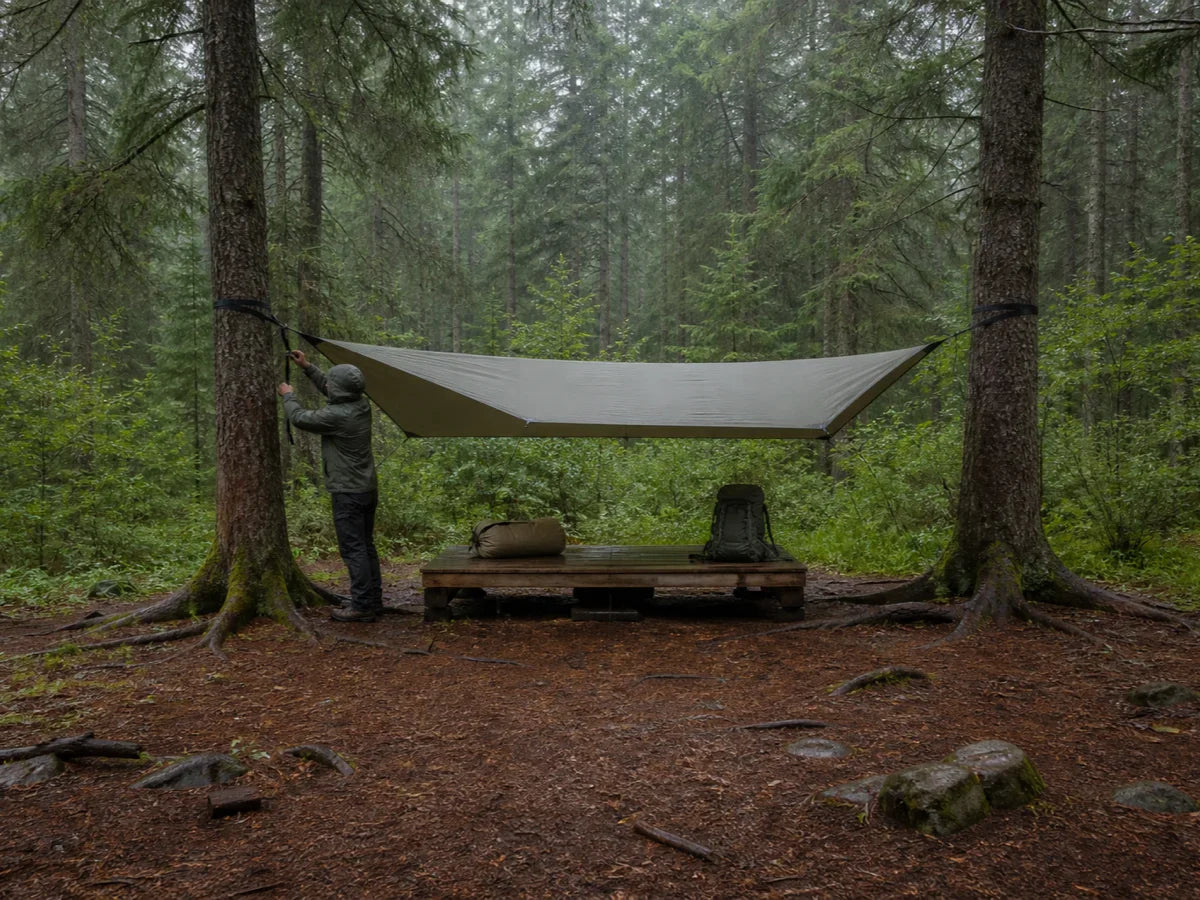
Bridge hammocks change your rain footprint.
The spreader bars create width.
Width changes tarp coverage.
A tarp that works over a gathered-end hammock may leave bridge bar ends too exposed.
According to the Onewind Tarp for Bridge Hammock product page, bridge-hammock coverage should account for that wider profile.
That is the practical reason a bridge tarp exists.
Use this tarp check.
Pitch the bridge hammock.
Load it with body weight.
Pitch the tarp.
Check bar-end coverage.
Lower one side for wind.
Check entry.
Simulate side rain with a hose or a conservative visual check.
If the bar ends sit near the drip line, solve tarp coverage before the first storm.
Flat-lay comfort is not useful when the shelter fails.
Responsibility 3: Bottom Insulation

A bridge hammock can feel bed-like.
It is still suspended in air.
Cold air still moves underneath.
Your body still compresses insulation if you rely only on a sleeping bag below you.
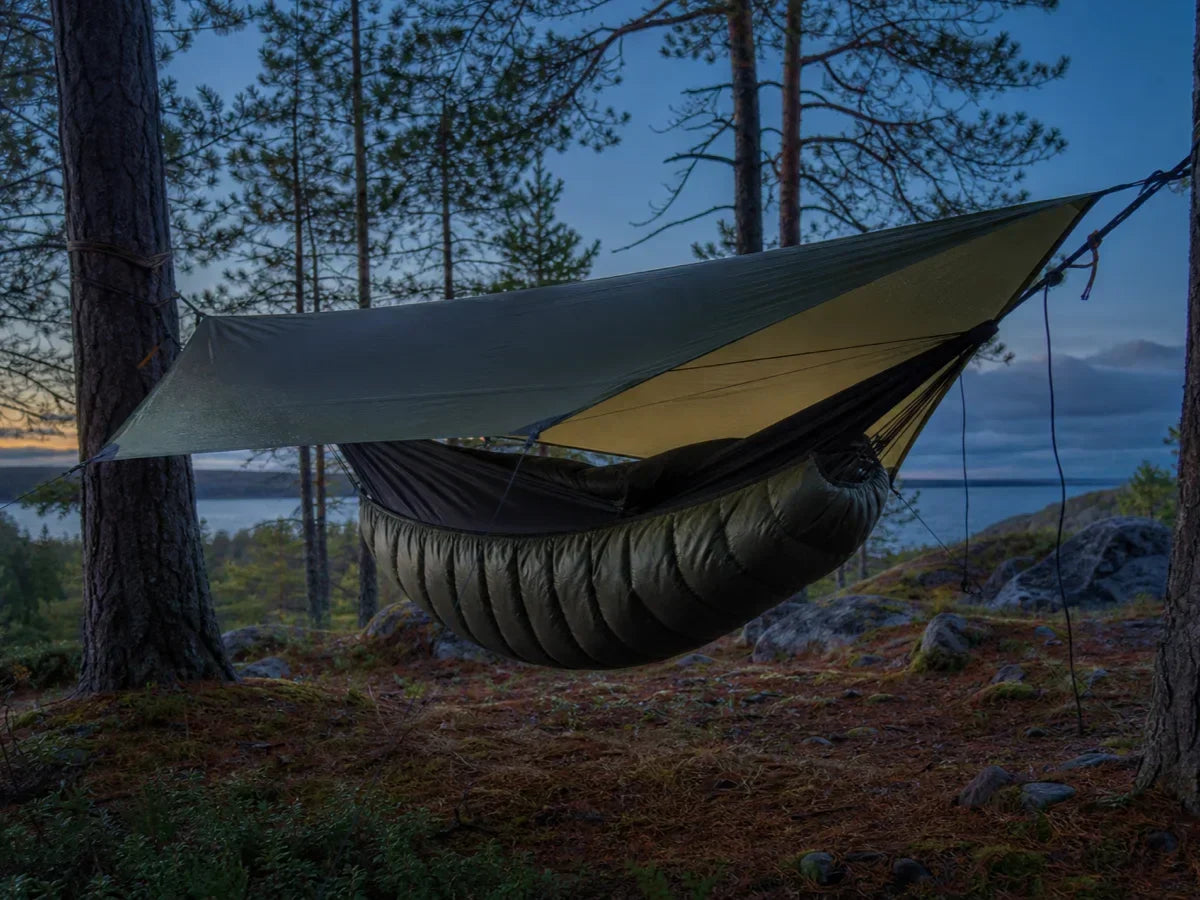
According to the Onewind Bridge Hammock Underquilt product page, bridge-specific bottom insulation is part of the system for cool-weather use.
That point matters because many first-time bridge buyers focus only on the hammock body.
They forget the bottom of the sleep system.
The underquilt test should happen with your body in the hammock.
Lie on your back.
Turn to your side.
Ask someone to check the side seal.
Feel for cold channels near the shoulder and hip.
Adjust before the trip.
Do not diagnose every cold spot as a weak temperature rating.
Sometimes the issue is fit.
Crystal Bridge Hammock Fit Test
The Crystal Bridge Hammock fits this decision point.
The product is not the answer to every hammock question.
It is an answer to a specific fit profile.
Choose it when you want bridge-hammock flat lay and modular bug protection.
Choose the 4-Strap Stable version when your first priority is controlled comfort.
Choose the 2-Strap UL version when pack weight matters and you are willing to practice.
Wait if you have not solved tarp or insulation needs for the trips you actually take.
Why Not Just Buy the Cheapest Hammock?
Onewind Crystal Bridge Hammock underquilt and tarp review
Cheap hammock decisions work only when the risk is low.
A backyard nap has low risk.
A warm car-camping night has moderate risk.
A wet shoulder-season trip has higher risk.
The cheapest hammock can be fine for testing whether you enjoy hanging above the ground.
It is a poor benchmark for judging side-sleep comfort, tarp coverage, or cold-weather insulation.
Use the cheapest option when the goal is curiosity.
Use a bridge hammock when the goal is solving a measured sleep-shape problem.
That difference keeps the buying decision honest.
Scenario 1: Side Sleeper With Shoulder Squeeze
Your gathered-end hammock works for lounging.
It fails when you try to sleep on your side.
Your shoulder feels trapped.
Your hip rotates.
You wake up fighting the fabric.
This is the cleanest bridge hammock use case.
The problem is not general camping skill.
The problem is sleep shape.
A bridge hammock is worth testing because its structure directly addresses the failure point.
I would start with a stable setup rather than chasing the lightest version first.
Comfort is the reason for the purchase.
Stability helps you judge comfort without fighting the learning curve.
Verdict: PASS for bridge hammock, with 4-Strap Stable as the safer first test.
Scenario 2: Back Sleeper Who Wants a Camp Bed Feel
You do not need side sleeping.
You want a flatter back-sleeping position.
You dislike the cocoon feel of a gathered-end hammock.
This is another good bridge hammock case.
The category gives you a more defined bed shape.
The spreader bars do some of the shape work for you.
The caution is expectation.
A bridge hammock is not a rigid cot.
It still moves.
It still hangs.
It still needs a proper site and suspension.
If you want outdoor bed feel without sleeping on the ground, bridge hammocks deserve a test.
Verdict: PASS if bed-like shape matters more than the fewest possible parts.
Scenario 3: Backpacker Choosing 4 lb vs 2.6 lb
You want flat lay.
You also count weight.
The Crystal numbers make this decision concrete.
The Stable setup is listed at 4 lb.
The UL setup is listed at 2.6 lb.
That 1.4 lb difference is meaningful in a backpack.
It is less meaningful at a drive-up campsite.
Do not choose the lighter version only because it looks better in a table.
Choose it because the trip rewards the savings and you can set it up confidently.
I would run a full backyard test before taking the 2-Strap UL version on a long-mile route.
That test should include entry, side sleeping, tarp coverage, underquilt fit, and pack-up.
Verdict: CAUTION for backpackers, with 2-Strap UL only after setup practice.
Scenario 4: Bug-Heavy Summer Camper
Your trips happen near water, in humid forests, or during mosquito season.
Bug pressure is not theoretical.
It is the reason you sleep or do not sleep.
A bridge hammock with removable bug protection is useful here.
The Crystal's detachable 1600 holes/in2 no-see-um mesh gives two modes.
Net mode handles buggy trips.
Open mode handles cooler trips with fewer insects.
The test is zipper access.
Can you enter without dragging the net?
Can you turn without pressing mesh into your skin?
Can you vent the hammock?
If yes, the bug net is a real buying reason.
Verdict: PASS when insects are common and open-air flexibility still matters.
Scenario 5: Rain or Cold-Weather Camper
You want a bridge hammock for real weather.
This is possible.
It is not hammock-only.
The tarp has to cover the spreader-bar profile.
The underquilt has to match the bridge bed.
The setup order has to keep insulation dry.
The Tarp for Bridge Hammock and Bridge Hammock Underquilt are the system pieces to evaluate before wet or cold trips.
Do not buy the hammock body and hope the rest sorts itself out later.
Rain and cold expose system gaps quickly.
Verdict: CAUTION until tarp coverage and underquilt seal pass a field test.
Scenario 6: Minimalist Beginner
You want fewer parts.
You want lower setup complexity.
You are not sure whether hammock camping is for you.
You do not have a specific side-sleep or shoulder-squeeze problem.
This is a poor bridge hammock fit.
The simpler path is a gathered-end hammock.
According to the Onewind 11ft Camping Hammock product page, a gathered-end model remains the cleaner Onewind path for basic hammock camping.
That path lets you learn tree selection, strap height, tarp pitch, and insulation basics with fewer components.
After that, you can decide whether flat lay is worth the upgrade.
Verdict: WAIT on bridge hammock and start with a simpler gathered-end setup.
Field Test 1: The Sleep-Shape Test
This test gives better evidence than reading ten more opinions.
Set the hammock low.
Lie in your real sleep position.
Stay there for at least ten minutes.
Turn once.
Reach once.
Exit once.
If the shape solves the problem, you will know.
If it does not, the category may not be your answer.
Field Test 2: The System-Readiness Test
Bridge hammocks work best when treated as systems.
The hammock body is only one part.
The bridge tarp protects the wider profile.
The bridge underquilt handles bottom warmth.
The bug net handles insects.
The suspension controls stability.
Measured comfort comes from the whole setup, not only the fabric bed.
That is why I would not publish a personal verdict until this field test passes.
What to Read Next
This article answers why.
The setup article should answer how.
The comparison article should answer vs.
The bug net article should answer insect protection.
The tarp and underquilt article should answer weather readiness.
That split matters for readers and search engines.
Each page should solve one job.
Final Buying Checklist
Choose a bridge hammock when the reason is specific.
Choose it for flatter lay.
Choose it for side-sleeping potential.
Choose it for less shoulder squeeze.
Choose it for modular bug protection when insects matter.
Choose it when you are ready to test the whole system.
Do not choose it because it sounds like the advanced option.
Advanced gear is only better when it solves the right problem.
For the right camper, a bridge hammock can turn hammock camping from tolerable to genuinely restful.
For the wrong camper, it adds parts before it adds value.
That boundary is the real answer to why choose a bridge hammock.