
A hiker on Reddit's r/hammockcamping woke on day two of a seven-day trip covered in bites that had gone through a bug net, a hammock, a sleeping bag, a jacket, and a shirt.
The net was not broken.
It was the wrong mesh, and the top reply named the culprit in one line: no-see-ums, small enough to pass straight through standard bug netting.
That is the fact every bug-net roundup buries.
They list the same eight nets and quietly repeat that 500 holes per square inch is no-see-um proof, when the mesh makers themselves say it is not.
So this guide throws out the badge-first list and gives you the decision that actually keeps bugs off you: pick the mesh for the insects where you camp, then the entry style, then the fit.
I cross-checked the roundups, the manufacturer specs, and a stack of r/hammockcamping bite reports, and the same three decisions decided every good or miserable night.
What You'll Learn
I built this around three specs in order, because a bug net is not a commodity where any net will do.
Here is what each part settles.
Quick Answer
Choose a hammock bug net by the bug, not the brand.
Match the mesh to your region first, then pick entry style and fit.
The rest of this guide explains why each call is what it is.
The Bug Net Decision

Two nets that look identical on a product page can differ by a factor of ten in the one number that matters, the mesh.
Three specs, in order, decide whether a net works for you.
Get the mesh right and the rest is comfort and convenience.
Get the mesh wrong and nothing else saves you.
Spec 1: The Mesh

This is the spec that decides whether you get bitten, and it is the one the roundups get wrong.
Netting is rated by holes per square inch, and the difference between grades is the difference between a good night and a ruined trip.
Standard netting at 156 to 200 holes stops mosquitoes and lets no-see-ums, midges, and sandflies walk right through.
Here is the claim you have to unlearn.
Many roundups, and plenty of product pages, call 500 holes per square inch no-see-um proof.
According to Sea to Summit's own material, its 500-hole mesh is not no-see-um proof, and true no-see-um and sandfly country needs closer to 2000 holes.
So 500 is a mosquito-grade floor sold as more than it is, and genuine no-see-um protection lives in the 1000-to-2000 band.
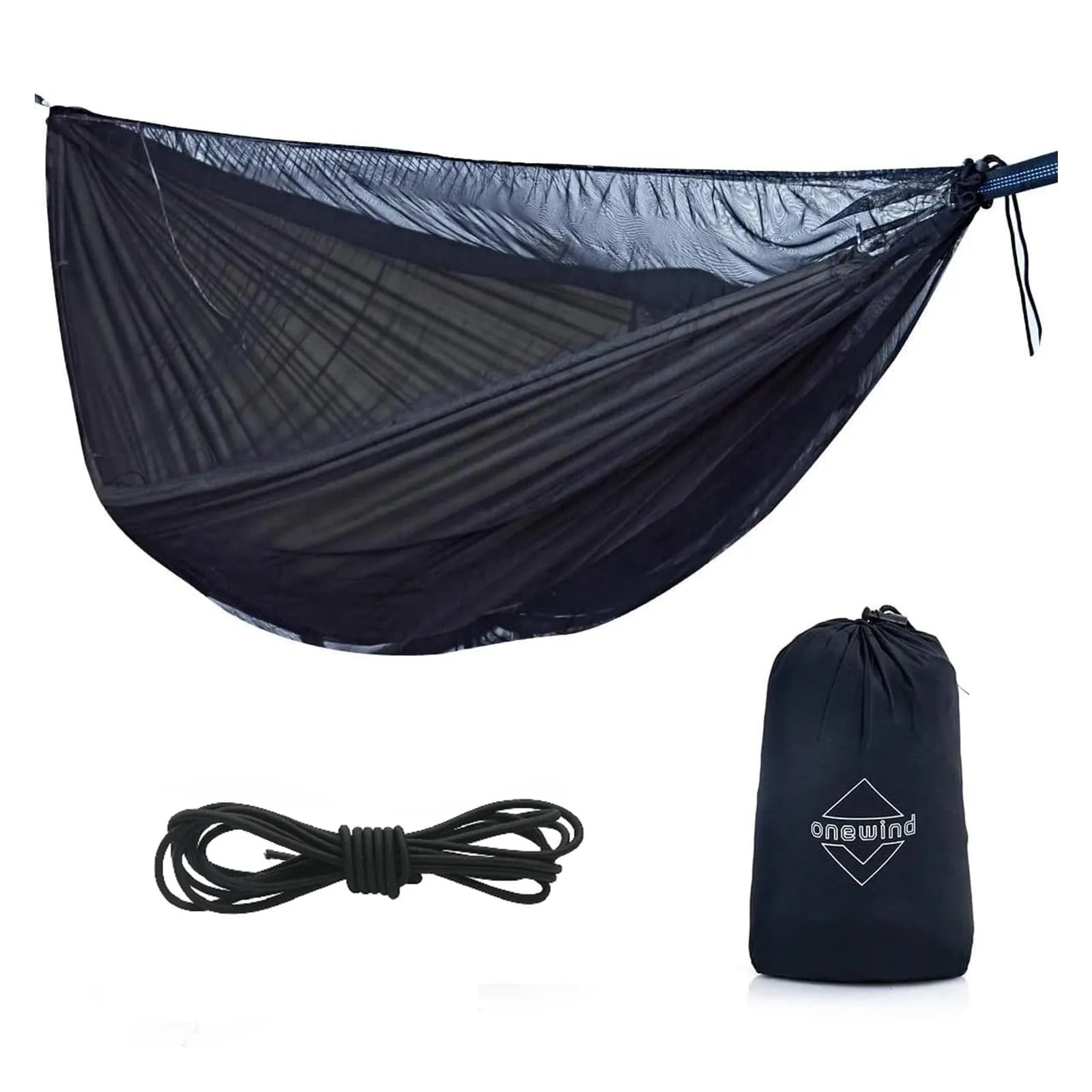
For reference, Onewind's own nets sit at 1600 to 1700 holes per square inch, which is squarely in that genuine band rather than at the borderline.
There is a cost to going finer, so do not overbuy.
Data from mesh comparisons puts no-see-um airflow around 65 percent against 80 to 85 for standard netting, and beyond roughly 640 holes ventilation drops toward a near-solid feel.
Fiber decides how long the net lasts, not whether it stops bugs.
According to mesh-material comparisons, nylon netting resists abrasion better but yellows and weakens under UV over seasons, while polyester holds its color and strength in sun.
A net that lives rigged in the open ages better in polyester, and one that packs away between trips gains more from nylon's abrasion resistance.
Denser mesh is safer but hotter, so buy exactly as fine as your bugs demand and no finer.
One frustration is that many nets never print a hole count at all.
A maker that stays vague about mesh is usually selling standard netting, so when the number is missing, look for the words no-see-um or the fabric name, and treat a net that only says mosquito netting as 156-to-200-hole standard grade until proven otherwise.
Verdict: choose your mesh by region, standard 156-to-200-hole netting for mosquito-only country and genuine 1000-to-2000-hole no-see-um mesh for the Southeast, the coasts, and buggy lowlands, and never trust a 500-hole net sold as no-see-um proof.
Spec 2: The Entry

Once the mesh is right, entry style is the next real decision, and the roundups bury it inside product blurbs.
How you get into the net shapes setup speed, weight, and what eventually breaks.
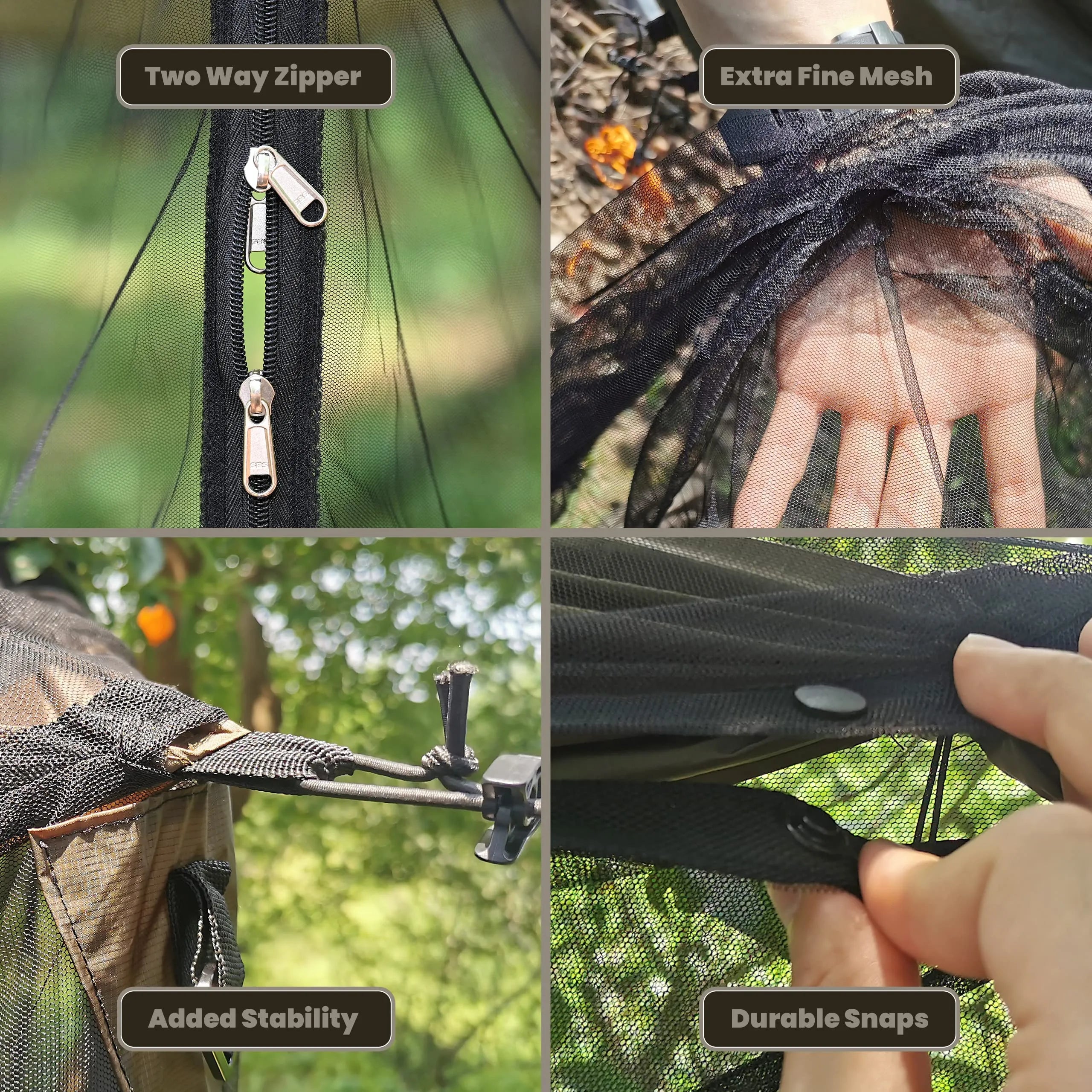
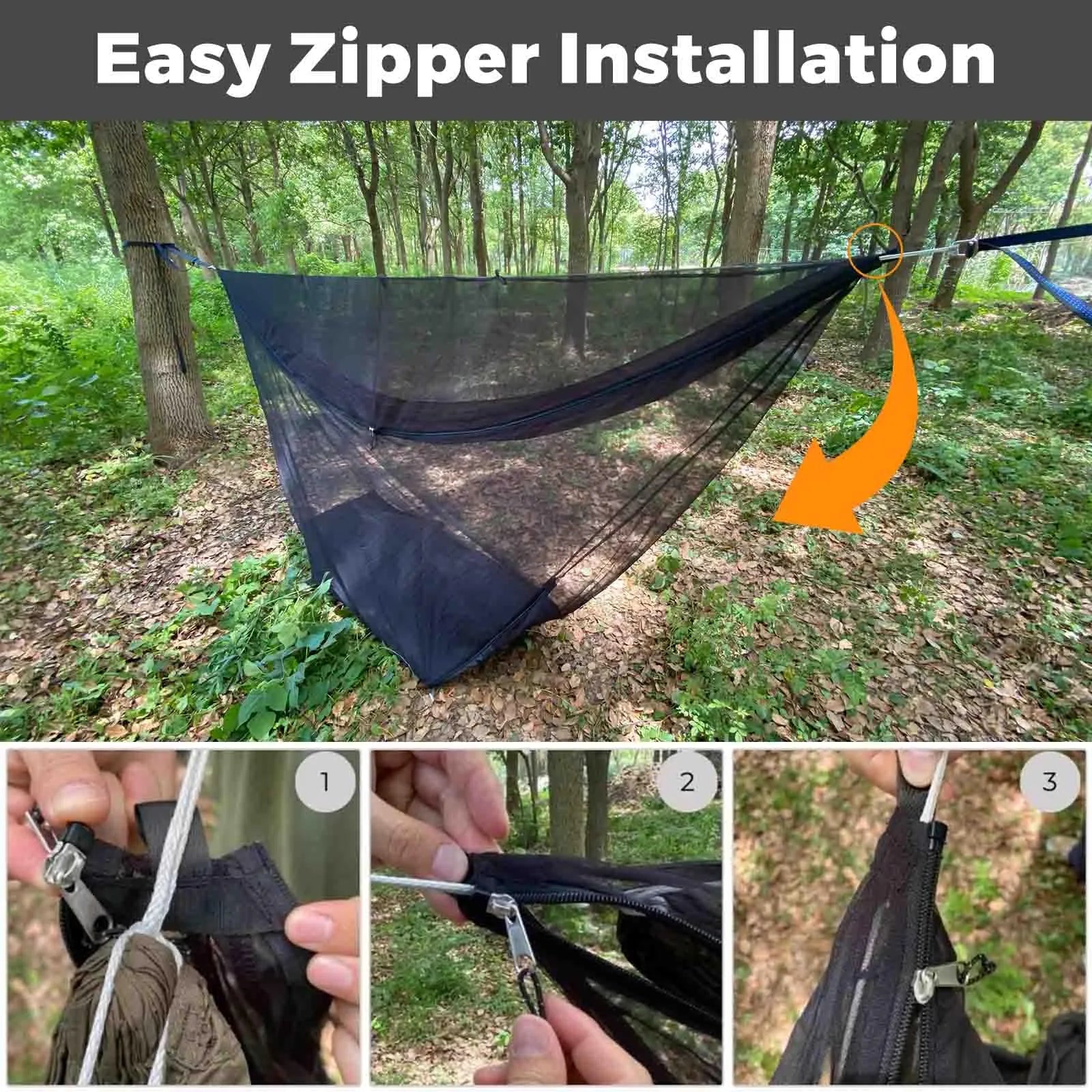
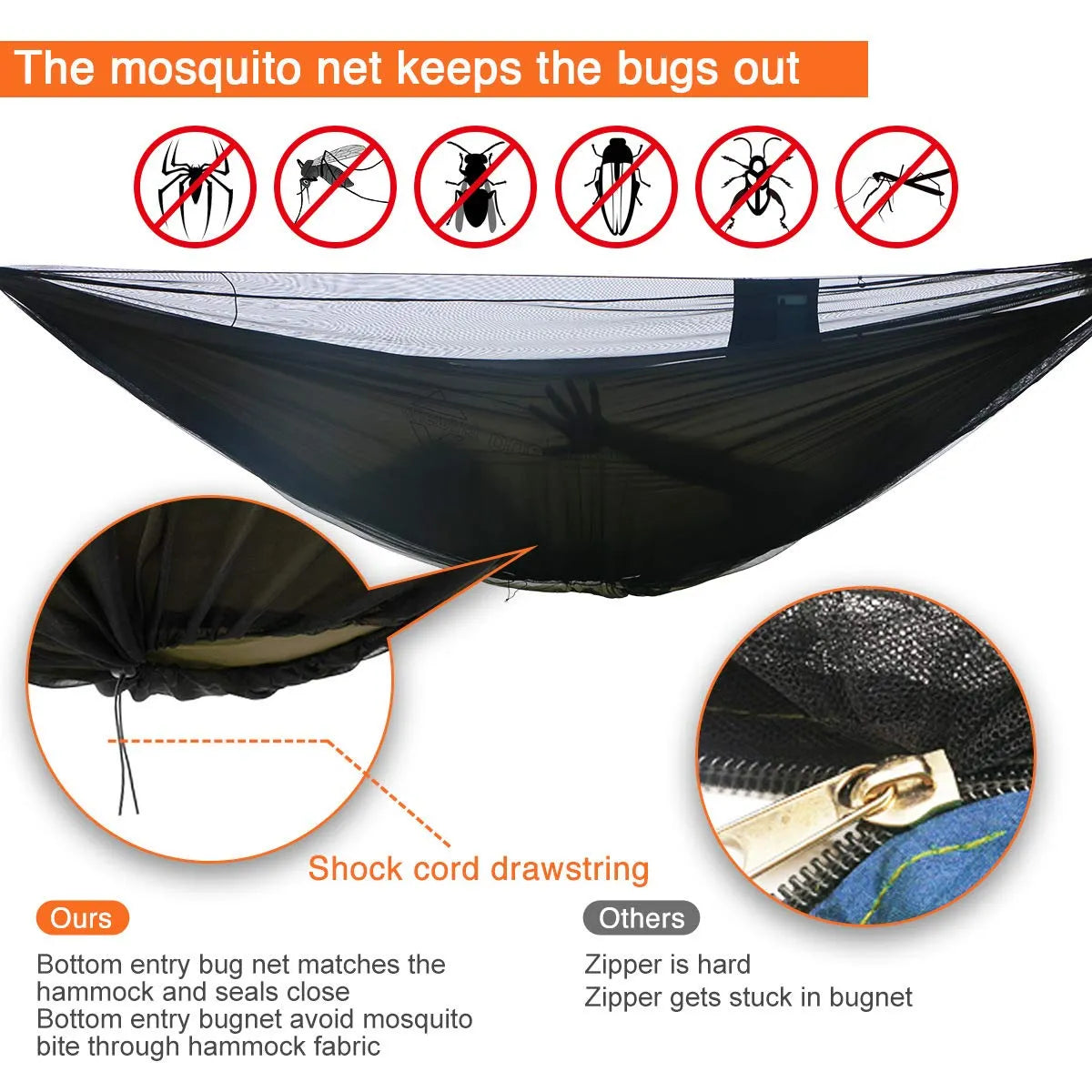
A bottom-entry net has no zipper at all, so nothing jams, and it runs light.
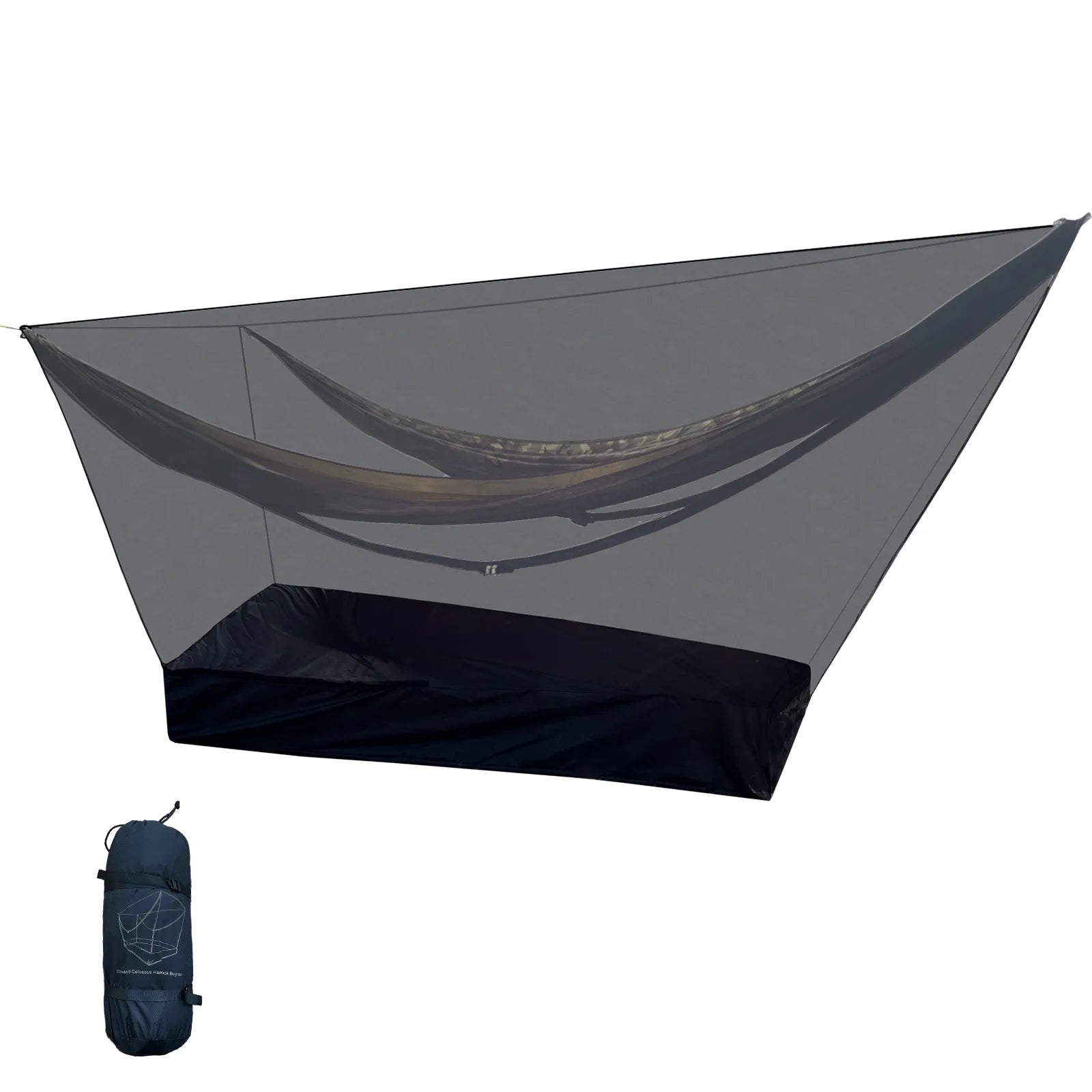
Dutchware's zipperless bottom-entry net is 6.5 oz for the 10-foot, and Onewind's Bottom Entry Bugnet is 410 grams, both with shock-cord ends and no zipper to fail.
The trade is a slower, more awkward entry from underneath, and the real-world gripe that you can drop gear out the opening.
A zippered side net is the opposite: a J-zip or dual zip gets you in fast, which is why it suits beginners, but the zipper is the single most common failure point.
An integrated net sewn into the hammock body seals best and never needs aligning, but you cannot take it off on a bug-free night.
Verdict: choose bottom entry for the lightest no-zipper net if you will accept a slower entry, a zippered side net if you are a beginner or want speed, and an integrated net only if you never need the net off.
Spec 3: The Fit

The third spec is fit, and it is where a good net gets rejected for a bad reason.
Get length, coverage, and shape right and the net seals; get them wrong and no mesh grade helps.
The rule every roundup agrees on is to buy a net about one foot longer than your hammock, so an 11-foot hammock wants a net near 12 feet.
A net cut too short, like a 9-foot net on a long or double hammock, leaves gaps at the ends where bugs get in.
Coverage is the next call.
Most nets cover a single hammock, and a few span two, so a solo sleeper picks a single net while a couple or family needs double coverage across two hammocks.
Shape is the one people miss.
A gathered-end net is cut for the banana curve of a gathered-end hammock, and it will not seal against the flat, spreader-bar trough of a bridge hammock.
A bridge hammock needs a bridge-specific net shaped to its spreader bars, so the two are not interchangeable.
How the net attaches matters as much as its length.
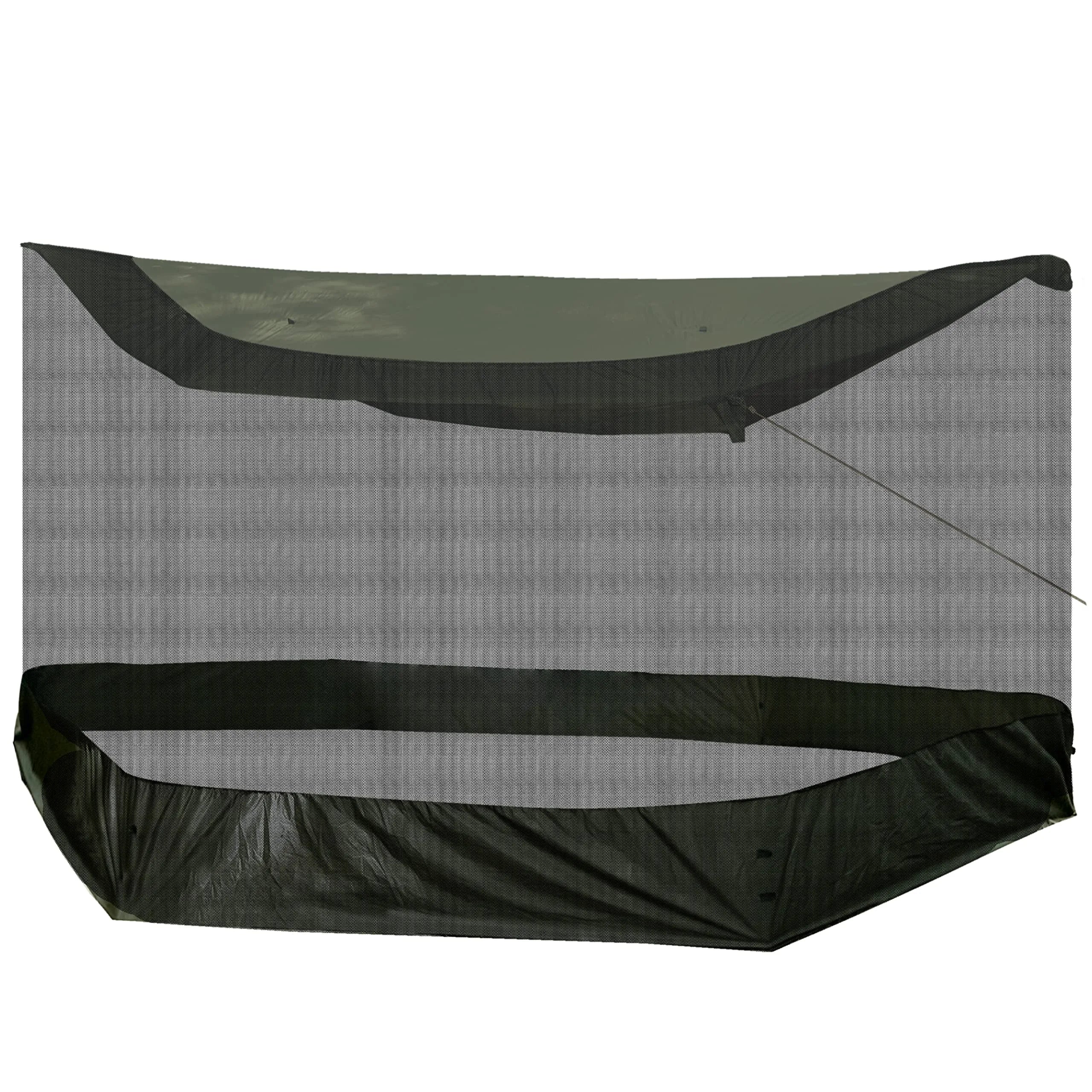
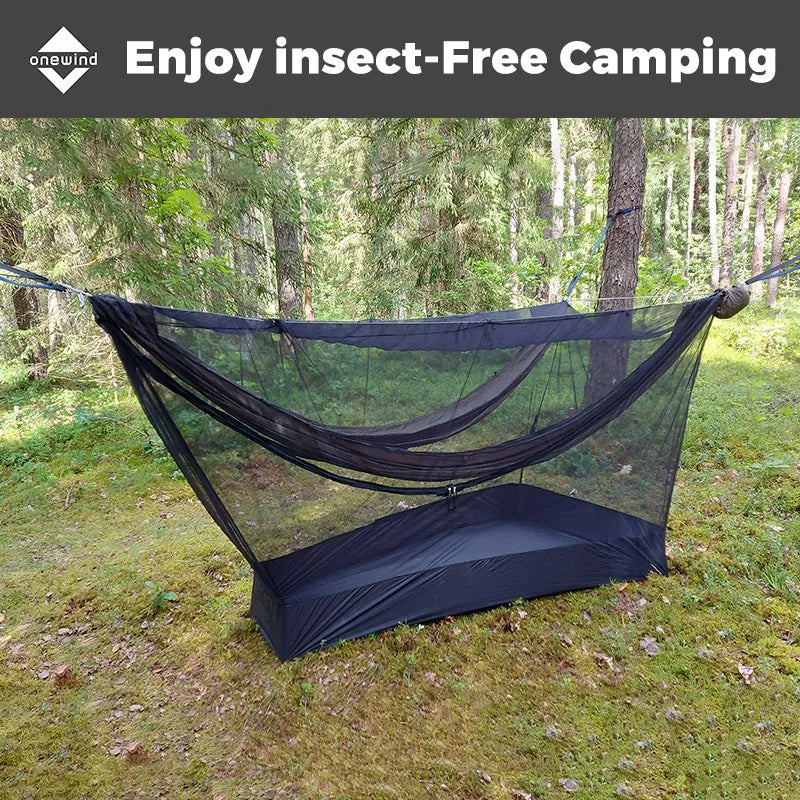
Add-on nets either slip over the whole hammock like a sock or drape from the ridgeline with snap buttons or shock cord, and either way the ends must cinch closed so bugs cannot enter where the suspension passes through.
Onewind's nets snap to the ridgeline and cinch at both ends with shock cord, which is the standard gathered-end pattern and the reason they drop onto almost any gathered-end hammock.
Verdict: buy about one foot longer than your hammock, pick single or double coverage for how many sleep under it, and match the net shape to your hammock because a gathered-end net will not seal a bridge.
The Setup Rule You Don't Skip
How to Set Up a Hammock Bug Net

You can buy the right mesh and still wake up bitten, and this is how.
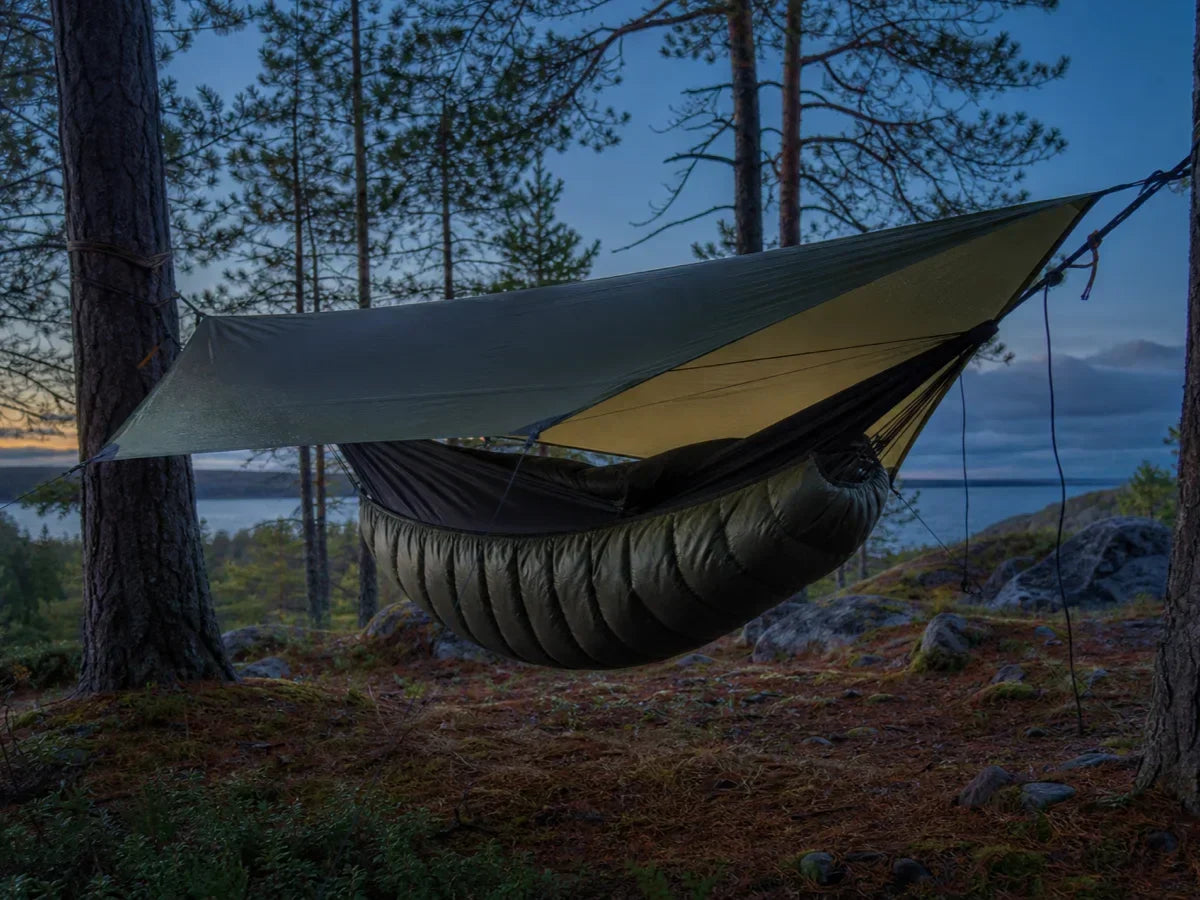
A drape net holds the mesh off your body only through the hammock's structural ridgeline.
Without a ridgeline, the net sags onto your face and legs, and bugs bite straight through wherever the mesh touches skin.
On r/hammockcamping a camper reported roughly 80 bites on a single foot that had pressed against the mesh, which is the whole rule in one anecdote.
So a drape net needs a ridgeline, and a knotless net with its own integrated ridgeline sleeve, like the ENO Guardian SL, removes that setup step entirely.
The second half of the rule is chemical.
In heavy-bug country, Reddit users treat the net and hammock with permethrin so the few bugs that reach a contact point are killed rather than biting.
Permethrin bonds to fabric and survives several washes, which is why hunters and hikers treat clothing and nets with it, and on a bug net it kills the few insects that reach a contact point before they bite.
Treat permethrin as a backup to the right mesh, though, never as a substitute for it, and follow the label because it must dry before contact and stay away from cats and fish.
Verdict: always hang a drape net off a structural ridgeline so the mesh clears your body, prefer an integrated-ridgeline net if you want zero setup, and add permethrin as a complement in heavy country, not as a fix for coarse mesh.
The Nets, Compared
First Look at the ENO Guardian SL Bug Net

Here are real nets with verified specs, so you can see how the three decisions play out in products.
Prices and weights are what the makers publish, and mesh grade is the number that should drive your pick.
If you camp where no-see-ums bite, the mesh column is the one to read first, and the Onewind Bottom Entry Bugnet at 1600 holes lands in the genuine no-see-um band for the price of a mosquito-grade net.
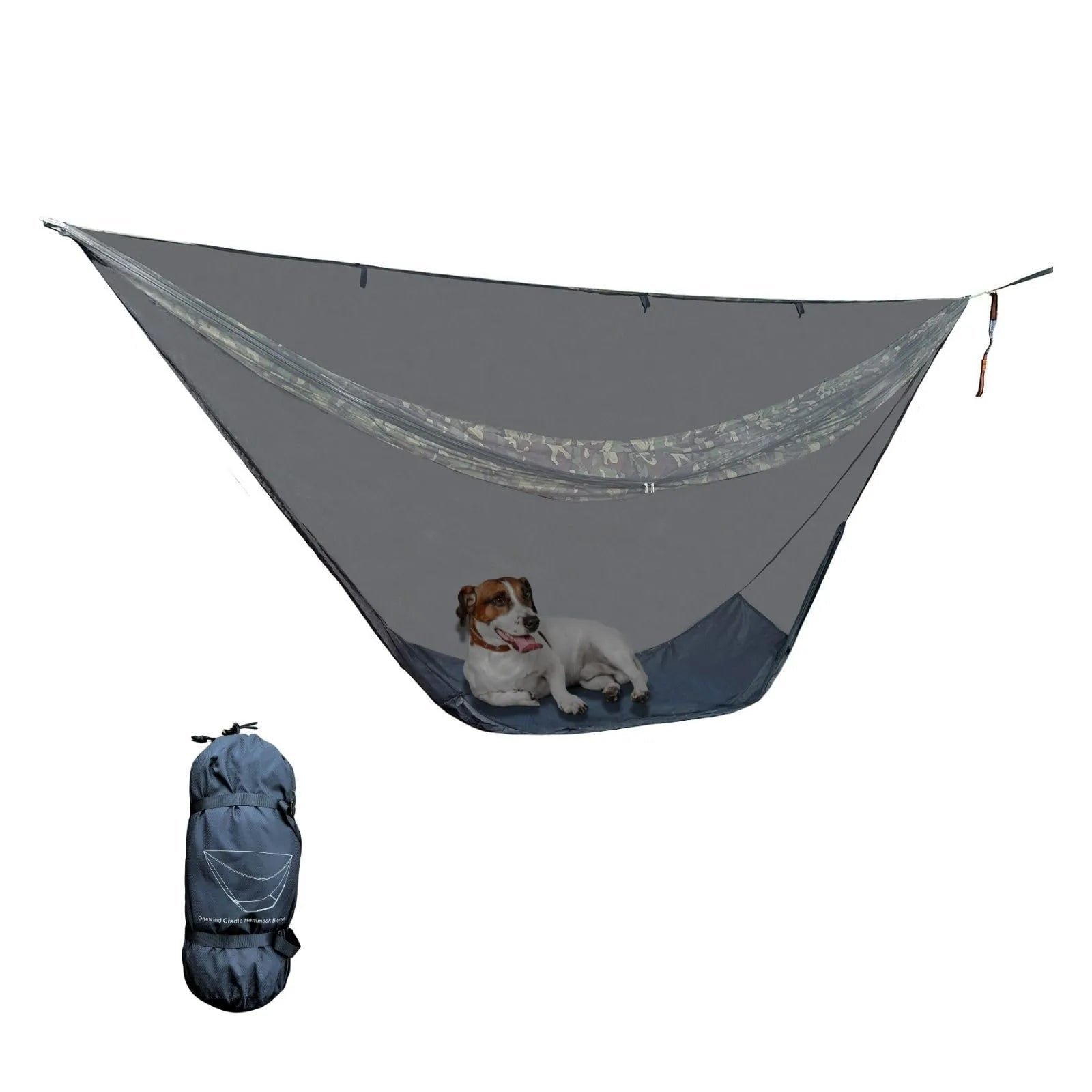
If you want a floor to keep gear and pets in with you, the Cradle Bugnet adds a 40D floor and a U-shaped zip.
If you and a partner hang side by side, the Colossus Sync Bugnet covers two hammocks under one net.
Two more common picks fill out the field.
The Grand Trunk Mozzy Lite is a 10-oz J-zip net with an integrated ridgeline that fits an 11-foot hammock, and the Kammok Dragonfly is a 9.8-oz no-see-um net with a knotless ridgeline, both solid zippered options.
As always, the number to check first is the mesh grade, not the badge, because a respected brand at 500 holes still lets no-see-ums through.
You can see the full range in the hammock bug net collection.
Scenario 1: Mosquito-Only Country

You camp in the dry high West or above the bug line, where mosquitoes are the only real threat.
Here you do not need the finest mesh, and buying it costs you airflow.
Standard netting at 156 to 200 holes stops mosquitoes, so prioritize a light, breathable net over a dense no-see-um one that sleeps hot for no benefit.
Mosquito country is also where airflow pays off, since a standard net breathes at 80 to 85 percent against a no-see-um net's 65, and on a warm dry night that difference is real comfort.
Verdict: for mosquito-only country, choose a standard-mesh net and spend your budget on low weight and high airflow, not on no-see-um density you will not use.
Scenario 2: No-See-Um and Sandfly Country

You camp in the Southeast, along the coasts, or in buggy summer lowlands, where no-see-ums and sandflies own the dusk.
This is the scenario the 500-hole nets fail.
A standard or borderline net leaves you bitten through the mesh, so you need genuine no-see-um netting in the 1000-to-2000-hole band and you accept the airflow hit.
A camper on r/hammockcamping put it plainly: going net-less in Florida's Apalachicola Forest is a terrible idea, and even a built-in net felt adequate only because a cool night suppressed the bugs.
The same threads report bites that came through standard netting and a sleeping bag together, which is what a coarse net buys you in this country.
This is also where a floored net earns its price, because it seals the underside that a drape net leaves open.
Verdict: for no-see-um country, choose genuine 1000-to-2000-hole mesh such as the Onewind Bottom Entry at 1600 holes, and do not settle for a 500-hole net sold as no-see-um proof.
Scenario 3: The Ultralight Backpacker

You count grams and want the least net that still does the job.
Bottom-entry and sock nets win here because there is no zipper hardware to carry.
A sub-8-oz net like the Dutchware bottom-entry at 6.5 oz gets you protection for the weight of a snack, and you accept the fiddly entry as the price.
Verdict: for the ultralight backpacker, choose a sub-8-oz bottom-entry net and match its mesh to your route's bugs, since going light does not excuse the wrong mesh.
Scenario 4: The Car Camper

You drive to the site and comfort beats weight.
Weight barely matters, so you can buy coverage and room.
An enclosure or floored net gives you space to move and store gear, and the extra ounces ride in the trunk.
Verdict: for the car camper, choose a roomy floored or enclosure net and let comfort win, because the weight penalty never touches your back.
Scenario 5: You Already Own a Hammock

You have a hammock you like and just need bug protection.
Do not rebuy the hammock, add a net.
An add-on or bottom-entry net slips over or under your existing gathered-end hammock and drapes on its ridgeline, so you keep what works.
Check two things before you buy: that your hammock has a structural ridgeline for the net to hang from, and that the net is rated for your hammock's length so the ends still cinch closed.
Verdict: if you already own a hammock, choose an add-on or bottom-entry net sized about a foot longer than your hammock, and confirm it drapes on a ridgeline.
Scenario 6: Buying New and Want Zero Fuss

You are buying fresh and would rather not think about nets and ridgelines.
If you want fewer separate decisions, compare hammock systems with bug protection and their total cost.
An integrated or knotless-ridgeline net removes the setup entirely.
A net sewn into the hammock, or one with its own ridgeline sleeve like the ENO Guardian SL, means nothing to align and no separate line to rig.
Verdict: if you are buying new and want zero fuss, choose an integrated net or a knotless-ridgeline net, and accept that a sewn-in net cannot come off for bug-free nights.
Scenario 7: A Couple or Family

You hang two or more hammocks and want to cover them together.
A single net will not stretch across two hangs.
A double-coverage net spans two hammocks under one canopy, which is simpler and cheaper than two separate nets.
Verdict: for a couple or family, choose a double net such as the Colossus Sync that covers two hammocks, rather than buying and rigging two singles.
Scenario 8: A Bridge Hammock

You sleep in a bridge hammock with spreader bars, not a gathered-end hammock.
A gathered-end net will not seal your hammock, no matter the mesh.
The flat, spreader-bar trough of a bridge needs a net shaped to it, so you buy a bridge-specific net rather than forcing a gathered-end one.
Verdict: for a bridge hammock, choose a bridge-shaped net such as the Brickfielder Bridge Net, because a gathered-end net will not seal the different geometry.
Common Mistakes

The first mistake is buying by brand or price and ignoring the mesh, which is the only spec that decides whether you get bitten.
The second is trusting a 500-hole net sold as no-see-um proof, when the mesh maker says it stops mosquitoes only.
The third is buying denser mesh than your bugs require and sleeping hot for no reason.
The fourth is a net too short, so bugs get in at the open ends.
The fifth is forgetting the ridgeline, so the net rests on your skin and bites come through the contact points.
The sixth is forcing a gathered-end net onto a bridge hammock, where it cannot seal.
The seventh is buying a cheap all-in-one netted hammock and discovering the ridgeline cord is too short to reach your trees, a complaint Reddit owners of $25 models report and fix with a length of paracord.
The eighth is relying on permethrin instead of mesh, when the chemical is a backup for contact points, not a replacement for netting your bugs cannot cross.
The Quick Decision Checklist
Run this before you buy.
Pick the mesh for your bugs, then the entry, then the fit, and the net that keeps you unbitten is usually not the one with the loudest brand.
Choose by the bug, and you sleep through the night the coarse-mesh crowd spends slapping at their own faces.