
An emergency bivy sack is one of the easiest pieces of gear to misunderstand.
It is small enough to feel harmless.
It is cheap enough to feel obvious.
It uses survival language that makes it sound more capable than it really is.
According to REI's bivy guidance, traditional bivy sacks and tent-like bivy shelters are different shelter categories. That distinction matters even more with emergency bivies because a pocket backup layer is not the same thing as a planned sleeping shelter.
The useful question is not, "Can I sleep in an emergency bivy sack?"
The better question is, "Am I carrying this because a plan might fail, or am I pretending it is the plan?"
That difference changes everything.
An emergency bivy sack can help when a day hike runs late, a minor injury slows the exit, weather shifts, a bike breaks, or a route takes longer than expected.
It can be a smart backup layer.
It should not become permission to skip shelter, insulation, rain cover, food storage, bug management, and site choice on a planned overnight.
This guide is the refusal test.
Carry the emergency bivy when it is insurance.
Choose a real shelter system when you already know you will sleep outside.
What You'll Learn

I will use "emergency bivy sack" to mean the compact survival-style sack many hikers keep in a daypack or fast kit.
That is different from a structured bivy tent.
It is also different from a tarp-tent.
The article keeps those lanes separate.
Quick Answer

Choose an emergency bivy sack when the overnight is unplanned.
Avoid using it as your only planned shelter when rain, bugs, condensation, rough ground, or food smells need management.
That answer is deliberately strict.
The gear is useful.
The misuse is the problem.
The Backup-Or-Shelter Test

Use this test before the trip.
If the overnight is unplanned and the bivy is paired with clothing, insulation, site choice, and signaling, carry the emergency bivy.
When the overnight is planned, when rain or bugs are expected, or when wet gear and food smells need management, choose a real shelter or tarp system instead.
This is the whole article in one sentence:
An emergency bivy sack is backup insurance, not a camping shelter license.
What An Emergency Bivy Sack Actually Does
Camping In Emergency Survival Bivvy Sack

An emergency bivy has a narrow job.
It helps reduce exposure when your normal plan breaks.
It can add a wind-blocking or heat-reflective layer around your body.
It can keep some weather off clothing or insulation.
It can make a cold wait less dangerous.
It can also be noisy, fragile, tight, clammy, and miserable.
That does not make it bad.
It means the scoring system is different.
For emergency gear, the question is, "Can this help me get through an unexpected night?"
For planned camping gear, the question is, "Can this reliably handle a full night of sleep, moisture, bugs, gear, and routine?"
Those are not the same test.
Community discussions on Reddit often make the same split. Users may accept an emergency bivy as cheap insurance, but they push back when someone tries to turn it into a normal shelter without tarp cover, insulation, or a weather plan.
That field report is useful because it matches the practical failure modes.
The bivy may help.
The missing system may still fail.
Emergency Foil Bivy vs Bivy Sack vs Bivy Tent

The word "bivy" causes confusion.
According to REI's bivy source, tent-like bivy shelters add features such as headspace and fuller enclosure that simple sacks do not provide.
That is why category language matters.
A structured shelter can weigh more because it does more.
A foil emergency bivy can weigh very little because it does less.
Do not buy one category and expect another category's benefits.
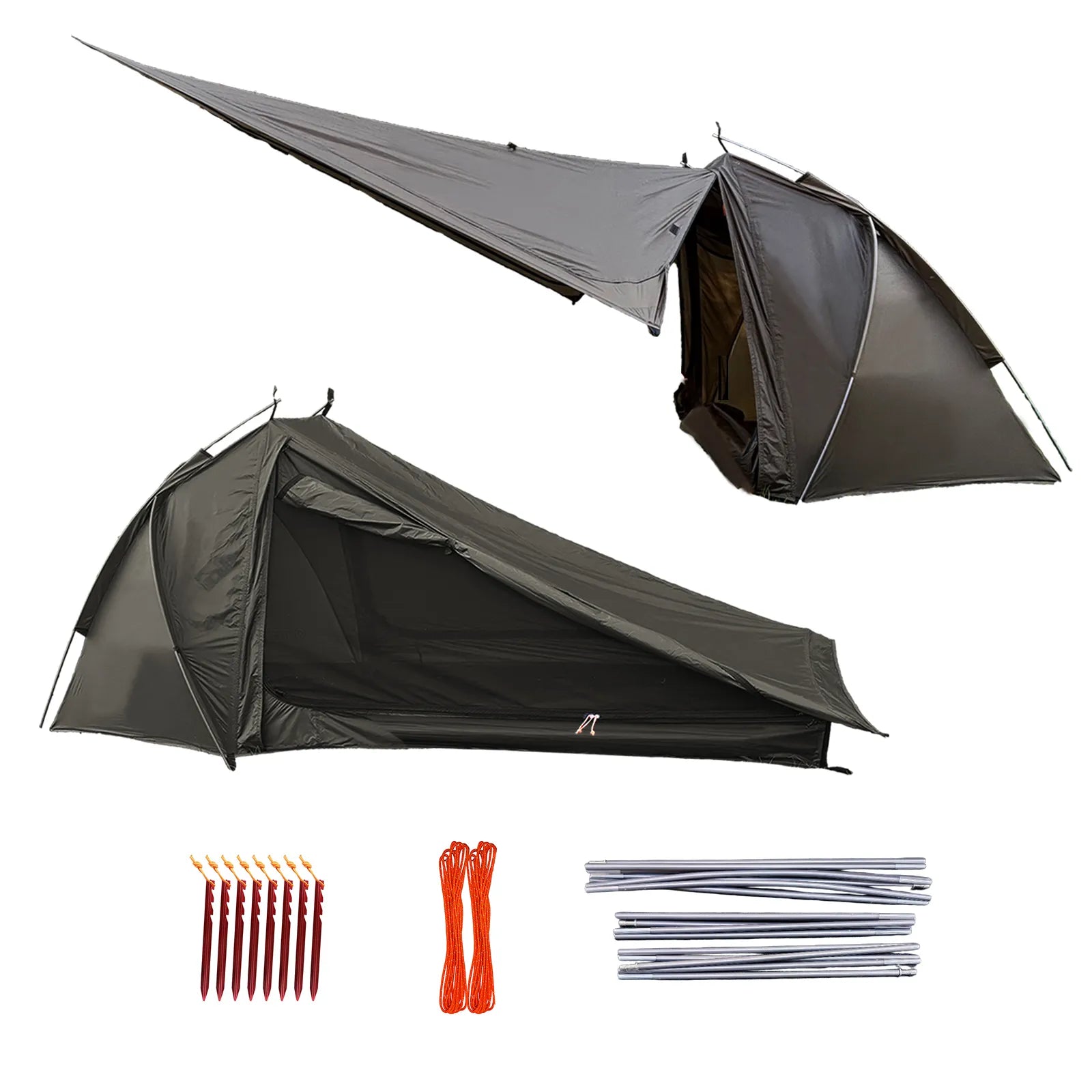
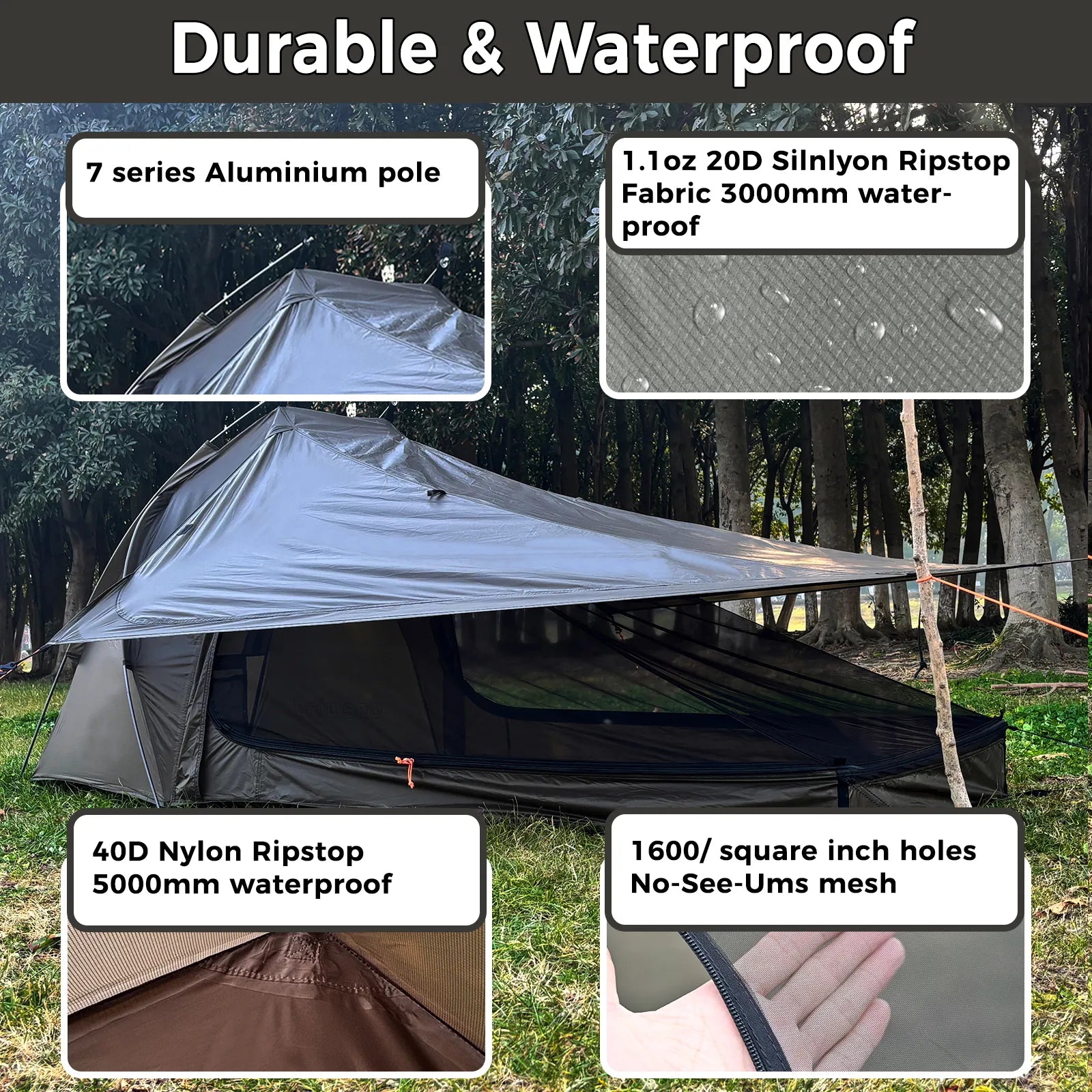
If you are planning to sleep low on purpose, a structured one-person shelter such as the Onewind Ultralight SoloVent Bivy Tent belongs in the planned-shelter lane. It is listed at 37 ounces / 1.04 kg with mesh, floor, stakes, guylines, and low shelter structure.
That is not the same object as a pocket emergency sack.
It is a different decision.
Scenario 1: Day Hiker Delayed After Dark

This is the strongest use case.
You are not planning to camp.
You start early.
The route takes longer than expected.
Someone twists an ankle.
The descent gets slower.
Darkness arrives before the trailhead.
In that moment, an emergency bivy sack is useful because the main objective changes.
You are no longer trying to create a comfortable camp.
You are trying to reduce exposure, preserve body heat, stay visible, and wait or move safely.
Pack it with the other parts of the emergency routine.
Headlamp.
Warm layer.
Rain shell.
Water.
Phone or locator.
Whistle or signal mirror.
Small sit pad if conditions justify it.
The bivy is not magic.
It is one layer in the delay kit.
I also keep the use case narrow in my head.
If I can still walk safely, the bivy buys time for a controlled pause, warmer layers, route reassessment, or waiting for daylight.
If I cannot move, the bivy helps reduce exposure while the signaling plan becomes more important.
Those are emergency decisions.
They are not the same as choosing a campsite.
Verdict: carry an emergency bivy sack for day hikes where delay, injury, or missed daylight is plausible, but pack it with the clothing and signaling tools that make the backup useful.
Scenario 2: Fast Hiker Skipping A Shelter

This is the misuse.
A fast hiker wants a very light pack.
The route is planned as an overnight.
The gear list has an emergency bivy but no real shelter.
The logic sounds efficient.
It is often a false saving.
A planned overnight asks for repeatable answers.
Where will rain go?
How will the sleeping bag stay dry?
What blocks bugs?
Where do wet shoes sit?
What happens if the first site is rough or exposed?
How do scented items stay away from the sleep area?
If those questions are unsolved, the emergency bivy is being used as an excuse rather than a system.
That is the line I would not cross.
Use the emergency bivy as a backup.
Do not use it to erase the shelter category.
Verdict: do not rely on an emergency bivy sack as the only planned overnight shelter unless tarp cover, insulation, bugs, ground, and food storage are already solved.
Scenario 3: Bikepacker Carrying Tarp Plus Emergency Bivy
Survival Overnight Adventure with only a Mylar Emergency Tent and Bivy

Bikepacking rewards compact gear.
An emergency bivy can make sense in a bike kit because breakdowns, flats, route errors, and late arrivals happen.
The better bikepacking question is not "bivy or no bivy?"
It is "what is primary and what is backup?"
If the tarp is the planned shelter and the emergency bivy is insurance, the system is coherent.
If the emergency bivy is the only shelter and the tarp was left at home, the system is fragile.
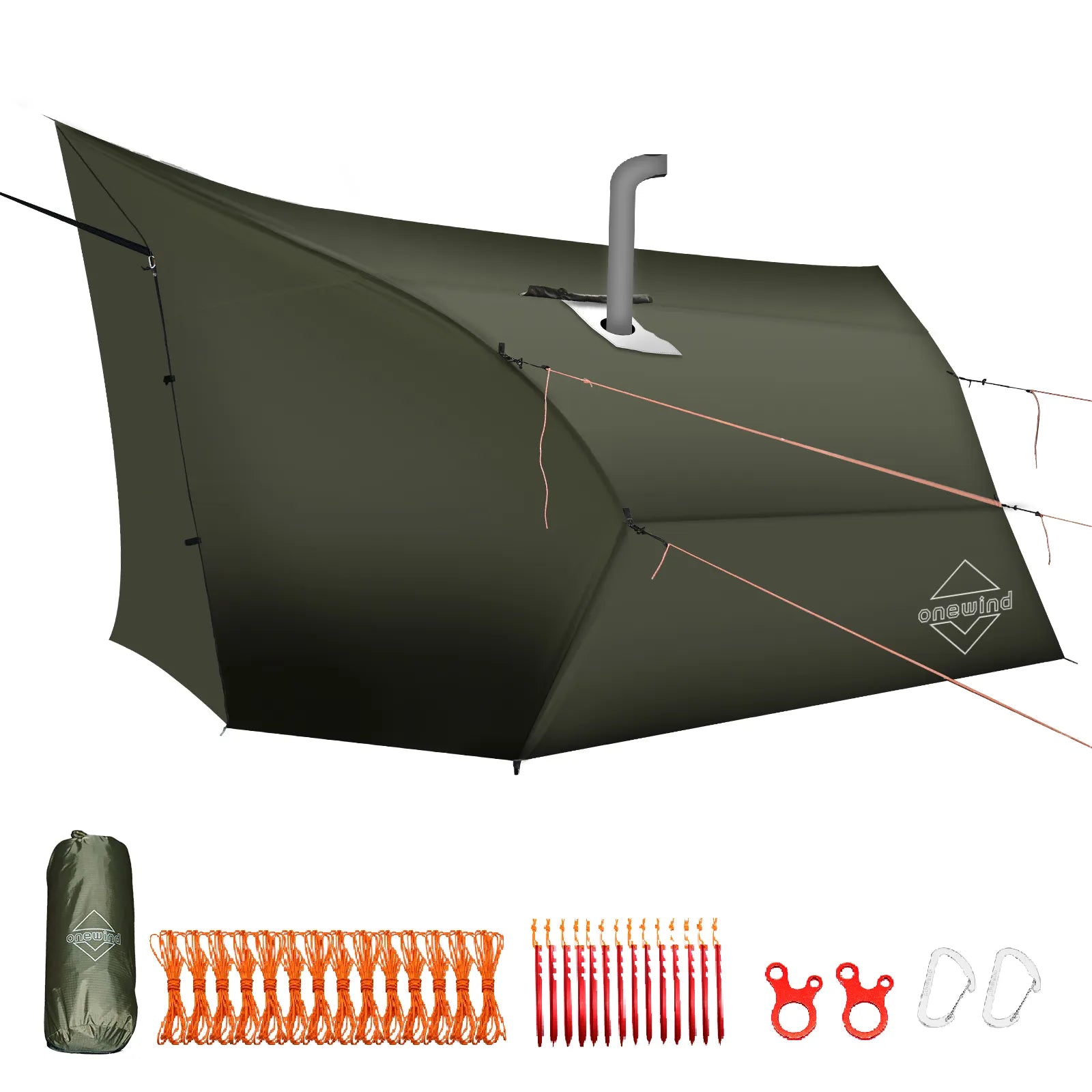
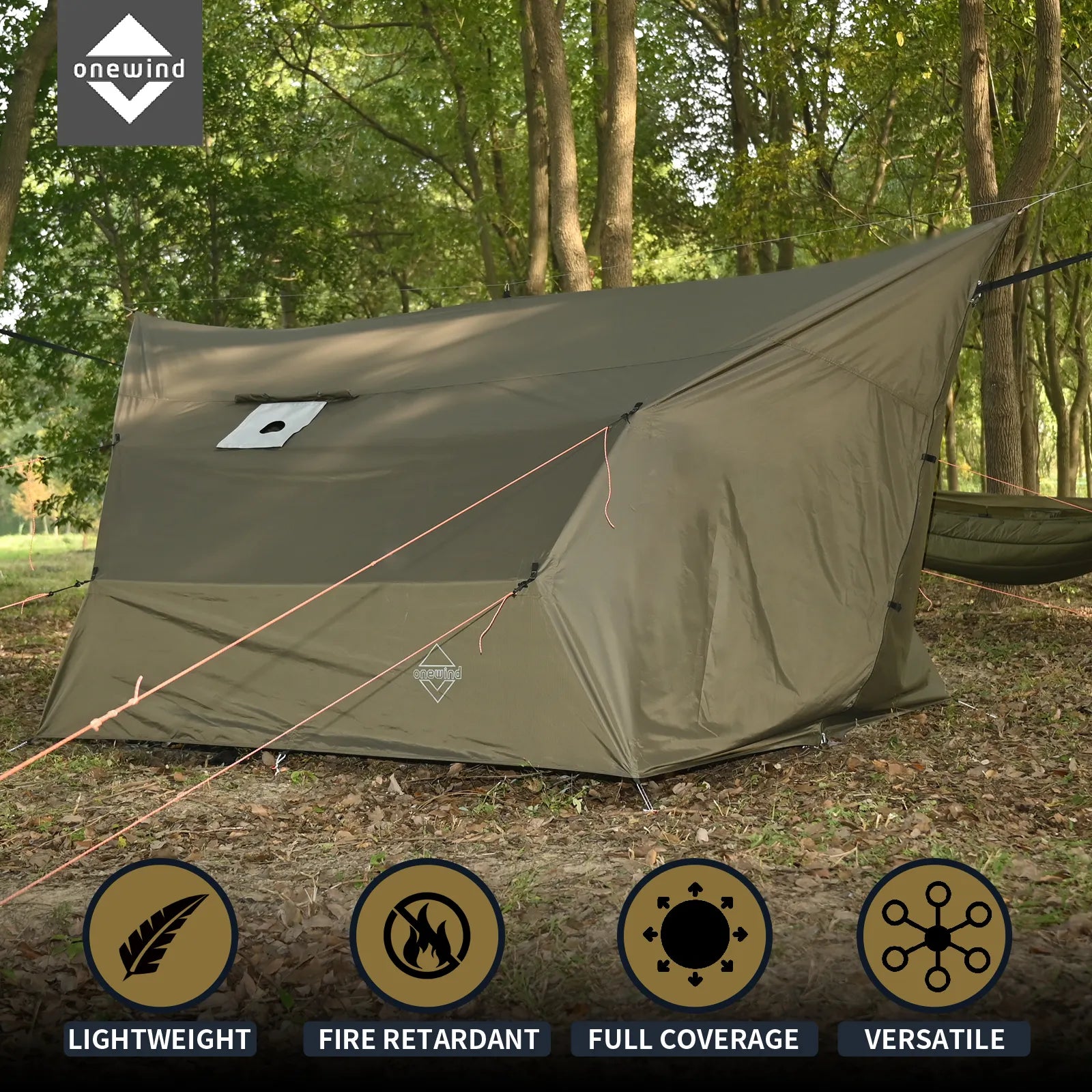
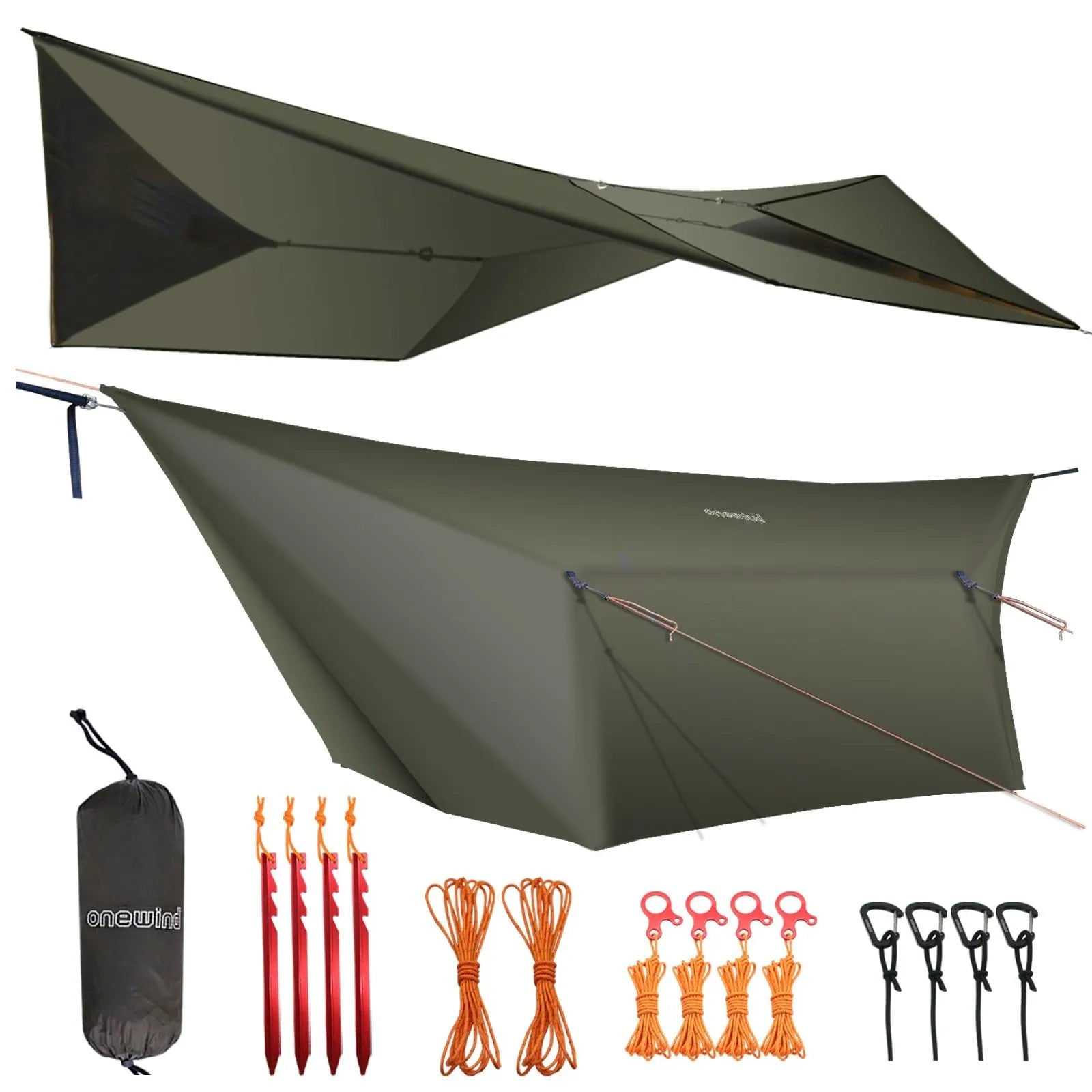
The 12 ft Onewind silnylon tarp belongs in the planned-cover lane. Its listed 12' x 9.7' coverage, 1.86 lb total weight, and 4000mm waterproof coating are real shelter data, not pocket-emergency data.
That tarp may be too much for some fast kits.
But for wet routes, it can turn a rough stop into a manageable night.
Verdict: for bikepacking, carry the emergency bivy as backup and rely on a tarp or shelter as the primary weather system when rain or late arrival is realistic.
Scenario 4: Cold Wet Shoulder-Season Night

Cold wet nights expose the limits of tiny backup gear.
Dew forms.
Rain jackets get wet.
Shoes soak through.
Hands get clumsy.
Condensation collects.
The emergency bivy can help reduce exposure, but it can also trap moisture if the setup has no airflow or cover.
A tarp or planned shelter changes the risk here.
Overhead cover gives you a place to handle rain gear.
It gives boots a place to sit.
It reduces splash.
It lets the bivy opening breathe more safely.
Without cover, the emergency bivy may become a wet pocket around tired clothing.
For planned shoulder-season trips, I would rather carry a real shelter system.
The Solo Skyshade Tartent belongs in the roomier planned solo lane when entry, sitting space, and weather routine matter more than the smallest possible backup item.
Verdict: in cold wet shoulder-season conditions, treat the emergency bivy as last-resort backup and choose tarp cover or a planned solo shelter for intentional sleep.
Scenario 5: Bugs, Ticks, And Ground Sleep

Emergency bivies often get discussed as weather gear.
Ground sleep also has a bug problem.
CDC tick guidance recommends avoiding brush and high grass, using EPA-registered repellents, treating boots and gear with 0.5% permethrin, and checking body and gear after exposure.
That matters because an emergency bivy puts the user close to the ground.
If the only available rest spot is grassy, brushy, or buggy, the bivy does not solve the whole problem.
You still need site judgment.
You still need repellents or treated clothing.
You still need a tick check routine.
You still need a plan for shoes, socks, and pant cuffs.
The lighter the shelter, the more important the routine.
Verdict: an emergency bivy can be part of a bug-aware kit, but it does not replace site choice, repellent, treated gear, and body checks when ground exposure is high.
Scented Items Still Need A Plan

A tiny shelter has no vestibule.
That makes scented-item discipline more important, not less important.
NPS food-storage guidance treats food, garbage, toiletries, sunscreen, bug repellent, fuel, and cookware as scented items.
Those items should not end up beside your face simply because the emergency bivy is small.
For a true emergency stop, you may not have perfect options.
Still, separate what you can.
Keep wrappers contained.
Do not sleep on spilled food.
Do not tuck bug repellent into the bivy opening for convenience.
Do not treat the backpack as a food locker and then use it as a pillow.
If you are planning an overnight, this is another reason an emergency bivy alone is the wrong primary shelter.
The smaller the sleep space, the cleaner the food and smell routine needs to be.
Product Path: What To Carry Instead

Onewind product routing should stay honest here.
Onewind does not need to be framed as an emergency foil bivy brand.
The stronger advice is category-based.
The full tarp shelter collection belongs in the comparison when the real problem is overhead cover rather than the smallest possible bivy.
Use the product path after the emergency decision.
Do not start with the product.
Start with the failure.
Common Mistakes With Emergency Bivy Sack

Emergency bivy mistakes are usually decision mistakes.
The gear is not the villain.
The category error is.
The bivy is useful when it supports a backup plan.
It becomes risky when it replaces the plan.
Mistake 1: Calling Backup Gear A Shelter System

The first mistake is language.
"I carry an emergency bivy" is different from "I have shelter."
A shelter system manages rain, ground, bugs, insulation, gear, entry, exit, and mistakes.
An emergency bivy manages one narrow slice of exposure.
That slice can matter.
It is not the whole pie.
If the trip is planned as an overnight, build an overnight system.
If the trip is planned as a day route with backup risk, carry backup gear.
Do not mix those two statements.
Mistake 2: Forgetting Insulation

An emergency bivy can reduce heat loss.
It does not create a warm sleeping system by itself.
Cold ground still pulls heat.
Wet clothing still matters.
Wind still matters.
A tired person still needs layers.
If you pack the bivy but no warm layer, no hat, no rain shell, and no way to get off wet ground, the backup is thin.
Treat the bivy as one piece of a cold-stop kit.
Not the whole kit.
Mistake 3: Ignoring Tears, Noise, And Exit

Emergency bivies can be fragile.
Some are noisy.
Some are hard to reseal.
Some are awkward to exit when hands are cold.
That does not make them useless.
It means you should not discover the design at midnight.
Open it once at home if the product instructions allow it.
Know where the head opening is.
Know whether you can sit up.
Know whether shoes need to stay outside.
Know whether sharp ground will shred it.
Backup gear should be boring before the emergency.
Mistake 4: Skipping The Tarp When Rain Is The Known Problem

If rain is likely, the emergency bivy should not be asked to do every job.
Rain entry is a separate problem.
Splash is a separate problem.
Wet boots are a separate problem.
Packing up in the morning is a separate problem.
A tarp can handle many of those jobs.
That is why a planned tarp system often beats pretending the emergency bivy is enough.
If you know the weather may be wet, do not let the word "emergency" become a shortcut around shelter planning.
Mistake 5: No Refusal Rule

You need refusal rules before the trip.
Here are mine.
These rules are conservative.
That is the point.
Emergency gear should make a bad situation less bad.
It should not create the bad situation.
The Quick Decision Checklist

- ✓ Carry an emergency bivy sack when injury, missed daylight, route delay, or exposure could force an unplanned stop.
- ✓ Pack it with warm layers, rain shell, headlamp, water, and signaling, not as a lonely miracle item.
- ✓ Do not use it to justify skipping shelter on a planned overnight.
- ✓ Add tarp cover when rain entry, splash, boots, and pack staging are likely problems.
- ✓ Choose a structured bivy tent when you want a low planned shelter with mesh, floor, and shape.
- ✓ Choose a roomier solo shelter when entry, gear handling, and waiting out weather matter.
- ✓ Refuse emergency-bivy-only planning for rain, bugs, multi-night routes, rough ground, poor insulation, or no scented-item plan.
An emergency bivy sack earns its place because plans fail.
It should not be the reason the plan was weak.

Compare the planned low-shelter path
Shop Now →